
Elastic protein Property of elasticity or the ability
Elastic protein • Property of elasticity, or the ability to deform reversibly without loss of energy; so elastic proteins should have high resilience. Functions : • Elastic is a key protein of the extracellular mat • It is highly elastic and present in connective tissue allowing many tissues in the body to resume their shape after stretching or contracting. • • Elastic helps skin to return to its original position when it is poked or pinched.
Elastic protein
Elastic protein • Elastic is the very stretchy protein found in connective tissue and skin. It allows the tissues in our body to resume their shape after stretching or contracting. And it plays the same role in skin: Elastic helps it to return to its original position when it is pulled or pinched Causes • Elastic fibers (or yellow fibers) are bundles of proteins (elastic) found in extracellular matrix of connective tissue and produced by fibroblasts and smooth muscle cells in arteries. These fibers can stretch up to 1. 5 times their length, and snap back to their original length when relaxed
Elastic protein • Uses • Elastic is a key protein of the extracellular matrix. • It is highly elastic and present in connective tissue allowing many tissues in the body to resume their shape after stretching or contracting. • Elastic helps skin to return to its original position when it is poked or pinched. • Elastic protein structure • In the body, elastic is usually associated with other proteins in connective tissues. Elastic fiber in the body is a mixture of amorphous elastic and fibrous fibrillin's. Both components are primarily made of smaller amino acids such as glycine, valine, alanine, and proline.
Elastic protein • Elastic is a major protein component of tissues that require elasticity such as arteries, lungs, bladder, skin and elastic ligaments and cartilage. meaning. • Elastic implies the property of elasticity, or the ability to deform reversibly without loss of energy.
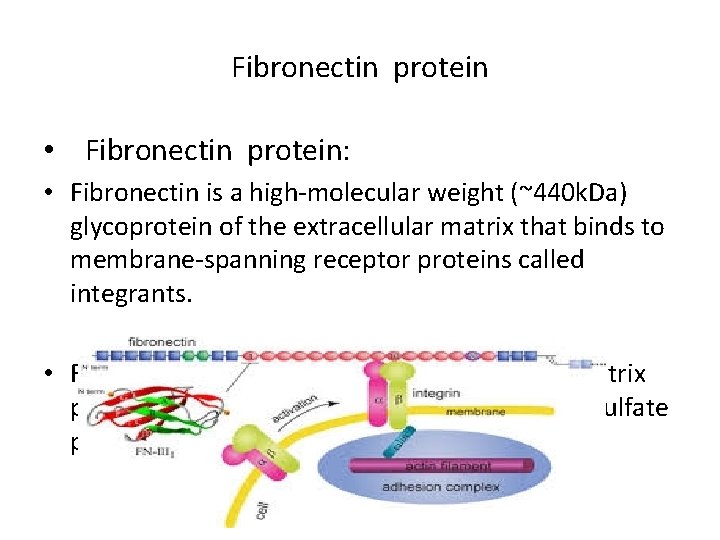
Fibronectin protein • Fibronectin protein: • Fibronectin is a high-molecular weight (~440 k. Da) glycoprotein of the extracellular matrix that binds to membrane-spanning receptor proteins called integrants. • Fibronectin also binds to other extracellular matrix proteins such as collagen, fibrin, and heparan sulfate proteoglycans
Fibronectin protein • function: • It is involved in cell adhesion, growth, migration, and differentiation. • Cellular fibronectin is assembled into the extracellular matrix, an insoluble network that separates and supports the organs and tissues of an organism. • The liver synthesizes most of the fibronectin found in the plasma, whereas fibroblasts, endothelial cells and other cell types synthesize tissue fibronectin. • Fibronectin enhances the initial adherence of neutrophils and monocots to endothelium.
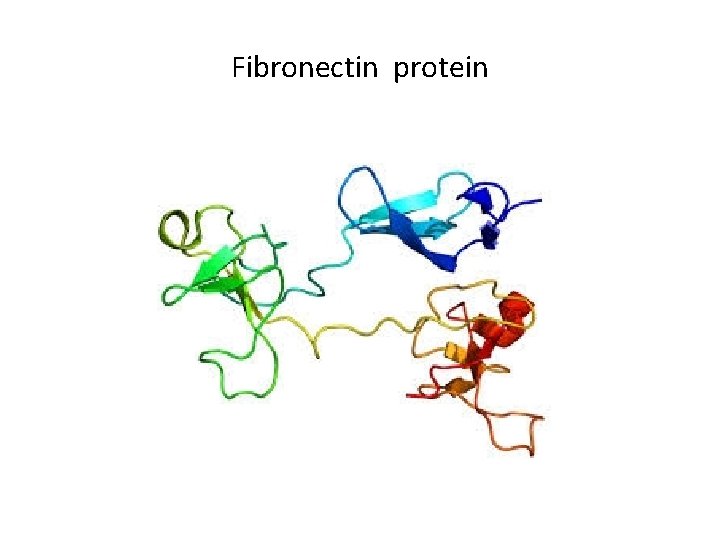
Fibronectin protein
- Slides: 8