
Elastic Modulus of Very Thin Diamondlike Carbon DLC
Elastic Modulus of Very Thin Diamond-like Carbon (DLC) Films Jin-Won Chung*+, Kwang-Ryeol Lee *, Dae-Hong Ko+, Kwang Yong Eun* *Thin Film Technology Research Center, Korea Institute of Science and Technology. +Department of Ceramic Engineering, Yonsei University.
Measurement of Mechanical Properties of Very Thin Films • Various industrial applications need very thin film. • The reliability for applications. • For Example – Protective layer for a hard disk üThickness of the protective layer has been reduced to less than 5 nm.
Measurement of Elastic Properties of Thin Films ü Nano-indentation – From Analysis of Unloading Curve – Significant Substrate Effect ü Sonic Vibration Method ü Other Acoustic Method – Using Laser, SAW – Difficult to Separate Acoustic Signal ü Bulge Test – Using Sonic Vibration Resonance – – Need Thick Films for High S/N Ratio – From Strain of Pressurized Membrane Difficult Micro-fabrication Technique
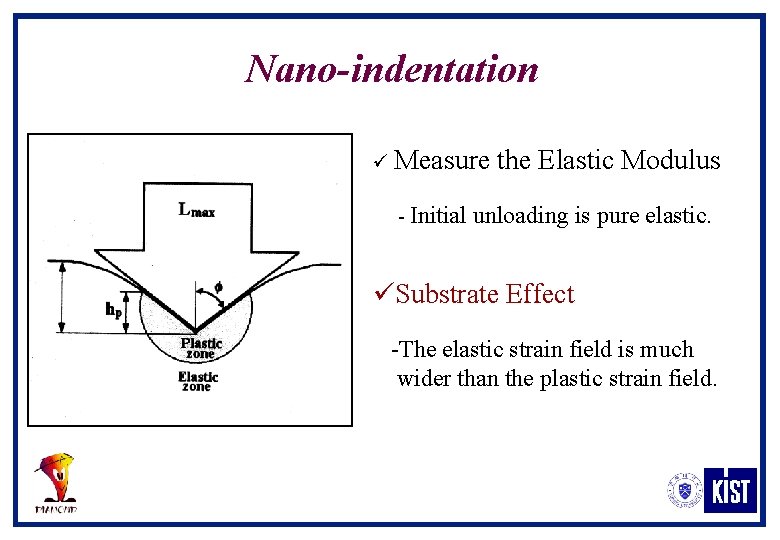
Nano-indentation ü Measure the Elastic Modulus - Initial unloading is pure elastic. üSubstrate Effect -The elastic strain field is much wider than the plastic strain field.
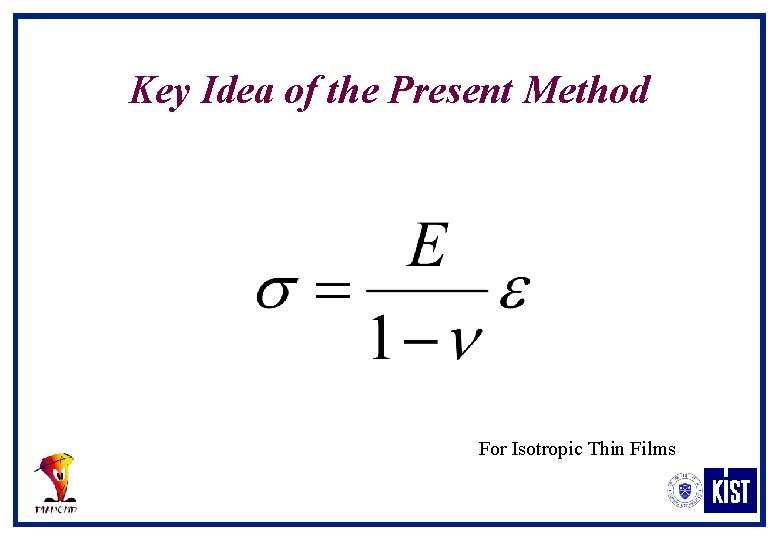
Key Idea of the Present Method For Isotropic Thin Films
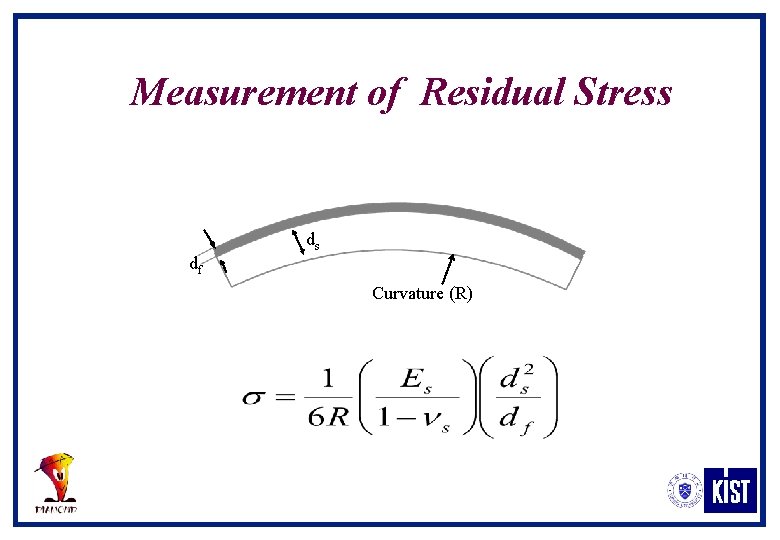
Measurement of Residual Stress ds df Curvature (R)
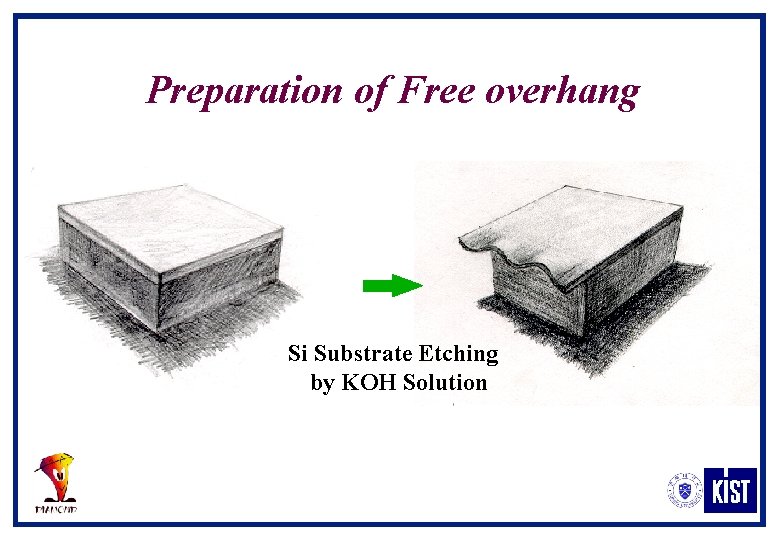
Preparation of Free overhang Si Substrate Etching by KOH Solution
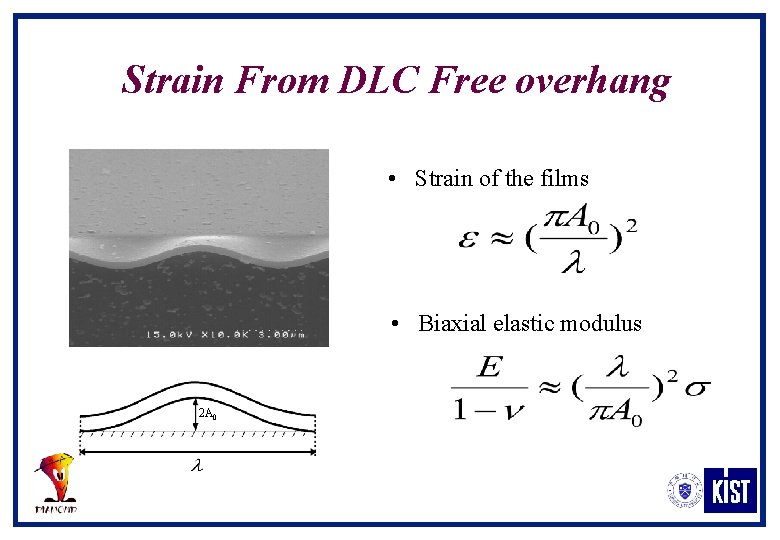
Strain From DLC Free overhang • Strain of the films • Biaxial elastic modulus 2 A 0
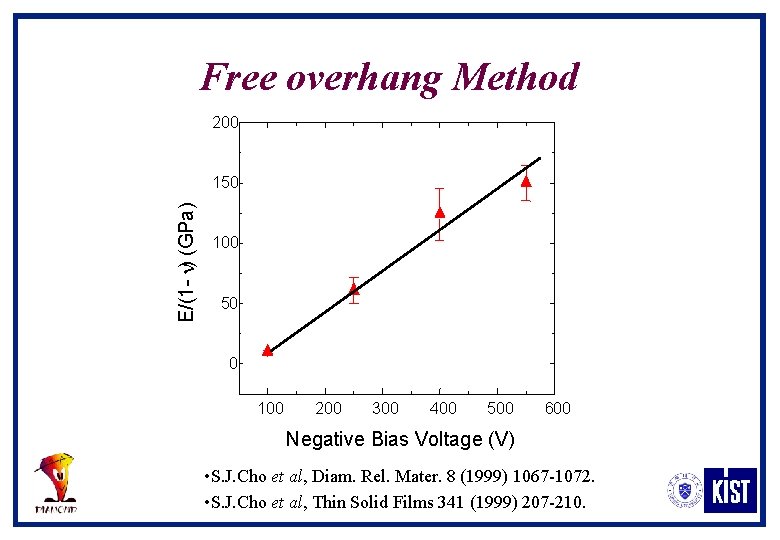
Free overhang Method 200 E/(1 - n) (GPa) 150 100 50 0 100 200 300 400 500 600 Negative Bias Voltage (V) • S. J. Cho et al, Diam. Rel. Mater. 8 (1999) 1067 -1072. • S. J. Cho et al, Thin Solid Films 341 (1999) 207 -210.
Advantages of This Method – Simple Method – Completely Exclude the Substrate Effect – Can Be Used for Very Thin Films ü The possibility of elastic modulus measurement in very thin film

Previous Work a-C: H, C 6 H 6 -400 V ta-C J. -W. Chung et al, Diam. Rel. Mater. in press (2001)
Purpose of the Present Work ü Evaluate the biaxial elastic modulus of very thin film in wide rage of deposition conditions in RF-PACVD ü Investigate the structural evolutions by the Raman spectroscopy
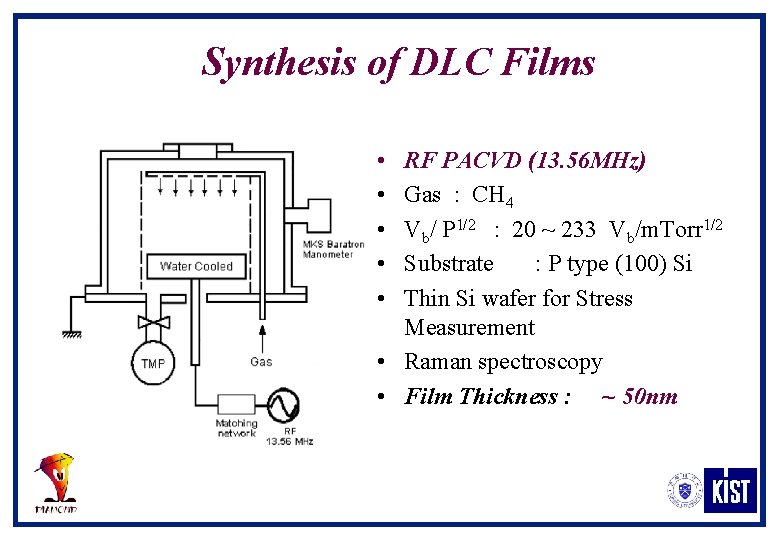
Synthesis of DLC Films • • • RF PACVD (13. 56 MHz) Gas : CH 4 Vb/ P 1/2 : 20 ~ 233 Vb/m. Torr 1/2 Substrate : P type (100) Si Thin Si wafer for Stress Measurement • Raman spectroscopy • Film Thickness : ~ 50 nm
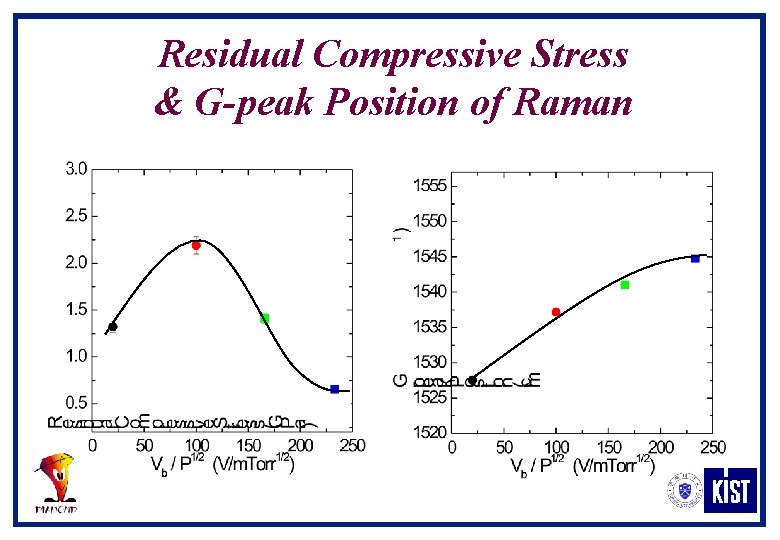
Residual Compressive Stress & G-peak Position of Raman
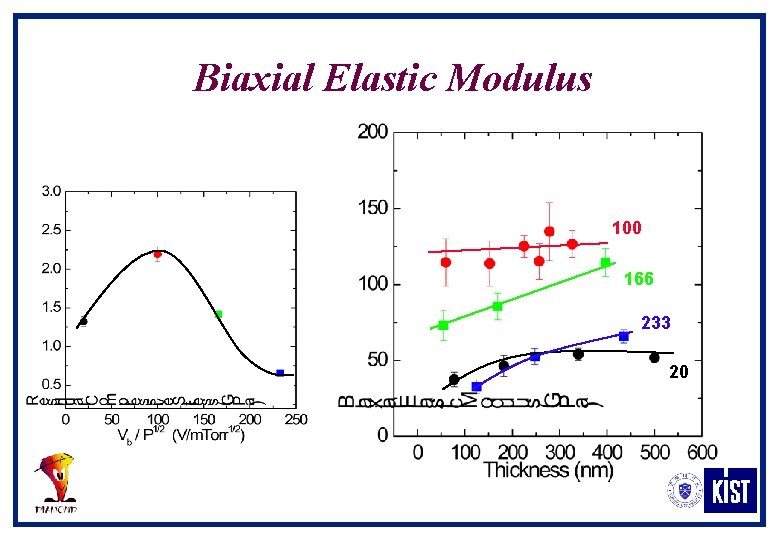
Biaxial Elastic Modulus 100 166 233 20
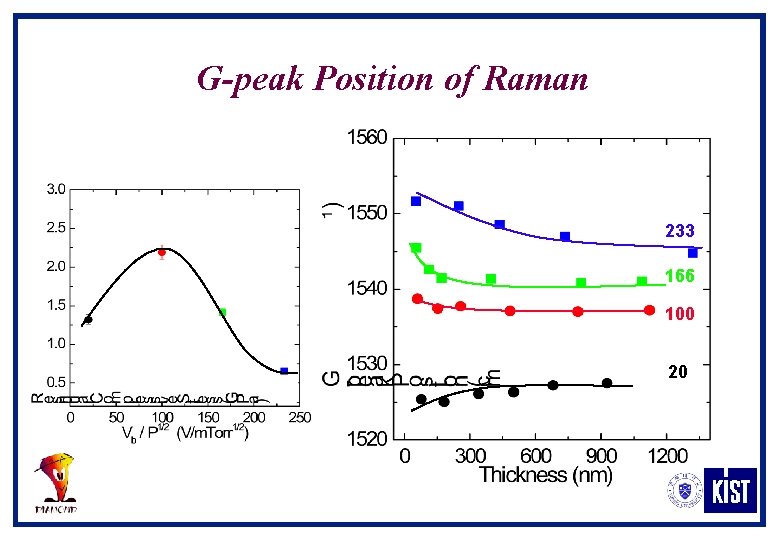
G-peak Position of Raman 233 166 100 20
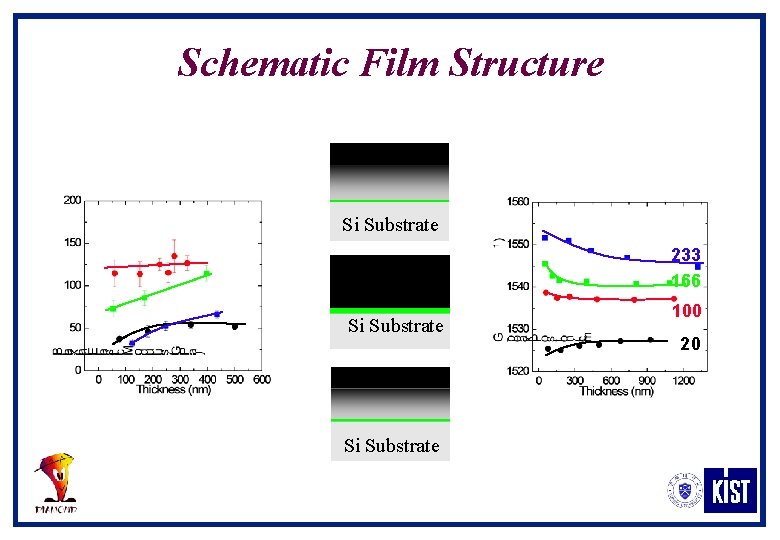
Schematic Film Structure Si Substrate 233 166 Si Substrate 100 20
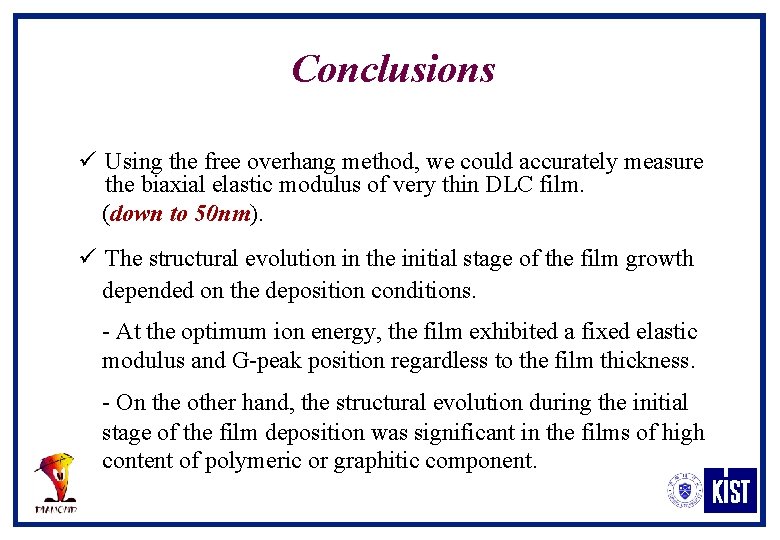
Conclusions ü Using the free overhang method, we could accurately measure the biaxial elastic modulus of very thin DLC film. (down to 50 nm). ü The structural evolution in the initial stage of the film growth depended on the deposition conditions. - At the optimum ion energy, the film exhibited a fixed elastic modulus and G-peak position regardless to the film thickness. - On the other hand, the structural evolution during the initial stage of the film deposition was significant in the films of high content of polymeric or graphitic component.
- Slides: 18