
Elastic Maps for Data Analysis Alexander Gorban Leicester
Elastic Maps for Data Analysis Alexander Gorban, Leicester with Andrei Zinovyev, Paris
Plan of the talk INTRODUCTION n Two paradigms for data analysis: statistics and modelling n Clustering and K-means n Self Organizing Maps n PCA and local PCA
Plan of the talk 1. Principal manifolds and elastic maps n The notion of of principal manifold (PM) n Constructing PMs: elastic maps n Adaptation and grammars 2. Application technique n Projection and regression n Maps and visualization of functions 3. Implementation and examples
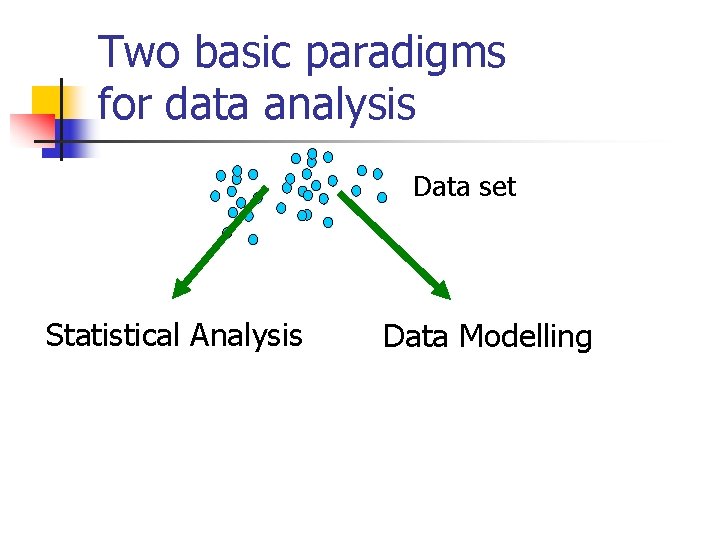
Two basic paradigms for data analysis Data set Statistical Analysis Data Modelling
Statistical Analysis n n n Existence of a Probability Distribution; Statistical Hypothesis about Data Generation; Verification/Falsification of Hypothesises about Hidden Properties of Data Distribution
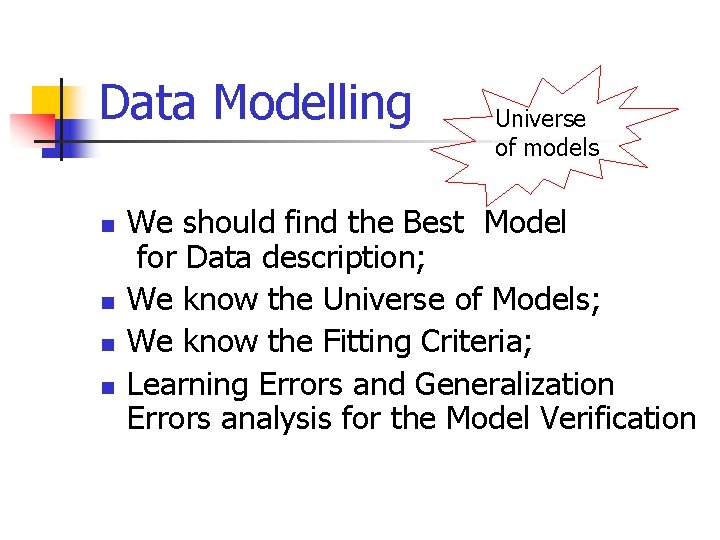
Data Modelling n n Universe of models We should find the Best Model for Data description; We know the Universe of Models; We know the Fitting Criteria; Learning Errors and Generalization Errors analysis for the Model Verification
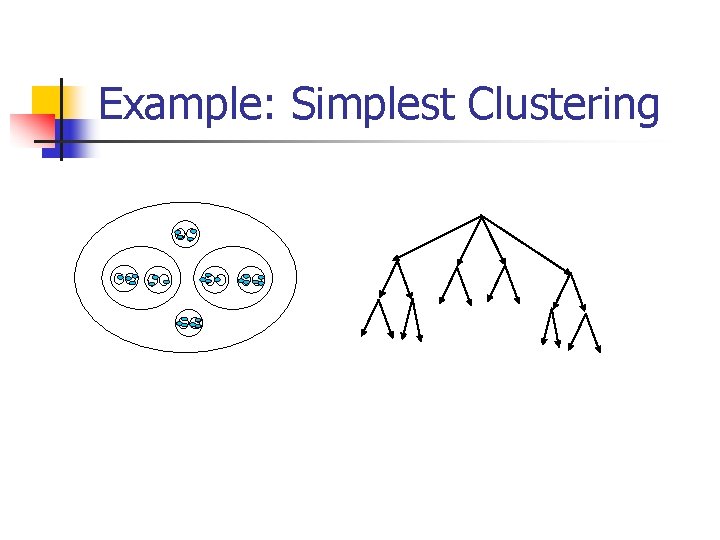
Example: Simplest Clustering
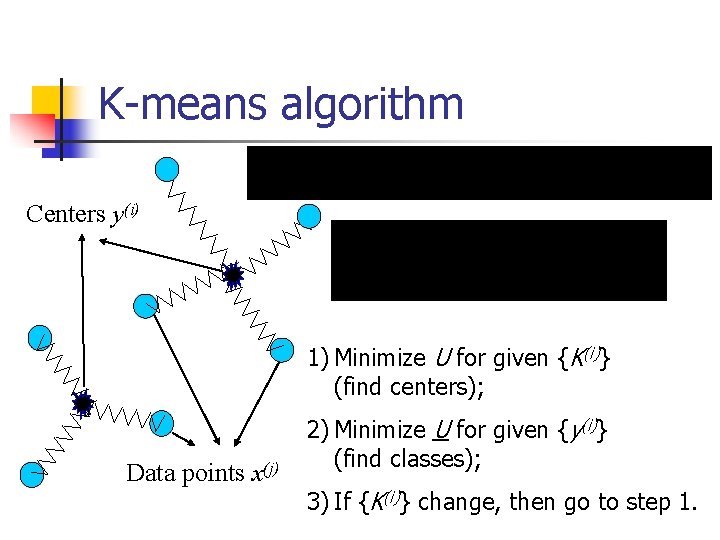
K-means algorithm Centers y(i) 1) Minimize U for given {K(i)} (find centers); Data points x(j) 2) Minimize U for given {y(i)} (find classes); 3) If {K(i)} change, then go to step 1.
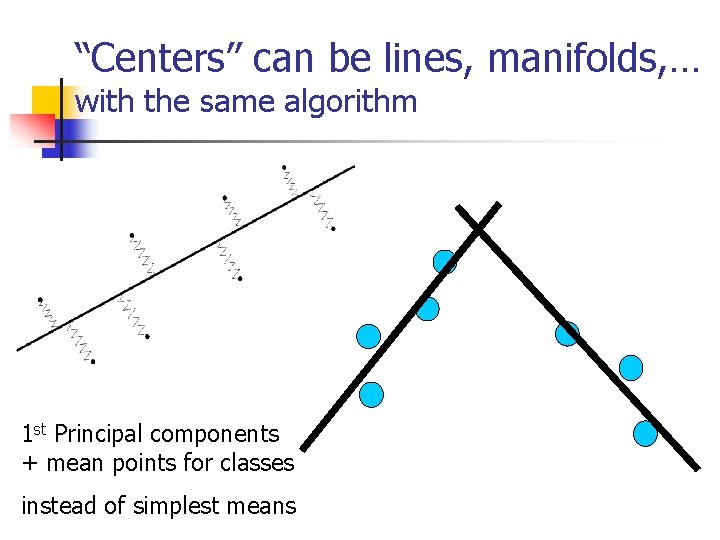
“Centers” can be lines, manifolds, … with the same algorithm 1 st Principal components + mean points for classes instead of simplest means
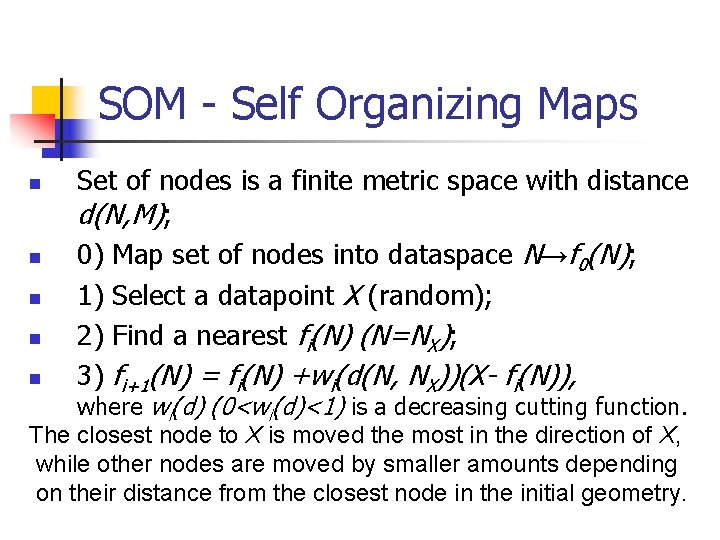
SOM - Self Organizing Maps n n n Set of nodes is a finite metric space with distance d(N, M); 0) Map set of nodes into dataspace N→f 0(N); 1) Select a datapoint X (random); 2) Find a nearest fi(N) (N=NX); 3) fi+1(N) = fi(N) +wi(d(N, NX))(X- fi(N)), where wi(d) (0<wi(d)<1) is a decreasing cutting function. The closest node to X is moved the most in the direction of X, while other nodes are moved by smaller amounts depending on their distance from the closest node in the initial geometry.
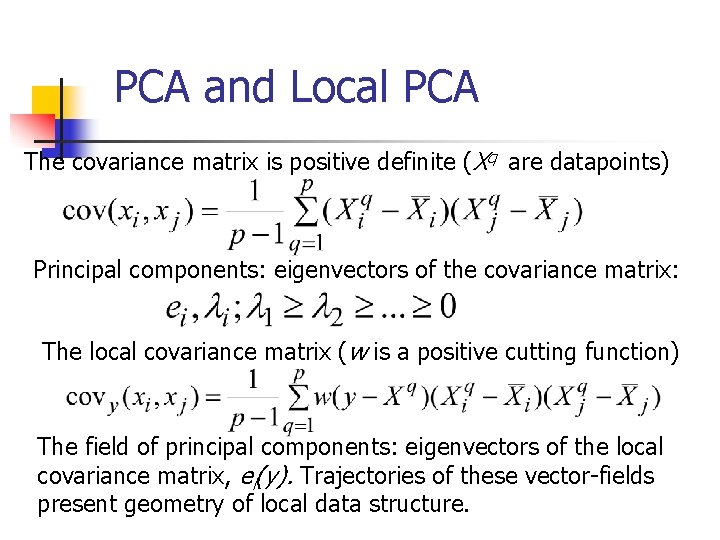
PCA and Local PCA The covariance matrix is positive definite (Xq are datapoints) Principal components: eigenvectors of the covariance matrix: The local covariance matrix (w is a positive cutting function) The field of principal components: eigenvectors of the local covariance matrix, ei(y). Trajectories of these vector-fields present geometry of local data structure.
A top secret: the difference between two basic paradigms is not crucial (Almost) Back to Statistics: n n Quasi-statistics: 1) delete one point from the dataset, 2) fitting, 3) analysis of the error for the deleted data; The overfitting problem and smoothed data points (it is very close to nonparametric statistics)
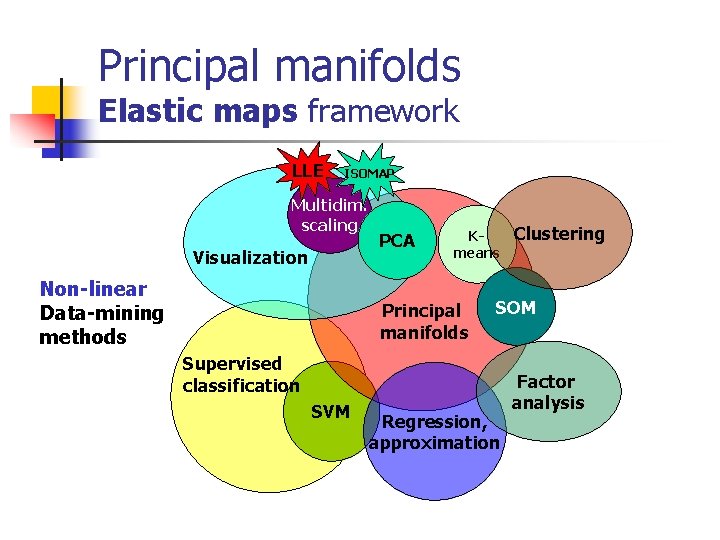
Principal manifolds Elastic maps framework LLE ISOMAP Multidim. scaling Visualization Non-linear Data-mining methods PCA Kmeans Principal manifolds SOM Supervised classification SVM Clustering Regression, approximation Factor analysis
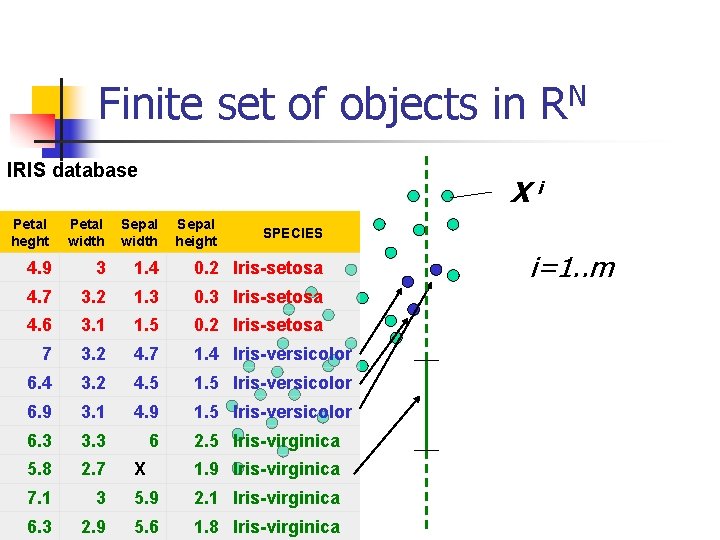
Finite set of objects in RN IRIS database Xi Petal heght Petal width Sepal height 4. 9 3 1. 4 0. 2 Iris-setosa 4. 7 3. 2 1. 3 0. 3 Iris-setosa 4. 6 3. 1 1. 5 0. 2 Iris-setosa 7 3. 2 4. 7 1. 4 Iris-versicolor 6. 4 3. 2 4. 5 1. 5 Iris-versicolor 6. 9 3. 1 4. 9 1. 5 Iris-versicolor 6. 3 3. 3 6 5. 8 2. 7 7. 1 6. 3 SPECIES 2. 5 Iris-virginica X 1. 9 Iris-virginica 3 5. 9 2. 1 Iris-virginica 2. 9 5. 6 1. 8 Iris-virginica i=1. . m
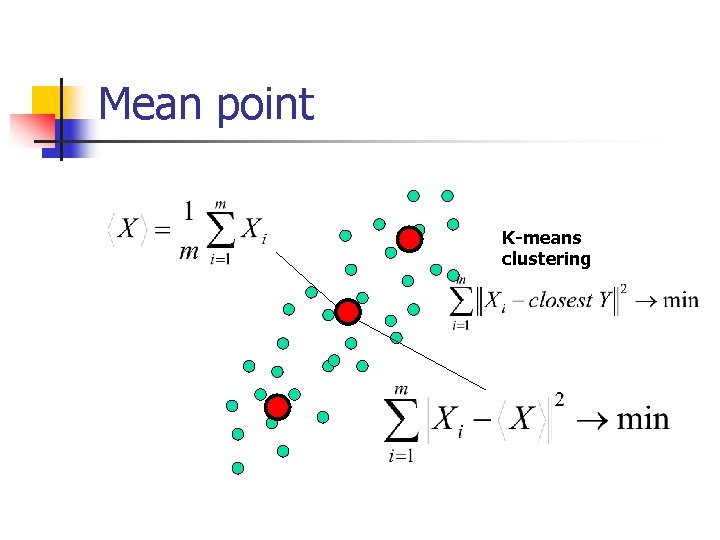
Mean point K-means clustering
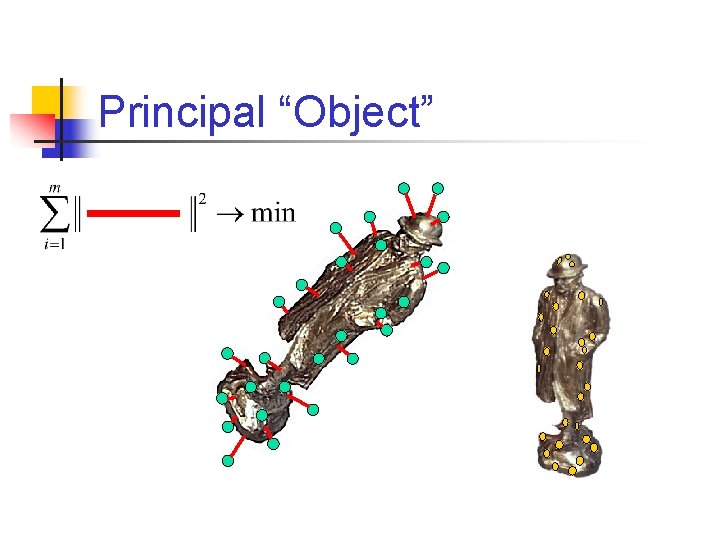
Principal “Object”
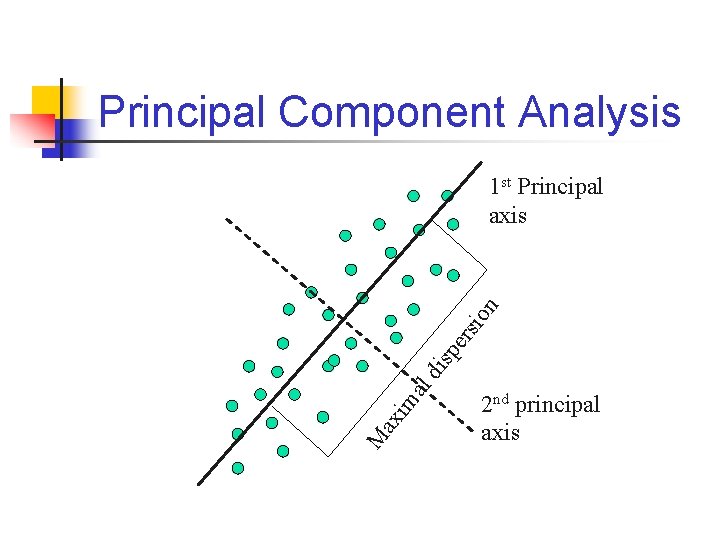
Principal Component Analysis M ax im al dis p ers ion 1 st Principal axis 2 nd principal axis
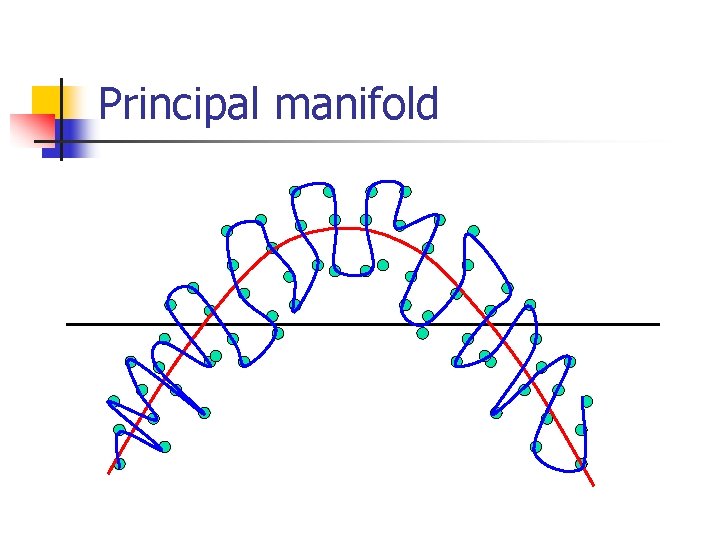
Principal manifold
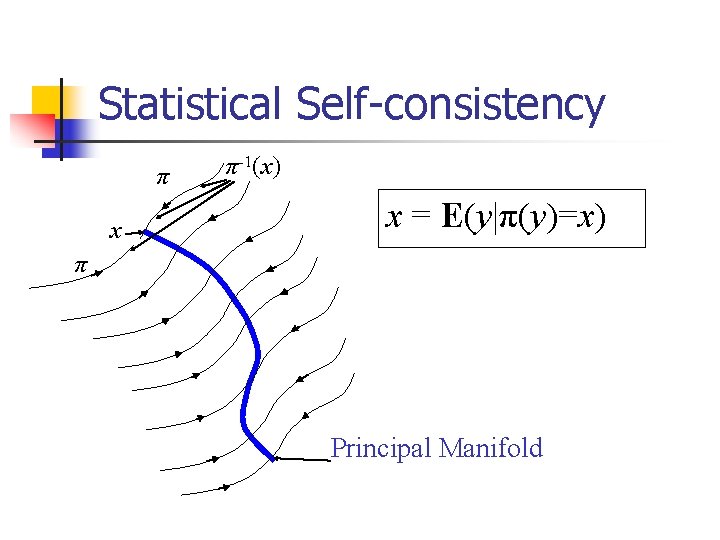
Statistical Self-consistency π x π-1(x) x = E(y|π(y)=x) π Principal Manifold
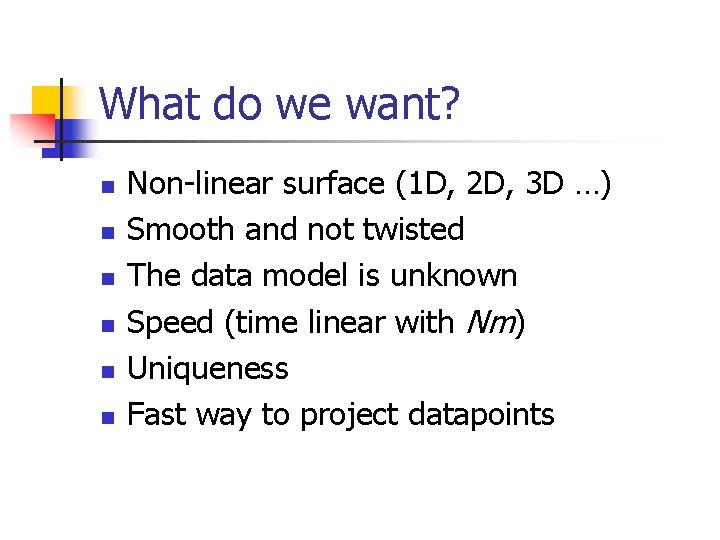
What do we want? n n n Non-linear surface (1 D, 2 D, 3 D …) Smooth and not twisted The data model is unknown Speed (time linear with Nm) Uniqueness Fast way to project datapoints
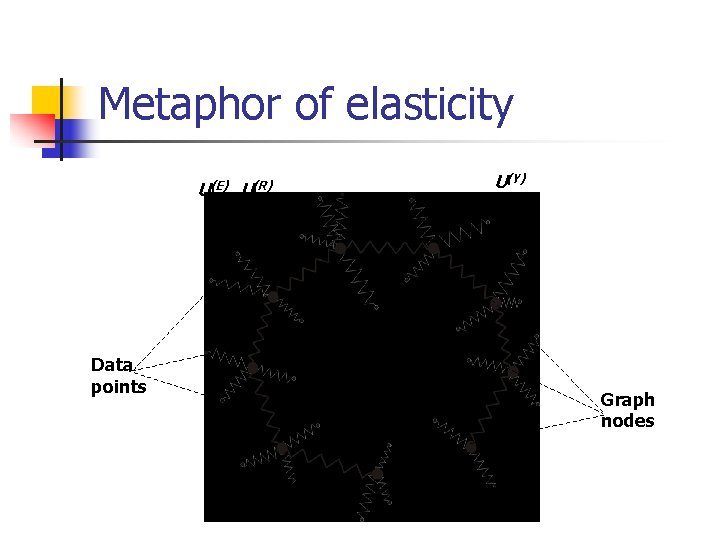
Metaphor of elasticity U(E), U(R) Data points U(Y) Graph nodes
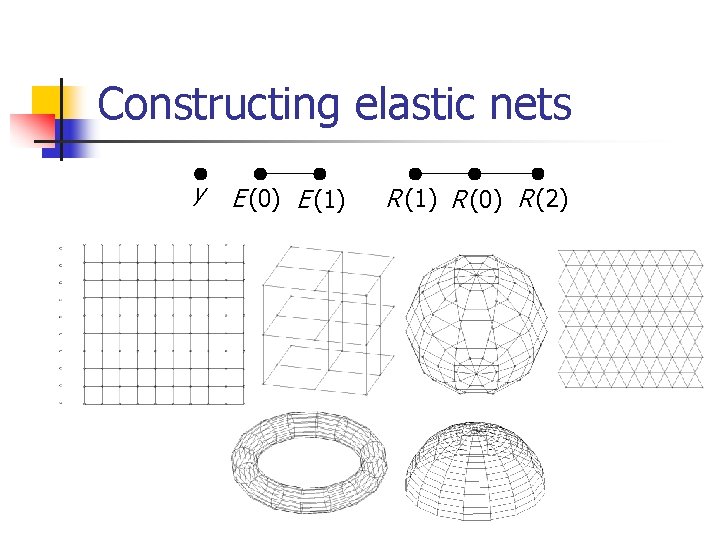
Constructing elastic nets y E (0) E (1) R (0) R (2)
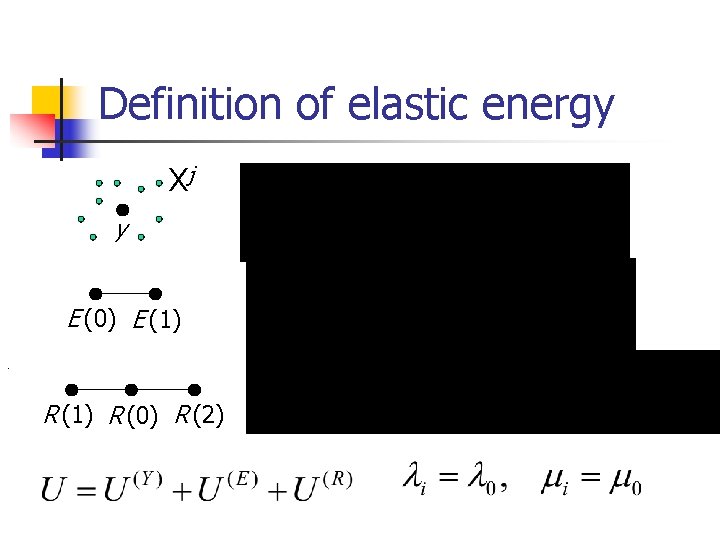
Definition of elastic energy Xj y E (0) E (1). R (1) R (0) R (2)
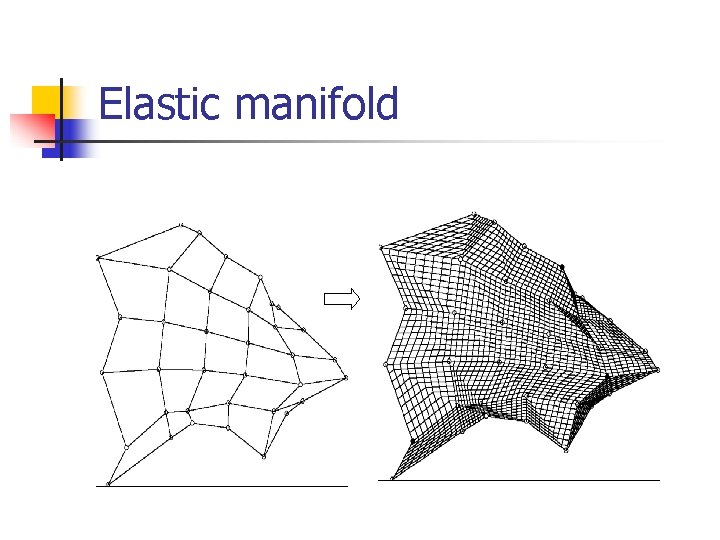
Elastic manifold
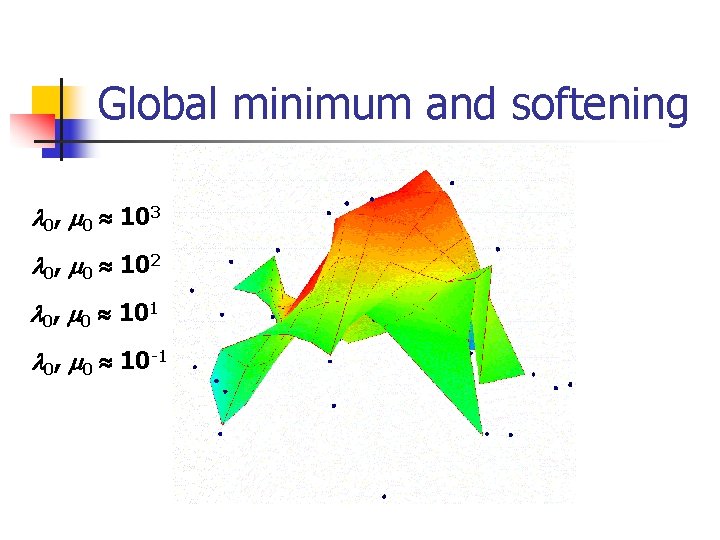
Global minimum and softening 0, 0 103 0, 0 102 0, 0 101 0, 0 10 -1
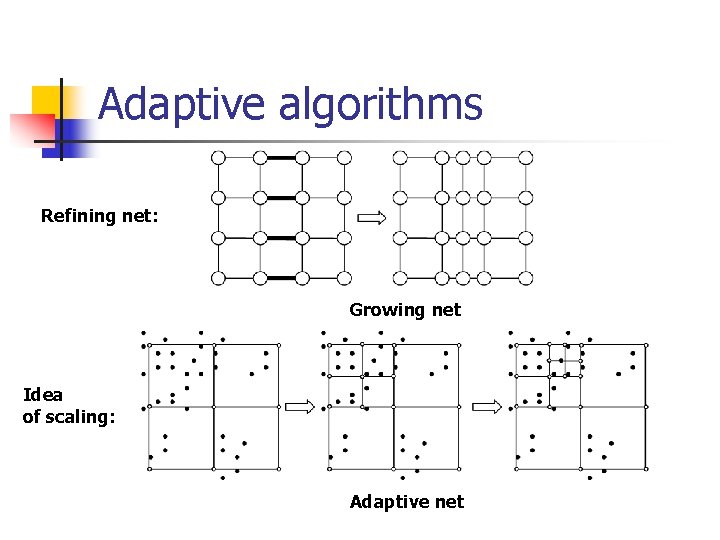
Adaptive algorithms Refining net: Growing net Idea of scaling: Adaptive net
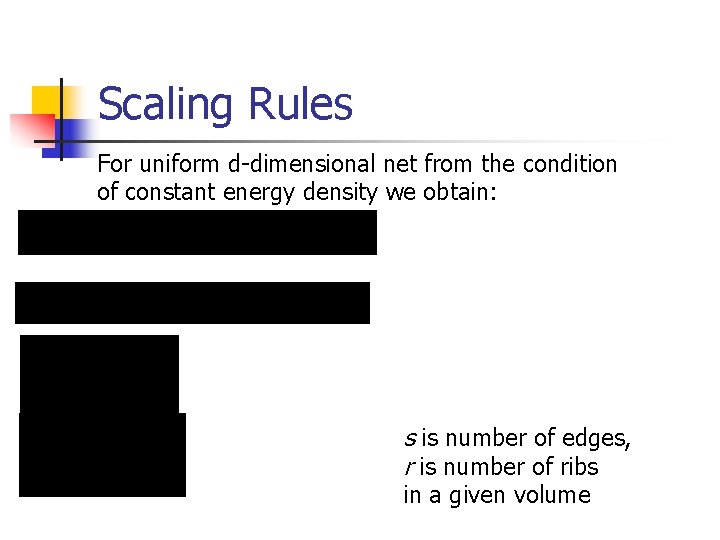
Scaling Rules For uniform d-dimensional net from the condition of constant energy density we obtain: s is number of edges, r is number of ribs in a given volume
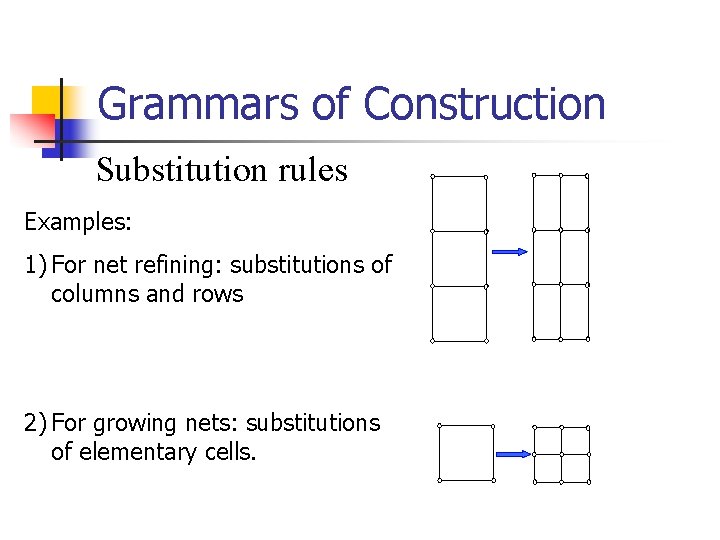
Grammars of Construction Substitution rules Examples: 1) For net refining: substitutions of columns and rows 2) For growing nets: substitutions of elementary cells.
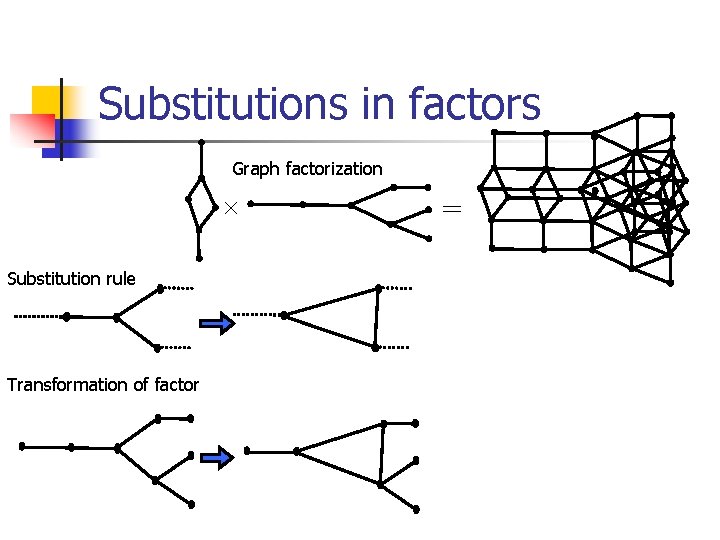
Substitutions in factors Graph factorization × Substitution rule Transformation of factor =
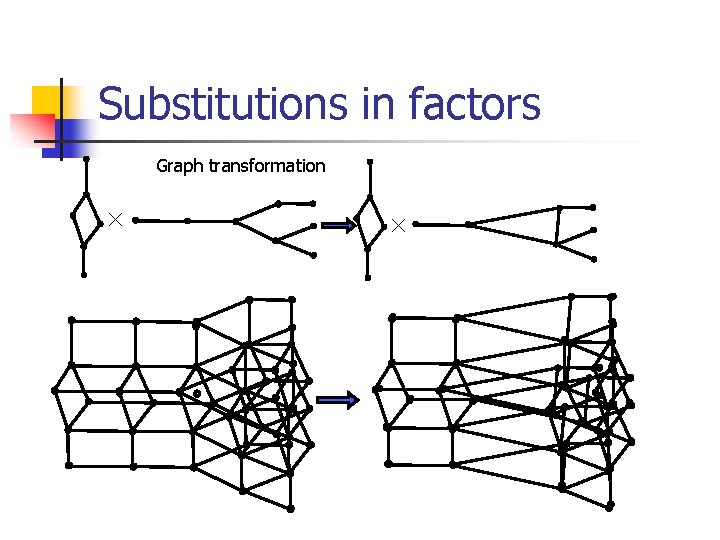
Substitutions in factors Graph transformation × ×
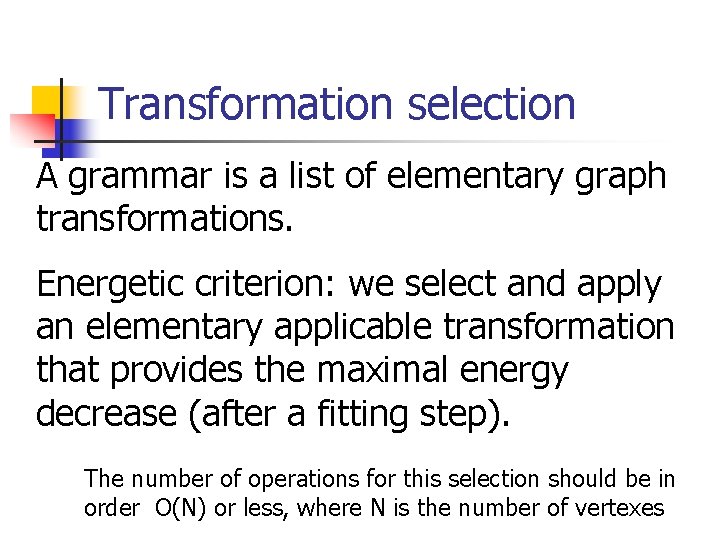
Transformation selection A grammar is a list of elementary graph transformations. Energetic criterion: we select and apply an elementary applicable transformation that provides the maximal energy decrease (after a fitting step). The number of operations for this selection should be in order O(N) or less, where N is the number of vertexes
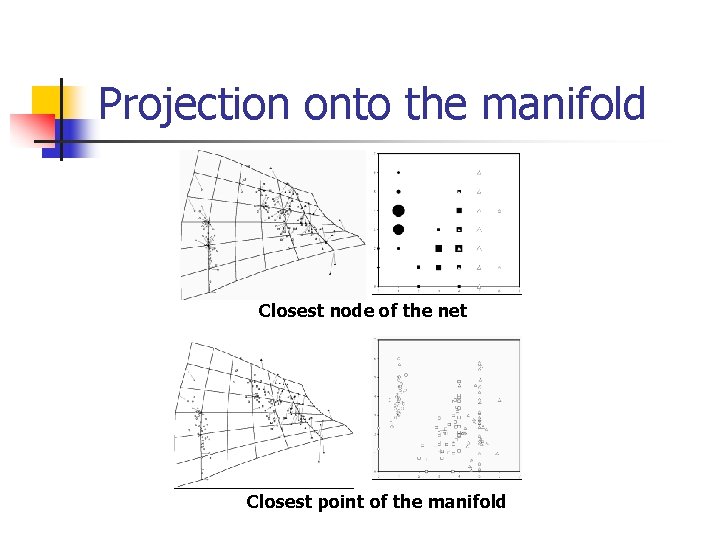
Projection onto the manifold Closest node of the net Closest point of the manifold
Mapping distortions Two basic types of distortion: 1) Projecting distant points in the close ones (bad resolution) 2) Projecting close points in the distant ones (bad topology compliance)
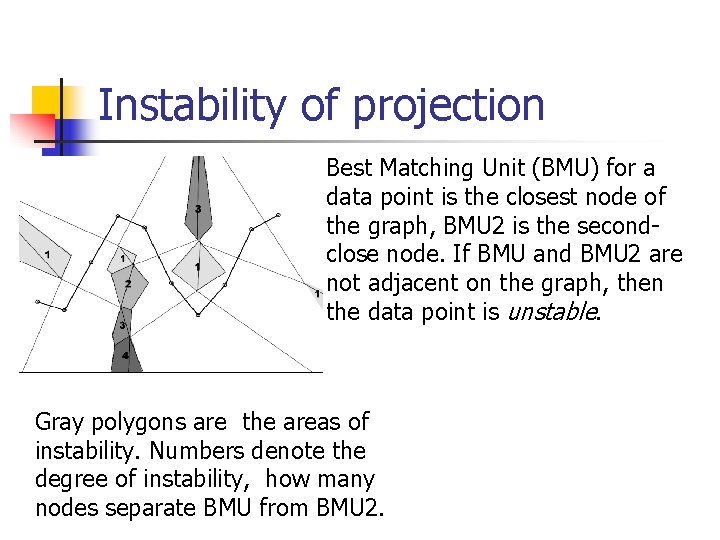
Instability of projection Best Matching Unit (BMU) for a data point is the closest node of the graph, BMU 2 is the secondclose node. If BMU and BMU 2 are not adjacent on the graph, then the data point is unstable. Gray polygons are the areas of instability. Numbers denote the degree of instability, how many nodes separate BMU from BMU 2.
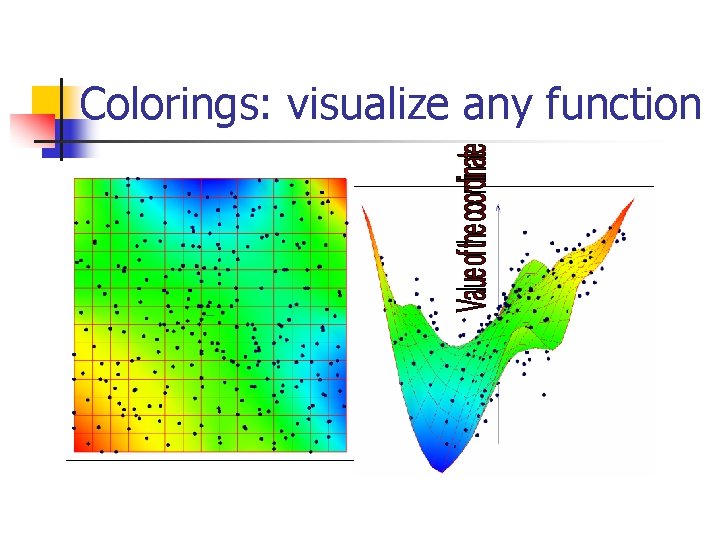
Colorings: visualize any function
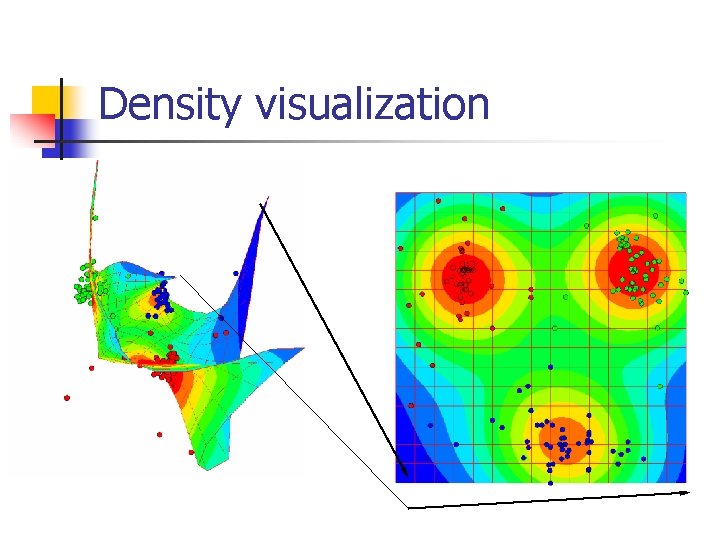
Density visualization
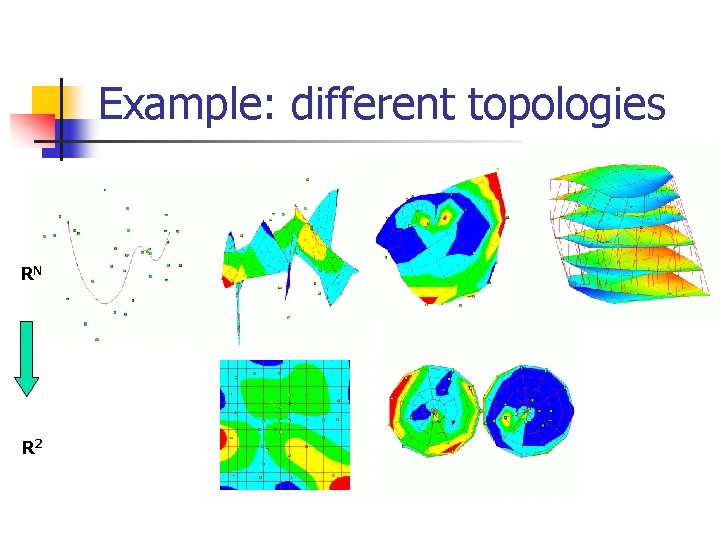
Example: different topologies RN R 2
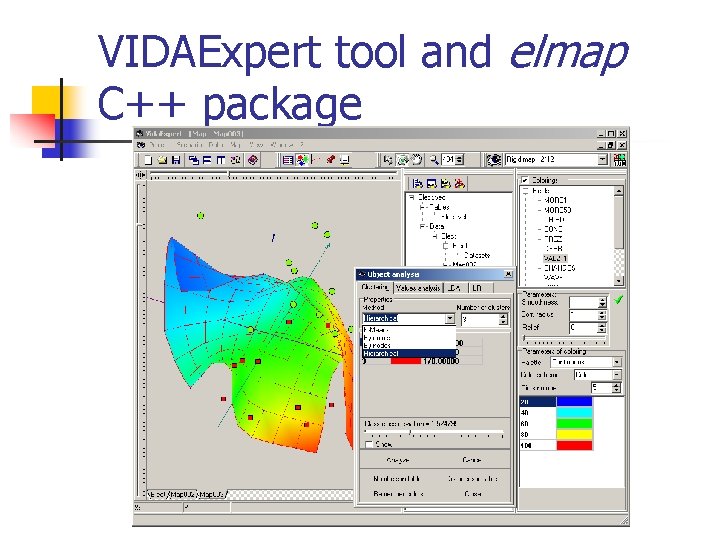
VIDAExpert tool and elmap C++ package
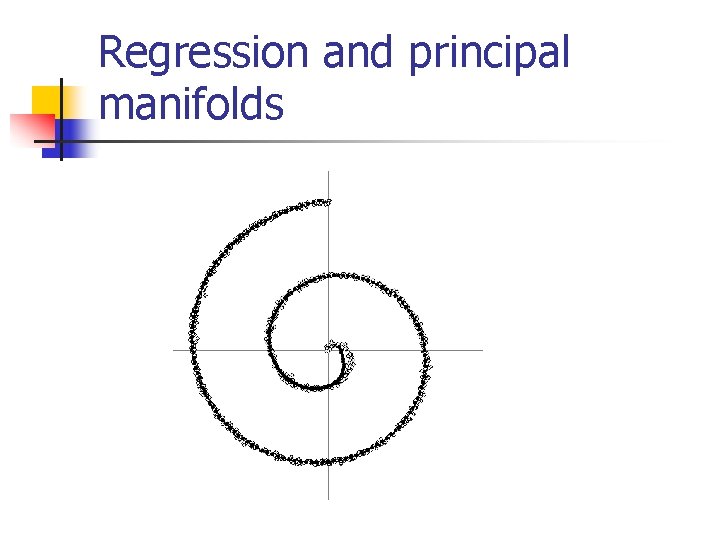
Regression and principal manifolds principal component regression F(x) x
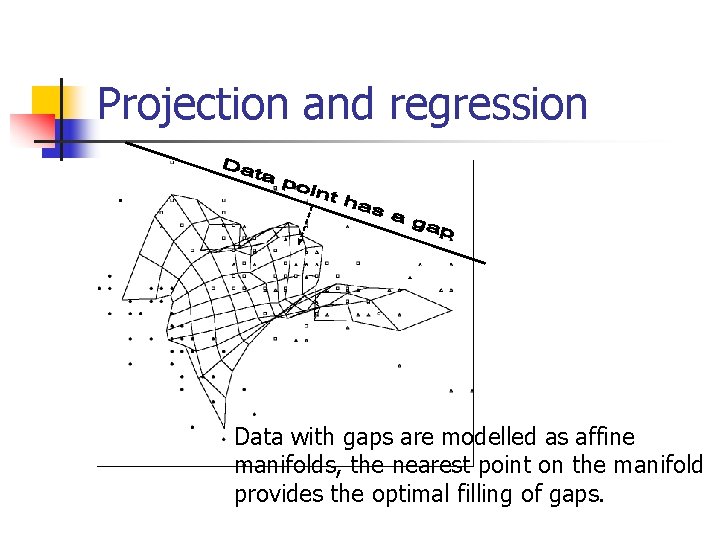
Projection and regression Data with gaps are modelled as affine manifolds, the nearest point on the manifold provides the optimal filling of gaps.
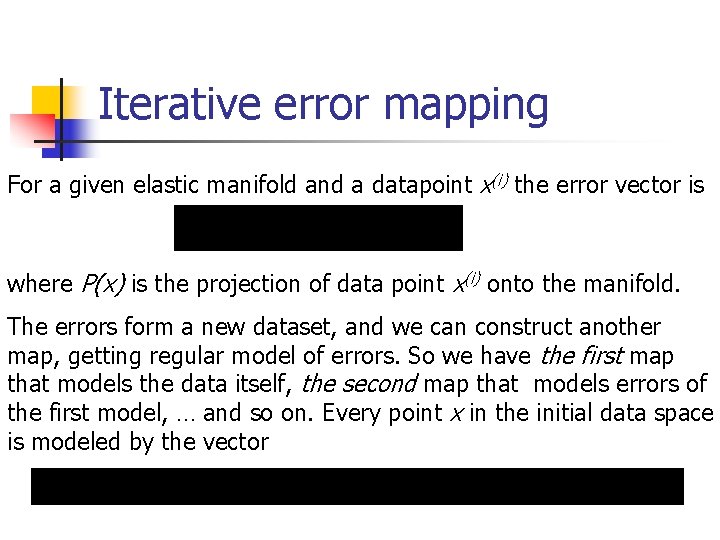
Iterative error mapping For a given elastic manifold and a datapoint x(i) the error vector is where P(x) is the projection of data point x(i) onto the manifold. The errors form a new dataset, and we can construct another map, getting regular model of errors. So we have the first map that models the data itself, the second map that models errors of the first model, … and so on. Every point x in the initial data space is modeled by the vector
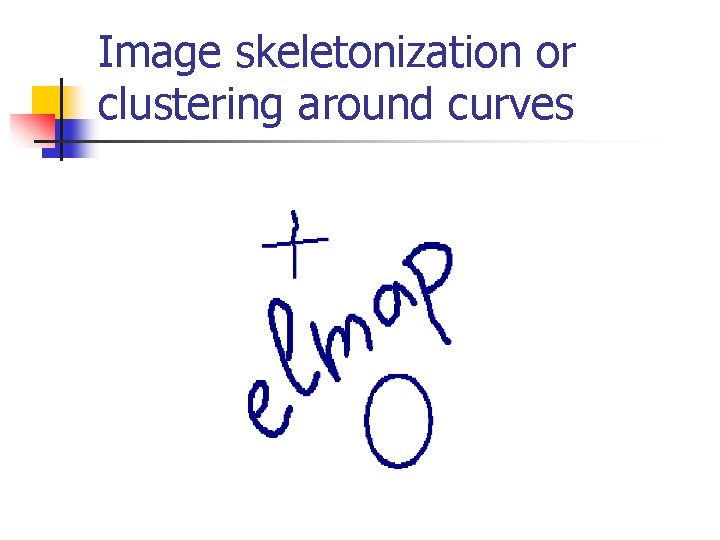
Image skeletonization or clustering around curves
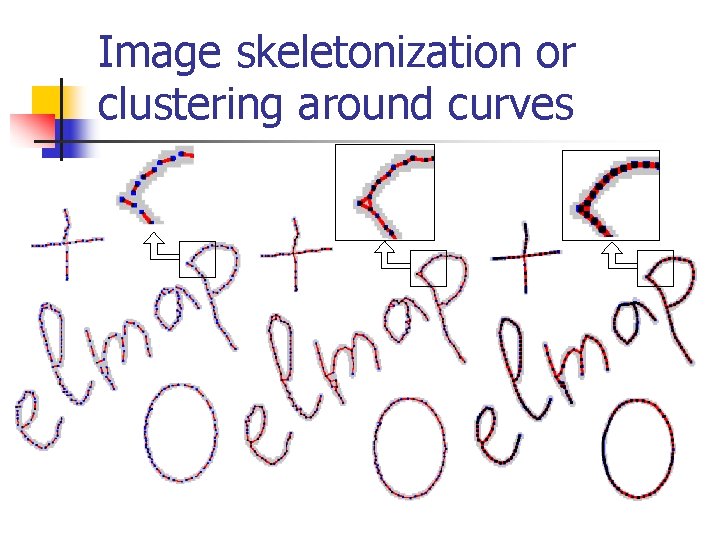
Image skeletonization or clustering around curves
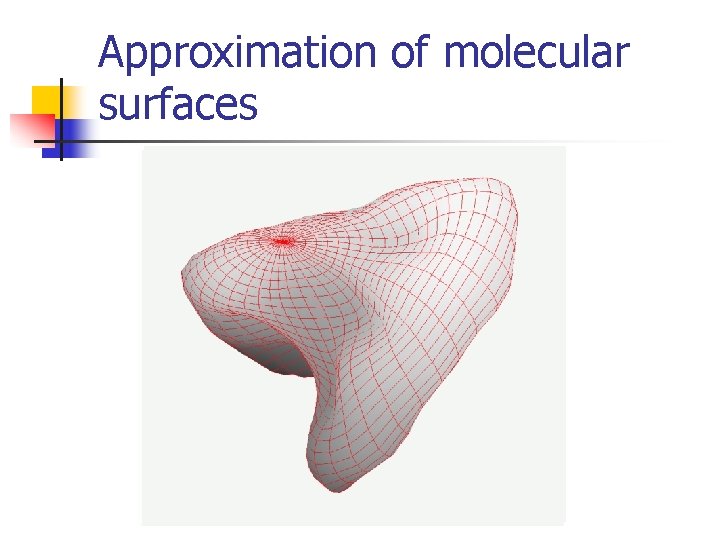
Approximation of molecular surfaces
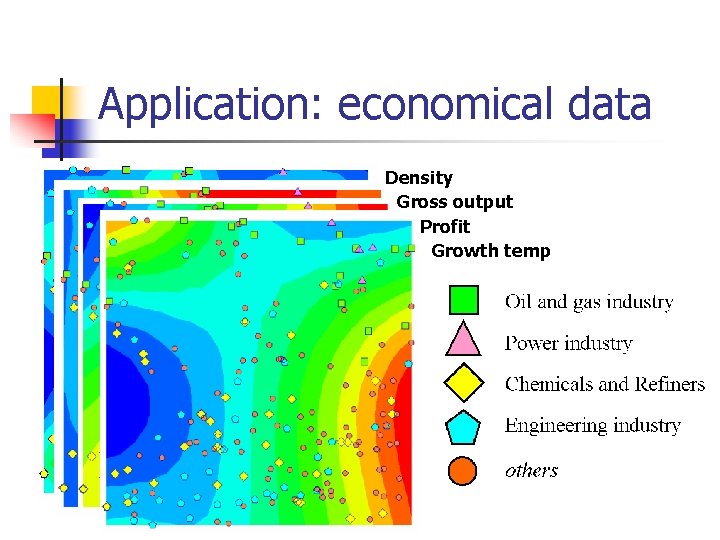
Application: economical data Density Gross output Profit Growth temp
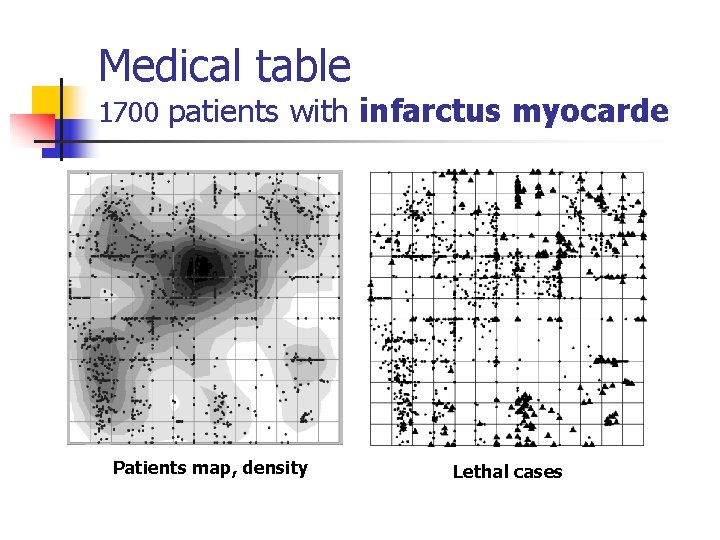
Medical table 1700 patients with infarctus myocarde Patients map, density Lethal cases
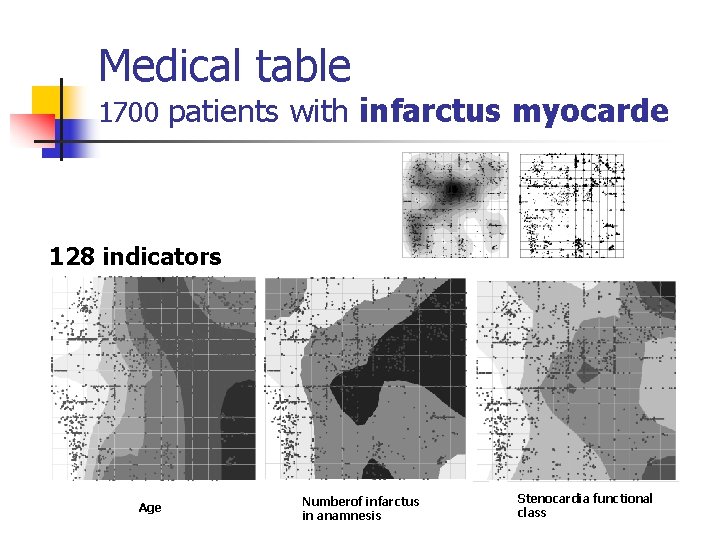
Medical table 1700 patients with infarctus myocarde 128 indicators Age Numberof infarctus in anamnesis Stenocardia functional class
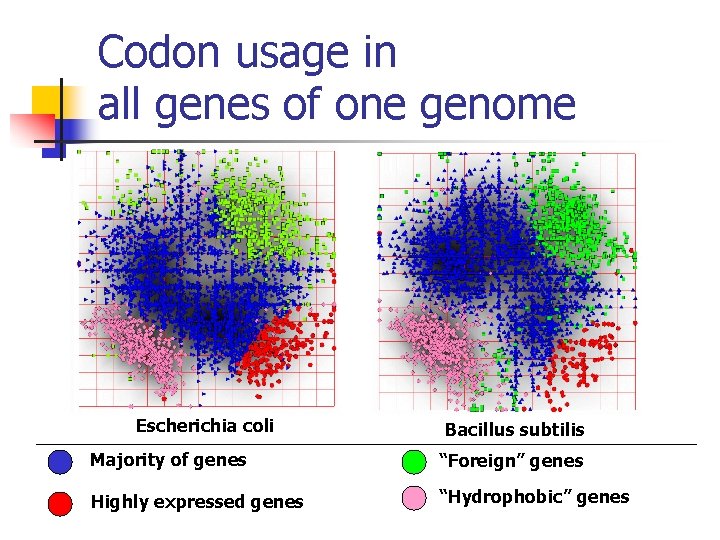
Codon usage in all genes of one genome Escherichia coli Bacillus subtilis Majority of genes “Foreign” genes Highly expressed genes “Hydrophobic” genes
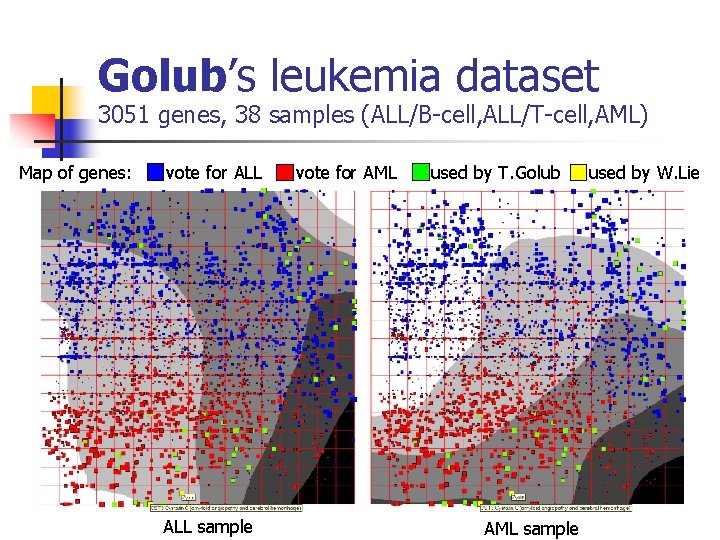
Golub’s leukemia dataset 3051 genes, 38 samples (ALL/B-cell, ALL/T-cell, AML) Map of genes: vote for ALL sample vote for AML used by T. Golub AML sample used by W. Lie
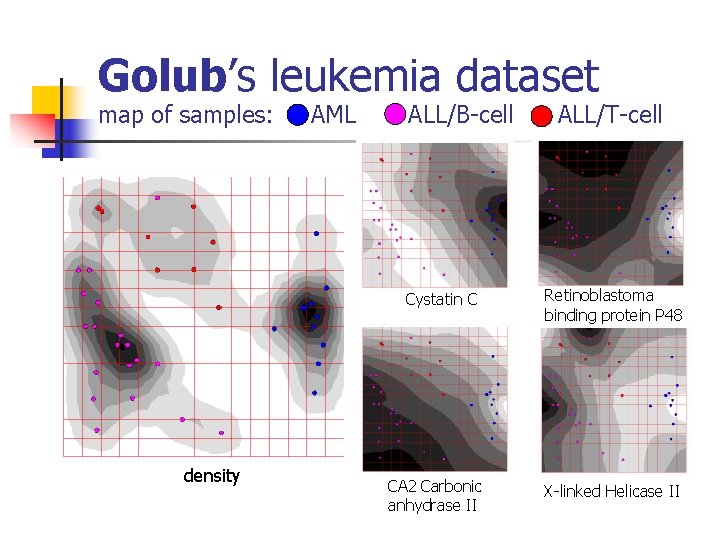
Golub’s leukemia dataset map of samples: AML ALL/B-cell Cystatin C density CA 2 Carbonic anhydrase II ALL/T-cell Retinoblastoma binding protein P 48 X-linked Helicase II
Useful links n Principal components and factor analysis n Principal curves and surfaces n Self Organizing Maps http: //www. statsoft. com/textbook/stfacan. html http: //149. 170. 199. 144/multivar/pca. htm http: //www. slac. stanford. edu/pubs/slacreports/slac-r-276. html http: //www. iro. umontreal. ca/~kegl/research/pcurves/ http: //www. mlab. uiah. fi/~timo/som/ http: //davis. wpi. edu/~matt/courses/soms/ http: //www. english. ucsb. edu/grad/student-pages/jdouglass/coursework/hyperliterature/soms/ n Elastic maps http: //www. ihes. fr/~zinovyev/ http: //www. math. le. ac. uk/~ag 153/homepage/
Several names n n n K-means clustering: Mac. Queen, 1967; SOM: T. Kohonen, 1981; Principal curves: T. Hastie and W. Stuetzle, 1989; Elastic maps: A. Gorban, A. Zinovyev, A. Rossiev, 1998; Polygonal models for principal curves: B. Kégl, 1999; Local PCA for orincipal curves construction: J. J. Verbeek, N. Vlassis, and B. Kröse, 2000.

Two of them are Authors

Thank you for your attention! n Questions?
- Slides: 54