
Elastic Block Caps Meni Rosenfeld Israeli Bitcoin Association

Elastic Block Caps Meni Rosenfeld Israeli Bitcoin Association Scaling Bitcoin 2019 Tel Aviv “Yesod” בס"ד
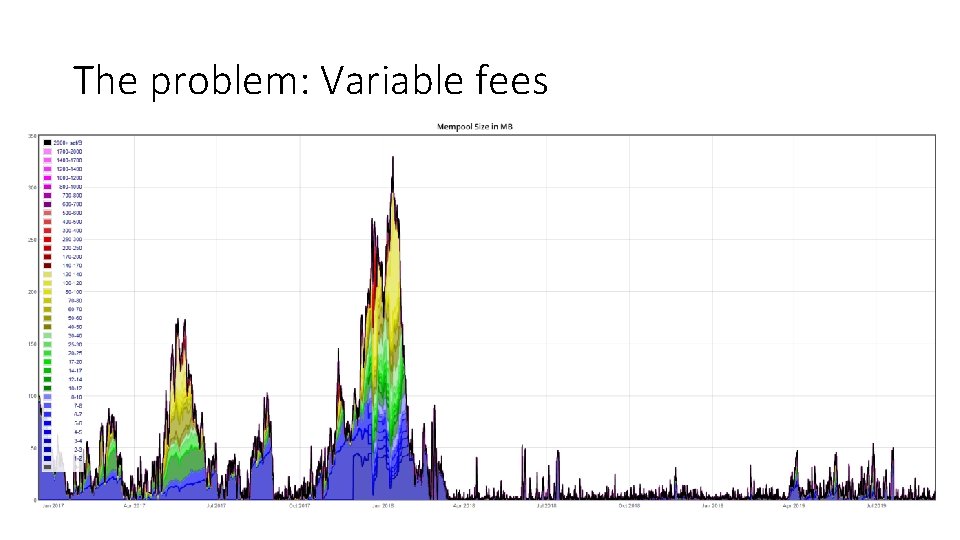
The problem: Variable fees
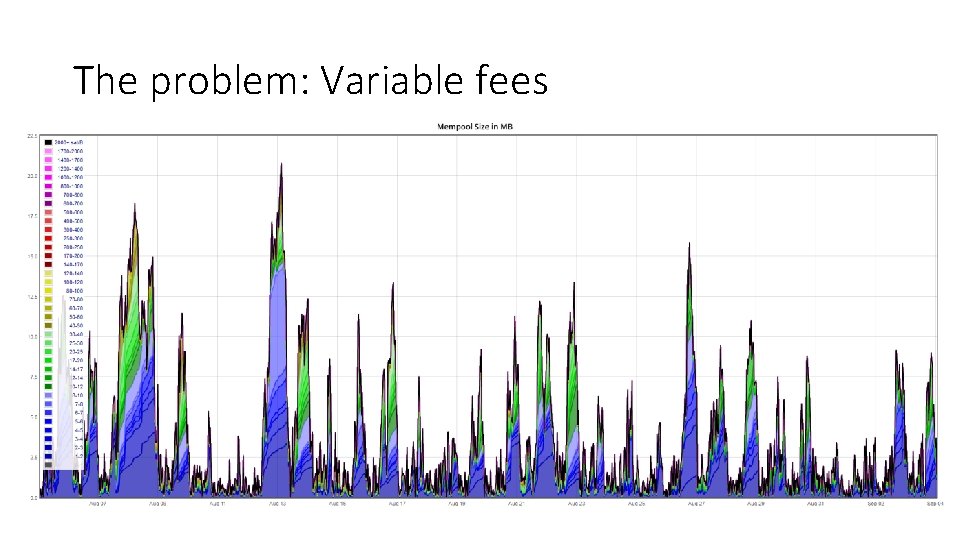
The problem: Variable fees
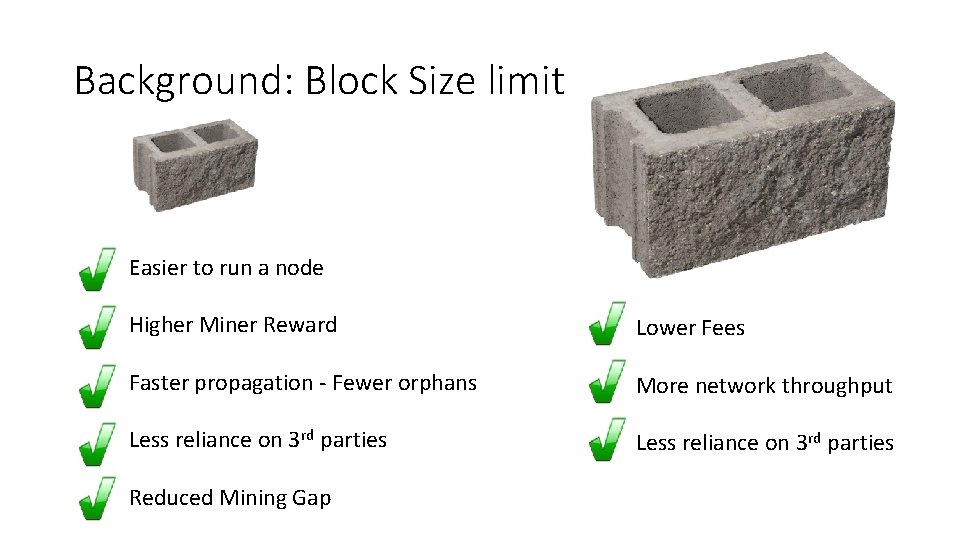
Background: Block Size limit Easier to run a node Higher Miner Reward Lower Fees Faster propagation - Fewer orphans More network throughput Less reliance on 3 rd parties Reduced Mining Gap
Easier to run a node • Lower peak throughput • Weaker CPU/RAM/infrastructure possible • Less peak bandwidth • Lower average/aggregate throughput • • Less total power consumption Less consumed bandwidth Less storage Faster Initial Block Download
Mineshaft Mining Gap • Assume negligible inflation • If blocks are big enough to fit all transactions… • Then after a block is found, the mempool is empty • No gain from mining honestly • Possibility: Miners stop mining, giving more power to attackers • Possibility: Miners ignore leaf block and mine their own • Better a chance of orphaning than 100% certainty of no reward • Instability and more power to attackers • Actual risk to network, not just “harder to run a node”
Varying network load – One size doesn’t fit all • “Too big” and “too small” are relative • High load = blocks are too small. Excessive fees, low usability • Low load = blocks are too big. • • Enough room for everyone, so fees nosedive. Txs are included cheaply, not respecting externalities. Reduced miner payment and security, even though users are willing to pay. Mining Gap • Fees are variable • Difficulty planning personal economic activity • Difficulty planning network upgrades

Elastic Block Caps • Block size limit is variable • Higher limit during high load, lower limit during low load • Fees will depend on load, but not as much • Same aggregate throughput, lower fee variability
Related work • Similar ideas go by names such as • Dynamic block limit • Flexcaps • Excess size penalty • Proposals by • 2013 - Nicolas van Saberhagen (Crypto. Note, Monero) • 2015: • Greg Maxwell aka nullc • Mark Friedenbach aka maaku • Meni Rosenfeld
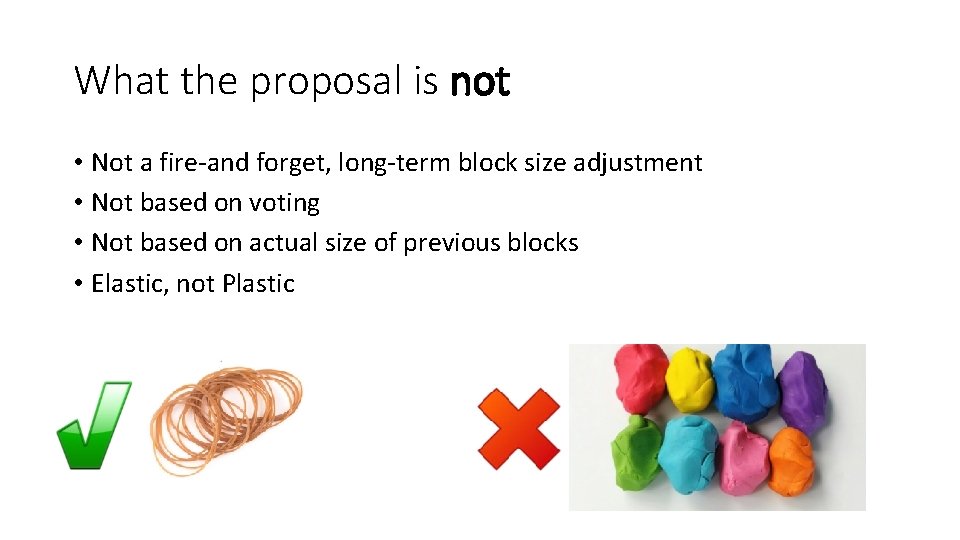
What the proposal is not • Not a fire-and forget, long-term block size adjustment • Not based on voting • Not based on actual size of previous blocks • Elastic, not Plastic
Network load metrics • #Transactions not a reliable load metric • A trillion floating transactions at 0. 1 sat/v. B is spam, not load • Load is when users are actually willing to pay and still can’t get in • Good load metric = Block inclusion threshold = Minimal block feerate

Elastic Block Cap •
Gameability • No benefit from lower-than-min fake tx • No benefit from higher-than-min fake tx • No benefit from out-of-band payments • Reverse out-of-band payment – miner pays user? • No freedom for miner to insert his own txs • Mitigation – use 0. 1% quantile instead of minimum
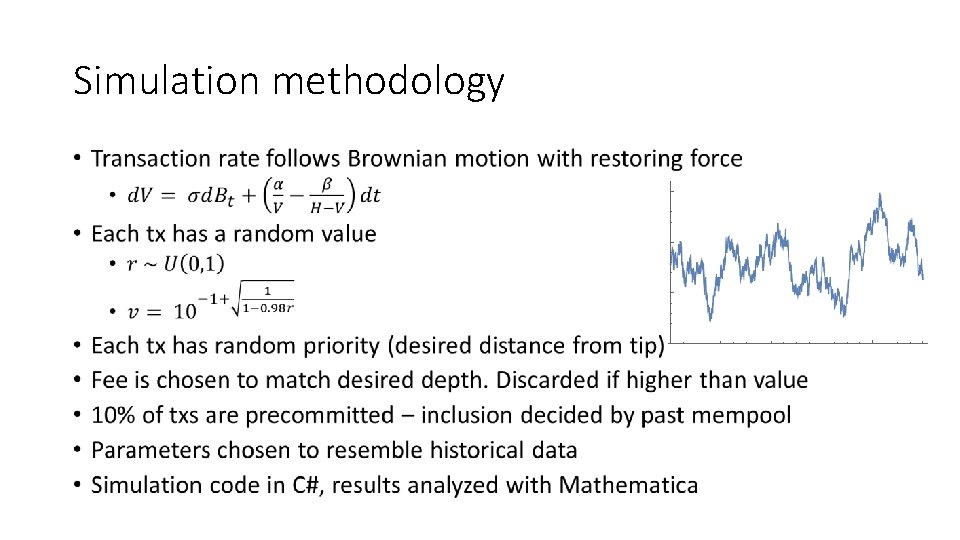
Simulation methodology •

Results •
Results • By implementing elastic block caps with a modest range, fee variance can be reduced by 30%, while maintaining the same average fee and throughput • (Standard deviation reduced by 16%)
Older idea – penalty based on block size • Equivalent to size based on min-fee • More “free-market” • Much more complicated to implement and reason about • Messes with inflation
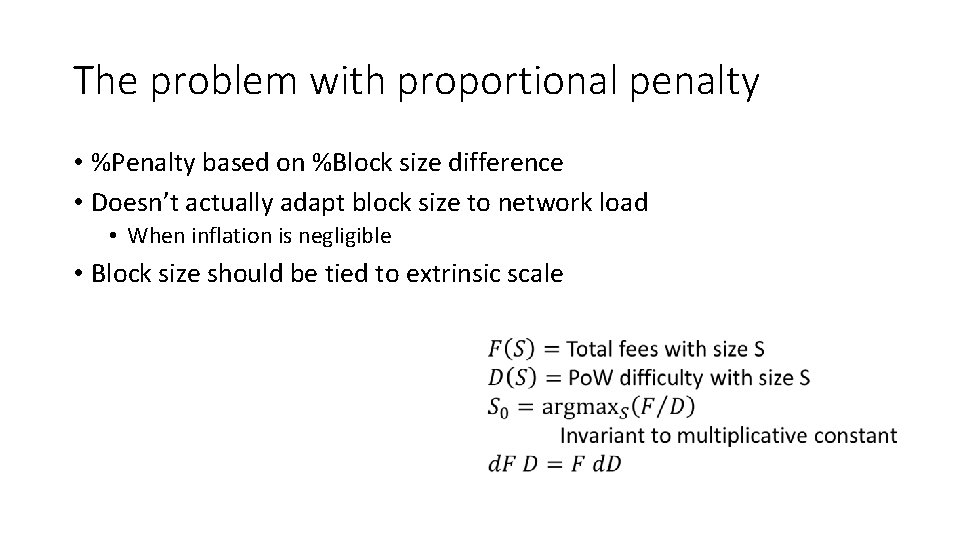
The problem with proportional penalty • %Penalty based on %Block size difference • Doesn’t actually adapt block size to network load • When inflation is negligible • Block size should be tied to extrinsic scale

Deployment •
Acknowledgements • Mike Hearn • Got me thinking about this problem (but everything he said was wrong) • Jochen Hoenicke aka Johoe • Provides the incredibly valuable mempool stats webpage • Nadav Ivgi aka shesek • Helped obtain data, insightful conversations • Mark Friedenbach aka maaku • Fruitful discussion

Questions?
- Slides: 22