
Elaboration or more specially Elaborative Interrogation Prepared by
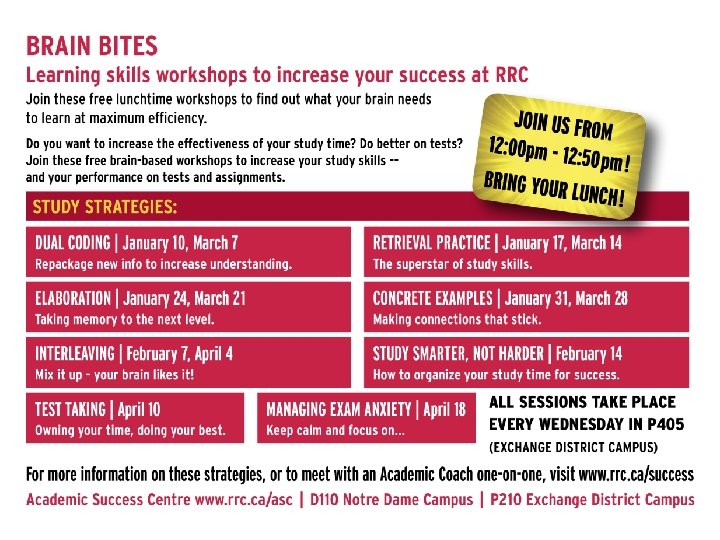
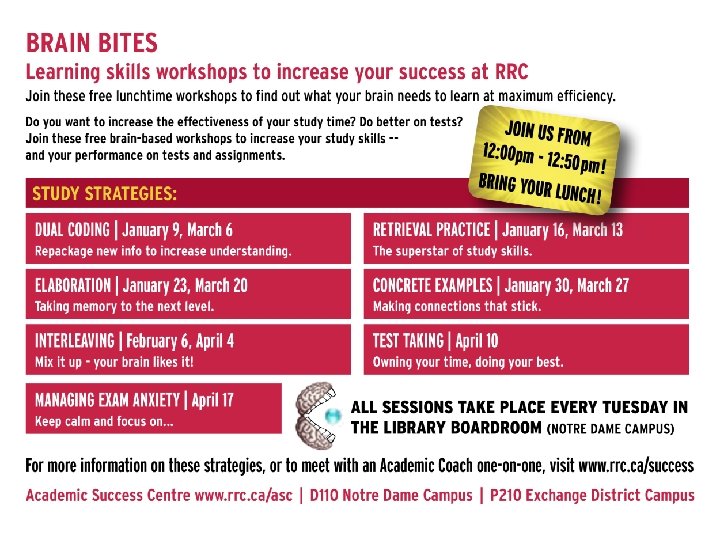
Elaboration (or more specially… Elaborative Interrogation) Prepared by Chris Harder BRAIN BITES Learning skills workshops to increase your success at RRC.
Agenda • What is elaborative interrogation? • An example of elaborative interrogation in action. • Caution: The limits of elaboration. • Practice
What is Elaborative Interrogation? Elaborate Interrogate To explain and describe ideas with many details. To ask questions So, elaborative interrogation is… asking yourself questions about how and why things work, and then producing answers to these questions.
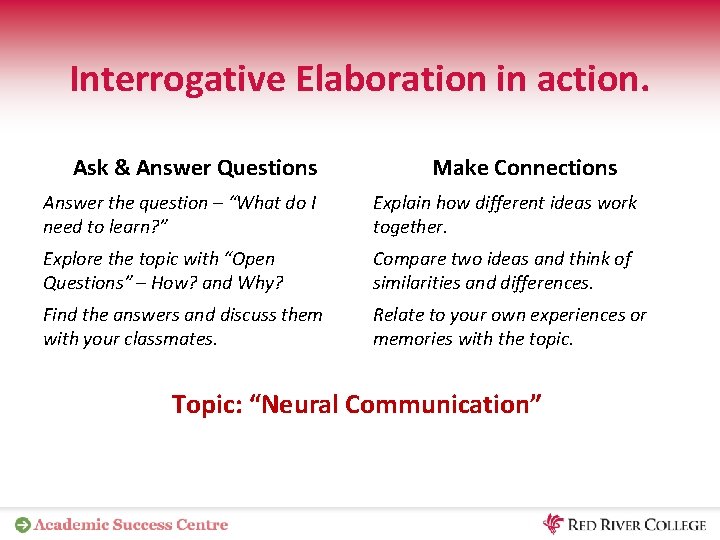
Interrogative Elaboration in action. Ask & Answer Questions Make Connections Answer the question – “What do I need to learn? ” Explain how different ideas work together. Explore the topic with “Open Questions” – How? and Why? Compare two ideas and think of similarities and differences. Find the answers and discuss them with your classmates. Relate to your own experiences or memories with the topic. Topic: “Neural Communication”
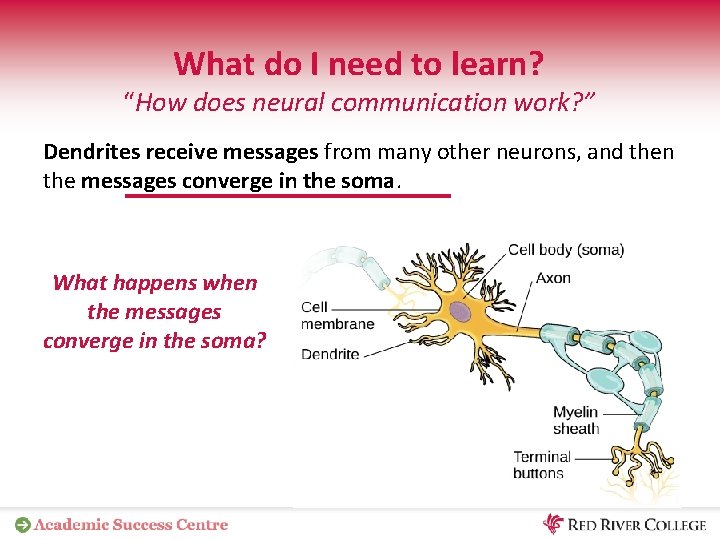
What do I need to learn? “How does neural communication work? ” Dendrites receive messages from many other neurons, and then the messages converge in the soma. What happens when the messages converge in the soma?
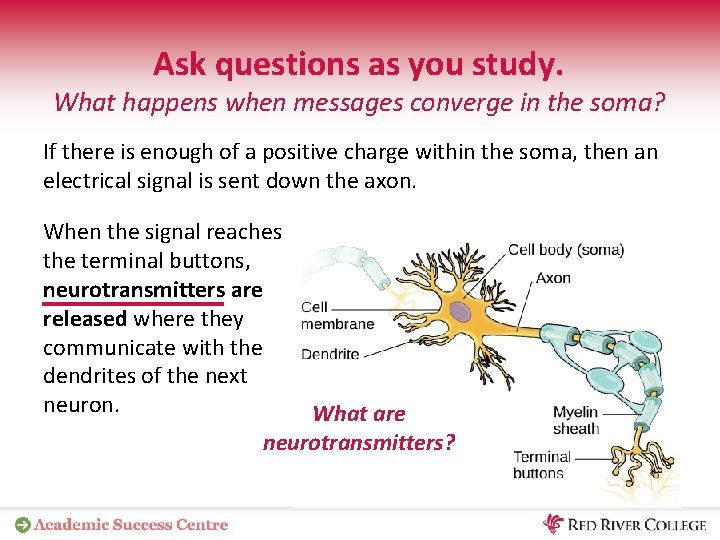
Ask questions as you study. What happens when messages converge in the soma? If there is enough of a positive charge within the soma, then an electrical signal is sent down the axon. When the signal reaches the terminal buttons, neurotransmitters are released where they communicate with the dendrites of the next neuron. What are neurotransmitters?
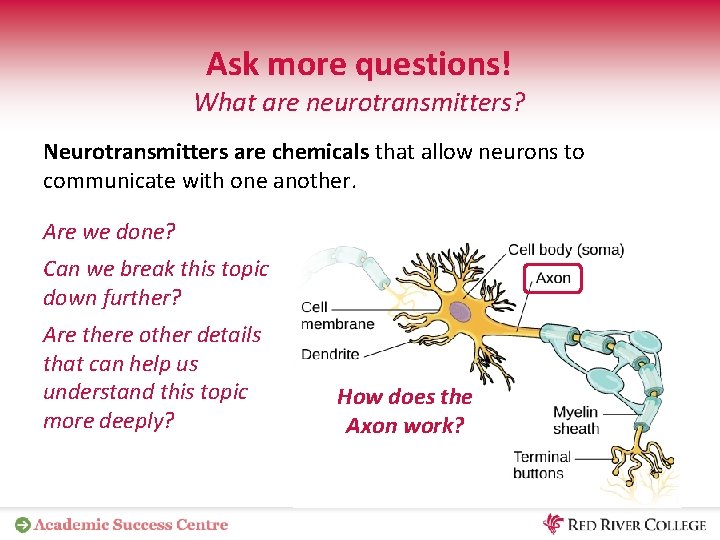
Ask more questions! What are neurotransmitters? Neurotransmitters are chemicals that allow neurons to communicate with one another. Are we done? Can we break this topic down further? Are there other details that can help us understand this topic more deeply? How does the Axon work?
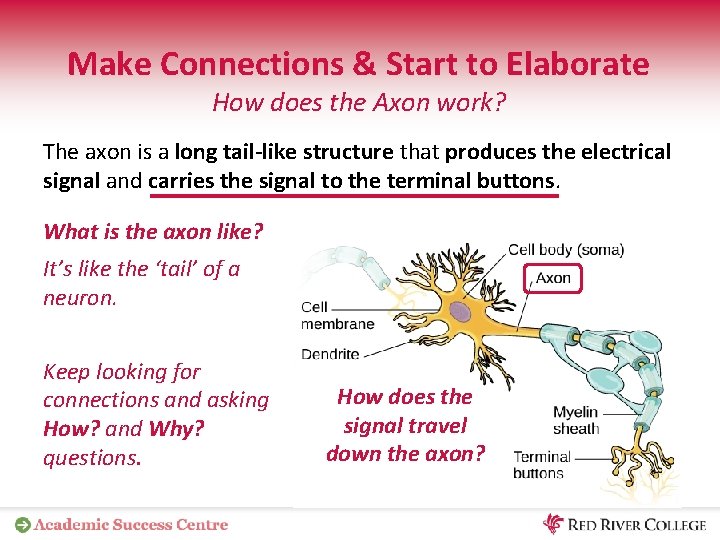
Make Connections & Start to Elaborate How does the Axon work? The axon is a long tail-like structure that produces the electrical signal and carries the signal to the terminal buttons. What is the axon like? It’s like the ‘tail’ of a neuron. Keep looking for connections and asking How? and Why? questions. How does the signal travel down the axon?
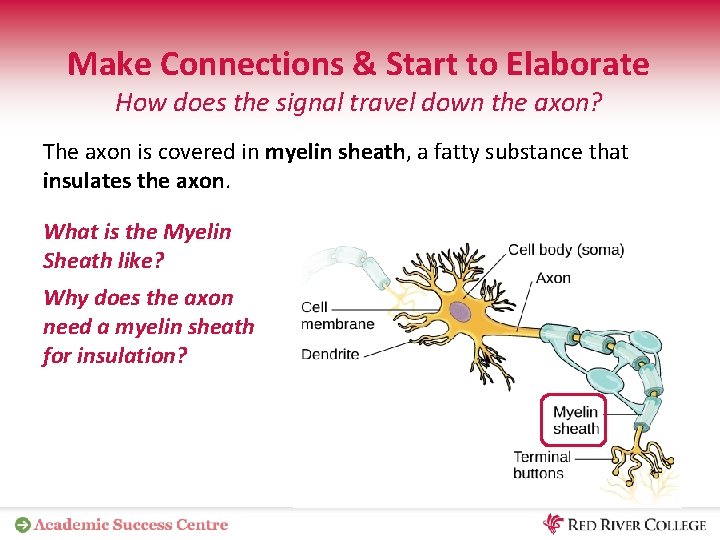
Make Connections & Start to Elaborate How does the signal travel down the axon? The axon is covered in myelin sheath, a fatty substance that insulates the axon. What is the Myelin Sheath like? Why does the axon need a myelin sheath for insulation?
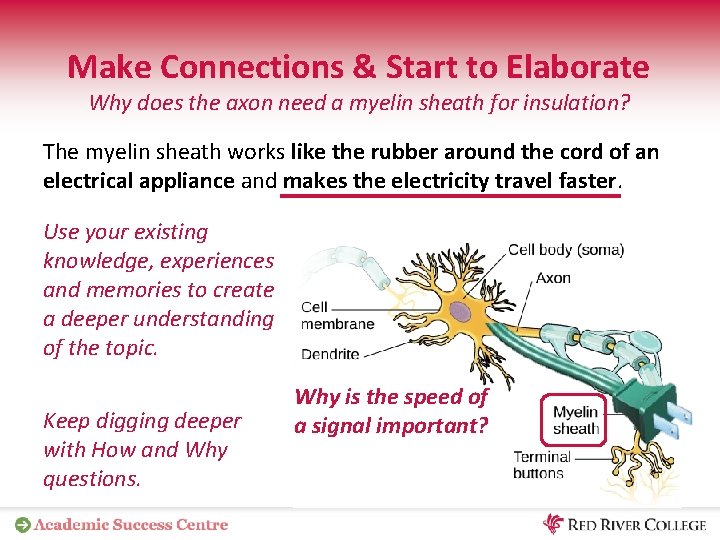
Make Connections & Start to Elaborate Why does the axon need a myelin sheath for insulation? The myelin sheath works like the rubber around the cord of an electrical appliance and makes the electricity travel faster. Use your existing knowledge, experiences and memories to create a deeper understanding of the topic. Keep digging deeper with How and Why questions. Why is the speed of a signal important?
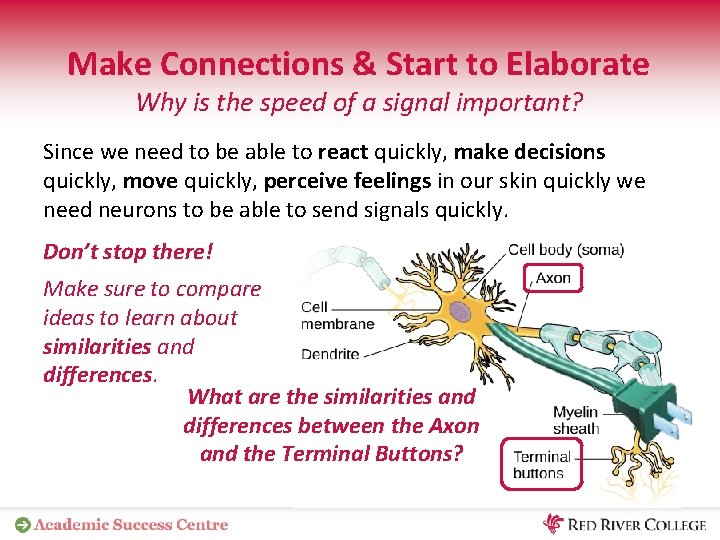
Make Connections & Start to Elaborate Why is the speed of a signal important? Since we need to be able to react quickly, make decisions quickly, move quickly, perceive feelings in our skin quickly we need neurons to be able to send signals quickly. Don’t stop there! Make sure to compare ideas to learn about similarities and differences. What are the similarities and differences between the Axon and the Terminal Buttons?
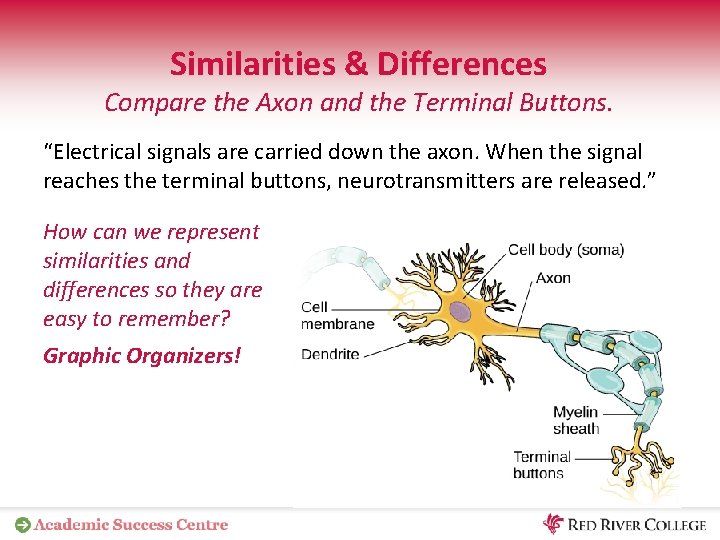
Similarities & Differences Compare the Axon and the Terminal Buttons. “Electrical signals are carried down the axon. When the signal reaches the terminal buttons, neurotransmitters are released. ” How can we represent similarities and differences so they are easy to remember? Graphic Organizers!
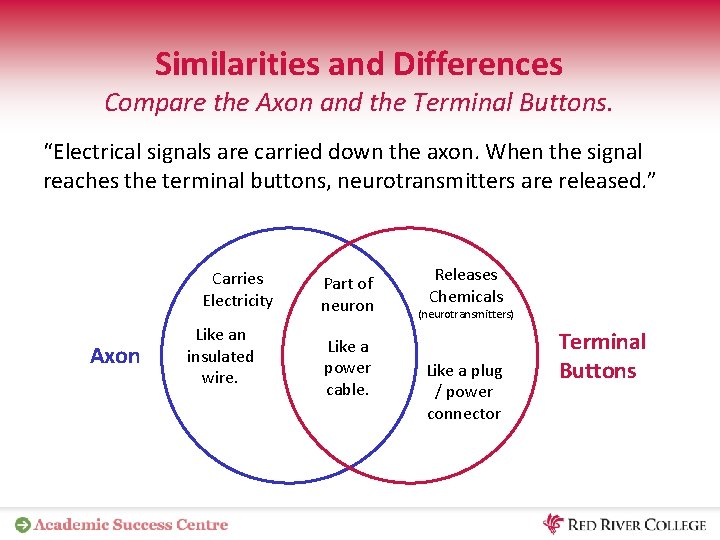
Similarities and Differences Compare the Axon and the Terminal Buttons. “Electrical signals are carried down the axon. When the signal reaches the terminal buttons, neurotransmitters are released. ” Carries Electricity Axon Like an insulated wire. Part of neuron Like a power cable. Releases Chemicals (neurotransmitters) Like a plug / power connector Terminal Buttons
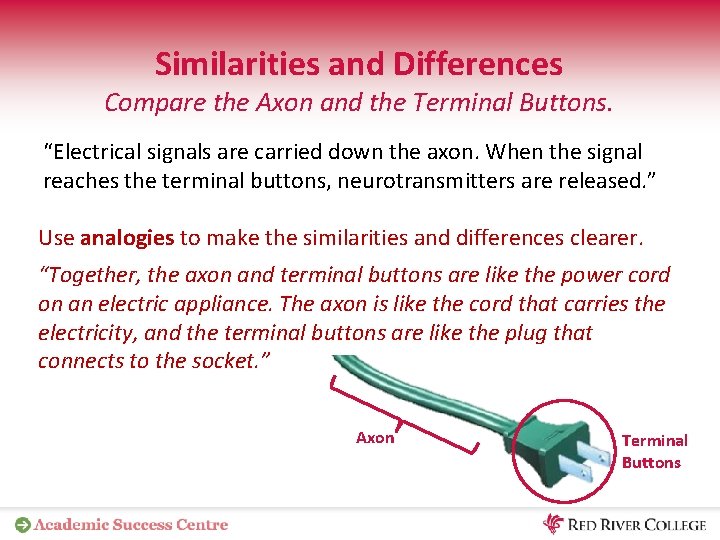
Similarities and Differences Compare the Axon and the Terminal Buttons. “Electrical signals are carried down the axon. When the signal reaches the terminal buttons, neurotransmitters are released. ” Use analogies to make the similarities and differences clearer. “Together, the axon and terminal buttons are like the power cord on an electric appliance. The axon is like the cord that carries the electricity, and the terminal buttons are like the plug that connects to the socket. ” Axon Terminal Buttons
Caution: Elaboration has it’s limits! Make sure you are explaining and describing an idea accurately. Don’t overextend the elaborations, and always check your class materials or ask your teacher.
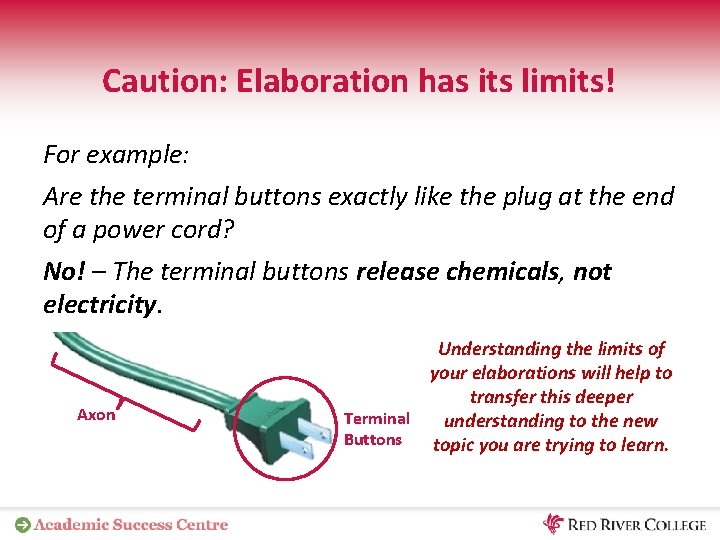
Caution: Elaboration has its limits! For example: Are the terminal buttons exactly like the plug at the end of a power cord? No! – The terminal buttons release chemicals, not electricity. Axon Understanding the limits of your elaborations will help to transfer this deeper Terminal understanding to the new Buttons topic you are trying to learn.
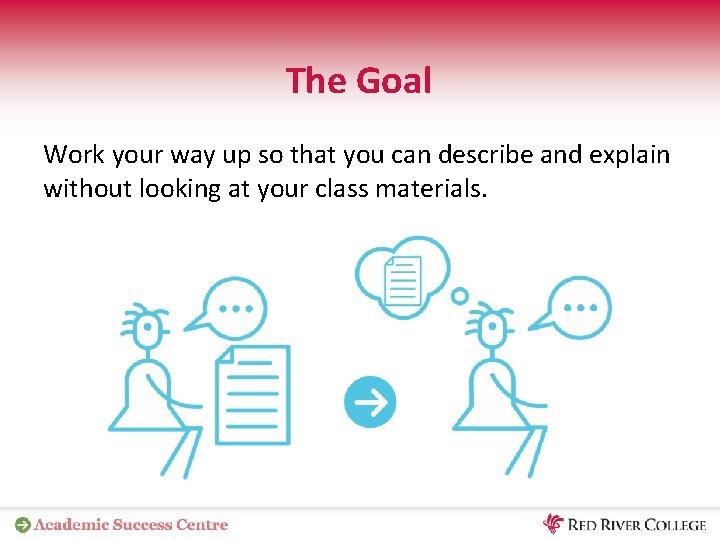
The Goal Work your way up so that you can describe and explain without looking at your class materials.
Your Turn Interrogative Elaboration & Concept Mapping In your groups: Think of two courses you are taking and identify two ideas or concepts you need to learn – one from each course. Discuss which are the most important things you need to know for each idea and write these down. Seek connections between the ideas you have. Analyze the similarities and differences. Organize your connections using a graphic organizer. Share your findings with the group.

Remember: Help is available! Academic Success Centre – P 210 For more information about Tutoring, Workshops or Academic Coaching please contact: Chris Harder charder 43@rrc. ca / (204) 631 -3342

Remember: Help is available! Academic Success Centre – D 110 Tutoring & Workshops - Kyle Schewe kschewe@rrc. ca / (204) 632 -2251 Academic Coaching – Lauren Phillips lmphillips@rrc. ca / (204) 632 -2570 Counselling and Accessibility Services – D 102 Laureen Janzen ljanzen@rrc. ca / (204) 632 -2121
References http: //www. learningscientists. org/blog/2016/7/7 -1
- Slides: 23