
El Yunque National Park By Dora Zheng Naomi
El Yunque National Park By Dora Zheng, Naomi Chavez, and Sabrina Li
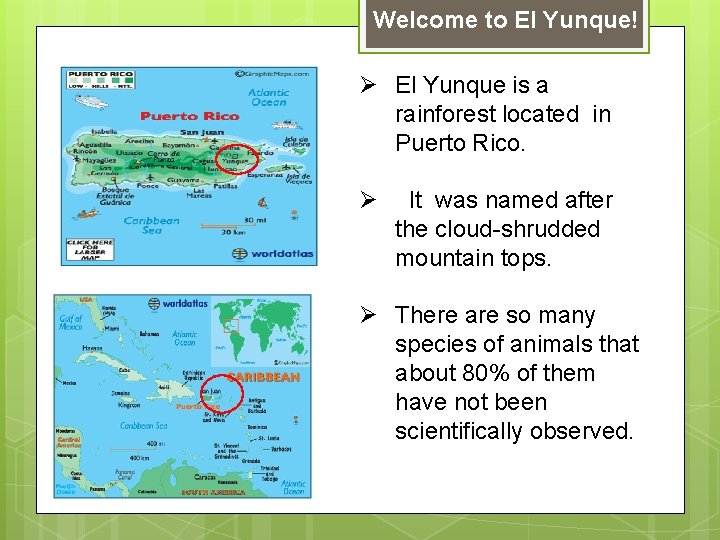
Welcome to El Yunque! Ø El Yunque is a rainforest located in Puerto Rico. Ø It was named after the cloud-shrudded mountain tops. Ø There are so many species of animals that about 80% of them have not been scientifically observed.
Biome Type El Yunque is a tropical rainforest. All rainforests are around the equator (0 degrees). Temperature is high, has only 2 seasons – wet season and dry season.
Abiotic Factors – Rainfall Average rainfall is 200 in. per year. It Ø rains year-round Results in year-round growing season. Ø Approximately 28, 000 acres of diverse vegetation is covered.
Abiotic Factors –Daylight Hours of daylight each day throughout the year is 11 -13. 25 Temperature and daylight length remain fairly constant throughout the year.

Daylight Hour Chart Date Daylight hours Jan 21 91. 482 hours Feb 21 91. 935 hours March 21 92. 622 hours April 21 93. 438 hours May 21 94. 100 hours June 21 94. 476 hours July 21 94. 450 hours Aug 21 94. 028 hours Sept 21 93. 312 hours Oct 21 92. 519 hours Nov 21 91. 817 hours Dec 21 91. 444 hours
Abiotic Factors- Effect on Ecosystem Animals and plants are affected by the factors The Ø wind contributes to the rainfall Essential for plants High Ø humidity Difficult for animals to deal with
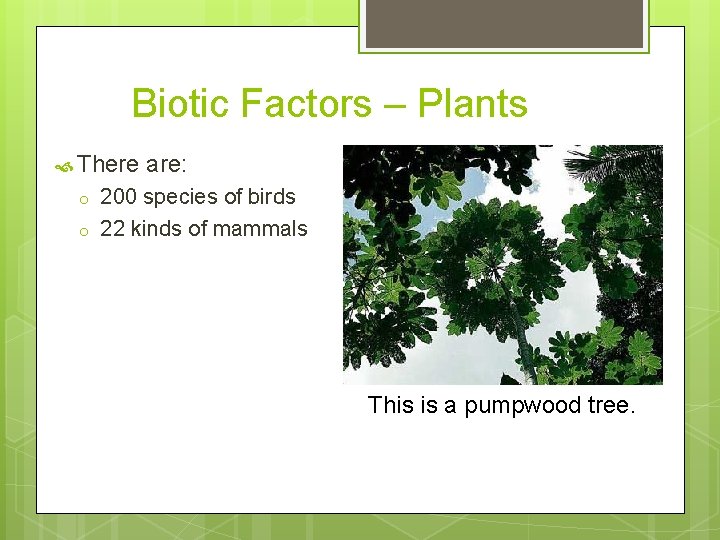
Biotic Factors – Plants There o o are: 200 species of birds 22 kinds of mammals This is a pumpwood tree.
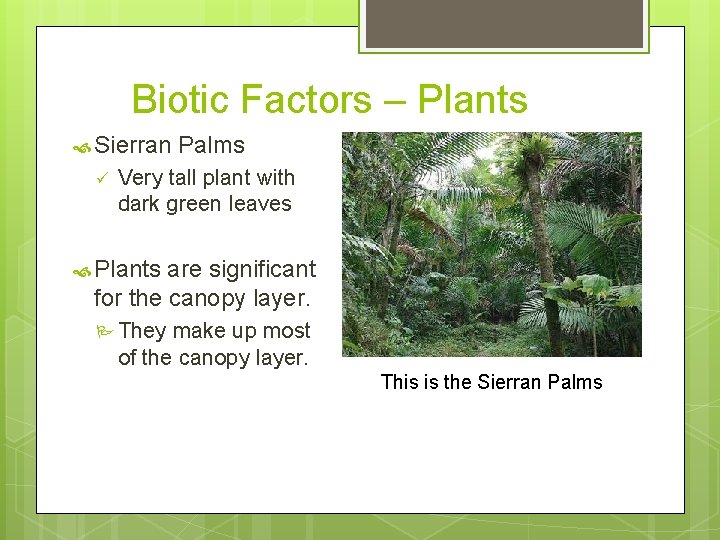
Biotic Factors – Plants Sierran ü Palms Very tall plant with dark green leaves Plants are significant for the canopy layer. They make up most of the canopy layer. This is the Sierran Palms
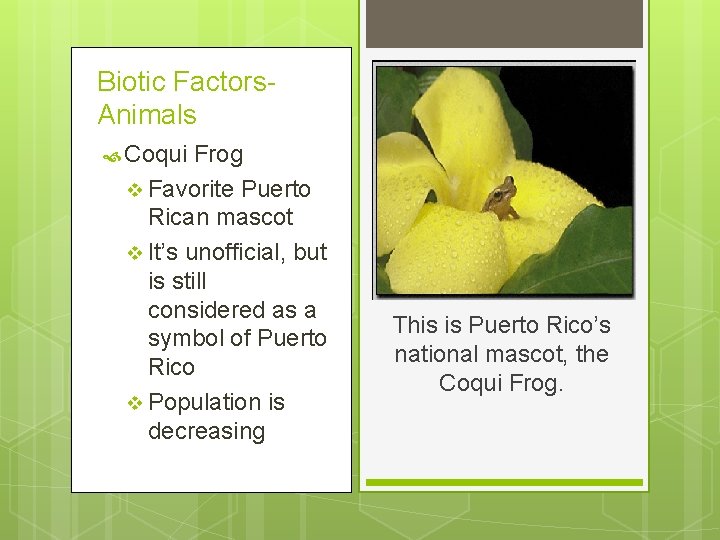
Biotic Factors. Animals Coqui Frog v Favorite Puerto Rican mascot v It’s unofficial, but is still considered as a symbol of Puerto Rico v Population is decreasing This is Puerto Rico’s national mascot, the Coqui Frog.
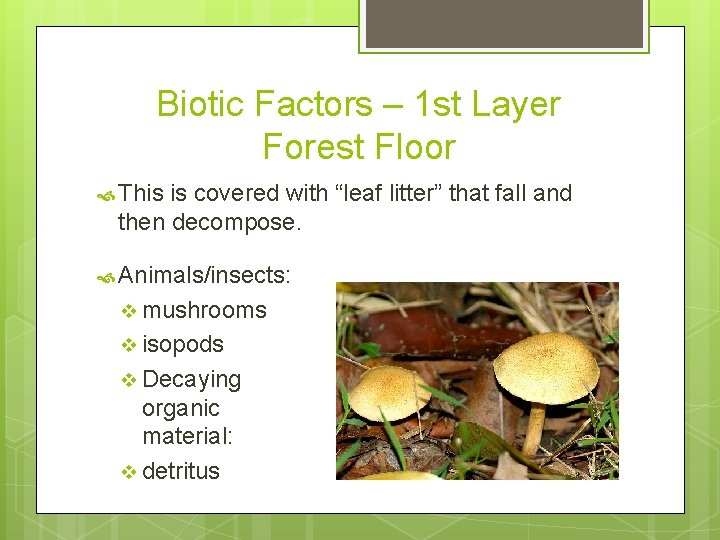
Biotic Factors – 1 st Layer Forest Floor This is covered with “leaf litter” that fall and then decompose. Animals/insects: v mushrooms v isopods v Decaying organic material: v detritus
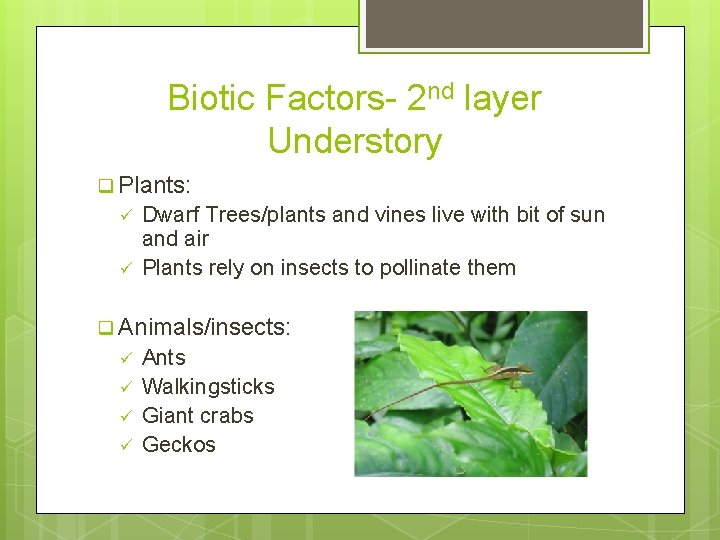
Biotic Factors- 2 nd layer Understory q Plants: ü ü Dwarf Trees/plants and vines live with bit of sun and air Plants rely on insects to pollinate them q Animals/insects: ü ü Ants Walkingsticks Giant crabs Geckos
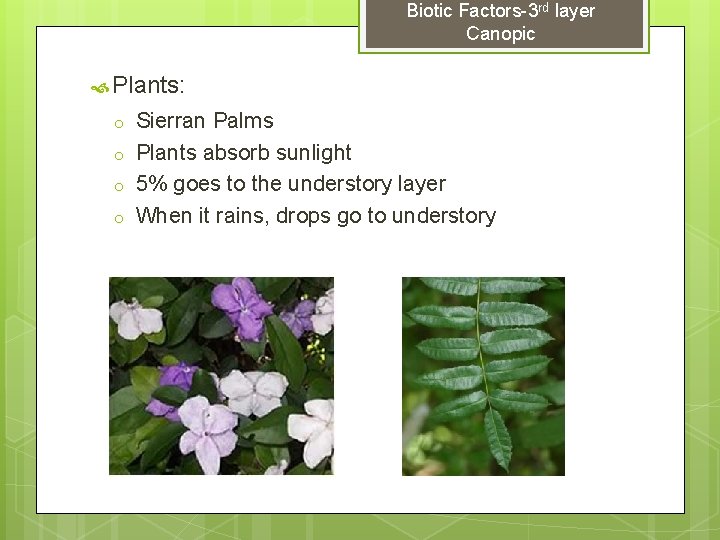
Biotic Factors-3 rd layer Canopic Plants: o o Sierran Palms Plants absorb sunlight 5% goes to the understory layer When it rains, drops go to understory
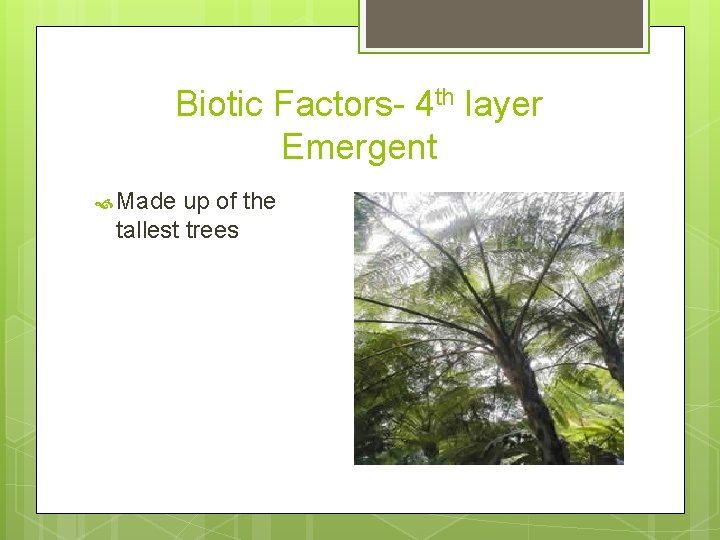
Biotic Factors- 4 th layer Emergent Made up of the tallest trees
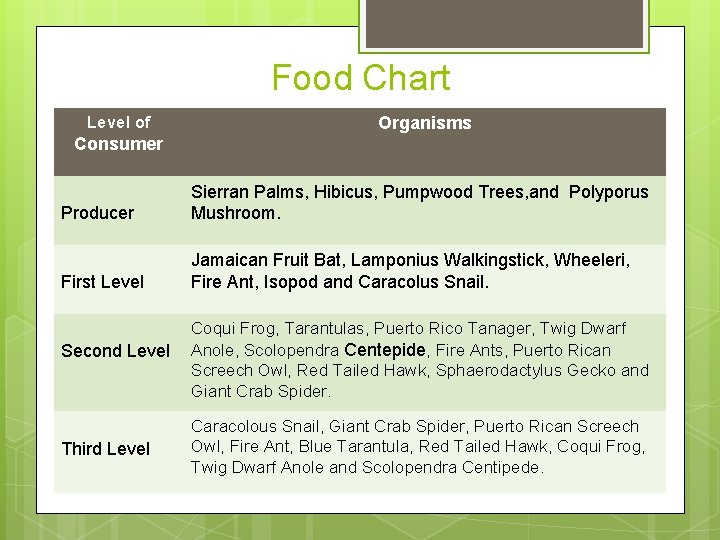
Food Chart Level of Organisms Consumer Producer Sierran Palms, Hibicus, Pumpwood Trees, and Polyporus Mushroom. First Level Jamaican Fruit Bat, Lamponius Walkingstick, Wheeleri, Fire Ant, Isopod and Caracolus Snail. Second Level Third Level Coqui Frog, Tarantulas, Puerto Rico Tanager, Twig Dwarf Anole, Scolopendra Centepide, Fire Ants, Puerto Rican Screech Owl, Red Tailed Hawk, Sphaerodactylus Gecko and Giant Crab Spider. Caracolous Snail, Giant Crab Spider, Puerto Rican Screech Owl, Fire Ant, Blue Tarantula, Red Tailed Hawk, Coqui Frog, Twig Dwarf Anole and Scolopendra Centipede.
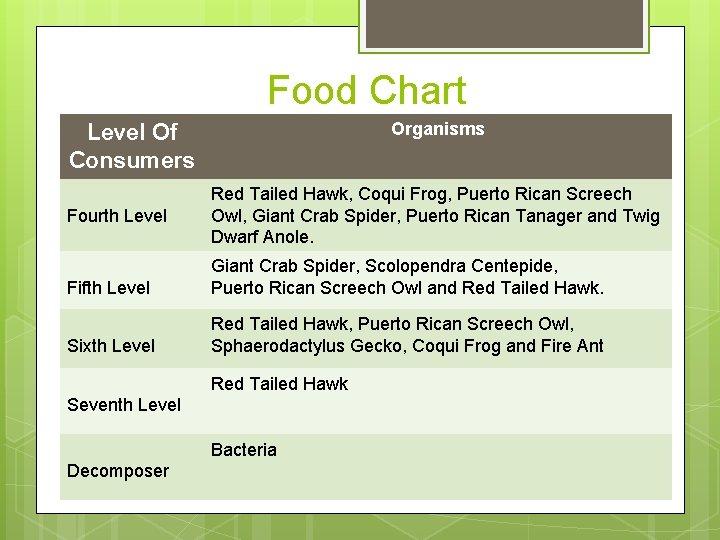
Food Chart Organisms Level Of Consumers Fourth Level Red Tailed Hawk, Coqui Frog, Puerto Rican Screech Owl, Giant Crab Spider, Puerto Rican Tanager and Twig Dwarf Anole. Fifth Level Giant Crab Spider, Scolopendra Centepide, Puerto Rican Screech Owl and Red Tailed Hawk. Sixth Level Red Tailed Hawk, Puerto Rican Screech Owl, Sphaerodactylus Gecko, Coqui Frog and Fire Ant Red Tailed Hawk Seventh Level Bacteria Decomposer
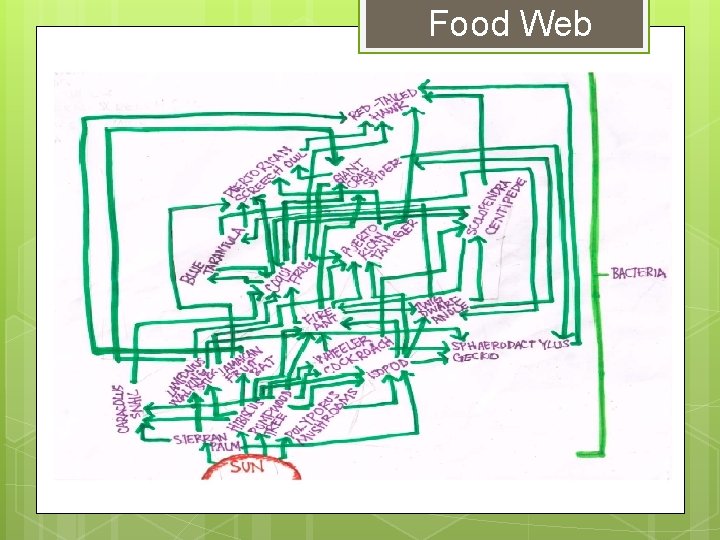
Food Web
Issues Habitat loss Covers only 6% of Earth’s surface 9, 000 Main acres cleared every hour organisms are hurt Coqui Frogs rapidly dercreased since the 1500’s

Work Cited Page www. fossweb/nyc. com www. google. com to find pictures www. elyunque. com
- Slides: 19