
El verbo estar con preposiciones y el presente
El verbo “estar” con preposiciones y el presente progresivo Español 1: Gramática de Capítulo 5
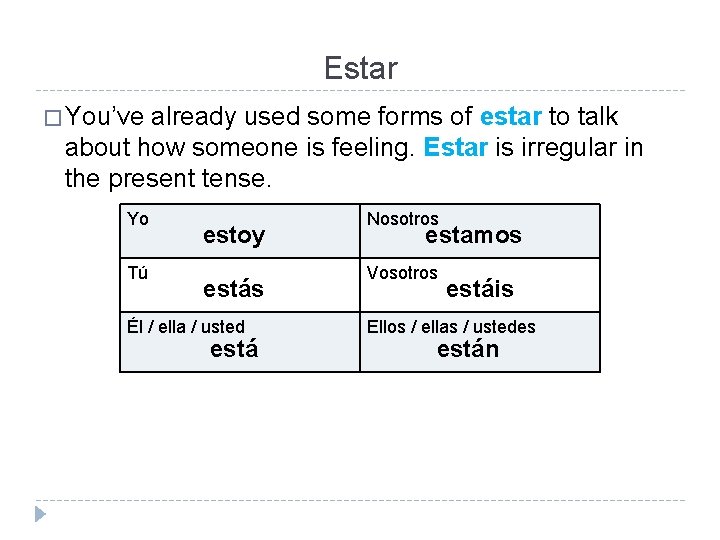
Estar � You’ve already used some forms of estar to talk about how someone is feeling. Estar is irregular in the present tense. Yo Tú estoy estás Él / ella / usted está Nosotros estamos Vosotros estáis Ellos / ellas / ustedes están
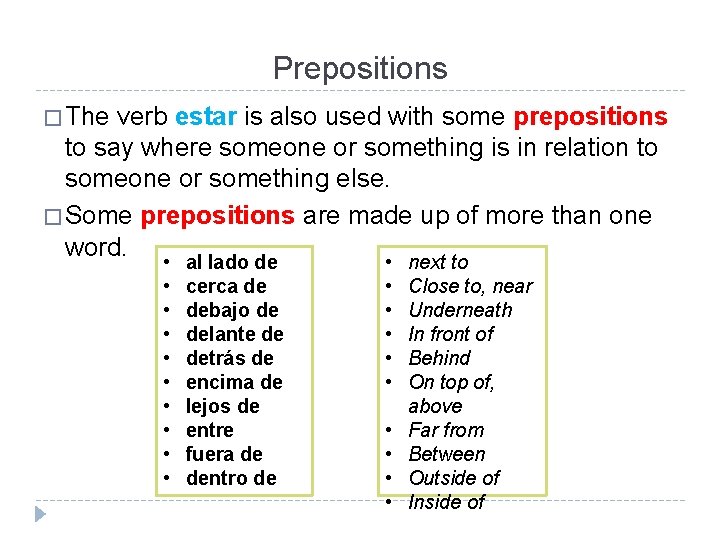
Prepositions � The verb estar is also used with some prepositions to say where someone or something is in relation to someone or something else. � Some prepositions are made up of more than one word. • • • al lado de cerca de debajo de delante de detrás de encima de lejos de entre fuera de dentro de • • • next to Close to, near Underneath In front of Behind On top of, above Far from Between Outside of Inside of
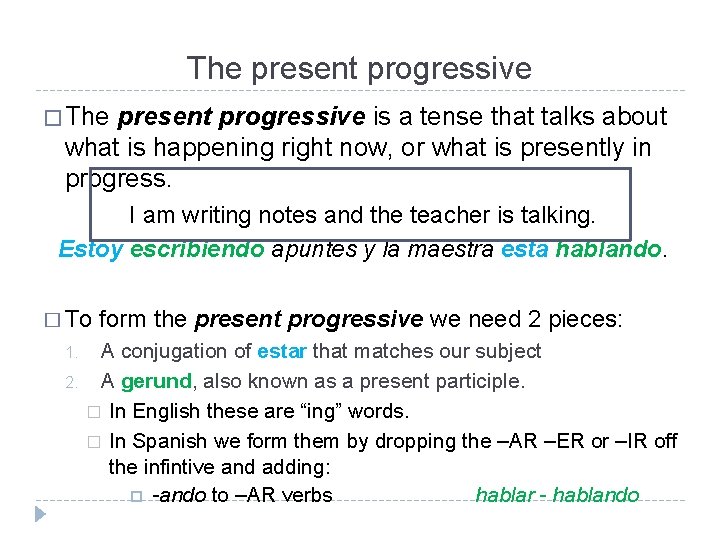
The present progressive � The present progressive is a tense that talks about what is happening right now, or what is presently in progress. I am writing notes and the teacher is talking. Estoy escribiendo apuntes y la maestra está hablando. � To 1. 2. form the present progressive we need 2 pieces: A conjugation of estar that matches our subject A gerund, also known as a present participle. � In English these are “ing” words. � In Spanish we form them by dropping the –AR –ER or –IR off the infintive and adding: -ando to –AR verbs hablar - hablando
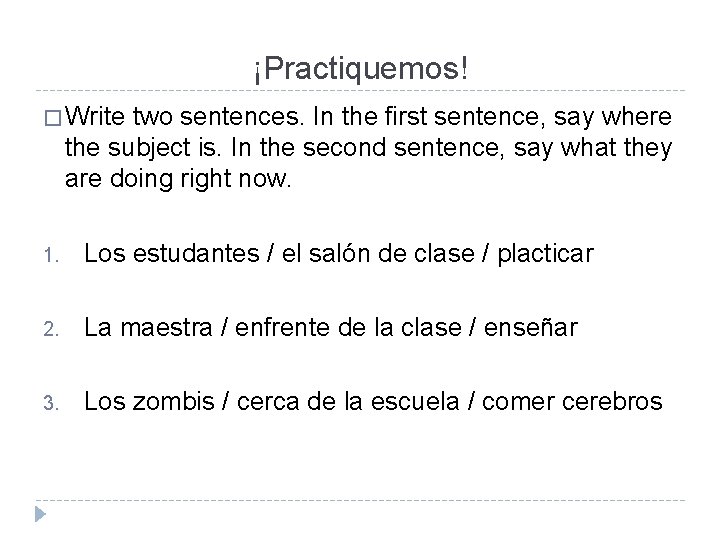
¡Practiquemos! � Write two sentences. In the first sentence, say where the subject is. In the second sentence, say what they are doing right now. 1. Los estudantes / el salón de clase / placticar 2. La maestra / enfrente de la clase / enseñar 3. Los zombis / cerca de la escuela / comer cerebros
- Slides: 5