
EL SUBJUNTIVO USING THE SUBJUNCTIVE MOOD IN SPANISH
EL SUBJUNTIVO USING THE SUBJUNCTIVE MOOD IN SPANISH
WHAT DIFFERENCES DO YOU SEE IN THE FOLLOWING SENTENCES? It’s raining outside. I hope that it’s raining outside. We will have a lot of homework. She eats healthy food. I don’t want us to It’s good that she eats healthy food. I’m certain that he is coming. I doubt that he is coming.
THE SUBJUNCTIVE… • Is a mood, not a tense. *A tense deals with when something happens (past, present). Example: We’re going to the beach tomorrow. *A mood expresses how a speaker feels about something. Example: I am happy that we are going to the beach tomorrow.
THE INDICATIVE MOOD Up until now, we’ve been using the indicative mood, which states factual information. The indicative requires certainty on the part of the speaker. Examples: We are going to the beach tomorrow. Vamos a la playa mañana. I think that it’s going to rain. Creo que va a llover.
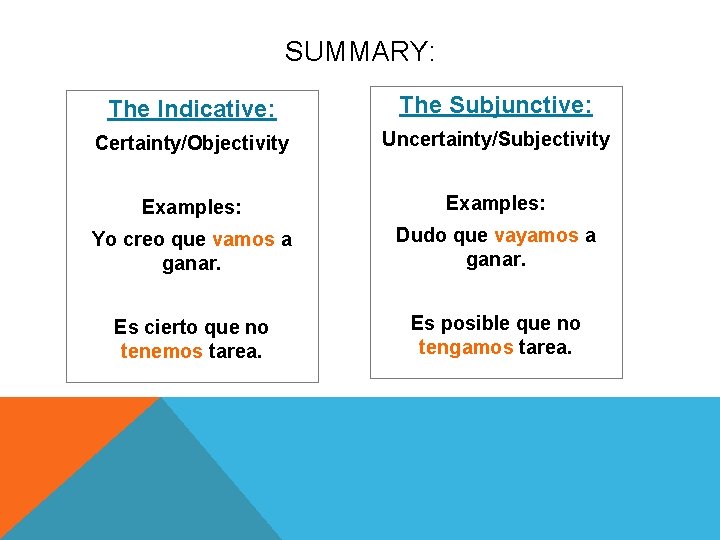
SUMMARY: The Indicative: The Subjunctive: Certainty/Objectivity Uncertainty/Subjectivity Examples: Yo creo que vamos a ganar. Dudo que vayamos a ganar. Es cierto que no tenemos tarea. Es posible que no tengamos tarea.
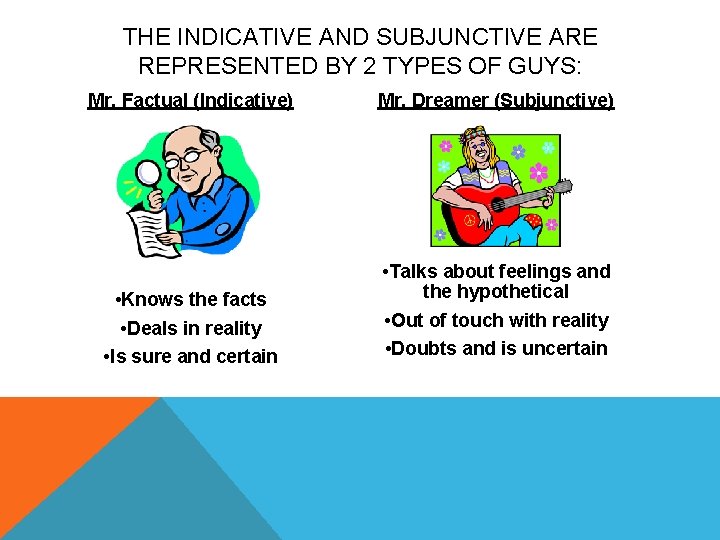
THE INDICATIVE AND SUBJUNCTIVE ARE REPRESENTED BY 2 TYPES OF GUYS: Mr. Factual (Indicative) Mr. Dreamer (Subjunctive) • Knows the facts • Deals in reality • Is sure and certain • Talks about feelings and the hypothetical • Out of touch with reality • Doubts and is uncertain
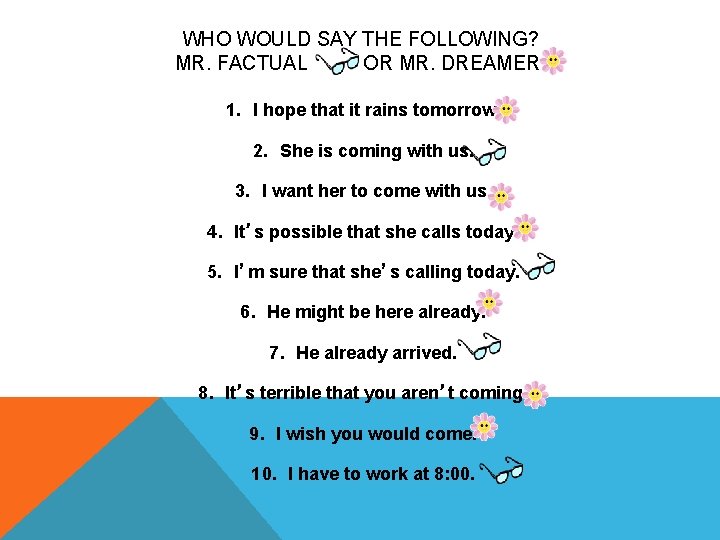
WHO WOULD SAY THE FOLLOWING? MR. FACTUAL OR MR. DREAMER ? 1. I hope that it rains tomorrow. 2. She is coming with us. 3. I want her to come with us. 4. It’s possible that she calls today. 5. I’m sure that she’s calling today. 6. He might be here already. 7. He already arrived. 8. It’s terrible that you aren’t coming. 9. I wish you would come. 10. I have to work at 8: 00.
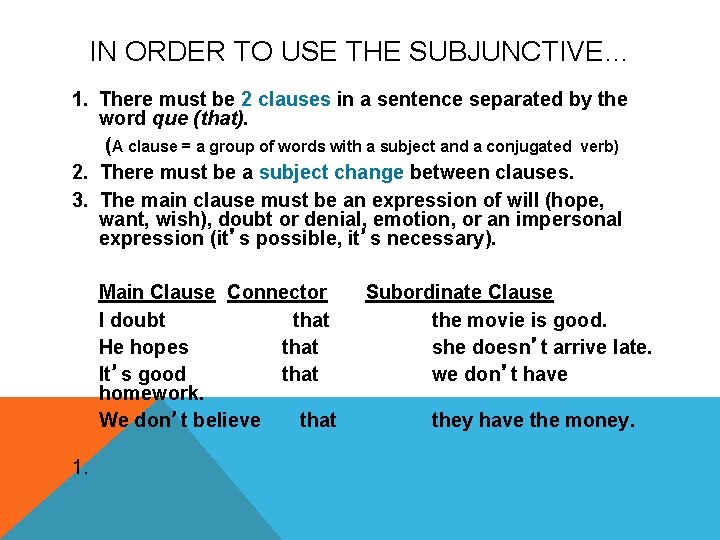
IN ORDER TO USE THE SUBJUNCTIVE… 1. There must be 2 clauses in a sentence separated by the word que (that). (A clause = a group of words with a subject and a conjugated verb) 2. There must be a subject change between clauses. 3. The main clause must be an expression of will (hope, want, wish), doubt or denial, emotion, or an impersonal expression (it’s possible, it’s necessary). Main Clause Connector I doubt that He hopes that It’s good that homework. We don’t believe that 1. Subordinate Clause the movie is good. she doesn’t arrive late. we don’t have they have the money.
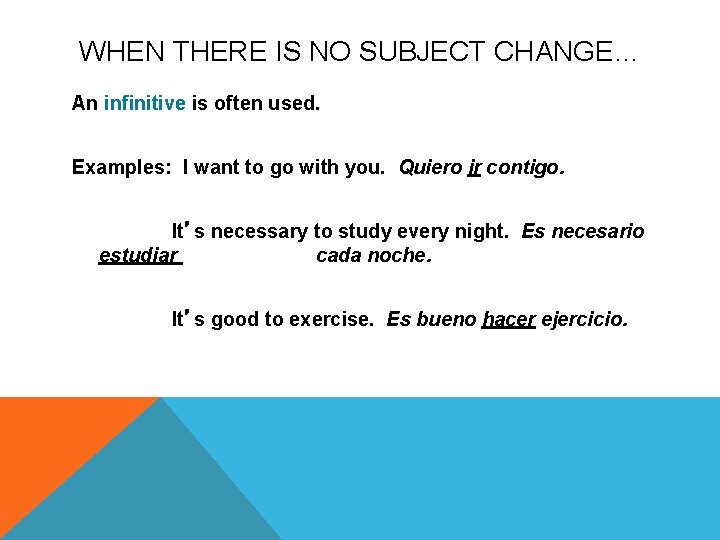
WHEN THERE IS NO SUBJECT CHANGE… An infinitive is often used. Examples: I want to go with you. Quiero ir contigo. It’s necessary to study every night. Es necesario estudiar cada noche. It’s good to exercise. Es bueno hacer ejercicio.
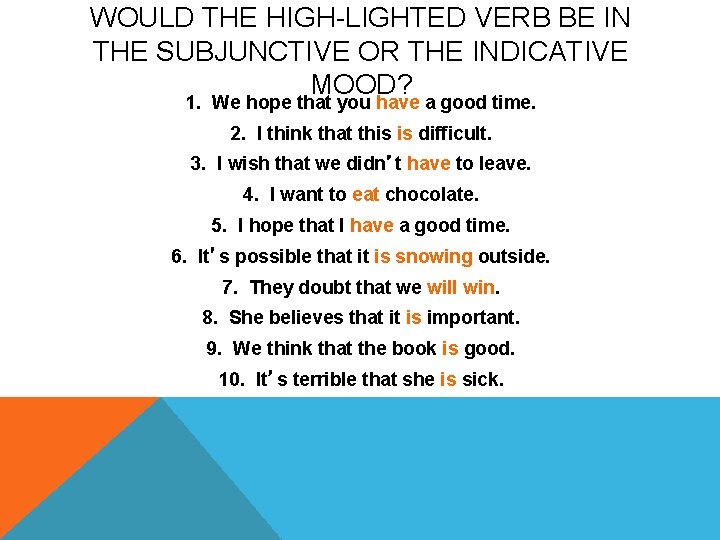
WOULD THE HIGH-LIGHTED VERB BE IN THE SUBJUNCTIVE OR THE INDICATIVE MOOD? 1. We hope that you have a good time. 2. I think that this is difficult. 3. I wish that we didn’t have to leave. 4. I want to eat chocolate. 5. I hope that I have a good time. 6. It’s possible that it is snowing outside. 7. They doubt that we will win. 8. She believes that it is important. 9. We think that the book is good. 10. It’s terrible that she is sick.
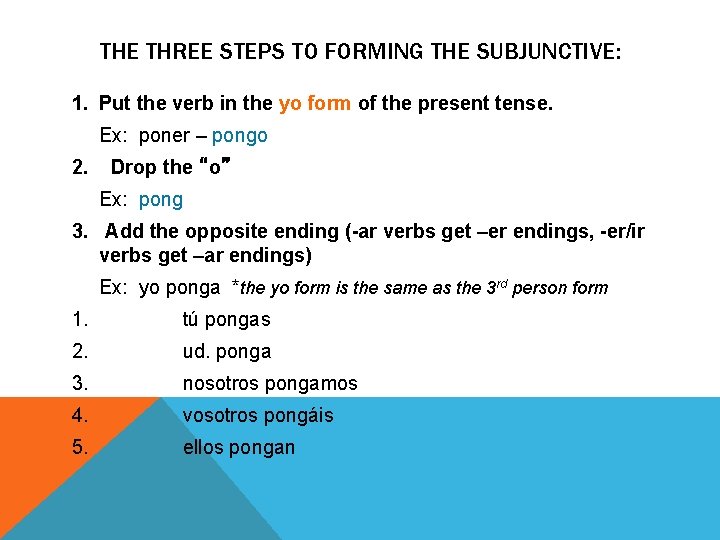
THE THREE STEPS TO FORMING THE SUBJUNCTIVE: 1. Put the verb in the yo form of the present tense. Ex: poner – pongo 2. Drop the “o” Ex: pong 3. Add the opposite ending (-ar verbs get –er endings, -er/ir verbs get –ar endings) Ex: yo ponga *the yo form is the same as the 3 rd person form 1. tú pongas 2. ud. ponga 3. nosotros pongamos 4. vosotros pongáis 5. ellos pongan
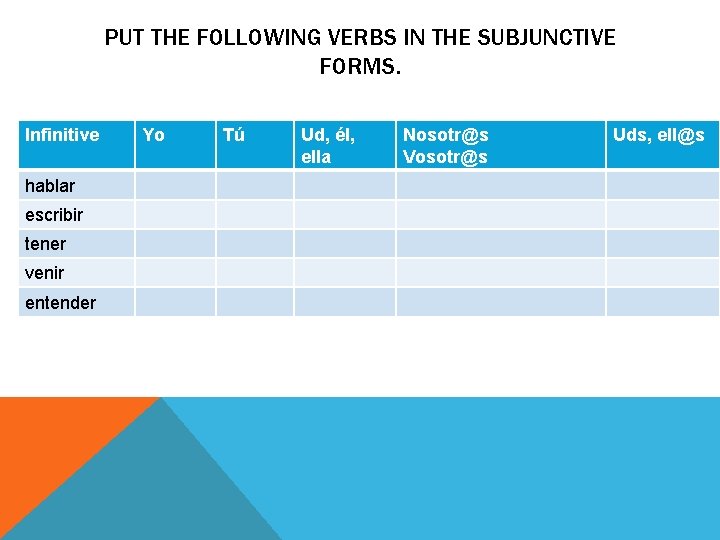
PUT THE FOLLOWING VERBS IN THE SUBJUNCTIVE FORMS. Infinitive hablar escribir tener venir entender Yo Tú Ud, él, ella Nosotr@s Vosotr@s Uds, ell@s
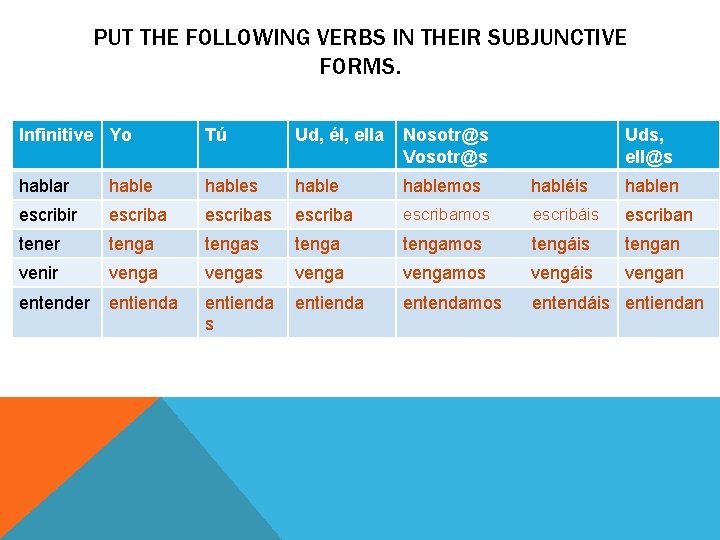
PUT THE FOLLOWING VERBS IN THEIR SUBJUNCTIVE FORMS. Infinitive Yo Tú Ud, él, ella Nosotr@s Vosotr@s Uds, ell@s hablar hables hablemos habléis hablen escribir escribas escribamos escribáis escriban tener tengas tengamos tengáis tengan venir vengas vengamos vengáis vengan entender entienda s entienda entendamos entendáis entiendan
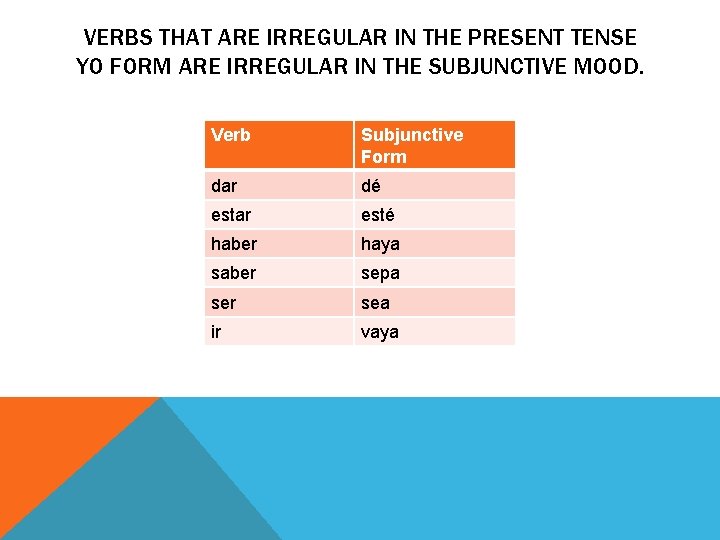
VERBS THAT ARE IRREGULAR IN THE PRESENT TENSE YO FORM ARE IRREGULAR IN THE SUBJUNCTIVE MOOD. Verb Subjunctive Form dar dé estar esté haber haya saber sepa ser sea ir vaya
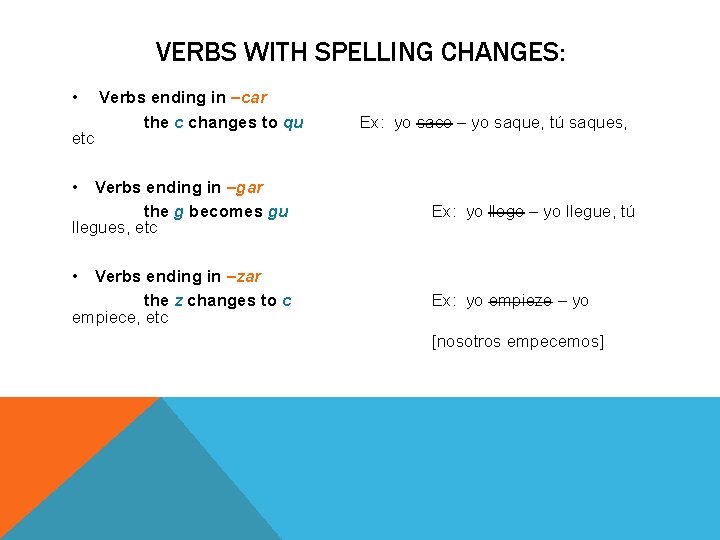
VERBS WITH SPELLING CHANGES: • etc Verbs ending in –car the c changes to qu Ex: yo sace – yo saque, tú saques, • Verbs ending in –gar the g becomes gu llegues, etc Ex: yo llego – yo llegue, tú • Verbs ending in –zar the z changes to c empiece, etc Ex: yo empieze – yo [nosotros empecemos]
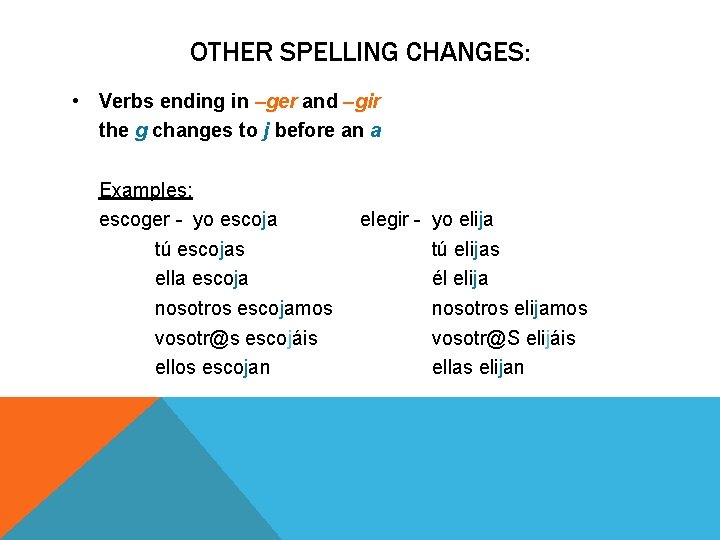
OTHER SPELLING CHANGES: • Verbs ending in –ger and –gir the g changes to j before an a Examples: escoger - yo escoja tú escojas ella escoja nosotros escojamos vosotr@s escojáis ellos escojan elegir - yo elija tú elijas él elija nosotros elijamos vosotr@S elijáis ellas elijan
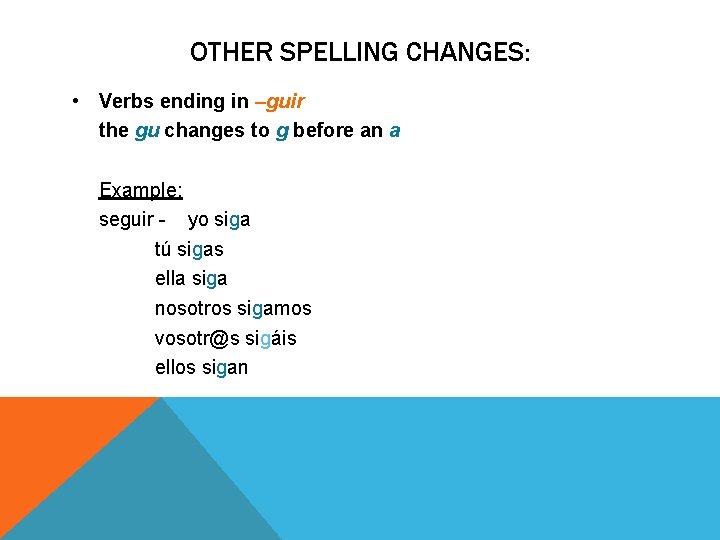
OTHER SPELLING CHANGES: • Verbs ending in –guir the gu changes to g before an a Example: seguir - yo siga tú sigas ella siga nosotros sigamos vosotr@s sigáis ellos sigan
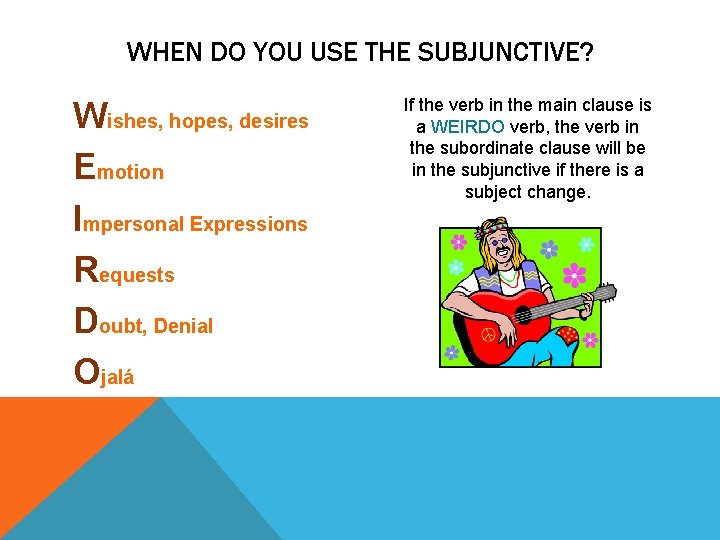
WHEN DO YOU USE THE SUBJUNCTIVE? Wishes, hopes, desires Emotion Impersonal Expressions Requests Doubt, Denial Ojalá If the verb in the main clause is a WEIRDO verb, the verb in the subordinate clause will be in the subjunctive if there is a subject change.
WISHES Using the subjunctive with expressions of hope and desire
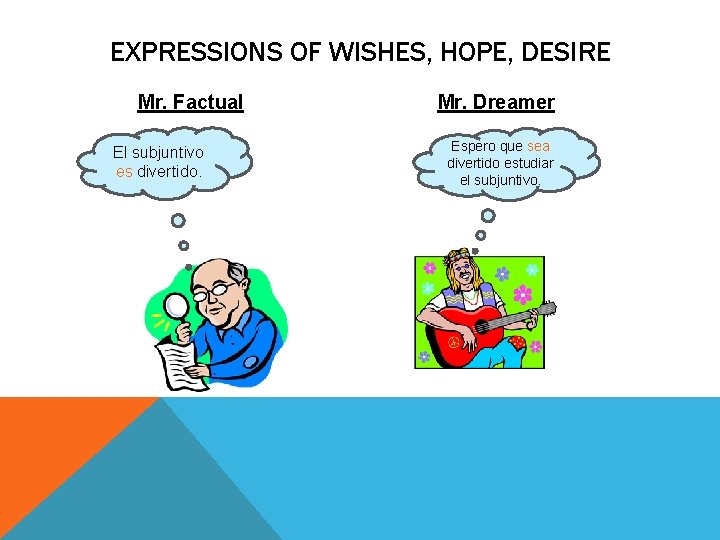
EXPRESSIONS OF WISHES, HOPE, DESIRE Mr. Factual El subjuntivo es divertido. Mr. Dreamer Espero que sea divertido estudiar el subjuntivo.
TO EXPRESS WHAT YOU WANT, HOPE, OR WISH TO HAPPEN, USE THE FOLLOWING EXPRESSIONS. Desear que Esperar que Querer que Ojalá (que)
EXAMPLES: • Quiero que me llames después de clase. I want you to call me after class. • Esperamos que sirvan pizza hoy. We hope that they serve pizza today. • Ellos desean que ella venga temprano. They want her to come early.
E V I T C OF N U S J N B SU SIO E ES H T PR G N EX I US ITH ION W OT EM
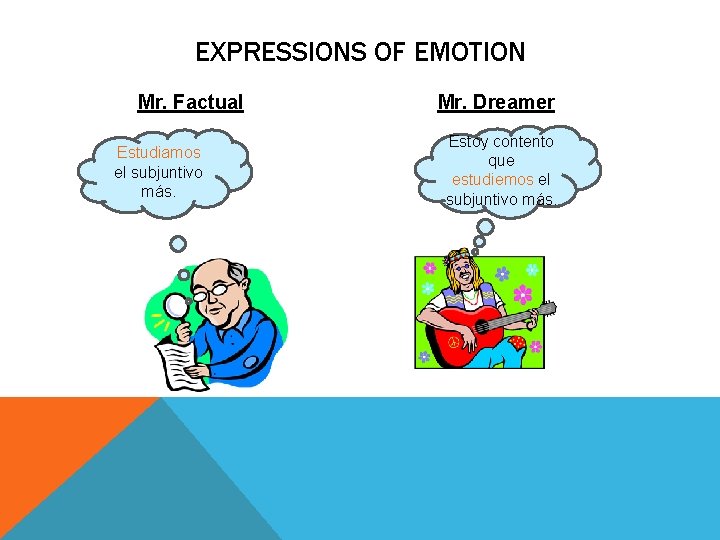
EXPRESSIONS OF EMOTION Mr. Factual Estudiamos el subjuntivo más. Mr. Dreamer Estoy contento que estudiemos el subjuntivo más.
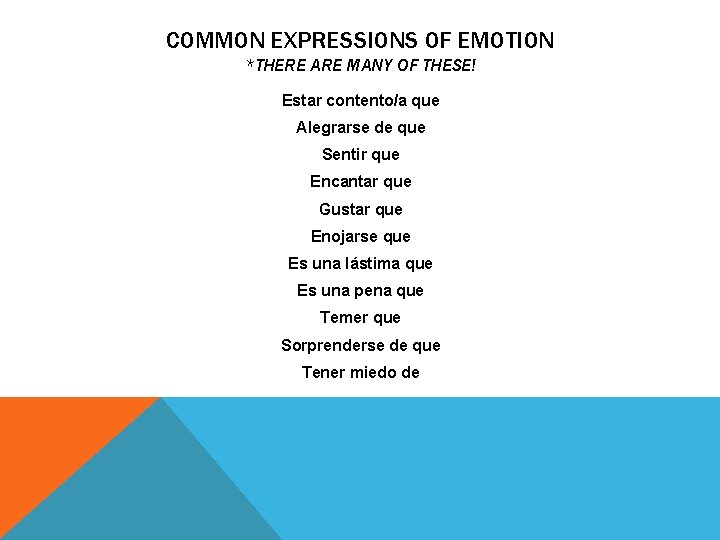
COMMON EXPRESSIONS OF EMOTION *THERE ARE MANY OF THESE! Estar contento/a que Alegrarse de que Sentir que Encantar que Gustar que Enojarse que Es una lástima que Es una pena que Temer que Sorprenderse de que Tener miedo de
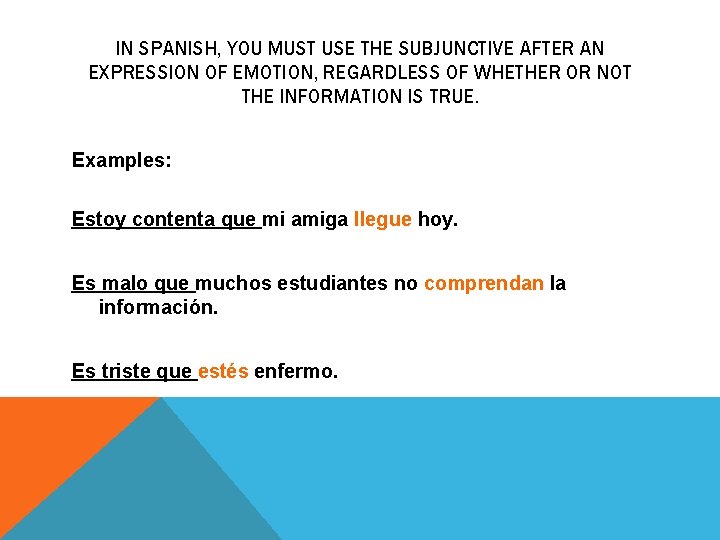
IN SPANISH, YOU MUST USE THE SUBJUNCTIVE AFTER AN EXPRESSION OF EMOTION, REGARDLESS OF WHETHER OR NOT THE INFORMATION IS TRUE. Examples: Estoy contenta que mi amiga llegue hoy. Es malo que muchos estudiantes no comprendan la información. Es triste que estés enfermo.
H T I W S E N V I IO T C SS N U RE J B P U S EX E L H A T N G SO N I R S U PE IM
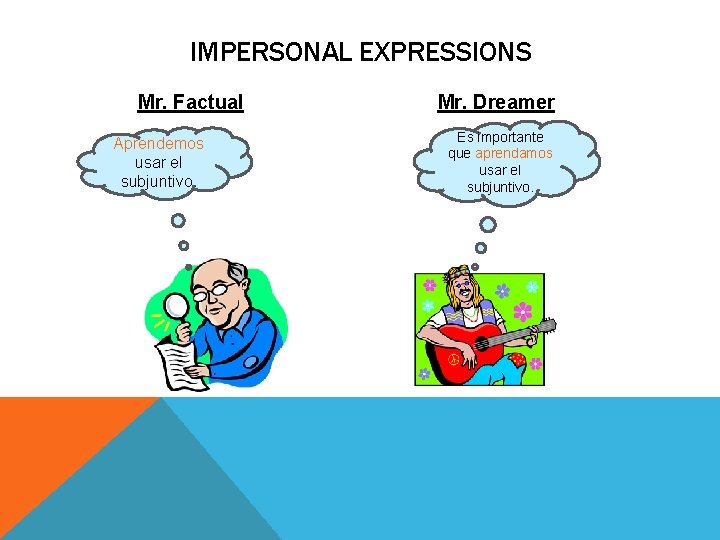
IMPERSONAL EXPRESSIONS Mr. Factual Aprendemos usar el subjuntivo. Mr. Dreamer Es importante que aprendamos usar el subjuntivo.
TO PRESENT AN OPINION, THE SUBJUNCTIVE IS OFTEN USED WITH THE FOLLOWING IMPERSONAL EXPRESSIONS. (No) es bueno que… (No) es malo que … (No) es importante que… (No) es posible que … (No) es imposible que… (No) es raro que … (No) es necesario que … (No) es probable que …
EXAMPLES: Es importante que vengamos a tiempo. Es posible que tengamos tarea esta noche. Es raro que ellos no escuchen.
REMEMBER: SOME IMPERSONAL EXPRESSIONS DEMONSTRATE CERTAINTY AND ARE USED WITH THE INDICATIVE. Es evidente que… Es obvio que … Es verdad que … Es cierto que… No es dudoso que … Examples: Es evidente que ella dice la verdad. Es cierto que él es muy inteligente.
TO F E O V I S T C RB N U VE J ( B SU STS E E H T QU G E ) E N R C I US AKE EN M FLU IN
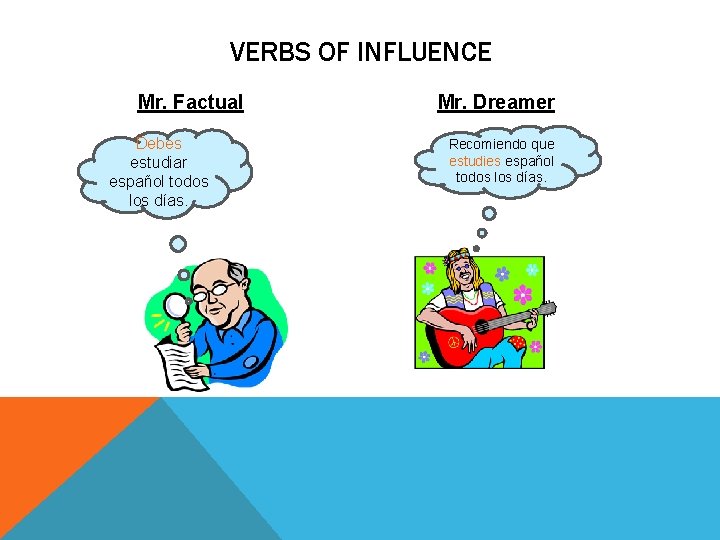
VERBS OF INFLUENCE Mr. Factual Debes estudiar español todos los días. Mr. Dreamer Recomiendo que estudies español todos los días.
THE FOLLOWING VERBS ARE USED TO INFLUENCE THE ACTIONS OF OTHERS. Verbs of Influence: Aconsejar que Dejar que Exigir que Insistir (en) que Mandar que Pedir (e: i) que Prohibir que Recomendar (e: ie) que Sugerir (e: ie) que
*The subjunctive is often used to make requests instead of using commands. It has a “softer” and sometimes more polite effect. Examples: Estudie más. Study more. Recomiendo que estudies más. I recommend that you study more. Quiero que estudies más. I want you to study more.
IMAGINE THAT A DOCTOR IS MAKING THE FOLLOWING RECOMMENDATIONS. COMPLETE THEM WITH THE VERB IN THE SUBJUNCTIVE. Doctor: “Recomiendo que tú duermas (dormir) mucho y que te quedes (quedarse) en cama por dos días. ” Doctor: “Sugiero que tú hagas (hacer) una consulta en una semana. ” Doctor: “Mando que tú no camines (caminar) en el pie por tres semanas. ”
E V I T C OF N U S J N B SU SIO IAL E ES N H T PR DE G N EX ND I US ITH T A W OUB D
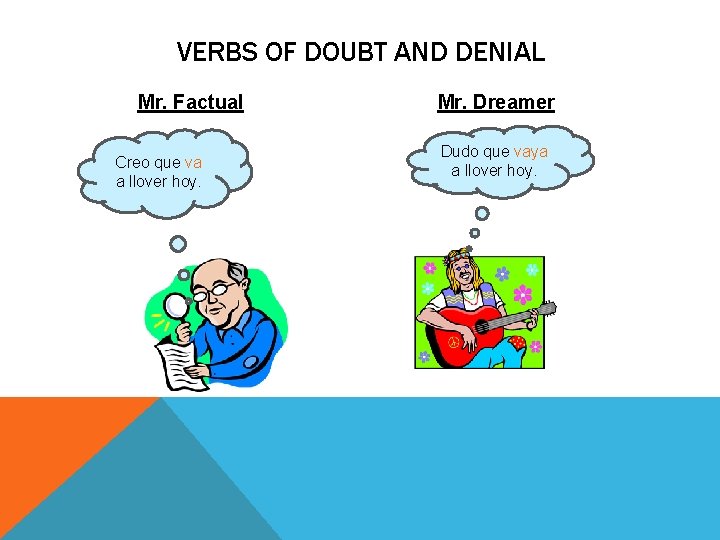
VERBS OF DOUBT AND DENIAL Mr. Factual Creo que va a llover hoy. Mr. Dreamer Dudo que vaya a llover hoy.
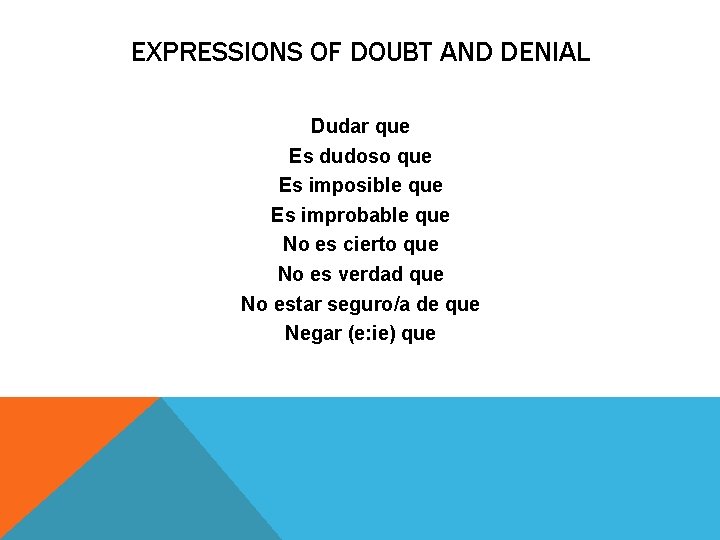
EXPRESSIONS OF DOUBT AND DENIAL Dudar que Es dudoso que Es imposible que Es improbable que No es cierto que No es verdad que No estar seguro/a de que Negar (e: ie) que
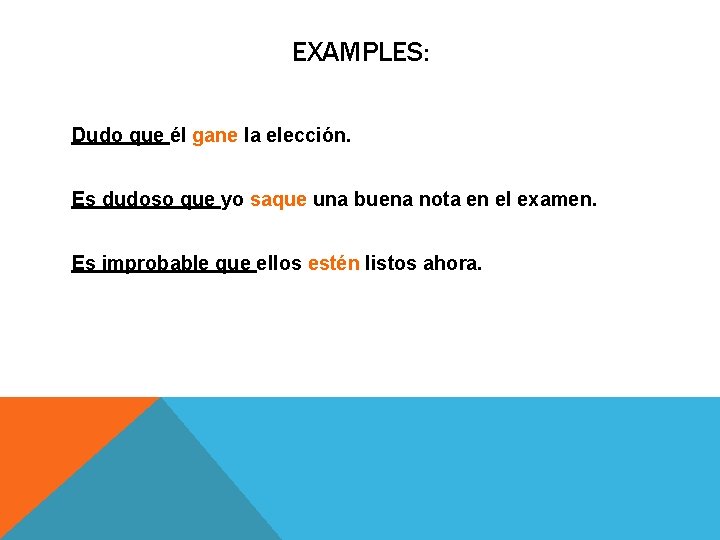
EXAMPLES: Dudo que él gane la elección. Es dudoso que yo saque una buena nota en el examen. Es improbable que ellos estén listos ahora.

Á L A US O D AN LA J O : E S A FR
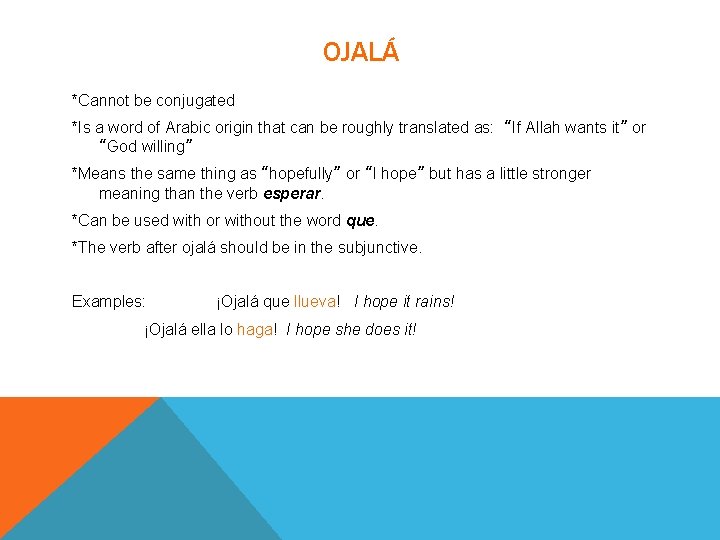
OJALÁ *Cannot be conjugated *Is a word of Arabic origin that can be roughly translated as: “If Allah wants it” or “God willing” *Means the same thing as “hopefully” or “I hope” but has a little stronger meaning than the verb esperar. *Can be used with or without the word que. *The verb after ojalá should be in the subjunctive. Examples: ¡Ojalá que llueva! I hope it rains! ¡Ojalá ella lo haga! I hope she does it!
- Slides: 42