
El Presente Progresivo Estar gerundio I am studying
- Slides: 12
El Presente Progresivo
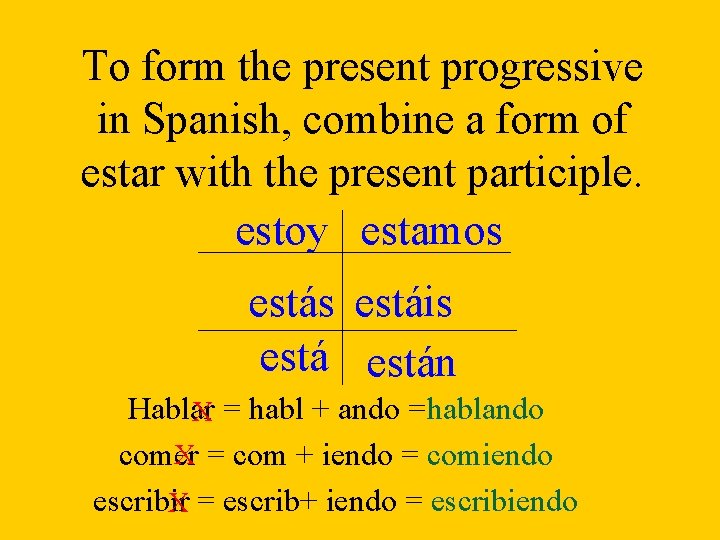
Estar + gerundio I am studying with María The present progressive is formed by combining the verb “to be” (estar, not ser) with the present participle.
In English Present progressive can be used to describe what is happening now or what will happen in the future. I am studying now. I am studying with María tonight.
In Spanish The present progressive is only used to describe an action that is in the process of taking place. It is NOT used for future actions. I am studying now. Estoy estudiando ahora. I am studying with María tonight. Estudio con María esta noche. Voy a estudiar con María esta noche.
To form the present progressive in Spanish, combine a form of estar with the present participle. estoy estamos estáis están Hablar X = habl + ando =hablando X = com + iendo = comiendo comer escribir X = escrib+ iendo = escribiendo
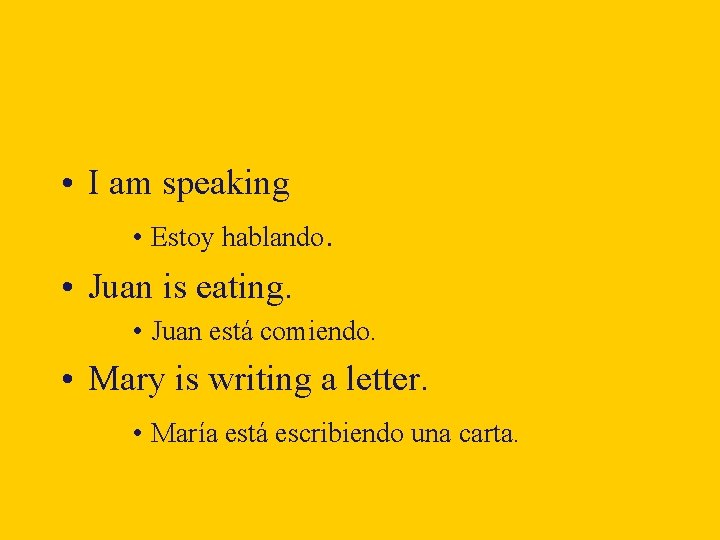
• I am speaking • Estoy hablando. • Juan is eating. • Juan está comiendo. • Mary is writing a letter. • María está escribiendo una carta.
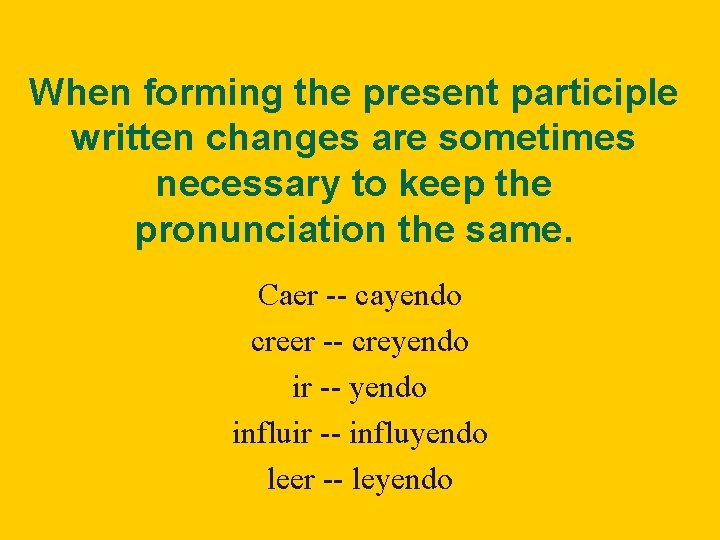
When forming the present participle written changes are sometimes necessary to keep the pronunciation the same. Caer -- cayendo creer -- creyendo ir -- yendo influir -- influyendo leer -- leyendo
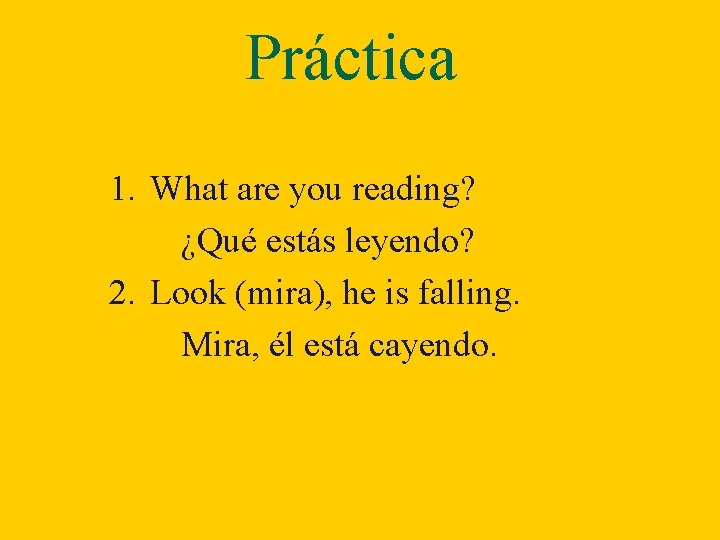
Práctica 1. What are you reading? ¿Qué estás leyendo? 2. Look (mira), he is falling. Mira, él está cayendo.
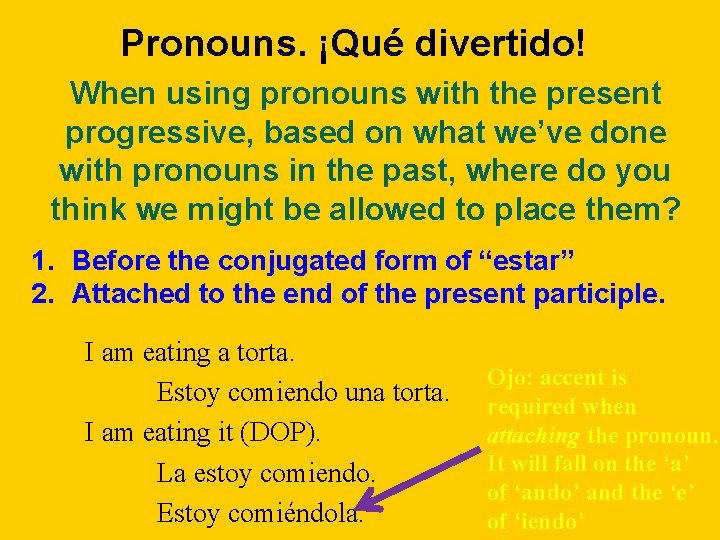
Pronouns. ¡Qué divertido! When using pronouns with the present progressive, based on what we’ve done with pronouns in the past, where do you think we might be allowed to place them? 1. Before the conjugated form of “estar” 2. Attached to the end of the present participle. I am eating a torta. Estoy comiendo una torta. I am eating it (DOP). La estoy comiendo. Estoy comiéndola. Ojo: accent is required when attaching the pronoun. It will fall on the ‘a’ of ‘ando’ and the ‘e’ of ‘iendo’
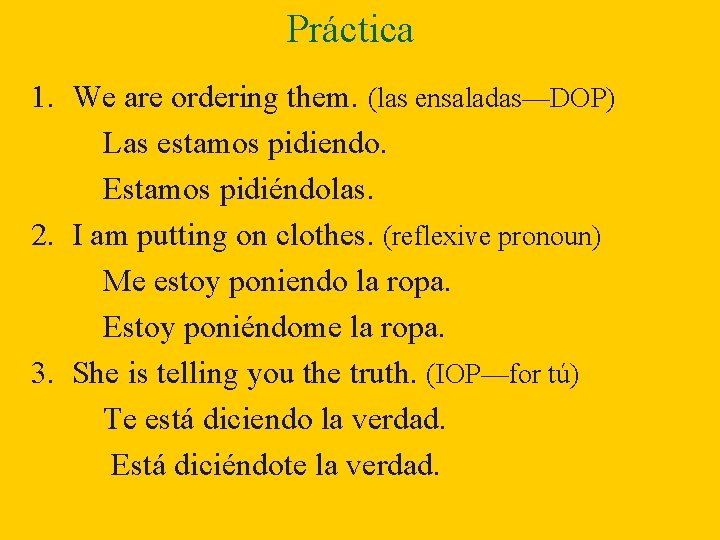
Práctica 1. We are ordering them. (las ensaladas—DOP) Las estamos pidiendo. Estamos pidiéndolas. 2. I am putting on clothes. (reflexive pronoun) Me estoy poniendo la ropa. Estoy poniéndome la ropa. 3. She is telling you the truth. (IOP—for tú) Te está diciendo la verdad. Está diciéndote la verdad.
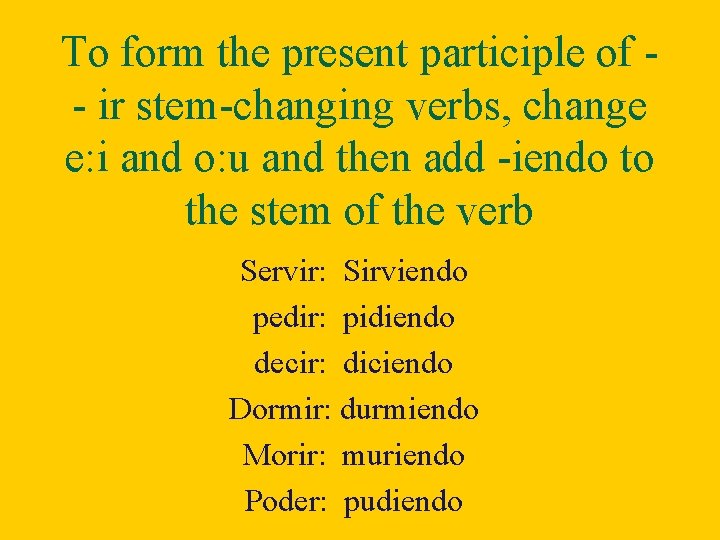
To form the present participle of - ir stem-changing verbs, change e: i and o: u and then add -iendo to the stem of the verb Servir: Sirviendo pedir: pidiendo decir: diciendo Dormir: durmiendo Morir: muriendo Poder: pudiendo
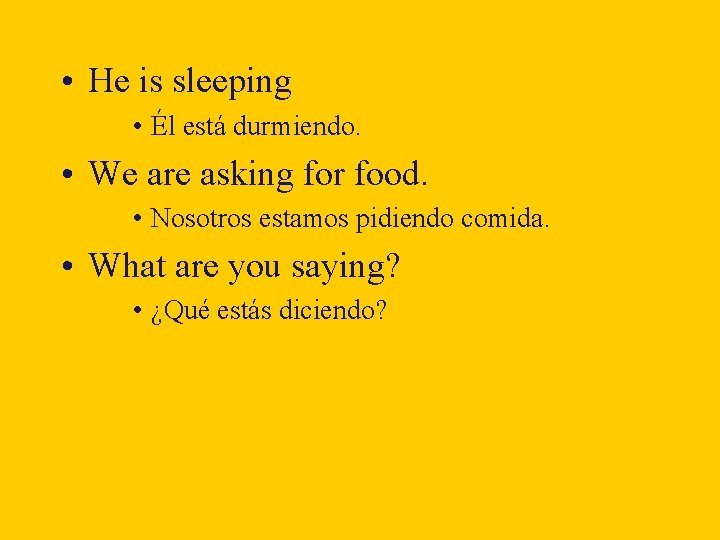
• He is sleeping • Él está durmiendo. • We are asking for food. • Nosotros estamos pidiendo comida. • What are you saying? • ¿Qué estás diciendo?