
EL EXAMEN ORAL What does the GCSE oral
- Slides: 10
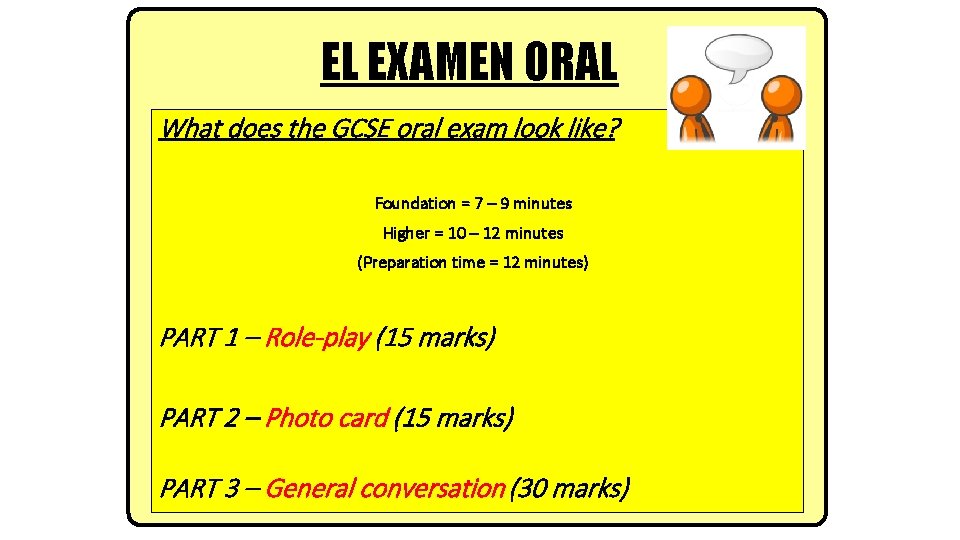
EL EXAMEN ORAL What does the GCSE oral exam look like? Foundation = 7 – 9 minutes Higher = 10 – 12 minutes (Preparation time = 12 minutes) PART 1 – Role-play (15 marks) PART 2 – Photo card (15 marks) PART 3 – General conversation (30 marks)
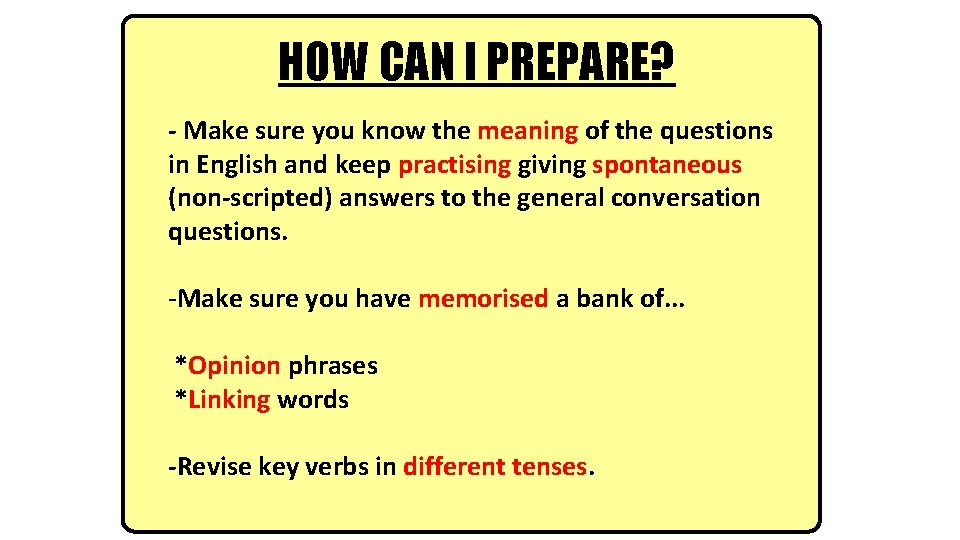
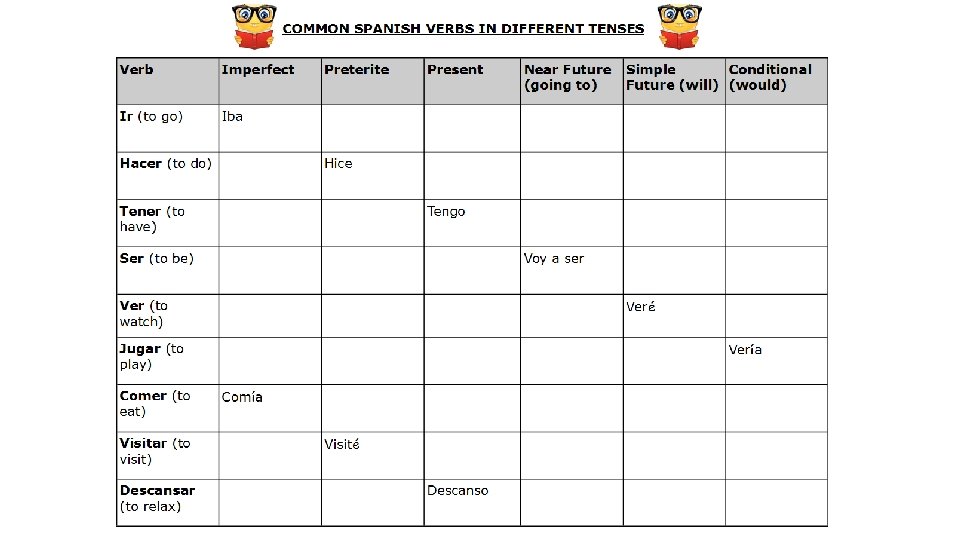
HOW CAN I PREPARE? - Make sure you know the meaning of the questions in English and keep practising giving spontaneous (non-scripted) answers to the general conversation questions. -Make sure you have memorised a bank of. . . *Opinion phrases *Linking words -Revise key verbs in different tenses.
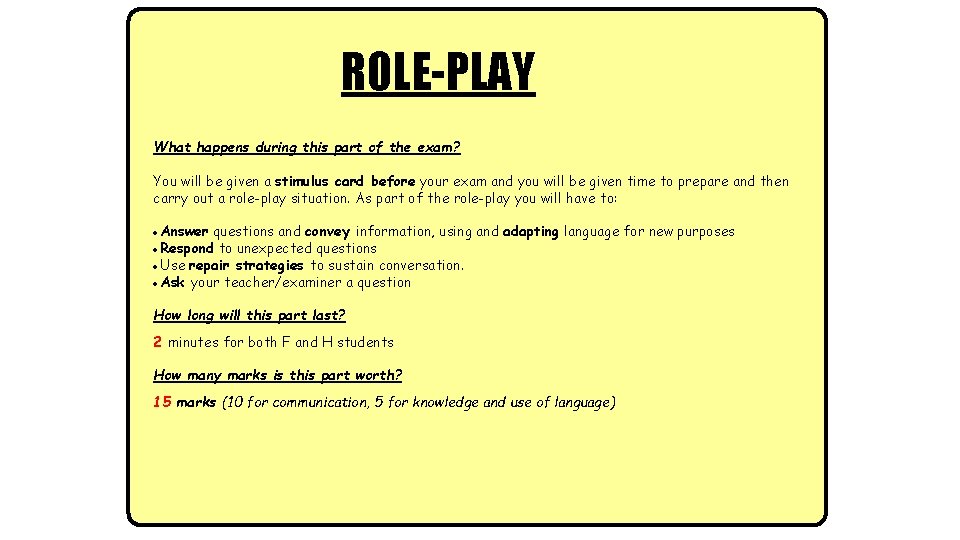
ROLE-PLAY What happens during this part of the exam? You will be given a stimulus card before your exam and you will be given time to prepare and then carry out a role-play situation. As part of the role-play you will have to: · Answer questions and convey information, using and adapting language for new purposes · Respond to unexpected questions · Use repair strategies to sustain conversation. · Ask your teacher/examiner a question How long will this part last? 2 minutes for both F and H students How many marks is this part worth? 15 marks (10 for communication, 5 for knowledge and use of language)
ROLE-PLAY What does it look like?
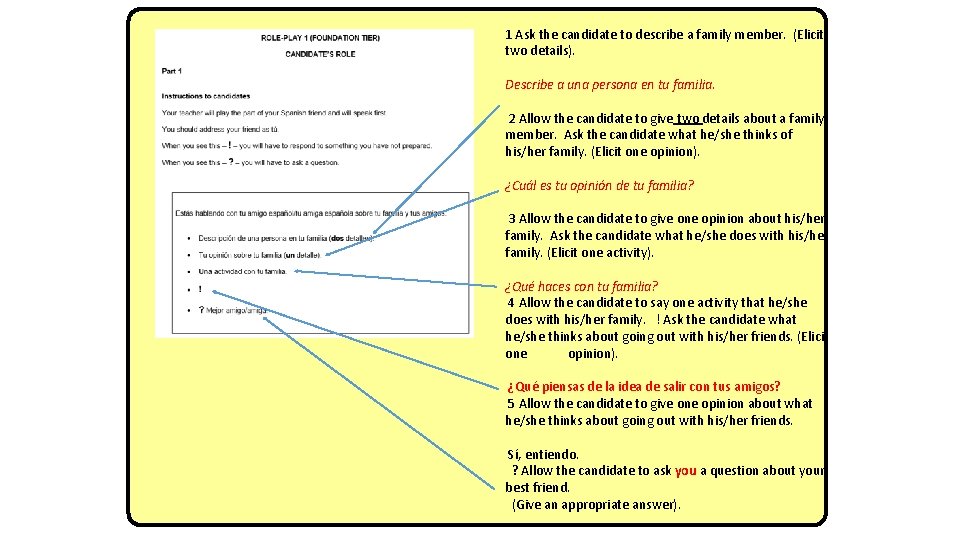
1 Ask the candidate to describe a family member. (Elicit two details). Describe a una persona en tu familia. 2 Allow the candidate to give two details about a family member. Ask the candidate what he/she thinks of his/her family. (Elicit one opinion). ¿Cuál es tu opinión de tu familia? 3 Allow the candidate to give one opinion about his/her family. Ask the candidate what he/she does with his/her family. (Elicit one activity). ¿Qué haces con tu familia? 4 Allow the candidate to say one activity that he/she does with his/her family. ! Ask the candidate what he/she thinks about going out with his/her friends. (Elicit one opinion). ¿Qué piensas de la idea de salir con tus amigos? 5 Allow the candidate to give one opinion about what he/she thinks about going out with his/her friends. Sí, entiendo. ? Allow the candidate to ask you a question about your best friend. (Give an appropriate answer).
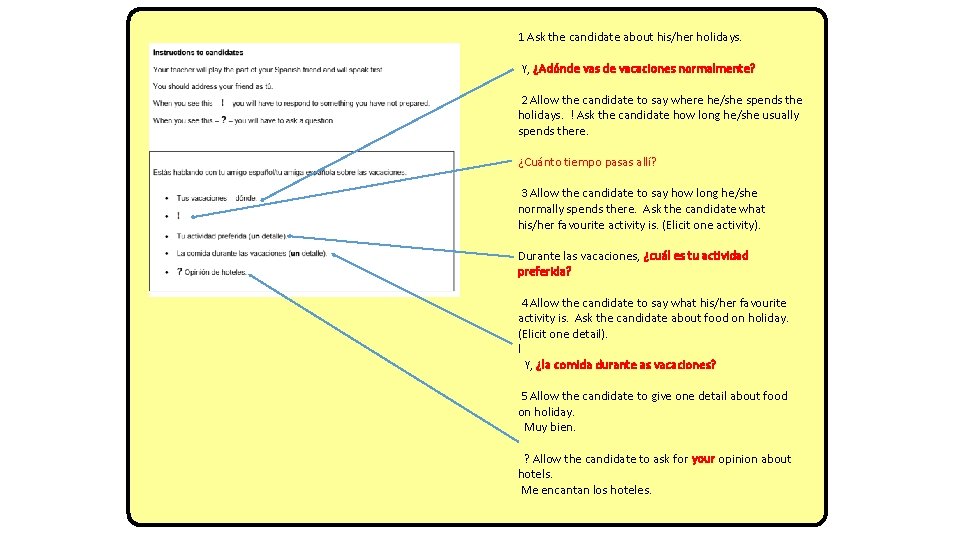
1 Ask the candidate about his/her holidays. Y, ¿Adónde vas de vacaciones normalmente? 2 Allow the candidate to say where he/she spends the holidays. ! Ask the candidate how long he/she usually spends there. ¿Cuánto tiempo pasas allí? 3 Allow the candidate to say how long he/she normally spends there. Ask the candidate what his/her favourite activity is. (Elicit one activity). Durante las vacaciones, ¿cuál es tu actividad preferida? 4 Allow the candidate to say what his/her favourite activity is. Ask the candidate about food on holiday. (Elicit one detail). l Y, ¿la comida durante as vacaciones? 5 Allow the candidate to give one detail about food on holiday. Muy bien. ? Allow the candidate to ask for your opinion about hotels. Me encantan los hoteles.
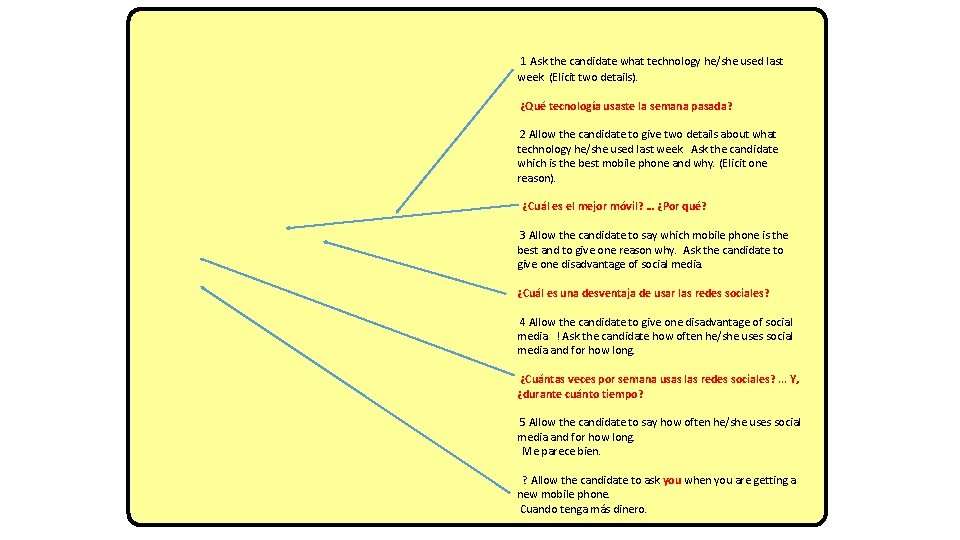
1 Ask the candidate what technology he/she used last week. (Elicit two details). ¿Qué tecnología usaste la semana pasada? 2 Allow the candidate to give two details about what technology he/she used last week. Ask the candidate which is the best mobile phone and why. (Elicit one reason). ¿Cuál es el mejor móvil? … ¿Por qué? 3 Allow the candidate to say which mobile phone is the best and to give one reason why. Ask the candidate to give one disadvantage of social media. ¿Cuál es una desventaja de usar las redes sociales? 4 Allow the candidate to give one disadvantage of social media. ! Ask the candidate how often he/she uses social media and for how long. ¿Cuántas veces por semana usas las redes sociales? . . . Y, ¿durante cuánto tiempo? 5 Allow the candidate to say how often he/she uses social media and for how long. Me parece bien. ? Allow the candidate to ask you when you are getting a new mobile phone. Cuando tenga más dinero.
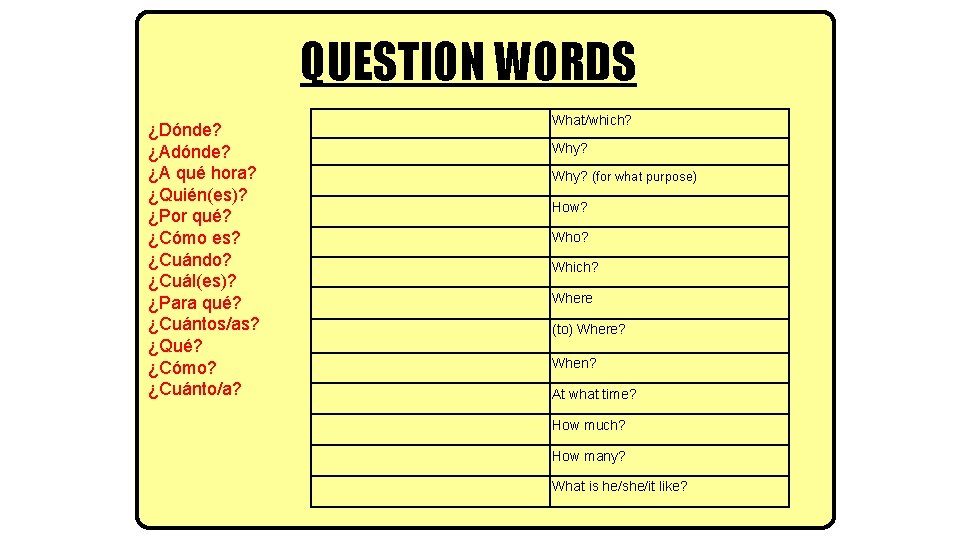
QUESTION WORDS ¿Dónde? ¿Adónde? ¿A qué hora? ¿Quién(es)? ¿Por qué? ¿Cómo es? ¿Cuándo? ¿Cuál(es)? ¿Para qué? ¿Cuántos/as? ¿Qué? ¿Cómo? ¿Cuánto/a? What/which? Why? (for what purpose) How? Who? Which? Where (to) Where? When? At what time? How much? How many? What is he/she/it like?
FORMING QUESTIONS. . Form a question using each of the question words…. ¿Dónde? ¿Adónde? ¿A qué hora? ¿Quién(es)? ¿Por qué? ¿Cómo es? ¿Cuándo? ¿Cuál(es)? ¿Para qué? ¿Cuántos/as? ¿Qué? ¿Cómo? ¿Cuánto/a?