
El comparativo y superlativo Comparative and Superlative Comparative

- Slides: 26
El comparativo y superlativo Comparative and Superlative
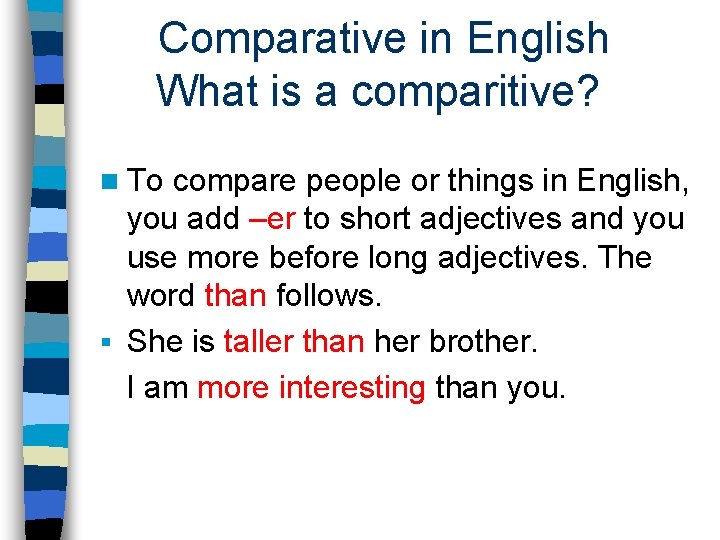
Comparative in English What is a comparitive? n To compare people or things in English, you add –er to short adjectives and you use more before long adjectives. The word than follows. § She is taller than her brother. I am more interesting than you.
Comparatives of inequality in Spanish n To form the comparative in Spanish, you put más or menos before the adjective, adverb, or noun and que after it. Daniela es más popular que tú. § Tú eres menos popular que Daniela. §
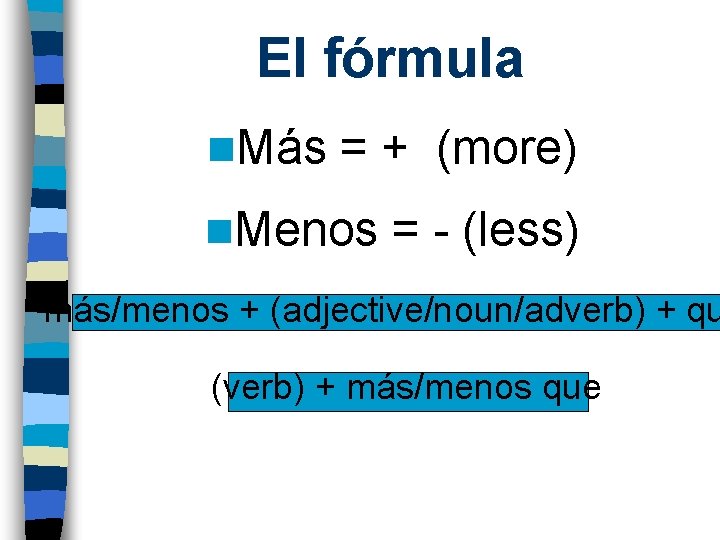
El fórmula n. Más = + (more) n. Menos = - (less) más/menos + (adjective/noun/adverb) + qu (verb) + más/menos que
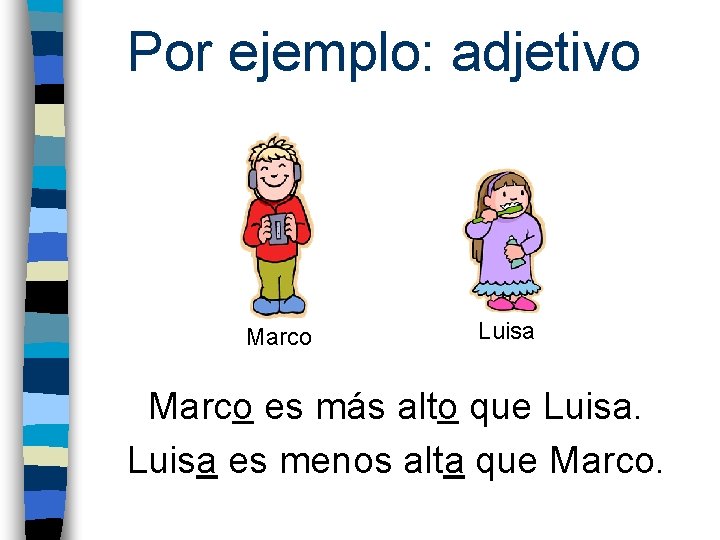
Por ejemplo: adjetivo Marco Luisa Marco es más alto que Luisa es menos alta que Marco.
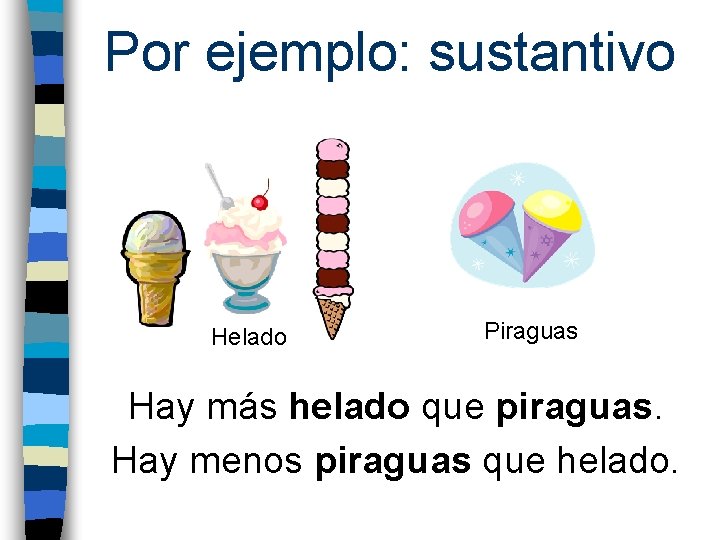
Por ejemplo: sustantivo Helado Piraguas Hay más helado que piraguas. Hay menos piraguas que helado.
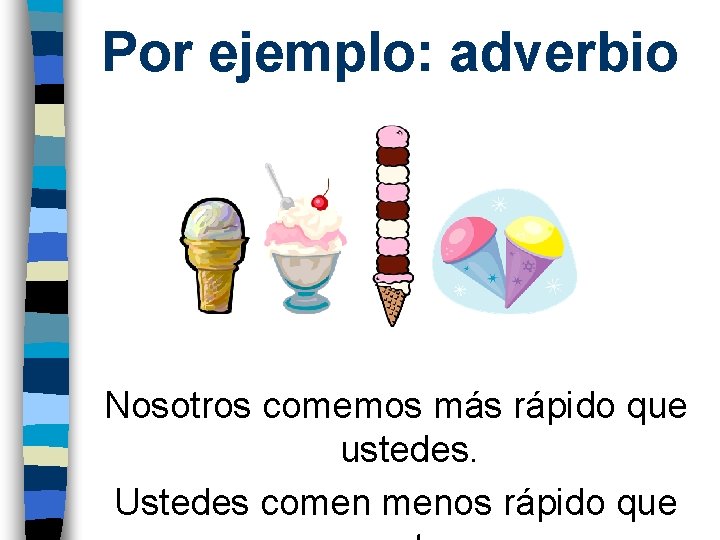
Por ejemplo: adverbio Nosotros comemos más rápido que ustedes. Ustedes comen menos rápido que
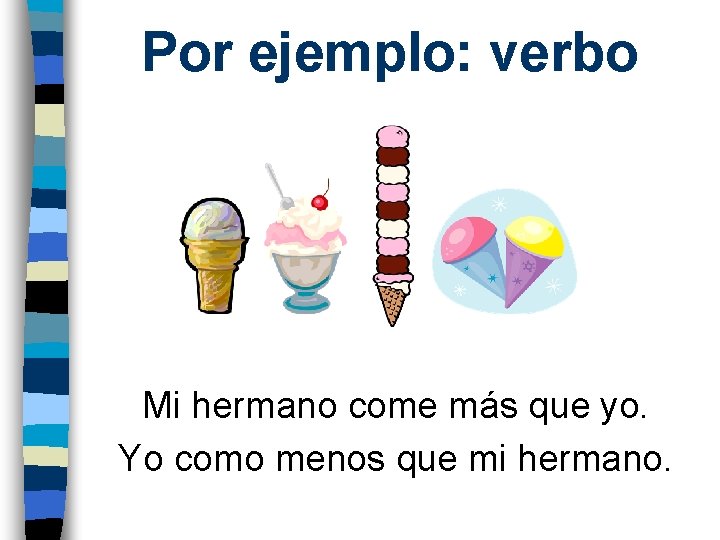
Por ejemplo: verbo Mi hermano come más que yo. Yo como menos que mi hermano.
n Before a number (or equivalent expression), more/less than is expressed with más/menos de. El pasaje cuesta más de trescientos dólares. The ticket costs more than three hundred dollars. n Note that when the sentence is negative, que is used even with numbers, to convey the meaning “only. ” Tengo más de cinco dólares. (I have more than five dollars. ) but No tengo más que cinco dólares. (I only have five dollars. )
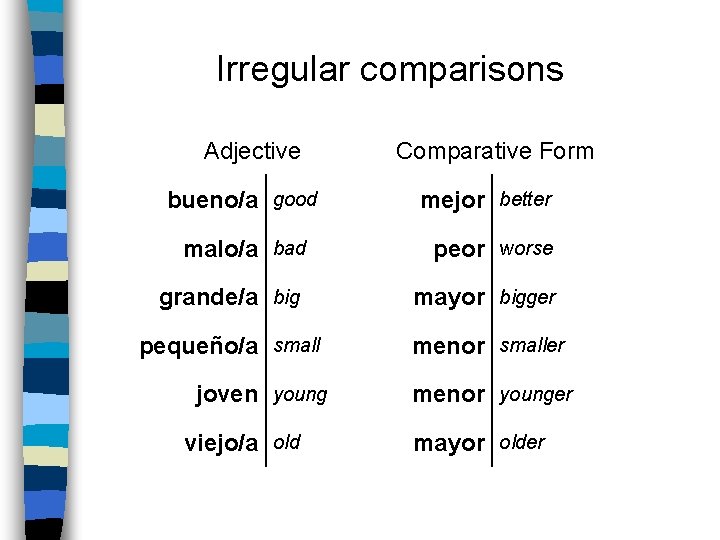
Irregular comparisons Adjective bueno/a good Comparative Form mejor better malo/a bad peor worse grande/a big mayor bigger pequeño/a small menor smaller joven young viejo/a old menor younger mayor older
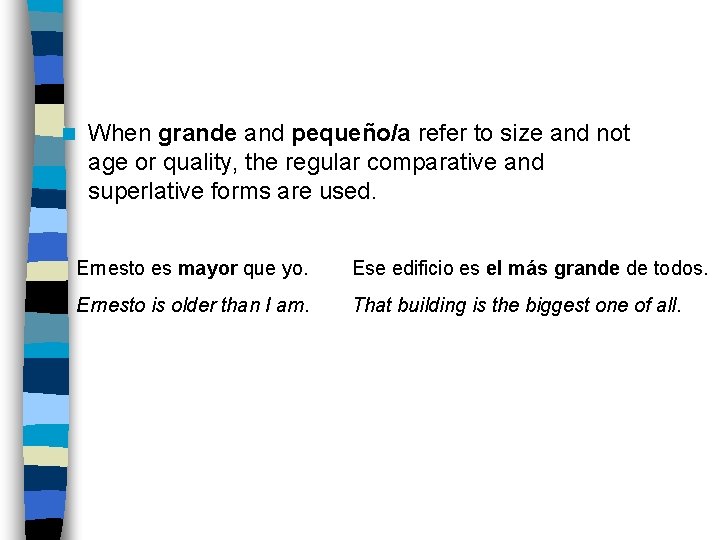
n When grande and pequeño/a refer to size and not age or quality, the regular comparative and superlative forms are used. Ernesto es mayor que yo. Ese edificio es el más grande de todos. Ernesto is older than I am. That building is the biggest one of all.
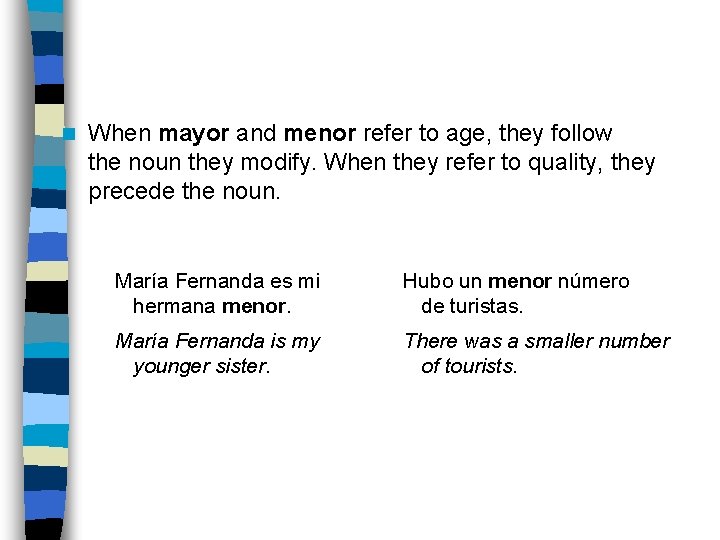
n When mayor and menor refer to age, they follow the noun they modify. When they refer to quality, they precede the noun. María Fernanda es mi hermana menor. Hubo un menor número de turistas. María Fernanda is my younger sister. There was a smaller number of tourists.
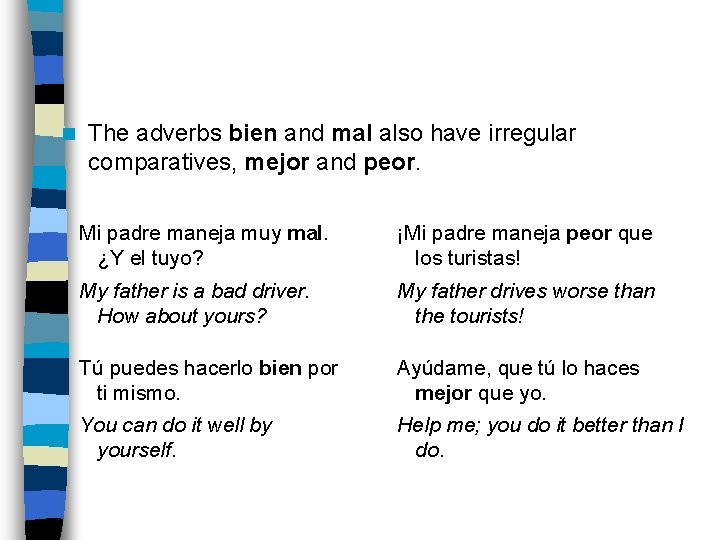
n The adverbs bien and mal also have irregular comparatives, mejor and peor. Mi padre maneja muy mal. ¿Y el tuyo? ¡Mi padre maneja peor que los turistas! My father is a bad driver. How about yours? My father drives worse than the tourists! Tú puedes hacerlo bien por ti mismo. Ayúdame, que tú lo haces mejor que yo. You can do it well by yourself. Help me; you do it better than I do.
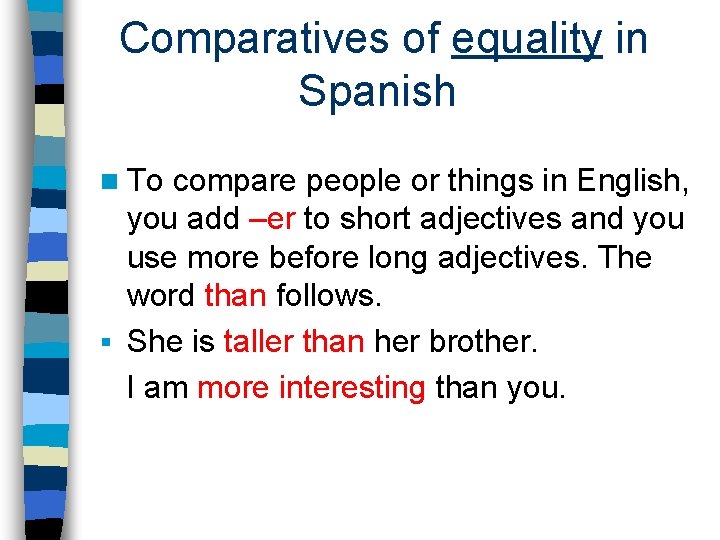
Comparatives of equality in Spanish n To compare people or things in English, you add –er to short adjectives and you use more before long adjectives. The word than follows. § She is taller than her brother. I am more interesting than you.
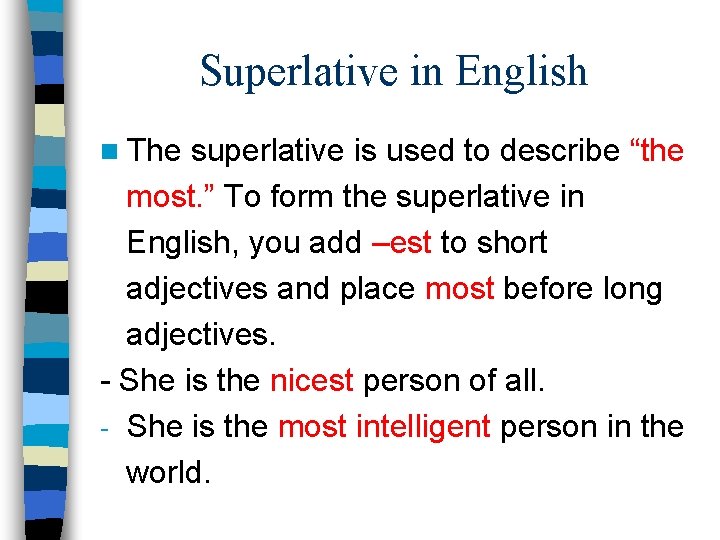
Superlative in English n The superlative is used to describe “the most. ” To form the superlative in English, you add –est to short adjectives and place most before long adjectives. - She is the nicest person of all. - She is the most intelligent person in the world.
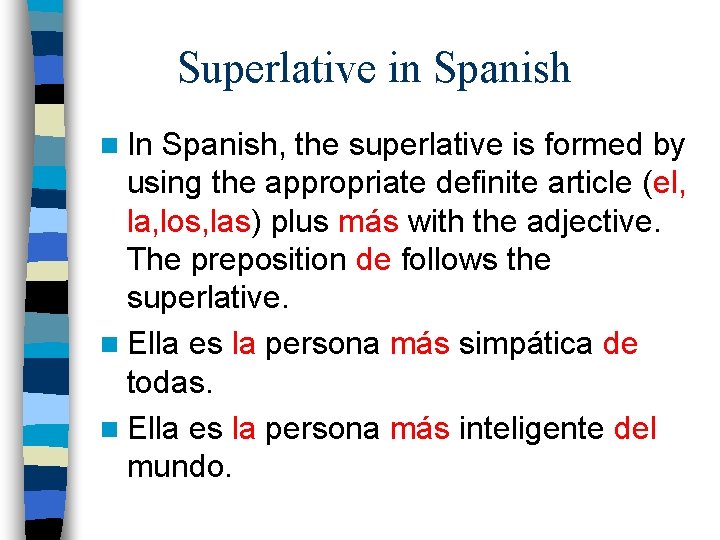
Superlative in Spanish n In Spanish, the superlative is formed by using the appropriate definite article (el, la, los, las) plus más with the adjective. The preposition de follows the superlative. n Ella es la persona más simpática de todas. n Ella es la persona más inteligente del mundo.
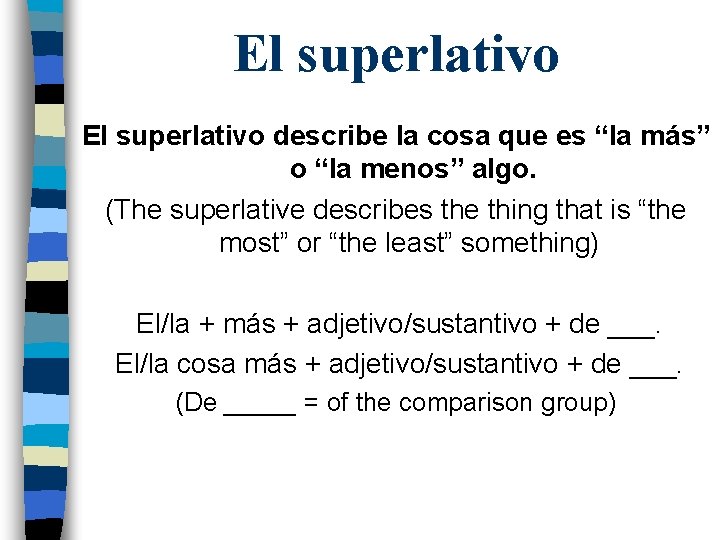
El superlativo describe la cosa que es “la más” o “la menos” algo. (The superlative describes the thing that is “the most” or “the least” something) El/la + más + adjetivo/sustantivo + de ___. El/la cosa más + adjetivo/sustantivo + de ___. (De _____ = of the comparison group)
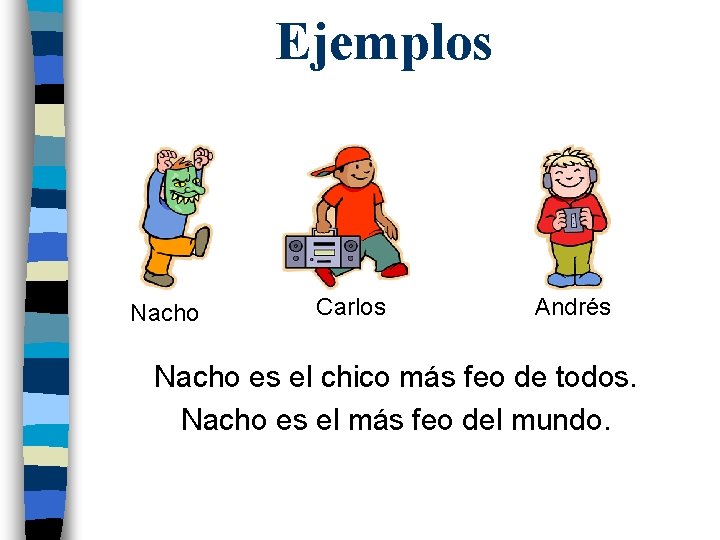
Ejemplos Nacho Carlos Andrés Nacho es el chico más feo de todos. Nacho es el más feo del mundo.
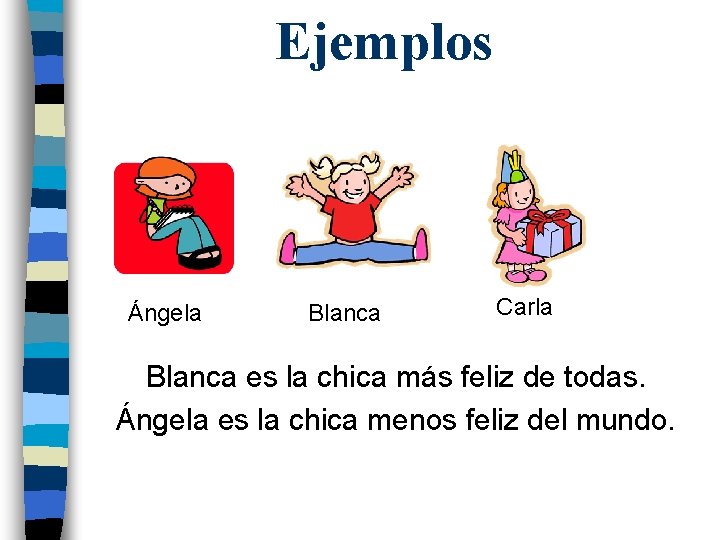
Ejemplos Ángela Blanca Carla Blanca es la chica más feliz de todas. Ángela es la chica menos feliz del mundo.
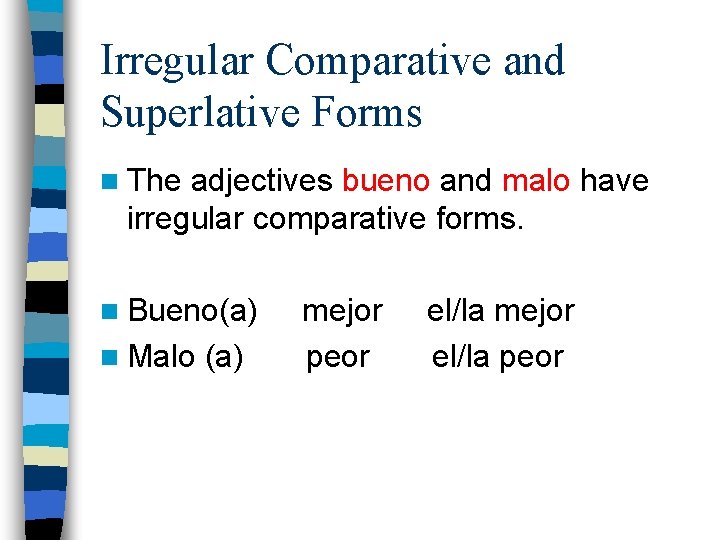
Irregular Comparative and Superlative Forms n The adjectives bueno and malo have irregular comparative forms. n Bueno(a) n Malo (a) mejor peor el/la mejor el/la peor
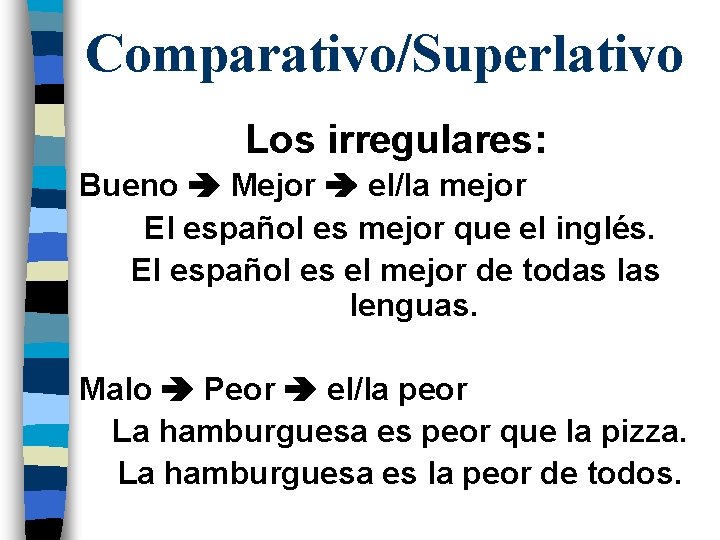
Comparativo/Superlativo Los irregulares: Bueno Mejor el/la mejor El español es mejor que el inglés. El español es el mejor de todas lenguas. Malo Peor el/la peor La hamburguesa es peor que la pizza. La hamburguesa es la peor de todos.
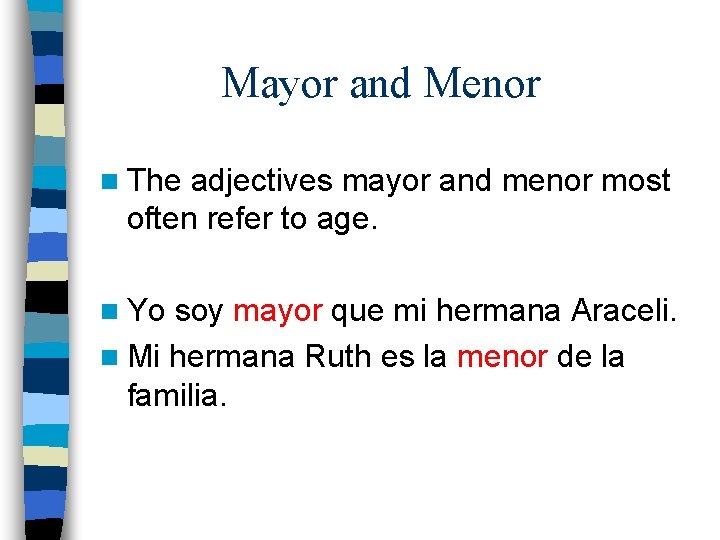
Mayor and Menor n The adjectives mayor and menor most often refer to age. n Yo soy mayor que mi hermana Araceli. n Mi hermana Ruth es la menor de la familia.
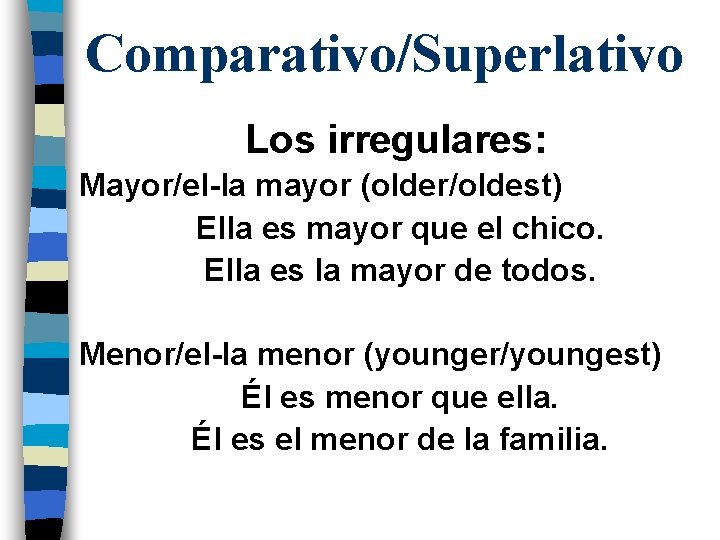
Comparativo/Superlativo Los irregulares: Mayor/el-la mayor (older/oldest) Ella es mayor que el chico. Ella es la mayor de todos. Menor/el-la menor (younger/youngest) Él es menor que ella. Él es el menor de la familia.
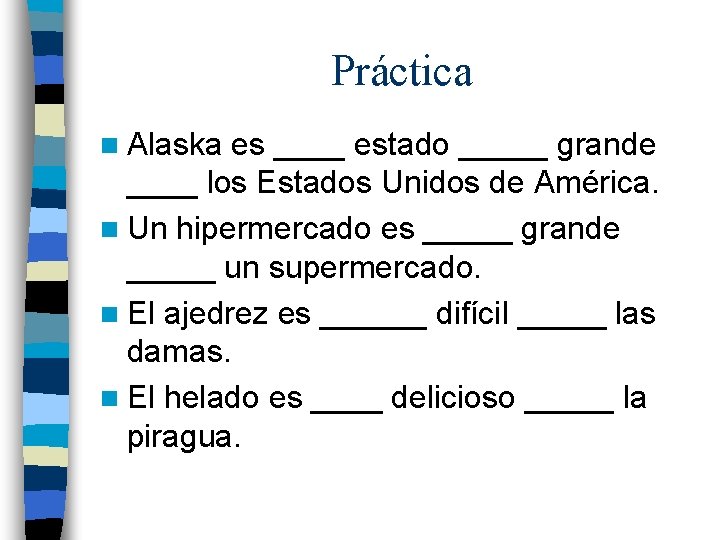
Práctica n Alaska es ____ estado _____ grande ____ los Estados Unidos de América. n Un hipermercado es _____ grande _____ un supermercado. n El ajedrez es ______ difícil _____ las damas. n El helado es ____ delicioso _____ la piragua.
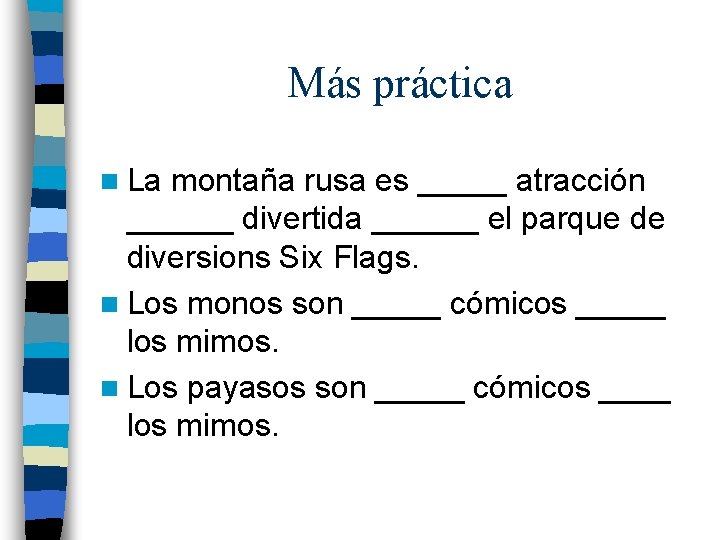
Más práctica n La montaña rusa es _____ atracción ______ divertida ______ el parque de diversions Six Flags. n Los monos son _____ cómicos _____ los mimos. n Los payasos son _____ cómicos ____ los mimos.
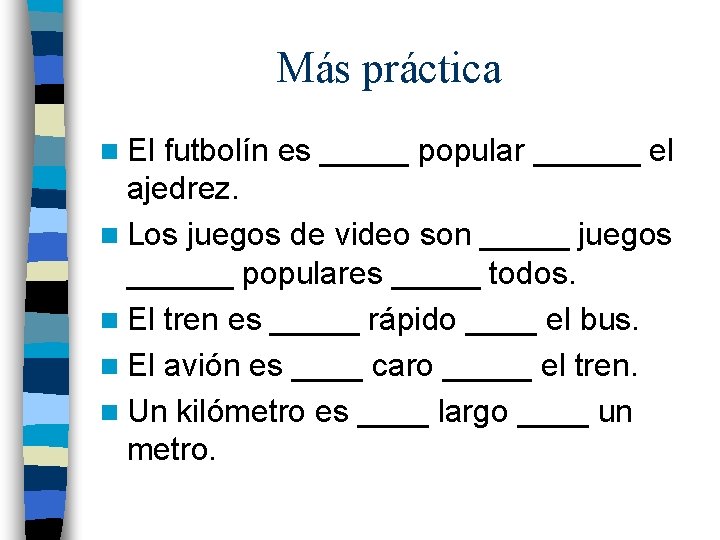
Más práctica n El futbolín es _____ popular ______ el ajedrez. n Los juegos de video son _____ juegos ______ populares _____ todos. n El tren es _____ rápido ____ el bus. n El avión es ____ caro _____ el tren. n Un kilómetro es ____ largo ____ un metro.