
Einsteins Happiest Thought Microworld MacroWorld Lecture 7 Equivalence
![Einstein Equivalence Principle in his words we [. . . ] assume the complete](https://slidetodoc.com/presentation_image_h/0f9896a0b065203a3bc07672c8ad3a77/image-6.jpg "Einstein Equivalence Principle in his words we [. . . ] assume the complete")
- Slides: 25
Einstein’s Happiest Thought Micro-world Macro-World Lecture 7
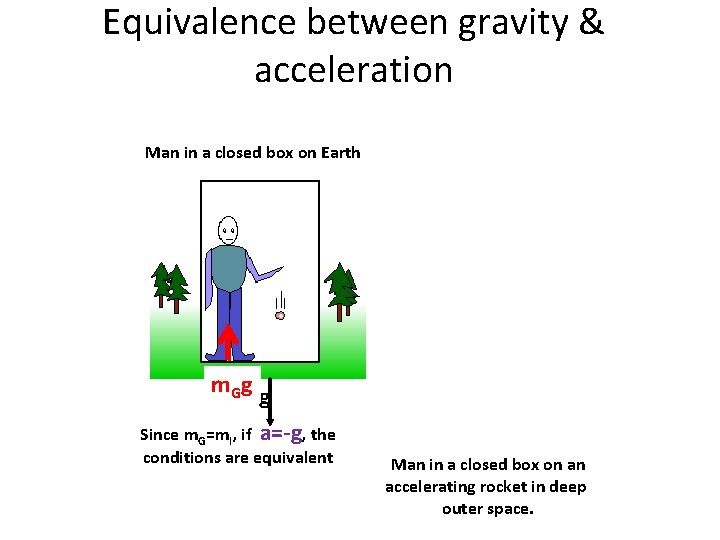
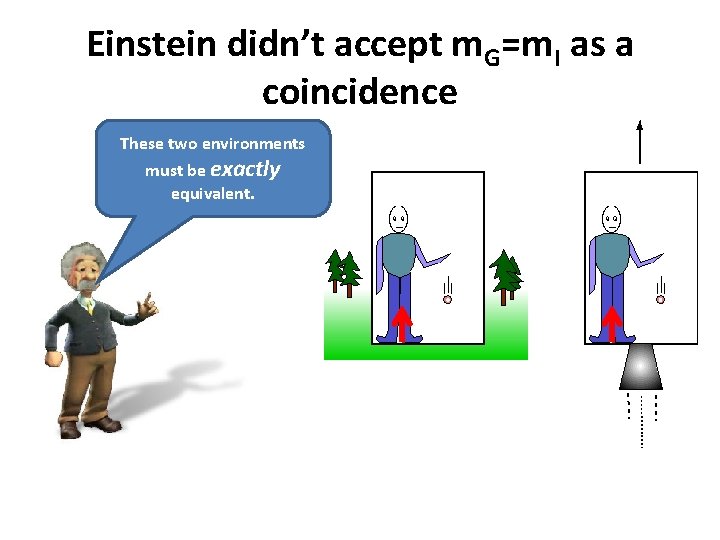
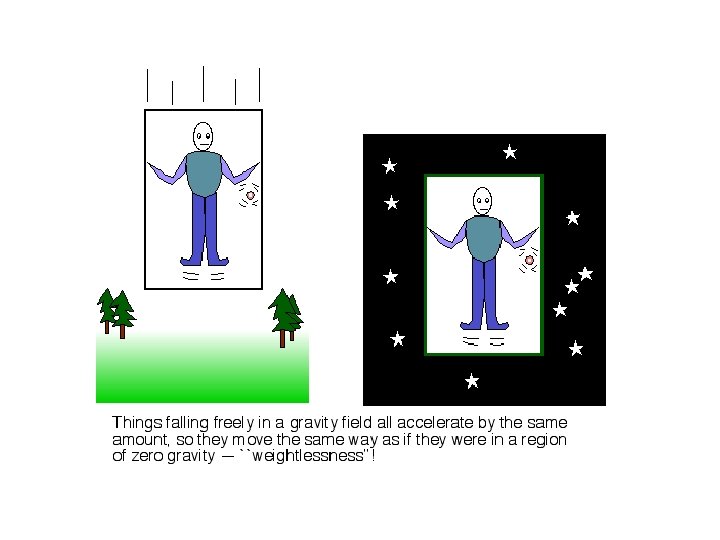
Equivalence between gravity & acceleration a Man in a closed box on Earth m Gg g Since m. G=m. I, if a=-g, the conditions are equivalent m. Ia Man in a closed box on an accelerating rocket in deep outer space.
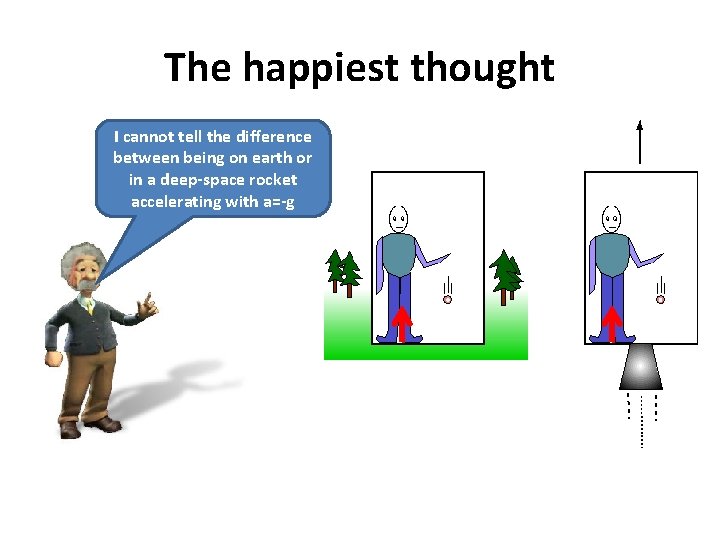
The happiest thought I cannot tell the difference between being on earth or in a deep-space rocket accelerating with a=-g
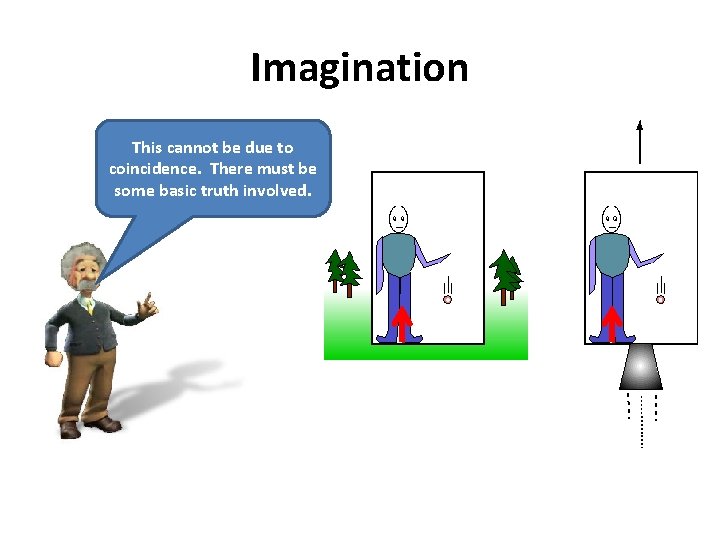
Imagination This cannot be due to coincidence. There must be some basic truth involved.
Einstein didn’t accept m. G=m. I as a coincidence These two environments must be exactly equivalent.
Einstein Equivalence Principle in his words we [. . . ] assume the complete physical equivalence of a gravitational field and a corresponding acceleration o the reference system [Einstein, 1907]
So what? What would happen if I were to shine a light beam through a window on the rocket? sra igh t lin e
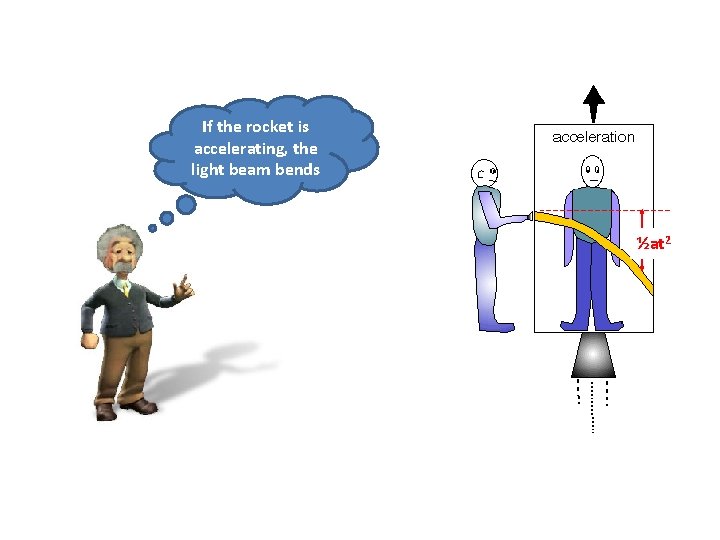
If the rocket is accelerating, the light beam bends ½at 2
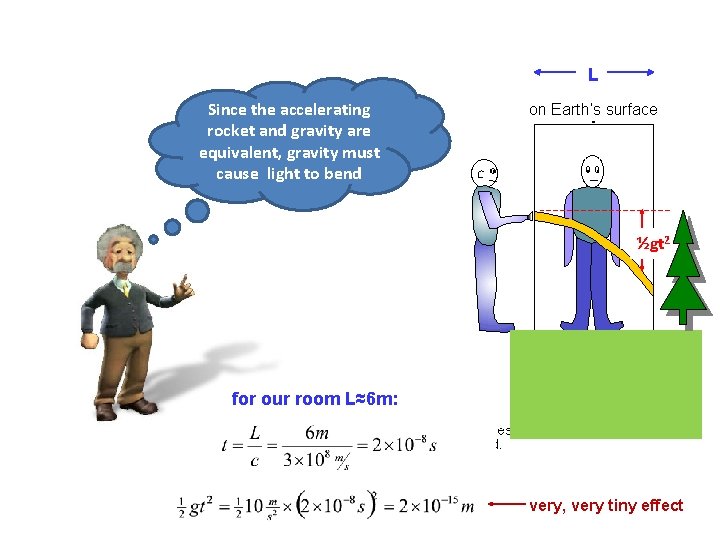
L Since the accelerating rocket and gravity are equivalent, gravity must cause light to bend on Earth’s surface ½gt 2 for our room L≈6 m: very, very tiny effect
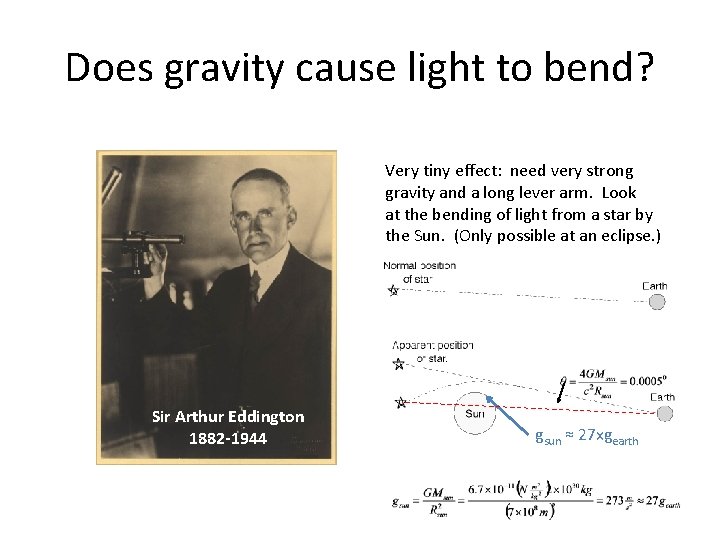
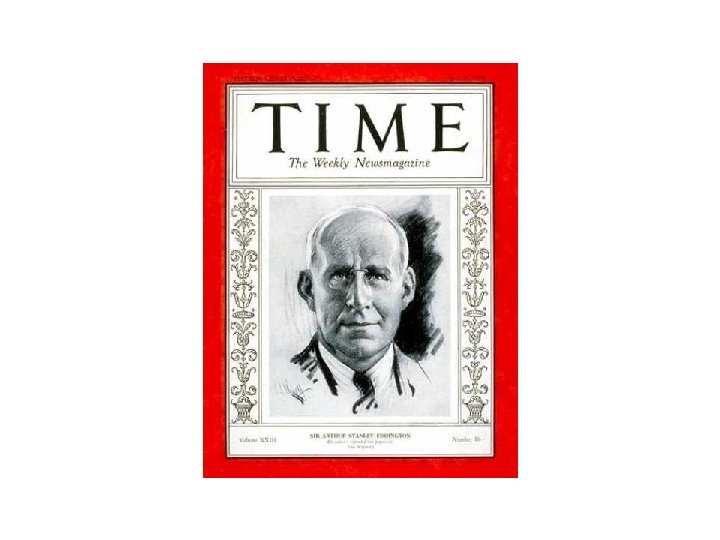
Does gravity cause light to bend? Very tiny effect: need very strong gravity and a long lever arm. Look at the bending of light from a star by the Sun. (Only possible at an eclipse. ) Sir Arthur Eddington 1882 -1944 gsun ≈ 27 xgearth
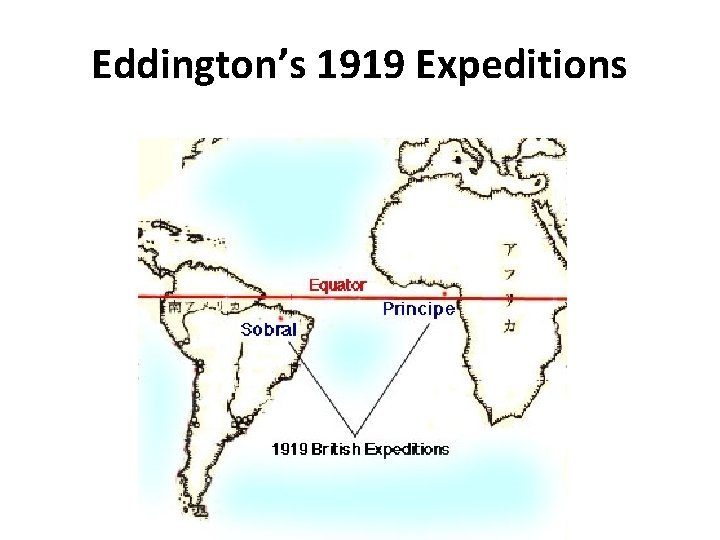
Eddington’s 1919 Expeditions
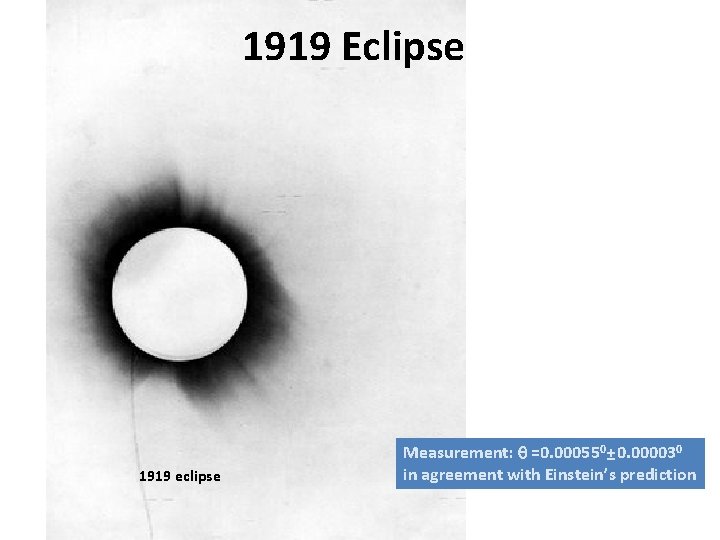
1919 Eclipse Africa 1919 eclipse Measurement: q =0. 000550± 0. 000030 in agreement with Einstein’s prediction
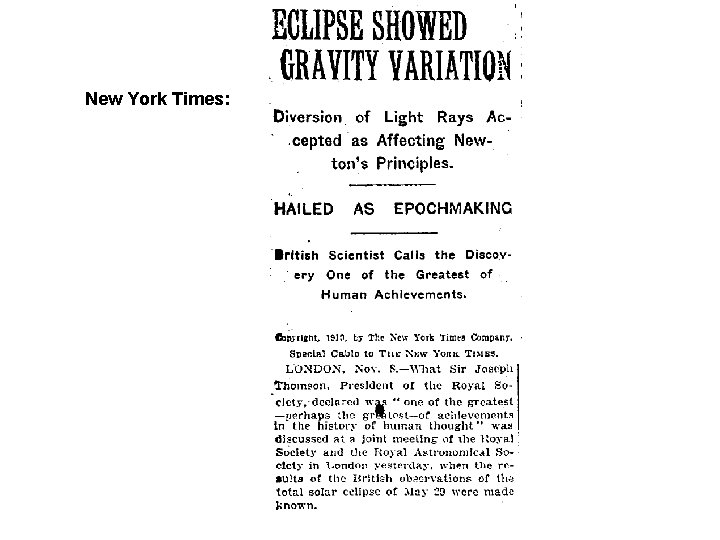
New York Times:
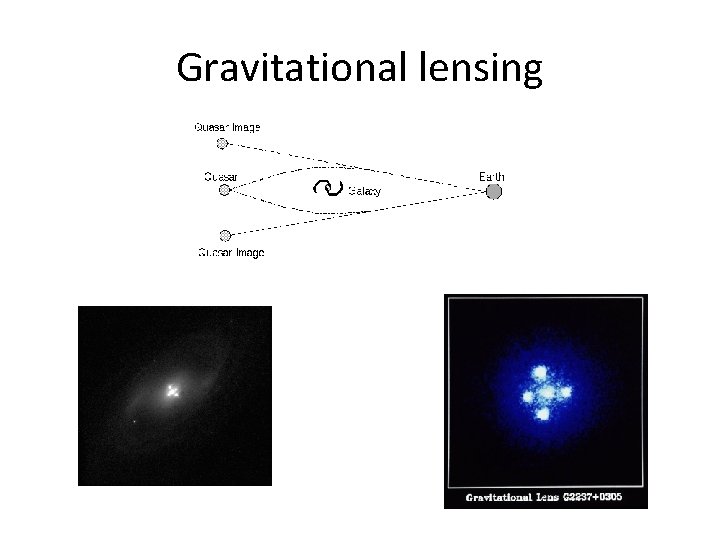
Gravitational lensing
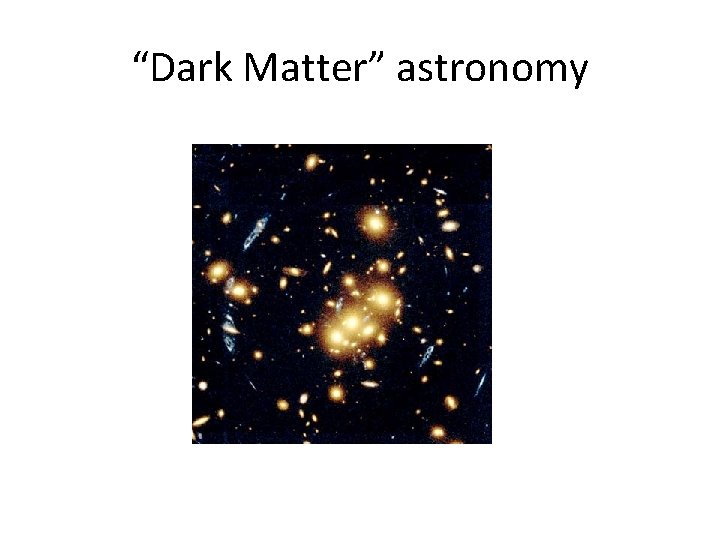
“Dark Matter” astronomy
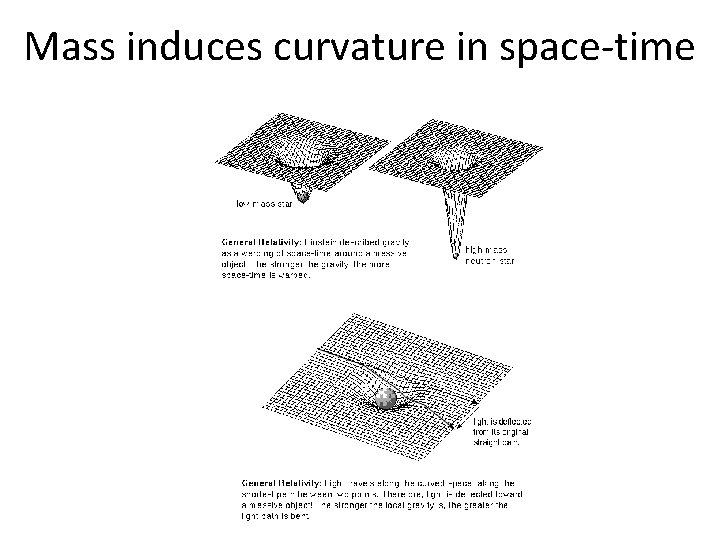
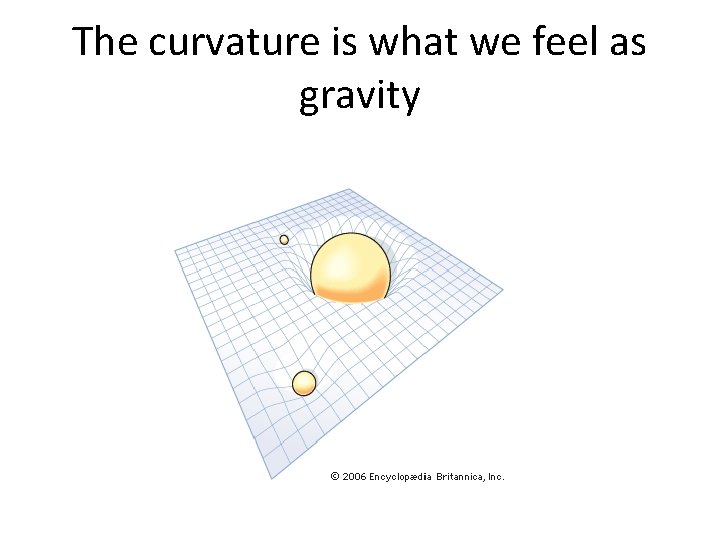
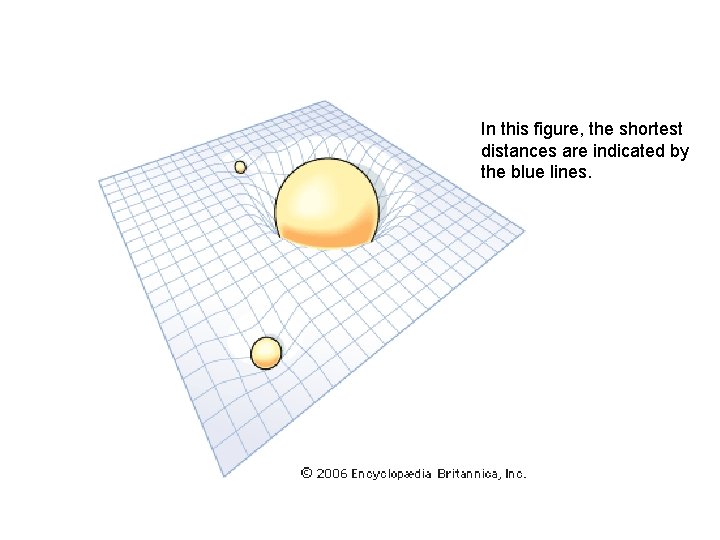
Mass induces curvature in space-time
The curvature is what we feel as gravity
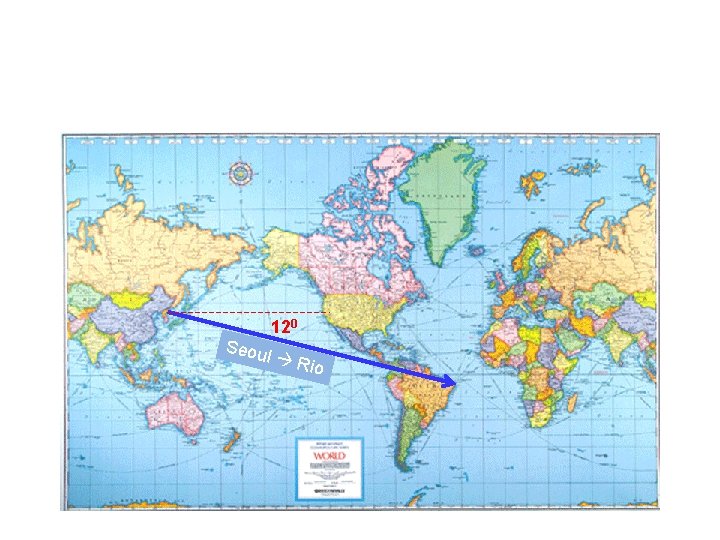
Seou l 120 Ri o
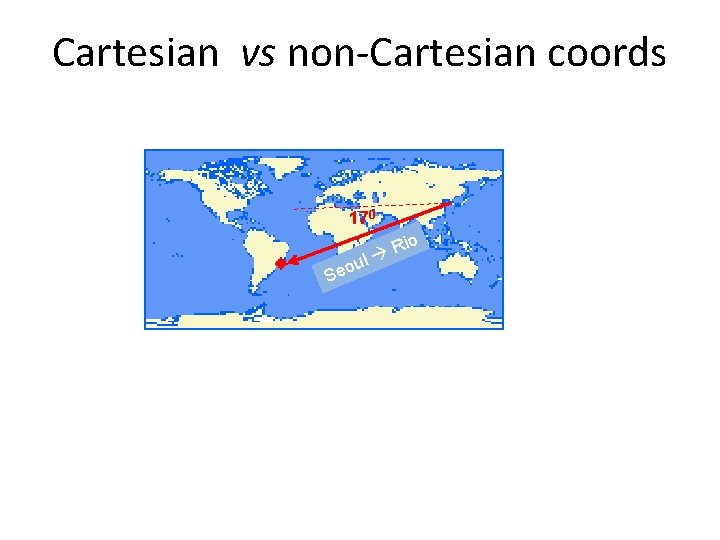
Cartesian vs non-Cartesian coords 170 ul o e S io R
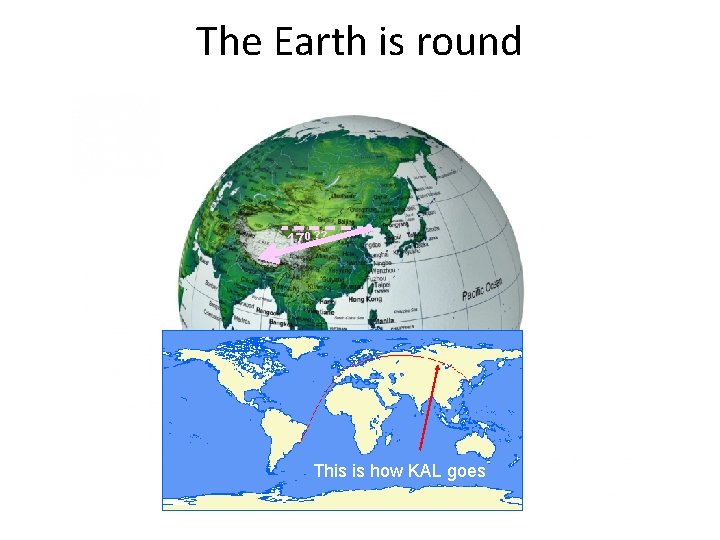
The Earth is round 170 ? ? This is how KAL goes
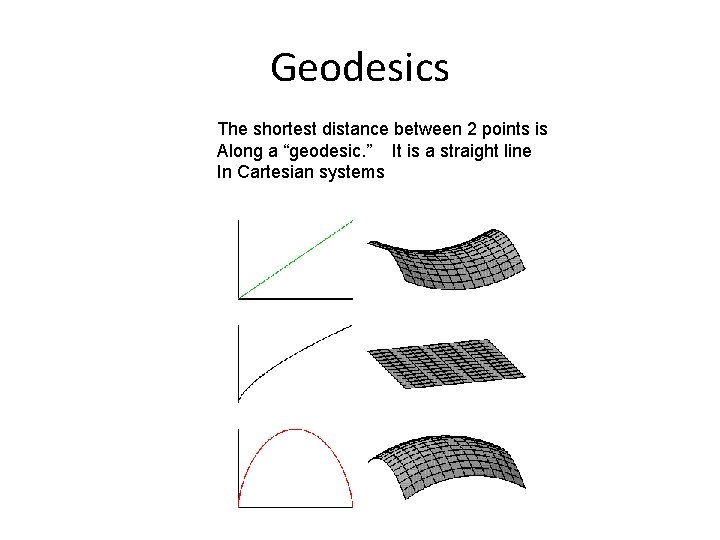
Geodesics The shortest distance between 2 points is Along a “geodesic. ” It is a straight line In Cartesian systems
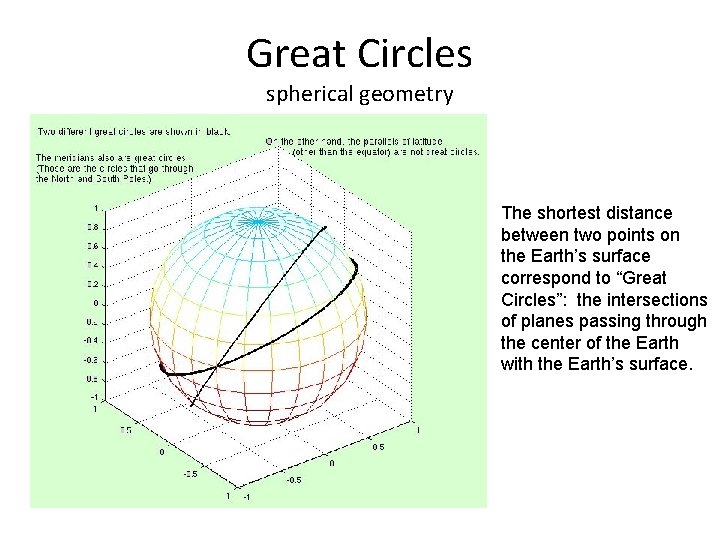
Great Circles spherical geometry The shortest distance between two points on the Earth’s surface correspond to “Great Circles”: the intersections of planes passing through the center of the Earth with the Earth’s surface.
In this figure, the shortest distances are indicated by the blue lines.