
Einstein Chasing the Light John D Norton Department


- Slides: 28
Einstein Chasing the Light John D. Norton Department of History and Philosophy of Science University of Pittsburgh 1
2
3
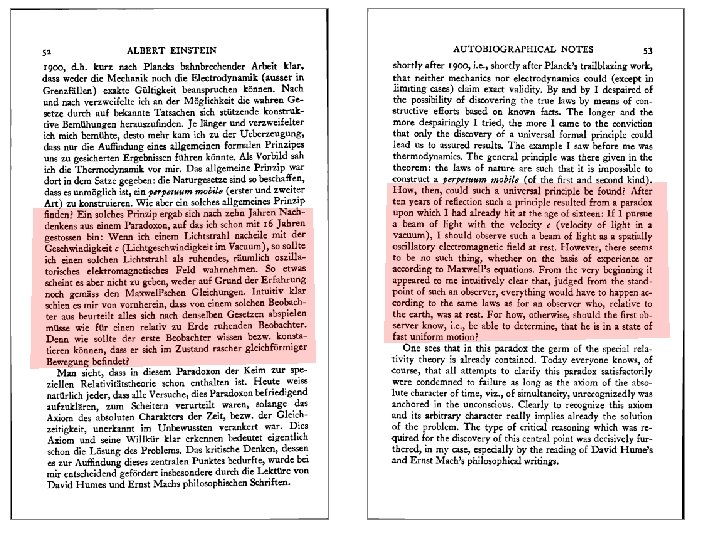
Einstein, Autobiographical Notes, 1946 “After ten years of reflection such a principle resulted from a paradox upon which I had already hit at the age of sixteen: If I pursue a beam of light with the velocity c (velocity of light in a vacuum), I should observe such a beam of light as an electromagnetic field at rest though spatially oscillating. There seems to be no such thing, however, neither on the basis of experience nor according to Maxwell’s equations. From the very beginning it appeared to me intuitively clear that, judged from the standpoint of such an observer, everything would have to happen according to the same laws as for an observer who, relative to the earth, was at rest. For how should the first observer know or be able to determine, that he is in a state of fast uniform motion? One sees in this paradox the germ of the special relativity theory is already contained. ” 4
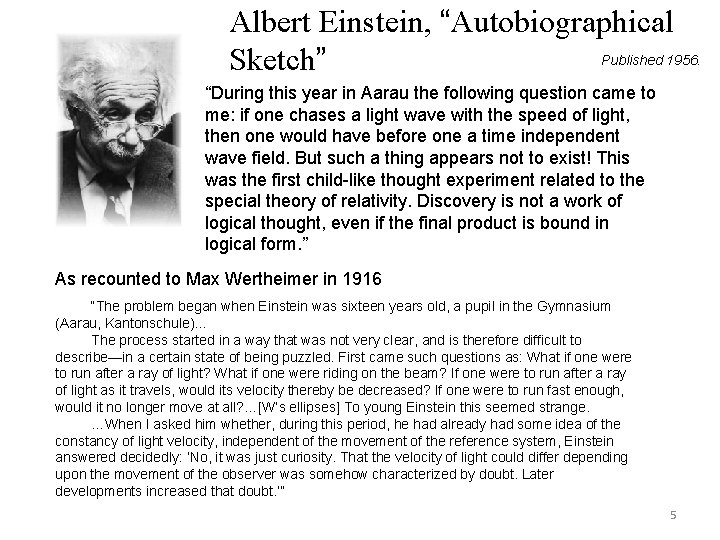
Albert Einstein, “Autobiographical Published 1956. Sketch” “During this year in Aarau the following question came to me: if one chases a light wave with the speed of light, then one would have before one a time independent wave field. But such a thing appears not to exist! This was the first child-like thought experiment related to the special theory of relativity. Discovery is not a work of logical thought, even if the final product is bound in logical form. ” As recounted to Max Wertheimer in 1916 “The problem began when Einstein was sixteen years old, a pupil in the Gymnasium (Aarau, Kantonschule)… The process started in a way that was not very clear, and is therefore difficult to describe—in a certain state of being puzzled. First came such questions as: What if one were to run after a ray of light? What if one were riding on the beam? If one were to run after a ray of light as it travels, would its velocity thereby be decreased? If one were to run fast enough, would it no longer move at all? …[W’s ellipses] To young Einstein this seemed strange. …When I asked him whether, during this period, he had already had some idea of the constancy of light velocity, independent of the movement of the reference system, Einstein answered decidedly: ‘No, it was just curiosity. That the velocity of light could differ depending upon the movement of the observer was somehow characterized by doubt. Later developments increased that doubt. ’” 5
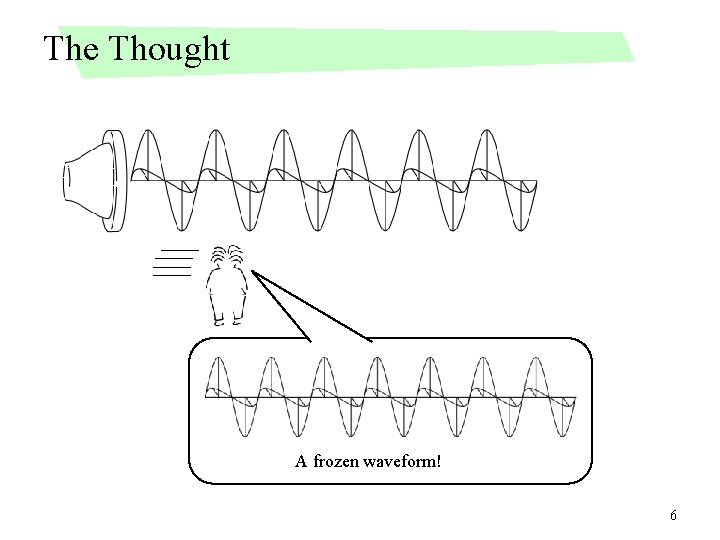
The Thought A frozen waveform! 6
All clear? 7
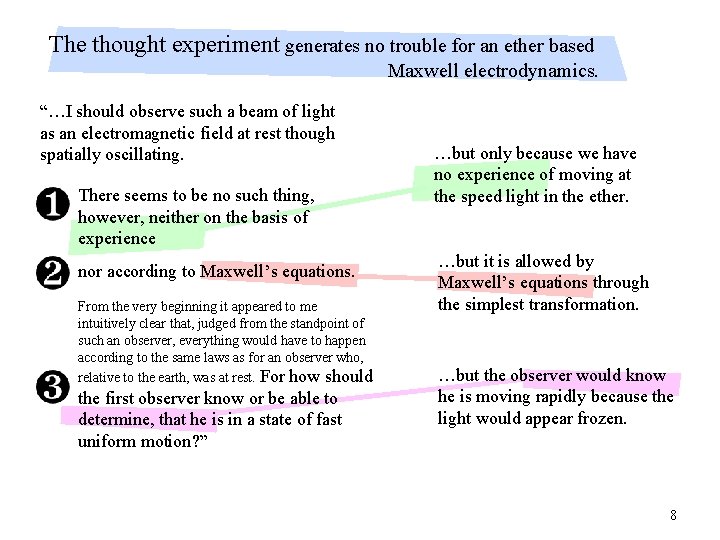
The thought experiment generates no trouble for an ether based Maxwell electrodynamics. “…I should observe such a beam of light as an electromagnetic field at rest though spatially oscillating. There seems to be no such thing, however, neither on the basis of experience nor according to Maxwell’s equations. From the very beginning it appeared to me intuitively clear that, judged from the standpoint of such an observer, everything would have to happen according to the same laws as for an observer who, relative to the earth, was at rest. For how should the first observer know or be able to determine, that he is in a state of fast uniform motion? ” …but only because we have no experience of moving at the speed light in the ether. …but it is allowed by Maxwell’s equations through the simplest transformation. …but the observer would know he is moving rapidly because the light would appear frozen. 8
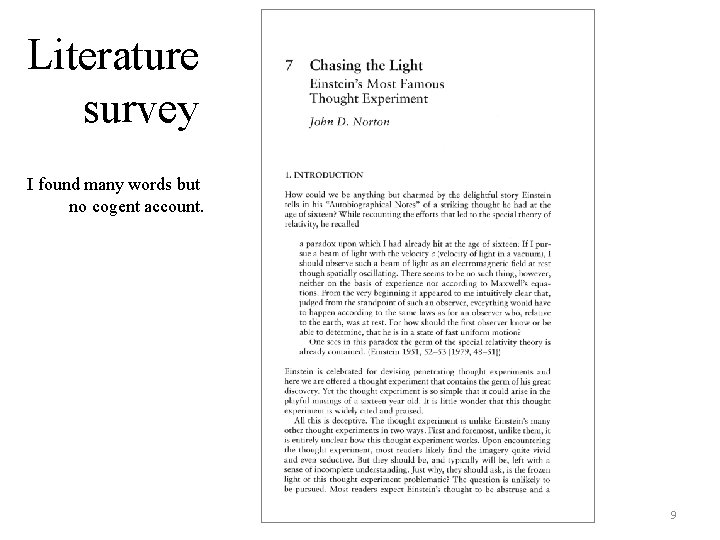
Literature survey I found many words but no cogent account. 9
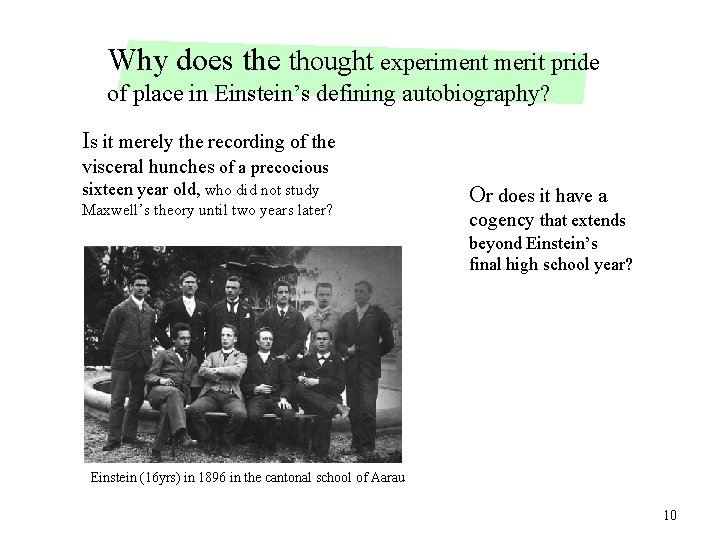
Why does the thought experiment merit pride of place in Einstein’s defining autobiography? Is it merely the recording of the visceral hunches of a precocious sixteen year old, who did not study Maxwell’s theory until two years later? Or does it have a cogency that extends beyond Einstein’s final high school year? Einstein (16 yrs) in 1896 in the cantonal school of Aarau 10
A Solution 11
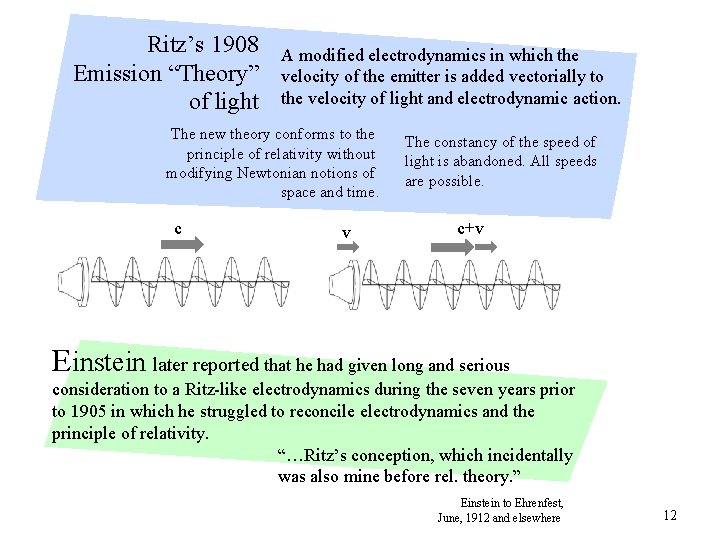
Ritz’s 1908 Emission “Theory” of light A modified electrodynamics in which the velocity of the emitter is added vectorially to the velocity of light and electrodynamic action. The new theory conforms to the principle of relativity without modifying Newtonian notions of space and time. c v The constancy of the speed of light is abandoned. All speeds are possible. c+v Einstein later reported that he had given long and serious consideration to a Ritz-like electrodynamics during the seven years prior to 1905 in which he struggled to reconcile electrodynamics and the principle of relativity. “…Ritz’s conception, which incidentally was also mine before rel. theory. ” Einstein to Ehrenfest, June, 1912 and elsewhere 12
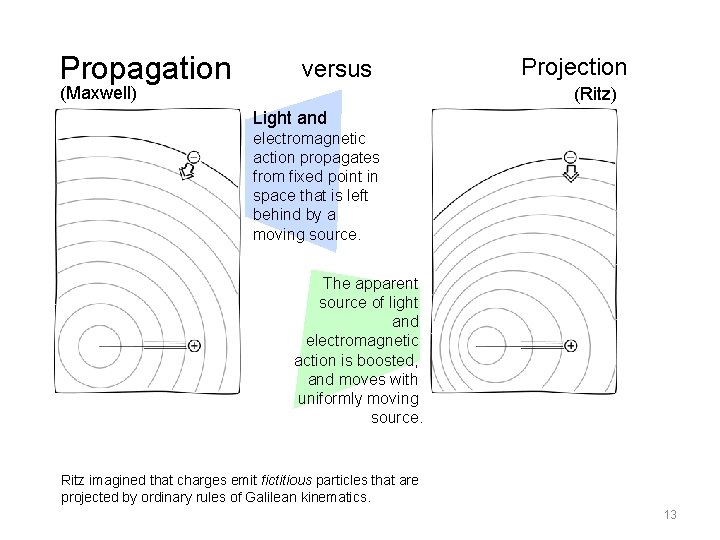
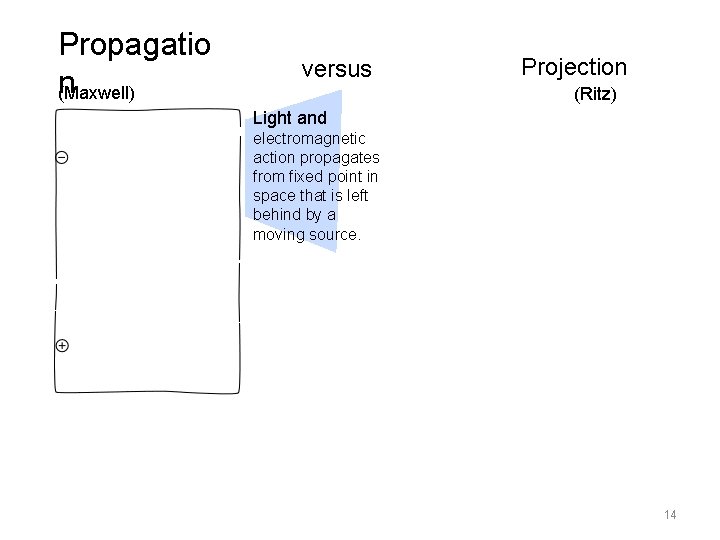
Propagation versus (Maxwell) Projection (Ritz) Light and electromagnetic action propagates from fixed point in space that is left behind by a moving source. The apparent source of light and electromagnetic action is boosted, and moves with uniformly moving source. Ritz imagined that charges emit fictitious particles that are projected by ordinary rules of Galilean kinematics. 13
Propagatio n (Maxwell) versus Projection (Ritz) Light and electromagnetic action propagates from fixed point in space that is left behind by a moving source. The apparent source of light and electromagnetic action is boosted, and moves with uniformly moving source. 14
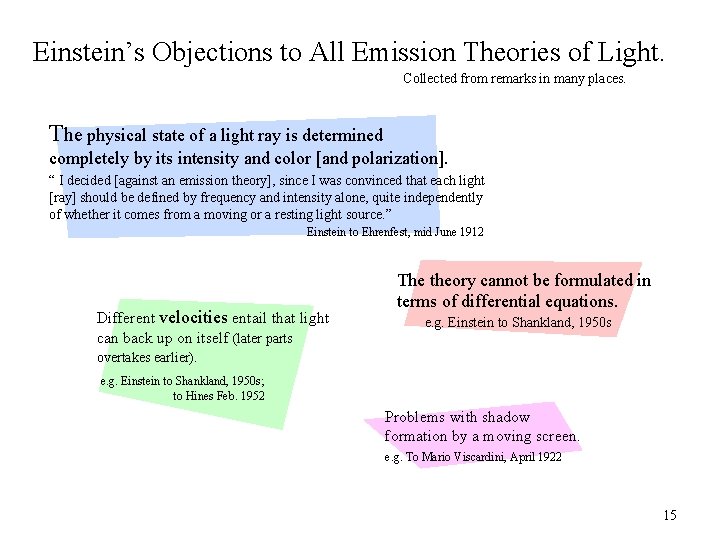
Einstein’s Objections to All Emission Theories of Light. Collected from remarks in many places. The physical state of a light ray is determined completely by its intensity and color [and polarization]. “ I decided [against an emission theory], since I was convinced that each light [ray] should be defined by frequency and intensity alone, quite independently of whether it comes from a moving or a resting light source. ” Einstein to Ehrenfest, mid June 1912 Different velocities entail that light can back up on itself (later parts overtakes earlier). The theory cannot be formulated in terms of differential equations. e. g. Einstein to Shankland, 1950 s; to Hines Feb. 1952 Problems with shadow formation by a moving screen. e. g. To Mario Viscardini, April 1922 15
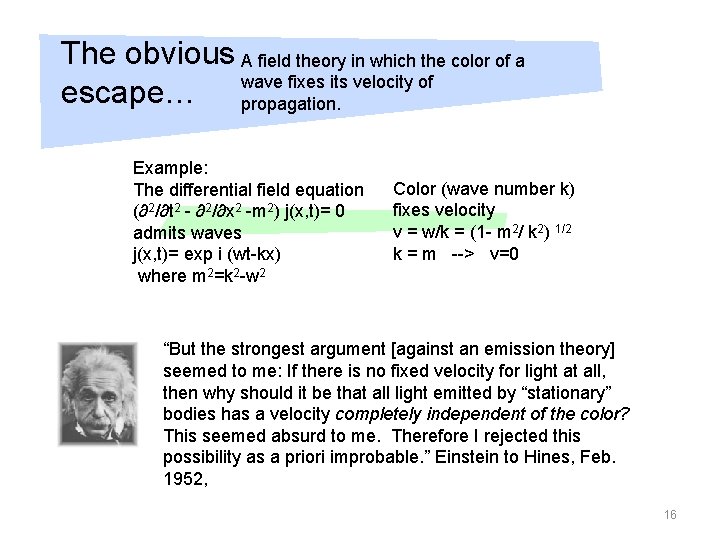
The obvious A field theory in which the color of a fixes its velocity of escape… wave propagation. Example: The differential field equation (∂2/∂t 2 - ∂2/∂x 2 -m 2) j(x, t)= 0 admits waves j(x, t)= exp i (wt-kx) where m 2=k 2 -w 2 Color (wave number k) fixes velocity v = w/k = (1 - m 2/ k 2) 1/2 k = m --> v=0 “But the strongest argument [against an emission theory] seemed to me: If there is no fixed velocity for light at all, then why should it be that all light emitted by “stationary” bodies has a velocity completely independent of the color? This seemed absurd to me. Therefore I rejected this possibility as a priori improbable. ” Einstein to Hines, Feb. 1952, 16
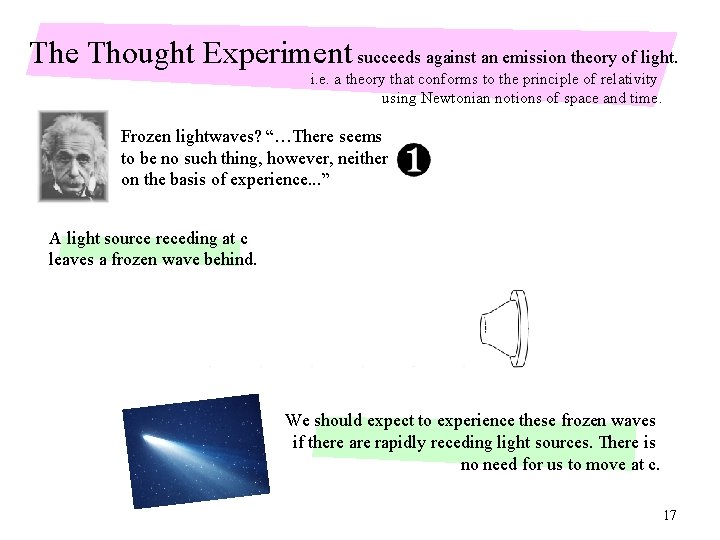
The Thought Experiment succeeds against an emission theory of light. i. e. a theory that conforms to the principle of relativity using Newtonian notions of space and time. Frozen lightwaves? “…There seems to be no such thing, however, neither on the basis of experience. . . ” A light source receding at c leaves a frozen wave behind. We should expect to experience these frozen waves if there are rapidly receding light sources. There is no need for us to move at c. 17
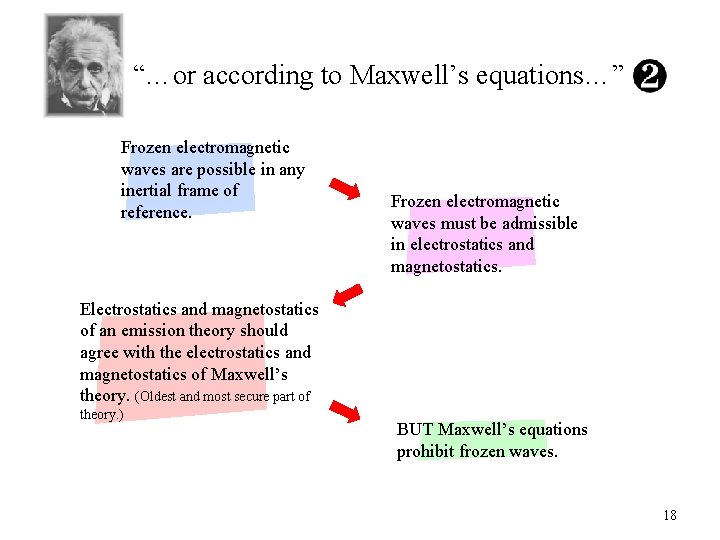
“…or according to Maxwell’s equations…” Frozen electromagnetic waves are possible in any inertial frame of reference. Frozen electromagnetic waves must be admissible in electrostatics and magnetostatics. Electrostatics and magnetostatics of an emission theory should agree with the electrostatics and magnetostatics of Maxwell’s theory. (Oldest and most secure part of theory. ) BUT Maxwell’s equations prohibit frozen waves. 18
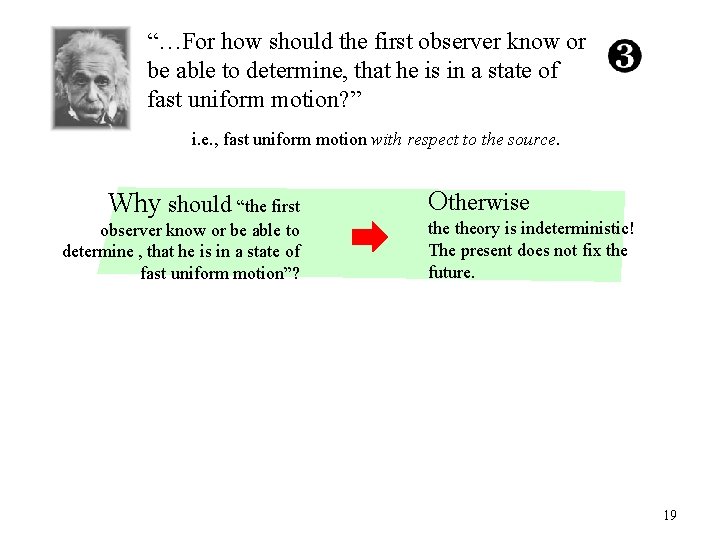
“…For how should the first observer know or be able to determine, that he is in a state of fast uniform motion? ” i. e. , fast uniform motion with respect to the source. Why should “the first observer know or be able to determine , that he is in a state of fast uniform motion”? Otherwise theory is indeterministic! The present does not fix the future. 19
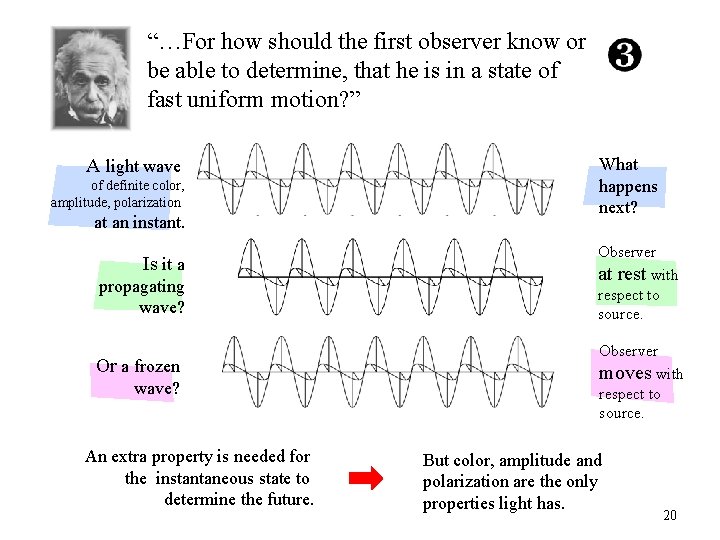
“…For how should the first observer know or be able to determine, that he is in a state of fast uniform motion? ” A light wave of definite color, amplitude, polarization at an instant. Is it a propagating wave? Or a frozen wave? An extra property is needed for the instantaneous state to determine the future. What happens next? Observer at rest with respect to source. Observer moves with respect to source. But color, amplitude and polarization are the only properties light has. 20
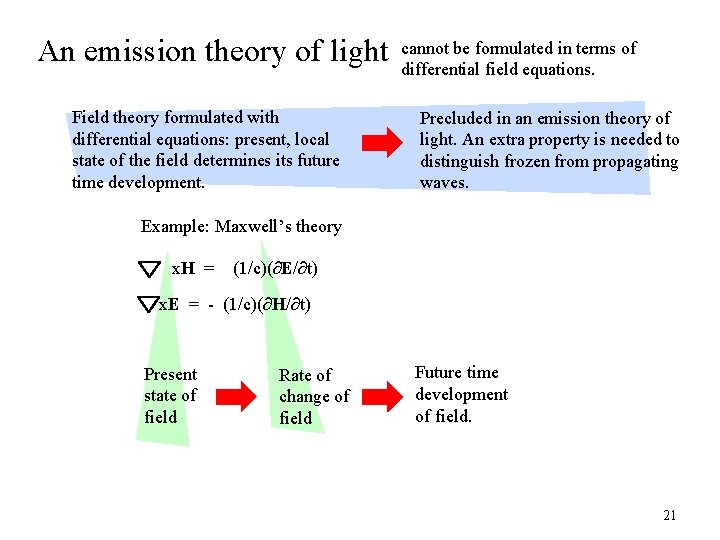
An emission theory of light Field theory formulated with differential equations: present, local state of the field determines its future time development. cannot be formulated in terms of differential field equations. Precluded in an emission theory of light. An extra property is needed to distinguish frozen from propagating waves. Example: Maxwell’s theory x. H = (1/c)(∂E/∂t) x. E = - (1/c)(∂H/∂t) Present state of field Rate of change of field Future time development of field. 21
An Historical Puzzle 22
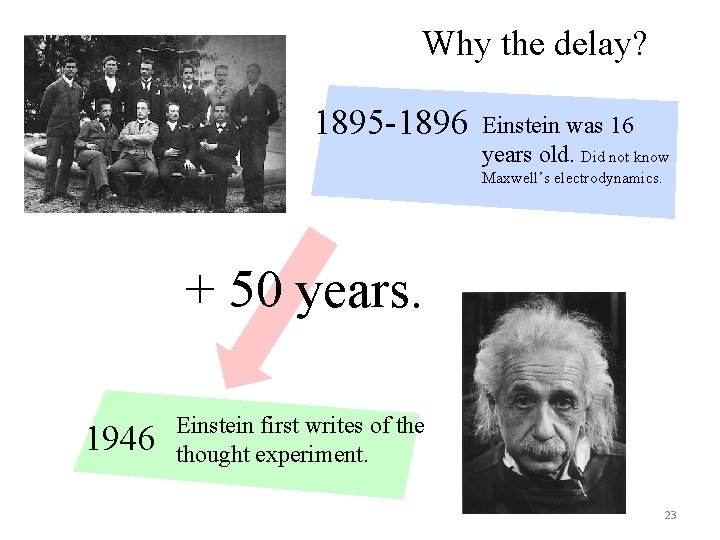
Why the delay? 1895 -1896 Einstein was 16 years old. Did not know Maxwell’s electrodynamics. + 50 years. 1946 Einstein first writes of the thought experiment. 23
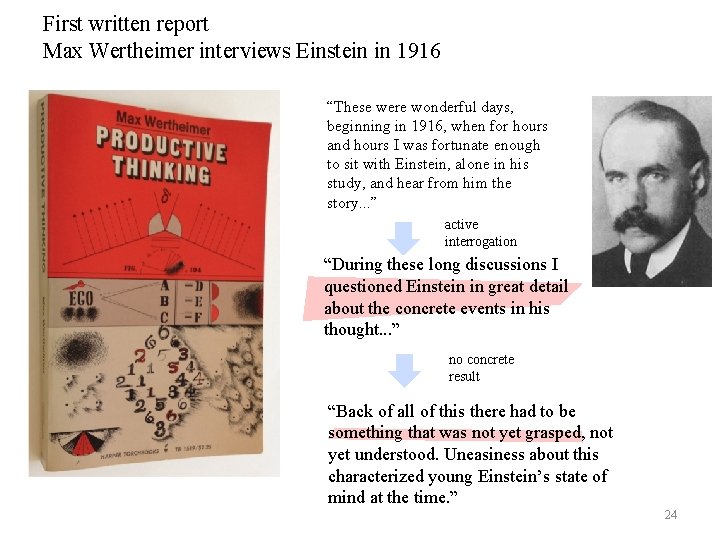
First written report Max Wertheimer interviews Einstein in 1916 “These were wonderful days, beginning in 1916, when for hours and hours I was fortunate enough to sit with Einstein, alone in his study, and hear from him the story. . . ” active interrogation “During these long discussions I questioned Einstein in great detail about the concrete events in his thought. . . ” no concrete result “Back of all of this there had to be something that was not yet grasped, not yet understood. Uneasiness about this characterized young Einstein’s state of mind at the time. ” 24
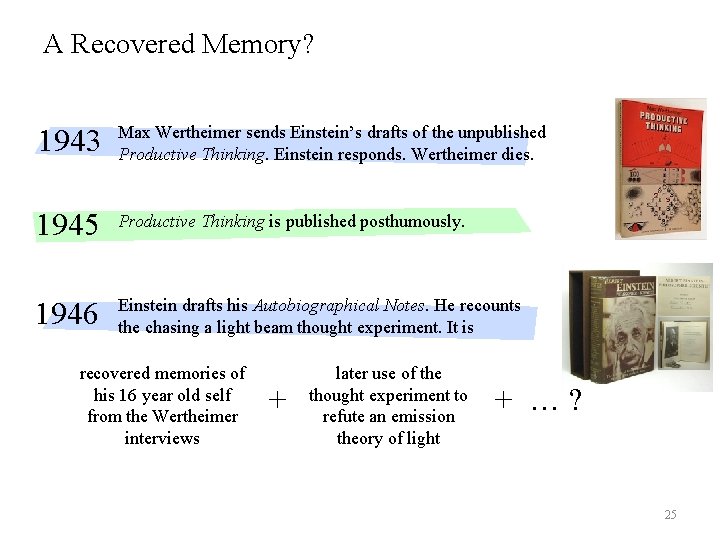
A Recovered Memory? 1943 Max Wertheimer sends Einstein’s drafts of the unpublished Productive Thinking. Einstein responds. Wertheimer dies. 1945 Productive Thinking is published posthumously. 1946 Einstein drafts his Autobiographical Notes. He recounts the chasing a light beam thought experiment. It is recovered memories of his 16 year old self from the Wertheimer interviews + later use of the thought experiment to refute an emission theory of light + …? 25
Einstein concludes… 26
Einstein concludes… “One sees that in this paradox the germ of the special relativity theory is already contained. Today everyone knows, of course, that all attempts to clarify this paradox satisfactorily were condemned to failure as long as the axiom of the absolute character of time, or of simultaneity, was rooted unrecognized in the unconscious. To recognize clearly this axiom and its arbitrary character already implies the essentials of the solution of the problem. ” 27
THE END 28