
Ehrlichiosis Rickettsial disease Presented By Emily and Jamie
Ehrlichiosis (Rickettsial disease) Presented By : Emily and Jamie
“Tommy” This video is VERY short. It is basically just to show you that this disease is VERY real, and can happen to any dog. http: //youtu. be/v. Ye. Hf 7 WS_r. Y
What is Ehrlichiosis? Ehrlichiosis, also known as “Tropical Canine Pancytopenia” or “Canine Rickettsiosis”, is a tick-borne disease caused by small obligate intracellular bacteria. There are several strands (E Canis, E Equi, E Platys, E Ewingii), but we will focus on Ehrlichia Canis because it is the most common, and has the most severe clinical disease. http: //youtu. be/Fq 0 D 8 k 7 Ch. Ro
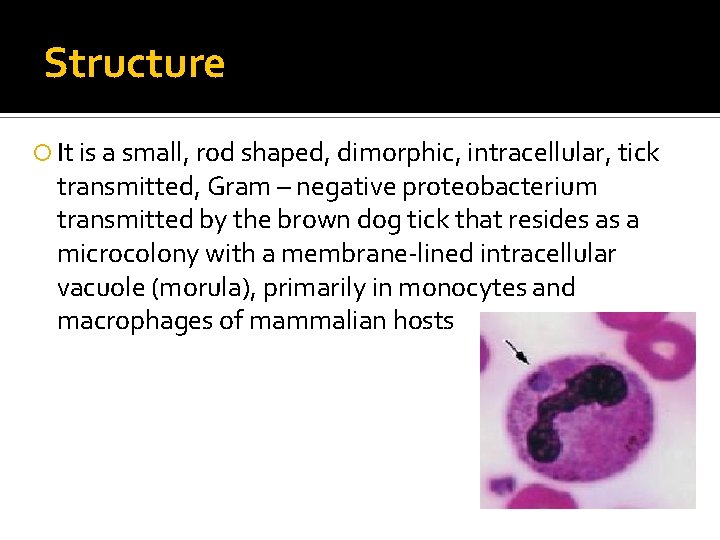
Structure It is a small, rod shaped, dimorphic, intracellular, tick transmitted, Gram – negative proteobacterium transmitted by the brown dog tick that resides as a microcolony with a membrane-lined intracellular vacuole (morula), primarily in monocytes and macrophages of mammalian hosts
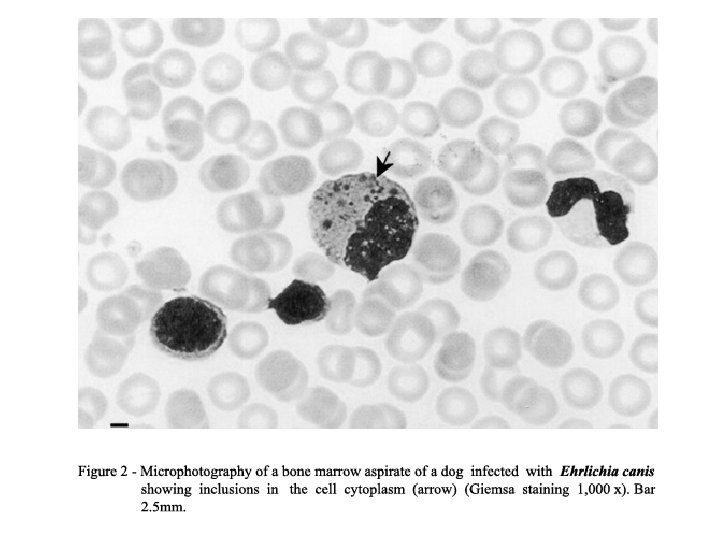

History Discovered in Algeria in 1935 First US Case was Reported in 1962 Outbreaks in British military dogs in Singapore in 1963 Ehrlichia Canis and the Vietnam War 200 deaths in a 4 year period
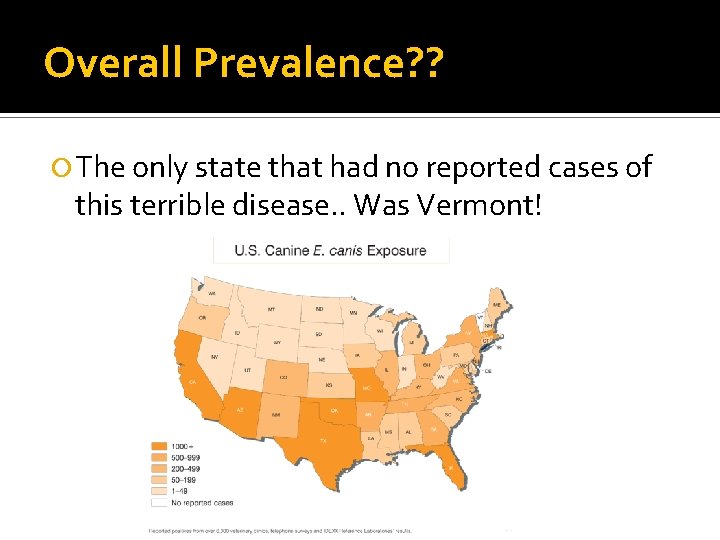
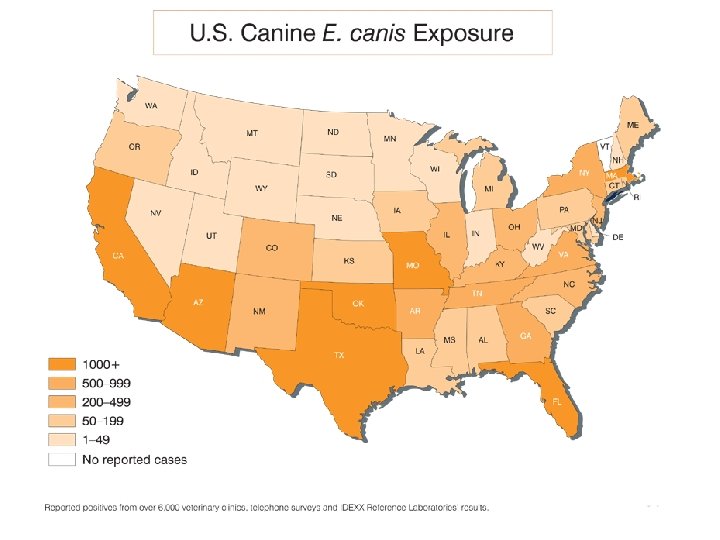
Overall Prevalence? ? The only state that had no reported cases of this terrible disease. . Was Vermont!
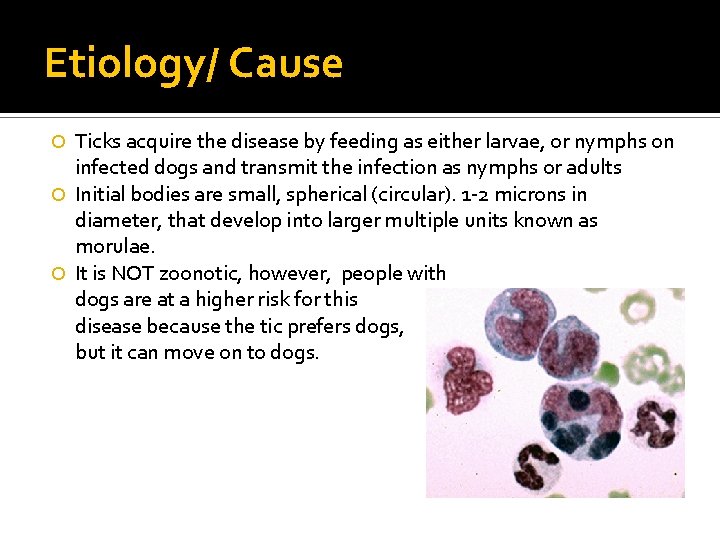
Etiology/ Cause Ticks acquire the disease by feeding as either larvae, or nymphs on infected dogs and transmit the infection as nymphs or adults Initial bodies are small, spherical (circular). 1 -2 microns in diameter, that develop into larger multiple units known as morulae. It is NOT zoonotic, however, people with dogs are at a higher risk for this disease because the tic prefers dogs, but it can move on to dogs.
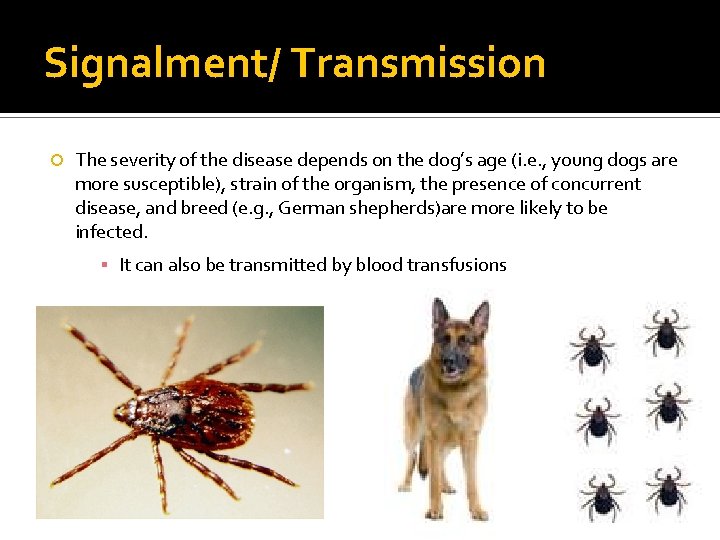
Signalment/ Transmission The severity of the disease depends on the dog’s age (i. e. , young dogs are more susceptible), strain of the organism, the presence of concurrent disease, and breed (e. g. , German shepherds)are more likely to be infected. ▪ It can also be transmitted by blood transfusions
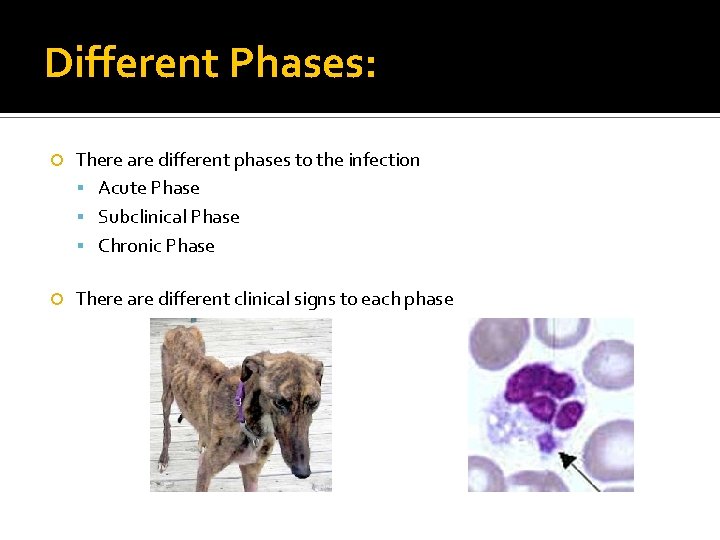
Different Phases: There are different phases to the infection Acute Phase Subclinical Phase Chronic Phase There are different clinical signs to each phase
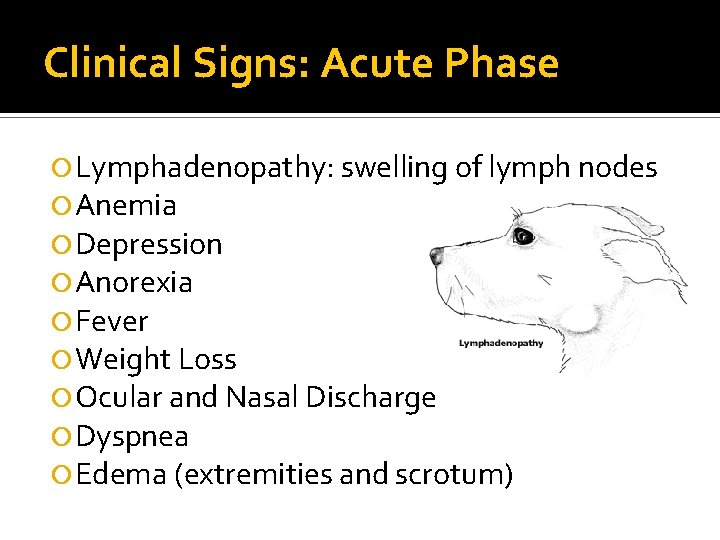
Clinical Signs: Acute Phase Lymphadenopathy: swelling of lymph nodes Anemia Depression Anorexia Fever Weight Loss Ocular and Nasal Discharge Dyspnea Edema (extremities and scrotum)
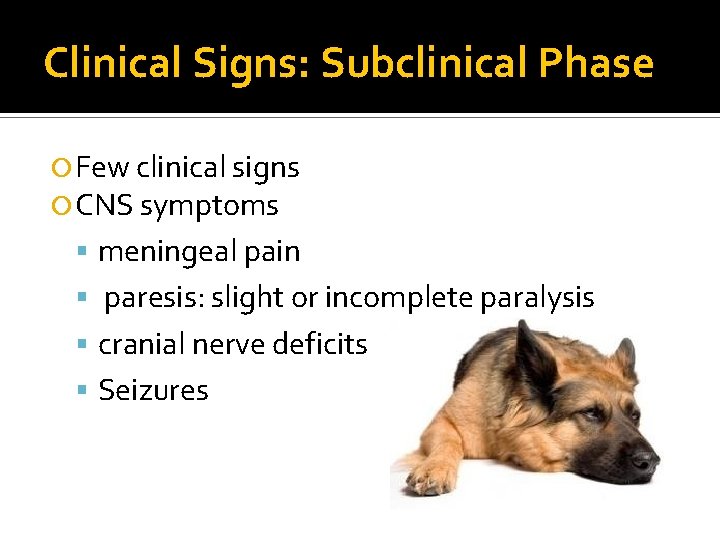
Clinical Signs: Subclinical Phase Few clinical signs CNS symptoms meningeal pain paresis: slight or incomplete paralysis cranial nerve deficits Seizures
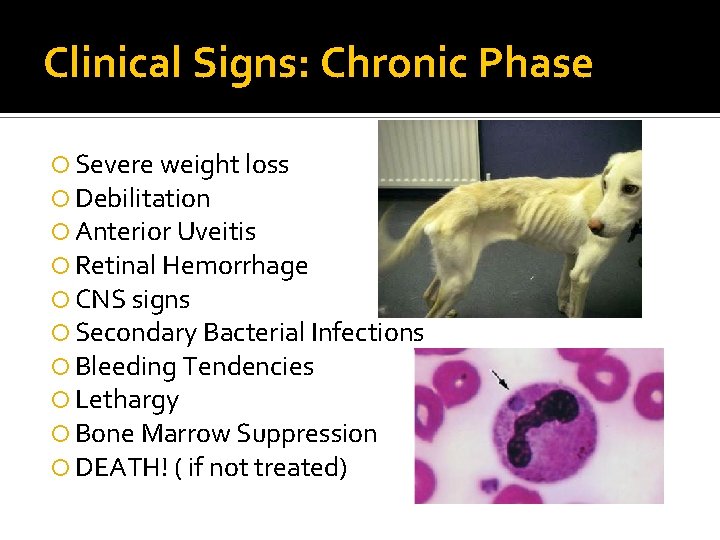
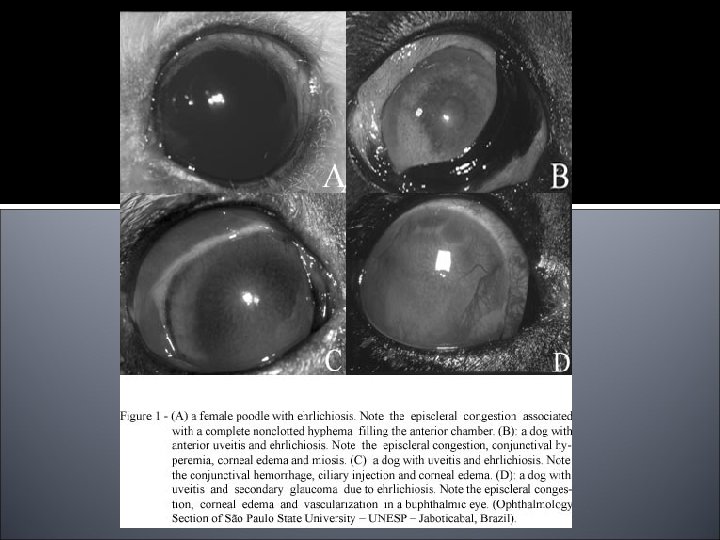
Clinical Signs: Chronic Phase Severe weight loss Debilitation Anterior Uveitis Retinal Hemorrhage CNS signs Secondary Bacterial Infections Bleeding Tendencies Lethargy Bone Marrow Suppression DEATH! ( if not treated)
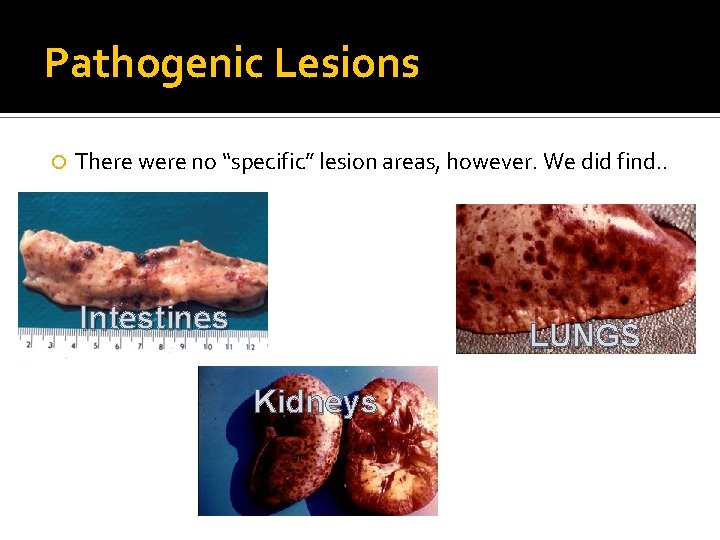
Pathogenic Lesions There were no “specific” lesion areas, however. We did find. . Intestines LUNGS Kidneys
Diagnosis Positive Indirect Immunofluorescent Antibody Test CBC Pancytopenia Nonregenerative Anemia Thrombocytopenia Serum Chemistry: Hyperglobulinemia
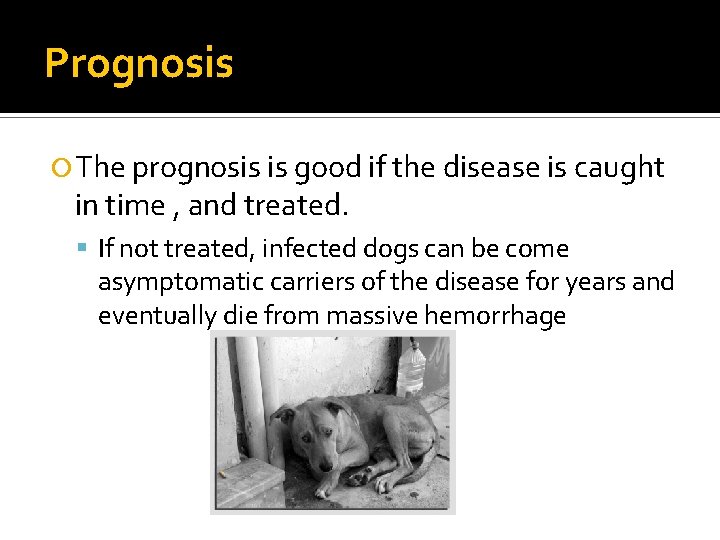
Prognosis The prognosis is good if the disease is caught in time , and treated. If not treated, infected dogs can be come asymptomatic carriers of the disease for years and eventually die from massive hemorrhage
Treatment FIRST: PROPERLY REMOVE TICK ! Tetracycline : Three times a day for 14 Days Doxycycline : Every 14 days Supportive care will be required for some animals : Intravenous Fluid Therapy Blood Transfusions Anabolic Steroids For Recurrent Infections : Tetracycline daily for long term
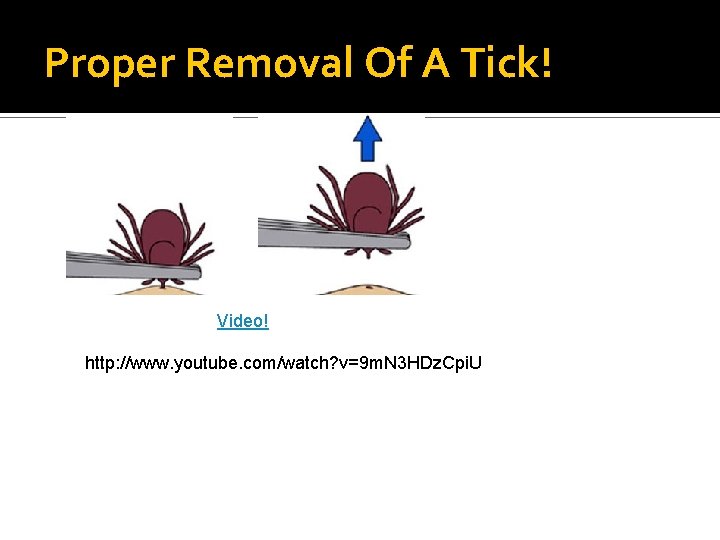
Proper Removal Of A Tick! Video! http: //www. youtube. com/watch? v=9 m. N 3 HDz. Cpi. U
Humans Can Get it Too! To prevent yourself from getting this disease, or any tick-bourne disease: Wear light colored, protective clothing Tape pant legs Wear bandannas or something to cover head when outdoors Check yourself when you come inside
References • • • Common Diseases of Companion Animals Book http: //www. addl. purdue. edu/newsletters/2000/winter/ce. shtml http: //www. cdc. gov/ehrlichiosis/symptoms/ http: //www. vet. uga. edu/vpp/clerk/Bockino/ http: //www. idph. state. il. us/public/hb/hbehrlic. htm http: //www. Vetmed. wisc. edu/pbs/zoonoses/Ehrlichia/ehrcanisdogs. html http: //microbewiki. kenyon. edu/index. php/Ehrlichia_canis http: //genome. jgi-psf. org/echra. home. html Google! (for images) And of course. . Youtube. com
- Slides: 22