
EHR Coding with Multiscale Feature Attention and Structured





- Slides: 26
EHR Coding with Multi-scale Feature Attention and Structured Knowledge Graph Propagation Source: CIKM” 19 Speaker: Tzu-Yun, Chien Advisor: Jia-Ling, Koh Date: 2020/03/30
2 Outline 01 INTRODUCTION 02 METHOD 03 EXPERIMENT 04 CONCLUSION
INTRODUCTION
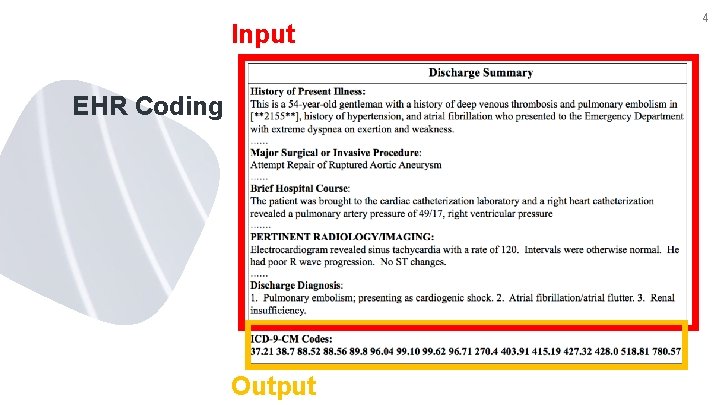
Input EHR Coding Output 4
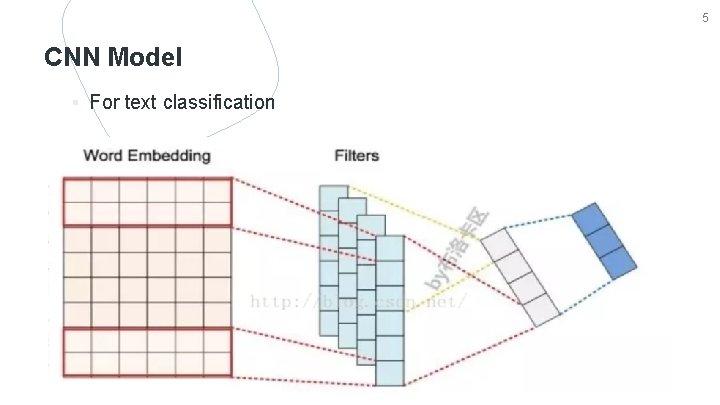
5 CNN Model ▪ For text classification
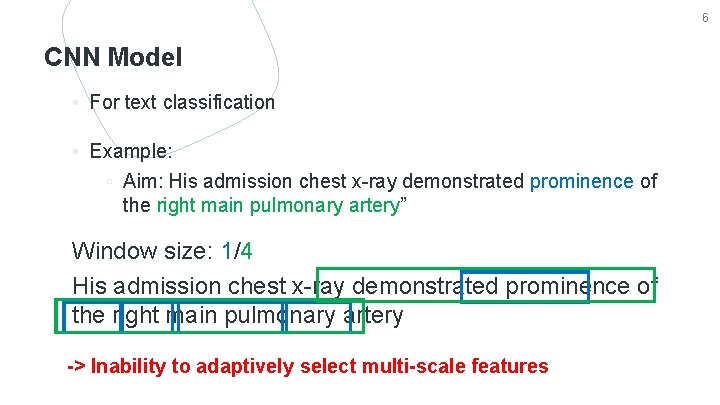
6 CNN Model ▪ For text classification ▪ Example: ▫ Aim: His admission chest x-ray demonstrated prominence of the right main pulmonary artery” Window size: 1/4 His admission chest x-ray demonstrated prominence of the right main pulmonary artery -> Inability to adaptively select multi-scale features
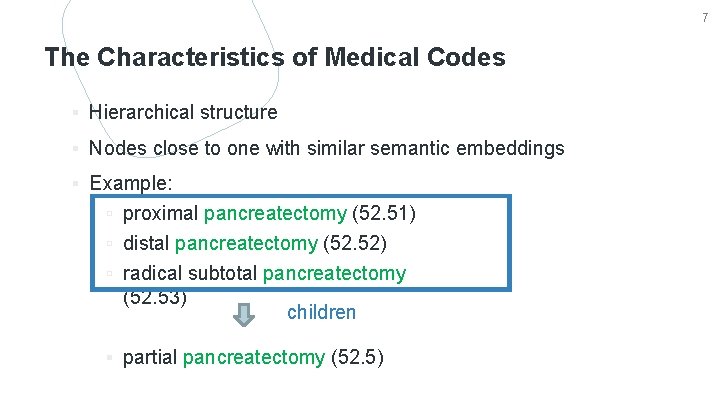
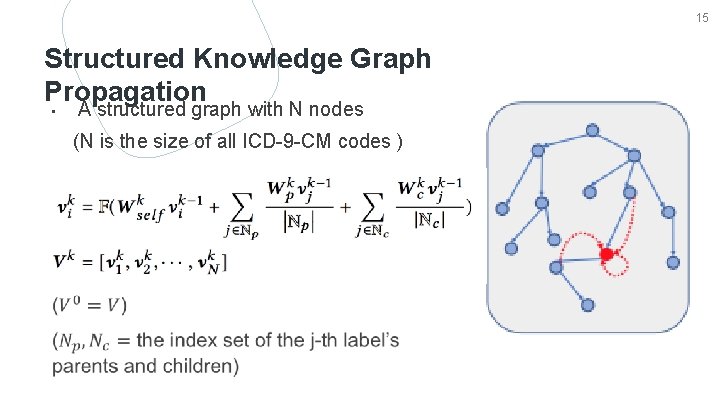
7 The Characteristics of Medical Codes ▪ Hierarchical structure ▪ Nodes close to one with similar semantic embeddings ▪ Example: ▫ proximal pancreatectomy (52. 51) ▫ distal pancreatectomy (52. 52) ▫ radical subtotal pancreatectomy (52. 53) children ▪ partial pancreatectomy (52. 5)
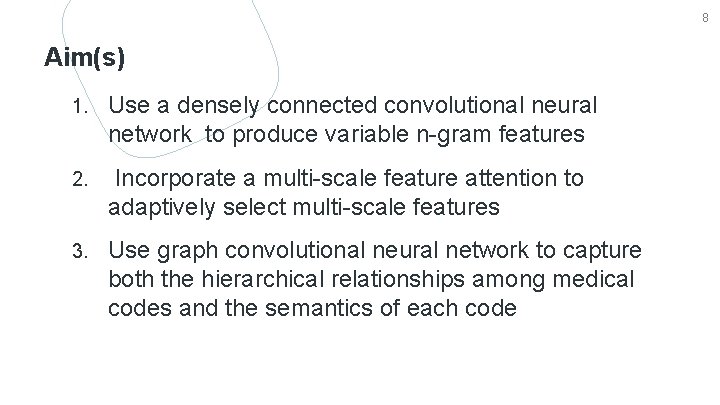
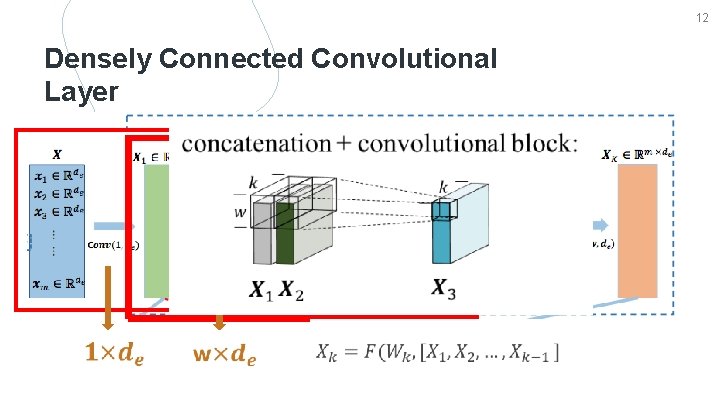
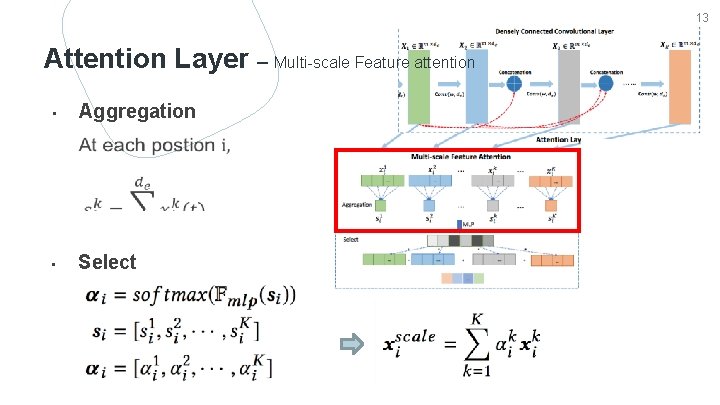
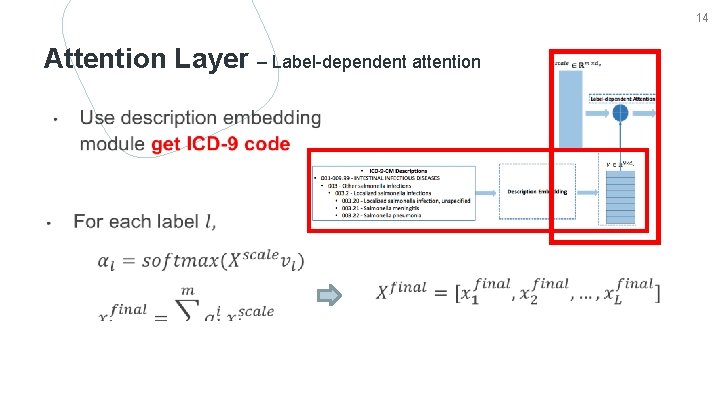
8 Aim(s) 1. Use a densely connected convolutional neural network to produce variable n-gram features 2. Incorporate a multi-scale feature attention to adaptively select multi-scale features 3. Use graph convolutional neural network to capture both the hierarchical relationships among medical codes and the semantics of each code
METHOD
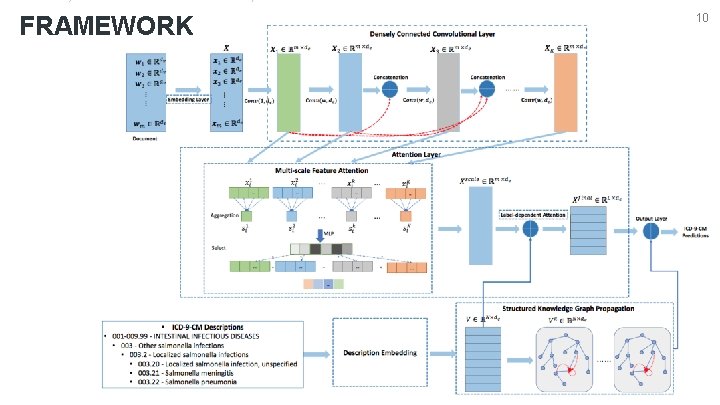
FRAMEWORK 10
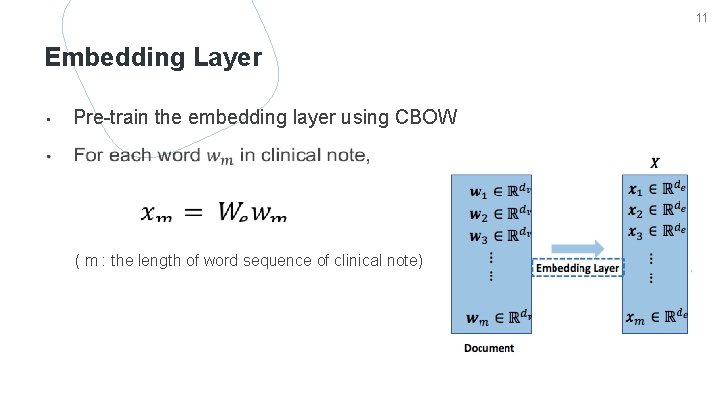
11 Embedding Layer • Pre-train the embedding layer using CBOW ( m : the length of word sequence of clinical note)
12 Densely Connected Convolutional Layer
13 Attention Layer – Multi-scale Feature attention Aggregation • Select
14 Attention Layer – Label-dependent attention
15 Structured Knowledge Graph Propagation • A structured graph with N nodes (N is the size of all ICD-9 -CM codes )
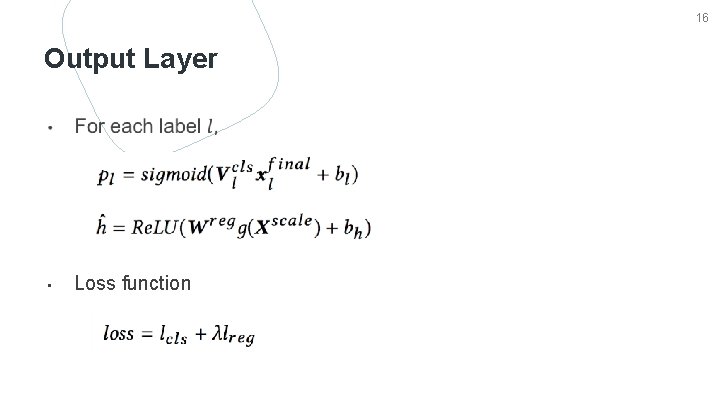
16 Output Layer • Loss function
EXPERIMENT
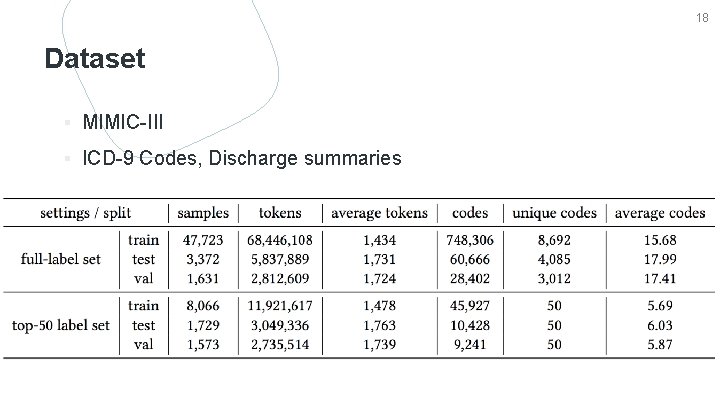
18 Dataset ▪ MIMIC-III ▪ ICD-9 Codes, Discharge summaries
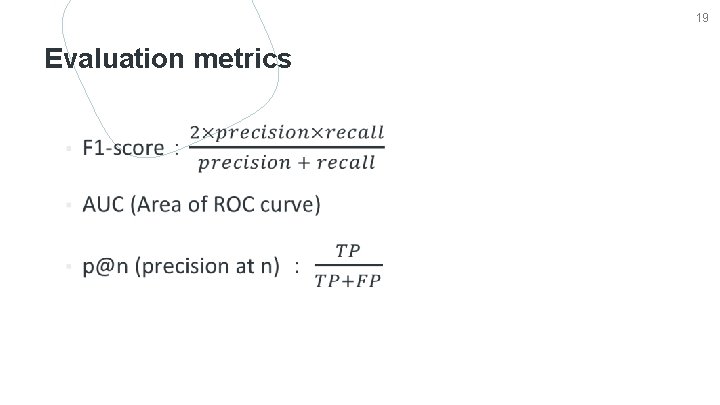
19 Evaluation metrics
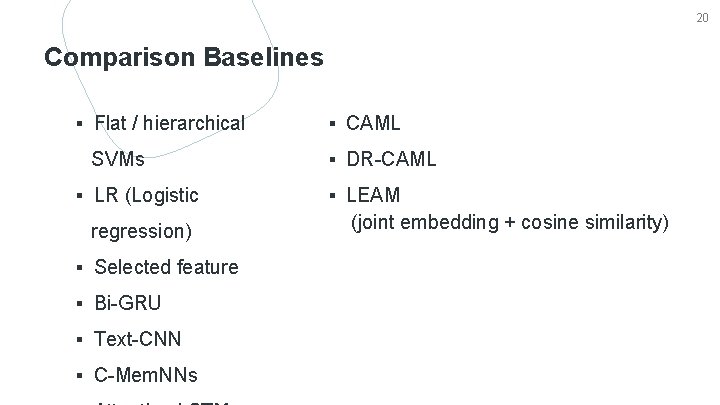
20 Comparison Baselines ▪ Flat / hierarchical SVMs ▪ LR (Logistic regression) ▪ Selected feature ▪ Bi-GRU ▪ Text-CNN ▪ C-Mem. NNs ▪ CAML ▪ DR-CAML ▪ LEAM (joint embedding + cosine similarity)
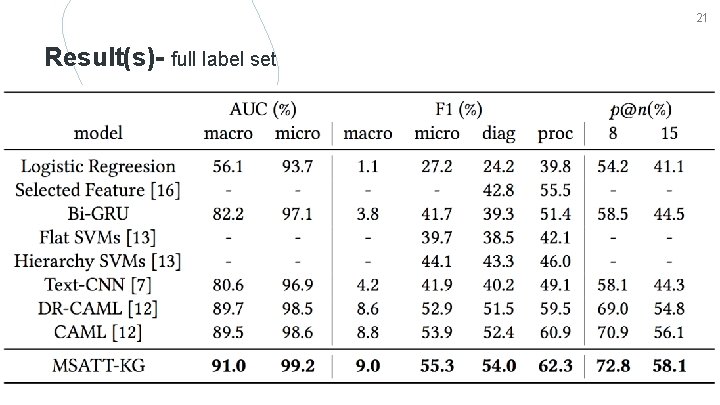
21 Result(s)- full label set
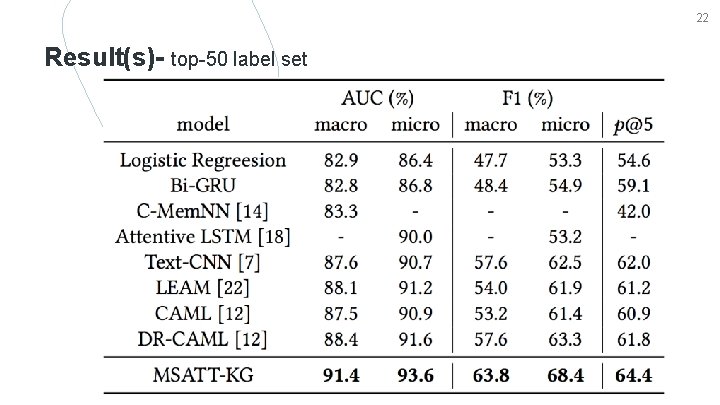
22 Result(s)- top-50 label set
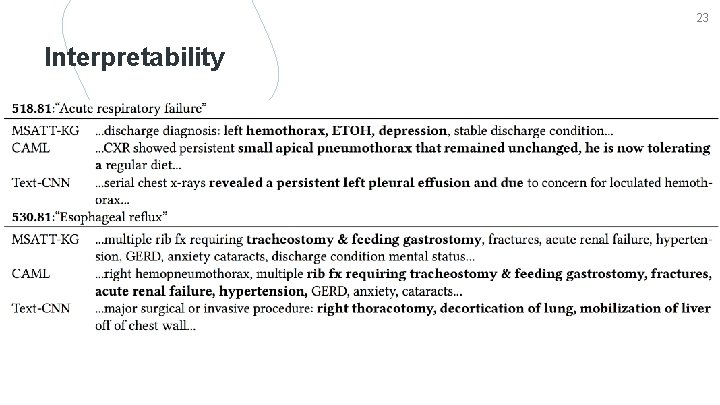
23 Interpretability
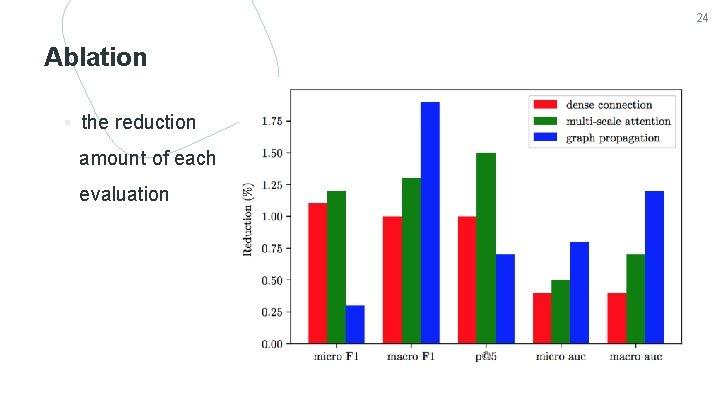
24 Ablation ▪ the reduction amount of each evaluation
CONCLUSION
26 Conclusion ▪ We utilize a densely connected convolutional neural network for clinical note encoding which can produce variable n-gram features layer by layer. ▪ We incorporate multi-scale feature attention to adaptively select most informative n-gram features. ▪ We leverage graph convolutional neural network to capture the hierarchical relationships among medical codes and the semantics of each code ▪ Following prior works we quantitatively evaluate our approach on real EHR datasets, demonstrating the effectiveness of our proposed method.