
Egyptian Symbols Tyet Known as the sign or
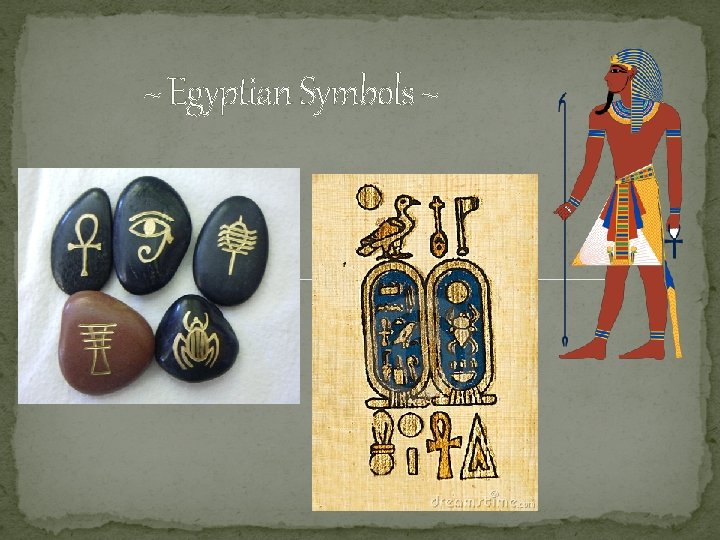
~ Egyptian Symbols ~

Tyet • Known as the sign or Knot of Isis • Symbol of fertility, welfare, and protection
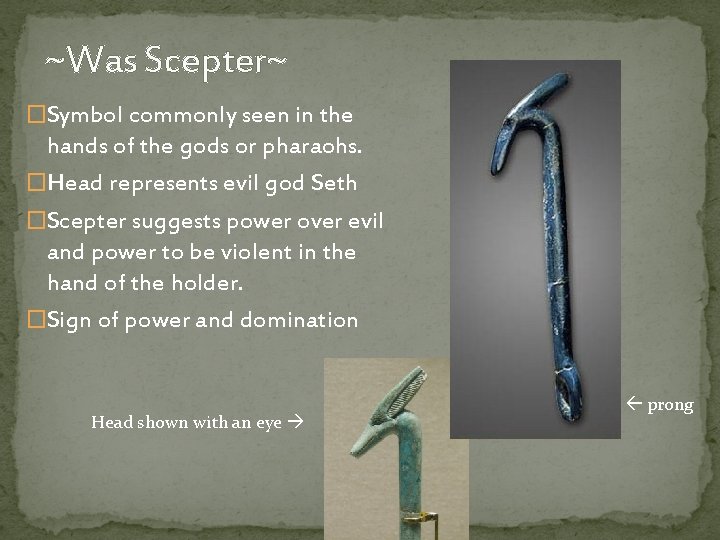
~Was Scepter~ �Symbol commonly seen in the hands of the gods or pharaohs. �Head represents evil god Seth �Scepter suggests power over evil and power to be violent in the hand of the holder. �Sign of power and domination Head shown with an eye prong
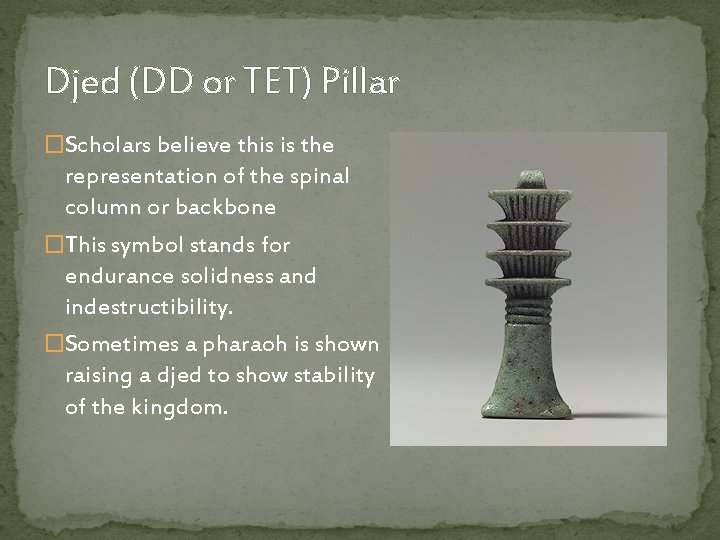
Djed (DD or TET) Pillar �Scholars believe this is the representation of the spinal column or backbone �This symbol stands for endurance solidness and indestructibility. �Sometimes a pharaoh is shown raising a djed to show stability of the kingdom.
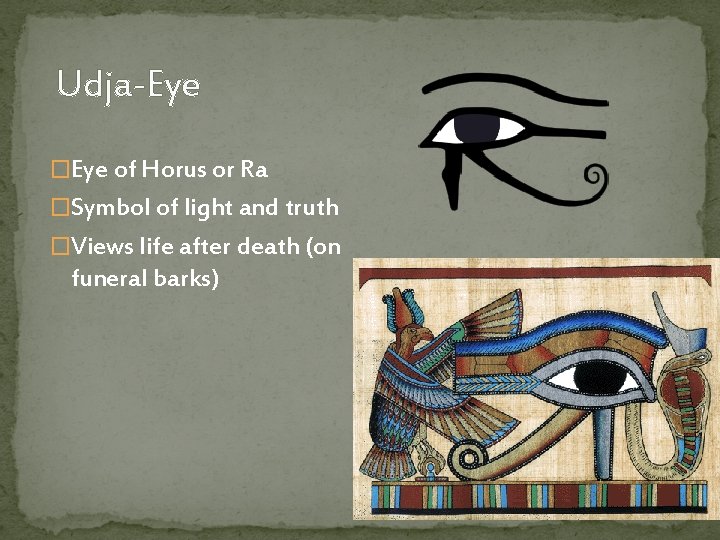
Udja-Eye �Eye of Horus or Ra �Symbol of light and truth �Views life after death (on funeral barks)
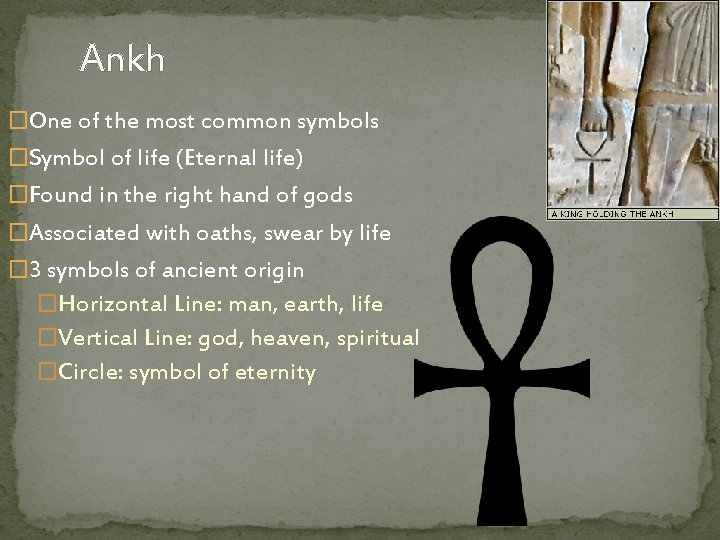
Ankh �One of the most common symbols �Symbol of life (Eternal life) �Found in the right hand of gods �Associated with oaths, swear by life � 3 symbols of ancient origin �Horizontal Line: man, earth, life �Vertical Line: god, heaven, spiritual �Circle: symbol of eternity
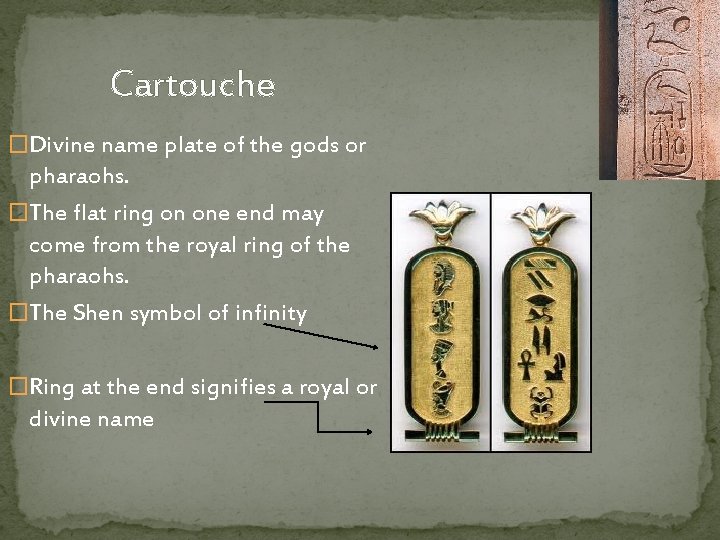
Cartouche �Divine name plate of the gods or pharaohs. �The flat ring on one end may come from the royal ring of the pharaohs. �The Shen symbol of infinity �Ring at the end signifies a royal or divine name
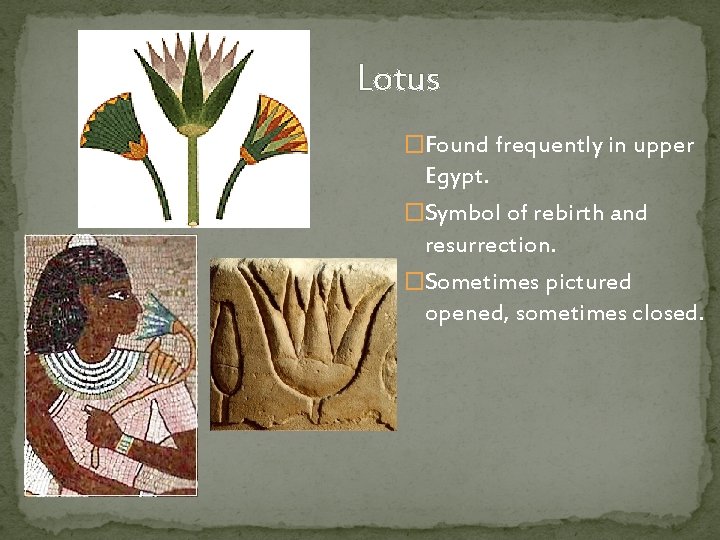
Lotus �Found frequently in upper Egypt. �Symbol of rebirth and resurrection. �Sometimes pictured opened, sometimes closed.
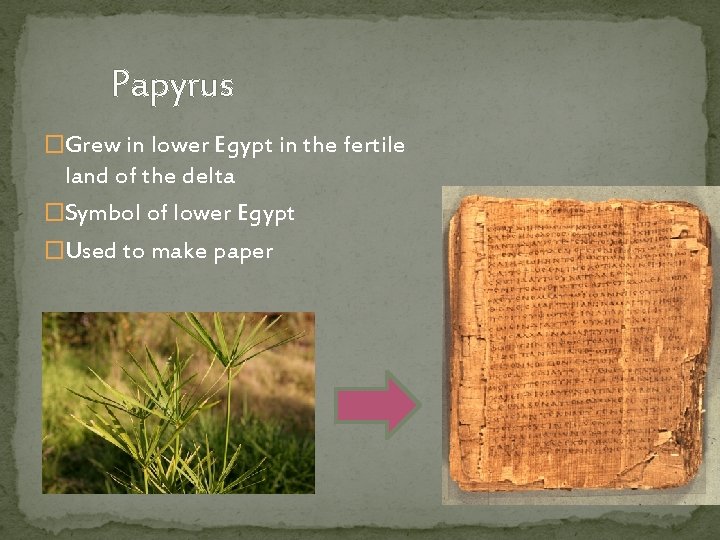
Papyrus �Grew in lower Egypt in the fertile land of the delta �Symbol of lower Egypt �Used to make paper
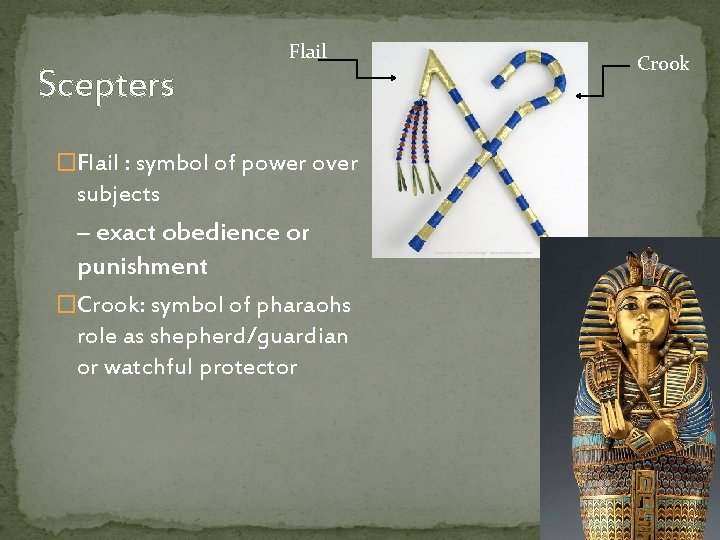
Scepters Flail �Flail : symbol of power over subjects – exact obedience or punishment �Crook: symbol of pharaohs role as shepherd/guardian or watchful protector Crook
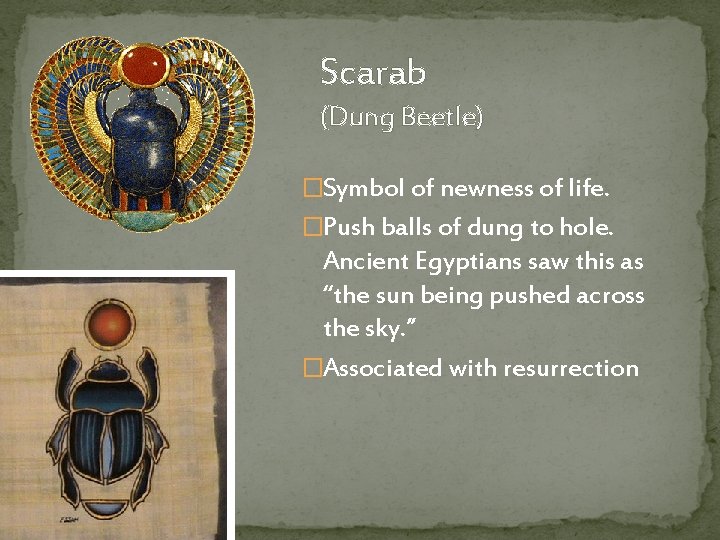
Scarab (Dung Beetle) �Symbol of newness of life. �Push balls of dung to hole. Ancient Egyptians saw this as “the sun being pushed across the sky. ” �Associated with resurrection
- Slides: 11