
Egyptian Migration Trends Figures and Current Challenges CAPMAS

- Slides: 13
Egyptian Migration: Trends, Figures, and Current Challenges CAPMAS, October 20, 2015
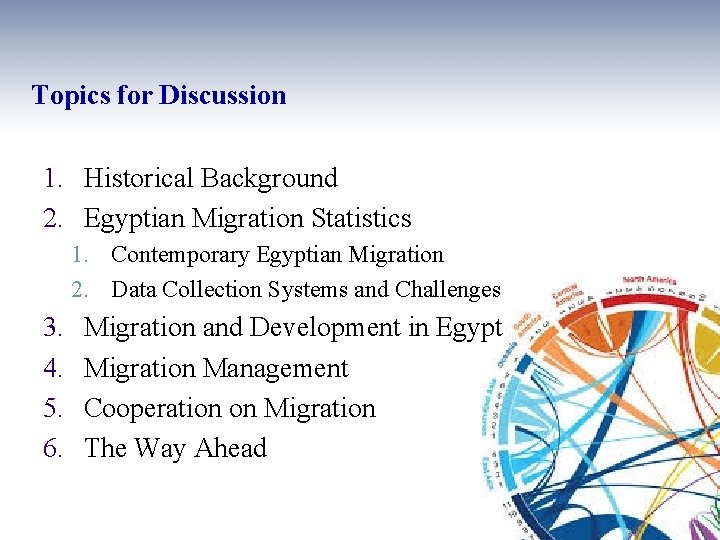
Topics for Discussion 1. Historical Background 2. Egyptian Migration Statistics 1. Contemporary Egyptian Migration 2. Data Collection Systems and Challenges 3. 4. 5. 6. Migration and Development in Egypt Migration Management Cooperation on Migration The Way Ahead
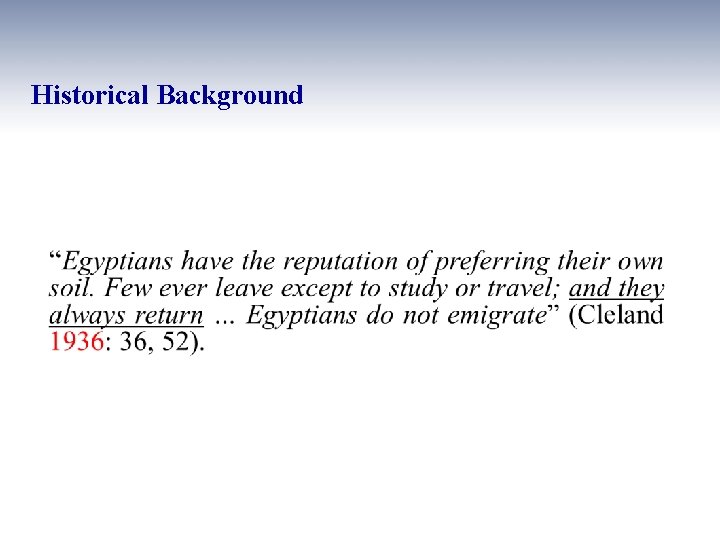
Historical Background
Historical Background l l Historically, Egypt was a land of immigrants. Egypt has been an area of international migration (migration from the eastern and the north-eastern Mediterranean countries to Egypt). In the past, foreigners were coming to Egypt while Egyptians rarely migrated abroad till the mid 1950 s. Migration for Egypt peaked after 1975.
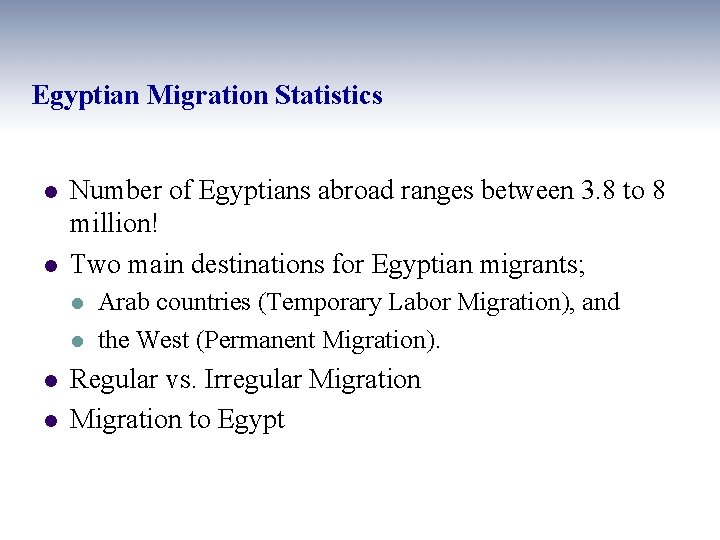
Egyptian Migration Statistics l l Number of Egyptians abroad ranges between 3. 8 to 8 million! Two main destinations for Egyptian migrants; l l Arab countries (Temporary Labor Migration), and the West (Permanent Migration). Regular vs. Irregular Migration to Egypt
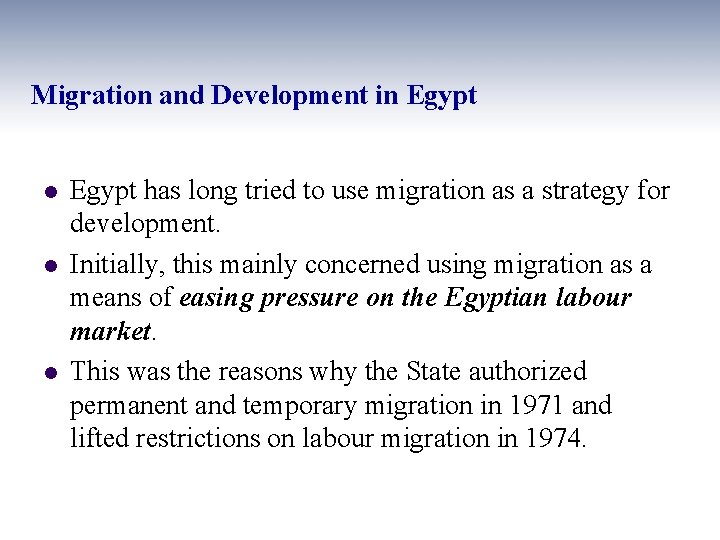
Migration and Development in Egypt l l l Egypt has long tried to use migration as a strategy for development. Initially, this mainly concerned using migration as a means of easing pressure on the Egyptian labour market. This was the reasons why the State authorized permanent and temporary migration in 1971 and lifted restrictions on labour migration in 1974.
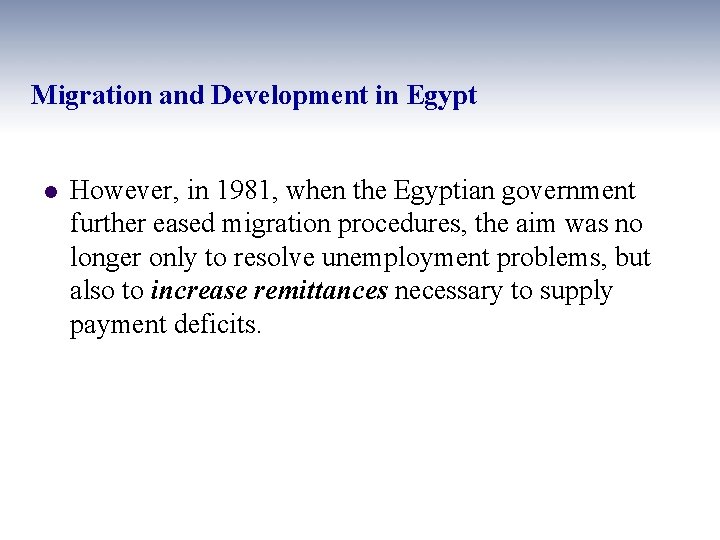
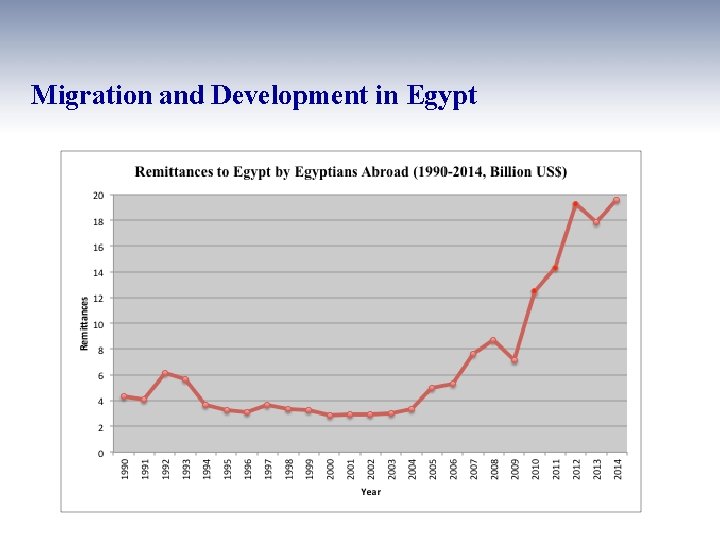
Migration and Development in Egypt l However, in 1981, when the Egyptian government further eased migration procedures, the aim was no longer only to resolve unemployment problems, but also to increase remittances necessary to supply payment deficits.
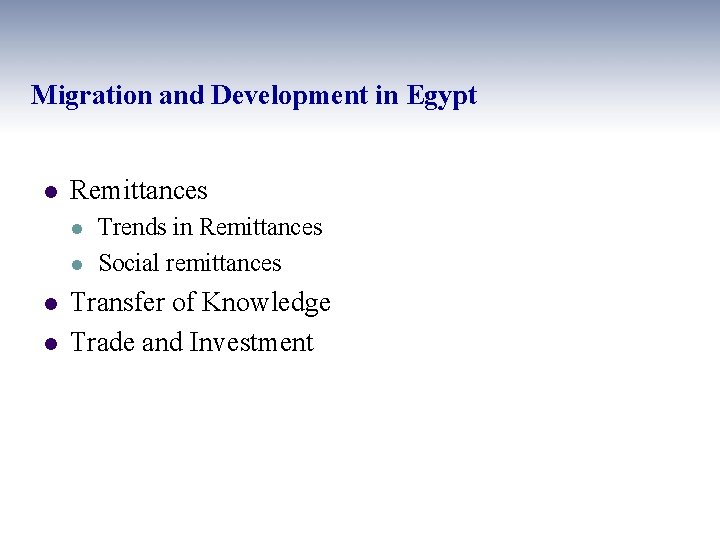
Migration and Development in Egypt l Remittances l l Trends in Remittances Social remittances Transfer of Knowledge Trade and Investment
Migration and Development in Egypt
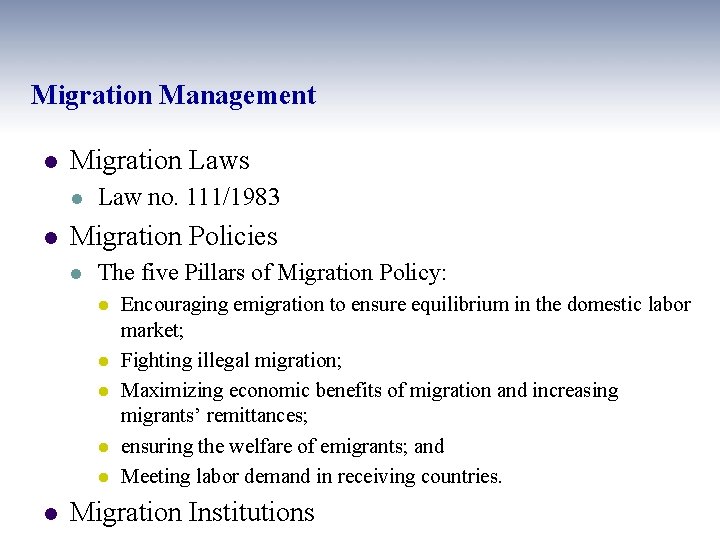
Migration Management l Migration Laws l l Law no. 111/1983 Migration Policies l The five Pillars of Migration Policy: l l l Encouraging emigration to ensure equilibrium in the domestic labor market; Fighting illegal migration; Maximizing economic benefits of migration and increasing migrants’ remittances; ensuring the welfare of emigrants; and Meeting labor demand in receiving countries. Migration Institutions
Cooperation on Migration l l l Cooperation with Arab Countries Cooperation with the EU and Member States Cooperation with Regional and International Organizations
The Way Ahead l l Migration and Development beyond Remittances Migration Statistics and Databases Migration Policy Migration: A window of Opportunity
Thank You