
Egyptian Landscape and Farming Learning Objective To know
Egyptian Landscape and Farming Learning Objective – To know some geographical facts about Egypt, the River Nile and farming
Using evidence to understand Learning objectives To use historical sources to know about food and farming To name the farming seasons of Ancient Egypt Recap – what have we learned about farming locally?
River Nile Facts Length of River - Nile 6663 km or 6700 km Is it the longest? Amazon 6900 km Source - Burundi (Central Africa) Mouth - Mediterranean Sea Other countries - Ethiopia, Rwanda, Uganda, Congo, Kenya, Eritrea, Egypt, Sudan, Tanzania, Burundi (only 22% is in Egypt)
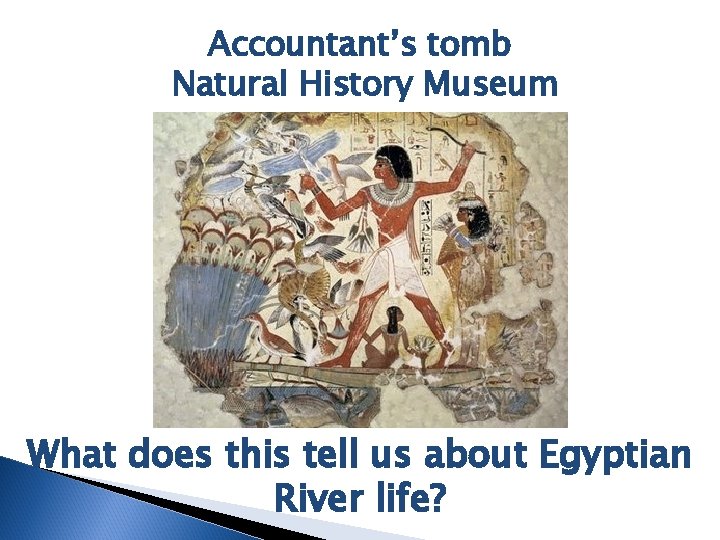
Accountant’s tomb Natural History Museum What does this tell us about Egyptian River life?
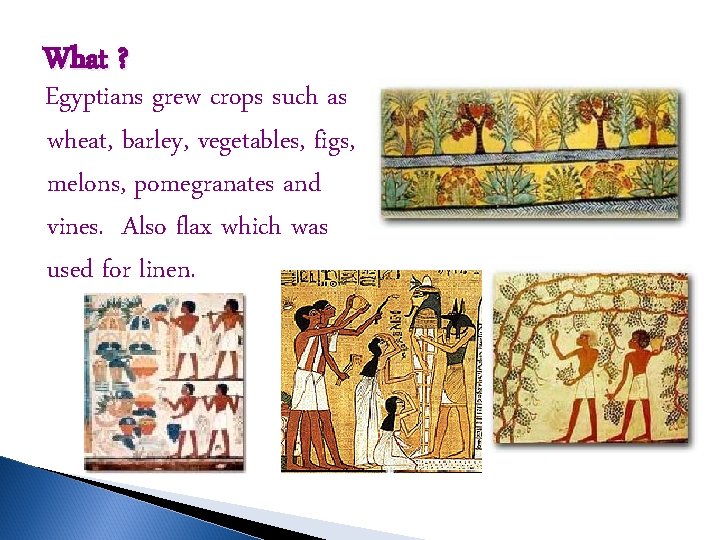
What ? Egyptians grew crops such as wheat, barley, vegetables, figs, melons, pomegranates and vines. Also flax which was used for linen.
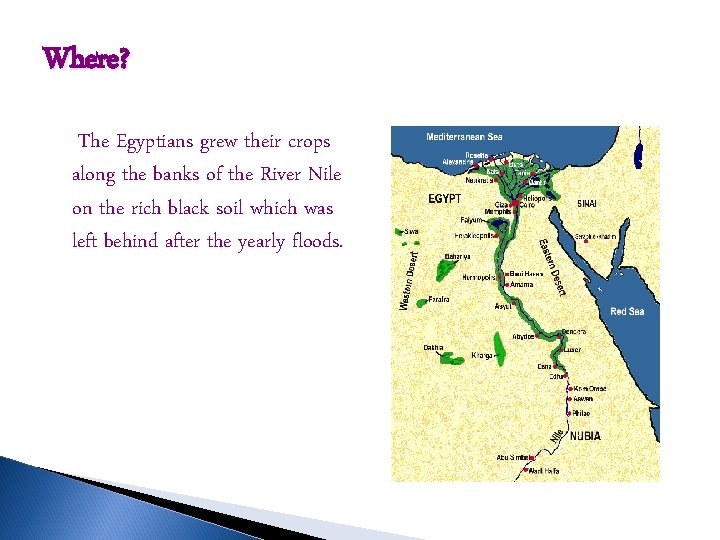
Where? The Egyptians grew their crops along the banks of the River Nile on the rich black soil which was left behind after the yearly floods.
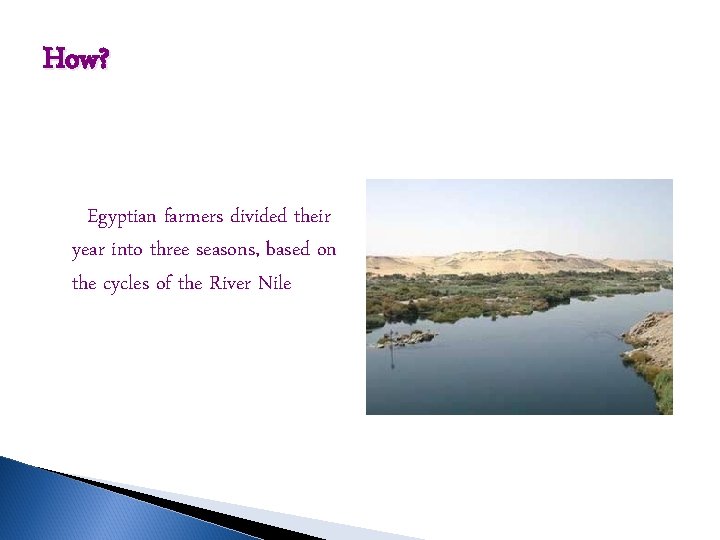
How? Egyptian farmers divided their year into three seasons, based on the cycles of the River Nile
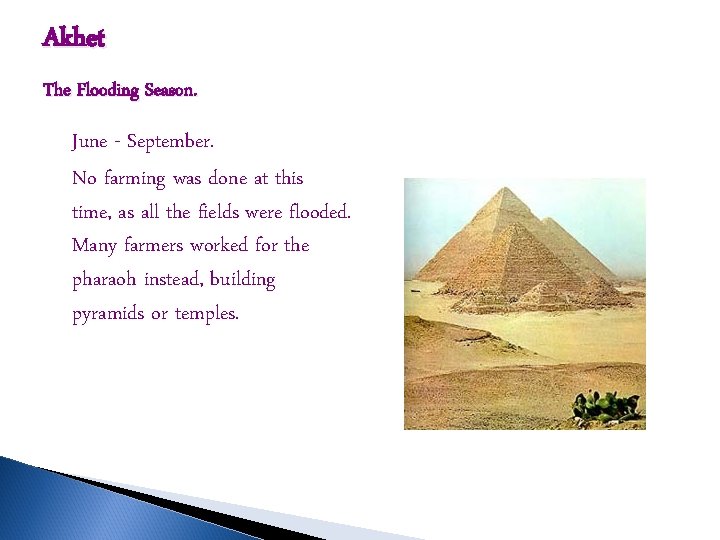
Akhet The Flooding Season. June - September. No farming was done at this time, as all the fields were flooded. Many farmers worked for the pharaoh instead, building pyramids or temples.
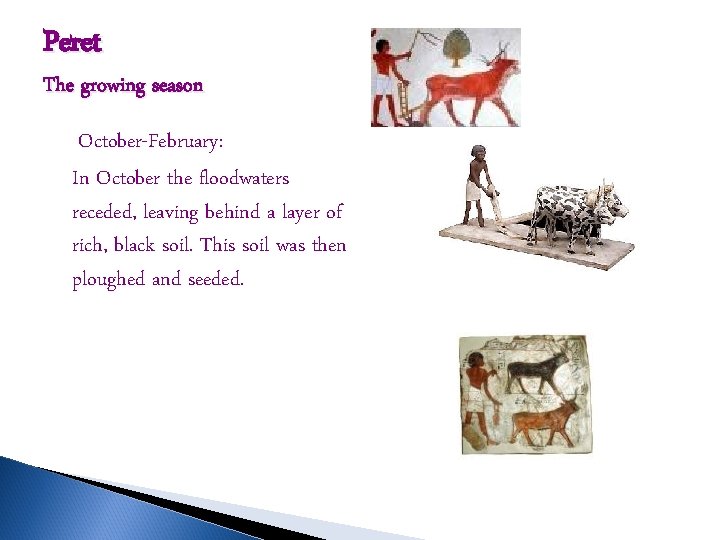
Peret The growing season October-February: In October the floodwaters receded, leaving behind a layer of rich, black soil. This soil was then ploughed and seeded.
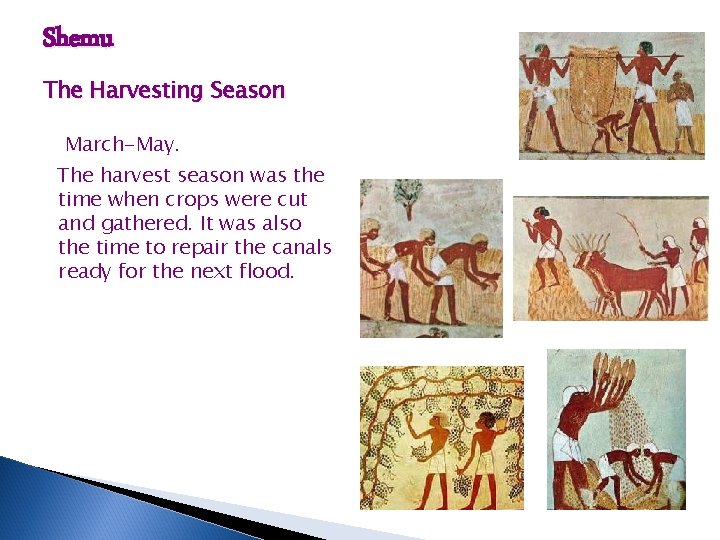
Shemu The Harvesting Season March-May. The harvest season was the time when crops were cut and gathered. It was also the time to repair the canals ready for the next flood.
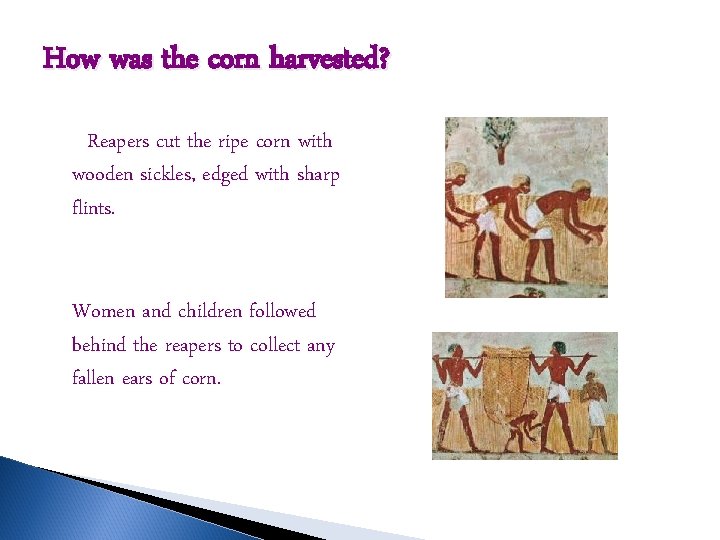
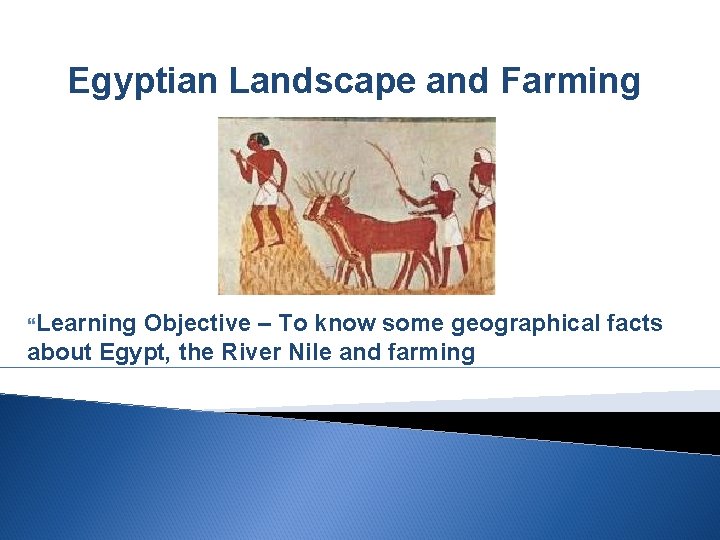
How was the corn harvested? Reapers cut the ripe corn with wooden sickles, edged with sharp flints. Women and children followed behind the reapers to collect any fallen ears of corn.
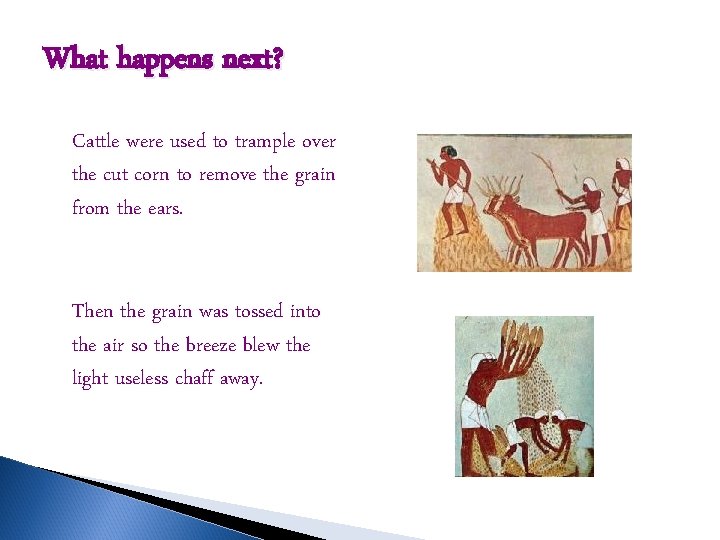
What happens next? Cattle were used to trample over the cut corn to remove the grain from the ears. Then the grain was tossed into the air so the breeze blew the light useless chaff away.
S 1 SEAL/Geography task Make paintings which fit together, of the farming seasons, in four pairs. (Alternative using chart handout) Photograph your chart and print a copy each for your books Write a few sentences about how we know. Remember what makes you a good group worker?
S 2 Technology/Literacy/Geography Making Egyptian bread Learning Objective To watch teacher reading instructions carefully to make bread. To take accurate notes To write a set of accurate instructions To follow instructions for making bread Summarise food for rich and poor Egyptians (see sheet)
- Slides: 14