
Egyptian Kingdoms Egyptian history is divided into three
- Slides: 17
Egyptian Kingdoms Egyptian history is divided into three major periods, called kingdoms.
Egyptian Kingdoms (cont. ) • Around 3100 B. C. , King Menes united Upper and Lower Egypt into a single kingdom and created the first royal dynasty. • Scholars divide Egyptian history into three periods: the Old Kingdom, the Middle Kingdom, and the New Kingdom.
Egyptian Kingdoms (cont. ) • The Old Kingdom (2700 B. C. – 2200 B. C. ) − Egyptian monarchs called pharaohs ruled Egypt with absolute power. − A government bureaucracy developed during this period. − The vizier was in charge of the government administration. − Pyramids were built to honor the dead.
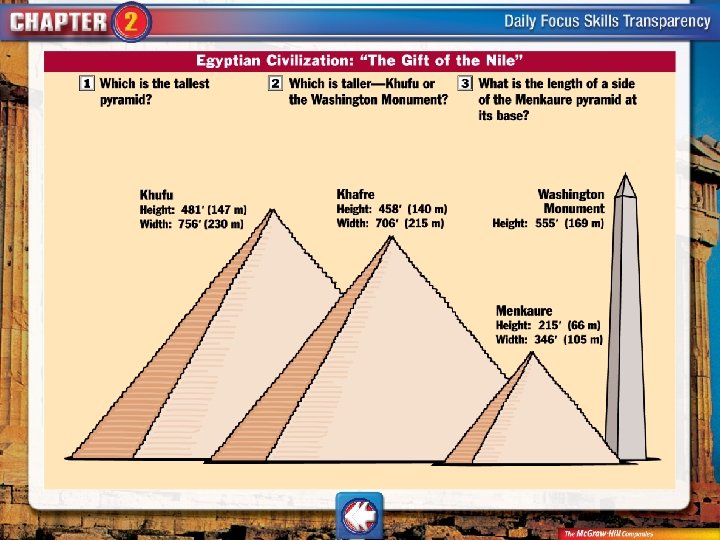
Egyptian Kingdoms (cont. ) • Egyptians practiced mummification to preserve the physical body. It was believed that preserving the physical body would allow the person’s spirit to return. • Pyramids were tombs for the mummified bodies of pharaohs, as well as symbols of royal power. The largest pyramid was built for King Khufu at Giza. • King Khufu’s tomb at Giza was called the Great Pyramid. • It was guarded by the Great Sphinx.
9 – 23 – 19
dynasty a family of rulers whose right to rule is passed on within the family
pharaoh the most common of the various titles for ancient Egyptian monarchs; the term originally meant “great house” or “palace”
bureaucracy an administrative organization that relies on nonelective officials and regular procedures
vizier a high government official in ancient Egypt or in Muslim countries
mummification a process of slowly drying a dead body to prevent it from decaying
hieroglyphic a picture or symbol used in a hieroglyphic system of writing
hieratic script simplified version of hieroglyphics used in ancient Egypt for business transactions, record keeping, and the general needs of daily life
major great; significant in size or importance
identifying believing that one is the same or very similar to another
physical relating to the body