
EGP vs ESP English for General Purposes EGP
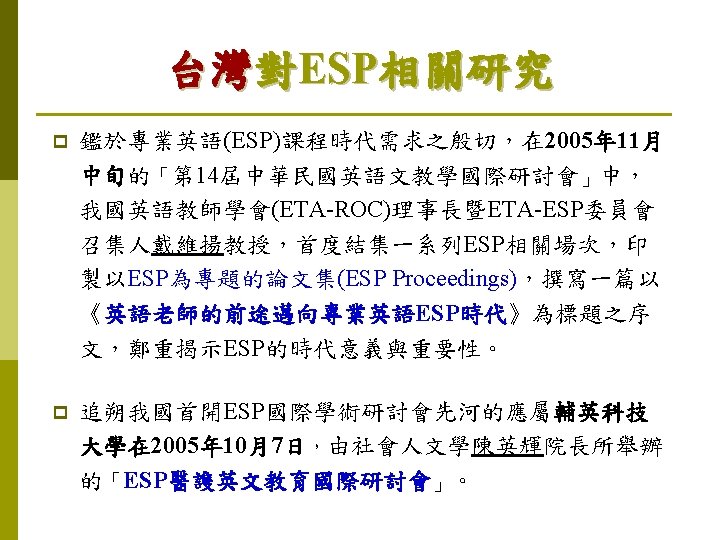
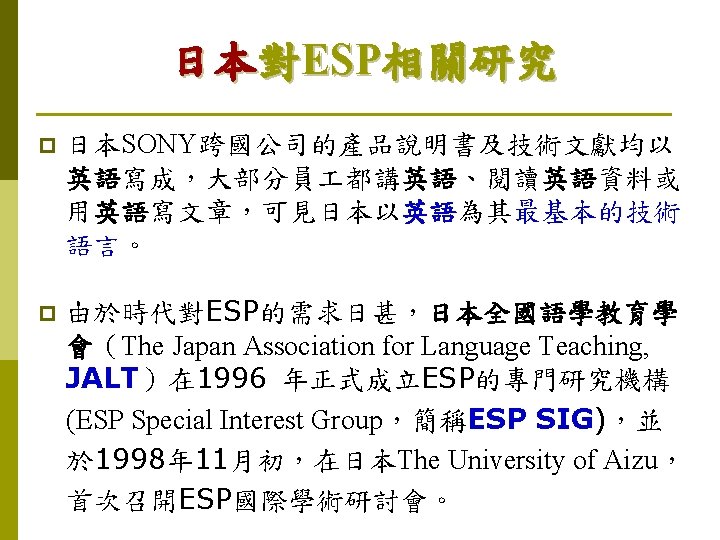
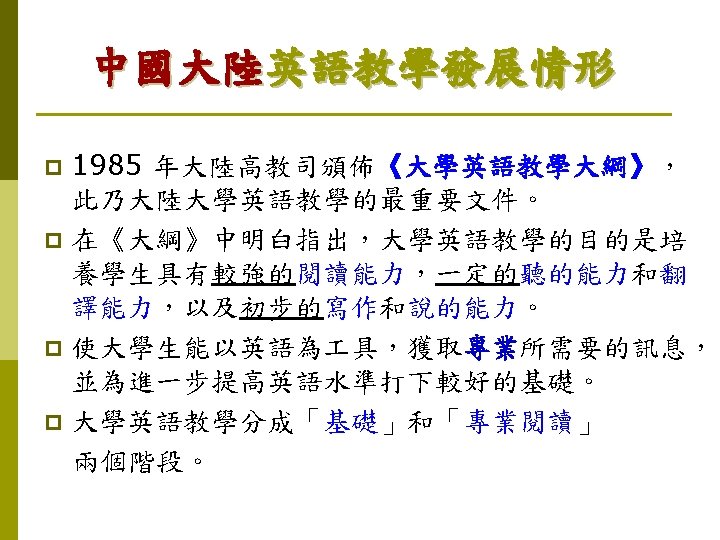
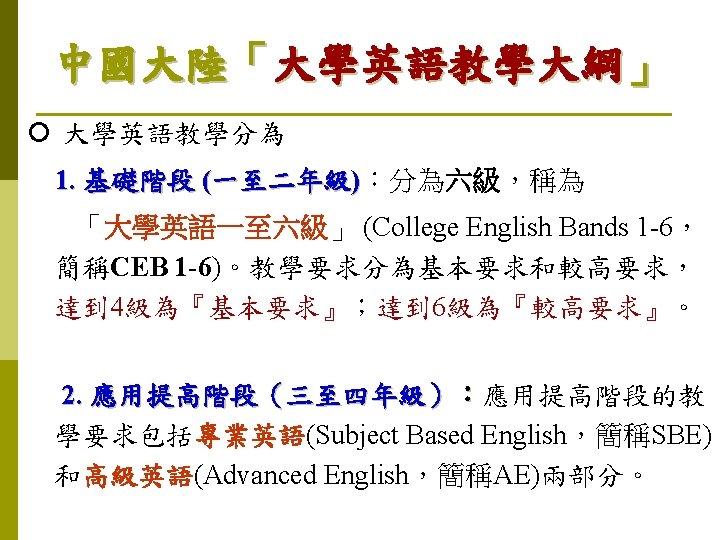
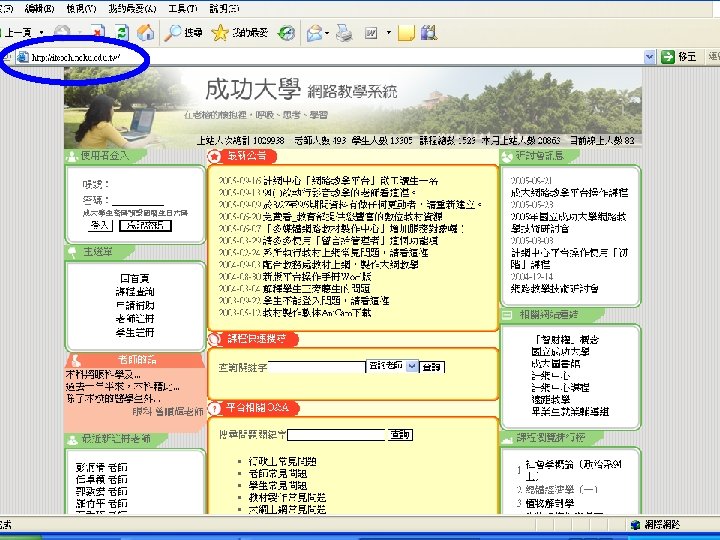
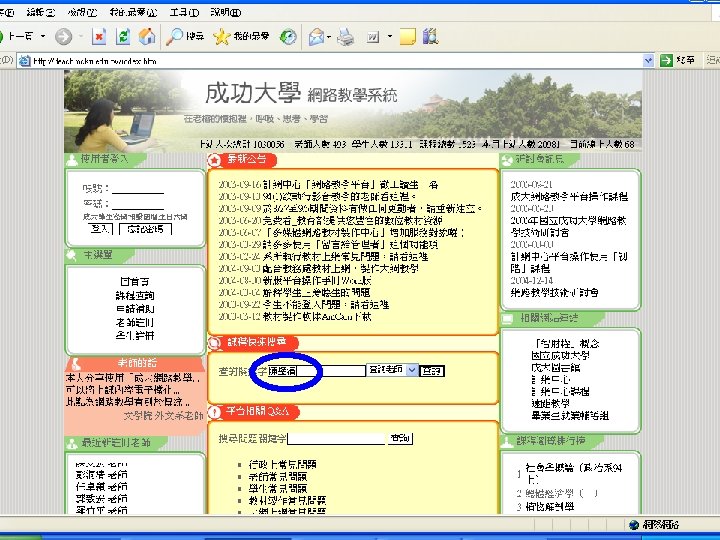
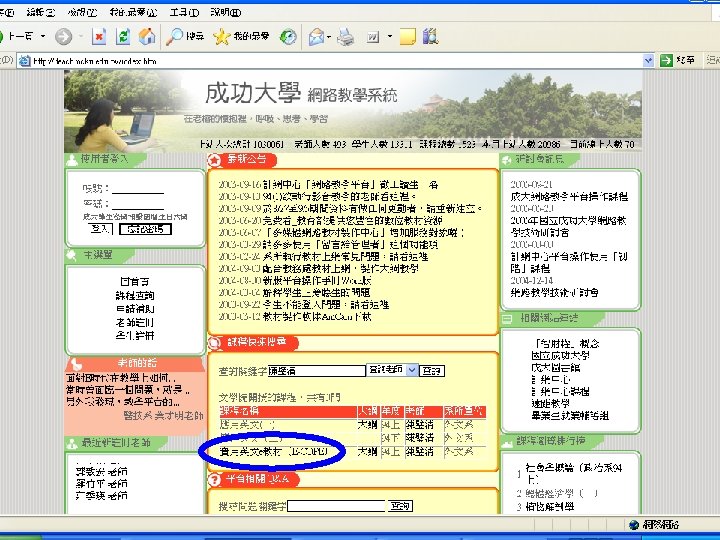
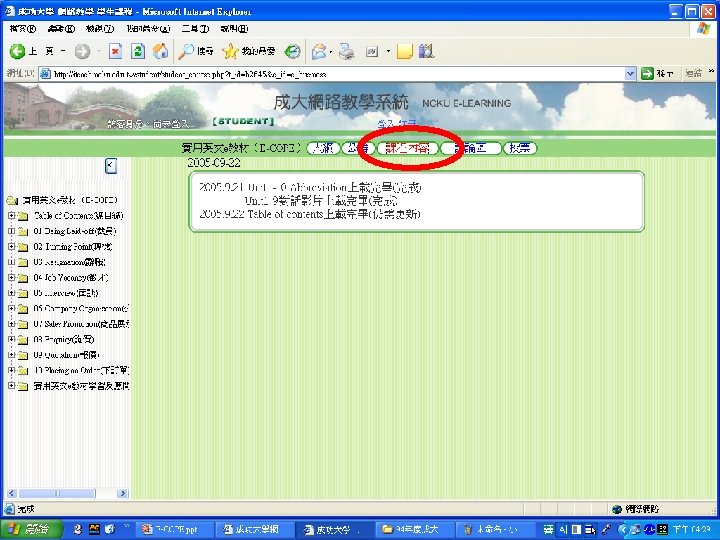

- Slides: 42
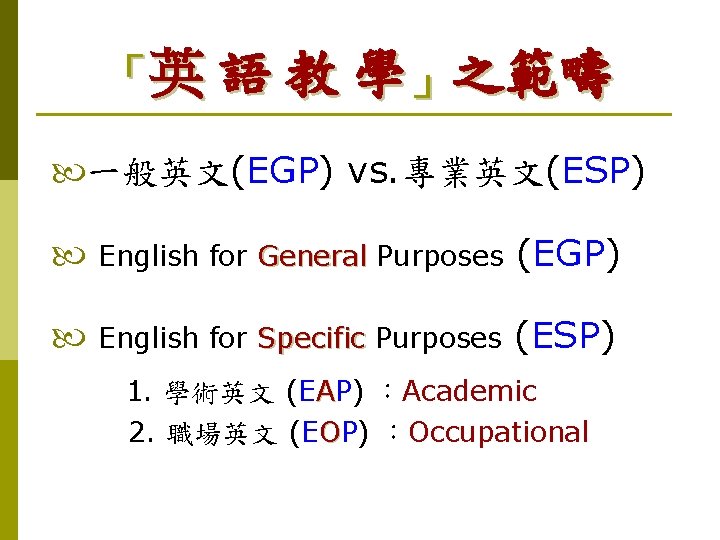
「英 語 教 學」之範疇 一般英文(EGP) vs. 專業英文(ESP) English for General Purposes (EGP) General English for Specific Purposes (ESP) Specific 1. 學術英文 (EAP) :Academic 2. 職場英文 (EOP) :Occupational
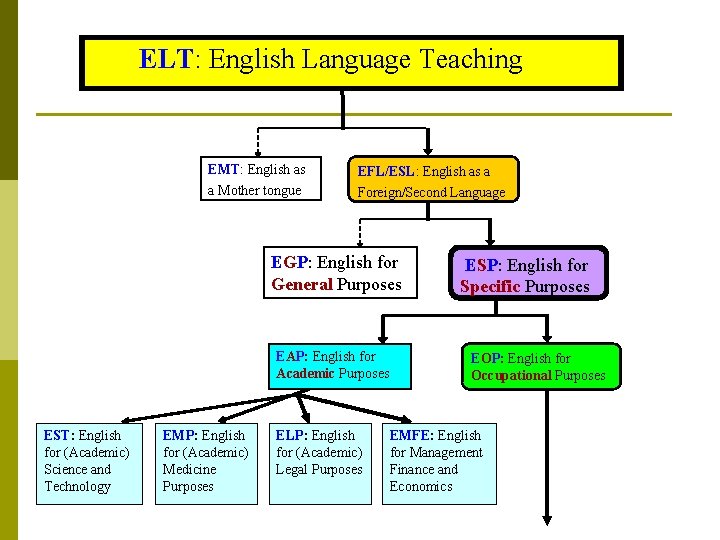
ELT: English Language Teaching EMT: English as a Mother tongue EFL/ESL: English as a Foreign/Second Language EGP: English for General Purposes EAP: English for Academic Purposes EST: English for (Academic) Science and Technology EMP: English for (Academic) Medicine Purposes ELP: English for (Academic) Legal Purposes ESP: English for Specific Purposes EOP: English for Occupational Purposes EMFE: English for Management Finance and Economics
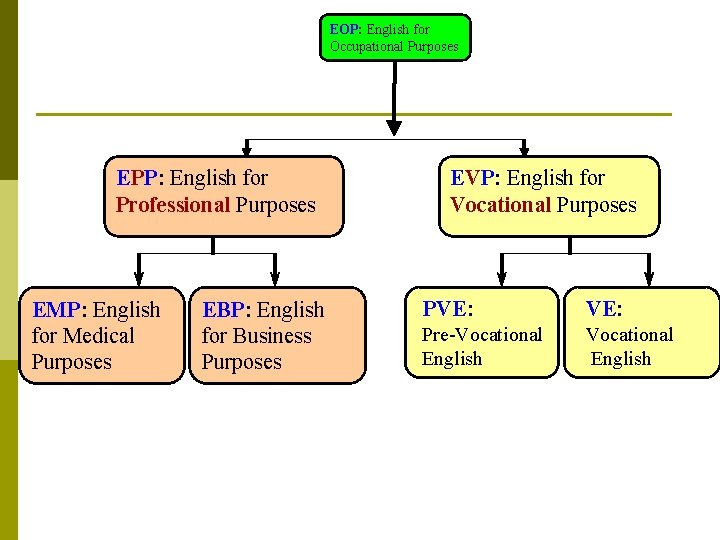
EOP: English for Occupational Purposes EPP: English for Professional Purposes EMP: English for Medical Purposes EBP: English for Business Purposes EVP: English for Vocational Purposes PVE: Pre-Vocational English
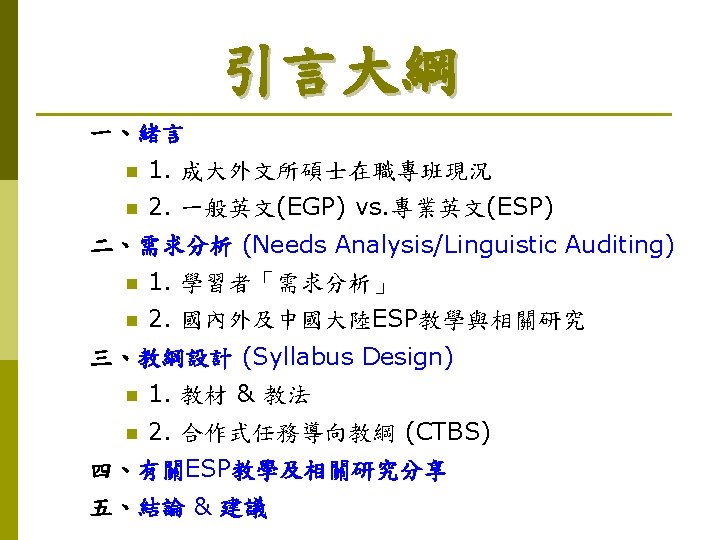
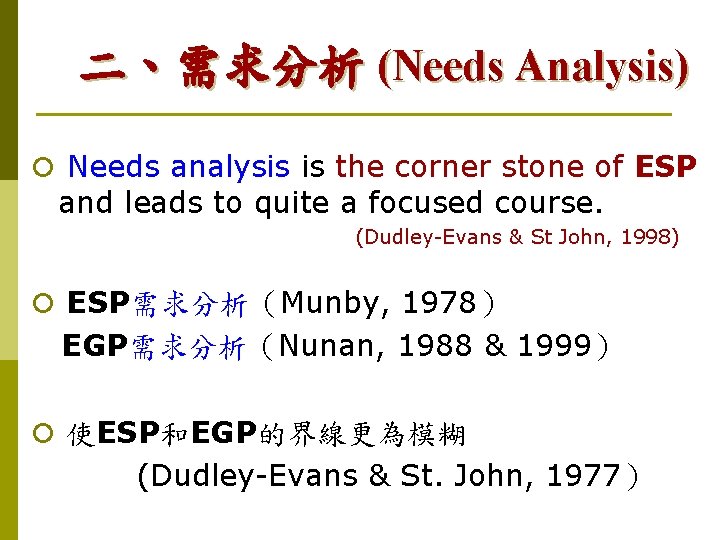
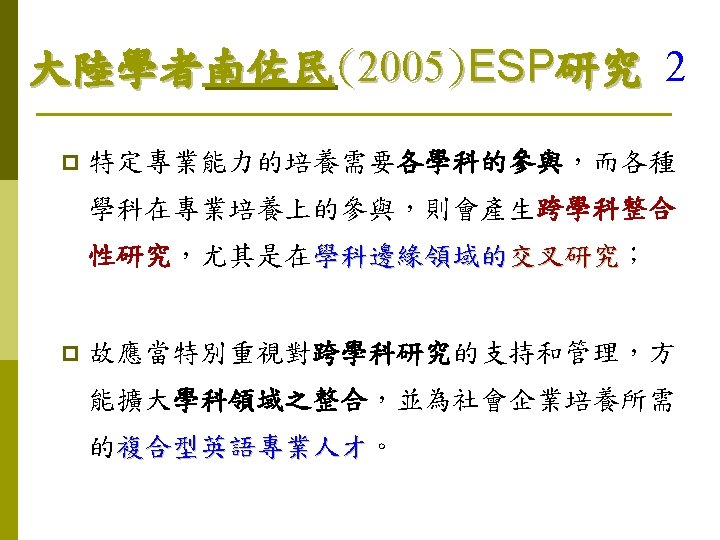
二、需求分析 (Needs Analysis) Needs analysis is the corner stone of ESP and leads to quite a focused course. (Dudley-Evans & St John, 1998) ESP需求分析(Munby, 1978) EGP需求分析(Nunan, 1988 & 1999) 使ESP和EGP的界線更為模糊 (Dudley-Evans & St. John, 1977)
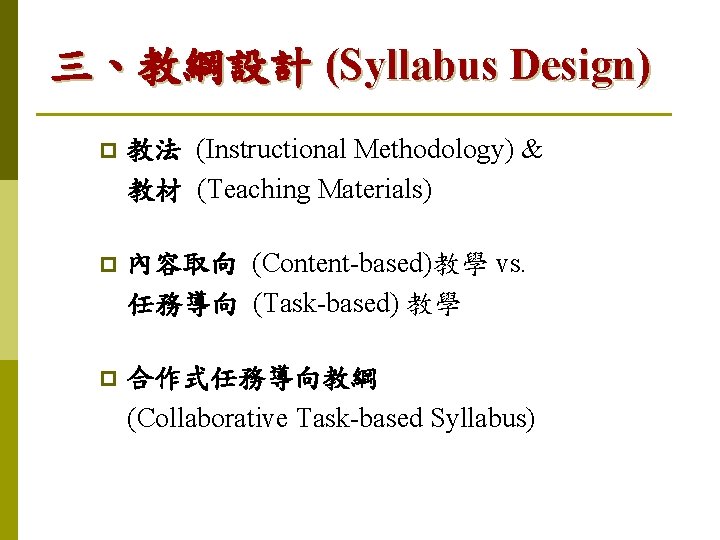
三、教綱設計 (Syllabus Design) p 教法 (Instructional Methodology) & 教材 (Teaching Materials) p 內容取向 (Content-based)教學 vs. 任務導向 (Task-based) 教學 p 合作式任務導向教綱 (Collaborative Task-based Syllabus)
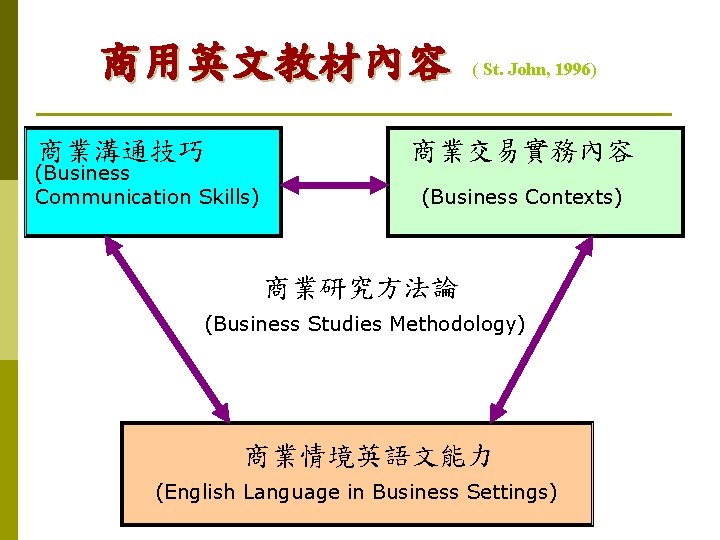
商用英文教材內容 ( St. John, 1996) 商業溝通技巧 商業交易實務內容 (Business Communication Skills) (Business Contexts) 商業研究方法論 (Business Studies Methodology) 商業情境英語文能力 (English Language in Business Settings)
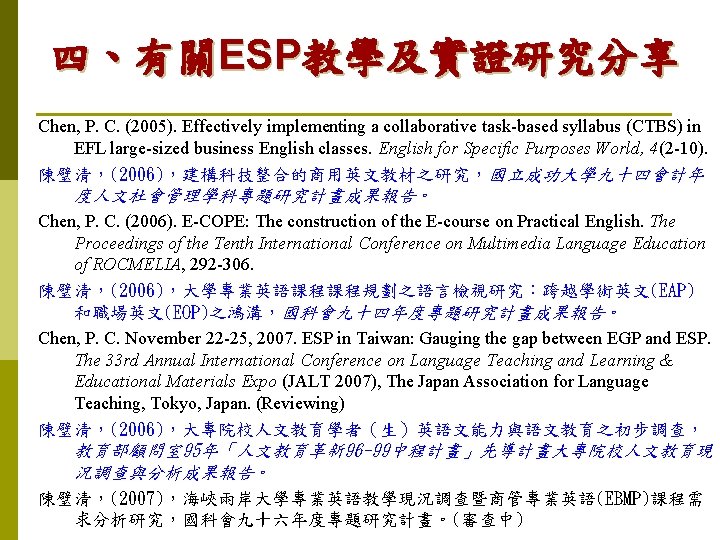
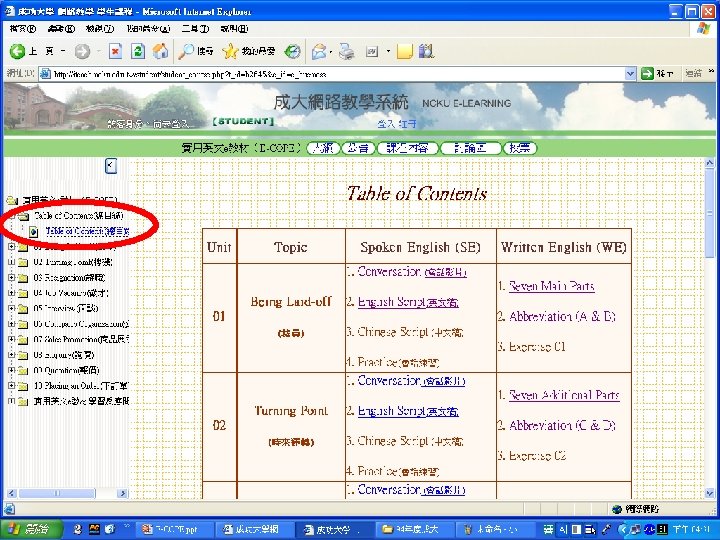
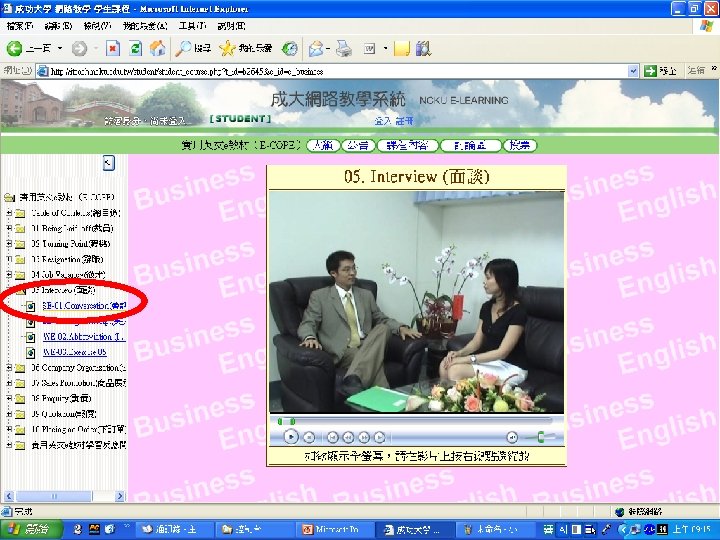
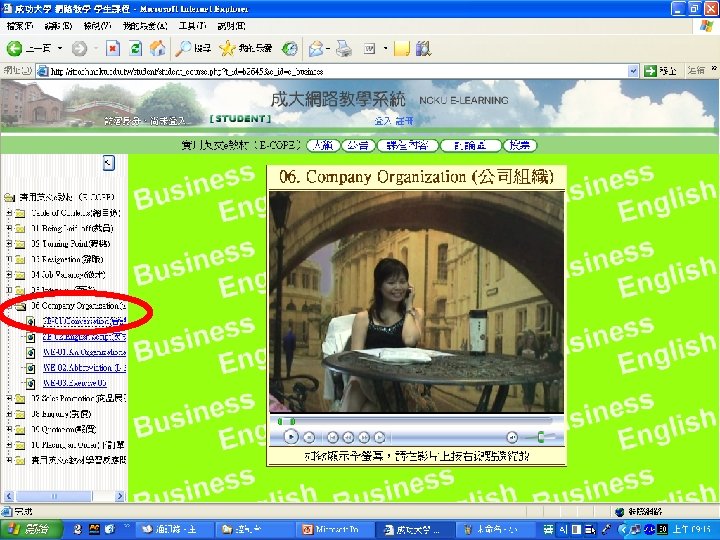
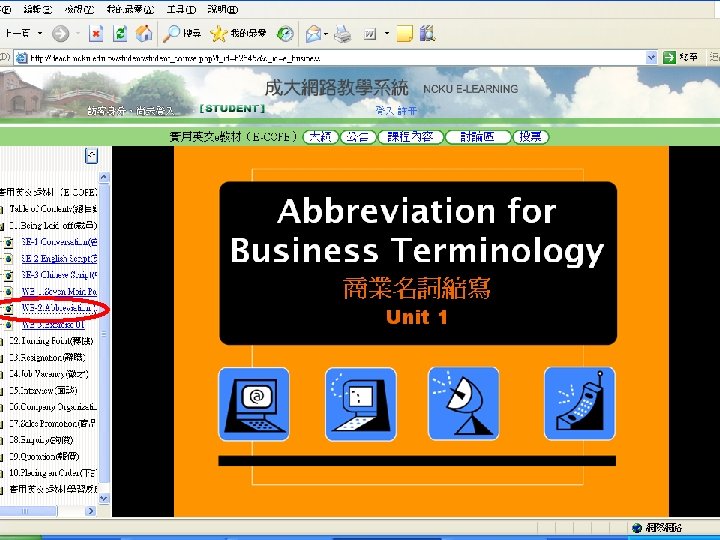
四、有關ESP教學及實證研究分享 Chen, P. C. (2005). Effectively implementing a collaborative task-based syllabus (CTBS) in EFL large-sized business English classes. English for Specific Purposes World, 4(2 -10). 陳璧清,(2006),建構科技整合的商用英文教材之研究,國立成功大學九十四會計年 度人文社會管理學科專題研究計畫成果報告。 Chen, P. C. (2006). E-COPE: The construction of the E-course on Practical English. The Proceedings of the Tenth International Conference on Multimedia Language Education of ROCMELIA, 292 -306. 陳璧清,(2006),大學專業英語課程課程規劃之語言檢視研究:跨越學術英文(EAP) 和職場英文(EOP)之鴻溝,國科會九十四年度專題研究計畫成果報告。 Chen, P. C. November 22 -25, 2007. ESP in Taiwan: Gauging the gap between EGP and ESP. The 33 rd Annual International Conference on Language Teaching and Learning & Educational Materials Expo (JALT 2007), The Japan Association for Language Teaching, Tokyo, Japan. (Reviewing) 陳璧清,(2006),大專院校人文教育學者(生)英語文能力與語文教育之初步調查, 教育部顧問室 95年「人文教育革新 96 -99中程計畫」先導計畫大專院校人文教育現 況調查與分析成果報告。 陳璧清,(2007),海峽兩岸大學專業英語教學現況調查暨商管專業英語(EBMP)課程需 求分析研究,國科會九十六年度專題研究計畫。(審查中)
Collaborative Task-based Syllabus p Chen, P. C. (2005). Effectively implementing a collaborative task-based syllabus (CTBS) CTBS in EFL large-sized business English classes. English for Specific Purposes World, 4(2 -10). p http: //www. esp-world. info/Articles_10/CTBS_. htm
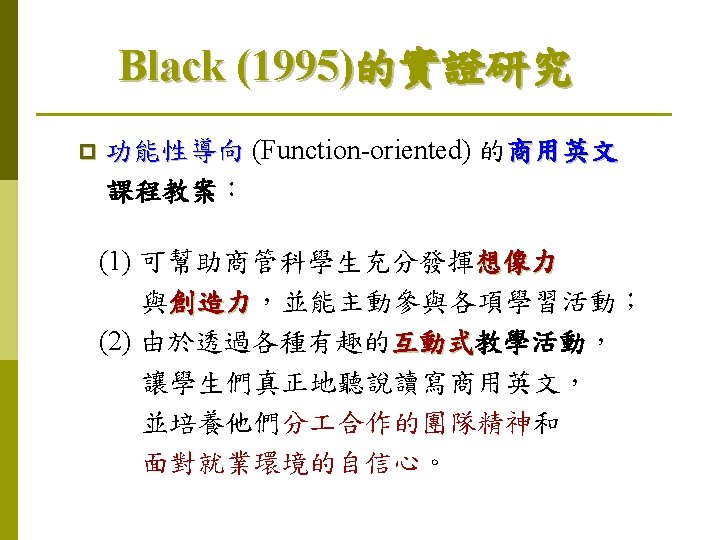
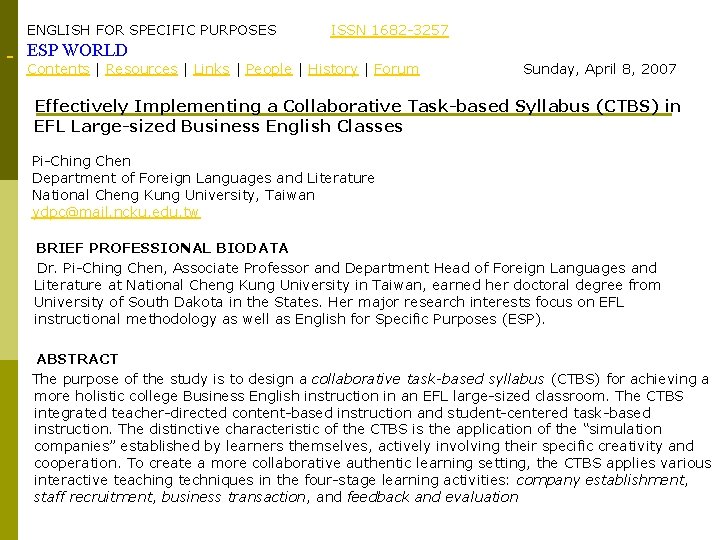
ENGLISH FOR SPECIFIC PURPOSES ISSN 1682 -3257 ESP WORLD Contents | Resources | Links | People | History | Forum Sunday, April 8, 2007 Effectively Implementing a Collaborative Task-based Syllabus (CTBS) in EFL Large-sized Business English Classes Pi-Ching Chen Department of Foreign Languages and Literature National Cheng Kung University, Taiwan ydpc@mail. ncku. edu. tw BRIEF PROFESSIONAL BIODATA Dr. Pi-Ching Chen, Associate Professor and Department Head of Foreign Languages and Literature at National Cheng Kung University in Taiwan, earned her doctoral degree from University of South Dakota in the States. Her major research interests focus on EFL instructional methodology as well as English for Specific Purposes (ESP). ABSTRACT The purpose of the study is to design a collaborative task-based syllabus (CTBS) for achieving a more holistic college Business English instruction in an EFL large-sized classroom. The CTBS integrated teacher-directed content-based instruction and student-centered task-based instruction. The distinctive characteristic of the CTBS is the application of the “simulation companies” established by learners themselves, actively involving their specific creativity and cooperation. To create a more collaborative authentic learning setting, the CTBS applies various interactive teaching techniques in the four-stage learning activities: company establishment, staff recruitment, business transaction, and feedback and evaluation
Q&A Thank you !