
eGovernment Subhash Dhakal Department of Information Technology Government
e-Government Subhash Dhakal Department of Information Technology Government of Nepal

Digital revolution has brought many private benefits A typical day in the life of the internet SOURCE: WDR 2016 team; http: //www. internetlivestats. com/one-second/ (As compiled on May 29, 2015)
e-Government It is the transformation of government to provide Efficient Convenient & Transparent Services to the Citizens & Businesses through Information & Communication Technologies
UN’s take on e-gov �UN Conference on Sustainable Development (Rio de Janeiro, June 2012) , a global consensus was reached that to achieve SDG we need institutions at all levels that are effective, transparent, accountable & democratic. �E-government holds tremendous potential �to improve the way that governments deliver public services �enhance broad stakeholder involvement in public service. WU Hongbo Under-Secretary-General for Economic and Social Affairs 4
What is NOT e-Government ? e-Government is not about ‘e’ but about government ! e-Government is not about computers & websites but about citizens & businesses! e-Government is not about translating processes but about transforming processes !
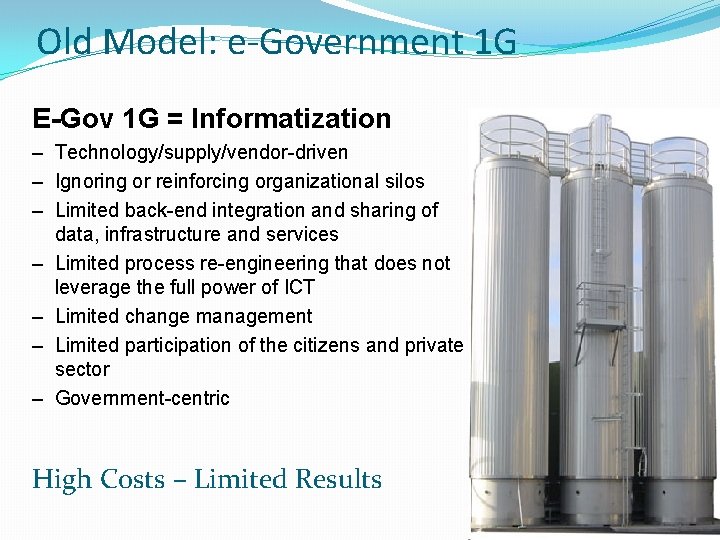
Old Model: e-Government 1 G E-Gov 1 G = Informatization – Technology/supply/vendor-driven – Ignoring or reinforcing organizational silos – Limited back-end integration and sharing of data, infrastructure and services – Limited process re-engineering that does not leverage the full power of ICT – Limited change management – Limited participation of the citizens and private sector – Government-centric High Costs – Limited Results

Current Trend of e-Government e. Transformation second-generation model of ICT-enabled govt transformation into citizen-centric and integrated government Whole-of-government perspective Sharing infrastructure and services e-Inclusion-for-all & Multi-channel delivery of services Change management and e-leadership Process re-engineering/admin reform Secure identification or Digital Identification
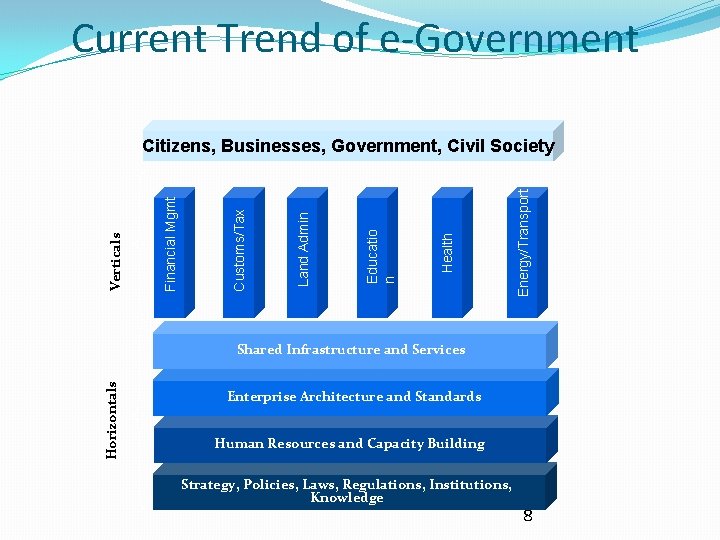
Current Trend of e-Government Energy/Transport Health Educatio n Land Admin Customs/Tax Financial Mgmt Verticals Citizens, Businesses, Government, Civil Society Horizontals Shared Infrastructure and Services Enterprise Architecture and Standards Human Resources and Capacity Building Strategy, Policies, Laws, Regulations, Institutions, Knowledge 8
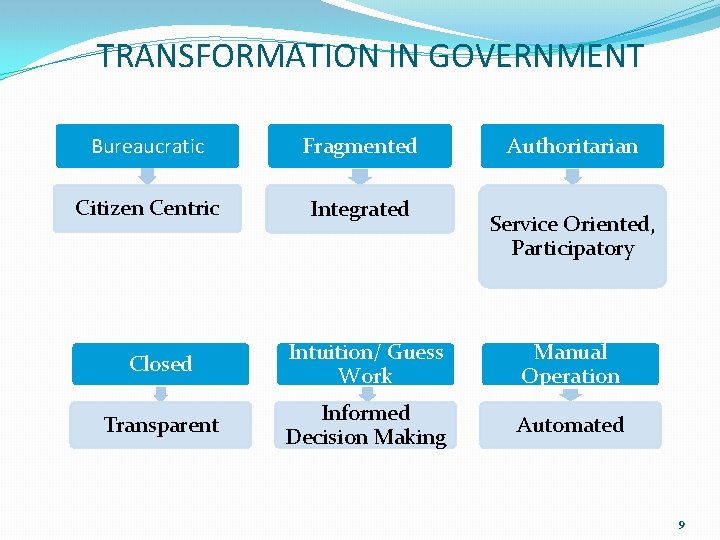
TRANSFORMATION IN GOVERNMENT Bureaucratic Fragmented Citizen Centric Integrated Authoritarian Service Oriented, Participatory Closed Intuition/ Guess Work Manual Operation Transparent Informed Decision Making Automated 9
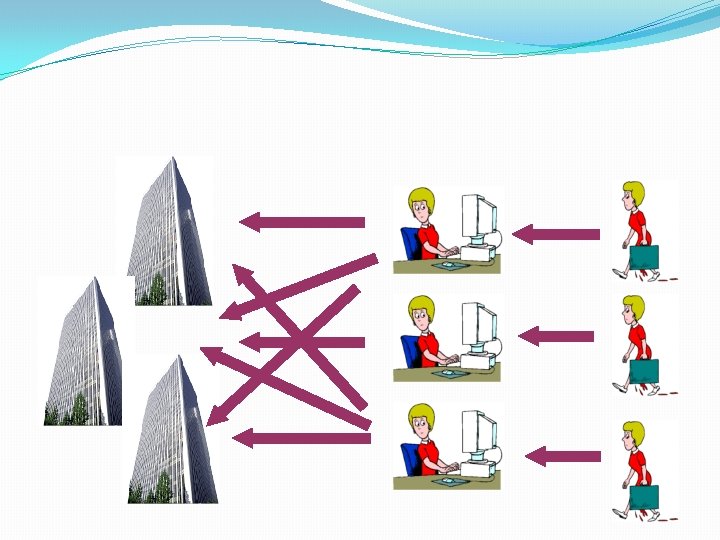
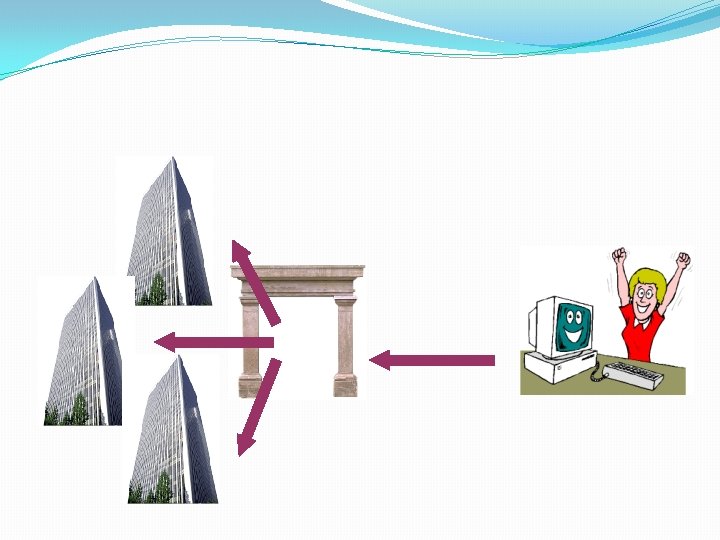
E-Government Architecture (Government Enterprise Architecture) �Adopted through “ Nepal Government IT System Operation and Management Directives, 2071” [Approved on: 2071/11/10] �Architecture Vision �focus on citizens (Citizen Centric Services) �The Government is a single unified enterprise �Business process driven �Information/Data is a national asset �Data is shared �Security, privacy and protecting information is core requirement �Shall simplifies government operations
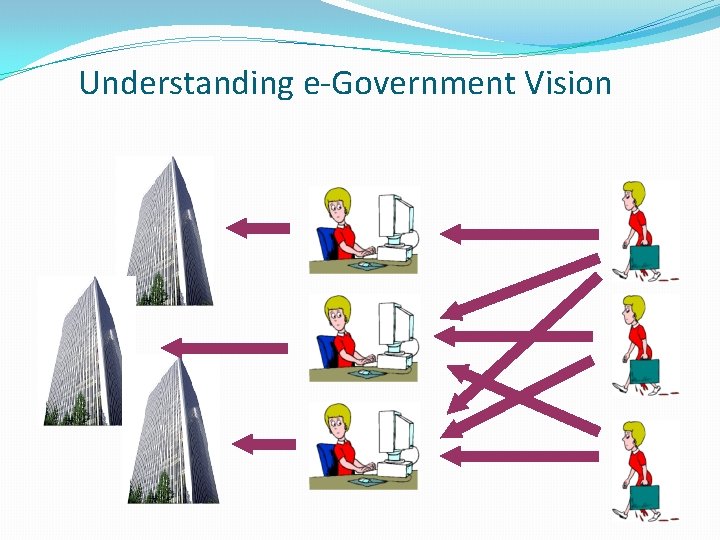
Understanding e-Government Vision
Emerging Trend of e-Government Smart Government: third generation model of ICT-enabled govt transformation into S. M. A. R. T Government : ØSocial: Not only highly personalized and citizen-friendly service delivery, but also allowing citizens and civil society to co-create with Government ØMobile: Using the latest mobile technologies to deliver information and services, and get contributions from citizens, wherever and whenever they want – by Apps, SMS, Social Media, and Web-on-the-move – using mobile networks and cloud computing at the back-end ØAnalytics: Using Big Data Analytics to drive policy action and to individualise communications and transactions ØRadical-openness: “Open by Default” transforms Accountability and Transparency and engages citizens in co-creation, as well as enable businesses to use data to innovative new services ØTrust: Effective Cybersecurity so that services are resilient, available and protect privacy
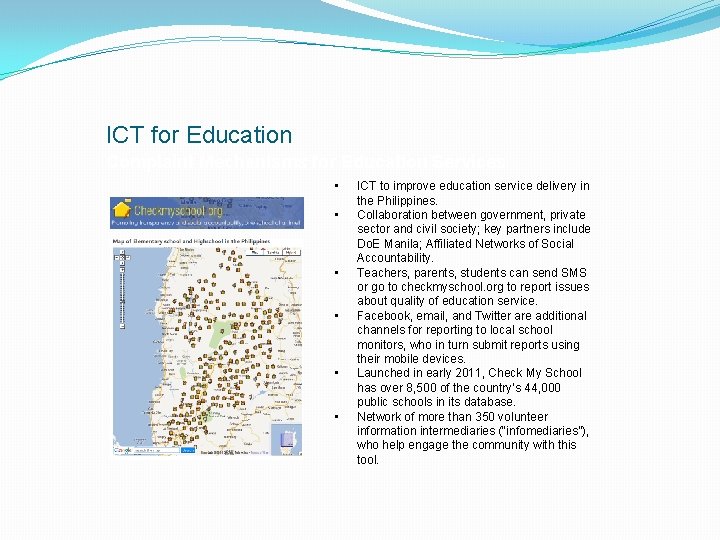
ICT for Education Complaint Mechanisms for Education Services • • • ICT to improve education service delivery in the Philippines. Collaboration between government, private sector and civil society; key partners include Do. E Manila; Affiliated Networks of Social Accountability. Teachers, parents, students can send SMS or go to checkmyschool. org to report issues about quality of education service. Facebook, email, and Twitter are additional channels for reporting to local school monitors, who in turn submit reports using their mobile devices. Launched in early 2011, Check My School has over 8, 500 of the country’s 44, 000 public schools in its database. Network of more than 350 volunteer information intermediaries (“infomediaries”), who help engage the community with this tool.
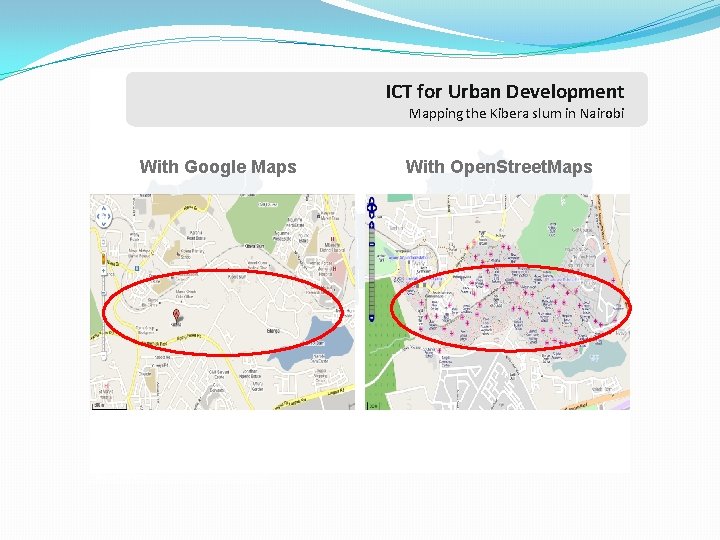
ICT for Development Education ICT for Urban Mapping the Kibera slum in Nairobi With Google Maps Image source: Open. Street. Maps, Google. Maps With Open. Street. Maps 16
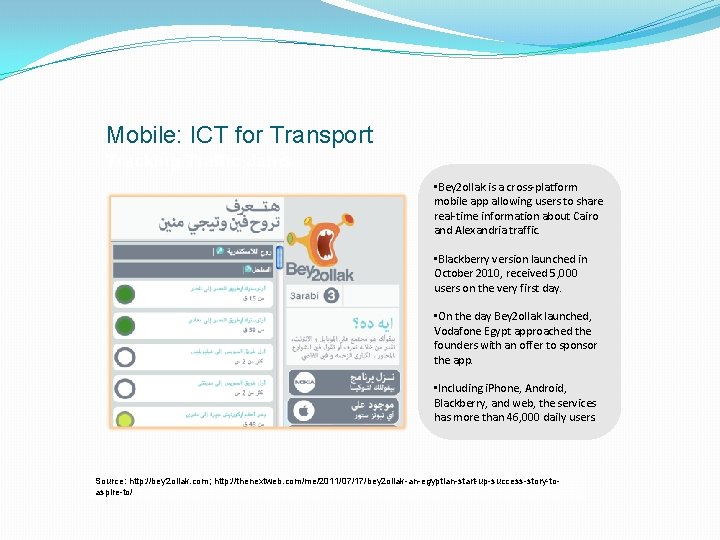
Mobile: ICT for Transport Tracking Traffic Jams • Bey 2 ollak is a cross-platform mobile app allowing users to share real-time information about Cairo and Alexandria traffic. • Blackberry version launched in October 2010, received 5, 000 users on the very first day. • On the day Bey 2 ollak launched, Vodafone Egypt approached the founders with an offer to sponsor the app. • Including i. Phone, Android, Blackberry, and web, the services has more than 46, 000 daily users. Source: http: //bey 2 ollak. com; http: //thenextweb. com/me/2011/07/17/bey 2 ollak-an-egyptian-start-up-success-story-toaspire-to/
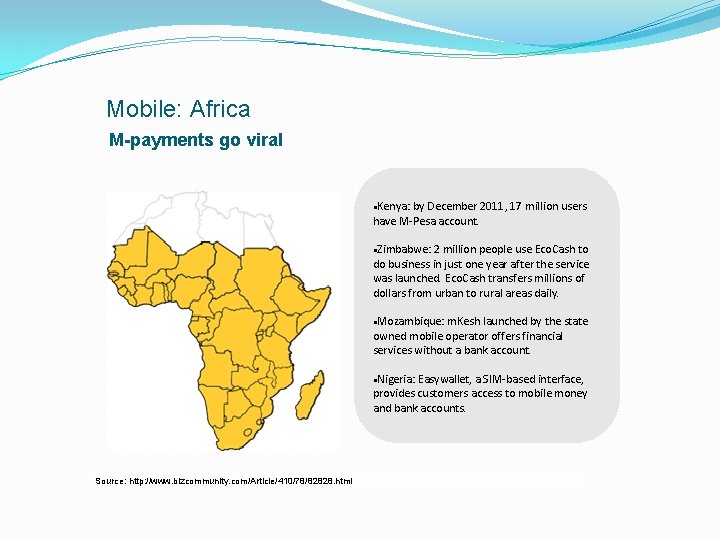
Mobile: Africa M-payments go viral Kenya: by December 2011, 17 million users have M-Pesa account. Zimbabwe: 2 million people use Eco. Cash to do business in just one year after the service was launched. Eco. Cash transfers millions of dollars from urban to rural areas daily. Mozambique: m. Kesh launched by the state owned mobile operator offers financial services without a bank account. Nigeria: Easywallet, a SIM-based interface, provides customers access to mobile money and bank accounts. Source: http: //www. bizcommunity. com/Article/410/78/82828. html
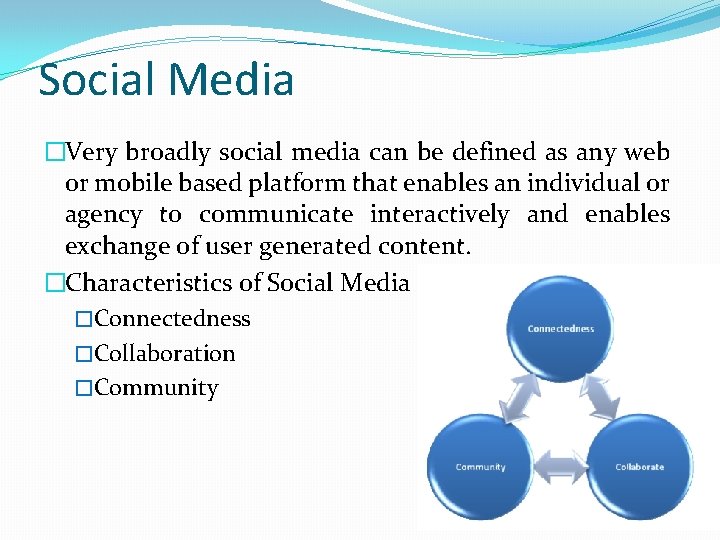
Social Media �Very broadly social media can be defined as any web or mobile based platform that enables an individual or agency to communicate interactively and enables exchange of user generated content. �Characteristics of Social Media �Connectedness �Collaboration �Community
Types of Social Media � Social Networking is an online service that enables its users to create virtual networks with likeminded people akin to social networks in real life. It often offers the facilities such as chat, instant messaging, photo sharing, updates, etc. Currently, social networking sites are the most prominent version of social media. Face. Book with 800 million users is one of the most well known social networking site. � Blogs are descriptive content pages created and maintained by individual users and may contain text, photos and links to other web sites. The main interactive feature of Blogs is the ability of readers to leave comments and the comment trail can be followed. � Micro. Blogs are similar to Blogs with a typical restriction of 140 characters or less, which allows users to write and share content. Twitter is the most well known microblogging site.
Types of Social Media �Vlogs and Video Sharing sites �Video. Blogs or Vlogs are blogging sites that mainly use video as the main form of content supported by text. You. Tube is the largest video sharing site. �Wikis �A Wiki is a collaborative website that allows multiple users to create and update pages on particular or interlinked subjects. While single page is referred to as “wiki page” the entire related content on that topic is called a “Wiki”. Wikipedia is the pioneering site of this type of platform.
Usages of Social Media �Citizen Engagement �Understanding, informing, and connecting with constituents �Benefits � Better understanding of citizens’ needs � Increase in positive sentiment � Better attendance at local events � Ability to make data informed decisions � Faster adoption of service changes � Increase in good press �Service delivery �Generating efficiency and cost savings with social �Benefits � Faster average response times � Reduction in volume of calls � Cost savings
Usages of Social Media �Disaster/Critical response communications �Taking control of a critical communications channel �Benefits � Citizens are better informed � Rumor control � Better coordinated response activities in case of disaster �Government branding �Highlighting Organizational Achievement, Attracting and engaging with candidates �Benefits � Higher Citizen Trust for Government � Could attract competent candidates
Critical challenges in adopting social media �Skills, resources, and strategy � � � � Skills gap/lack of social media training Lack of cross-departmental collaboration Lack of human resources to manage program Lack of budget for new technologies Departmental resistance, Lack of wide adoption Approval processes Increased expectations from citizens Trolls �Measuring return on investment in social � � � � Engagement metrics (e. g. likes, comments, retweets, shares) Follower metrics (e. g. fans, followers, subscribers) Consumption metrics (e. g. photo, video and post views) Customer service issues resolved Reduced number of calls/emails to customer service Sentiment analysis Share of voice �Managing security and compliance
Focus on �Develop Skills and ensure Human Resource and all other required resources are available. �Develop strategy of Social Media usages considering environmental factors of an organization �Ensure periodic monitoring and evaluation of impact of usage of Social Media �Ensure Security Measures and Compliance are right in place and followed
Core Values for Using Social Media � Identity: � Always identify clearly who you are, what is your role in the department and publish in the first person. Disclaimer may be used when appropriate � Authority: � Do not comment and respond unless authorized to do so especially in the matters that are sub-judice, draft legislations or relating to other individuals � Relevance: � Comment on issues relevant to your area and make relevant and pertinent comments. This will make conversation productive and help take it to its logical conclusion � Professionalism: � Be Polite, Be Discrete and Be Respectful to all and do not make personal comments for or against any individuals or agencies. Also, professional discussions should not be politicized � Openness: � Be open to comments – whether positive or negative. It is NOT necessary to respond to each and every comment � Compliance: � Be compliant to relevant rules and regulations. Do not infringe upon IPR, copyright � Privacy: � Do not reveal personal information about other individuals as well as do not publish your own private and personal details unless you wish for them to be made public to be used
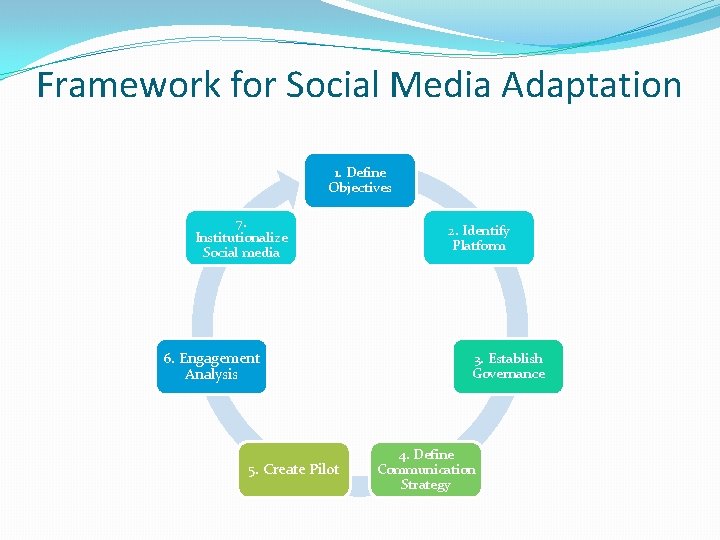
Framework for Social Media Adaptation 1. Define Objectives 7. Institutionalize Social media 6. Engagement Analysis 5. Create Pilot 2. Identify Platform 3. Establish Governance 4. Define Communication Strategy

Thank You !!!
- Slides: 28