
Effort Time Success Supplementing your revision using online



- Slides: 29
Effort + Time = Success Supplementing your revision using online activities
Objectives of this session § To remind students of the revision sites available from school subscriptions § To explain how to access past papers and mark schemes
Between now and the end of your exams you will NEVER have “no homework”
Revision - what works for you? Many techniques work but two definitely DO NOT! • However much you believe reading / simple highlighting works for you there are many MUCH BETTER ways. • The more ACTIVE and VARIED your revision, the more likely you will be to remember what you need under pressure.
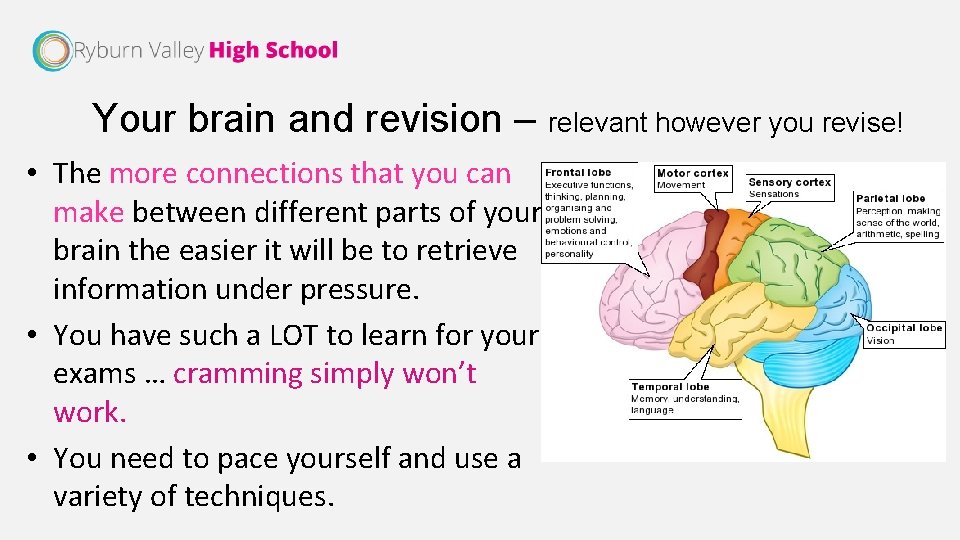
Your brain and revision – relevant however you revise! • The more connections that you can make between different parts of your brain the easier it will be to retrieve information under pressure. • You have such a LOT to learn for your exams … cramming simply won’t work. • You need to pace yourself and use a variety of techniques.
Two types of revision strategies 1. Using technology Desktop computers, i. Pads, Macbooks, podcasts and your mobile phone all link you up with ways you can revise. These are useful but should not be used exclusively. 2. Switch off and learn! Unless you are doing a revision activity that specifically uses the internet – SWITCH OFF!
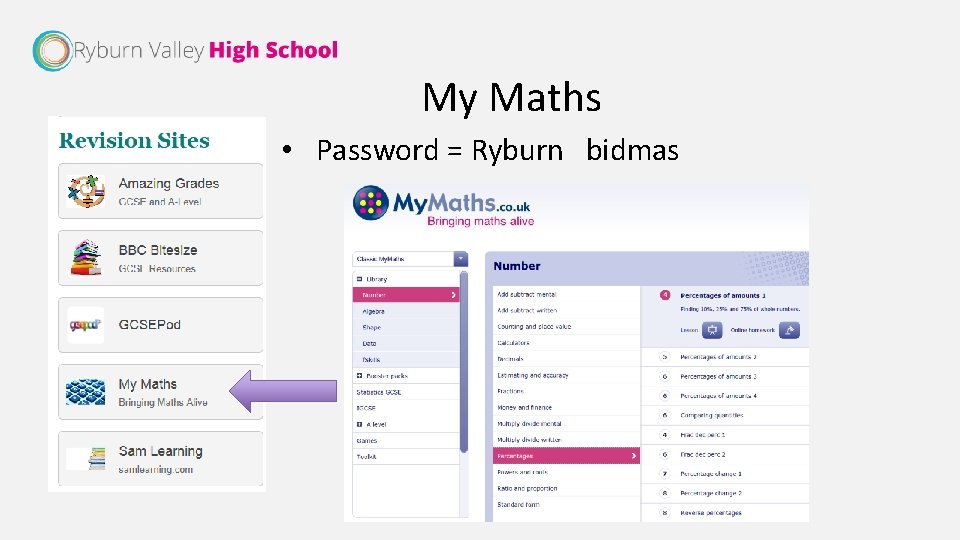
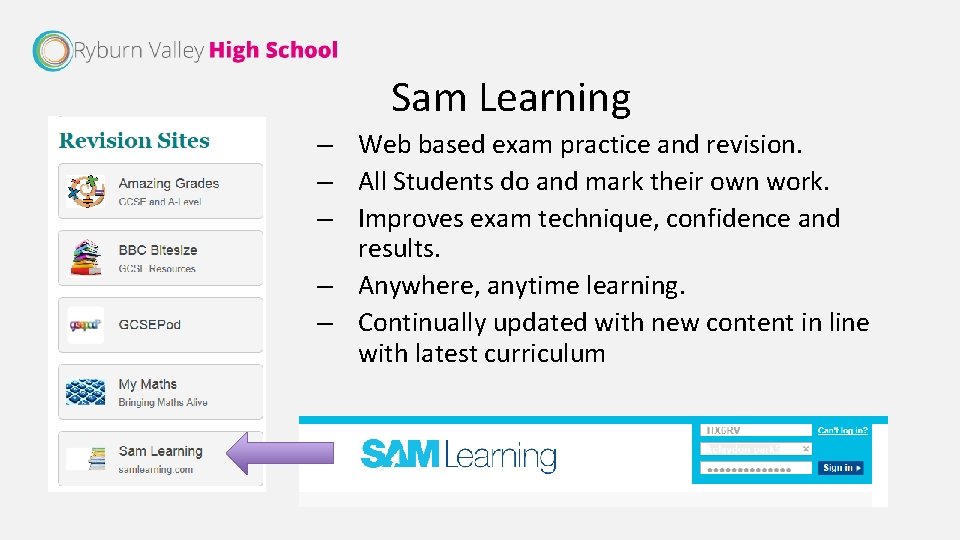
Logging On through our VLE • The homepage of our VLE has direct links to allow you to log on to these popular revision sites.
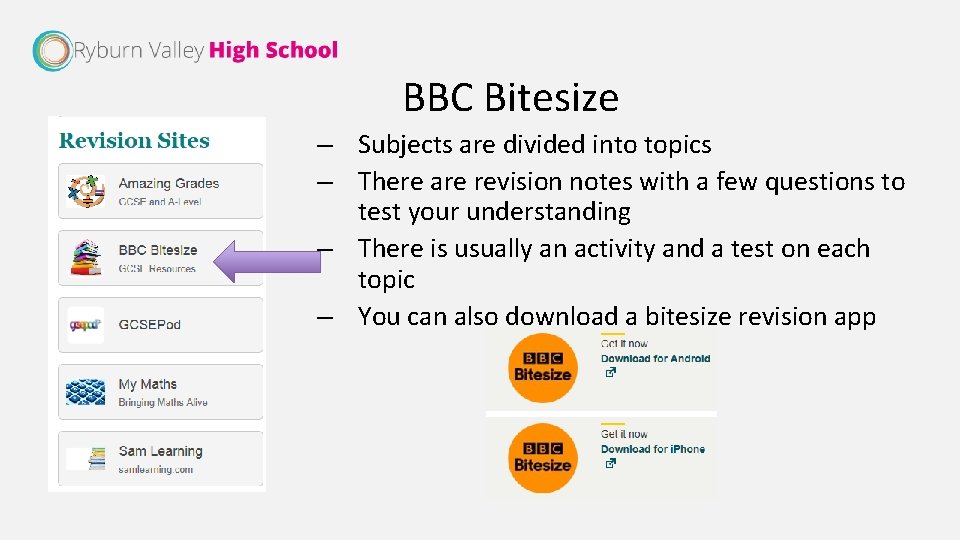
BBC Bitesize – Subjects are divided into topics – There are revision notes with a few questions to test your understanding – There is usually an activity and a test on each topic – You can also download a bitesize revision app
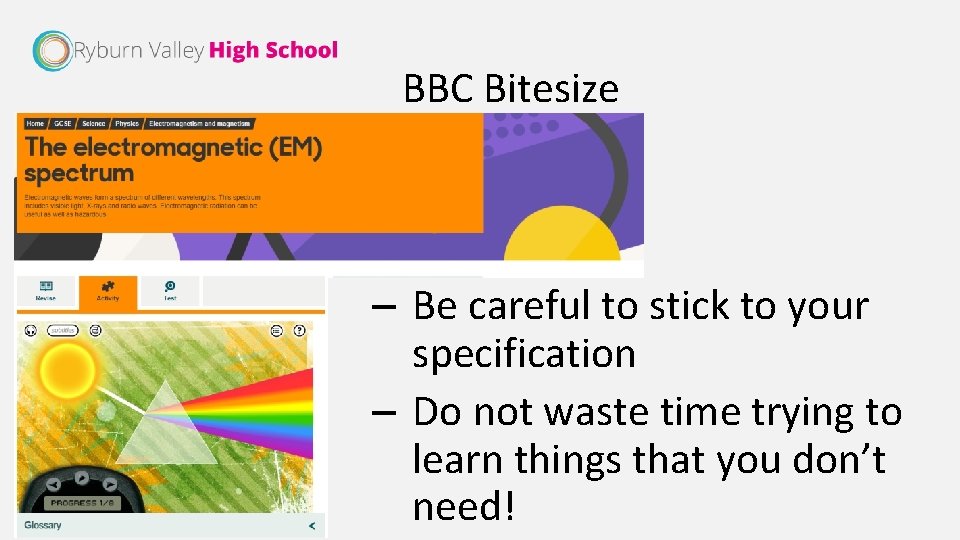
BBC Bitesize – Be careful to stick to your specification – Do not waste time trying to learn things that you don’t need!
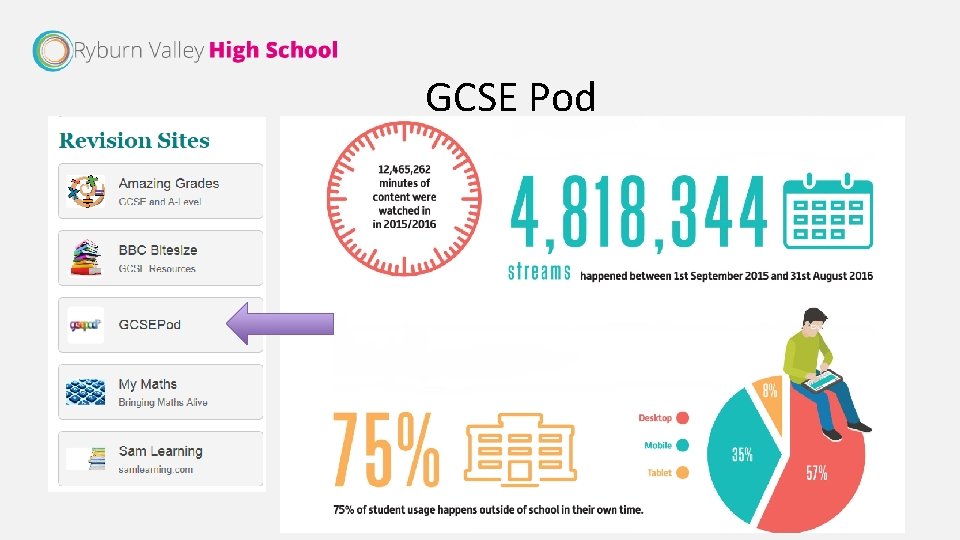
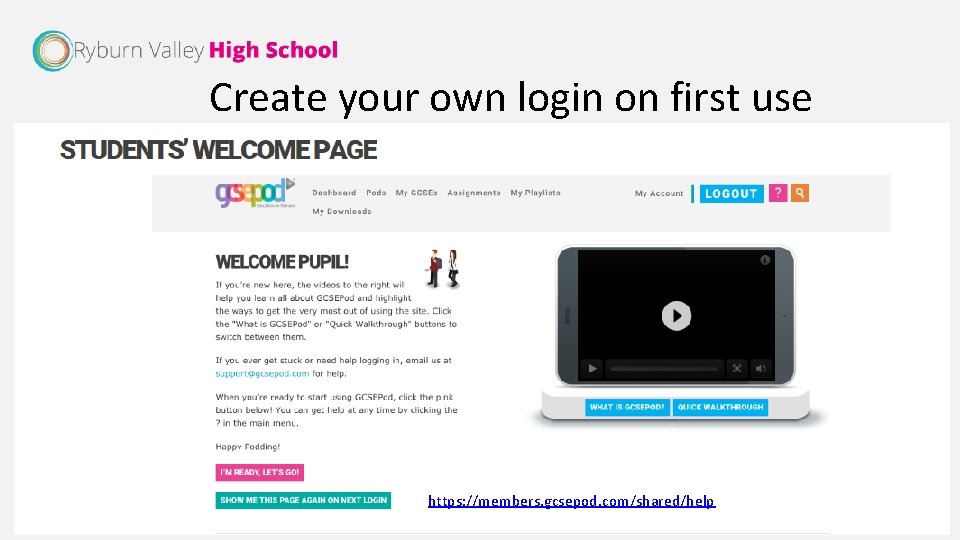
GCSE Pod
Create your own login on first use https: //members. gcsepod. com/shared/help
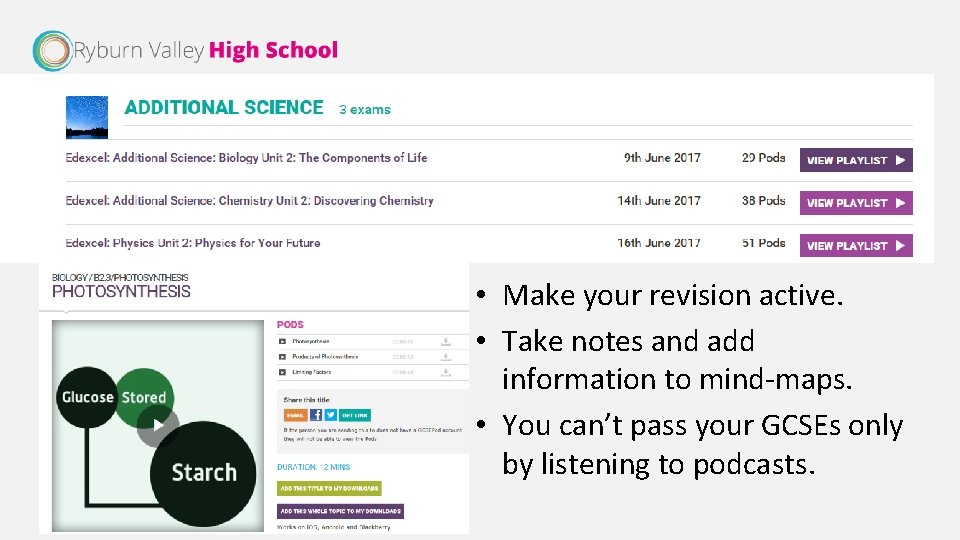
• Make your revision active. • Take notes and add information to mind-maps. • You can’t pass your GCSEs only by listening to podcasts.
My Maths • Password = Ryburn bidmas
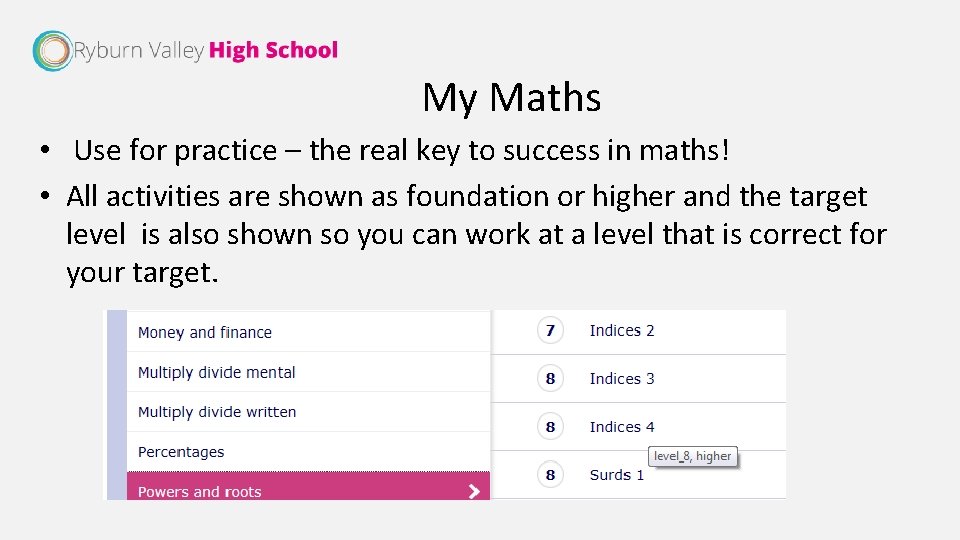
My Maths • Use for practice – the real key to success in maths! • All activities are shown as foundation or higher and the target level is also shown so you can work at a level that is correct for your target.
Sam Learning – Web based exam practice and revision. – All Students do and mark their own work. – Improves exam technique, confidence and results. – Anywhere, anytime learning. – Continually updated with new content in line with latest curriculum
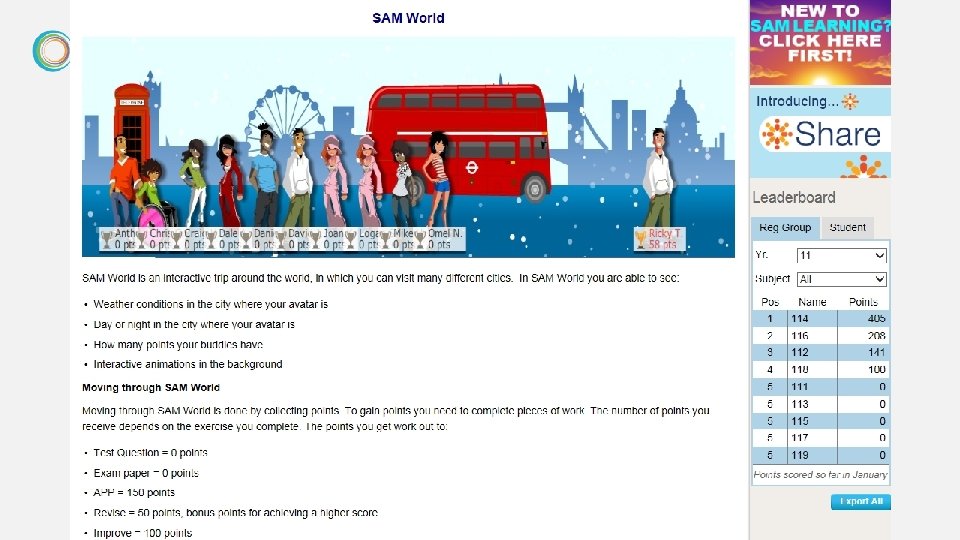
Five facts about SAM Learning • More than 5 million students have used SAM Learning to improve their grades. • Using us for just 10 hours across the year will increase your expected attainment by 2 GCSE grades, on average. • SAM Learning is, on average, used by over 100, 000 students every day. • There are more than 70, 000 activities across 27 subjects to help you revise. • You can challenge your friends to beat your scores and keep up with you progress on a live leader board.
GCSE Subjects Available Subject Hours Maths improve activities 112 Spanish 11 Statistics 49 Welsh 1 English improve activities 39 Applied Leisure & Tourism 10 English Literature 96 Business Studies 26 Science 173 Citizenship 23 Science for the 21 st Century 75 Design & Technology 17 Applied Science 41 Drama 4 ICT 32 Geography 19 Applied ICT 24 History 91 Di. DA 19 Media Studies 5 French 32 Music 4 German 13 Physical Education 30 Italian 5 Religious Studies 13
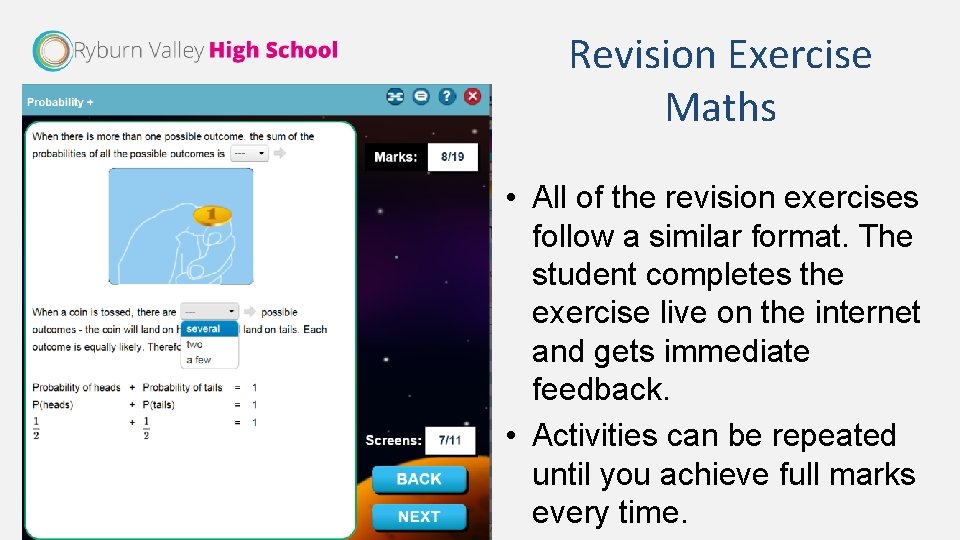
Revision Exercise Maths • All of the revision exercises follow a similar format. The student completes the exercise live on the internet and gets immediate feedback. • Activities can be repeated until you achieve full marks every time.
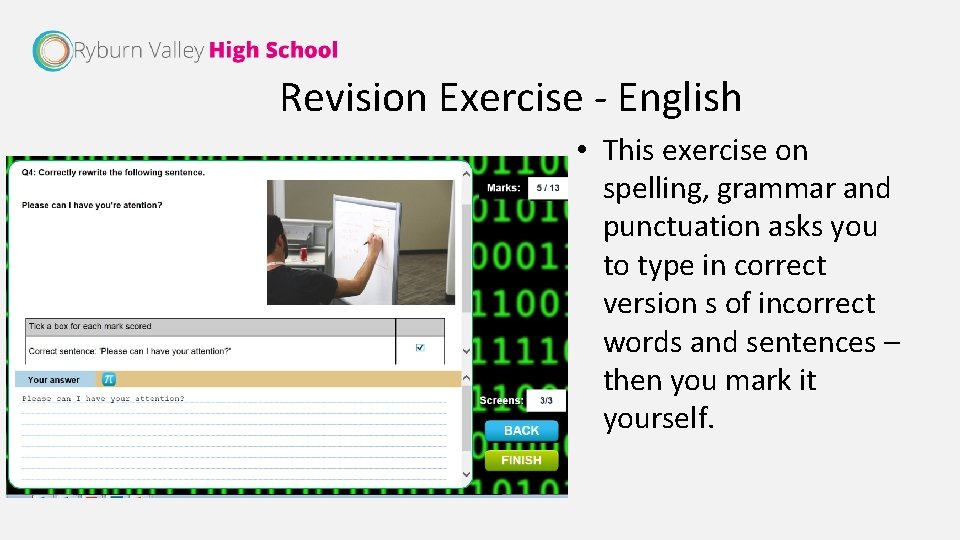
Revision Exercise - English • This exercise on spelling, grammar and punctuation asks you to type in correct version s of incorrect words and sentences – then you mark it yourself.
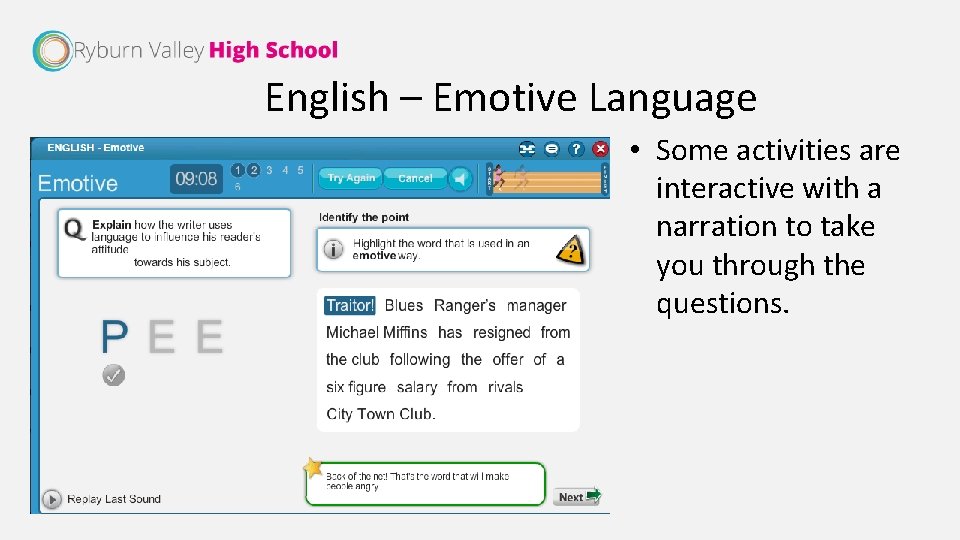
English – Emotive Language • Some activities are interactive with a narration to take you through the questions.
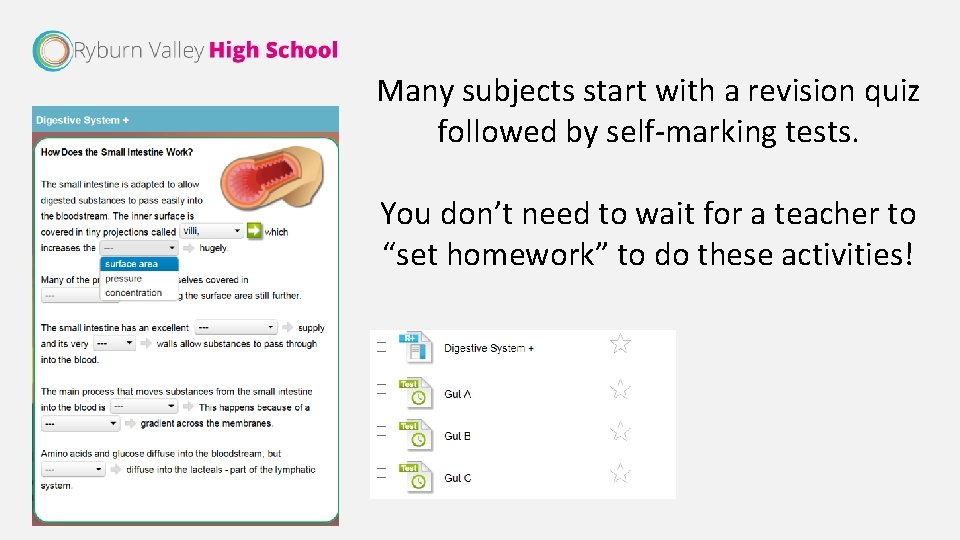
Many subjects start with a revision quiz followed by self-marking tests. You don’t need to wait for a teacher to “set homework” to do these activities!
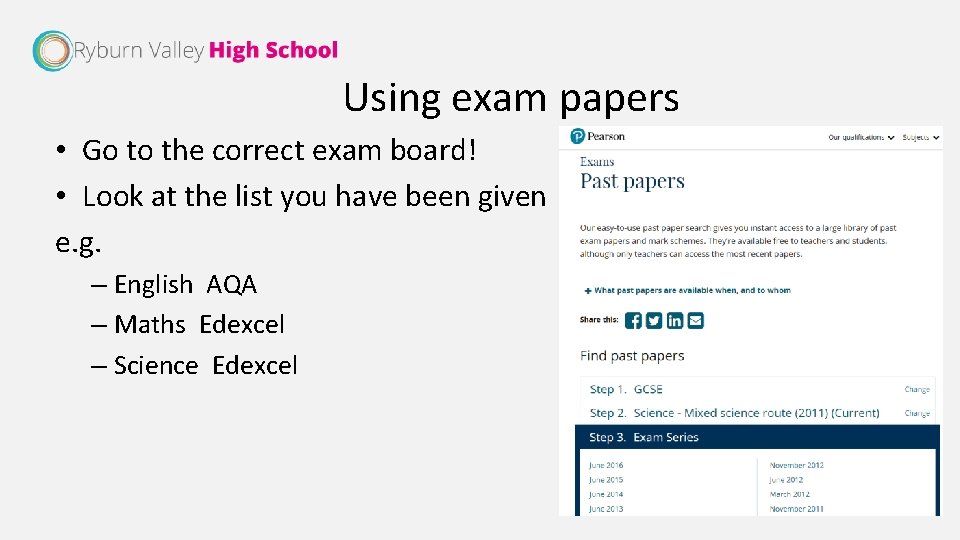
Using exam papers • Go to the correct exam board! • Look at the list you have been given e. g. – English AQA – Maths Edexcel – Science Edexcel
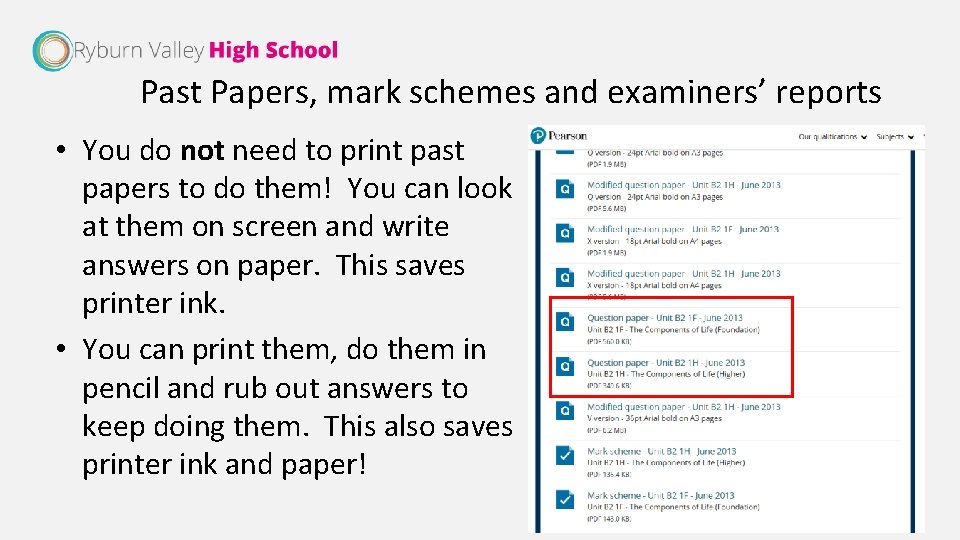
Past Papers, mark schemes and examiners’ reports • You do not need to print past papers to do them! You can look at them on screen and write answers on paper. This saves printer ink. • You can print them, do them in pencil and rub out answers to keep doing them. This also saves printer ink and paper!
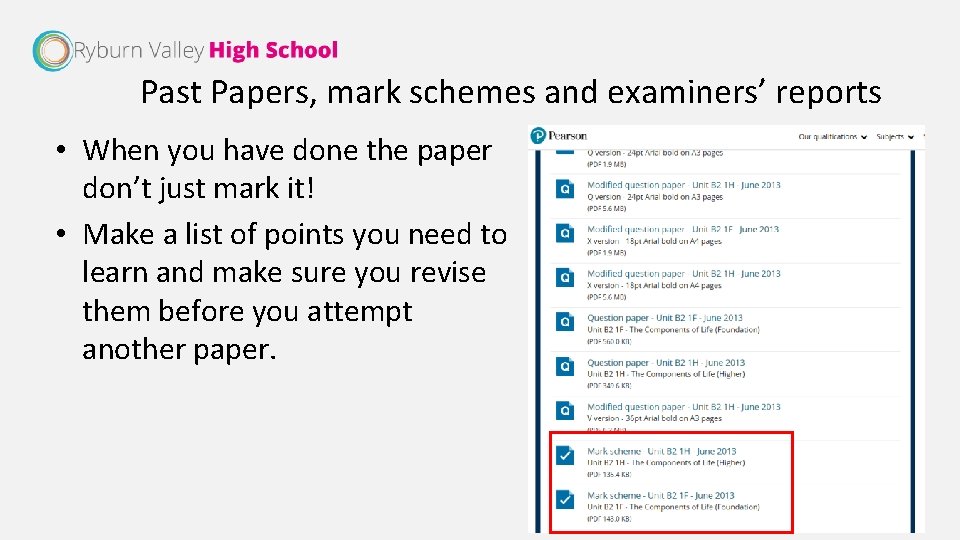
Past Papers, mark schemes and examiners’ reports • When you have done the paper don’t just mark it! • Make a list of points you need to learn and make sure you revise them before you attempt another paper.
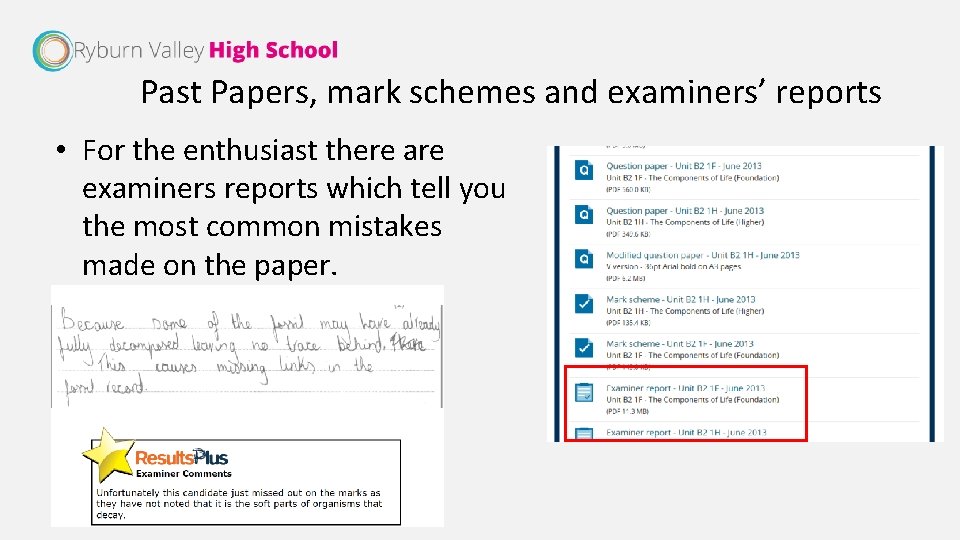
Past Papers, mark schemes and examiners’ reports • For the enthusiast there are examiners reports which tell you the most common mistakes made on the paper.
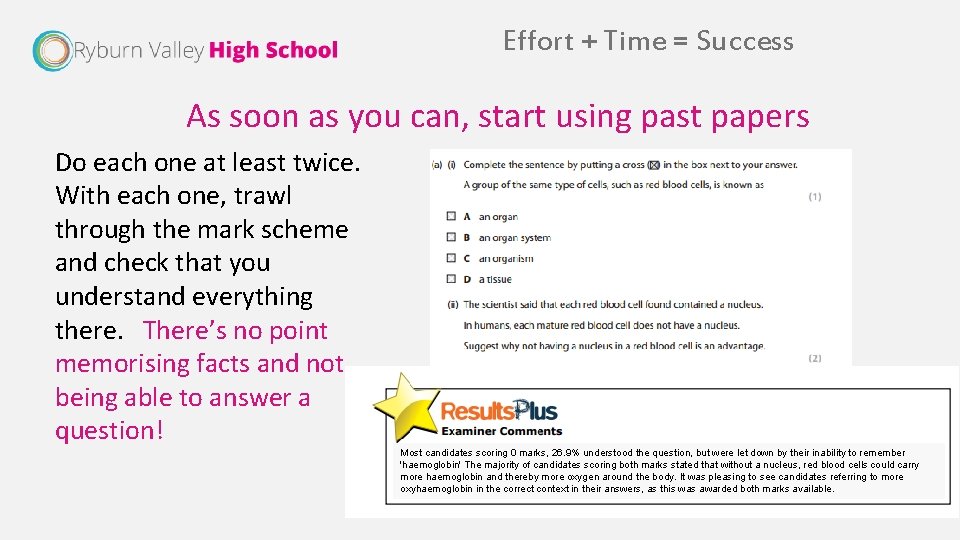
Effort + Time = Success As soon as you can, start using past papers Do each one at least twice. With each one, trawl through the mark scheme and check that you understand everything there. There’s no point memorising facts and not being able to answer a question! Most candidates scoring 0 marks, 26. 9% understood the question, but were let down by their inability to remember 'haemoglobin' The majority of candidates scoring both marks stated that without a nucleus, red blood cells could carry more haemoglobin and thereby more oxygen around the body. It was pleasing to see candidates referring to more oxyhaemoglobin in the correct context in their answers, as this was awarded both marks available.
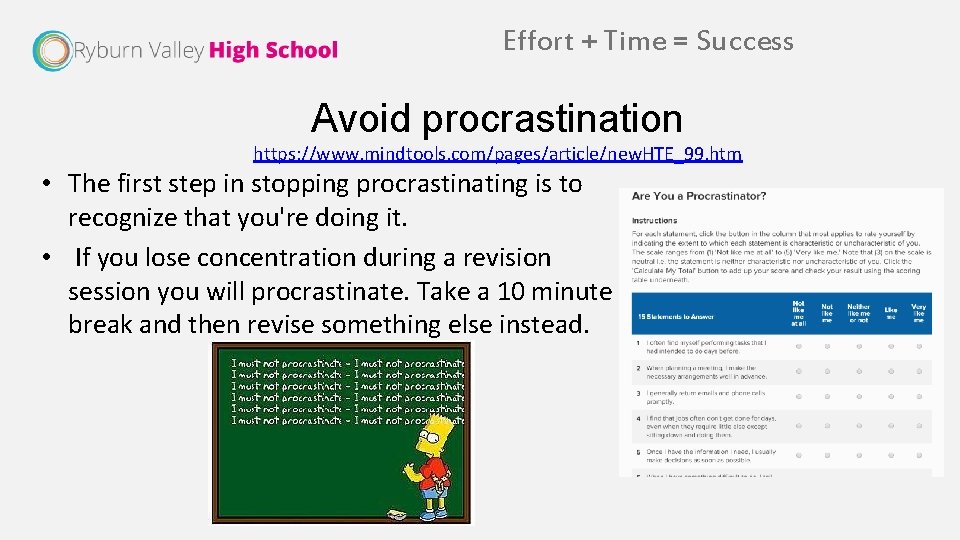
Effort + Time = Success Avoid procrastination https: //www. mindtools. com/pages/article/new. HTE_99. htm • The first step in stopping procrastinating is to recognize that you're doing it. • If you lose concentration during a revision session you will procrastinate. Take a 10 minute break and then revise something else instead.