
efficient simplification of pointsampled geometry Mark Pauly Markus
- Slides: 49
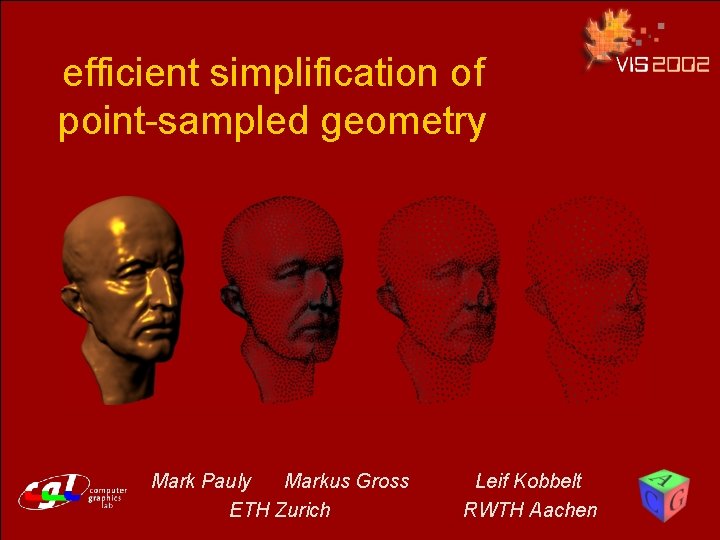
efficient simplification of point-sampled geometry Mark Pauly Markus Gross ETH Zurich Leif Kobbelt RWTH Aachen
outline n n n introduction surface model & local surface analysis point cloud simplification – hierarchical clustering – iterative simplification – particle simulation n measuring surface error comparison conclusions
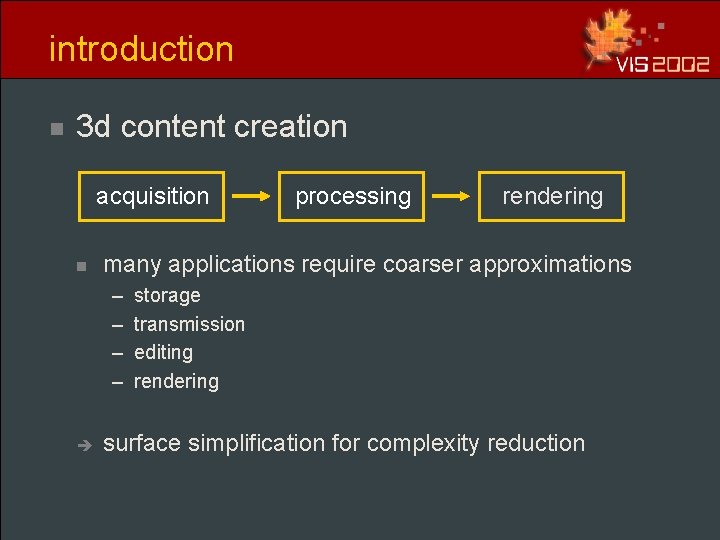
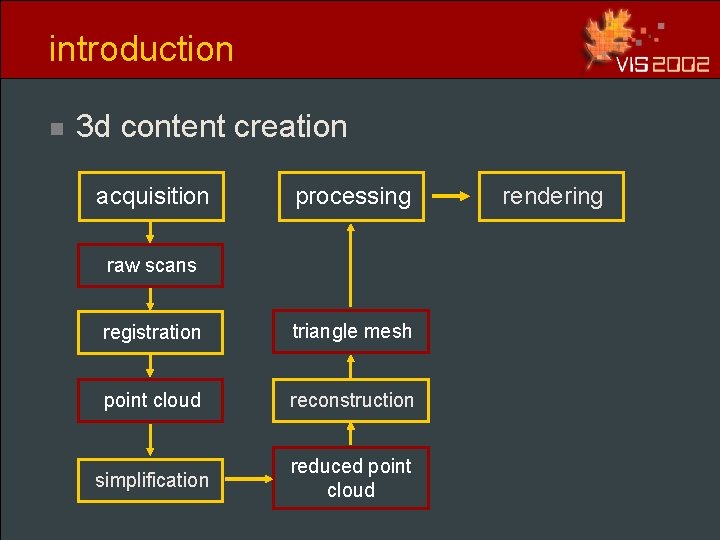
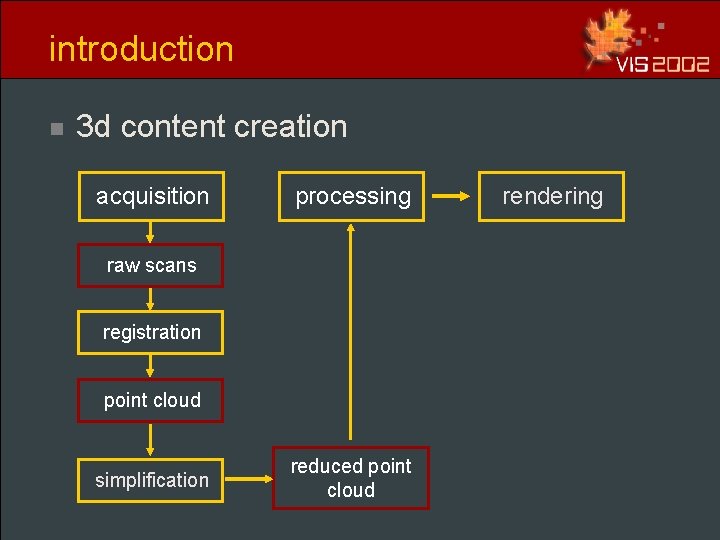
introduction n 3 d content creation acquisition n rendering many applications require coarser approximations – – è processing storage transmission editing rendering surface simplification for complexity reduction
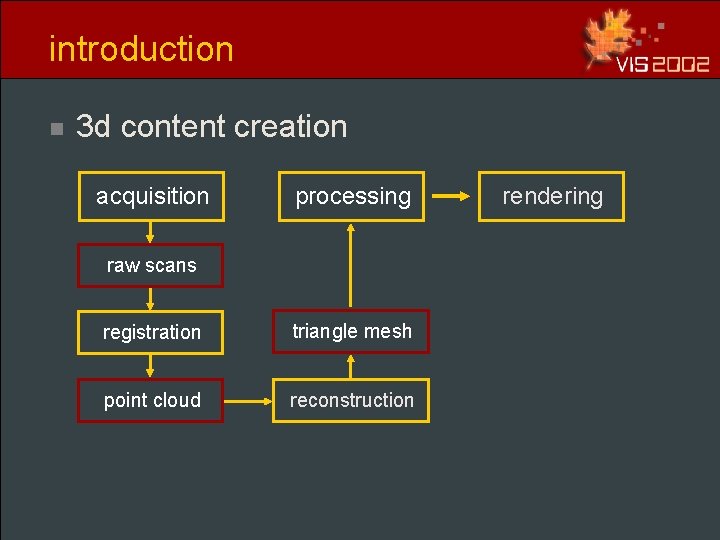
introduction n 3 d content creation acquisition processing raw scans registration triangle mesh point cloud reconstruction rendering
introduction n 3 d content creation acquisition processing raw scans registration triangle mesh point cloud reconstruction simplification reduced point cloud rendering
introduction n 3 d content creation acquisition processing raw scans registration point cloud simplification reduced point cloud rendering
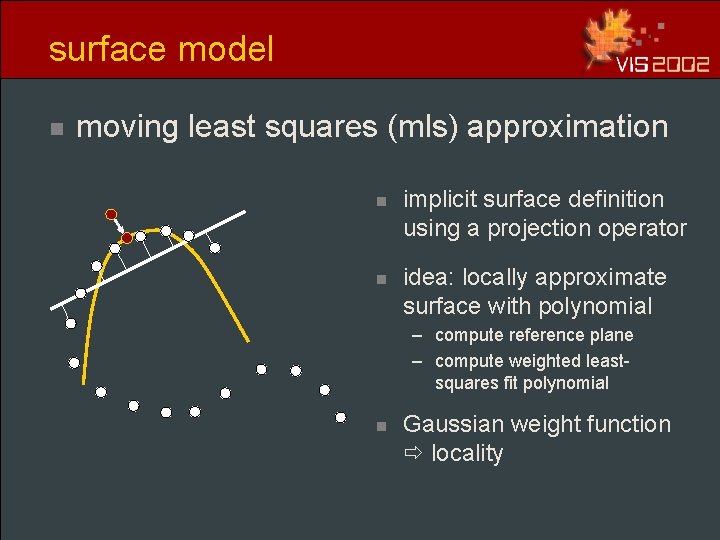
surface model n moving least squares (mls) approximation n implicit surface definition using a projection operator n idea: locally approximate surface with polynomial – compute reference plane – compute weighted leastsquares fit polynomial n Gaussian weight function locality
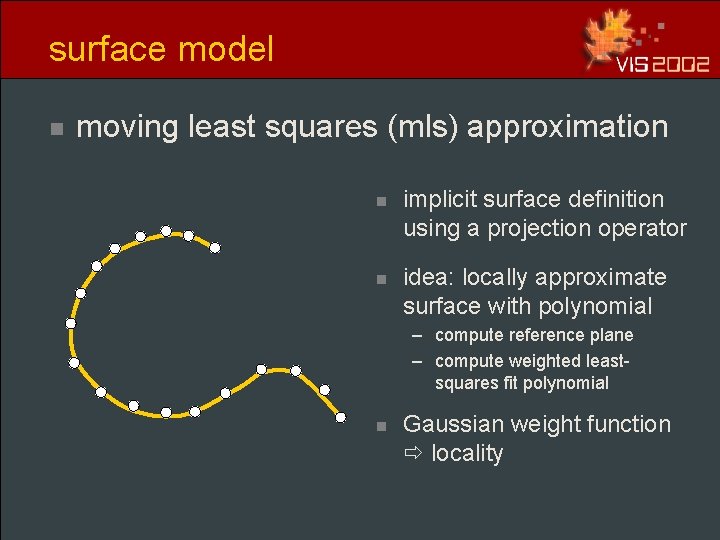
surface model n moving least squares (mls) approximation n implicit surface definition using a projection operator n idea: locally approximate surface with polynomial – compute reference plane – compute weighted leastsquares fit polynomial n Gaussian weight function locality
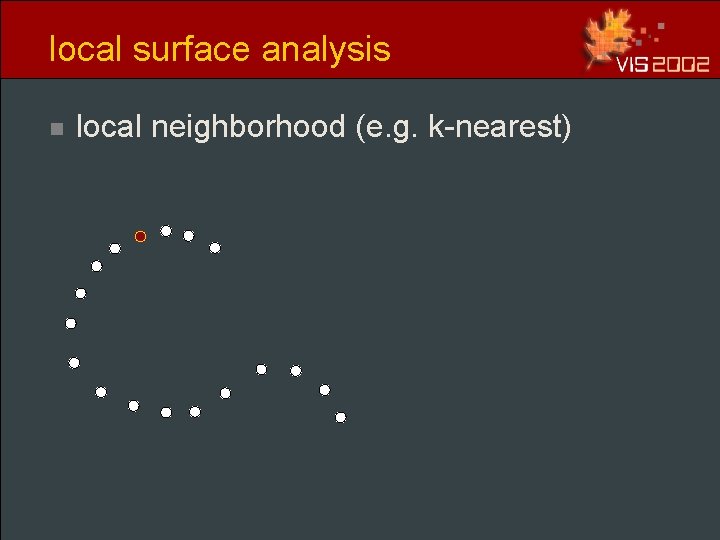
local surface analysis n local neighborhood (e. g. k-nearest)
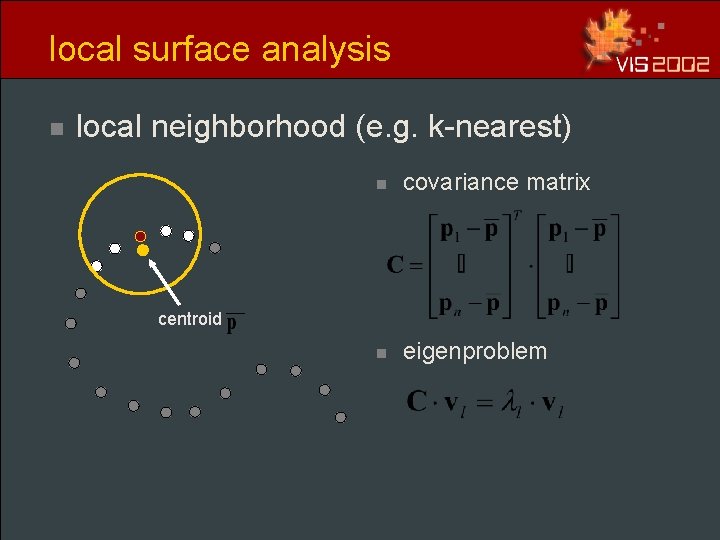
local surface analysis n local neighborhood (e. g. k-nearest) n covariance matrix n eigenproblem centroid
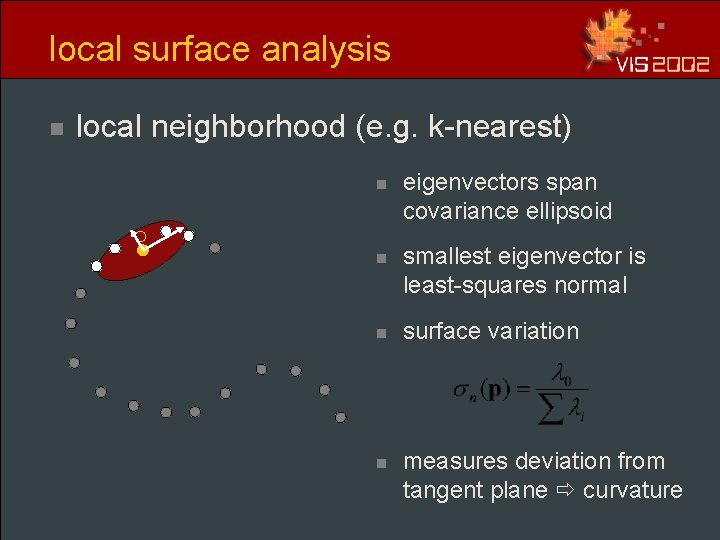
local surface analysis n local neighborhood (e. g. k-nearest) n eigenvectors span covariance ellipsoid n smallest eigenvector is least-squares normal n surface variation n measures deviation from tangent plane curvature
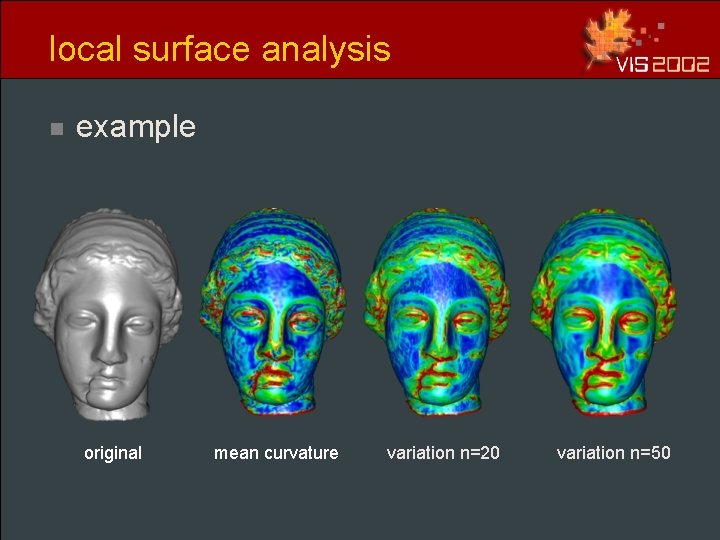
local surface analysis n example original mean curvature variation n=20 variation n=50
surface simplification n hierarchical clustering iterative simplification particle simulation
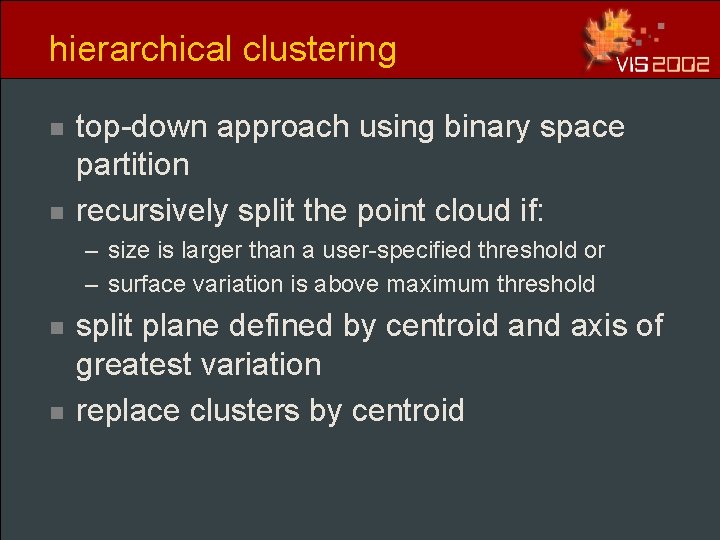
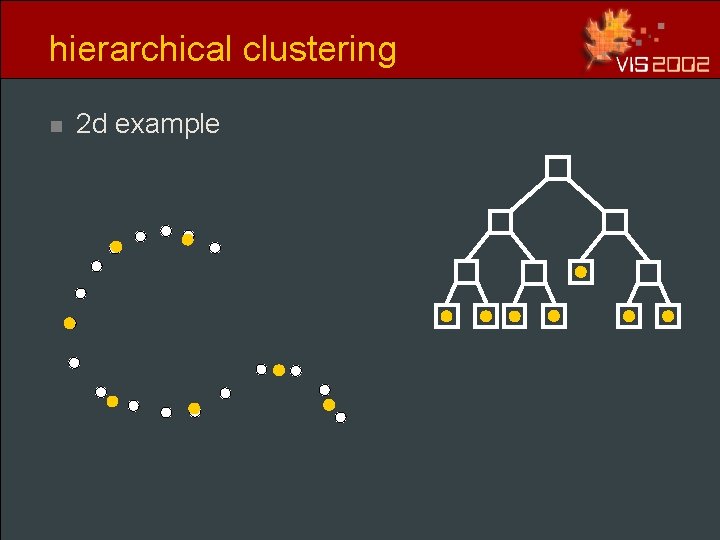
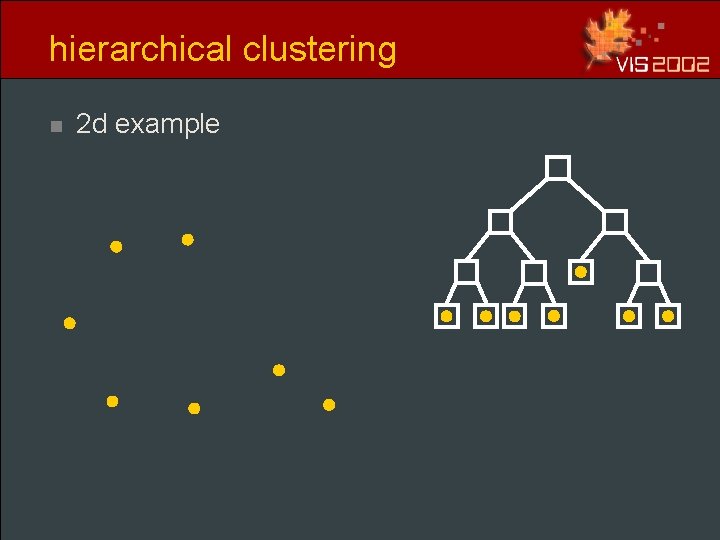
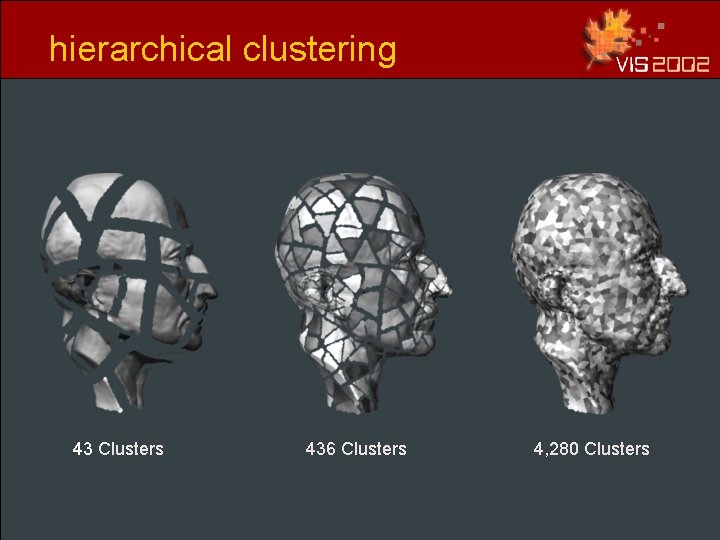
hierarchical clustering n n top-down approach using binary space partition recursively split the point cloud if: – size is larger than a user-specified threshold or – surface variation is above maximum threshold n n split plane defined by centroid and axis of greatest variation replace clusters by centroid
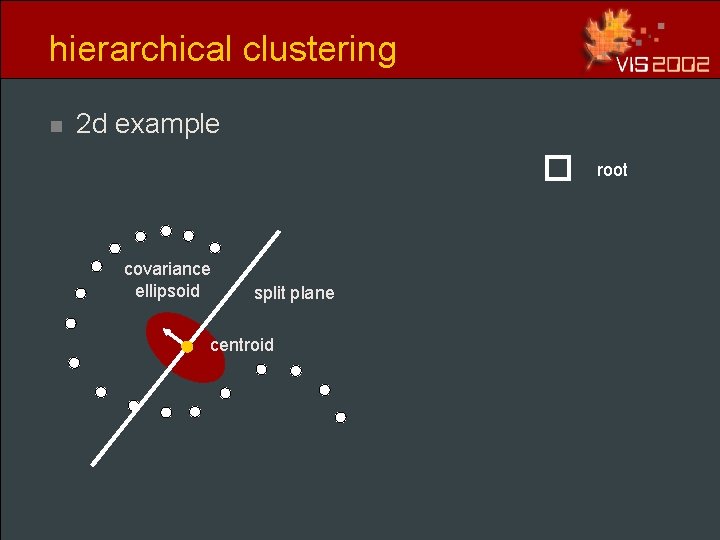
hierarchical clustering n 2 d example root covariance ellipsoid split plane centroid
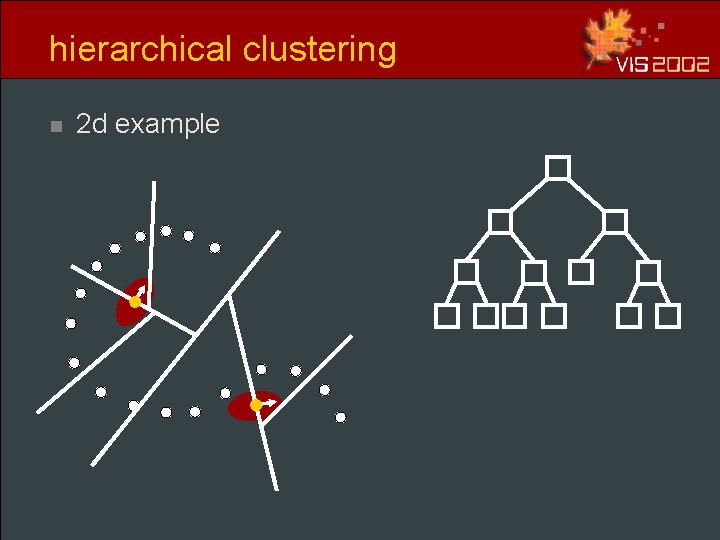
hierarchical clustering n 2 d example
hierarchical clustering n 2 d example
hierarchical clustering n 2 d example
hierarchical clustering 43 Clusters 436 Clusters 4, 280 Clusters
surface simplification n hierarchical clustering iterative simplification particle simulation
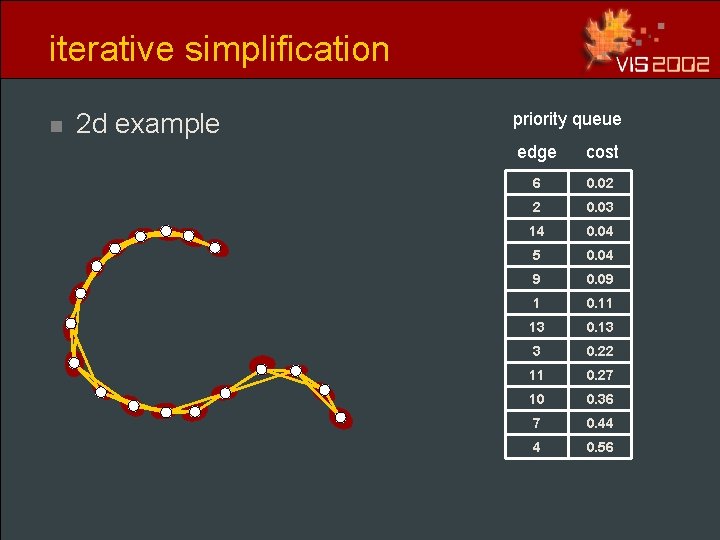
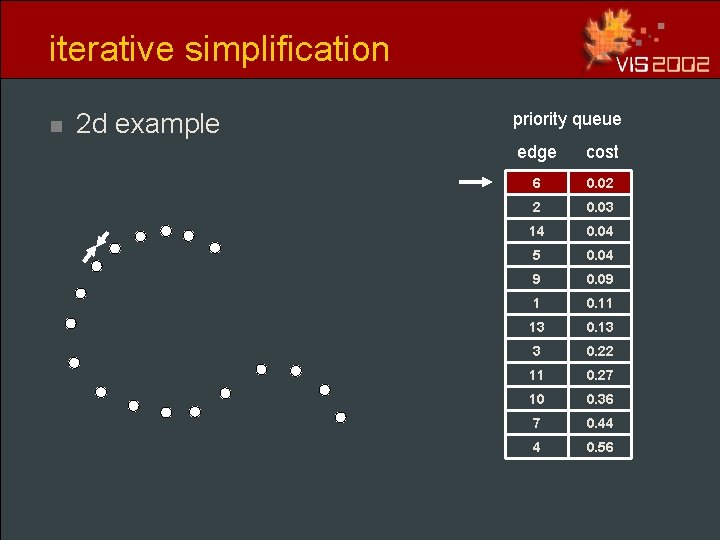
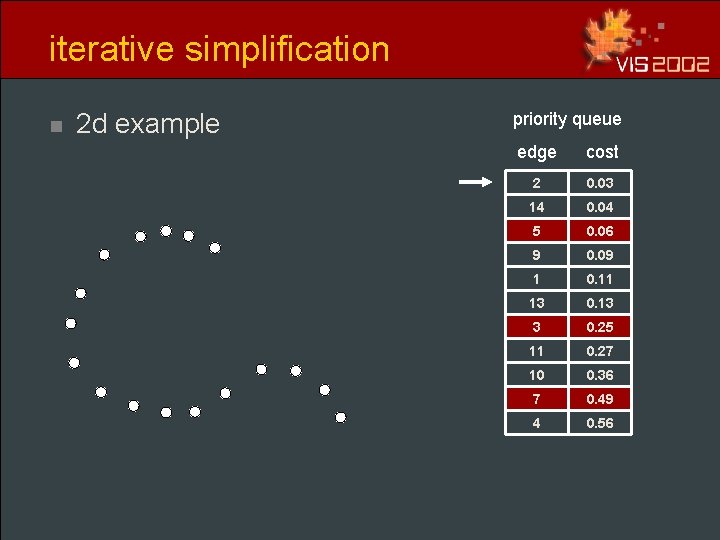
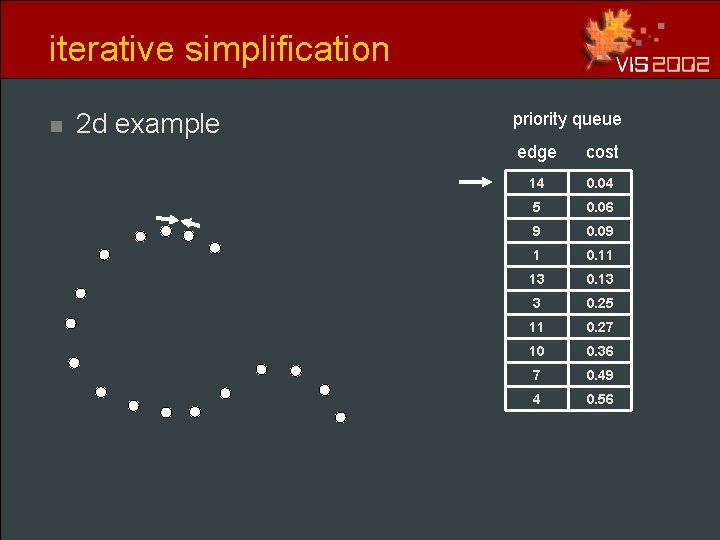
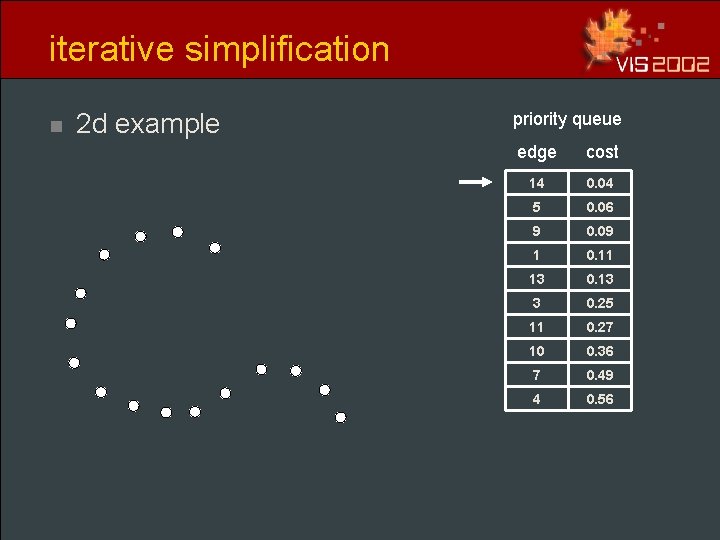
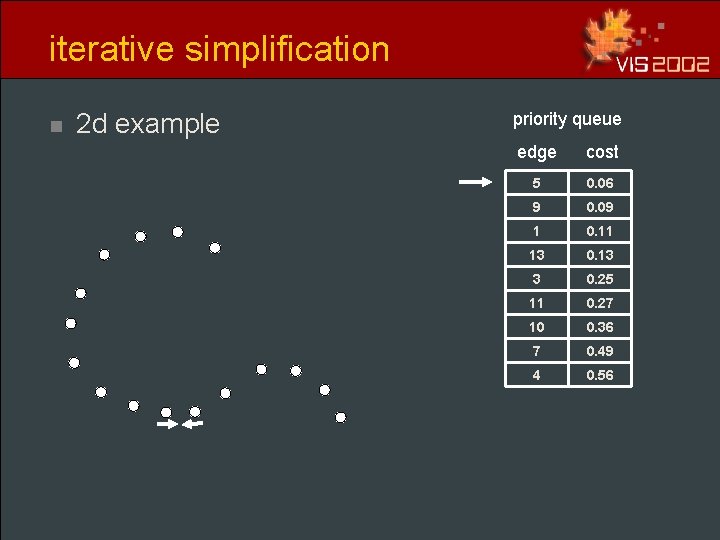
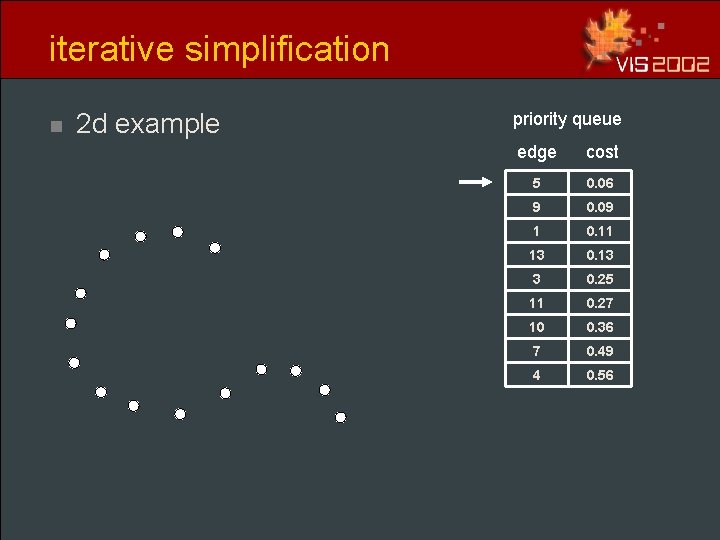
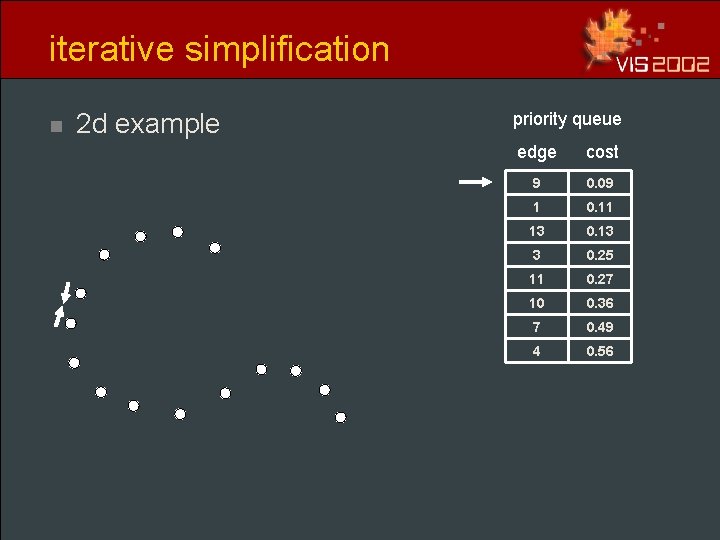
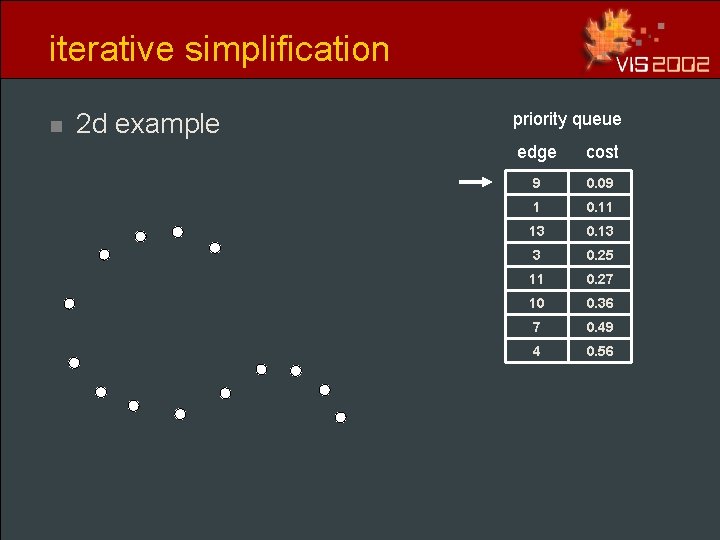
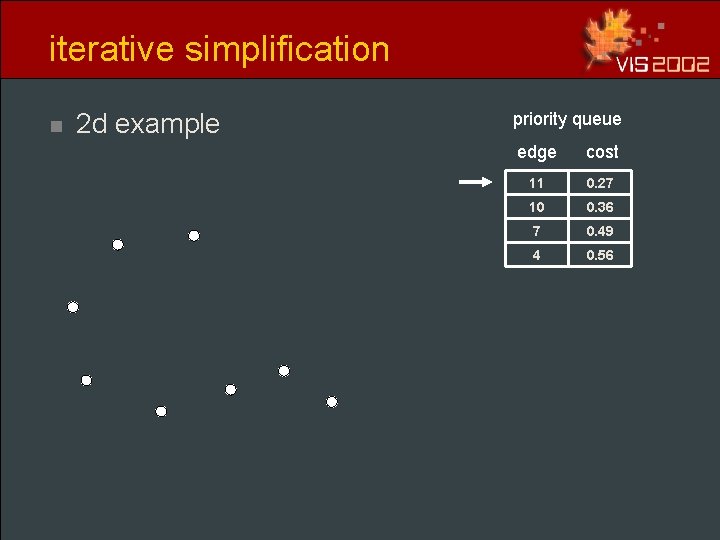
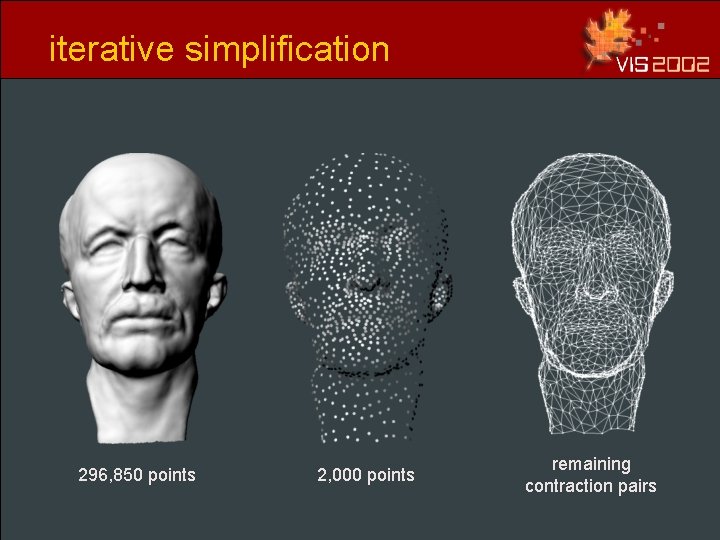
iterative simplification n iteratively contracts point pairs each contraction reduces the number of points by one n contractions are arranged in priority queue according to quadric error metric n quadric measures cost of contraction and determines optimal position for contracted sample n equivalent to QSlim except for definition of approximating planes
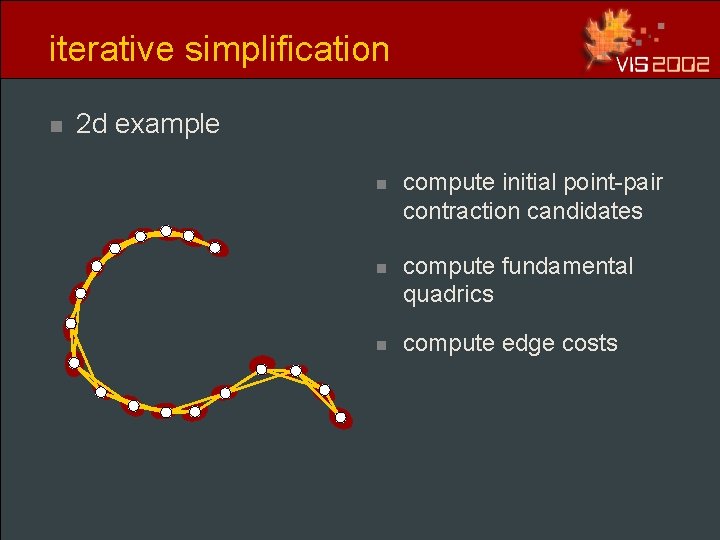
iterative simplification n 2 d example n compute initial point-pair contraction candidates n compute fundamental quadrics n compute edge costs
iterative simplification n 2 d example priority queue edge cost 6 0. 02 2 0. 03 14 0. 04 5 0. 04 9 0. 09 1 0. 11 13 0. 13 3 0. 22 11 0. 27 10 0. 36 7 0. 44 4 0. 56
iterative simplification n 2 d example priority queue edge cost 6 0. 02 2 0. 03 14 0. 04 5 0. 04 9 0. 09 1 0. 11 13 0. 13 3 0. 22 11 0. 27 10 0. 36 7 0. 44 4 0. 56
iterative simplification n 2 d example priority queue edge cost 2 0. 03 14 0. 04 5 0. 06 9 0. 09 1 0. 11 13 0. 13 3 0. 25 11 0. 27 10 0. 36 7 0. 49 4 0. 56
iterative simplification n 2 d example priority queue edge cost 14 0. 04 5 0. 06 9 0. 09 1 0. 11 13 0. 13 3 0. 25 11 0. 27 10 0. 36 7 0. 49 4 0. 56
iterative simplification n 2 d example priority queue edge cost 14 0. 04 5 0. 06 9 0. 09 1 0. 11 13 0. 13 3 0. 25 11 0. 27 10 0. 36 7 0. 49 4 0. 56
iterative simplification n 2 d example priority queue edge cost 5 0. 06 9 0. 09 1 0. 11 13 0. 13 3 0. 25 11 0. 27 10 0. 36 7 0. 49 4 0. 56
iterative simplification n 2 d example priority queue edge cost 5 0. 06 9 0. 09 1 0. 11 13 0. 13 3 0. 25 11 0. 27 10 0. 36 7 0. 49 4 0. 56
iterative simplification n 2 d example priority queue edge cost 9 0. 09 1 0. 11 13 0. 13 3 0. 25 11 0. 27 10 0. 36 7 0. 49 4 0. 56
iterative simplification n 2 d example priority queue edge cost 9 0. 09 1 0. 11 13 0. 13 3 0. 25 11 0. 27 10 0. 36 7 0. 49 4 0. 56
iterative simplification n 2 d example priority queue edge cost 11 0. 27 10 0. 36 7 0. 49 4 0. 56
iterative simplification 296, 850 points 2, 000 points remaining contraction pairs
surface simplification n hierarchical clustering iterative simplification particle simulation
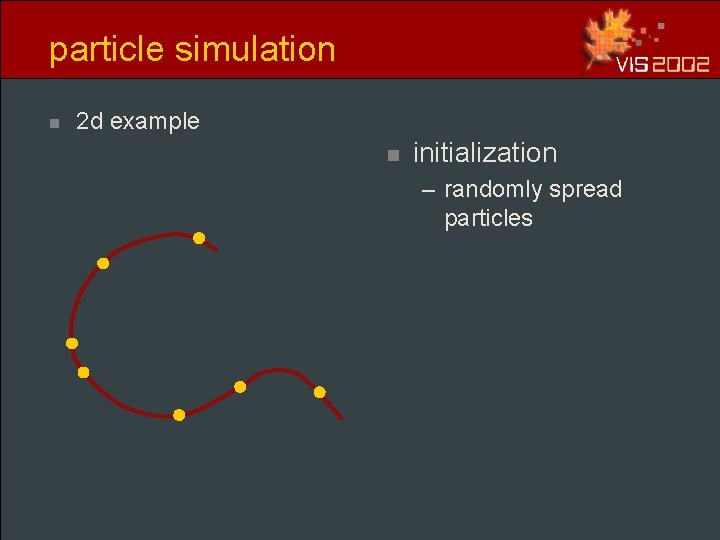
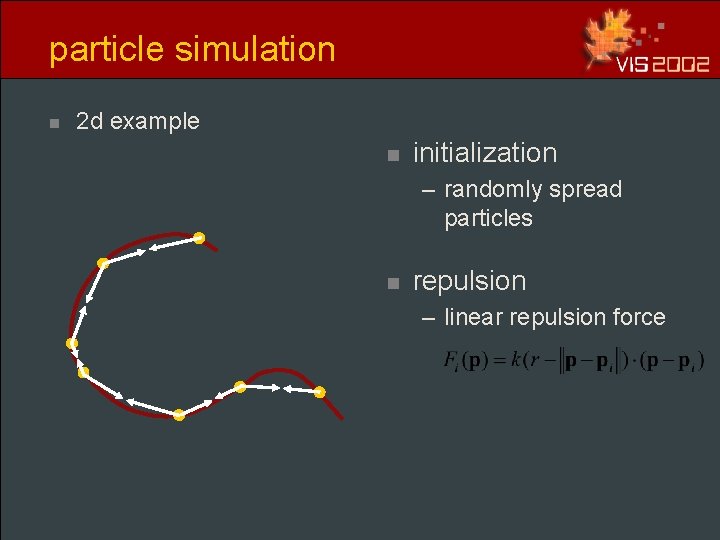
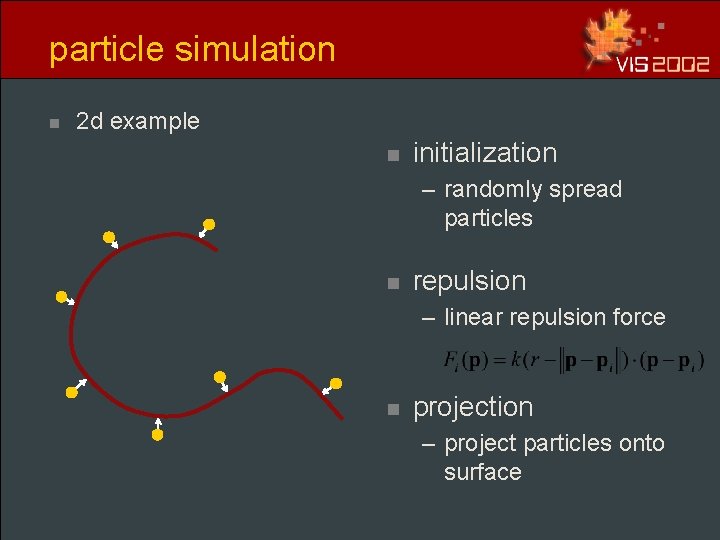
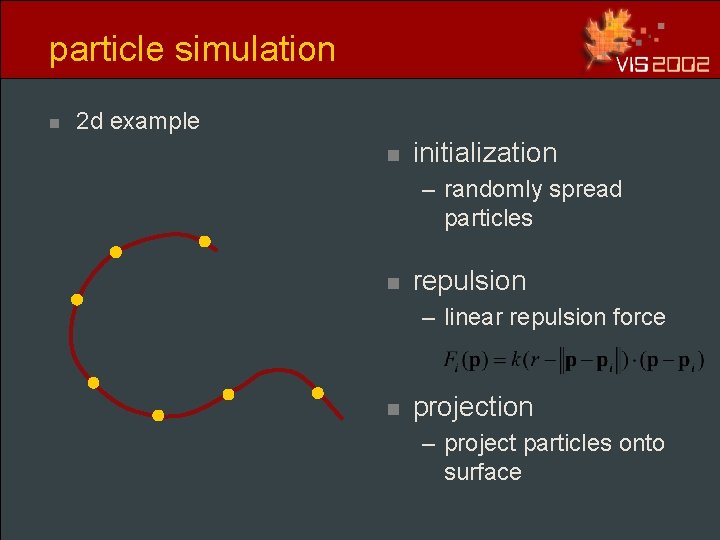
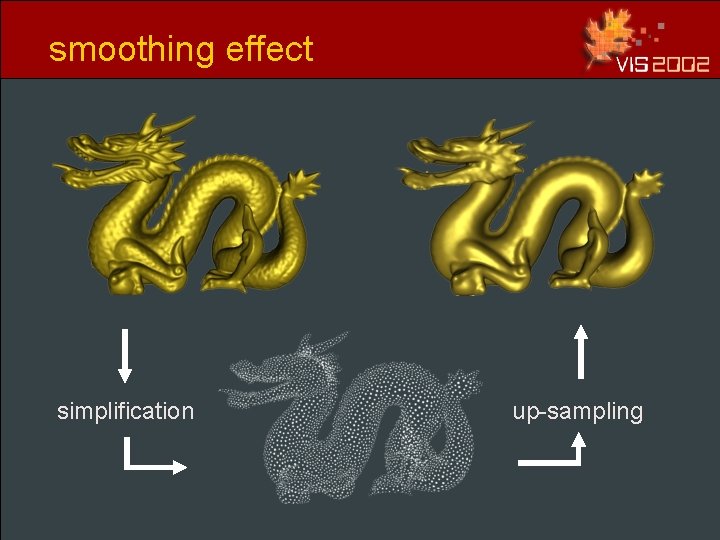
particle simulation n resample surface by distributing particles on the surface n particles move on surface according to interparticle repelling forces n particle relaxation terminates when equilibrium is reached (requires damping) n can also be used for up-sampling!
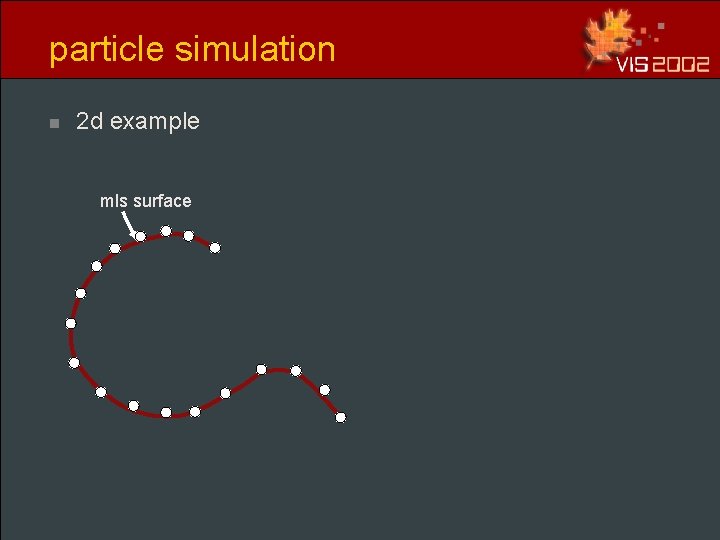
particle simulation n 2 d example mls surface
particle simulation n 2 d example n initialization – randomly spread particles
particle simulation n 2 d example n initialization – randomly spread particles n repulsion – linear repulsion force
particle simulation n 2 d example n initialization – randomly spread particles n repulsion – linear repulsion force n projection – project particles onto surface
particle simulation n 2 d example n initialization – randomly spread particles n repulsion – linear repulsion force n projection – project particles onto surface
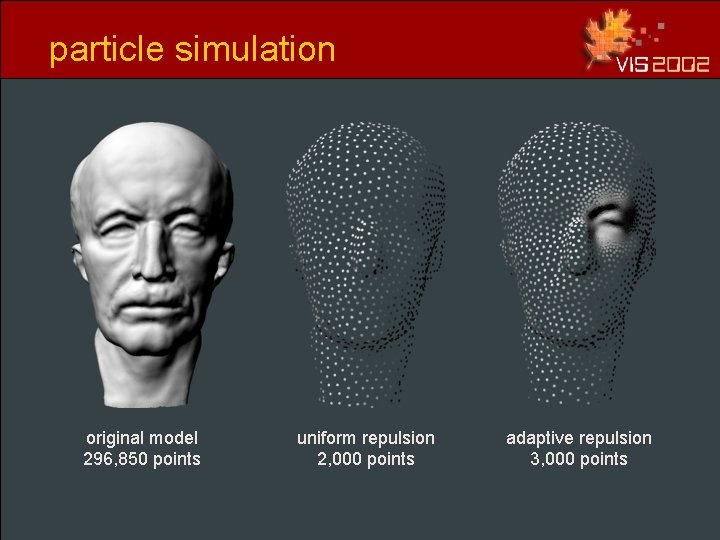
particle simulation original model 296, 850 points uniform repulsion 2, 000 points adaptive repulsion 3, 000 points
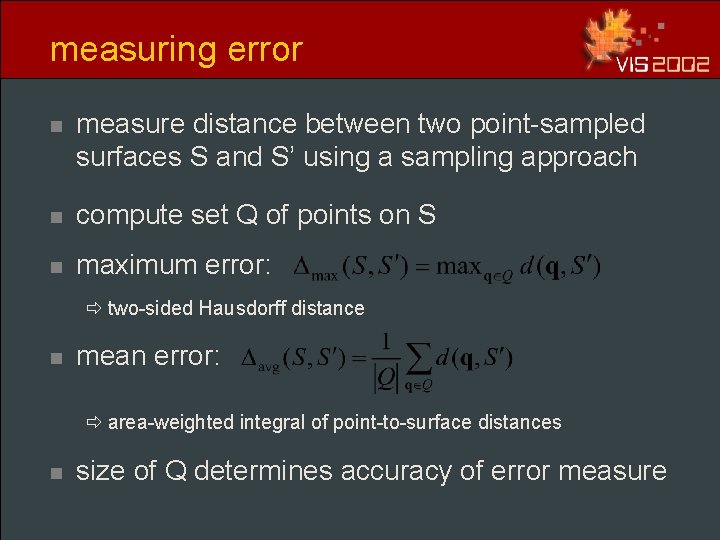
measuring error n measure distance between two point-sampled surfaces S and S’ using a sampling approach n compute set Q of points on S n maximum error: two-sided Hausdorff distance n mean error: area-weighted integral of point-to-surface distances n size of Q determines accuracy of error measure
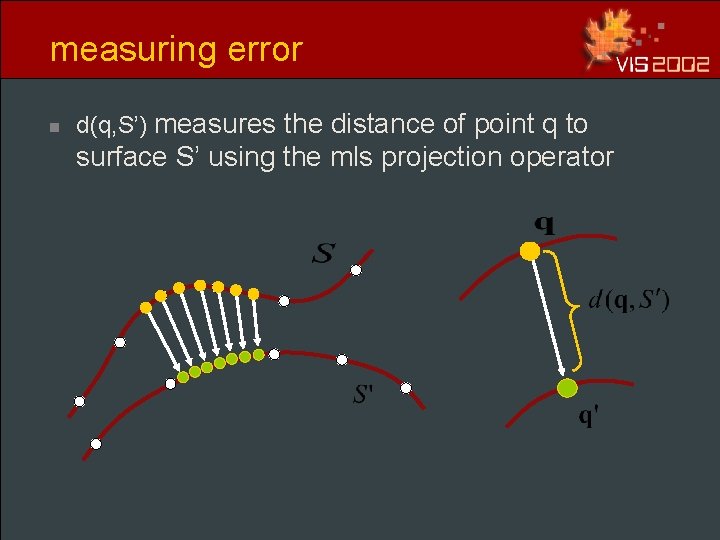
measuring error n d(q, S’) measures the distance of point q to surface S’ using the mls projection operator
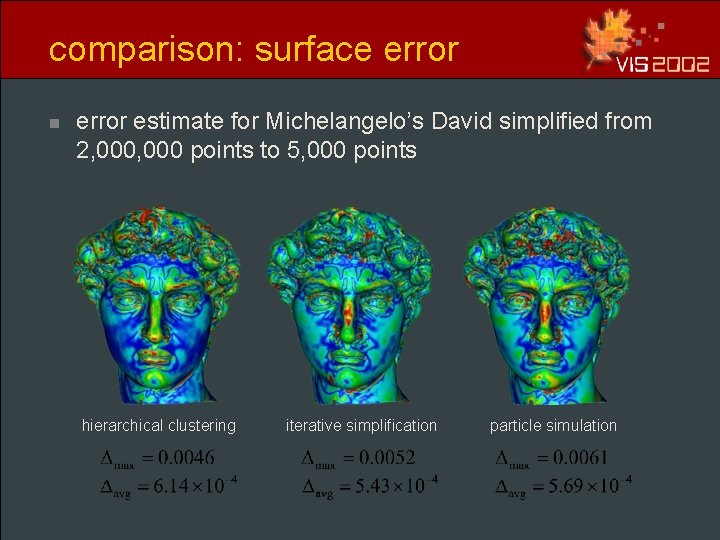
comparison: surface error n error estimate for Michelangelo’s David simplified from 2, 000 points to 5, 000 points hierarchical clustering iterative simplification particle simulation
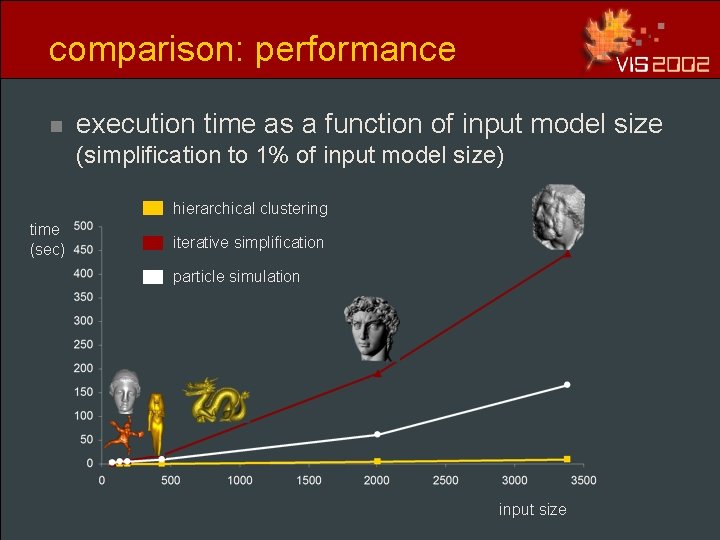
comparison: performance n execution time as a function of input model size (simplification to 1% of input model size) hierarchical clustering time (sec) iterative simplification particle simulation input size
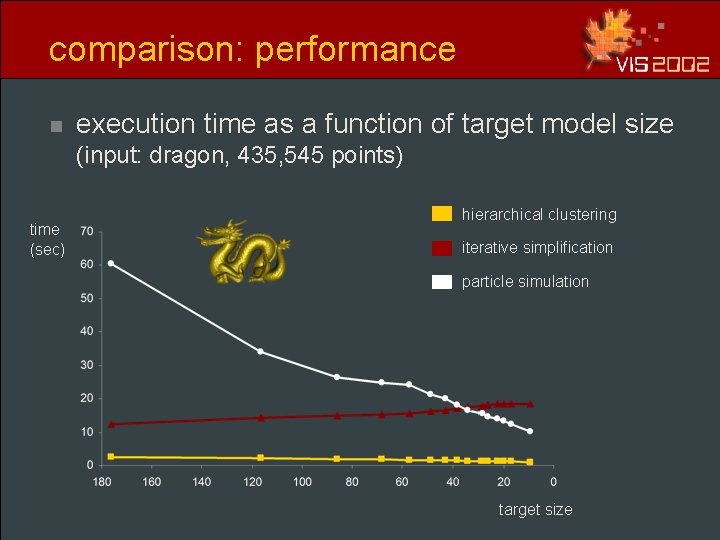
comparison: performance n execution time as a function of target model size (input: dragon, 435, 545 points) time (sec) hierarchical clustering iterative simplification particle simulation target size
smoothing effect simplification up-sampling
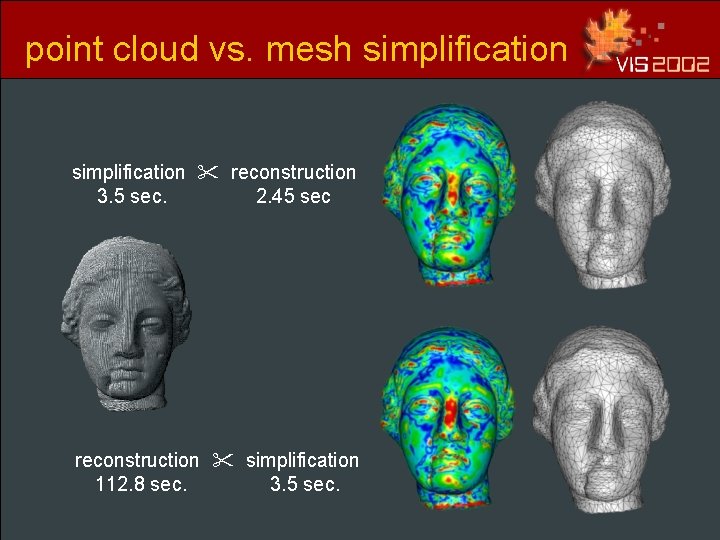
point cloud vs. mesh simplification reconstruction 3. 5 sec. 2. 45 sec reconstruction simplification 112. 8 sec. 3. 5 sec.
conclusions n point cloud simplification can be useful to – reduce the complexity of geometric models early in the 3 d content creation pipeline – build LOD surface representations – create surface hierarchies n n n the right method depends on the application check out: www. pointshop 3 d. com acknowledgement: European graduate program on combinatorics, geometry, and computation