
Efficient Environment Part II Phenol Resins Structure of


- Slides: 10
Efficient Environment, Part II: Phenol Resins
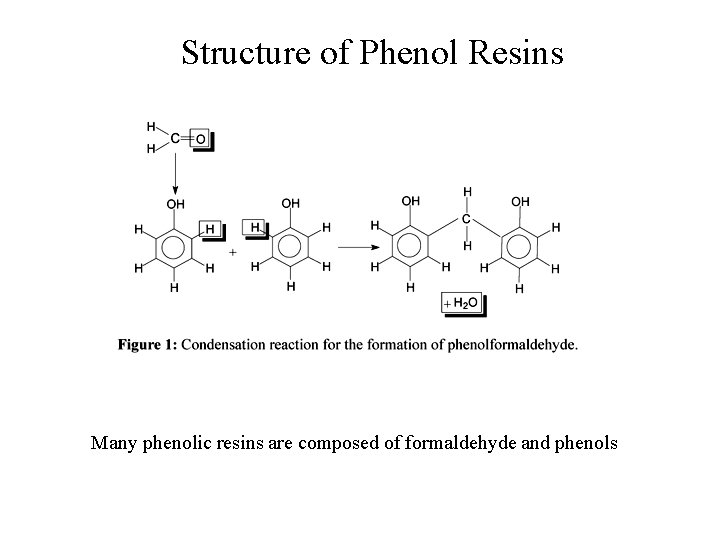
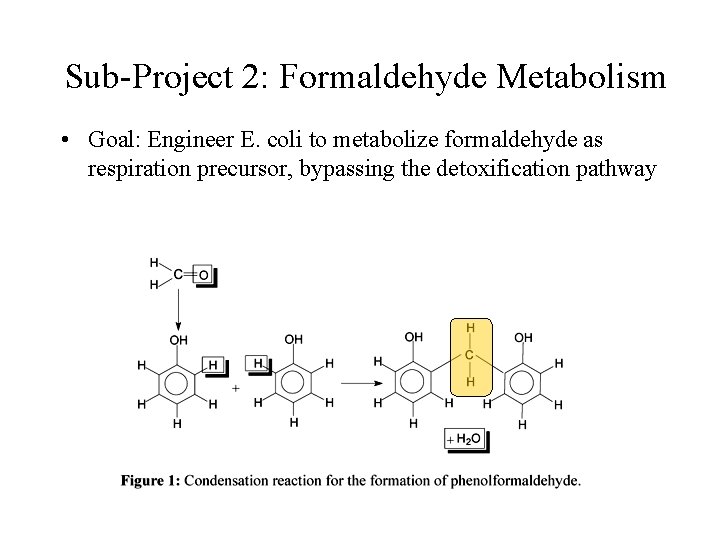
Structure of Phenol Resins Many phenolic resins are composed of formaldehyde and phenols
Sub-project 1: Phenol metabolism • Goal: Engineer E. coli to metabolize phenol as a carbon source, linking it to cellular respiration
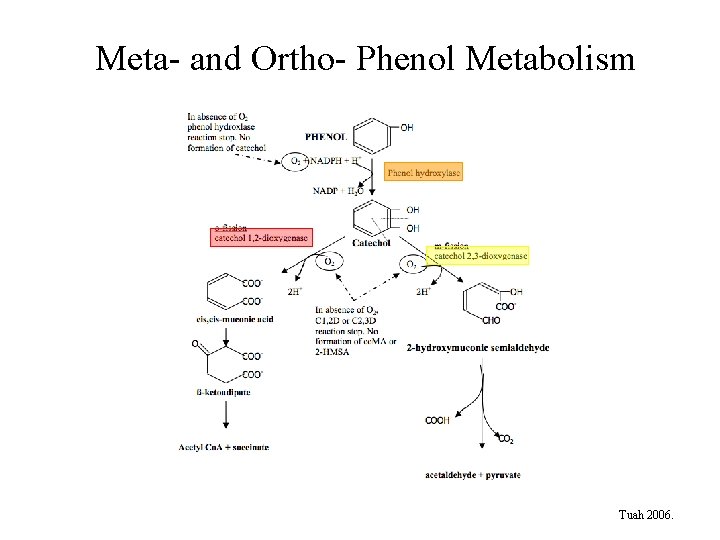
Meta- and Ortho- Phenol Metabolism Tuah 2006.
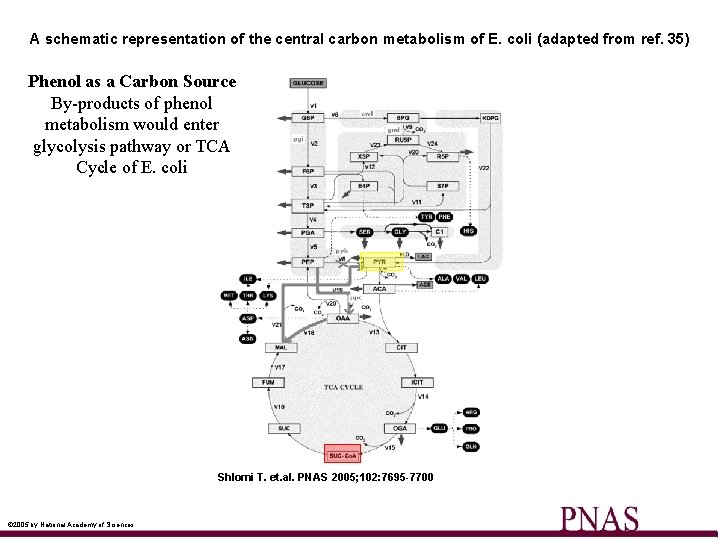
A schematic representation of the central carbon metabolism of E. coli (adapted from ref. 35) Phenol as a Carbon Source By-products of phenol metabolism would enter glycolysis pathway or TCA Cycle of E. coli Shlomi T. et. al. PNAS 2005; 102: 7695 -7700 © 2005 by National Academy of Sciences
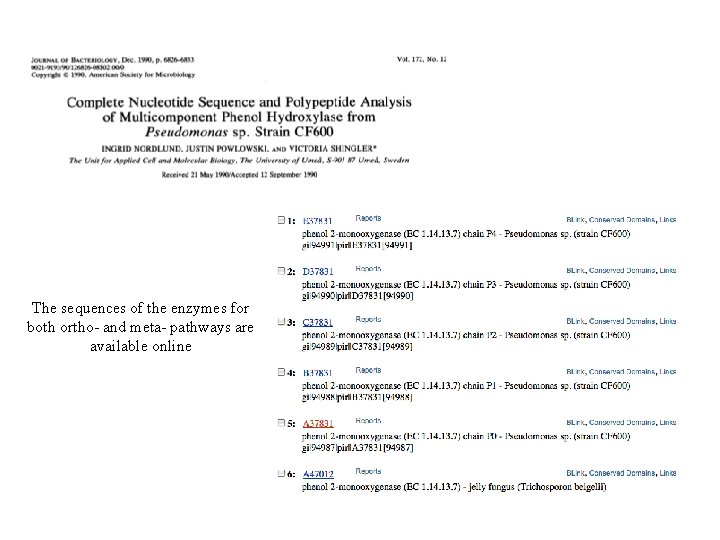
The sequences of the enzymes for both ortho- and meta- pathways are available online
Sub-Project 2: Formaldehyde Metabolism • Goal: Engineer E. coli to metabolize formaldehyde as respiration precursor, bypassing the detoxification pathway
Oxidation versus assimilation 3 -Hexulose-6 -Phosphate Synthase: Condensation of ribulose 5 phosphate with formaldehyde to form 3 -hexulose 6 -phosphate. phospho-3 -hexuloisomerase: 3 -hexulose 6 -phosphate to form Dfructose-6 -phosphate http: //sti. srs. gov/fulltext/ms 2001058/fig 1. gif
Project in Context • Tsai et al. isolated a strain of yeast capable of degrading both phenol (metafission) and formaldehyde, but acknowledged that “a microbe with a biodegrading power toward phenol and formaldehyde concurrently has been scarcely reported” (Tsai et al. 2005) • Gusse et al. isolated white-rot fungus capable of degrading phenolic resins but efficiency uncertain (Gusse et al. 2006) • Hidalgo et al. showed the ability of Rhodococcus erythropolis UPV-1 to grow on phenol and remove formaldehyde • Linking both to cellular respiration (not just detoxification) in E. coli would facilitate future projects to make PR degradation more efficient--more genetically tractable and better understood
Questions to Consider • Can we make phenol the sole or preferred carbon source? • Competition with formaldehyde resistance pathway? • Linking to other pathways/phenomena in bacteria? (e. g. quorum sensing, biofilms, etc. )