
Efficiency Issues Taxation PAI 897 Lecture 13 Incentive

- Slides: 26
Efficiency Issues: Taxation PAI 897 Lecture 13
Incentive Effects of Taxation Taxes alter incentives and will influence choices. • Change in marginal income tax rates can influence decisions to supply labor (remember our discussion of whether leisure was normal or inferior). • Disincentive to supply labor as net becomes a smaller fraction of gross (increase in marginal tax rate) • However, a lower tax rate increases net pay making you more able to buy leisure
Responses to Taxes • Tax avoidance • Legal: • • • Move funds to lower-tax countries or categories / pass physical presence test (330 days) Shop in lower-tax localities Fill up in Maryland not in DC Charitable deductions Mortgage interest deduction rather than renting Health Savings Accounts • Tax evasion • Illegal: • Pay workers in cash off the books / ask to be paid in cash off the books • Fictional entries on your 1040 federal income tax form • Report higher income from properties on a loan application than you state when filing taxes
Types of Tax • General consumption taxes • Sales tax • Commodity-specific consumption tax • Gasoline • Cigarettes • Imported good (tariff)
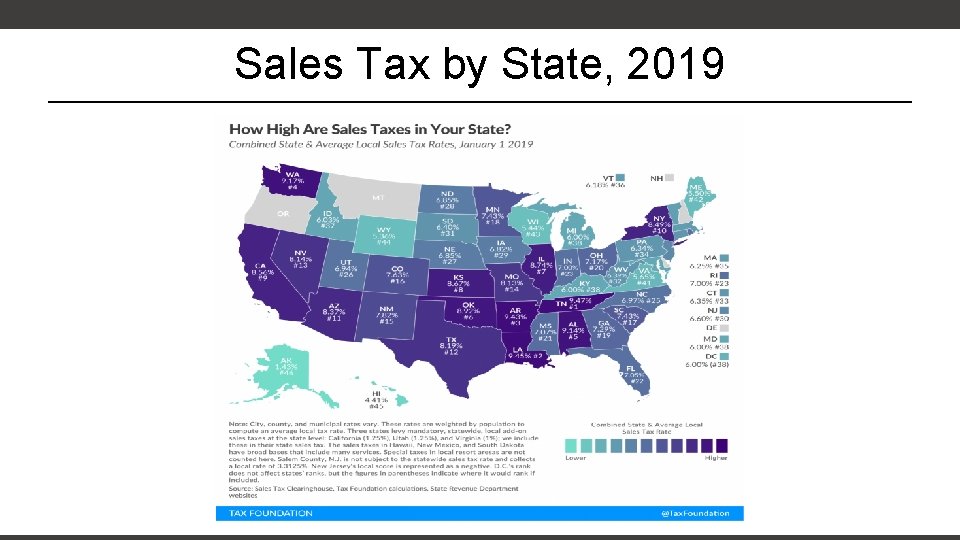
Sales Tax by State, 2019
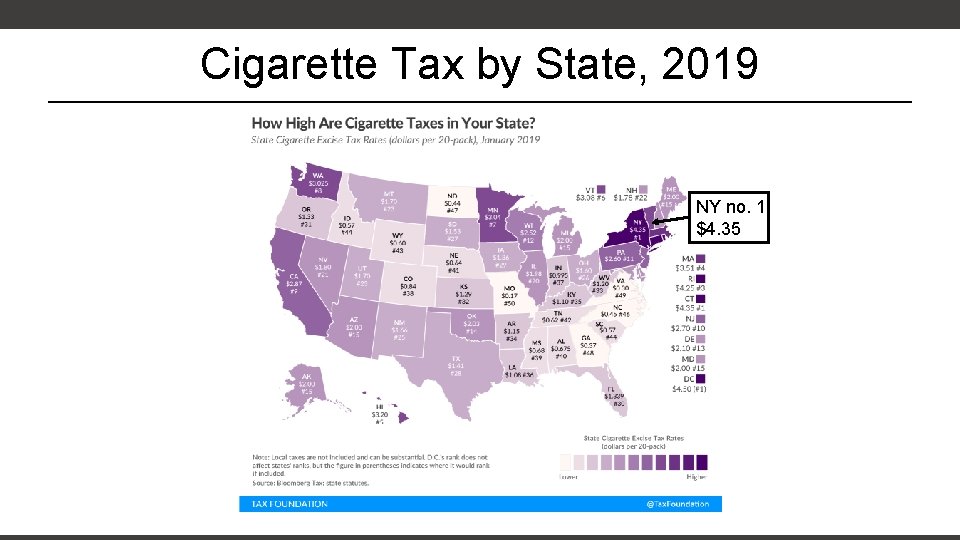
Cigarette Tax by State, 2019 NY no. 1 $4. 35
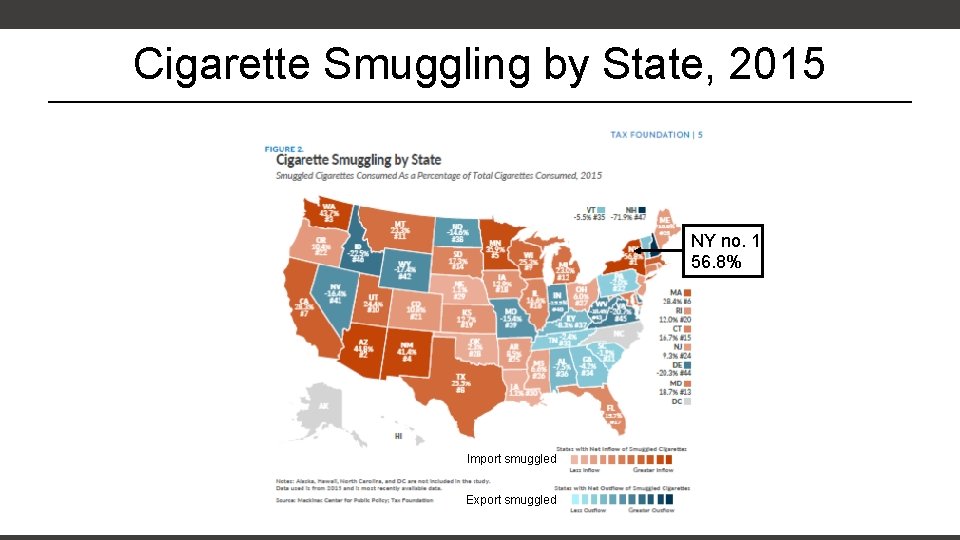
Cigarette Smuggling by State, 2015 NY no. 1 56. 8% Import smuggled Export smuggled
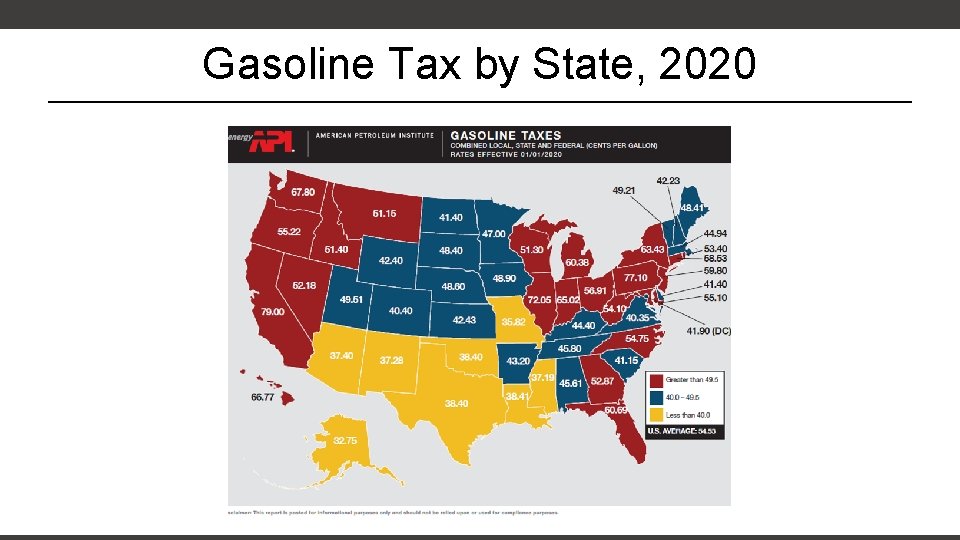
Gasoline Tax by State, 2020
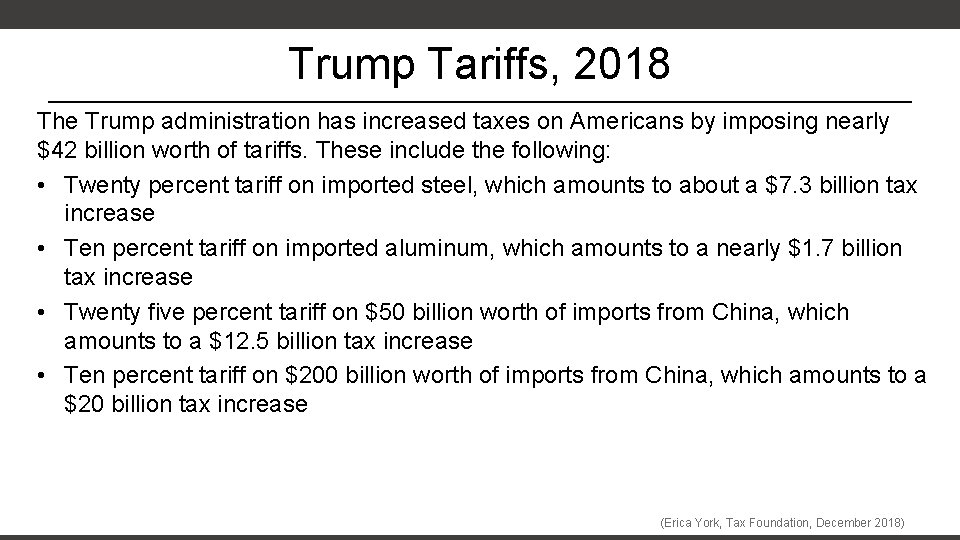
Trump Tariffs, 2018 The Trump administration has increased taxes on Americans by imposing nearly $42 billion worth of tariffs. These include the following: • Twenty percent tariff on imported steel, which amounts to about a $7. 3 billion tax increase • Ten percent tariff on imported aluminum, which amounts to a nearly $1. 7 billion tax increase • Twenty five percent tariff on $50 billion worth of imports from China, which amounts to a $12. 5 billion tax increase • Ten percent tariff on $200 billion worth of imports from China, which amounts to a $20 billion tax increase (Erica York, Tax Foundation, December 2018)
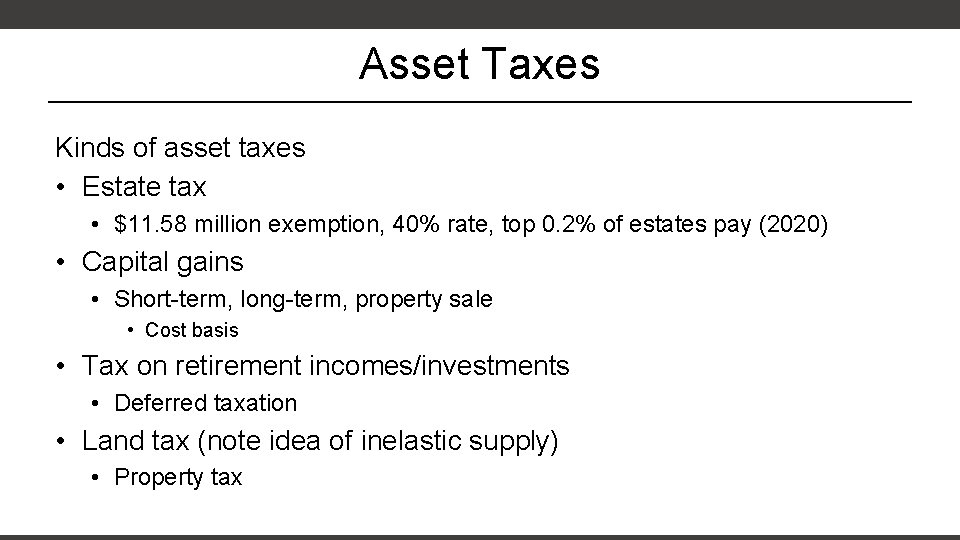
Asset Taxes Kinds of asset taxes • Estate tax • $11. 58 million exemption, 40% rate, top 0. 2% of estates pay (2020) • Capital gains • Short-term, long-term, property sale • Cost basis • Tax on retirement incomes/investments • Deferred taxation • Land tax (note idea of inelastic supply) • Property tax
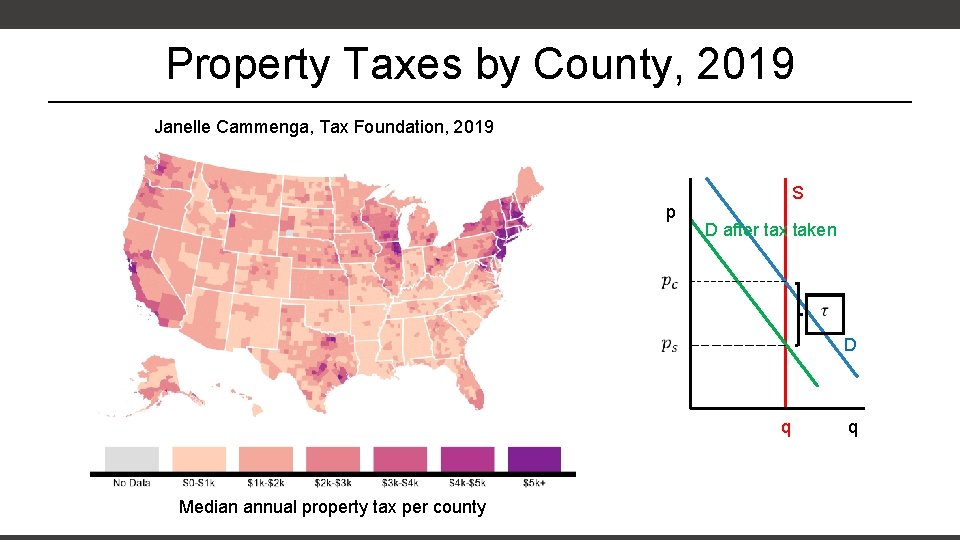
Property Taxes by County, 2019 Janelle Cammenga, Tax Foundation, 2019 p S D after tax taken D q Median annual property tax per county q
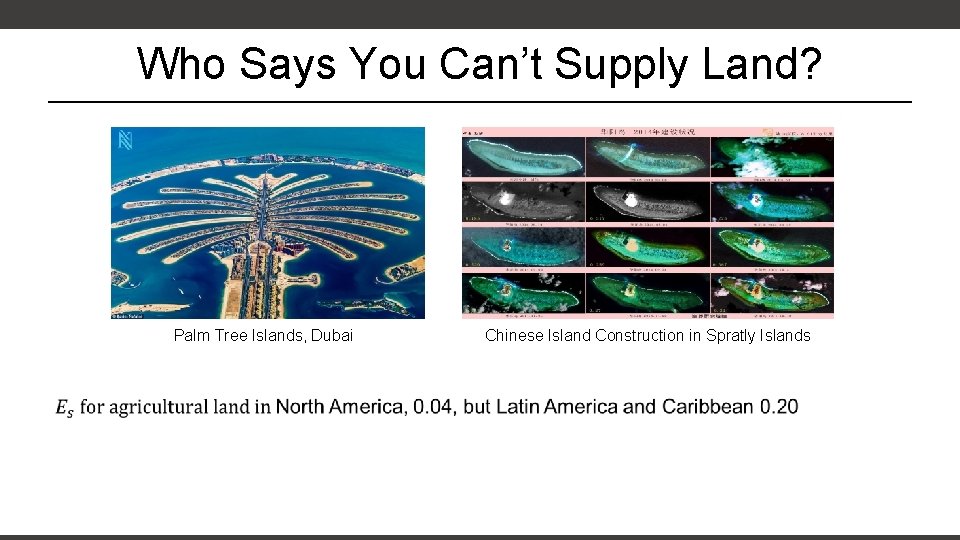
Who Says You Can’t Supply Land? Palm Tree Islands, Dubai Chinese Island Construction in Spratly Islands
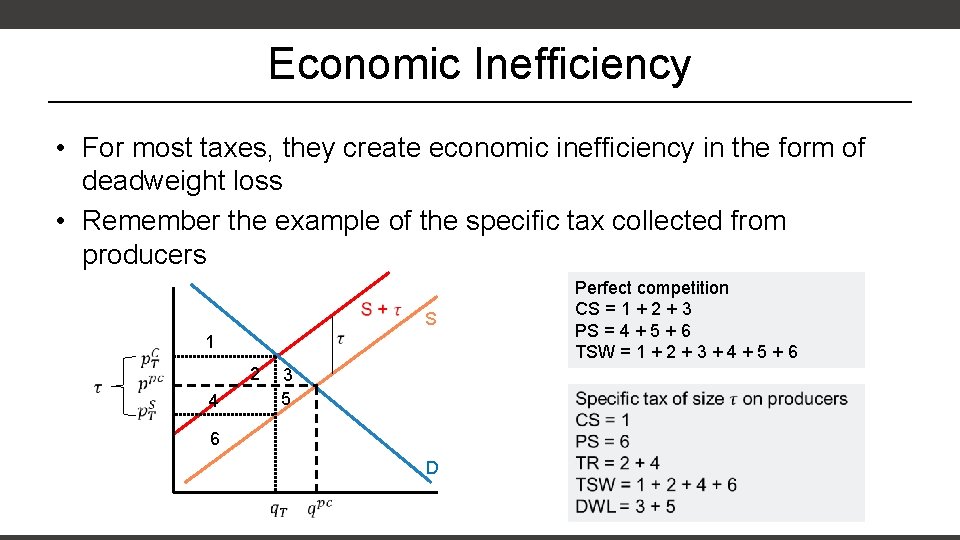
Economic Inefficiency • For most taxes, they create economic inefficiency in the form of deadweight loss • Remember the example of the specific tax collected from producers 1 2 S 3 5 4 6 D Perfect competition CS = 1 + 2 + 3 PS = 4 + 5 + 6 TSW = 1 + 2 + 3 + 4 + 5 + 6
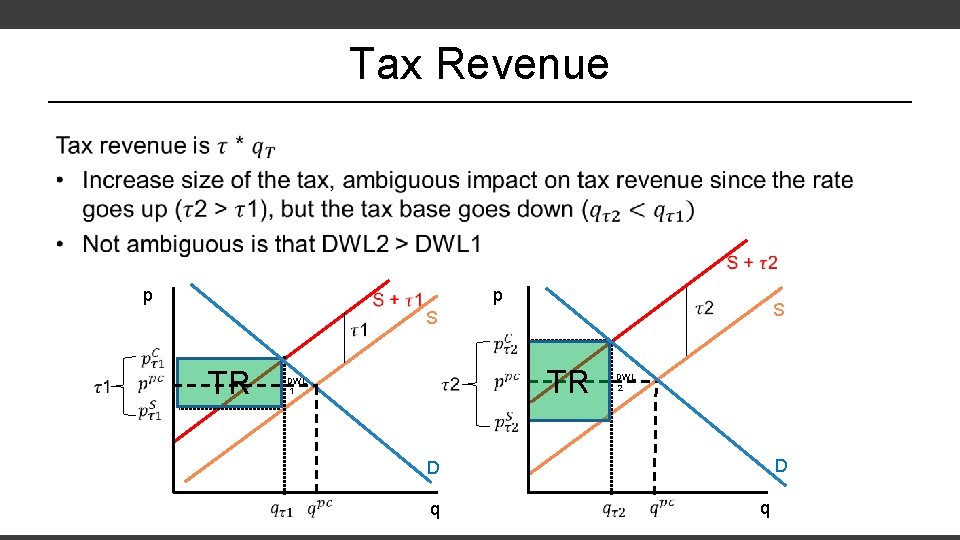
Tax Revenue • p TR DWL 1 p S S TR DWL 2 D D q q
An Exception: The Pigouvian Tax Revisited • Arthur Pigou, 1920 • In the presence of a negative externality, we can define a tax that internalized the cost of the externality • It can lead us to the socially optimal outcome • In this case, the perfectly competitive market does not take us to the socially optimal, economically efficient outcome • Sometimes spelled (and said) Pigovian
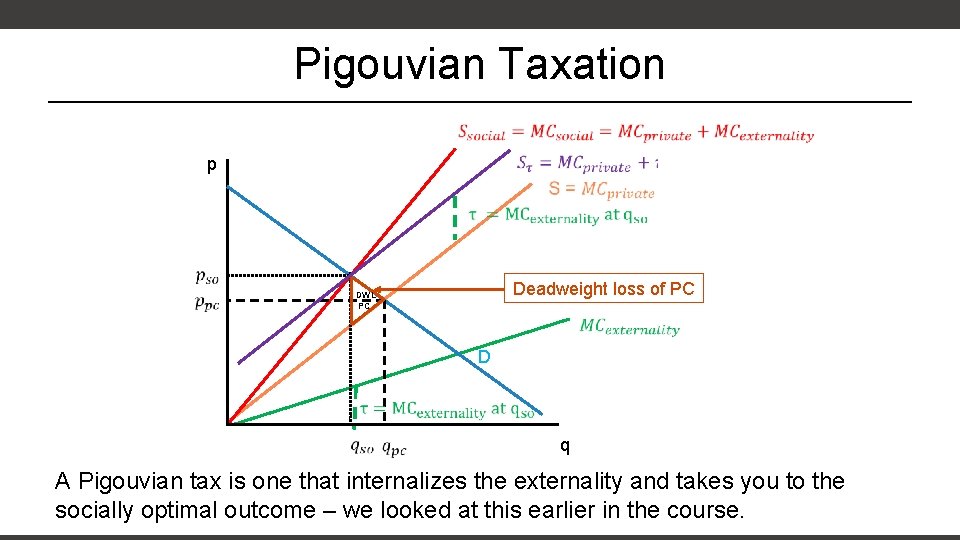
Pigouvian Taxation p Deadweight loss of PC DWL PC D q A Pigouvian tax is one that internalizes the externality and takes you to the socially optimal outcome – we looked at this earlier in the course.
Subsidies Their Rationale and Mechanisms
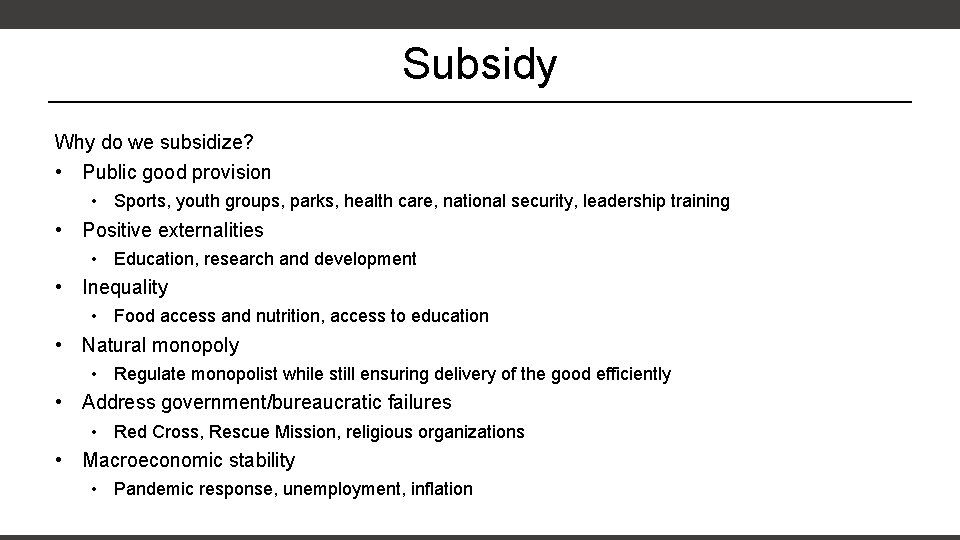
Subsidy Why do we subsidize? • Public good provision • Sports, youth groups, parks, health care, national security, leadership training • Positive externalities • Education, research and development • Inequality • Food access and nutrition, access to education • Natural monopoly • Regulate monopolist while still ensuring delivery of the good efficiently • Address government/bureaucratic failures • Red Cross, Rescue Mission, religious organizations • Macroeconomic stability • Pandemic response, unemployment, inflation
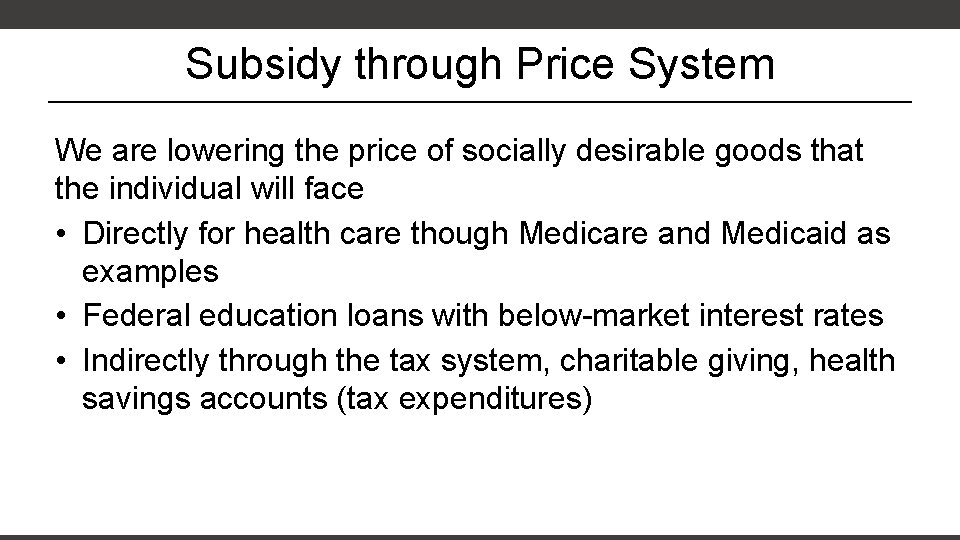
Subsidy through Price System We are lowering the price of socially desirable goods that the individual will face • Directly for health care though Medicare and Medicaid as examples • Federal education loans with below-market interest rates • Indirectly through the tax system, charitable giving, health savings accounts (tax expenditures)
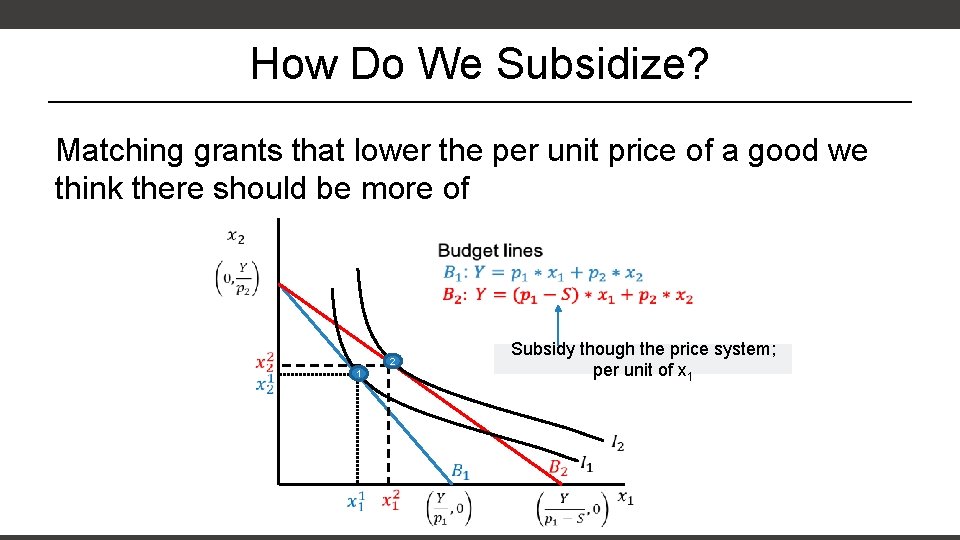
How Do We Subsidize? Matching grants that lower the per unit price of a good we think there should be more of Subsidy though the price system; per unit of x 1 2 1
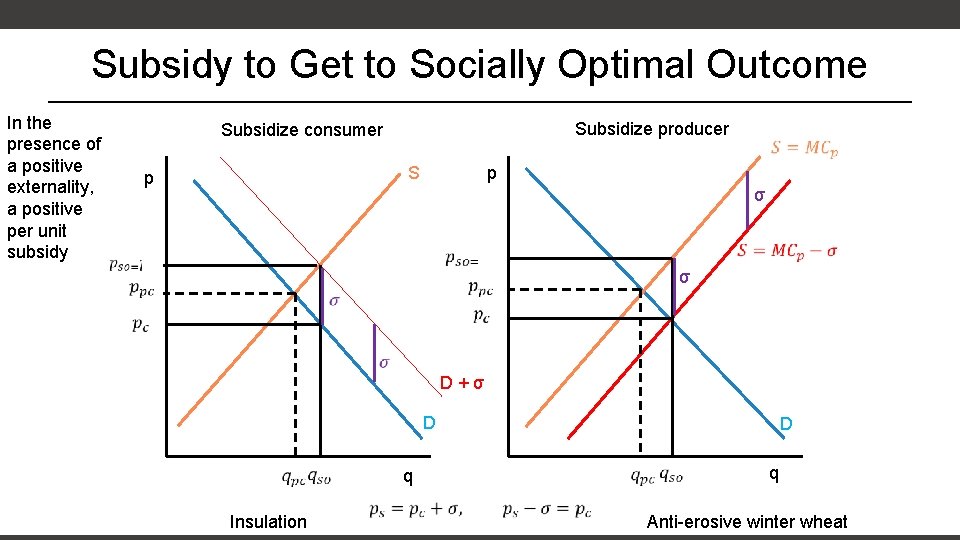
Subsidy to Get to Socially Optimal Outcome In the presence of a positive externality, a positive per unit subsidy Subsidize producer Subsidize consumer S p p σ D + σ D Insulation q D q Anti-erosive winter wheat
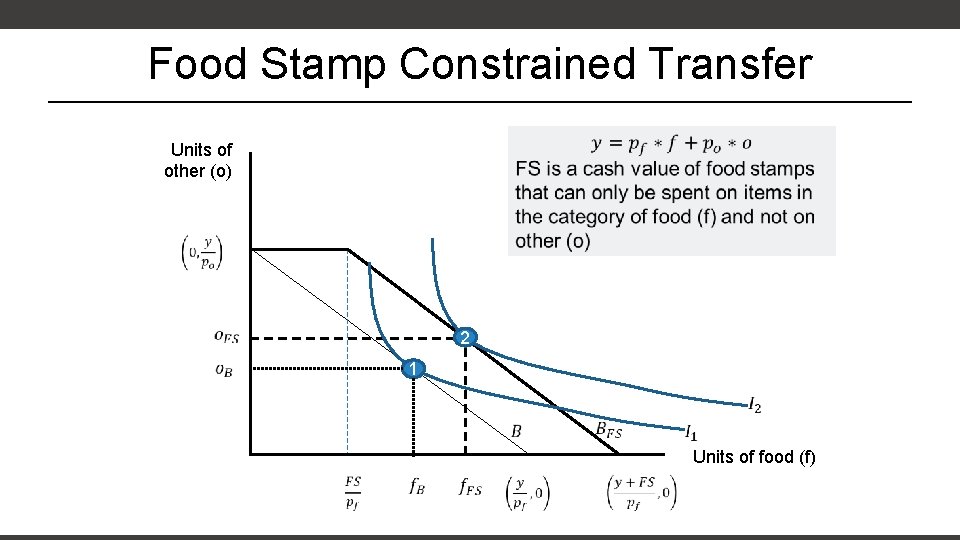
Food Stamp Constrained Transfer Units of other (o) 2 1 Units of food (f)
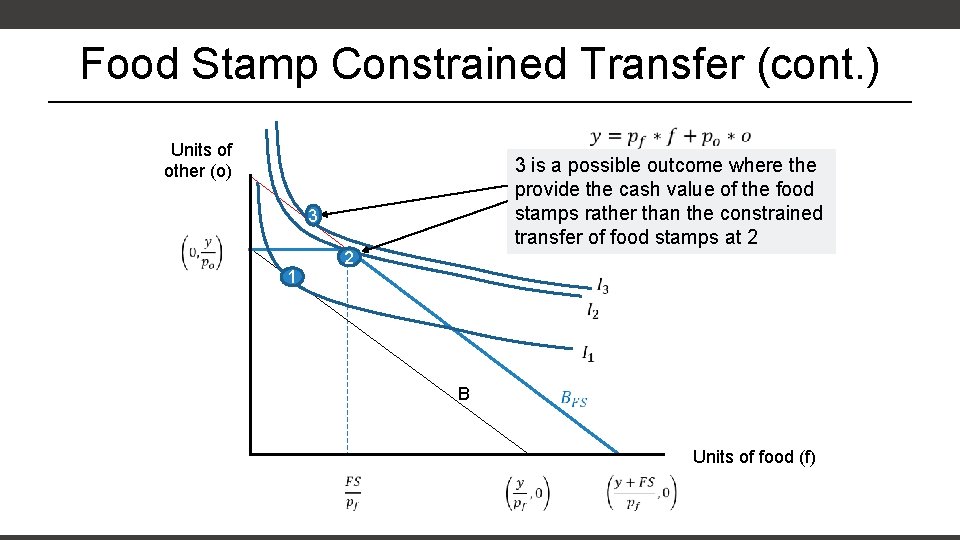
Food Stamp Constrained Transfer (cont. ) Units of other (o) 3 is a possible outcome where the provide the cash value of the food stamps rather than the constrained transfer of food stamps at 2 3 1 2 B Units of food (f)
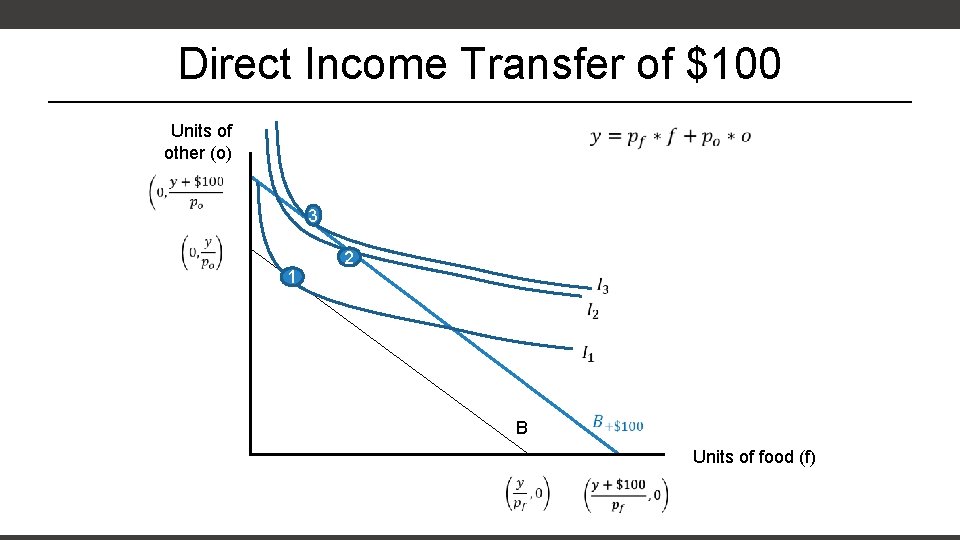
Direct Income Transfer of $100 Units of other (o) 3 1 2 B Units of food (f)
Why Do We Constrain Transfers Then? • • Political acceptability and sustainability Targeting specific behavior Indirectly targeting vulnerable groups Political economy considerations