
Efficiency Gains Cost Savings by Integrating OSISoft PI
Efficiency Gains & Cost Savings by Integrating OSISoft PI and Maximo November 5, 2019 Max. TECH 2019 Bryan Fuqua & Josh Harrel
Speaker Bio – Josh Harrel • January 2012 – Present: Business Analyst Consultant in Williams Asset Performance & Reliability (AP&R) group. • Leverage OSISoft PI technology to prevent equipment failure, increase reliability, automate condition based maintenance and optimize decision making using operational data. • Jan 2002 – 2012: IT Analyst focused on BI reporting and database development. • Current hobbies include going to youth sporting events and dance recitals with my wife to watch the kids in the photo.

Speaker Bio – Bryan Fuqua, CRE, CMRP • Dec, 2013 – Present: Sr. Reliability Specialist in Williams’ Safety & Operational Discipline’s (S&OD) Asset Performance & Reliability (AP&R) group. • Jun, 2000 – Nov, 2013: Safety & Mission Assurance (S&MA) Reliability/Risk Analyst at NASA’s Johnson Space Center, Houston, TX ( & ). • Greatest Success: Becoming a father to my daughter & son. • Avid Sports Enthusiast, Softball, Coaching Youth Sports
Overview • Meter-Based PM Program • Downtime Tracker (DTT) Application Integration with Maximo • Baseline Maintenance Data-Mining (BLMDM) Report Integration with Maximo • Asset Condition Maintenance (ACM) Program
Meter-Based PM Program Overview • What is the Meter-based PM Program? • • • Run hour-based maintenance strategy Sanctioned and supported by SMEs Targets major equipment, primarily Recip Compression Packages Leverages a simple Pi-to-Maximo integration Note: participation in the program is currently voluntary • Objectives of Meter-based PM Program • • • Optimize maintenance scheduling intervals (based on true run time) Reduce costs related to Labor, Material, and Downtime Build efficiencies (e. g. work order automation, gives time back to Operations) Improve Safety, Reliability, and Availability Only utilize internal expertise and existing systems
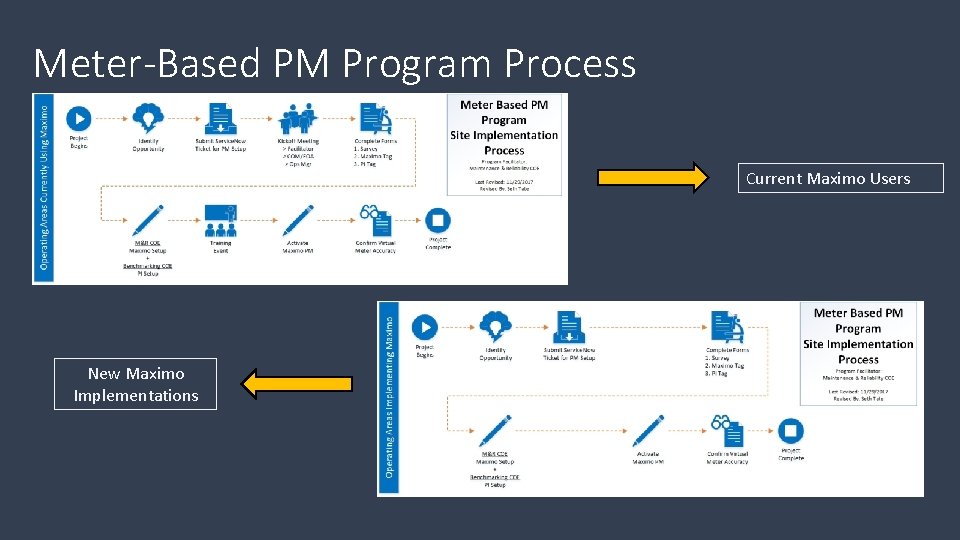
Meter-Based PM Program Process Current Maximo Users New Maximo Implementations
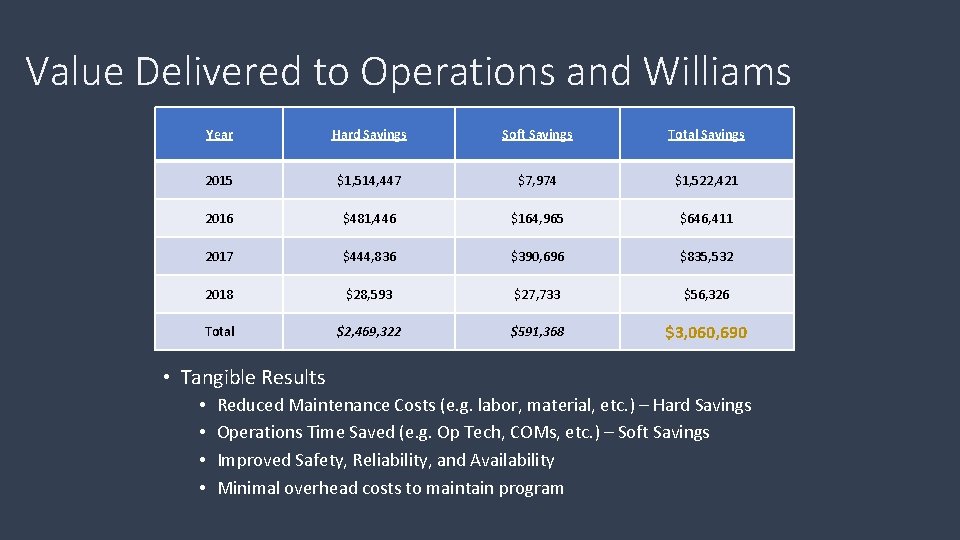
Value Delivered to Operations and Williams Year Hard Savings Soft Savings Total Savings 2015 $1, 514, 447 $7, 974 $1, 522, 421 2016 $481, 446 $164, 965 $646, 411 2017 $444, 836 $390, 696 $835, 532 2018 $28, 593 $27, 733 $56, 326 Total $2, 469, 322 $591, 368 $3, 060, 690 • Tangible Results • • Reduced Maintenance Costs (e. g. labor, material, etc. ) – Hard Savings Operations Time Saved (e. g. Op Tech, COMs, etc. ) – Soft Savings Improved Safety, Reliability, and Availability Minimal overhead costs to maintain program
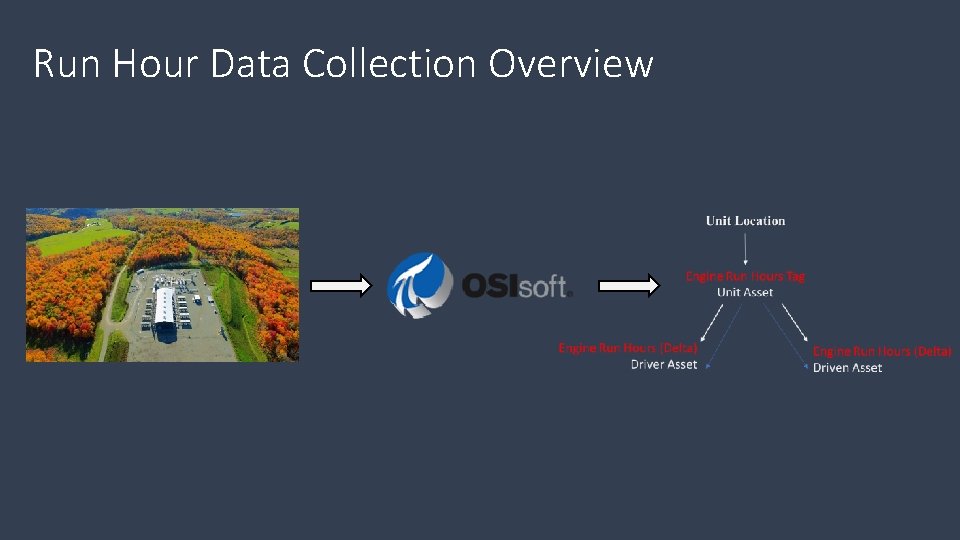
Run Hour Data Collection Overview
Downtime Tracker (DTT) Application – Maximo Work Request (WR) Integration • The DTT is an application used to consistently track downtime events for equipment due to planned, unplanned, or elective activities • The DTT Application is most commonly used by operations to log downtime events for Compression Units • Currently, most operators must go into the DTT to log an event requiring maintenance & then into Maximo to create the Work Request or After-the-Fact (ATF) Work Order • Integrating DTT & Maximo allows the Operators to access only one system to document the downtime event & create a Maximo WR
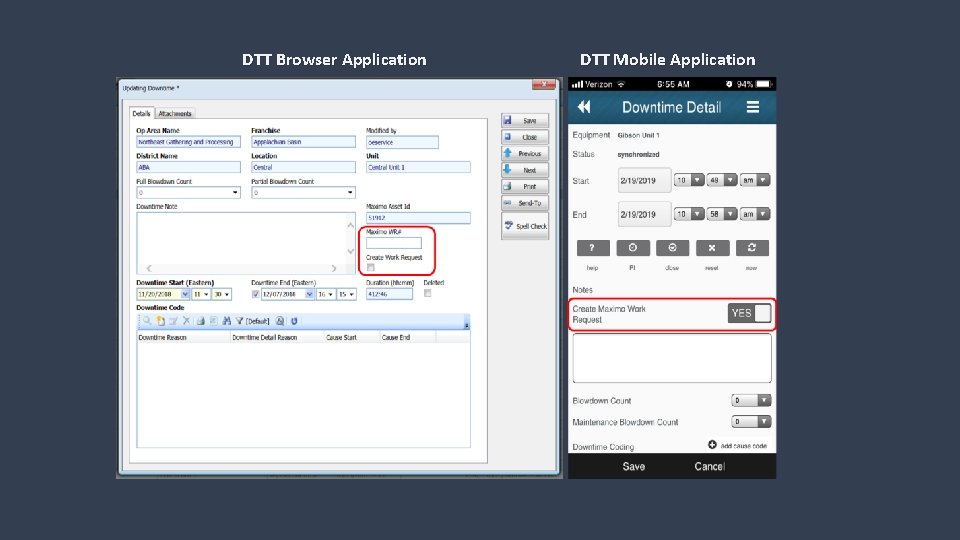
DTT Browser Application DTT Mobile Application
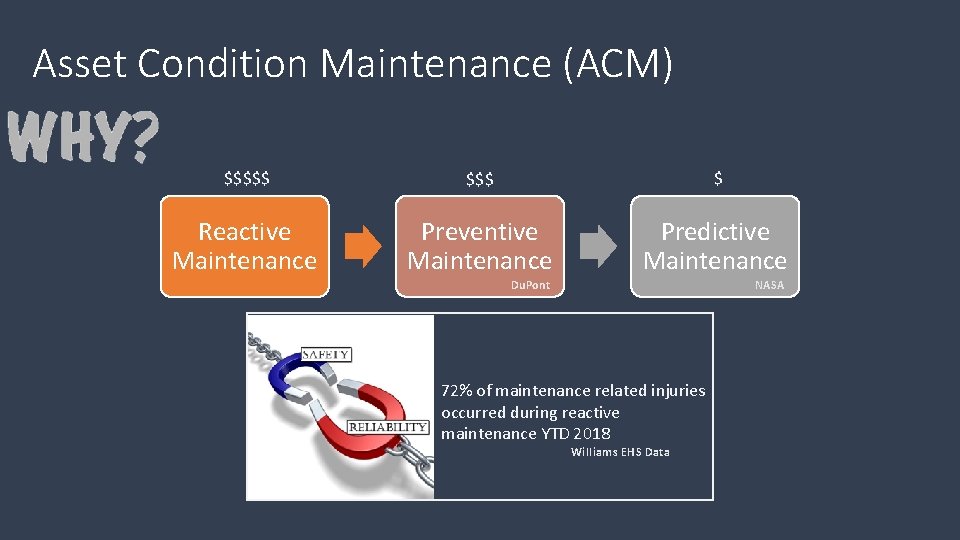
Asset Condition Maintenance (ACM) $$$$$ $ Reactive Maintenance Preventive Maintenance Predictive Maintenance Du. Pont NASA 72% of maintenance related injuries occurred during reactive maintenance YTD 2018 Williams EHS Data
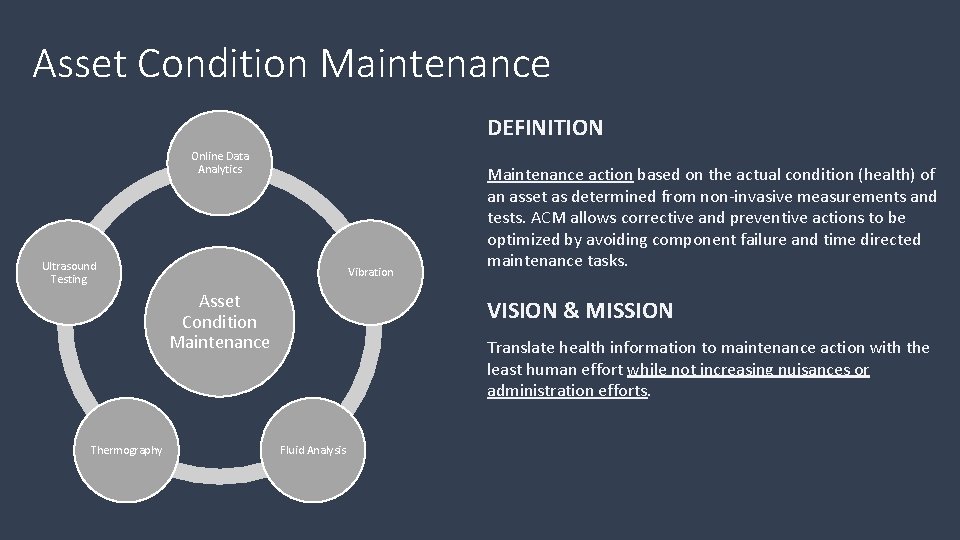
Asset Condition Maintenance DEFINITION Online Data Analytics Ultrasound Testing Vibration Asset Condition Maintenance Thermography Maintenance action based on the actual condition (health) of an asset as determined from non-invasive measurements and tests. ACM allows corrective and preventive actions to be optimized by avoiding component failure and time directed maintenance tasks. VISION & MISSION Translate health information to maintenance action with the least human effort while not increasing nuisances or administration efforts. Fluid Analysis
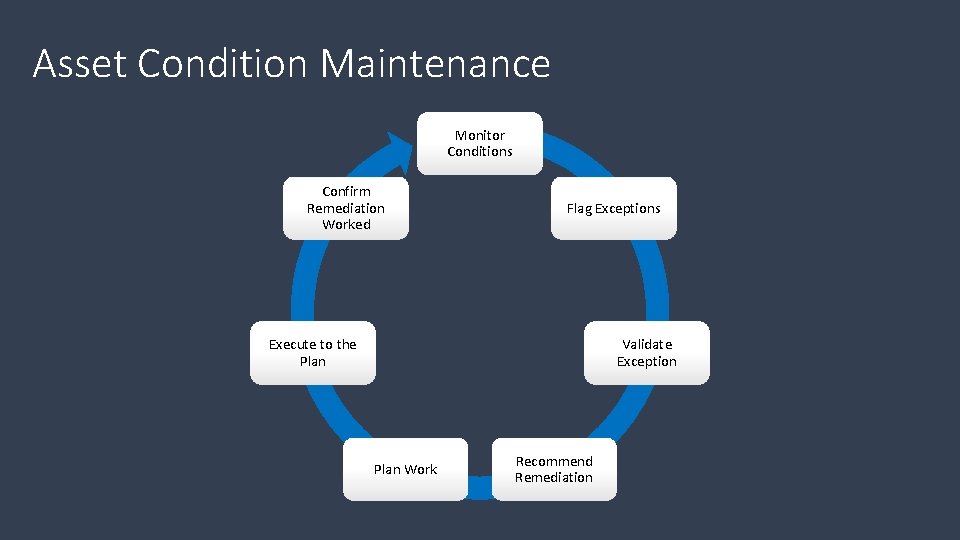
Asset Condition Maintenance Monitor Conditions Confirm Remediation Worked Flag Exceptions Execute to the Plan Validate Exception Plan Work Recommend Remediation
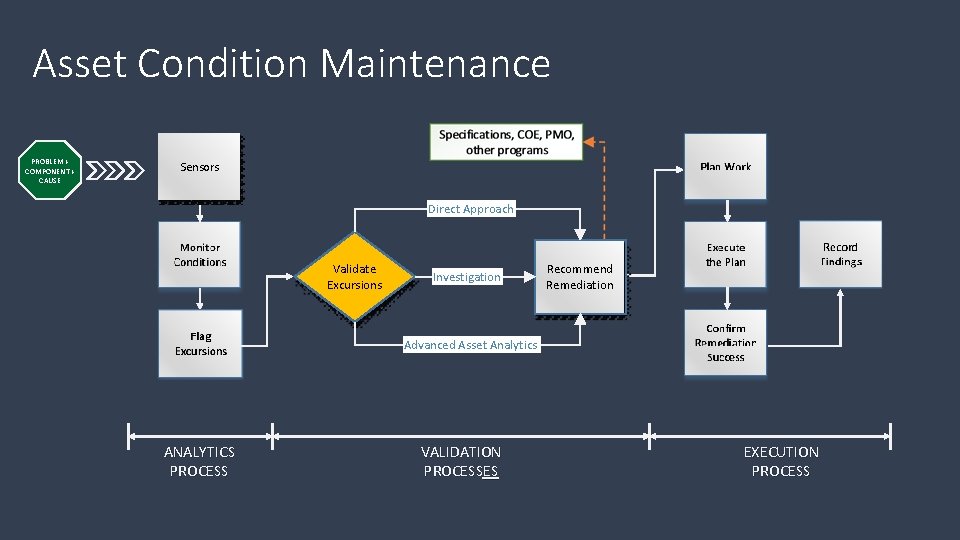
Asset Condition Maintenance PROBLEM + COMPONENT + CAUSE Sensors Direct Approach Validate Excursions Investigation Recommend Remediation Advanced Asset Analytics ANALYTICS PROCESS VALIDATION PROCESSES EXECUTION PROCESS
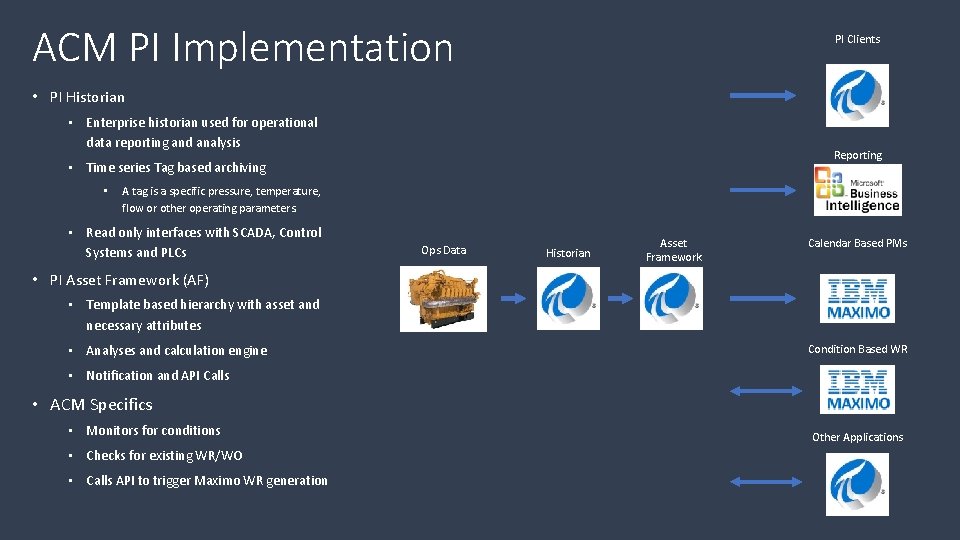
ACM PI Implementation PI Clients • PI Historian • Enterprise historian used for operational data reporting and analysis Reporting • Time series Tag based archiving • A tag is a specific pressure, temperature, flow or other operating parameters. • Read only interfaces with SCADA, Control Systems and PLCs Ops Data Historian Asset Framework Calendar Based PMs • PI Asset Framework (AF) • Template based hierarchy with asset and necessary attributes • Analyses and calculation engine Condition Based WR • Notification and API Calls • ACM Specifics • Monitors for conditions • Checks for existing WR/WO • Calls API to trigger Maximo WR generation Other Applications
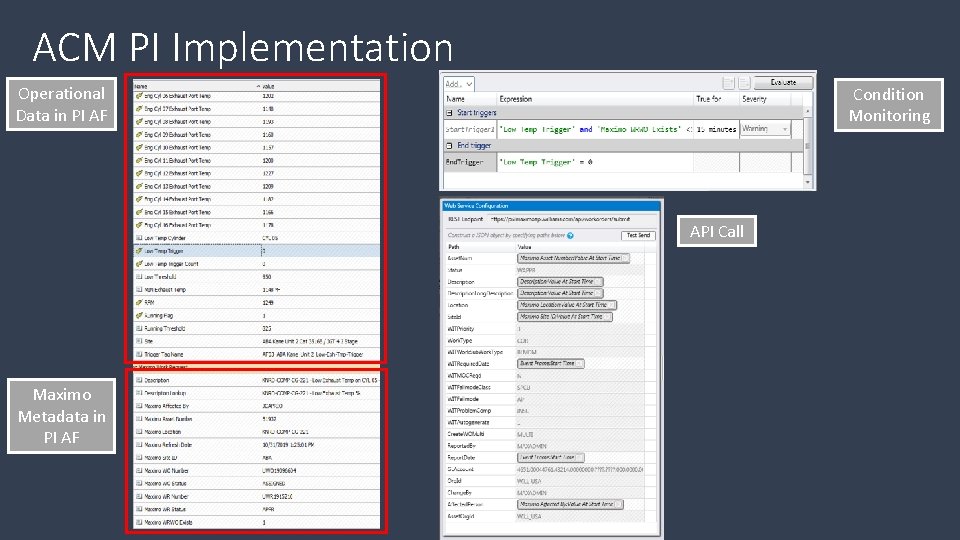
ACM PI Implementation Operational Data in PI AF Condition Monitoring API Call Maximo Metadata in PI AF
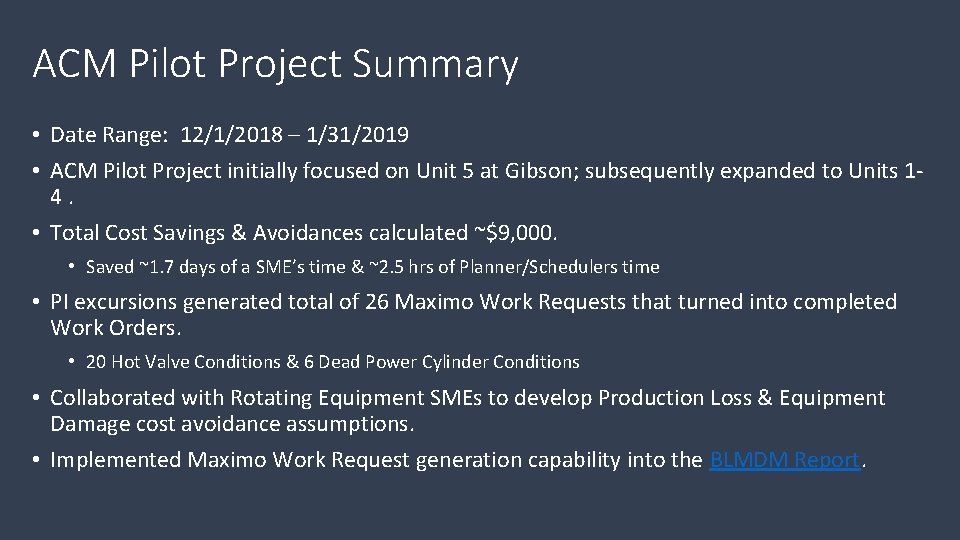
ACM Pilot Project Summary • Date Range: 12/1/2018 – 1/31/2019 • ACM Pilot Project initially focused on Unit 5 at Gibson; subsequently expanded to Units 14. • Total Cost Savings & Avoidances calculated ~$9, 000. • Saved ~1. 7 days of a SME’s time & ~2. 5 hrs of Planner/Schedulers time • PI excursions generated total of 26 Maximo Work Requests that turned into completed Work Orders. • 20 Hot Valve Conditions & 6 Dead Power Cylinder Conditions • Collaborated with Rotating Equipment SMEs to develop Production Loss & Equipment Damage cost avoidance assumptions. • Implemented Maximo Work Request generation capability into the BLMDM Report.
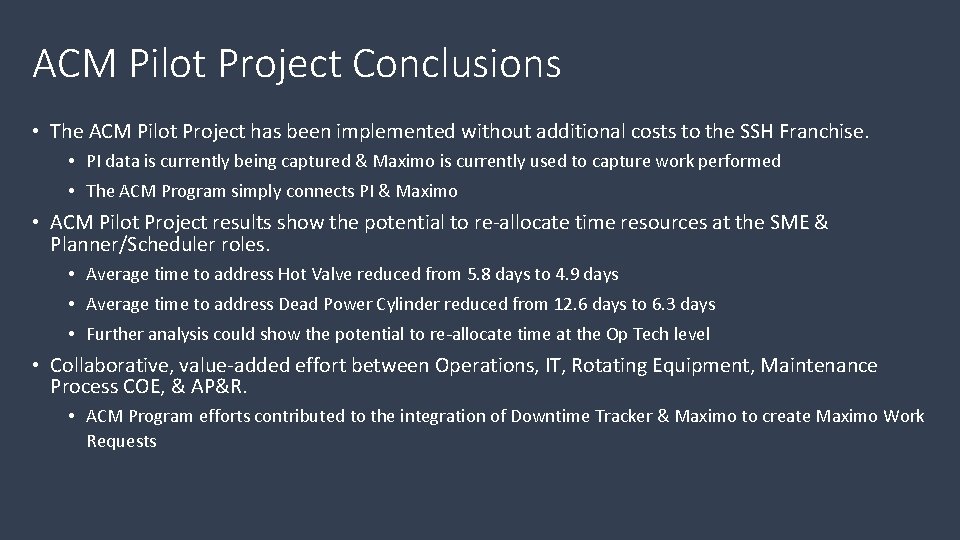
ACM Pilot Project Conclusions • The ACM Pilot Project has been implemented without additional costs to the SSH Franchise. • PI data is currently being captured & Maximo is currently used to capture work performed • The ACM Program simply connects PI & Maximo • ACM Pilot Project results show the potential to re-allocate time resources at the SME & Planner/Scheduler roles. • Average time to address Hot Valve reduced from 5. 8 days to 4. 9 days • Average time to address Dead Power Cylinder reduced from 12. 6 days to 6. 3 days • Further analysis could show the potential to re-allocate time at the Op Tech level • Collaborative, value-added effort between Operations, IT, Rotating Equipment, Maintenance Process COE, & AP&R. • ACM Program efforts contributed to the integration of Downtime Tracker & Maximo to create Maximo Work Requests
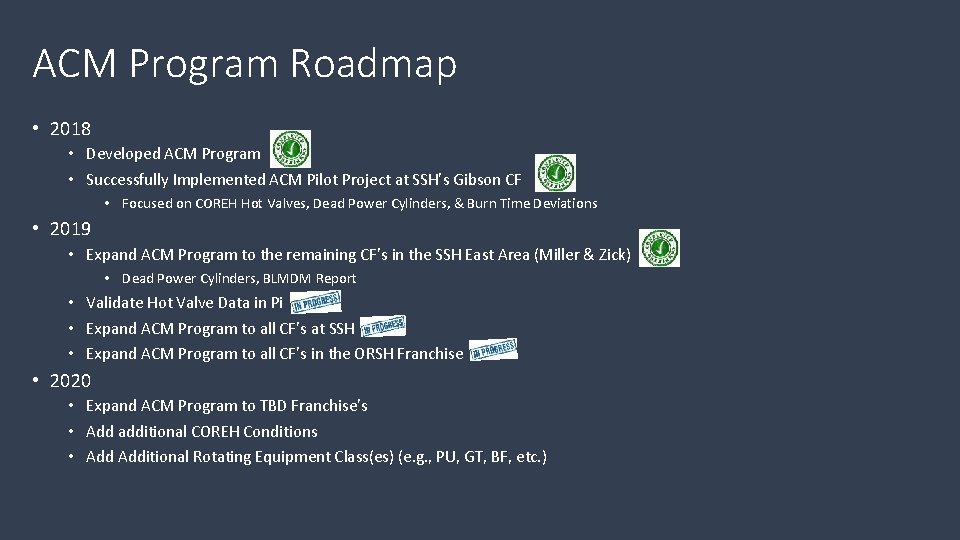
ACM Program Roadmap • 2018 • Developed ACM Program • Successfully Implemented ACM Pilot Project at SSH’s Gibson CF • Focused on COREH Hot Valves, Dead Power Cylinders, & Burn Time Deviations • 2019 • Expand ACM Program to the remaining CF’s in the SSH East Area (Miller & Zick) • Dead Power Cylinders, BLMDM Report • Validate Hot Valve Data in Pi • Expand ACM Program to all CF’s at SSH • Expand ACM Program to all CF’s in the ORSH Franchise • 2020 • Expand ACM Program to TBD Franchise’s • Add additional COREH Conditions • Additional Rotating Equipment Class(es) (e. g. , PU, GT, BF, etc. )
Conclusions • Integrating PI Data/Information with Maximo has proven to reduce costs to Operations, reduce administrative burdens, and reduce downtime. • Allows Op Techs to re-allocate valuable time in the field • Reducing downtime increases level of safety • PI-Maximo integration has been accomplished with no additional costs to Operations • PI has been implemented at Williams since 2011 • Maximo has been implemented at Williams since 2012 • Integration platform can be easily deployed for other equipment types and conditions • For further information/questions, please contact either Josh Harrel or Bryan Fuqua
- Slides: 20