
EFFICIENCY FAIRNESS Chapter 6 RESOURCE ALLOCATION METHODS Resources
- Slides: 16
EFFICIENCY & FAIRNESS Chapter 6
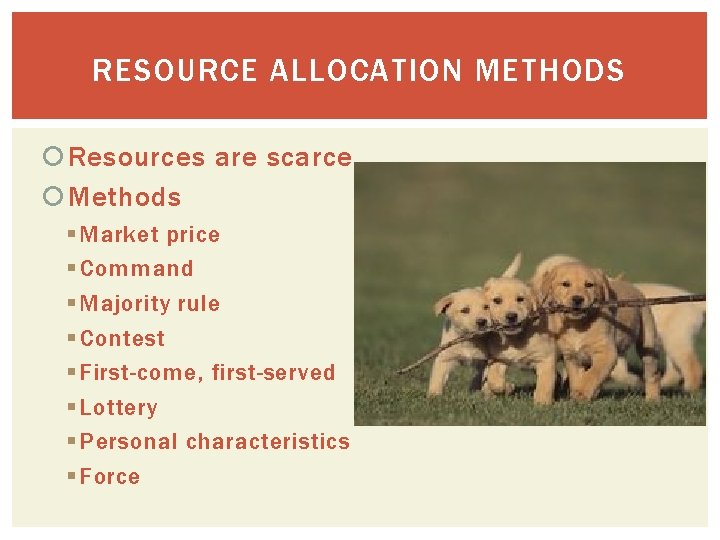
RESOURCE ALLOCATION METHODS Resources are scarce Methods § Market price § Command § Majority rule § Contest § First-come, first-served § Lottery § Personal characteristics § Force
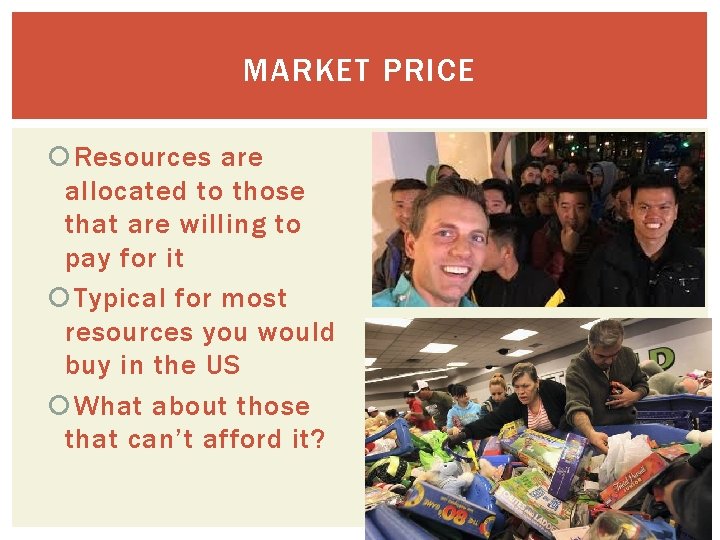
MARKET PRICE Resources are allocated to those that are willing to pay for it Typical for most resources you would buy in the US What about those that can’t afford it?
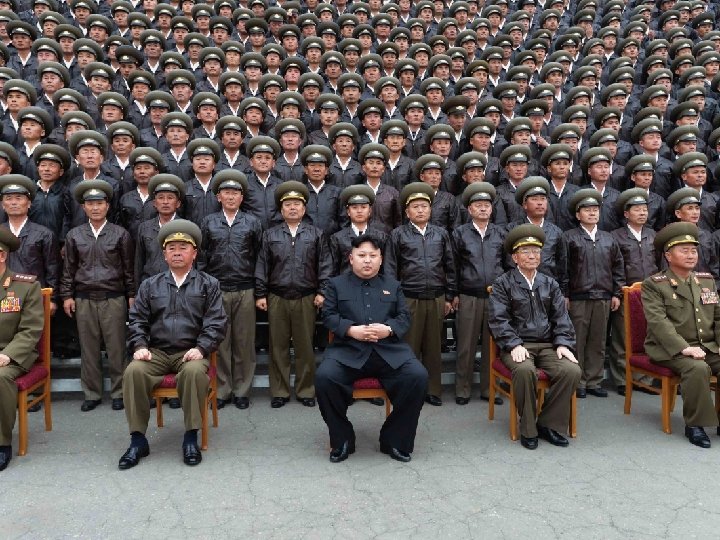
COMMAND Resources are allocated by someone’s orders (commands) In the US, this might be your manager telling you what to do with your time Some economies are entirely command
MAJORITY RULE Most commonly seen in the form of representative government Americans elect their leaders, who then vote on budgets, taxes, who gets healthcare, etc.
CONTEST This is the most American, by far Or, perhaps, the most Darwinian Spurs productivity as everyone tries to rise to the top But, THERE CAN ONLY BE ONE!!!
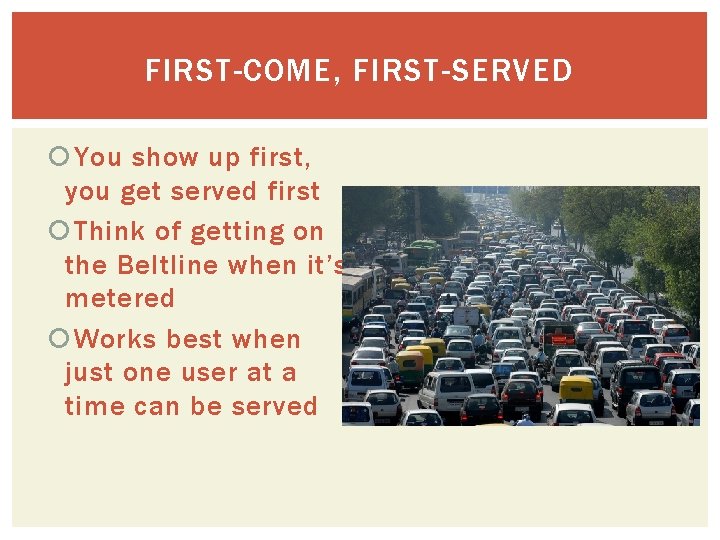
FIRST-COME, FIRST-SERVED You show up first, you get served first Think of getting on the Beltline when it’s metered Works best when just one user at a time can be served
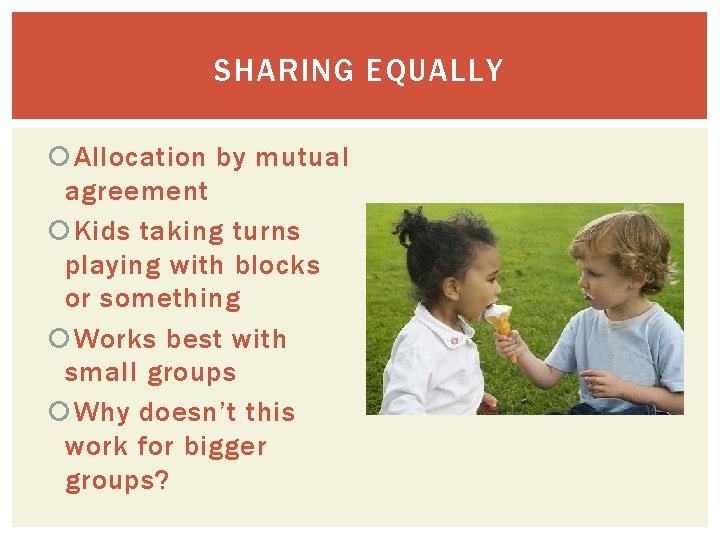
SHARING EQUALLY Allocation by mutual agreement Kids taking turns playing with blocks or something Works best with small groups Why doesn’t this work for bigger groups?
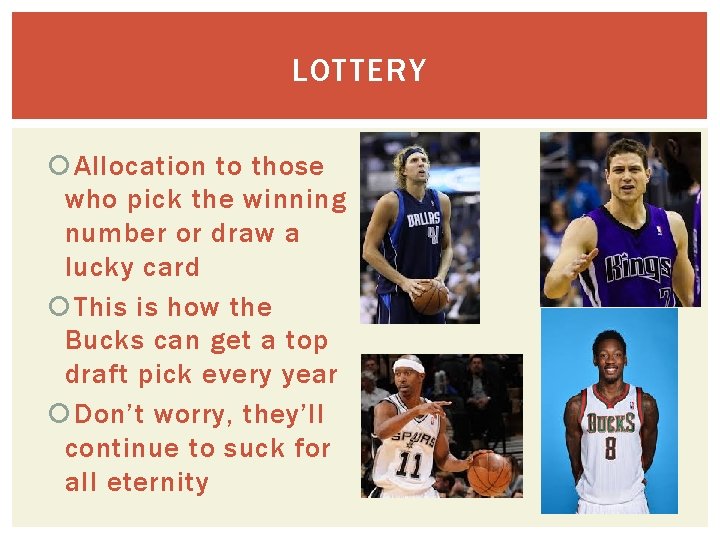
LOTTERY Allocation to those who pick the winning number or draw a lucky card This is how the Bucks can get a top draft pick every year Don’t worry, they’ll continue to suck for all eternity
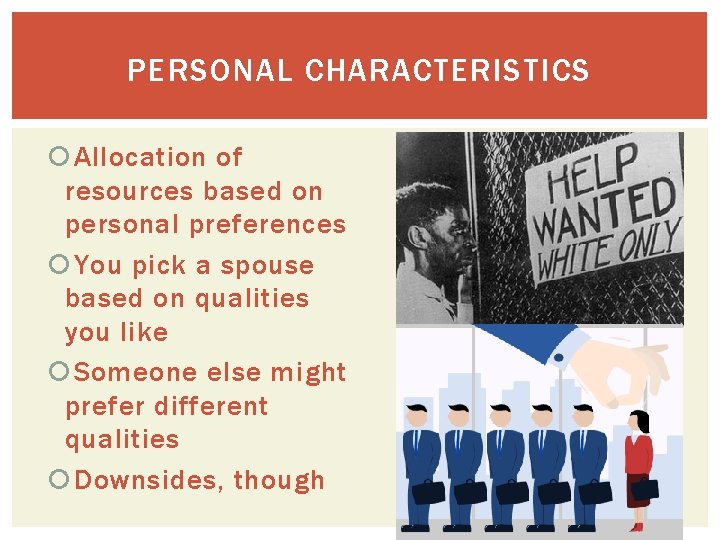
PERSONAL CHARACTERISTICS Allocation of resources based on personal preferences You pick a spouse based on qualities you like Someone else might prefer different qualities Downsides, though
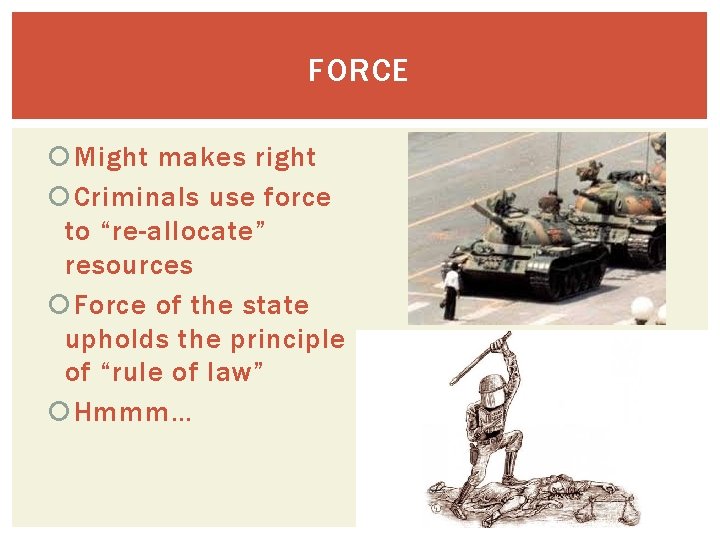
FORCE Might makes right Criminals use force to “re-allocate” resources Force of the state upholds the principle of “rule of law” Hmmm…
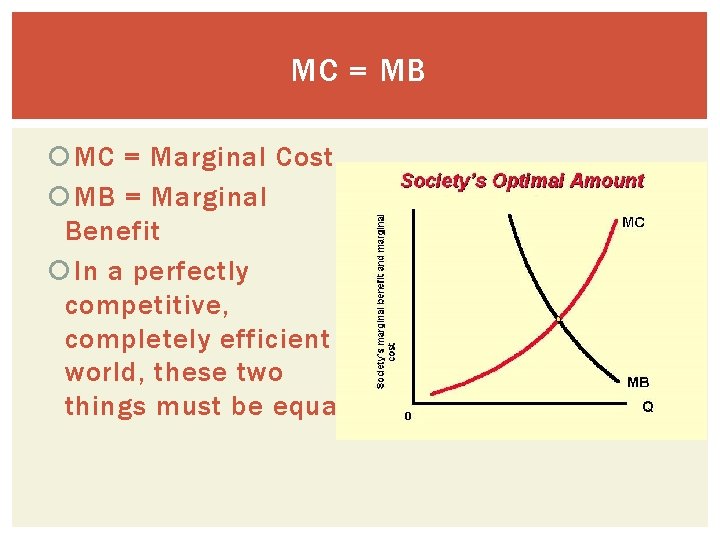
MC = MB MC = Marginal Cost MB = Marginal Benefit In a perfectly competitive, completely efficient world, these two things must be equal
THOUGHTS… A Marginal Benefit Curve is a demand curve § People will only pay as much for a good as they would benefit A Marginal Cost Curve is a supply curve § Producer costs for producing each additional unit are marginal costs This underpins Adam Smith’s ideas about the invisible hand. Markets are efficient because MC=MB.
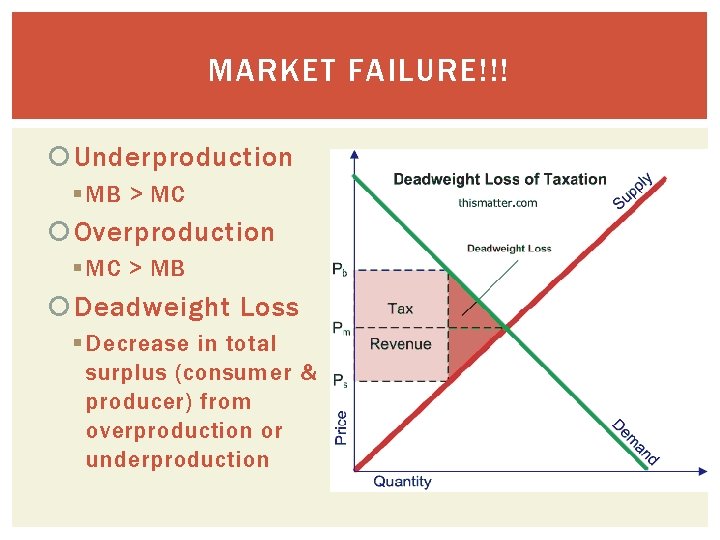
MARKET FAILURE!!! Underproduction § MB > MC Overproduction § MC > MB Deadweight Loss § Decrease in total surplus (consumer & producer) from overproduction or underproduction
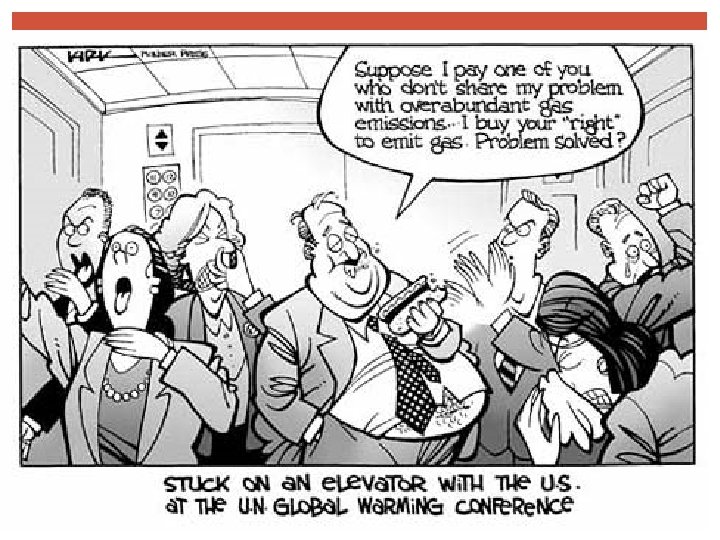
SOURCES OF MARKET FAILURE Price & Quantity Regulations Taxes & Subsidies Externalities Public Goods & Common Resources Monopoly High Transaction Costs
FAIRNESS Rules Results The state must establish and protect private property rights Persons must be free to participate in voluntary exchange of goods and services There is a tradeoff between efficiency and fairness If we are too efficient, we risk becoming less equal This is why government has to step in: minimum wage, etc.