
EFFICIENCY AND EFFECTIVENESS IN THE WORKPLACE THROUGH BEHAVIOR
EFFICIENCY AND EFFECTIVENESS IN THE WORKPLACE THROUGH BEHAVIOR Presented By:
Introduction to Case Study ■ Ralph Lorean International (RLI) now has controlling interests in House of Cloth (HOC). ■ HOC has been facing financial problems where revenues have remained flat while costs have been steadily rising. ■ RLI allows for the independent operation of HOC but sends Areama Cantros to discover the challenges facing management and provide recommendations. ■ Areama attends several meetings with Management and identifies key facts that will facilitate the information provided in the report. ■ This presentation addresses efficiency and effectiveness in the workplace through behaviour.
Effectiveness Issues in Decision Making ■ Refers to actions undertaken that logically contribute to information and preference of the company usually in terms of mission and vision (Murphy 1996). ■ HOC’s mission is provide quality products and services to a global market while it’s vision is to be a global leader in fashion (Active. Sourcing. org) ■ An effectiveness issue identifiable from the case study springs from the founder’s Russell “Rusty” Gee comment, who openly felt that outside analysis and recommendation was unnecessary because they (managers at the meeting), knew the place better than anyone. ■ Another effectiveness issue is the number of law suits against HOC in courts of law which works against the company’s interests in the communities it exists through bad publicity by employees who do not receive appropriate promotion and are not provided with a proper work environment.
Efficiency Issues in Decision Making ■ Refers to the proper application of resources towards the achievement of final goals (Charnes et al. , 1978). ■ The first efficiency issue was the application of information resources provided to management towards the improvement of the company which Rusty felt was unnecessary and therefore an improper application of a resource. ■ The second efficiency issue comes with the talent obtained from the market which HOC allows easy poaching by other firms. Human labour as a resource is key in increasing efficiency which with a high turnover rate, efficiency is not achieved. ■ The third efficiency issue is also associated with human capital where employees as resources are not properly enabled because the company enforces impossible workloads and pressure on time that promote work-life imbalance and stress.
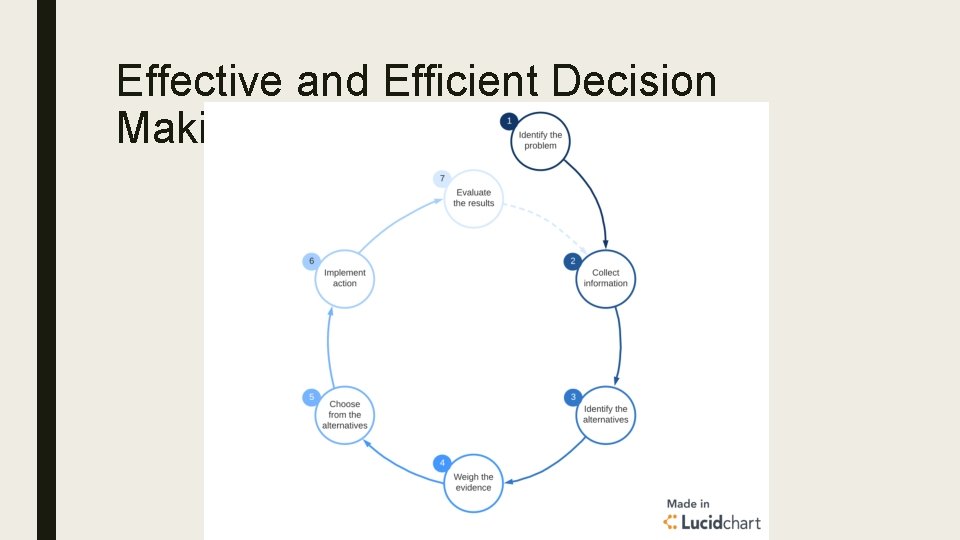
Effective and Efficient Decision Making
Diversity at HOC ■ HOC promotes diversity in its employee talent pool. ■ The case study identifies seven members in the first management meeting where three had been present during the foundation of the company and the other four joined the company during expansion in 2010. ■ Geographicall the meeting contained members from India, Guatemala and Romania crossing the beyond the barriers of race, ethnicity and nationality. ■ Two of the members were women which is a little short of the 1/3 international gender inclusivity rate (Ilmakunnas et al. , 2011) ■ Diversity in a workplace demands that an organisation intentionally hires a workforce comprising individuals of different genders, race, age, ethnicity and religion which HOC has achieved (Ilmakunnas et al. , 2011).
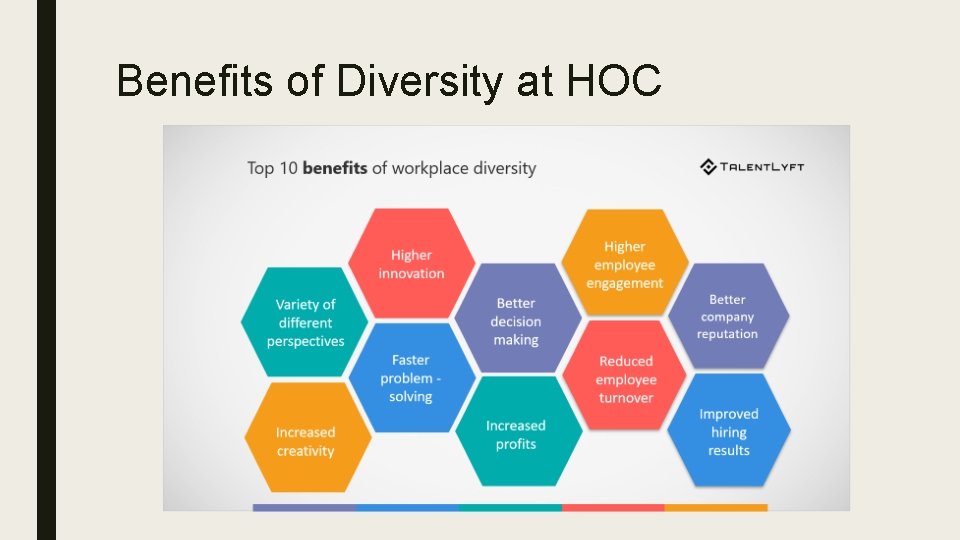
Benefits of Diversity at HOC
Effective Promotion of Culture ■ Effectiveness in workplace culture refers to shared attitudes, beliefs and values which improves team cooperation, motivation and productivity (Manley et al. , 2011). ■ HOC has a health promotion of culture that Areama noted that “the team was that while they seemed to be personally different in obvious ways, beneath the surface they were quite alike” ■ They shared common values and ideas and when one of them spoke, he was representing all of them which promoted the idea of an intergrated management environment. ■ However, the shared values also worked against HOC through the fact that the management team had been so connected and constant that they revolted change or opinion from outside.
Efficient Promotion of Culture ■ While HOC had an effective promotion of culture aspect, the company also had a poor efficient promotion of workplace culture. ■ The culture instead of working as a resources towards the better performance of the company, it worked against the company by making it resistant to change and the feeling that “we have weathered storms together and while I admit the last years haven’t been stellar, I know we can handle things ourselves” as Rusty put it to Areama. ■ Culture is a vital resource to a workplace but must be applied appropriately in order to benefit a company (Manley et al. , 2011)
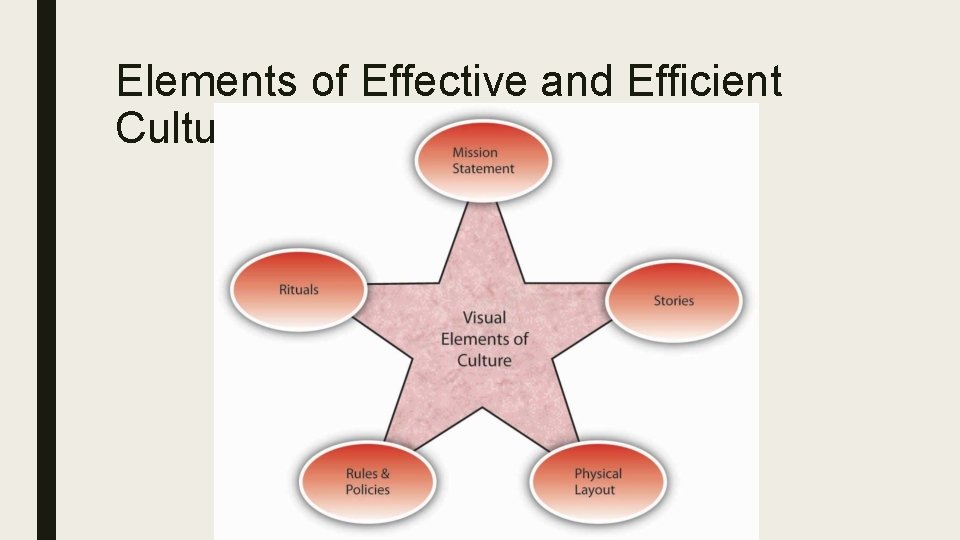
Elements of Effective and Efficient Culture
Components of Relationship Building ■ The key idea in promoting relationship building for managers is building resilience which refers to the ability to unlock business performance from the human workforce through aid in coping with stress effectively and efficiently (Backup HR). ■ Resilience helps develop and grow careers not only to the benefit of the company but the individuals as well. ■ It comprises: – Confidence building – Social Support – Adaptability – Purposefulness
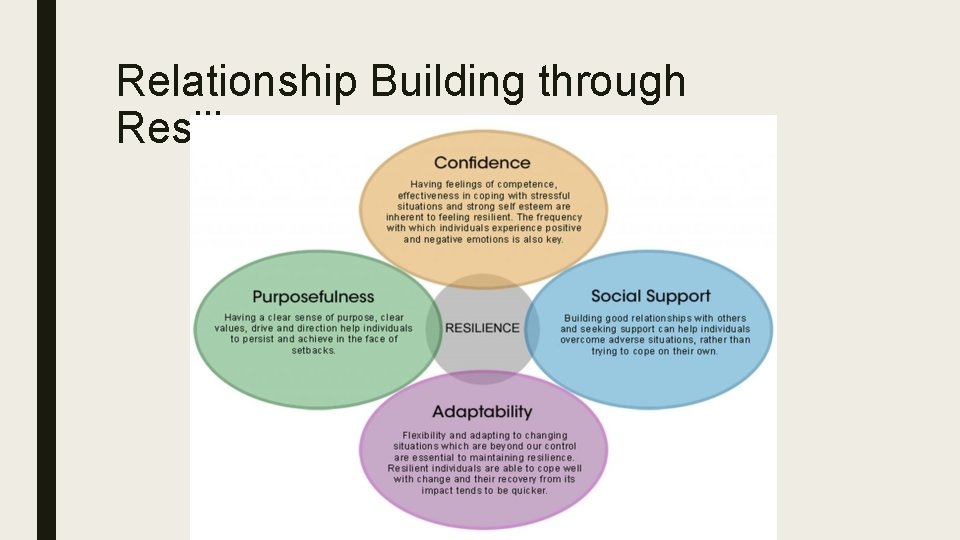
Relationship Building through Resilience
Improvement of Relationship Building ■ At HOC the relationship building could be improved by promoting a work-life balance where workers are not forces to take time from their leisure and social activities in order to achieve deadlines and survive the company pressures. ■ Secondly, HOC could focus on the individual nature of employees. For instance, mothers cannot be expected to stay overnight working on a project and that does not mean they are bad employees that ‘do not fit it’ but rather, different employees with different needs. ■ Similarly, the relationship building could be achieved by ensuring promotions are granted where they are deserved.
Outcomes without Change ■ Without change, HOC can be expected drastically loose to competition through loss of revenue as a result of rising costs and non-progressive profits. ■ New talent and experience will be less inclined to join HOC on account of the work stress in the company and lack of work-life balance. ■ HOC will refuse to adapt and change together with the surrounding environment and eventually get phased out to pave way to newer and innovative companies in a similar business. ■ The company will loose on gender balance at work and therefore be outside the law in terms of the gender inclusivity policy.
Recommendations to Improve Effectiveness and Efficiency ■ Areama could suggest that the company investigates their financial flows and come up with ways to pay employees competitive wages to stop loss of talent to competitors. ■ Secondly, the human resource department could engage in an investigative research on how to improve work life balance. ■ Thirdly, newer and younger individuals could be included in the decision making process to enable for an account of a wholesome perspective on issues. ■ Lastly, the human resource department could put more effort towards the implementations of gender balance and equality in the company.
References ■ Murphy, W. H. , & Gorchels, L. (1996). How to improve product management effectiveness. Industrial Marketing Management, 25(1), 47 -58. ■ Charnes, A. , Cooper, W. W. , & Rhodes, E. (1978). Measuring the efficiency of decision making units. European journal of operational research, 2(6), 429 -444. ■ Active Clothing Co. Ltd. Vision and Mission. Retrieved on 14 th December 2020 from http: //www. activesourcing. org/about-us/our-vision-and-mission/ ■ Ilmakunnas, P. , & Ilmakunnas, S. (2011). Diversity at the workplace: whom does it benefit? . De Economist, 159(2), 223 -255. ■ Manley, K. , Sanders, K. , Cardiff, S. , & Webster, J. (2011). Effective workplace culture: the attributes, enabling factors and consequences of a new concept. International Practice Development Journal, 1(2), 1 -29. ■ Backup. HR. Developing Resilience: A Manager’s Guide. Retrieved on 14 th December 2020 from https: //www. backuphr. com/developing-resilience-a-managers-guide/ ■ “Managing Commitment in Demanding Jobs” found in “Organizing Behavior: Improving Performance and Commitment in the Workplace” by Jason A. Colquitt, Jeffery A. Lepine, Michael J. Wesson Mc. Graw-Hill/Irwin New York NY 10020, 2013. Page 551
- Slides: 16