
Effects of the Industrial Revolution Overview In the

- Slides: 22
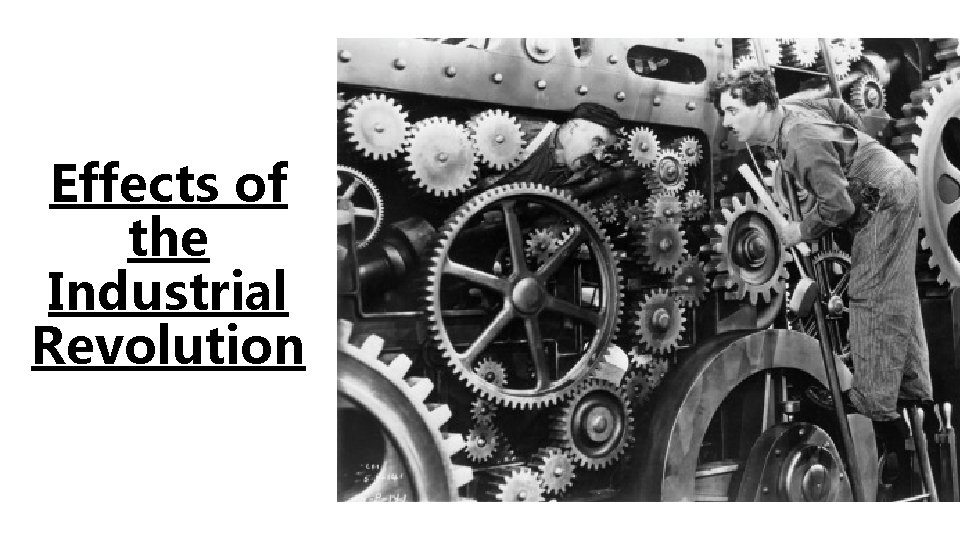
Effects of the Industrial Revolution
Overview… In the 1800 s, most Americans worked on farms. Items that were not made at home or on a farm were manufactured – BY HAND – one at a time. The INDUSTRIAL REVOLUTION changed the American economy.
Main Idea… By the early 1800 s – NORTHERN STATES started using powerdriven machinery that REVOLUTIONIZED the way that Americans worked, traveled and communicated and created MASSIVE economic growth for the American economy.
• LABOR: work • EFFICIENT: production with the least amount of effort or expense • INTERCHANGEABLE: parts that are made similarly for multiple products • IMMIGRATION: individuals that permanently travel to another country • URBANIZATION: people moving from the countryside to the cities for work • URBAN: city • DEPLORABLE: horrible, unsafe • UNSANITARY: unclean, unhygienic • MANUFACTURERS: business owners Vocabulary
There are FIVE main effects that happened as a result of the Industrial Revolution 1. Mass Production 2. Interchangeabl e Parts 3. Low Cost of Goods 4. Urbanization 5. Deplorable Work Conditions
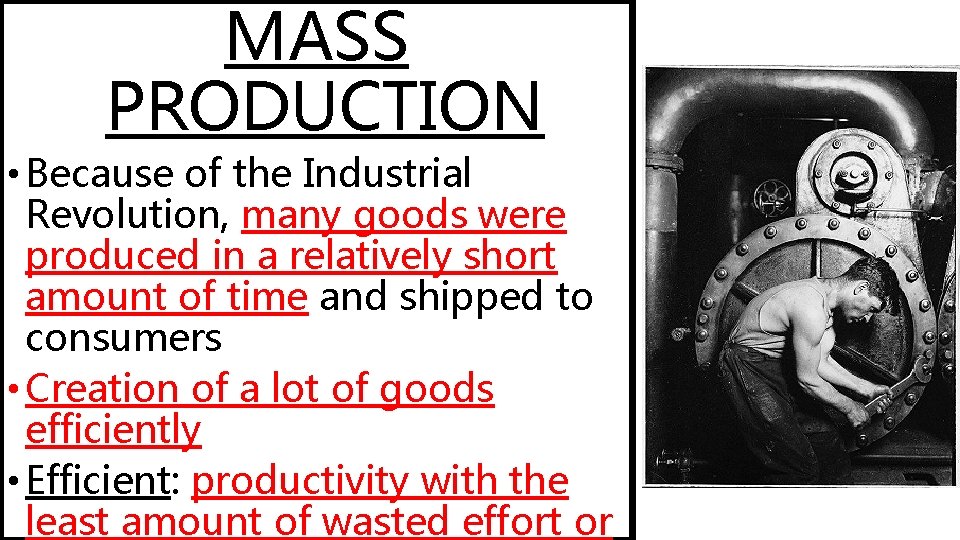
MASS PRODUCTION • Because of the Industrial Revolution, many goods were produced in a relatively short amount of time and shipped to consumers • Creation of a lot of goods efficiently • Efficient: productivity with the least amount of wasted effort or
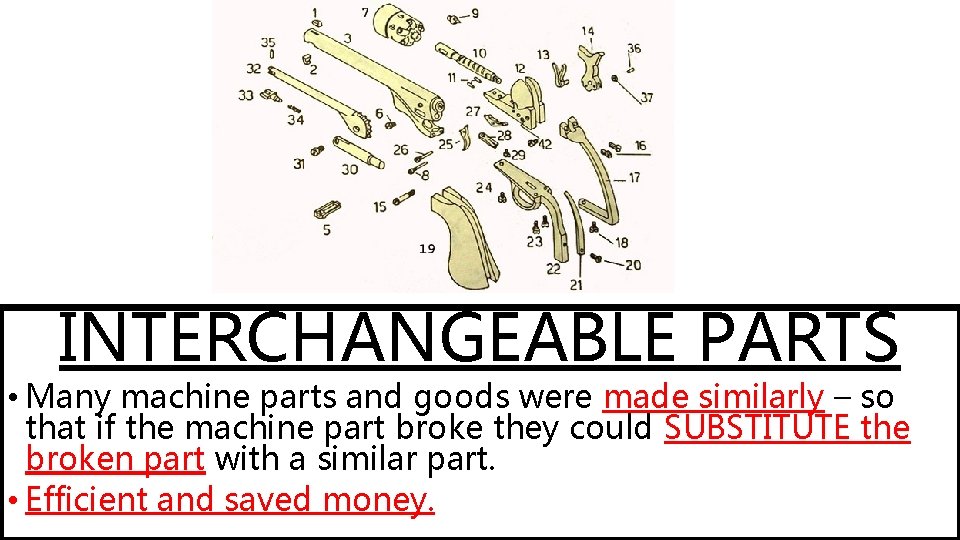
INTERCHANGEABLE PARTS • Many machine parts and goods were made similarly – so that if the machine part broke they could SUBSTITUTE the broken part with a similar part. • Efficient and saved money.
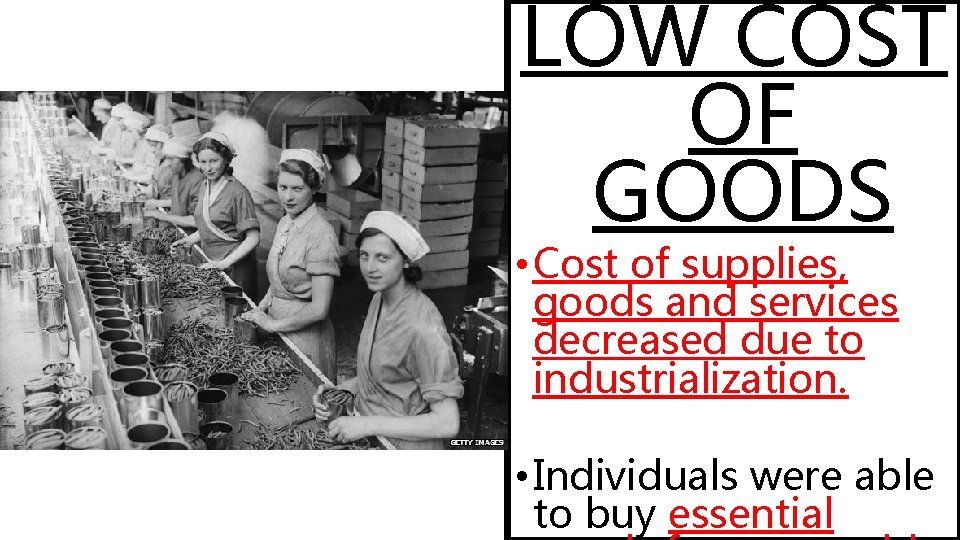
LOW COST OF GOODS • Cost of supplies, goods and services decreased due to industrialization. • Individuals were able to buy essential
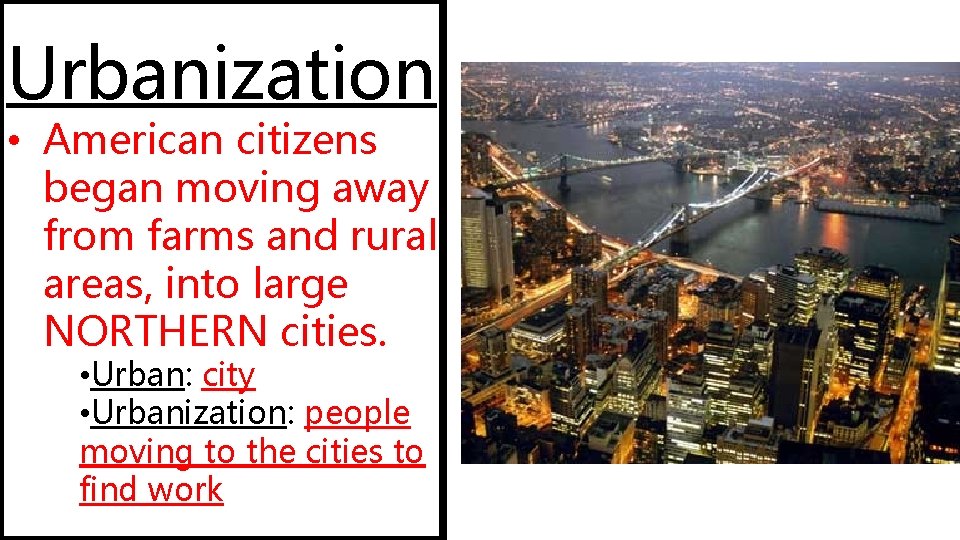
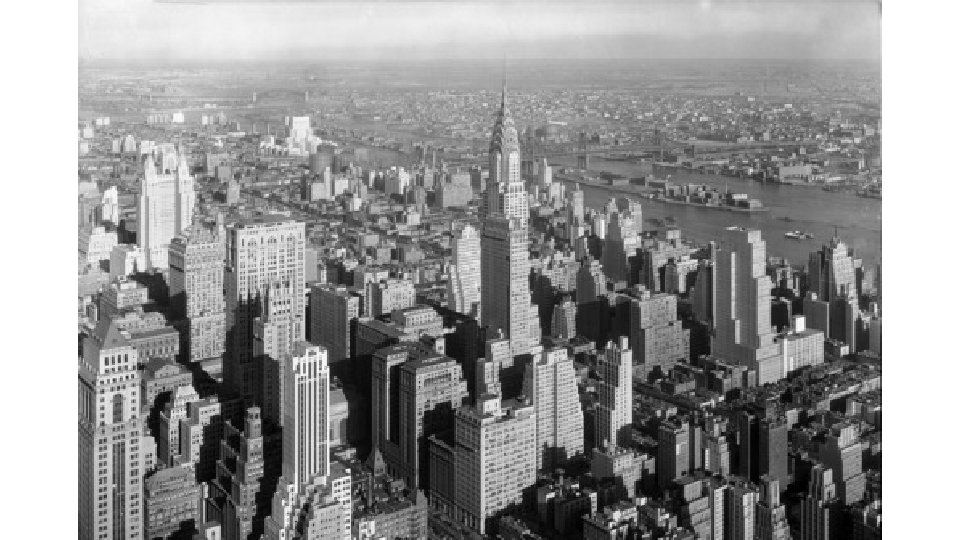
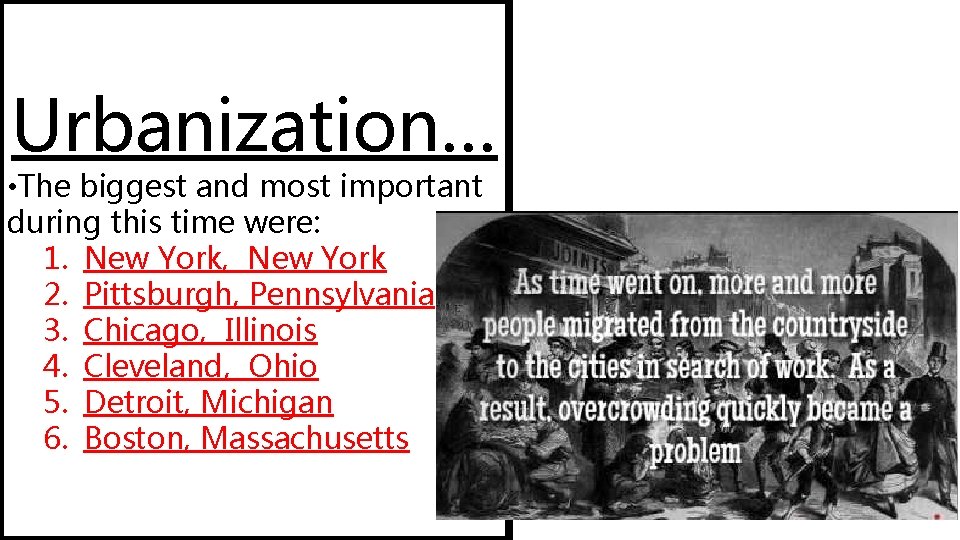
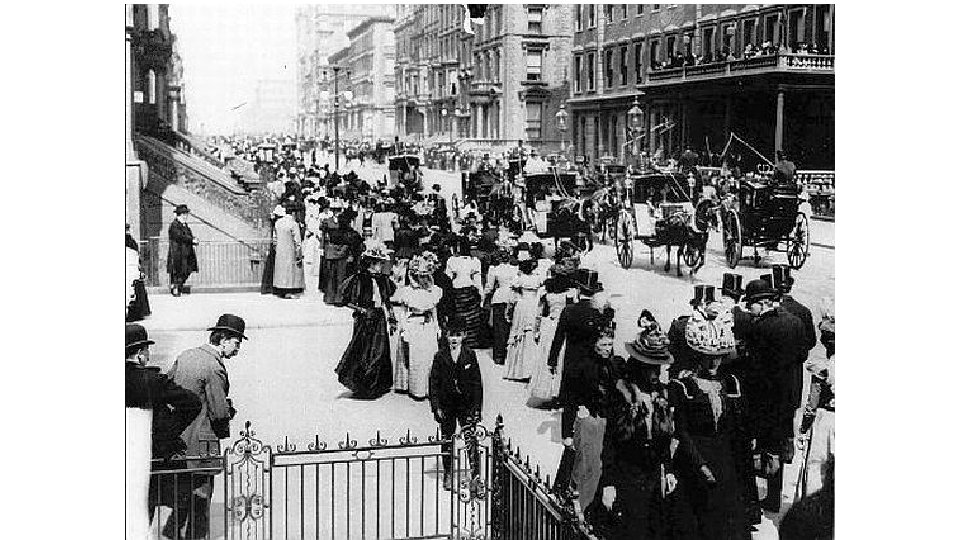
Urbanization • American citizens began moving away from farms and rural areas, into large NORTHERN cities. • Urban: city • Urbanization: people moving to the cities to find work
Urbanization… • The biggest and most important during this time were: 1. New York, New York 2. Pittsburgh, Pennsylvania 3. Chicago, Illinois 4. Cleveland, Ohio 5. Detroit, Michigan 6. Boston, Massachusetts
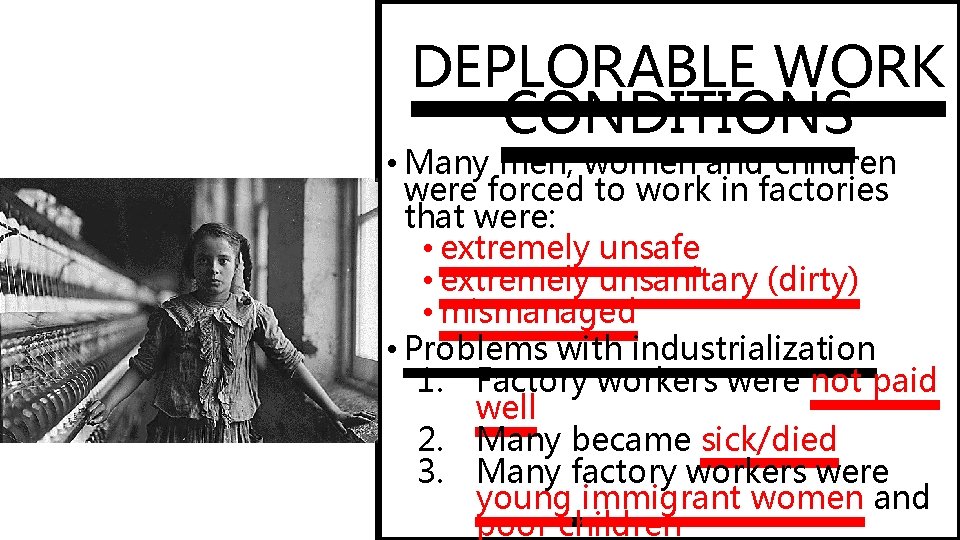
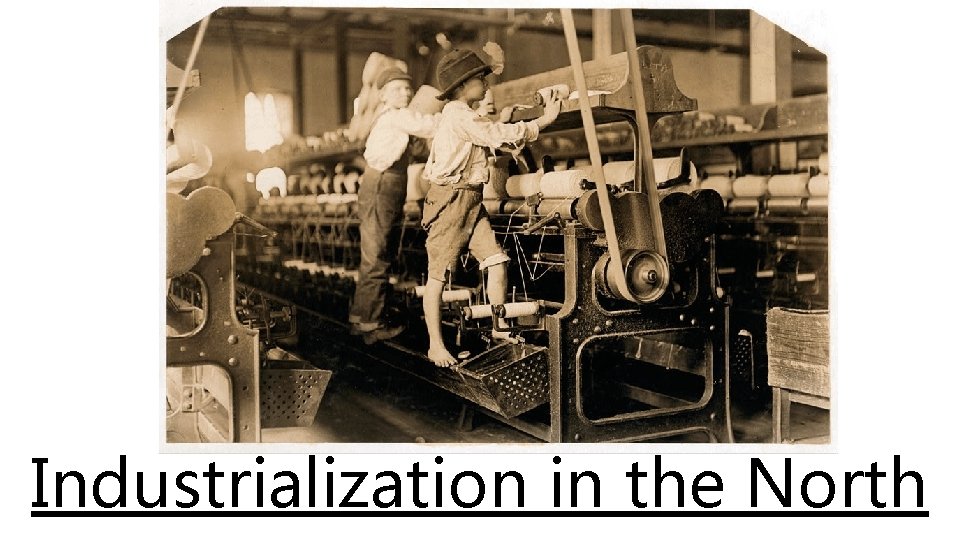
DEPLORABLE WORK CONDITIONS • Many men, women and children were forced to work in factories that were: • extremely unsafe • extremely unsanitary (dirty) • mismanaged • Problems with industrialization 1. Factory workers were not paid well 2. Many became sick/died 3. Many factory workers were young immigrant women and poor children
Industrialization in the North
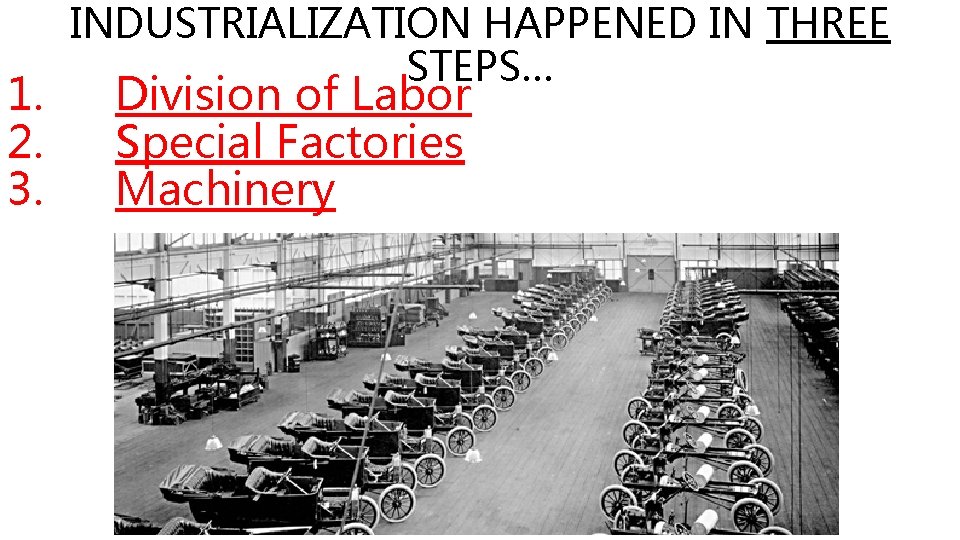
1. 2. 3. INDUSTRIALIZATION HAPPENED IN THREE STEPS… Division of Labor Special Factories Machinery
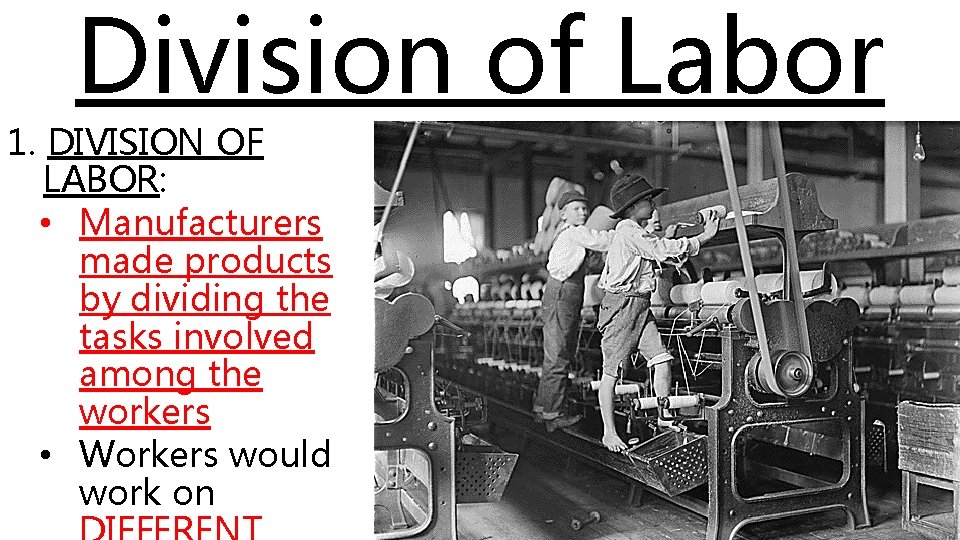
Division of Labor 1. DIVISION OF LABOR: • Manufacturers made products by dividing the tasks involved among the workers • Workers would work on
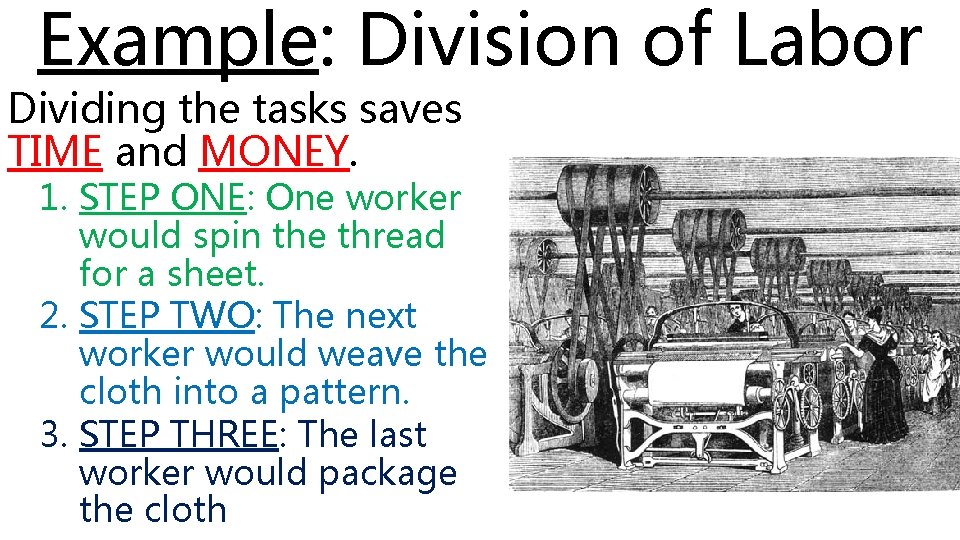
Example: Division of Labor Dividing the tasks saves TIME and MONEY. 1. STEP ONE: One worker would spin the thread for a sheet. 2. STEP TWO: The next worker would weave the cloth into a pattern. 3. STEP THREE: The last worker would package the cloth
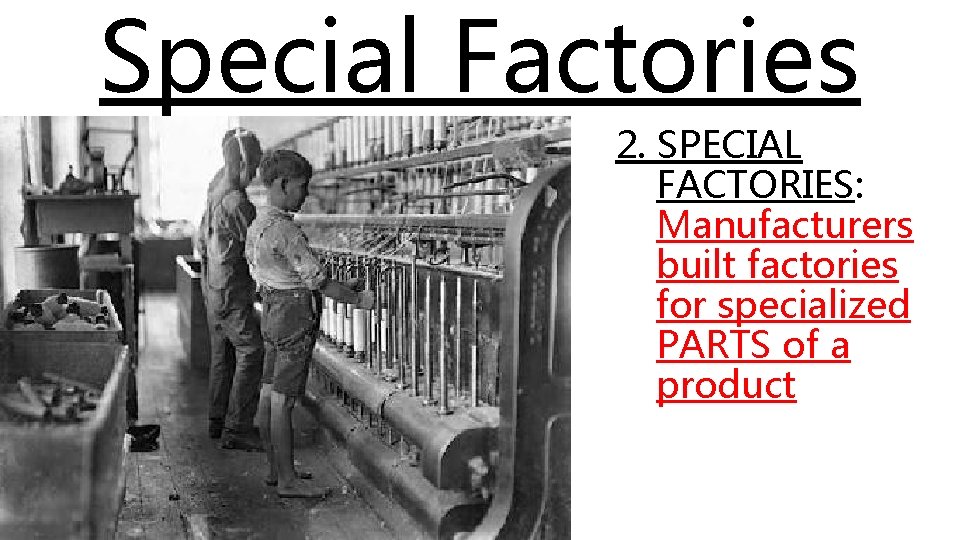
Special Factories 2. SPECIAL FACTORIES: Manufacturers built factories for specialized PARTS of a product
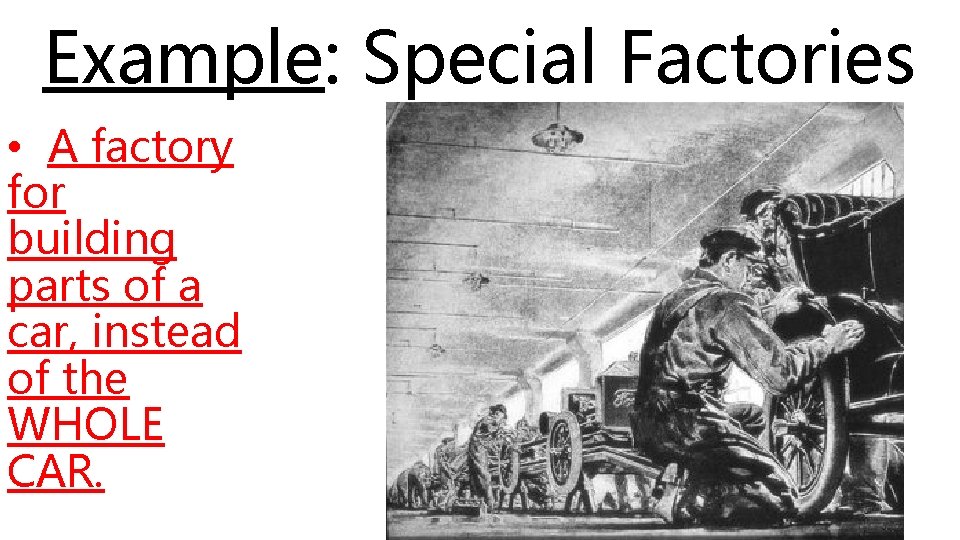
Example: Special Factories • A factory for building parts of a car, instead of the WHOLE CAR.
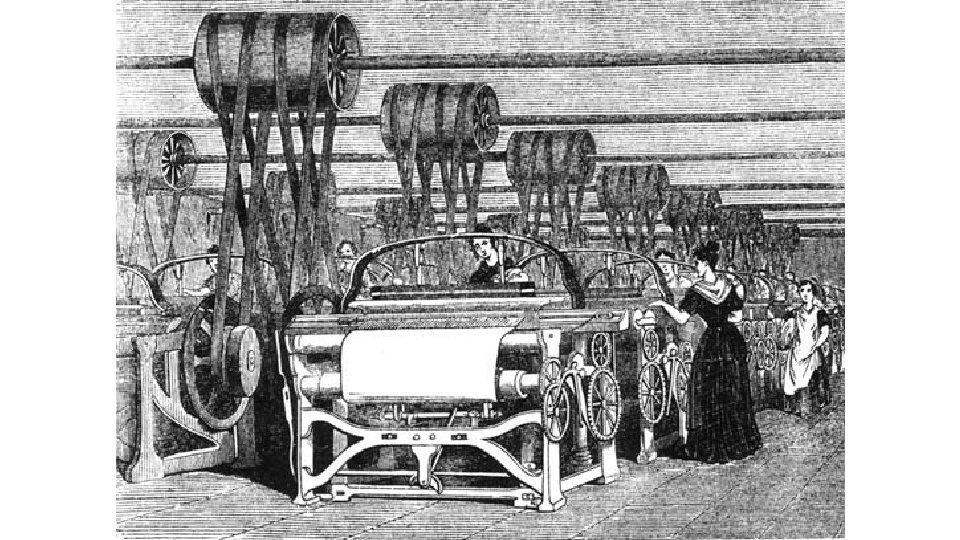
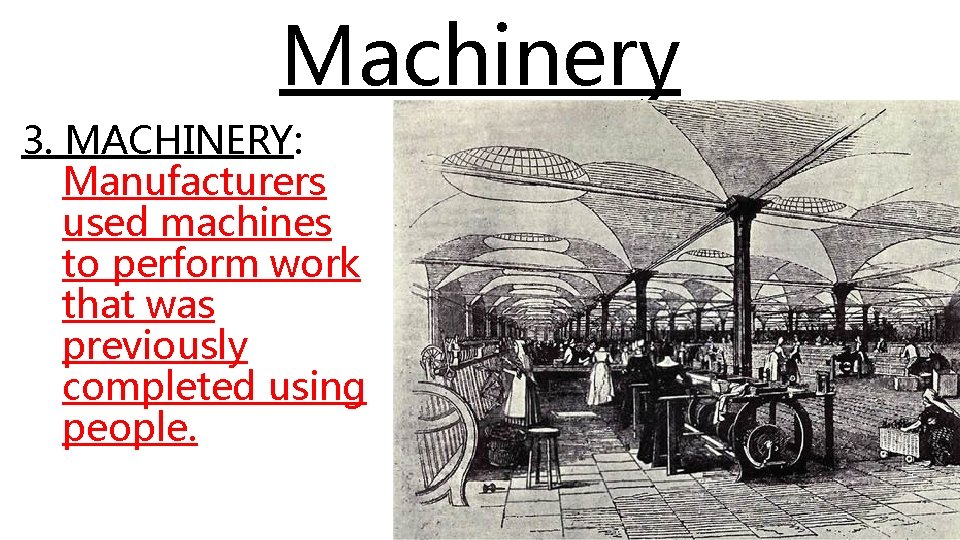
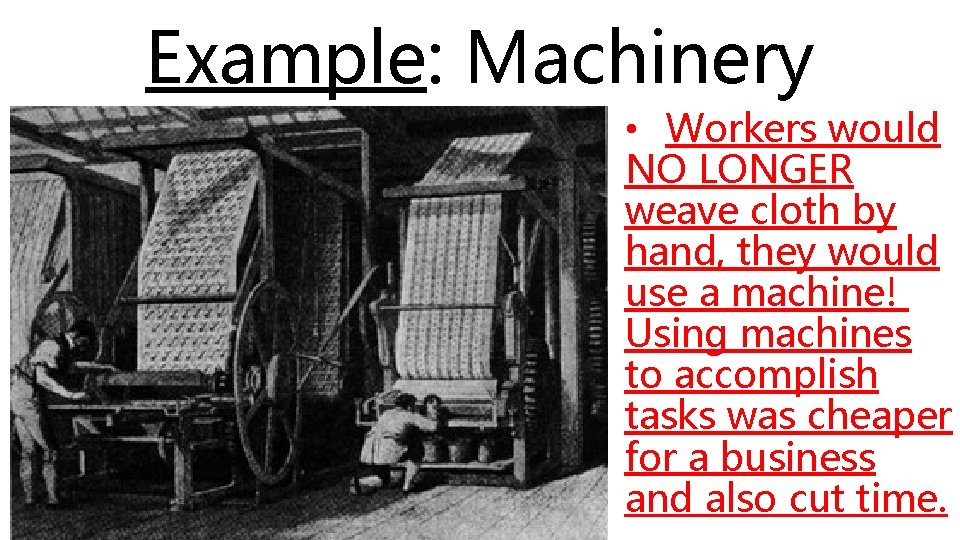
Machinery 3. MACHINERY: Manufacturers used machines to perform work that was previously completed using people.
Example: Machinery • Workers would NO LONGER weave cloth by hand, they would use a machine! Using machines to accomplish tasks was cheaper for a business and also cut time.