
EFFECTS of the Industrial Revolution In groups Brainstorm
EFFECTS of the Industrial Revolution In groups: Brainstorm before we move on – what are some possible effects the Industrial Revolution had, based on what you know thus far?
Effect # 1: Farming Upgrades The Industrial Revolution brought machinery to farms The use of farm machinery meant that fewer farm workers were needed More food surplus The industrial revolution created the ability to produce more crops, and rapidly increasing populations increased the need for more crops. Food to eat Raw materials (like cotton) for textile factories
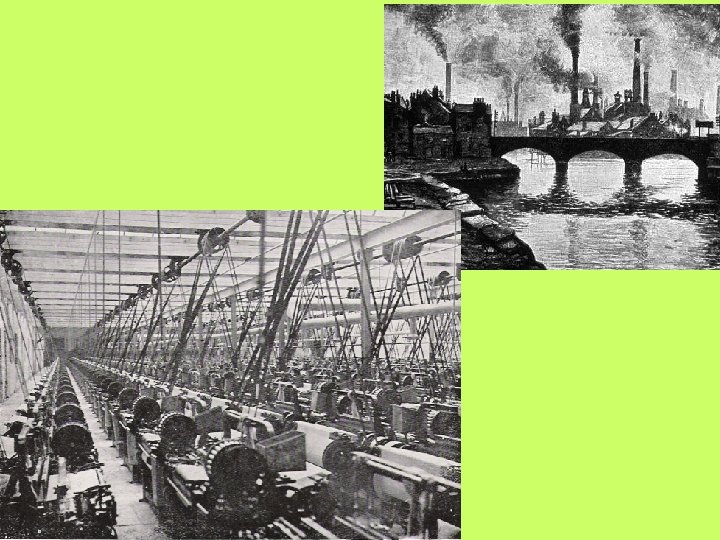
Effect # 2: Factory System New Steam Engine used to create massive buildings that house giant machines powered by steam Mechanization of industry (cotton was first) Higher productivity, lower costs Example: India – 500 Hours to spin 1 lb. cotton Factory in England – 80 minutes by 1830, 1 person Concentrated labor in a single location - Easier to ship and trade goods made Increased specialization of labor Dependence on fossil fuels (coal and oil) These factories justified massive environmental devastation to seek fossil fuels and rapidly expand urban areas Also resulted in massive pollution. This period is when scientists point to the major beginning of humans influencing climate change.

https: //www. youtube. com/watch? v =fhk. Fd 3 Xy 5 Pg
Effect # 3: Urbanization Massive new factories popping up everywhere led to new jobs in the cities Displaced farm workers moved to the cities to find work in factories Leads to unsanitary conditions as a result of extremely dense populations Increased mortality rate, drop in life expectancy Higher instances of Alcoholism and crime because of lower quality of life, less family structure New Diseases Cholera, Cancer, Black Lung, Emphysema
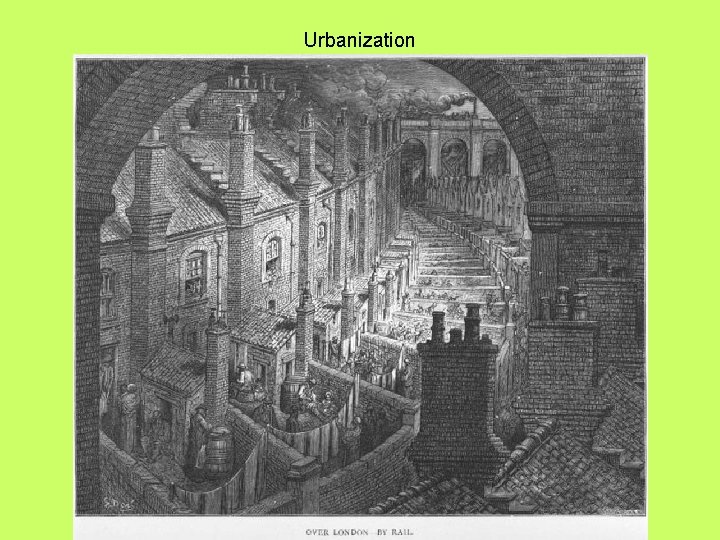
Urbanization
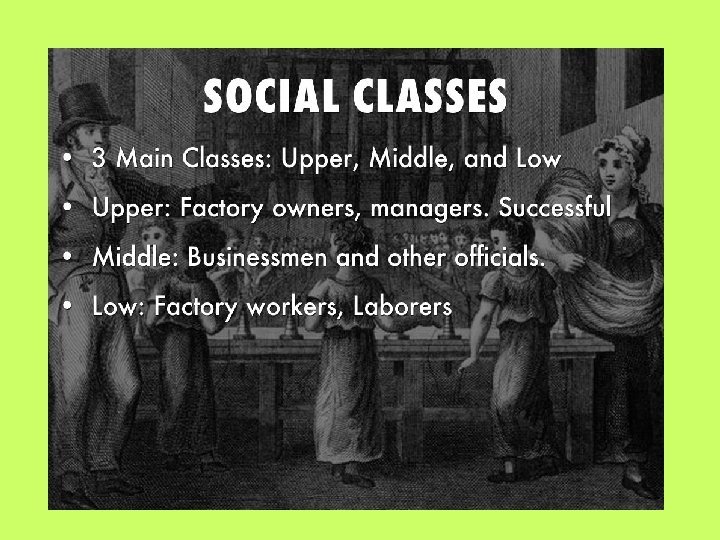
Effect # 3 Continued: Working and Housing Conditions Low pay, long hours Ø Labor unions Child labor, no protection for workers Ø Child labor laws Crowded housing, pollution Ø Ø Police and fire departments Public health acts Sewage systems, drainage systems Supplying clean water Horrible, dangerous working conditions Ø Safety laws
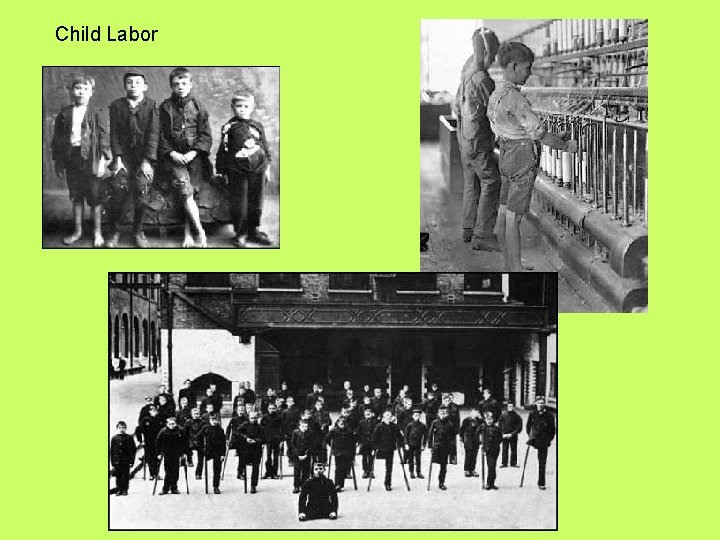
Child Labor
Effect # 4: New Technology! • • Steamship Railroad Spinning Jenny Cotton Gin Seed Drill The battery Telegraph (wired communication over long distances) – often follow train tracks
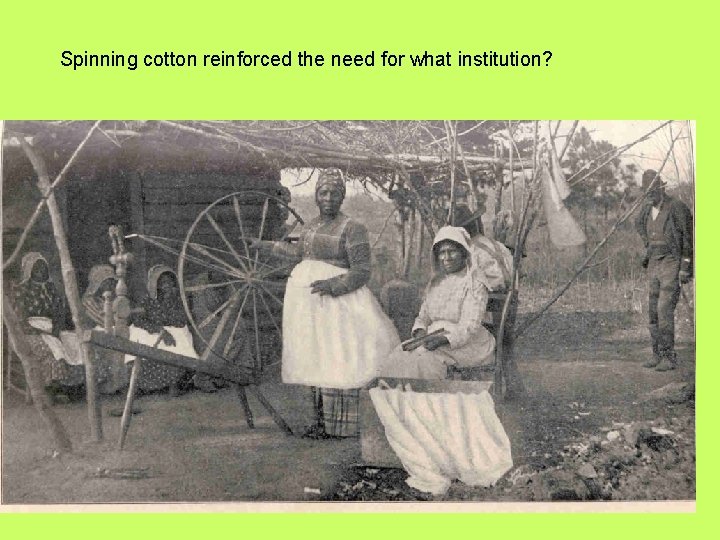
Spinning cotton reinforced the need for what institution?
Second Industrial Revolution The second Industrial Revolution took place about 1870 Spread to places such as the U. S. , Germany, Japan, and Russia Electricity became the primary source of power for factories, farms, and homes Steel, chemicals, internal combustion engines Precision machinery to mass produce goods
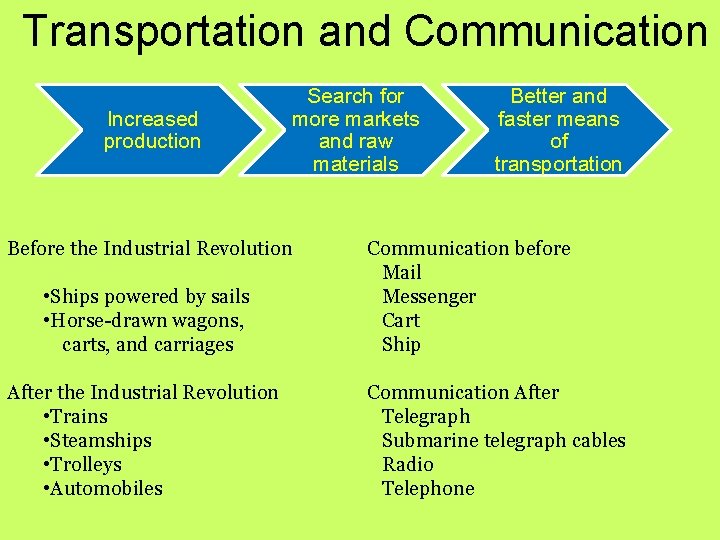
Transportation and Communication Increased production Search for more markets and raw materials Before the Industrial Revolution • Ships powered by sails • Horse-drawn wagons, carts, and carriages After the Industrial Revolution • Trains • Steamships • Trolleys • Automobiles Better and faster means of transportation Communication before Mail Messenger Cart Ship Communication After Telegraph Submarine telegraph cables Radio Telephone
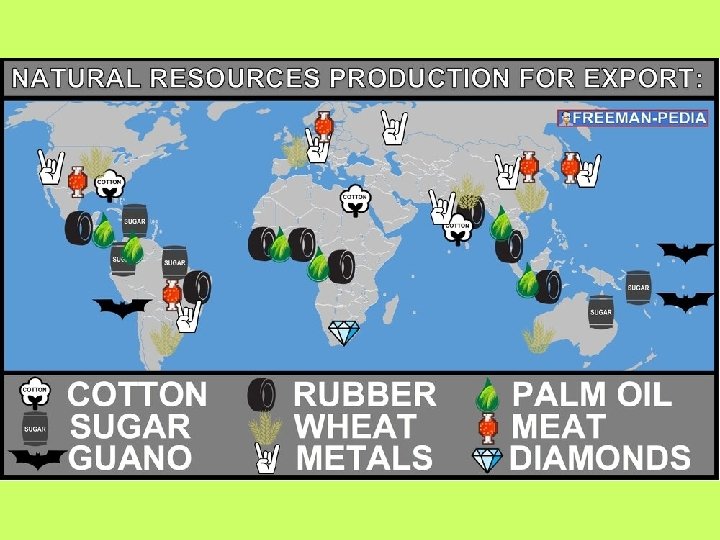
Effect # 5: Need for Raw Materials and Food q Many colonies became dependent on exporting a single natural resource such as metals or minerals or a single food product for the growing urban populations Rubber from SE Asia Palm Oil from Africa Guano from Peru Beef from Argentina q Global demand for industrial minerals and metal as well as gold, silver and diamonds as forms of wealth, leading to extensive mining centers worldwide.
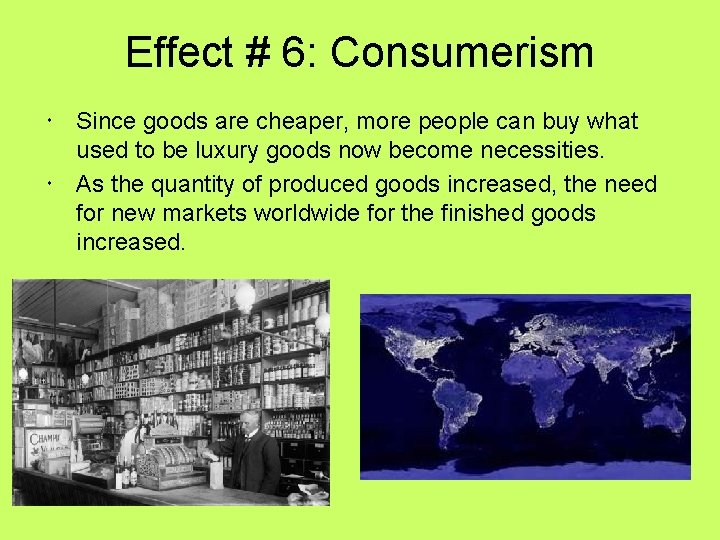
Effect # 6: Consumerism Since goods are cheaper, more people can buy what used to be luxury goods now become necessities. As the quantity of produced goods increased, the need for new markets worldwide for the finished goods increased.
Effect # 8 New Financial Instruments As capitalism grows so do financial institutions Ø Stock Holders and Markets – New York, Amsterdam, London Ø Corporations – companies with limited liability Ø Monopoly – only one provider Ø Transnational companies – crosses borders and has great influence in smaller countries Ø Banking and Insurance grows
Effect # 9 Reactions to Industrial Economy and Reform Attempts v Reform v Labor Unions v Voting Rights v Women’s Suffrage Movements v Child Labor Laws v Intellectual Reaction v Utilitarianism – John Stuart Mill v Utopian Socialism – Robert Owen v Communism – Karl Marx and Fredrich Engels v Capitalists v Bourgeoisie v Proletariat
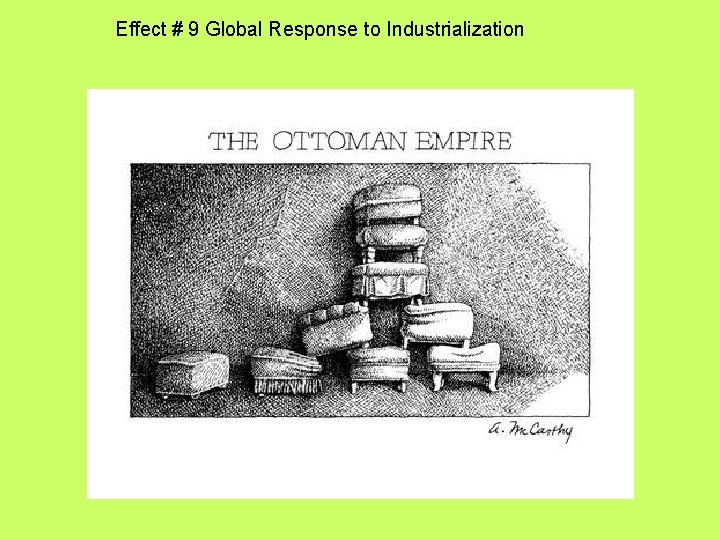
Effect # 9 Global Response to Industrialization
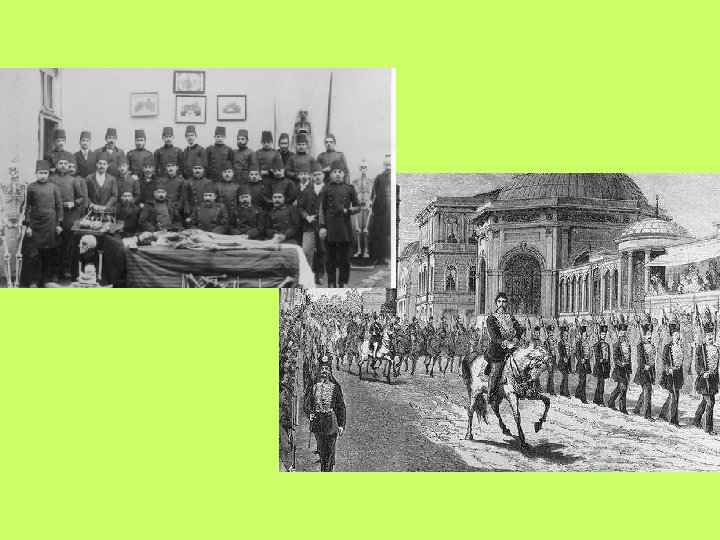
The Ottoman Empire: “The Sick Man of Europe” • Before the 18 th century, Ottoman are still considered a major world power • Causes of weakening in the 18 th and 19 th centuries: – Egyptian/Greek Independence – Janissaries become hereditary – fear modernization – Muslim clerics fearing secularization • Weakening is slowed by the “Tanzimat” – Massive modernization: More rights for non-Muslims, ended outdated tax systems (Tax Farming) – Modeled tax systems, military systems, and education systems off of European models (France): New medical schools, more doctors, textbooks (written in French) – Secularization of legal code (no more Dhimmi tax), easier foreigners to do business in Ottoman Empire – Women lost rights – Destruction of the Janissaries, replaced with modern soldiers/artillery
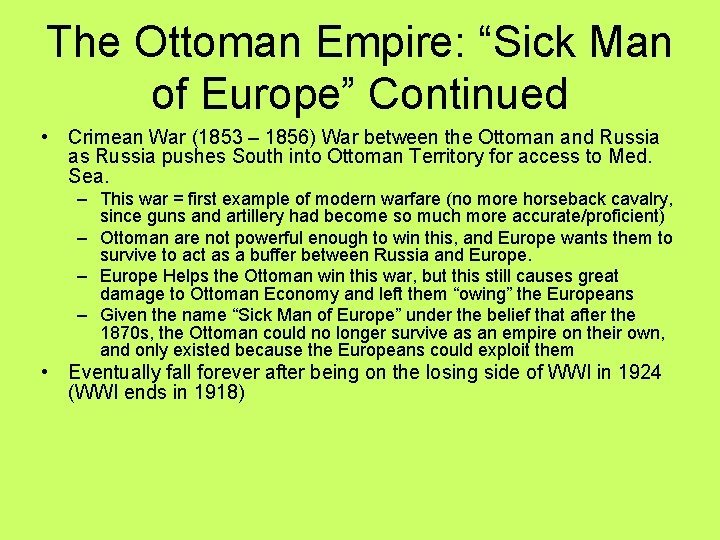
The Ottoman Empire: “Sick Man of Europe” Continued • Crimean War (1853 – 1856) War between the Ottoman and Russia as Russia pushes South into Ottoman Territory for access to Med. Sea. – This war = first example of modern warfare (no more horseback cavalry, since guns and artillery had become so much more accurate/proficient) – Ottoman are not powerful enough to win this, and Europe wants them to survive to act as a buffer between Russia and Europe. – Europe Helps the Ottoman win this war, but this still causes great damage to Ottoman Economy and left them “owing” the Europeans – Given the name “Sick Man of Europe” under the belief that after the 1870 s, the Ottoman could no longer survive as an empire on their own, and only existed because the Europeans could exploit them • Eventually fall forever after being on the losing side of WWI in 1924 (WWI ends in 1918)
Effect # 9 Global Response to Industrialization v China v Self-Strengthening Movement – trying to government sponsor military tech. , ships and arsenals. v Empress Dowager Cixi v feared incursion so stopped all trains and telegraphs into interior v Got rid of Civil Service Exam v Japan v Meiji Restoration – Government sponsored modernization. v By 1920 Army officers begin to dominate government again foreshadowing WW 2.
- Slides: 24