
Effects of the Equatorial Ionosphere Anomaly on the
- Slides: 14
Effects of the Equatorial Ionosphere Anomaly on the Inter-Hemispheric Circulation in the Thermosphere Liying Qian 1, Alan G. Burns 1, Wenbin Wang 1, Stanley C. Solomon 1, Yongliang Zhang 2, and V. Hsu 3 1 High Altitude Observatory, National Center for Atmospheric Research, Boulder, Colorado, USA 2 Applied Physics Laboratory, Johns Hopkins University, Laurel, Maryland, USA 3 Department of Aerospace Engineering Sciences, University of Colorado at Boulder, Colorado, USA The High Altitude Observatory (HAO) at the National Center for Atmospheric Research (NCAR). The National Center for Atmospheric Research is sponsored by the National Science Foundation. Any opinions, findings and conclusions or recommendations expressed in this publication are those of the author(s) and do not necessarily reflect the views of the National Science Foundation.
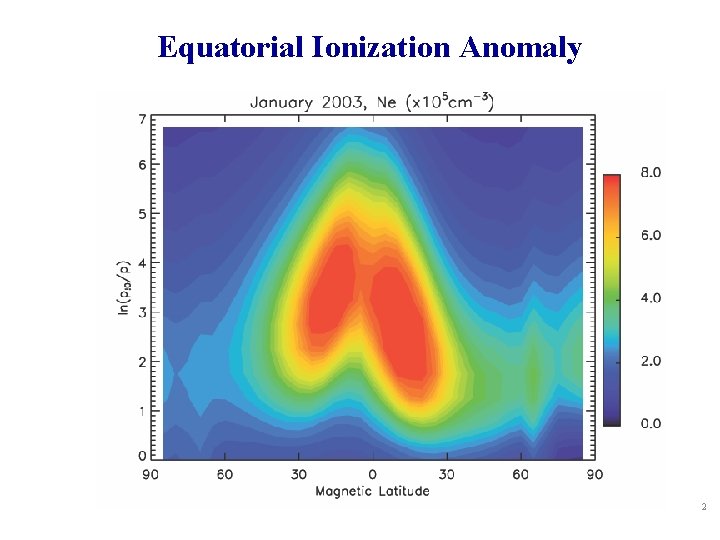
Equatorial Ionization Anomaly 2
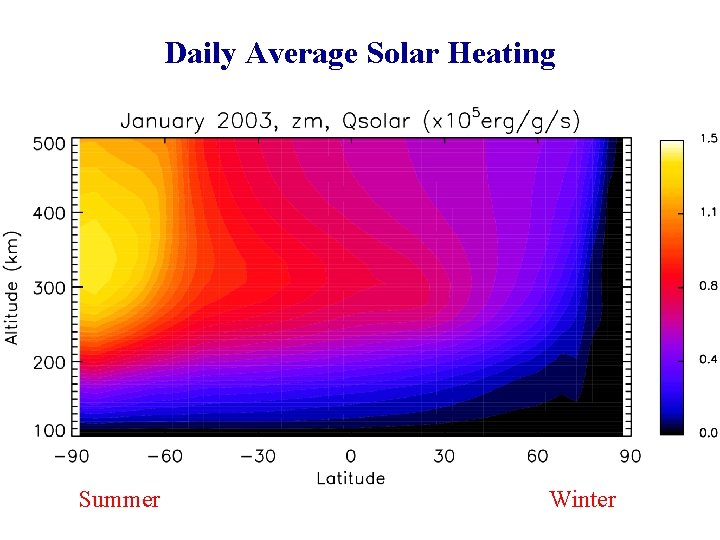
Daily Average Solar Heating Summer Winter
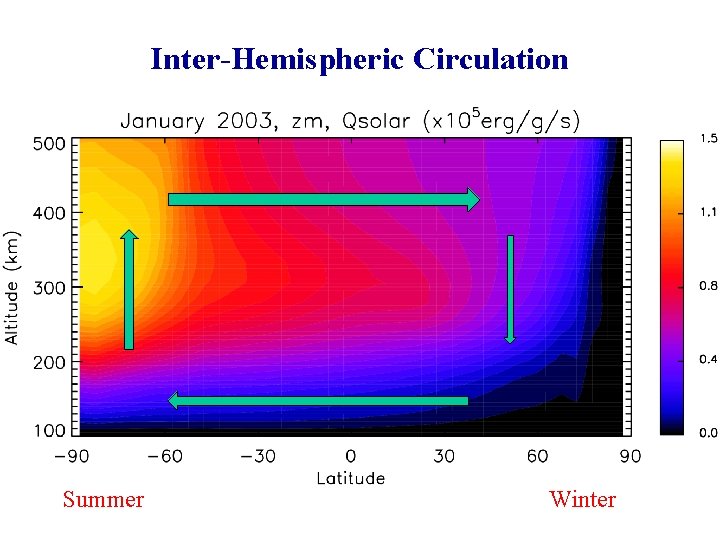
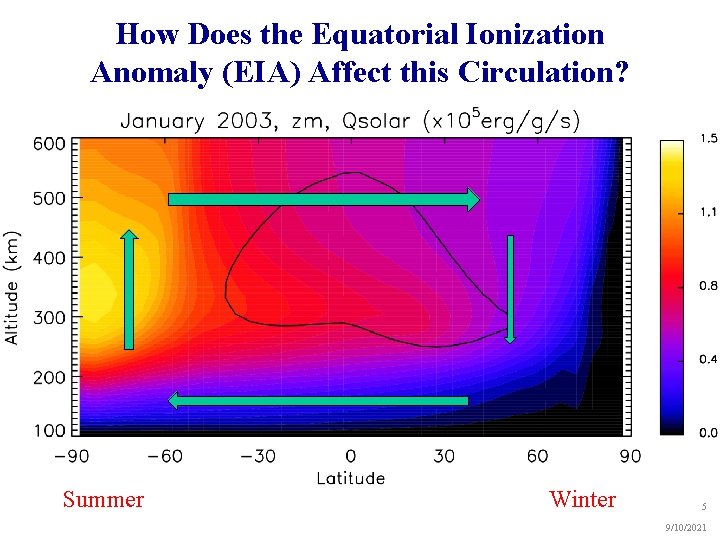
Inter-Hemispheric Circulation Summer Winter
How Does the Equatorial Ionization Anomaly (EIA) Affect this Circulation? Summer Winter 5 9/10/2021
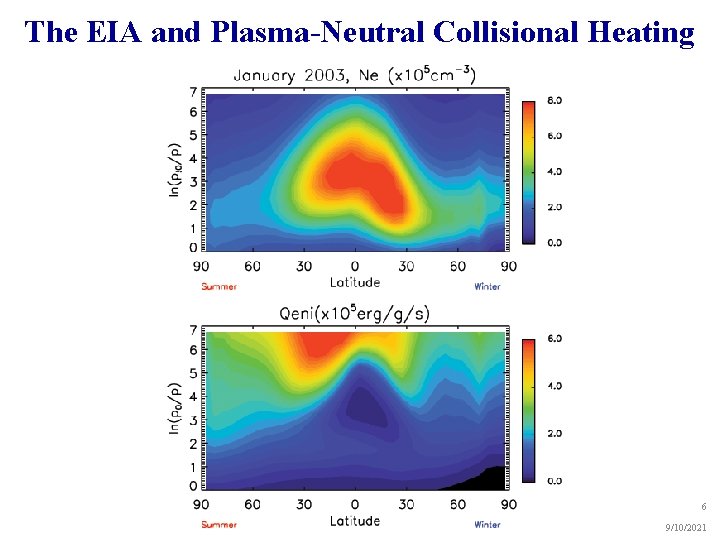
The EIA and Plasma-Neutral Collisional Heating 6 9/10/2021
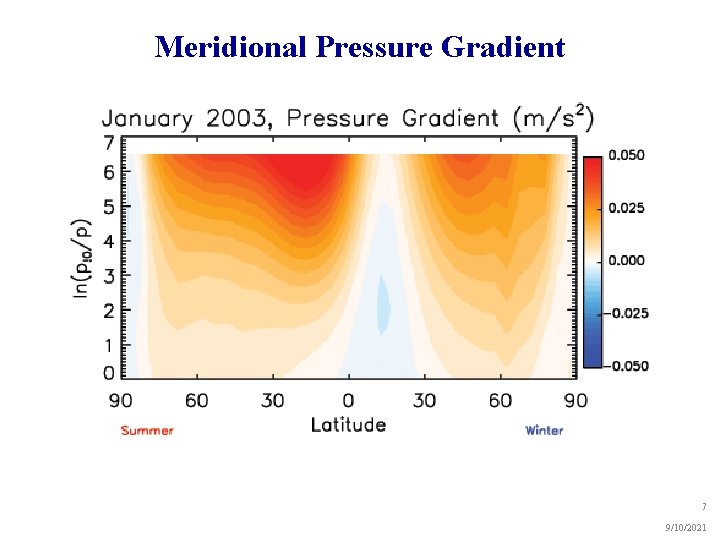
Meridional Pressure Gradient 7 9/10/2021
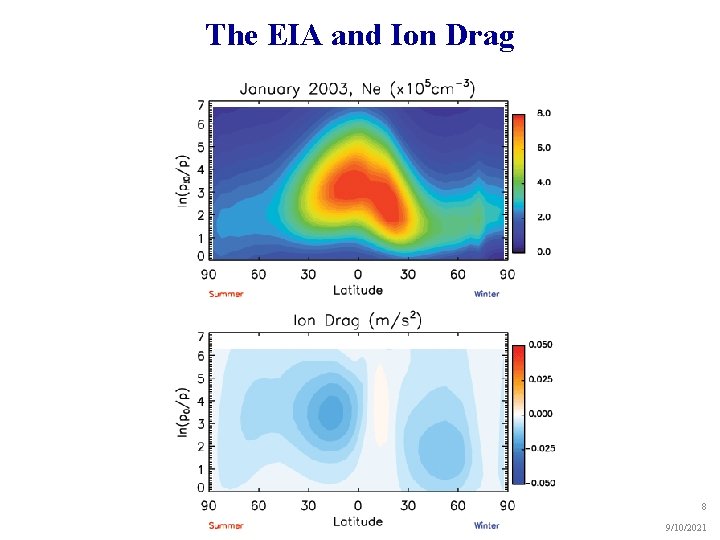
The EIA and Ion Drag 8 9/10/2021
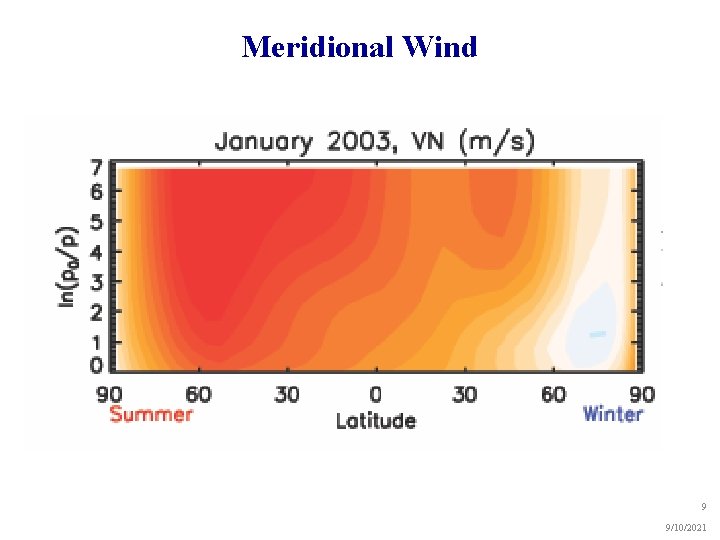
Meridional Wind 9 9/10/2021
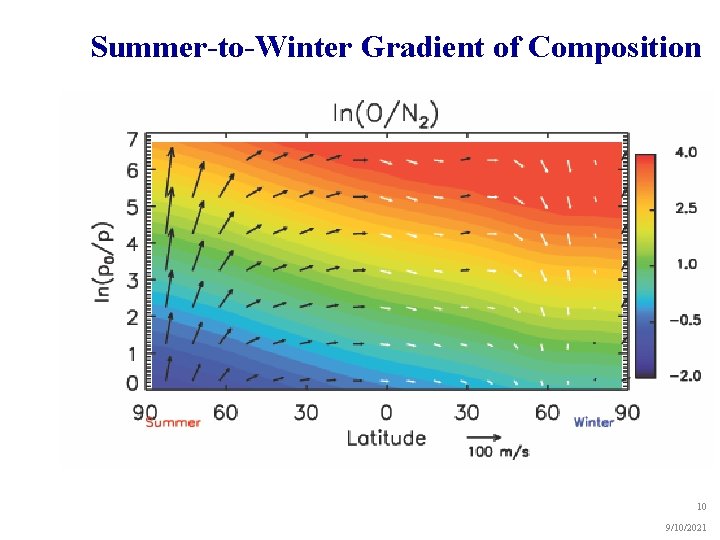
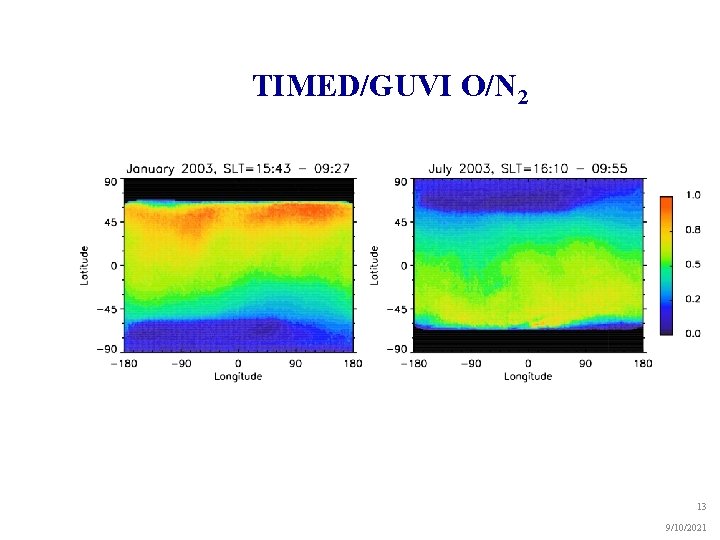
Summer-to-Winter Gradient of Composition 10 9/10/2021
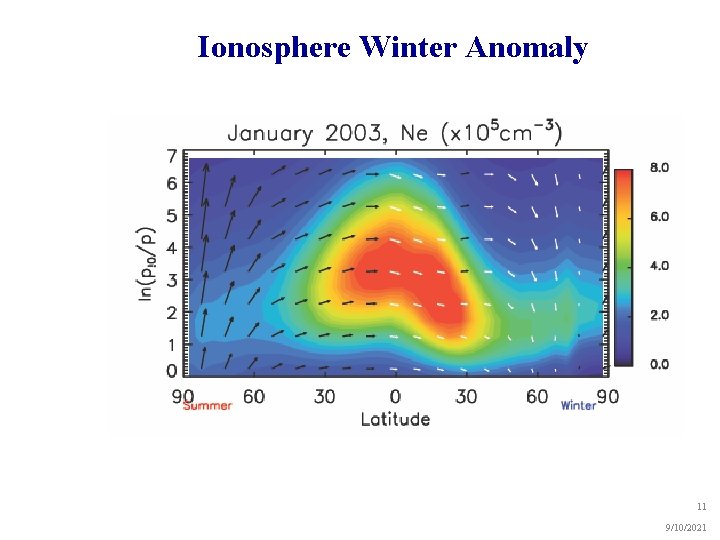
Ionosphere Winter Anomaly 11 9/10/2021
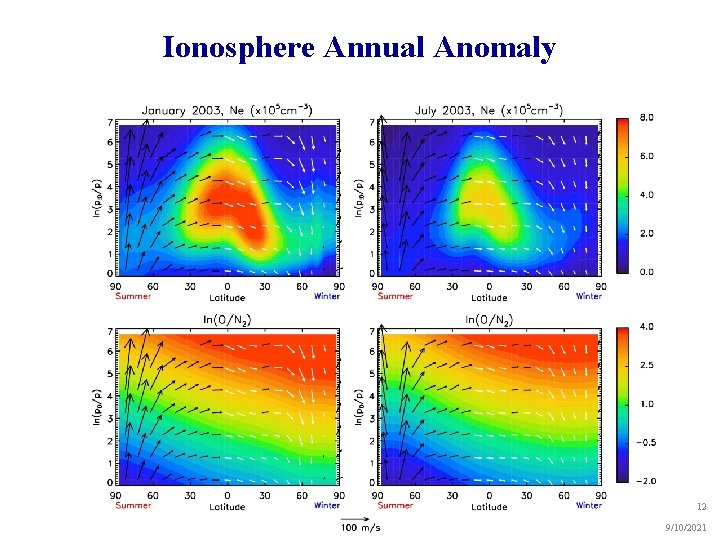
Ionosphere Annual Anomaly 12 9/10/2021
TIMED/GUVI O/N 2 13 9/10/2021
Conclusions (1) The EIA affects the summer-to-winter meridional wind through plasma-neutral collisional heating and ion drag; (2) The wind is suppressed as it encounters the EIA in the summer hemisphere, accelerates again in the winter hemisphere after passing the EIA, then converges in subauroral regions. (3) Therefore, the EIA affects summer-to-winter latitudinal gradient of thermospheric composition, ionosphere winter anomaly, ionosphere annual anomaly. (4) Any lower atmospheric processes that affect the EIA can therefore affect the mid-latitude thermosphere and ionosphere. Qian et al. , 2016 a, b, JGR 14 9/10/2021