
Effects of Shading and Evapotranspiration Trees can reduce
- Slides: 32
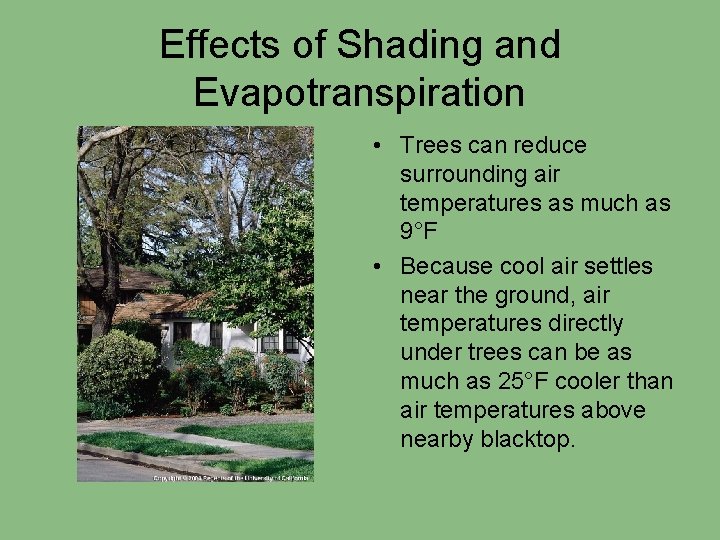
Effects of Shading and Evapotranspiration • Trees can reduce surrounding air temperatures as much as 9°F • Because cool air settles near the ground, air temperatures directly under trees can be as much as 25°F cooler than air temperatures above nearby blacktop.
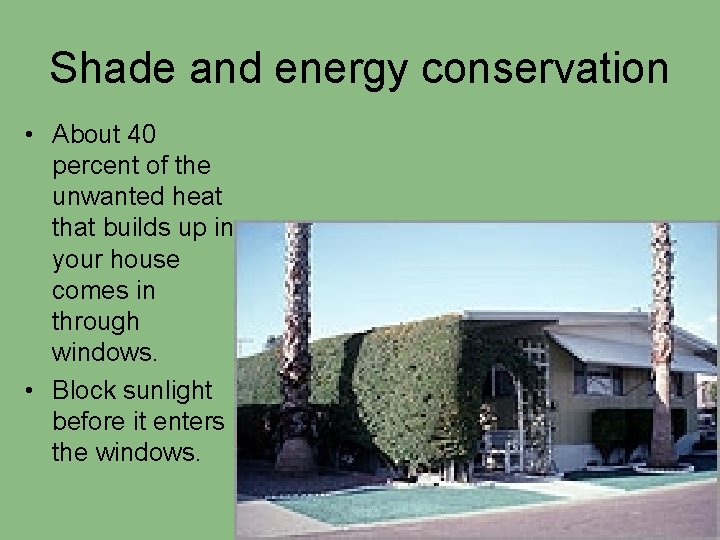
Shade and energy conservation • About 40 percent of the unwanted heat that builds up in your house comes in through windows. • Block sunlight before it enters the windows.
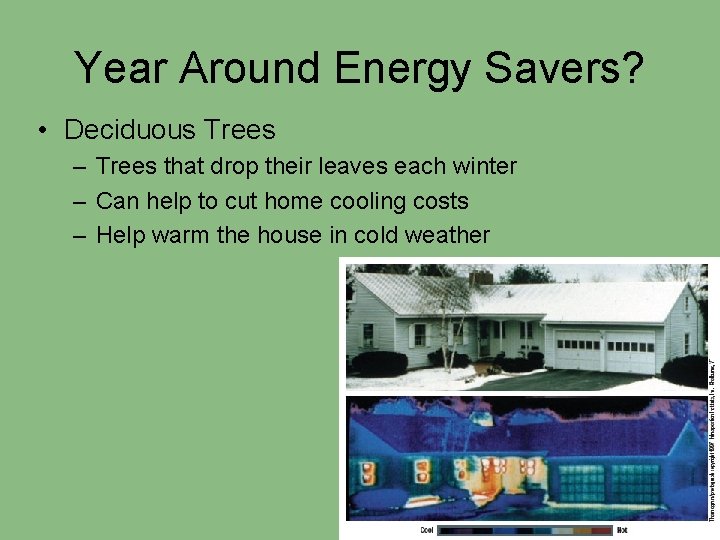
Year Around Energy Savers? • Deciduous Trees – Trees that drop their leaves each winter – Can help to cut home cooling costs – Help warm the house in cold weather
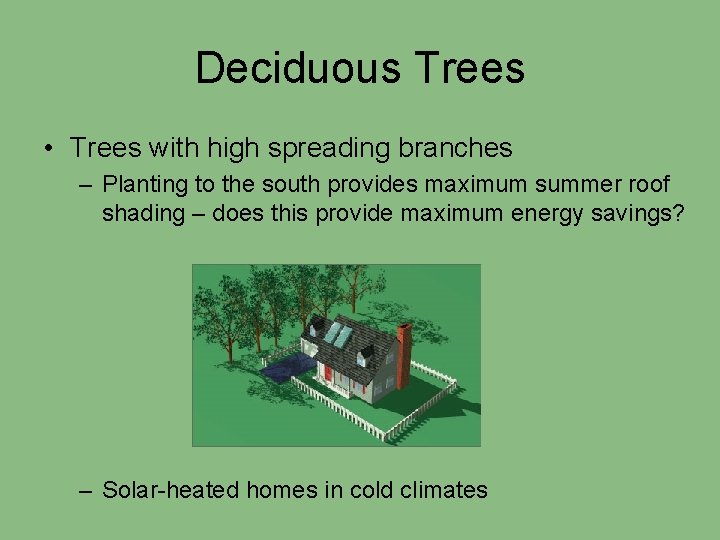
Deciduous Trees • Trees with high spreading branches – Planting to the south provides maximum summer roof shading – does this provide maximum energy savings? – Solar-heated homes in cold climates
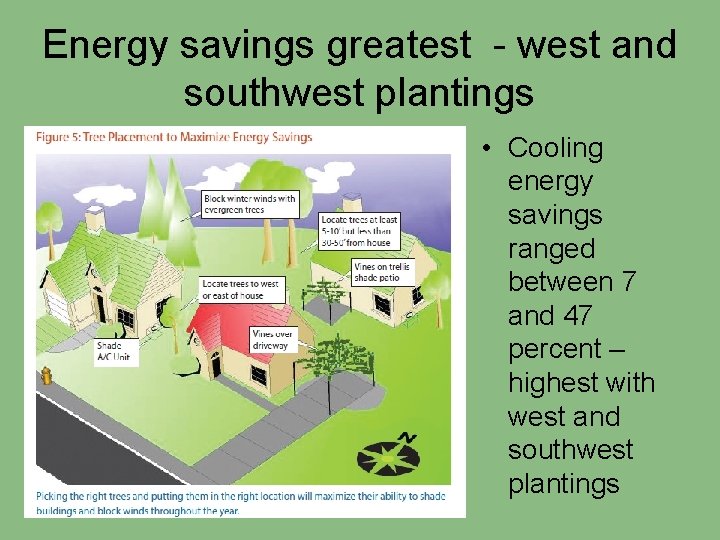
Energy savings greatest - west and southwest plantings • Cooling energy savings ranged between 7 and 47 percent – highest with west and southwest plantings
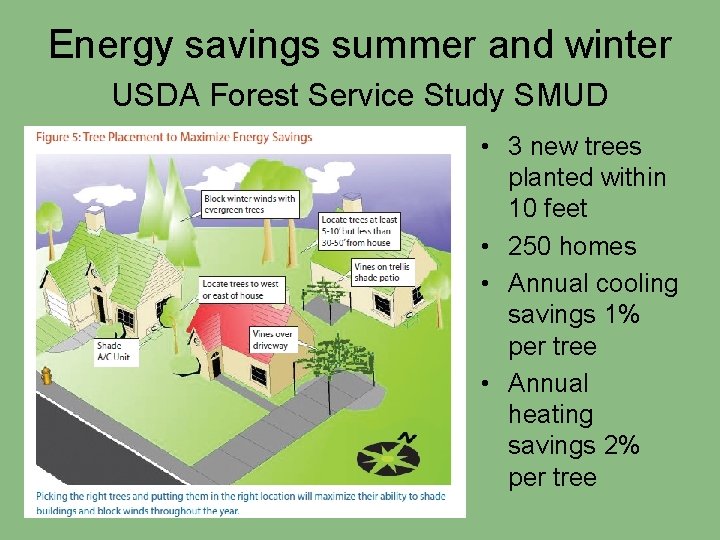
Energy savings summer and winter USDA Forest Service Study SMUD • 3 new trees planted within 10 feet • 250 homes • Annual cooling savings 1% per tree • Annual heating savings 2% per tree
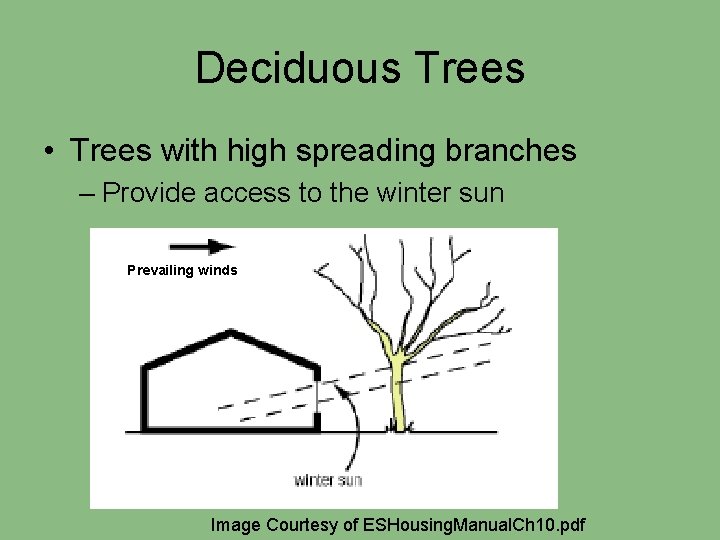
Deciduous Trees • Trees with high spreading branches – Provide access to the winter sun Prevailing winds Image Courtesy of ESHousing. Manual. Ch 10. pdf
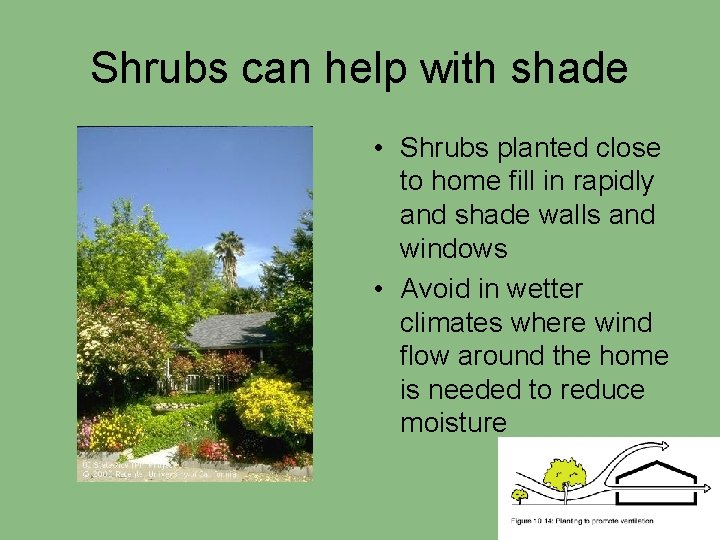
Shrubs can help with shade • Shrubs planted close to home fill in rapidly and shade walls and windows • Avoid in wetter climates where wind flow around the home is needed to reduce moisture
Windbreaks • For best results – Plant dense evergreen trees and shrubs to break prevailing winter winds – Plant windbreak at a distance two to five times mature height of trees – Block wind close to the ground with low growing trees and shrubs
Windbreaks • For best results – Plant 90 degrees to direction of wind. – Density of 50 -60% creates less turbulence
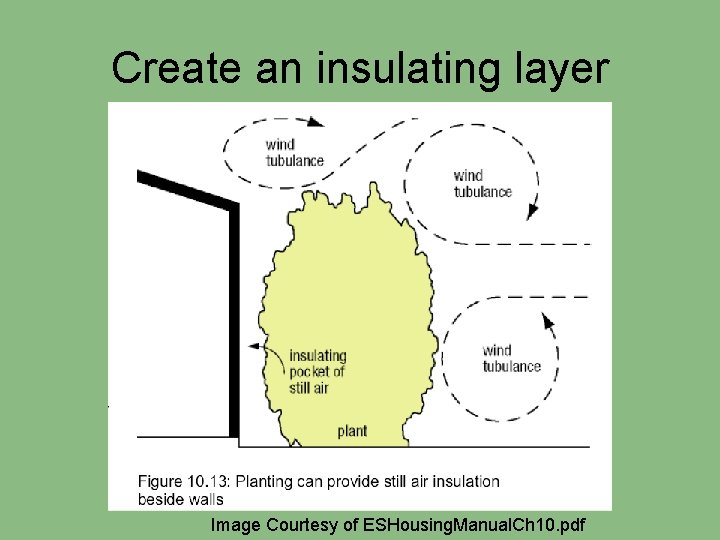
Create an insulating layer Image Courtesy of ESHousing. Manual. Ch 10. pdf
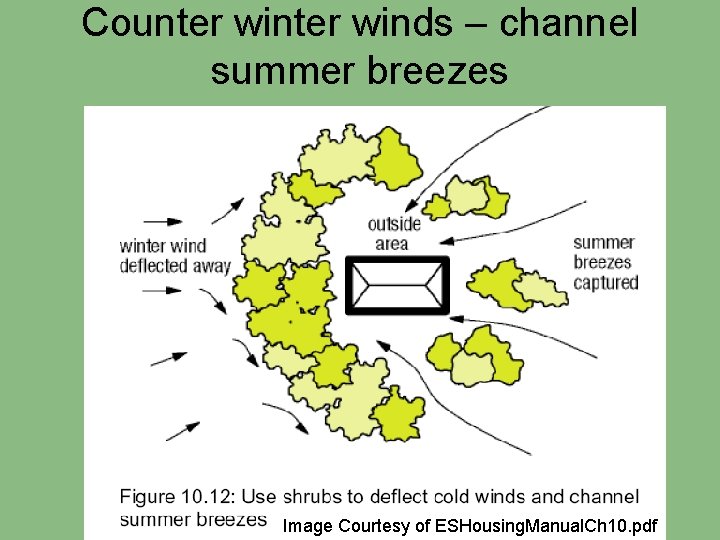
Counter winds – channel summer breezes Image Courtesy of ESHousing. Manual. Ch 10. pdf
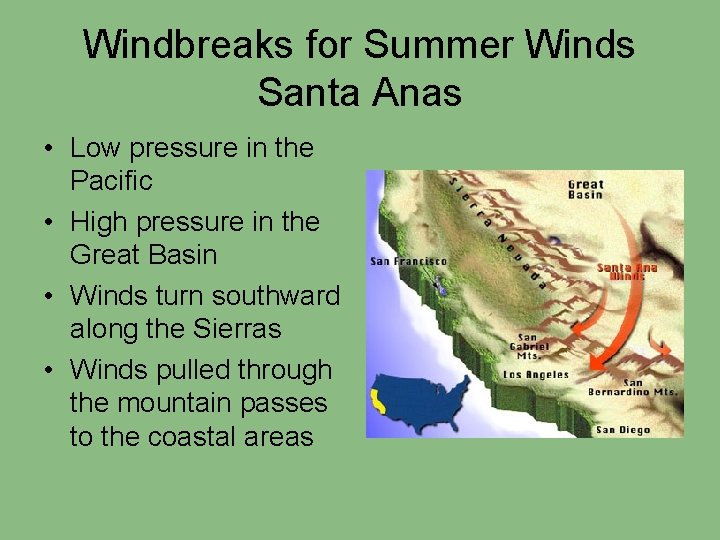
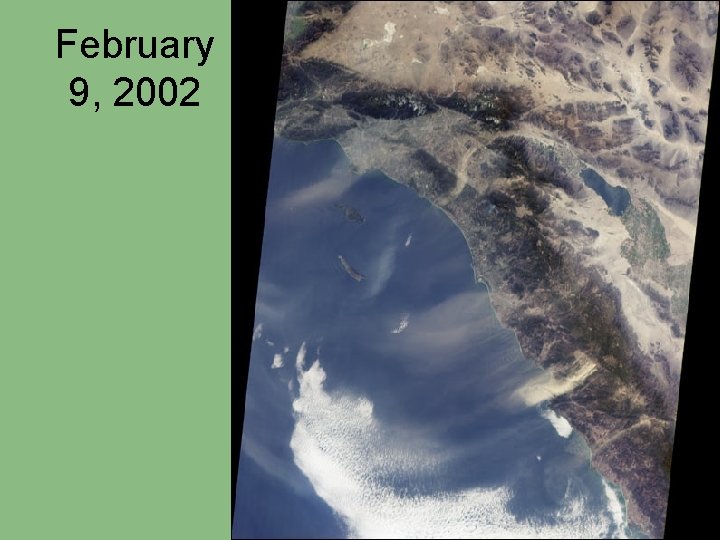
Windbreaks for Summer Winds Santa Anas • Low pressure in the Pacific • High pressure in the Great Basin • Winds turn southward along the Sierras • Winds pulled through the mountain passes to the coastal areas
February 9, 2002
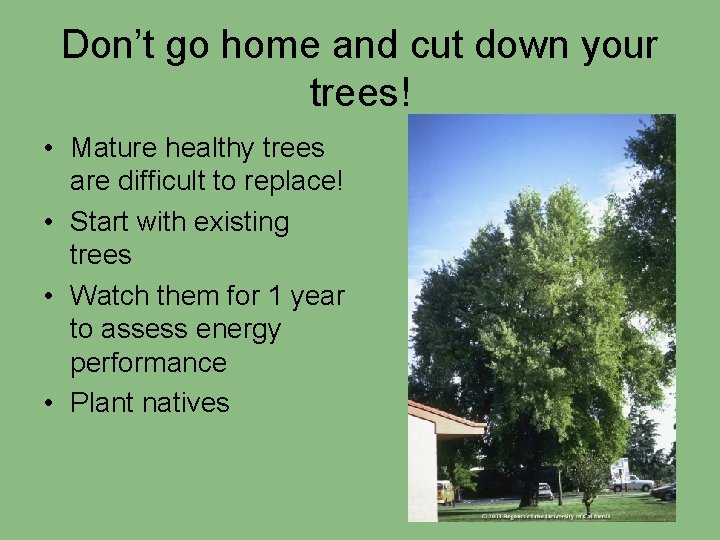
Don’t go home and cut down your trees! • Mature healthy trees are difficult to replace! • Start with existing trees • Watch them for 1 year to assess energy performance • Plant natives
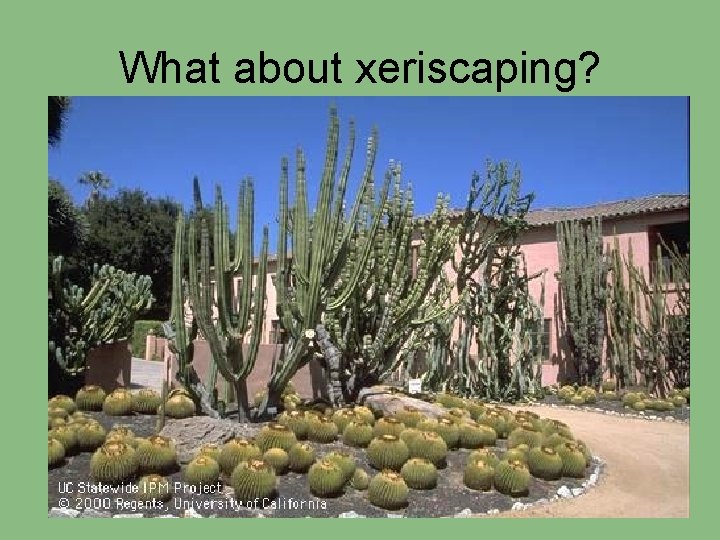
What about xeriscaping?
What about xeriscaping? • Trees, shrubs, ground cover, outdoor pools and fountains • Low maintenance (reduces that work term!) • Bushes and shrubs reduce heat and glare • Place water features upwind from house
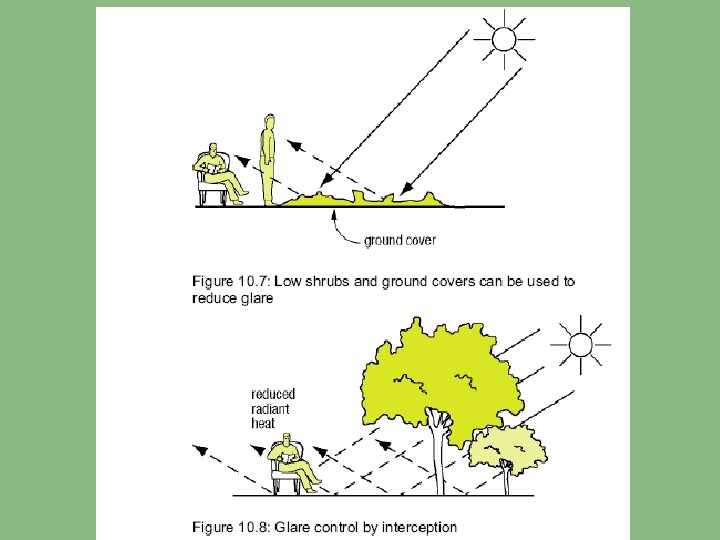
Reducing glare • Remember running barefoot across hot pavement in the summer? • Strong sunshine reflected from paving, walls, water, or shiny objects • Lawns, ground covers, low-growing shrubs absorb sunlight and re-radiate less
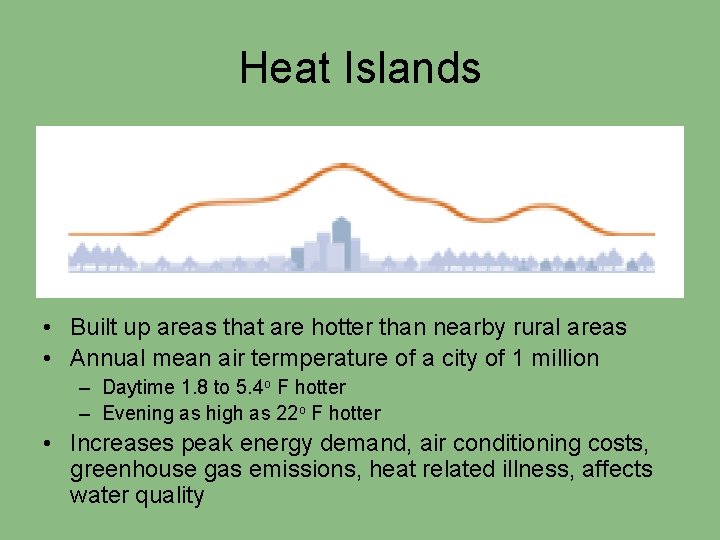
Heat Islands • Built up areas that are hotter than nearby rural areas • Annual mean air termperature of a city of 1 million – Daytime 1. 8 to 5. 4 o F hotter – Evening as high as 22 o F hotter • Increases peak energy demand, air conditioning costs, greenhouse gas emissions, heat related illness, affects water quality
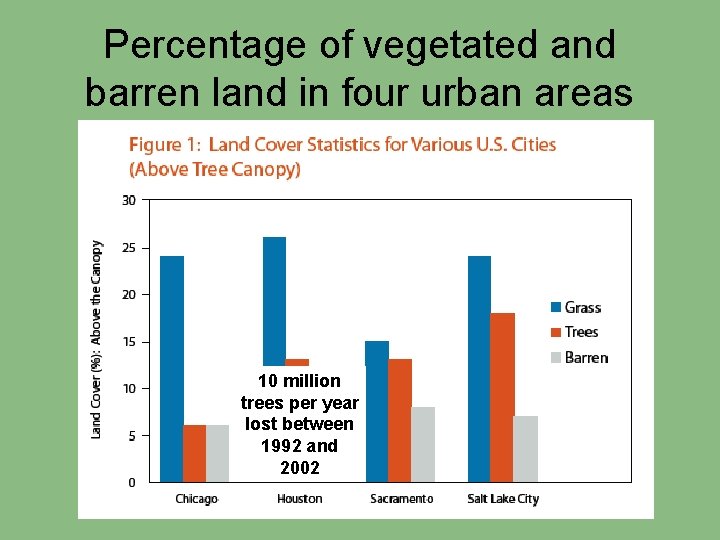
Percentage of vegetated and barren land in four urban areas 10 million trees per year lost between 1992 and 2002
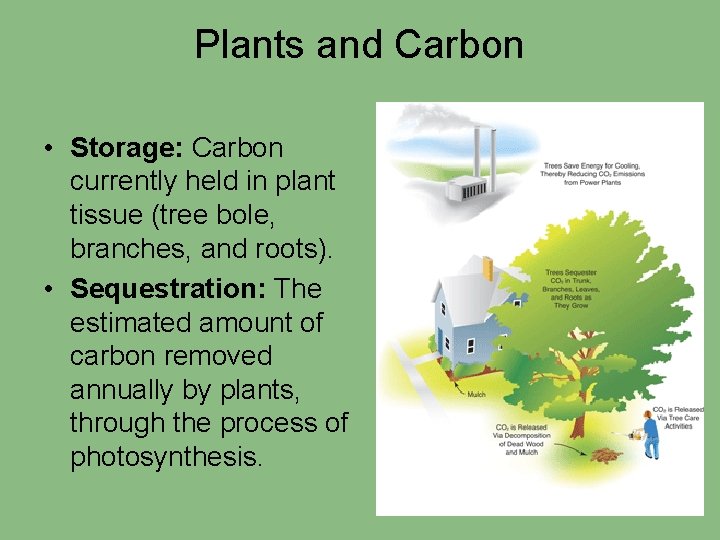
Plants and Carbon • Storage: Carbon currently held in plant tissue (tree bole, branches, and roots). • Sequestration: The estimated amount of carbon removed annually by plants, through the process of photosynthesis.
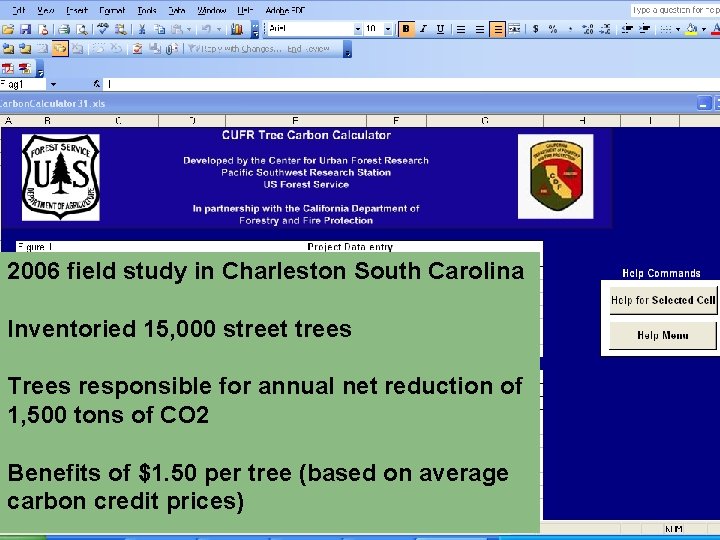
2006 field study in Charleston South Carolina Inventoried 15, 000 street trees Trees responsible for annual net reduction of 1, 500 tons of CO 2 Benefits of $1. 50 per tree (based on average carbon credit prices)
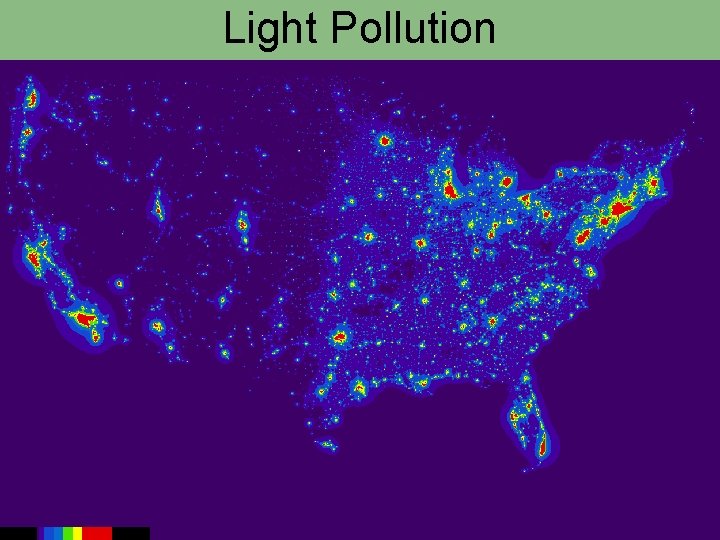
Light Pollution
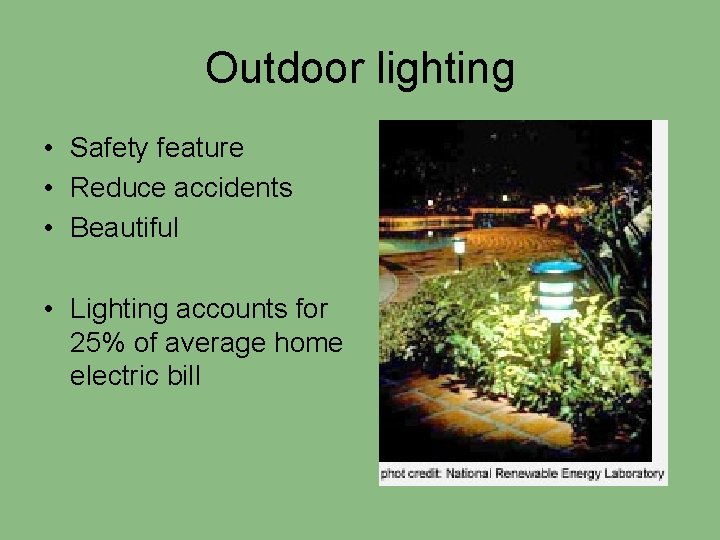
Outdoor lighting • Safety feature • Reduce accidents • Beautiful • Lighting accounts for 25% of average home electric bill
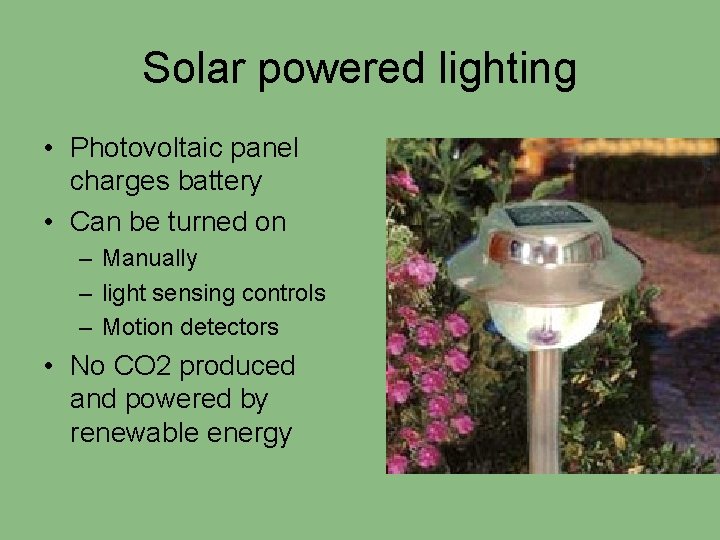
Solar powered lighting • Photovoltaic panel charges battery • Can be turned on – Manually – light sensing controls – Motion detectors • No CO 2 produced and powered by renewable energy
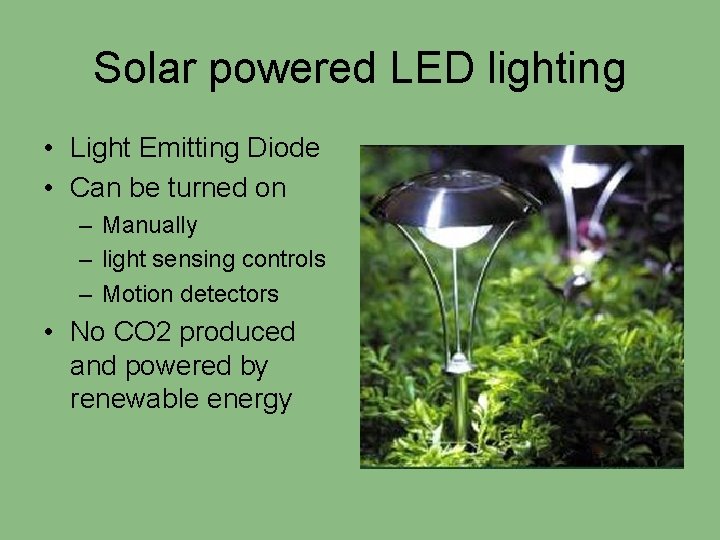
Solar powered LED lighting • Light Emitting Diode • Can be turned on – Manually – light sensing controls – Motion detectors • No CO 2 produced and powered by renewable energy
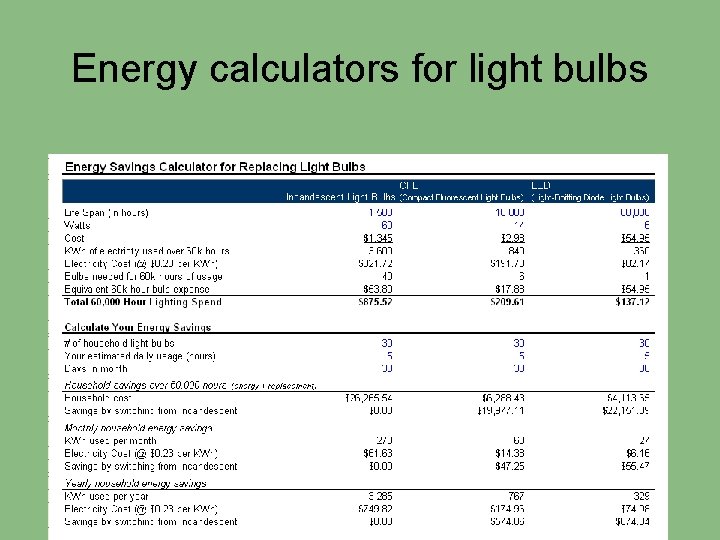
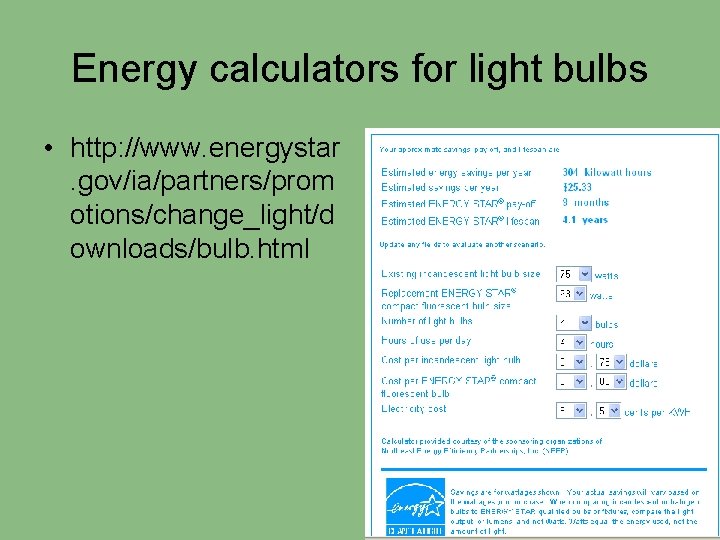
Energy calculators for light bulbs
Energy calculators for light bulbs • http: //www. energystar. gov/ia/partners/prom otions/change_light/d ownloads/bulb. html
What Are Sustainable Landscape Practices? • Remember, the key goals of sustainable gardening practices are to: – sustain water availability and quality – reduce off-site water movement into storm drains, lakes, rivers and creeks – reduce energy use – – reduce our green waste to landfill prevent soil degradation facilitate wildlife, and reduce the spread of invasive plant species
Which Sustainable Landscape Practices Save Energy? 1. 2. 3. 4. 5. 6. 7. 8. Landscaping in harmony with the natural conditions of the watershed. Reducing waste and recycling materials. Keeping greenwaste on site Nurturing healthy soils while reducing fertilizer use. Conserving water and topsoil. Using IPM to minimize chemical use. Reducing stormwater runoff. Creating wildlife habitat. • From “River Friendly Landscape Guidelines”
Which Sustainable Landscape Practices Save Energy? 1. 2. 3. 4. 5. 6. 7. 8. Landscaping in harmony with the natural conditions of the watershed. Reducing waste and recycling materials. Keeping greenwaste on site Nurturing healthy soils while reducing fertilizer use. Conserving water and topsoil. Using IPM to minimize chemical use. Reducing stormwater runoff. Creating wildlife habitat. • From “River Friendly Landscape Guidelines”