
Effects of Relative Reduction Factor Grid Cell Sampling
- Slides: 32
Effects of Relative Reduction Factor Grid Cell Sampling Approaches on Model Byeong-Uk Kim and Jim Boylan Planning and Support Program Georgia EPD - Air Protection Branch 2017 CMAS Conference Chapel Hill, NC October 23, 2017
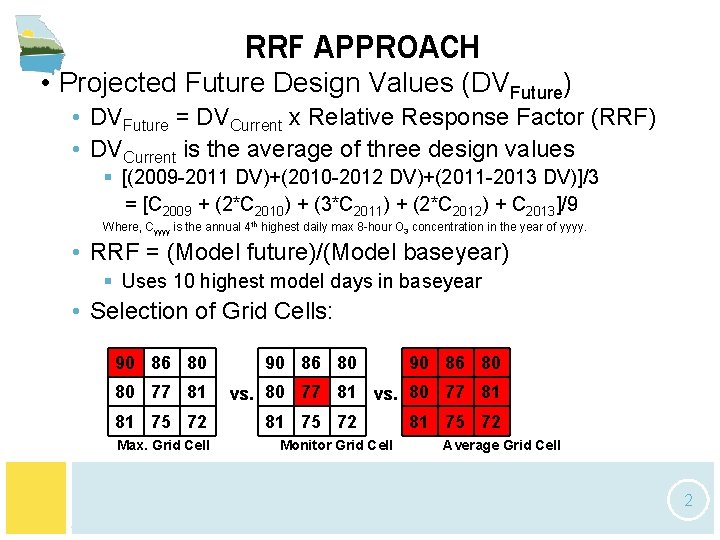
RRF APPROACH • Projected Future Design Values (DVFuture) • DVFuture = DVCurrent x Relative Response Factor (RRF) • DVCurrent is the average of three design values § [(2009 -2011 DV)+(2010 -2012 DV)+(2011 -2013 DV)]/3 = [C 2009 + (2*C 2010) + (3*C 2011) + (2*C 2012) + C 2013]/9 Where, Cyyyy is the annual 4 th highest daily max 8 -hour O 3 concentration in the year of yyyy. • RRF = (Model future)/(Model baseyear) § Uses 10 highest model days in baseyear • Selection of Grid Cells: 90 86 80 80 77 81 81 75 72 Max. Grid Cell 90 86 80 vs. 80 77 81 81 75 72 Monitor Grid Cell 81 75 72 Average Grid Cell 2
EPA’S CSAPR MODELING • EPA ran CAMx for 2011 and 2023 • Spatially, two options are discussed. • 3 x 3 Maximum Grid Cell (EPA default) • Highest value in the 3 x 3 matrix of grid cells surrounding the monitor • This value can be significantly different than the value in the grid cell containing the monitor • This value can be significantly different than the ambient ozone measurements • 1 x 1 Monitor Grid Cell • Value of the grid cell containing the monitor • Can evaluate model performance with ozone measurements • Other nearby grid cells can be evaluated using EPA’s Unmonitored Area Analysis (UAA) 3
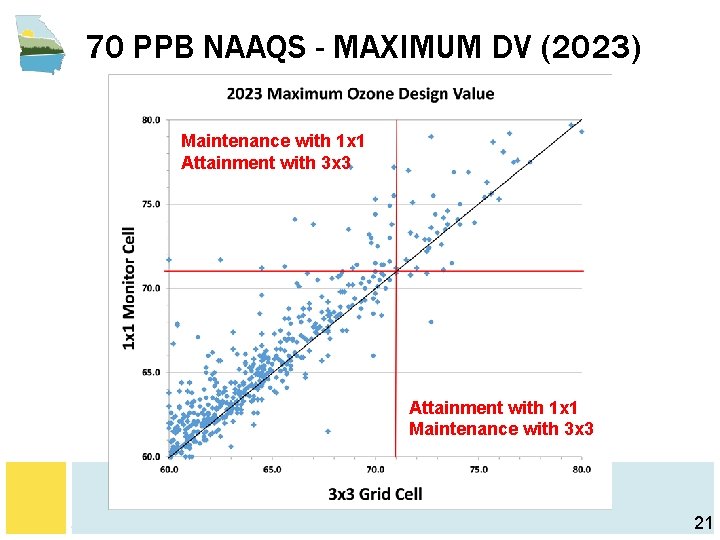
PROJECTED ATTAINMENT STATUS • Nonattainment • (Average of 3 -year ozone design values) x RRF > NAAQS • Maintenance • (Average of 3 -year ozone design values) x RRF < NAAQS • (Maximum of 3 -year ozone design values) x RRF > NAAQS • Attainment • (Maximum of 3 -year ozone design values) x RRF < NAAQS • Temporally, two definitions for design values were used. 4
2023 CSAPR MODELING 5
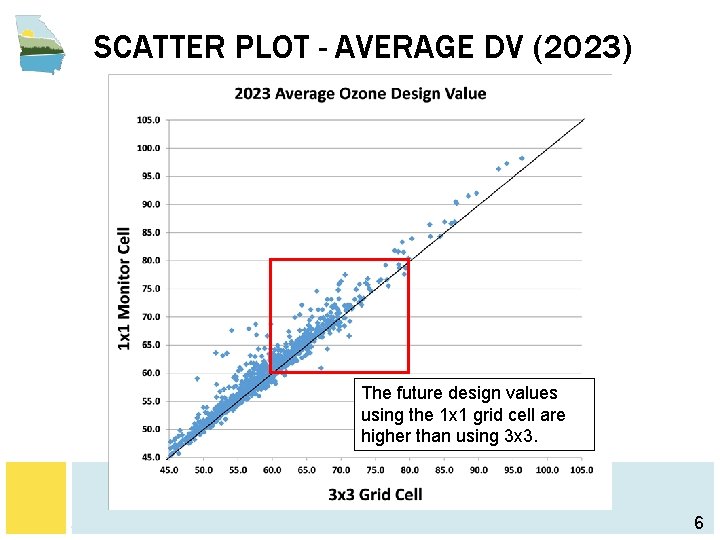
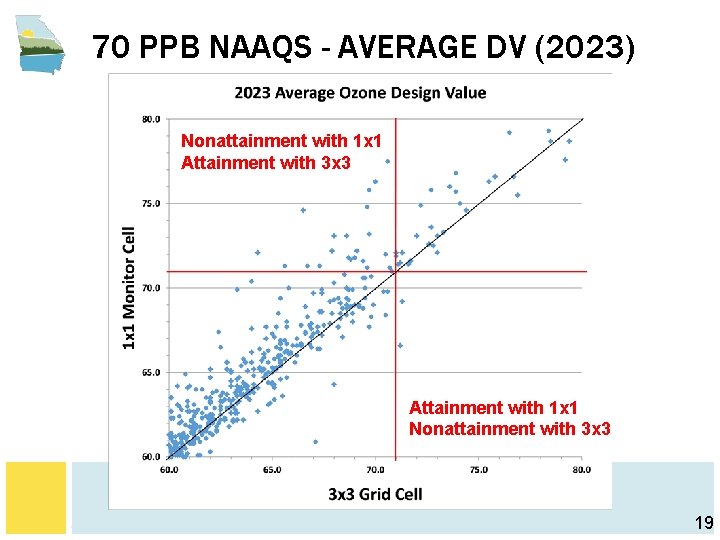
SCATTER PLOT - AVERAGE DV (2023) The future design values using the 1 x 1 grid cell are higher than using 3 x 3. 6
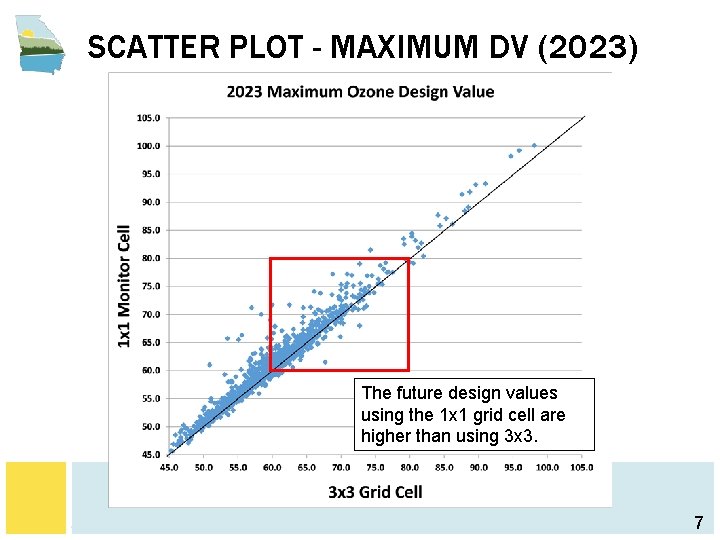
SCATTER PLOT - MAXIMUM DV (2023) The future design values using the 1 x 1 grid cell are higher than using 3 x 3. 7
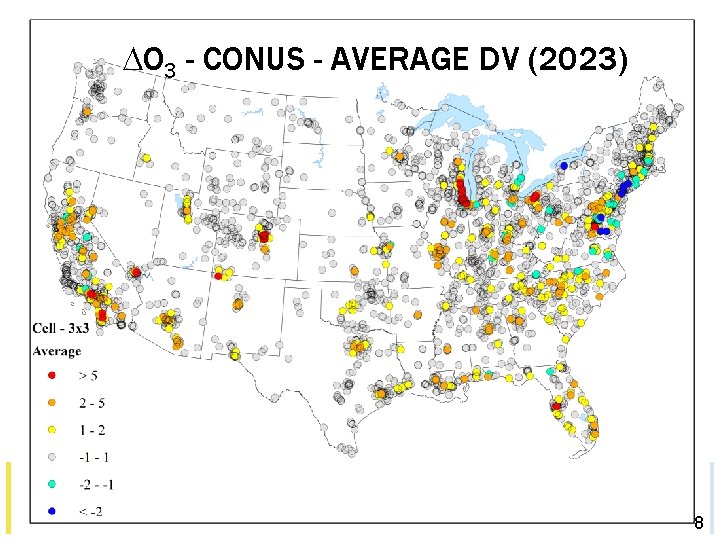
DO 3 - CONUS - AVERAGE DV (2023) 8
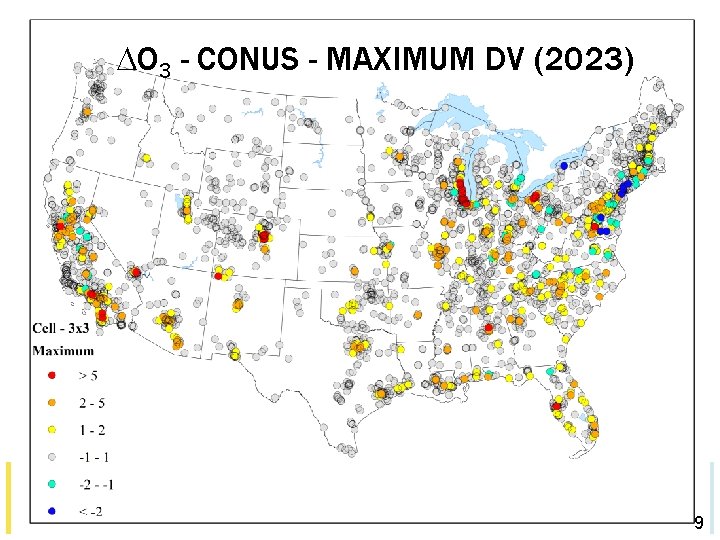
DO 3 - CONUS - MAXIMUM DV (2023) 9
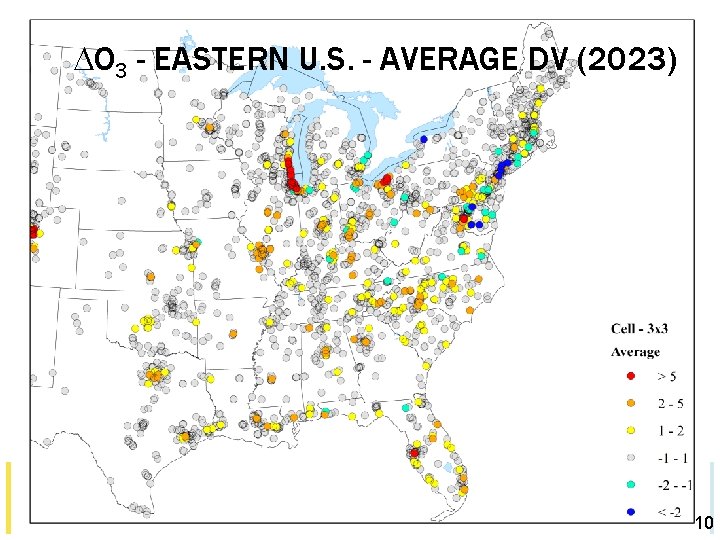
DO 3 - EASTERN U. S. - AVERAGE DV (2023) 10
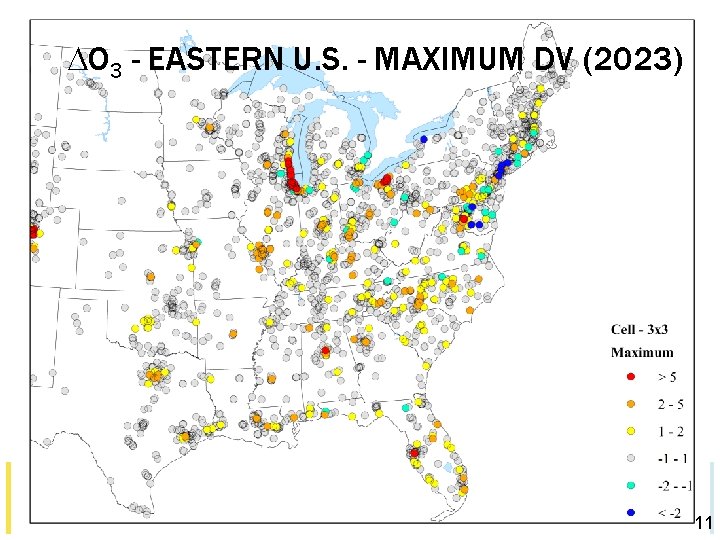
DO 3 - EASTERN U. S. - MAXIMUM DV (2023) 11
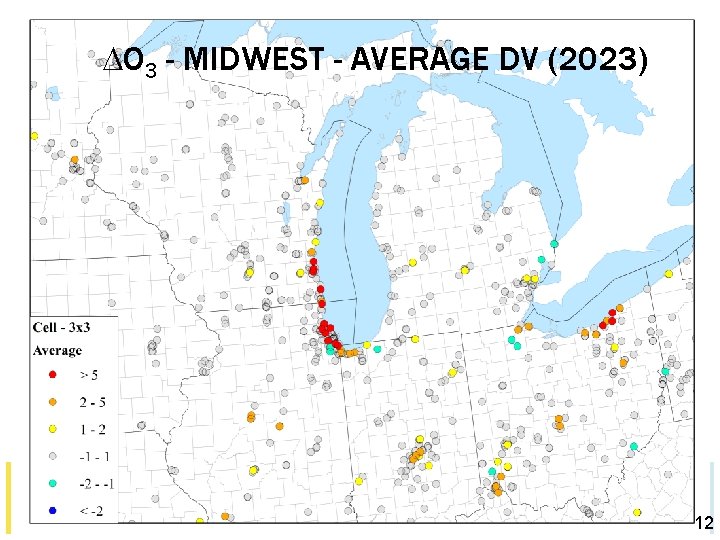
DO 3 - MIDWEST - AVERAGE DV (2023) 12
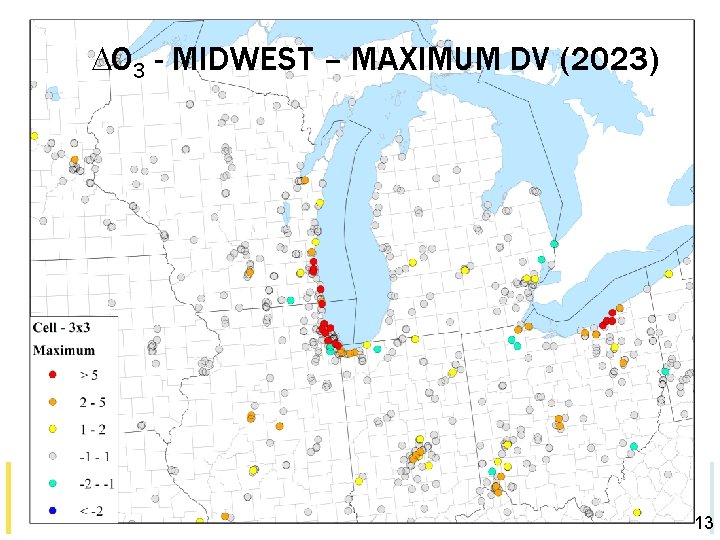
DO 3 - MIDWEST – MAXIMUM DV (2023) 13
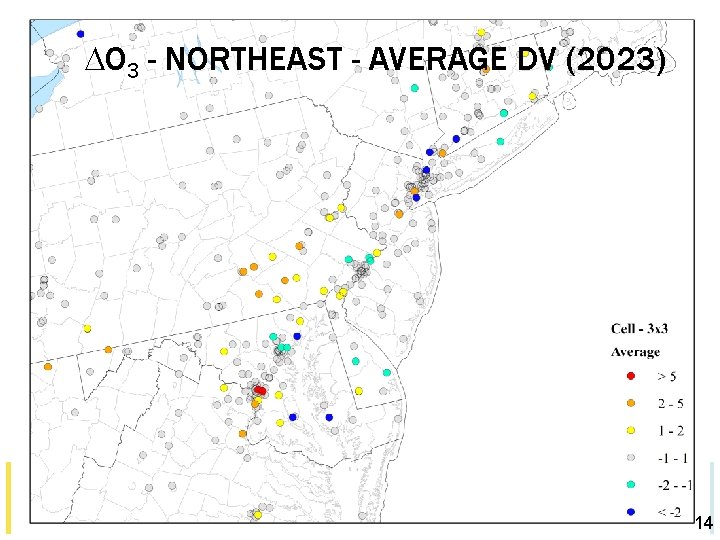
DO 3 - NORTHEAST - AVERAGE DV (2023) 14
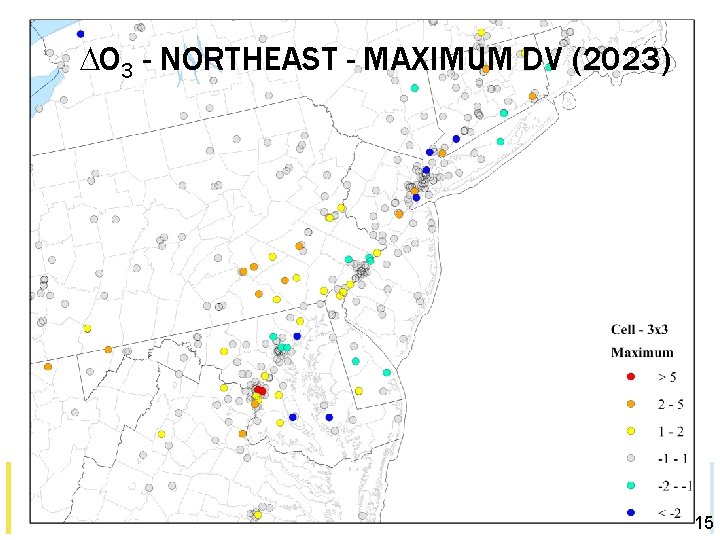
DO 3 - NORTHEAST - MAXIMUM DV (2023) 15
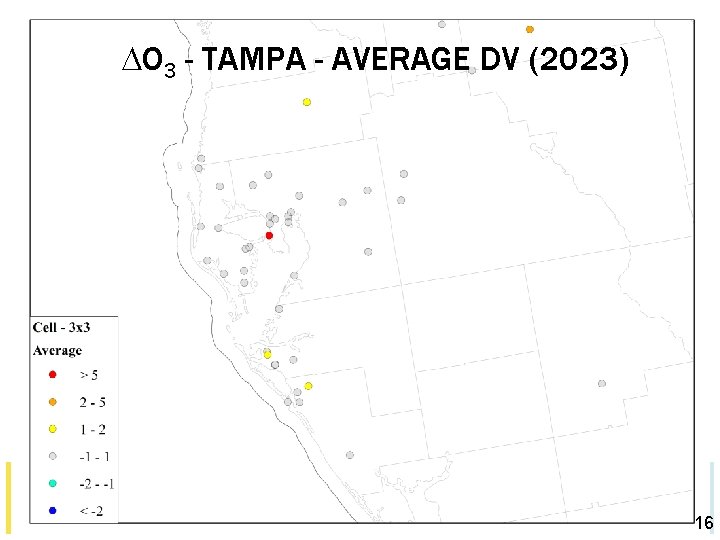
DO 3 - TAMPA - AVERAGE DV (2023) 16
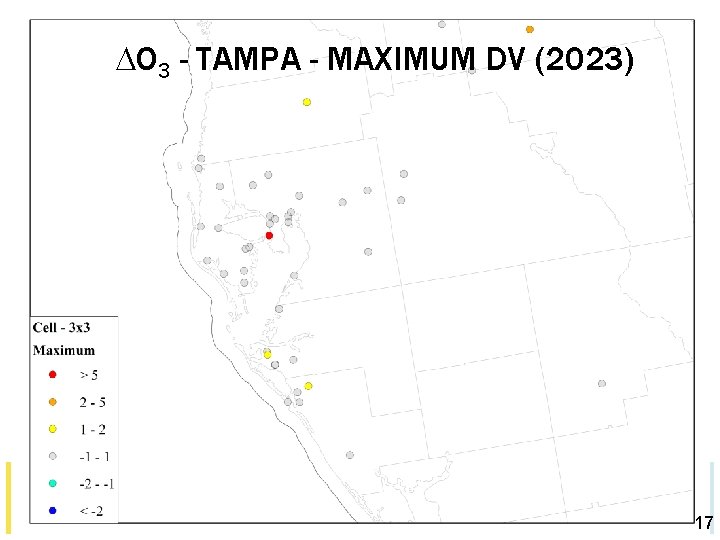
DO 3 - TAMPA - MAXIMUM DV (2023) 17
70 PPB NAAQS 18
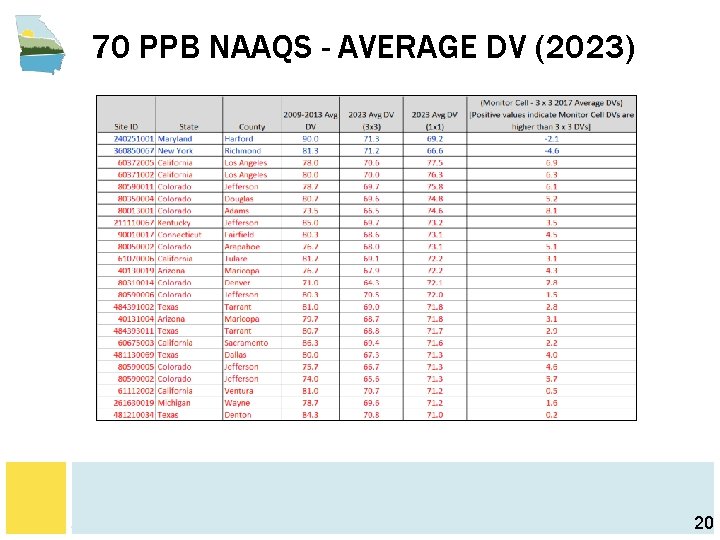
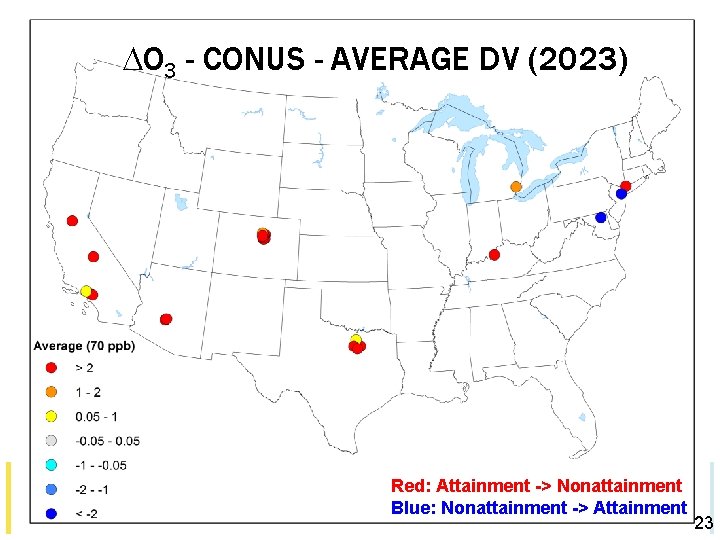
70 PPB NAAQS - AVERAGE DV (2023) Nonattainment with 1 x 1 Attainment with 3 x 3 Attainment with 1 x 1 Nonattainment with 3 x 3 19
70 PPB NAAQS - AVERAGE DV (2023) 20
70 PPB NAAQS - MAXIMUM DV (2023) Maintenance with 1 x 1 Attainment with 3 x 3 Attainment with 1 x 1 Maintenance with 3 x 3 21
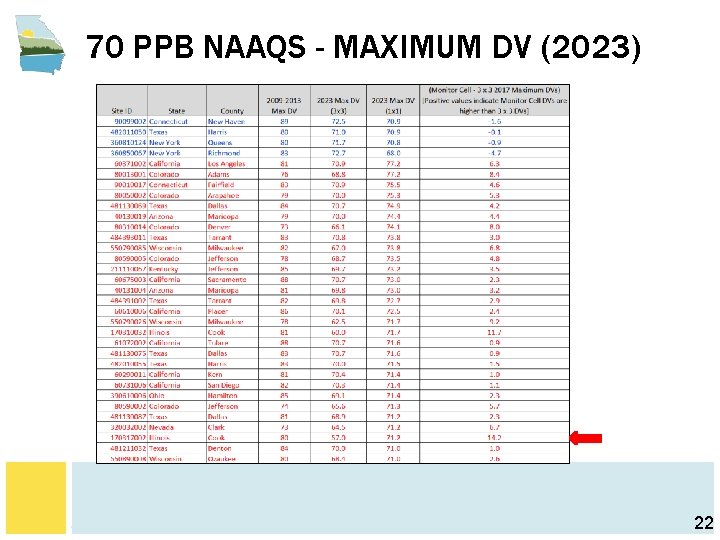
70 PPB NAAQS - MAXIMUM DV (2023) 22
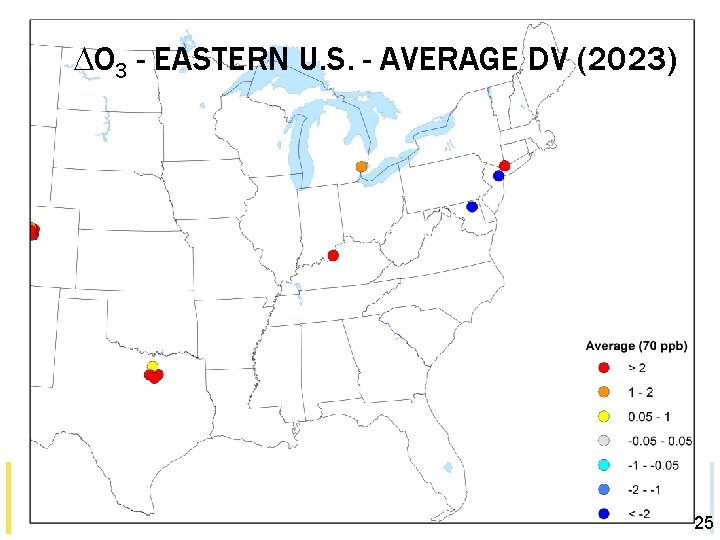
DO 3 - CONUS - AVERAGE DV (2023) Red: Attainment -> Nonattainment Blue: Nonattainment -> Attainment 23
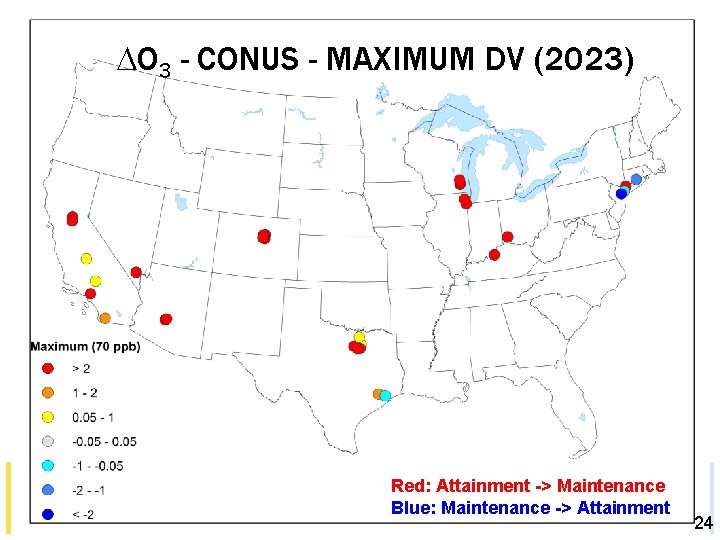
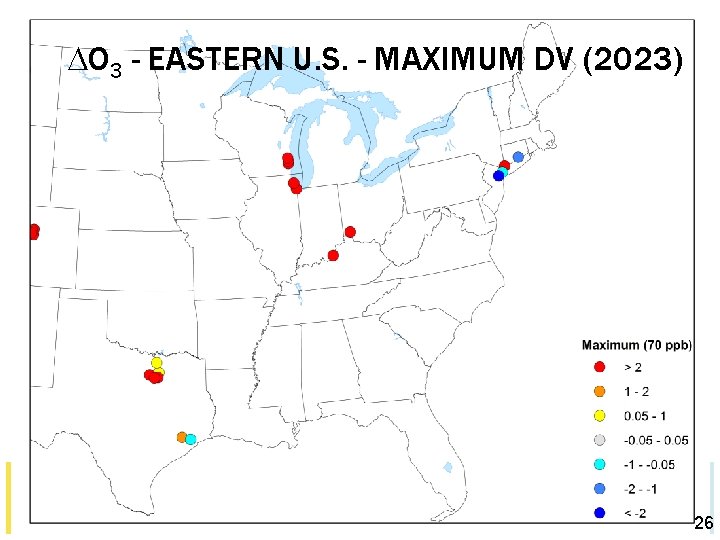
DO 3 - CONUS - MAXIMUM DV (2023) Red: Attainment -> Maintenance Blue: Maintenance -> Attainment 24
DO 3 - EASTERN U. S. - AVERAGE DV (2023) 25
DO 3 - EASTERN U. S. - MAXIMUM DV (2023) 26
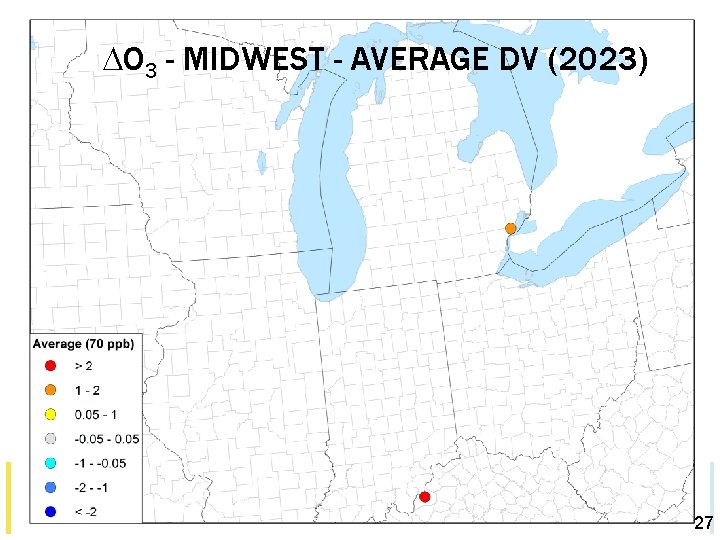
DO 3 - MIDWEST - AVERAGE DV (2023) 27
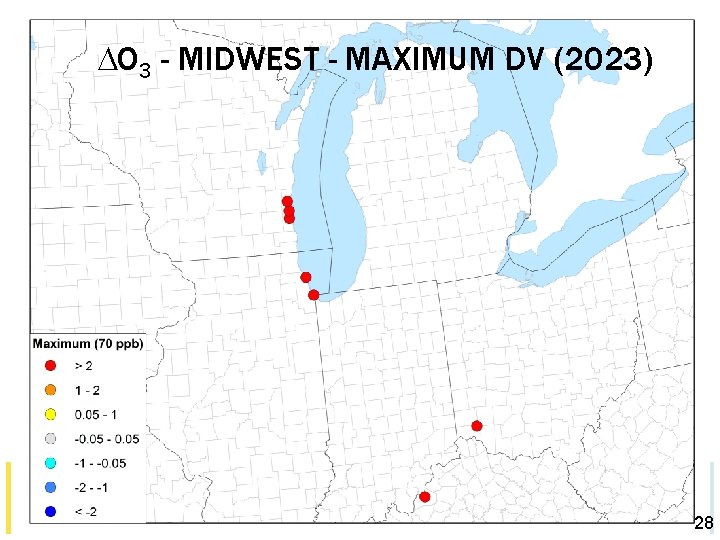
DO 3 - MIDWEST - MAXIMUM DV (2023) 28
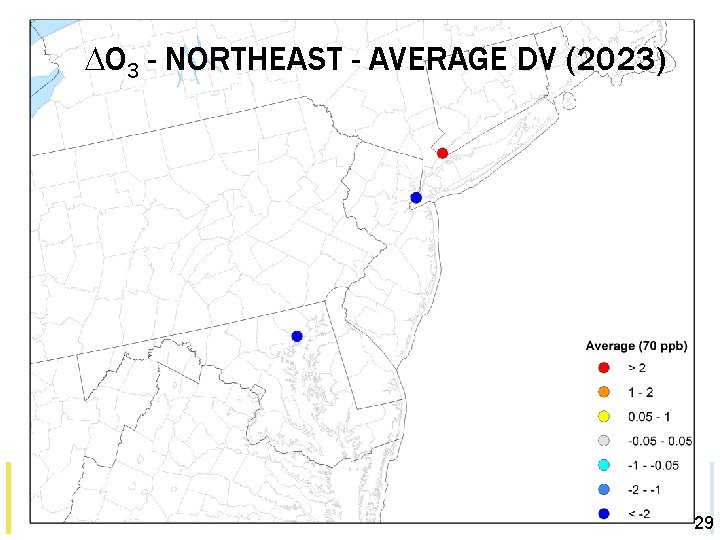
DO 3 - NORTHEAST - AVERAGE DV (2023) 29
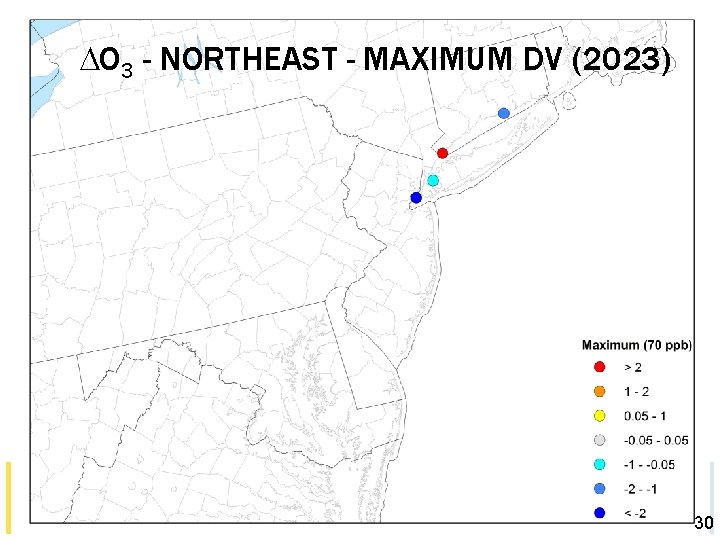
DO 3 - NORTHEAST - MAXIMUM DV (2023) 30
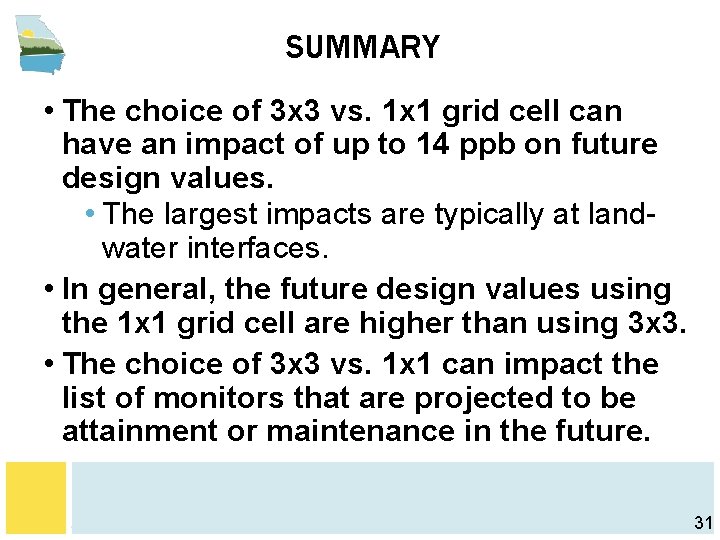
SUMMARY • The choice of 3 x 3 vs. 1 x 1 grid cell can have an impact of up to 14 ppb on future design values. • The largest impacts are typically at landwater interfaces. • In general, the future design values using the 1 x 1 grid cell are higher than using 3 x 3. • The choice of 3 x 3 vs. 1 x 1 can impact the list of monitors that are projected to be attainment or maintenance in the future. 31
CONTACT INFORMATION Byeong-Uk Kim, Ph. D. Georgia Dept. of Natural Resources 4244 International Parkway, Suite 120 Atlanta, GA 30354 Byeong. Kim@dnr. ga. gov 404 -363 -7085