
EFFECTS OF MEDICAL TELEMETRY SYSTEMS AND DIGITAL TELEVISION
- Slides: 19
EFFECTS OF MEDICAL TELEMETRY SYSTEMS AND DIGITAL TELEVISION SIGNALS ON MEDICAL DEVICES Kok-Swang Tan Medical Devices Bureau Therapeutic Products Programme RABC – EMC Committee Ottawa September 18, 2000
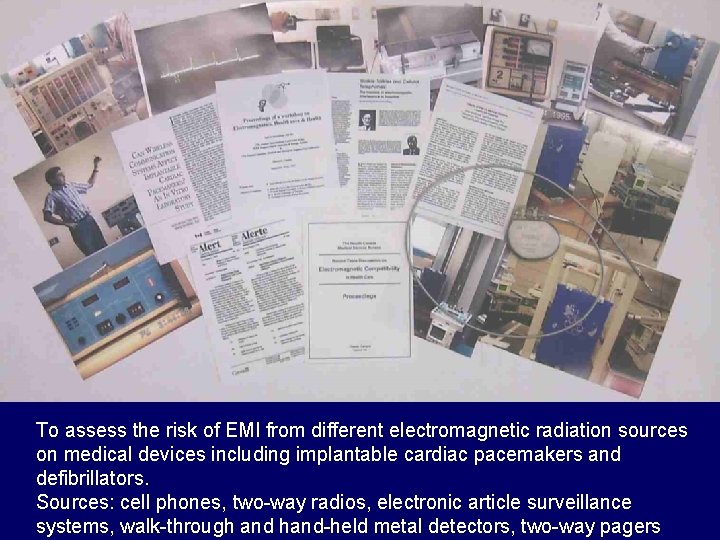
To assess the risk of EMI from different electromagnetic radiation sources on medical devices including implantable cardiac pacemakers and defibrillators. Sources: cell phones, two-way radios, electronic article surveillance systems, walk-through and hand-held metal detectors, two-way pagers
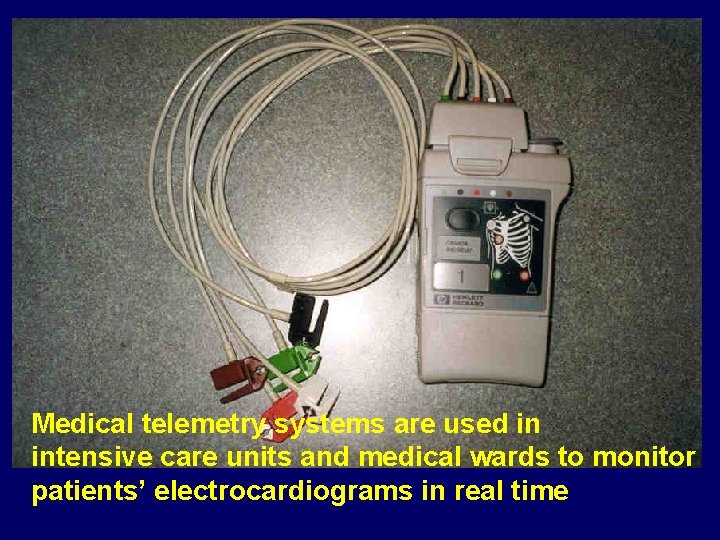
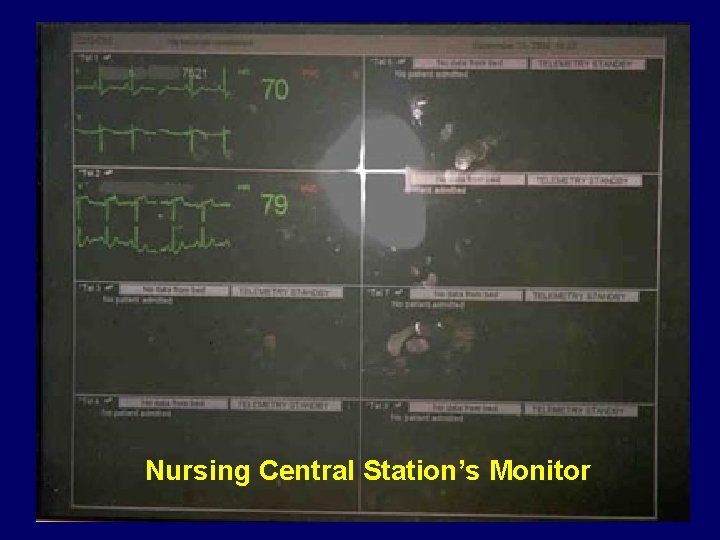
Medical telemetry systems are used in intensive care units and medical wards to monitor patients’ electrocardiograms in real time
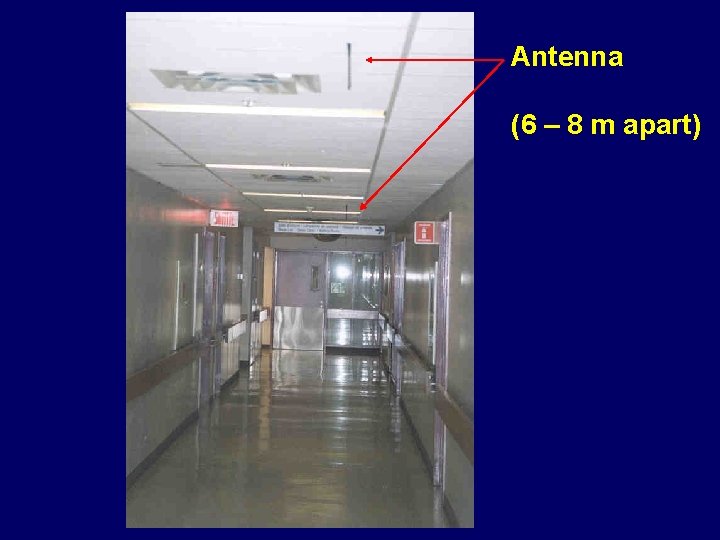
Antenna (6 – 8 m apart)
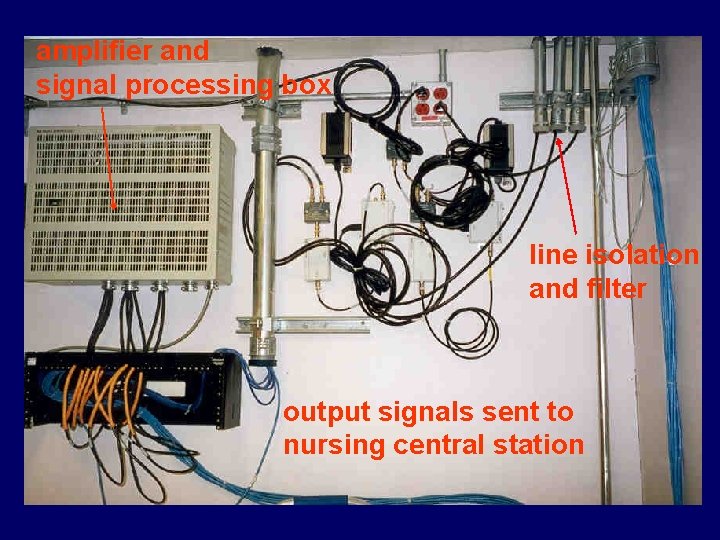
amplifier and signal processing box line isolation and filter output signals sent to nursing central station
Nursing Central Station’s Monitor
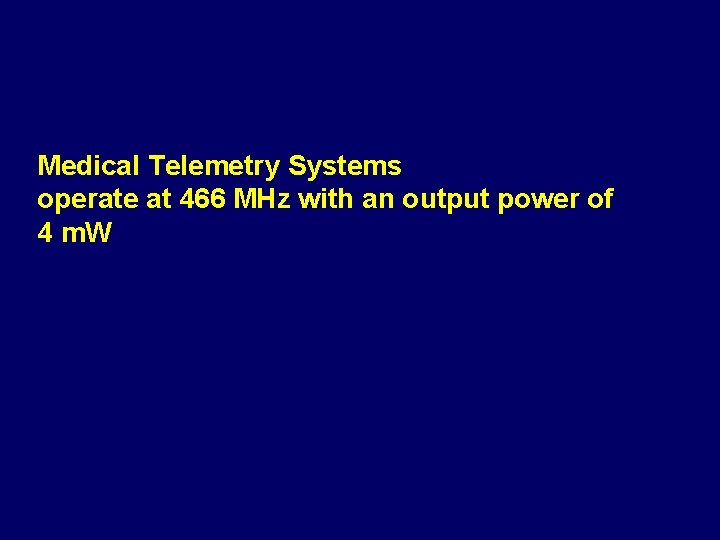
Medical Telemetry Systems operate at 466 MHz with an output power of 4 m. W
Certain medical telemetry devices are allowed to operate on television broadcasting channels that are currently unoccupied in their geographical area. As television services are starting to use the formally unoccupied channels for digital television (DTV) broadcasts, the potential for interference to the medical telemetry devices is now substantially higher.
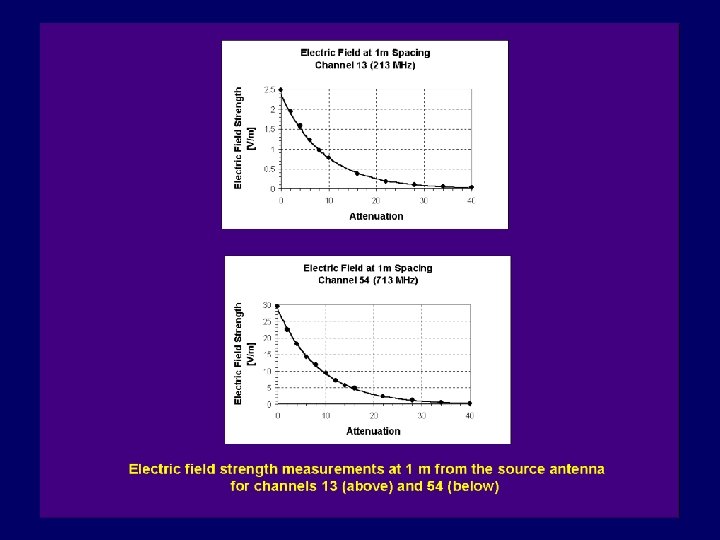
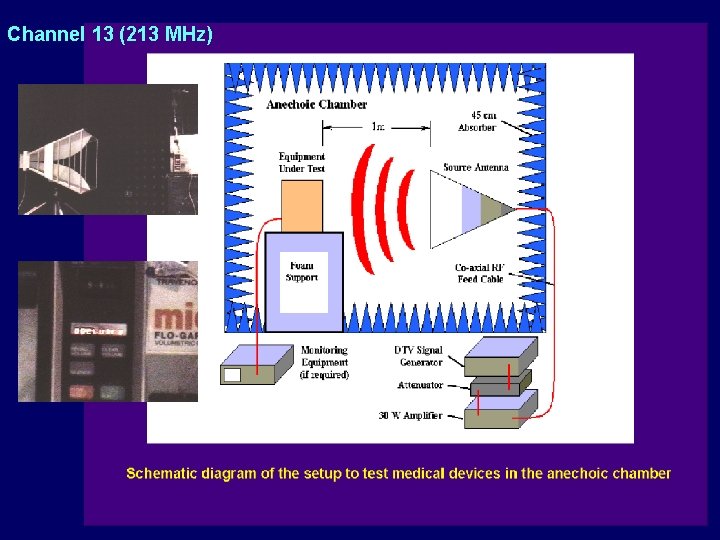
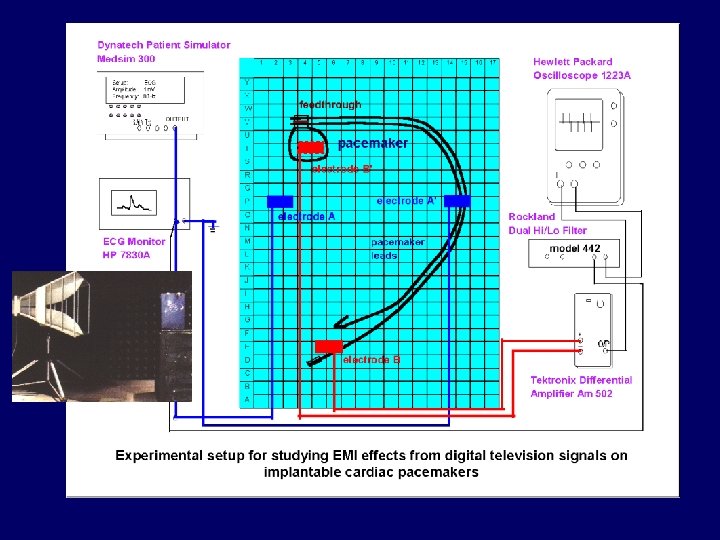
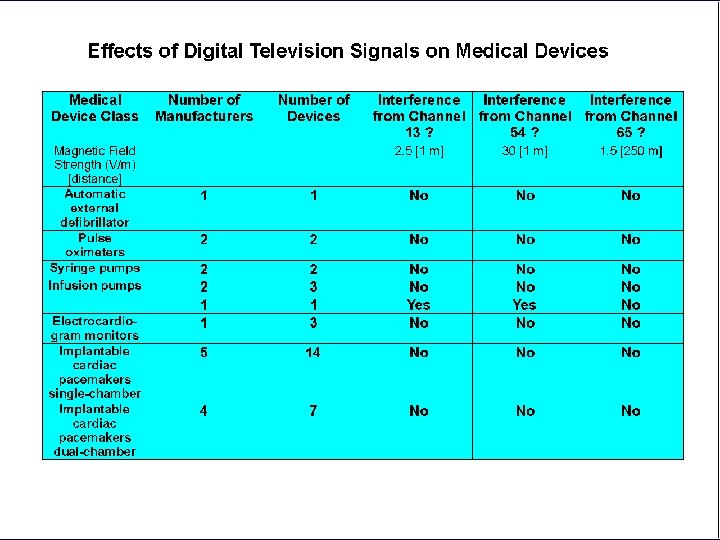
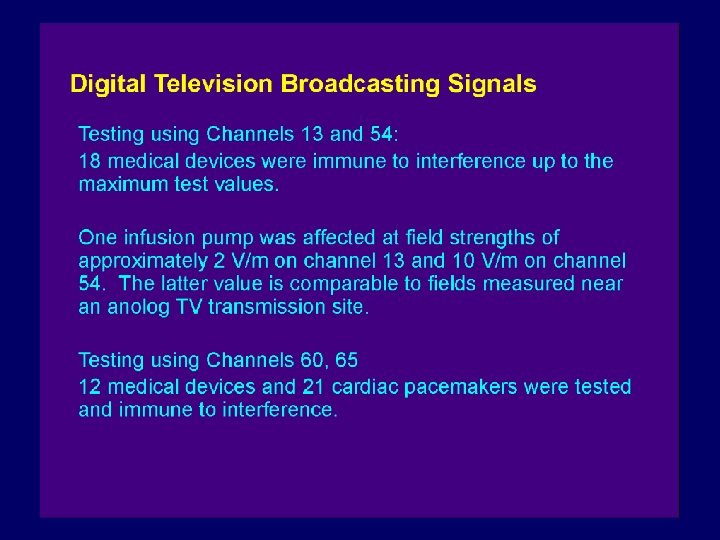
Interference of digital television signals on medical telemetry devices Two cases of electromagnetic interference with hospital medical telemetry devices have already occurred when a television station in the US introduced its DTV services. In response to concerns about interference with other medical devices, we have investigated the susceptibility of electromagnetic devices to two television broadcasting channels designated for digital television.
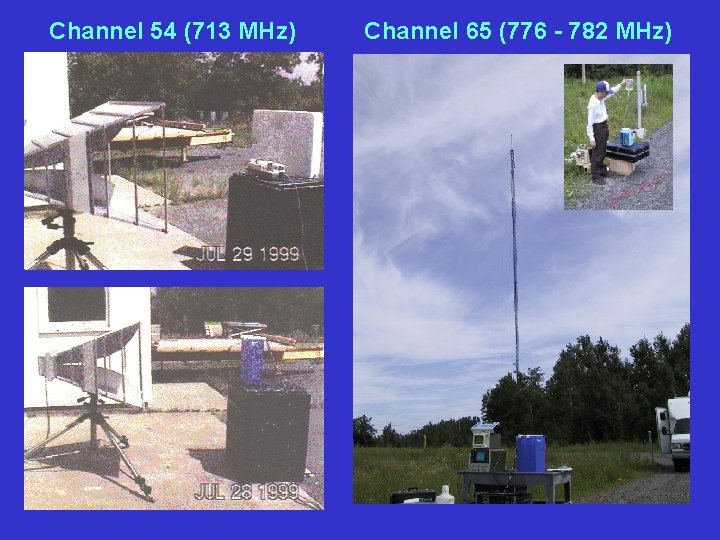
Channel 13 (213 MHz)
Channel 54 (713 MHz) Channel 65 (776 - 782 MHz)
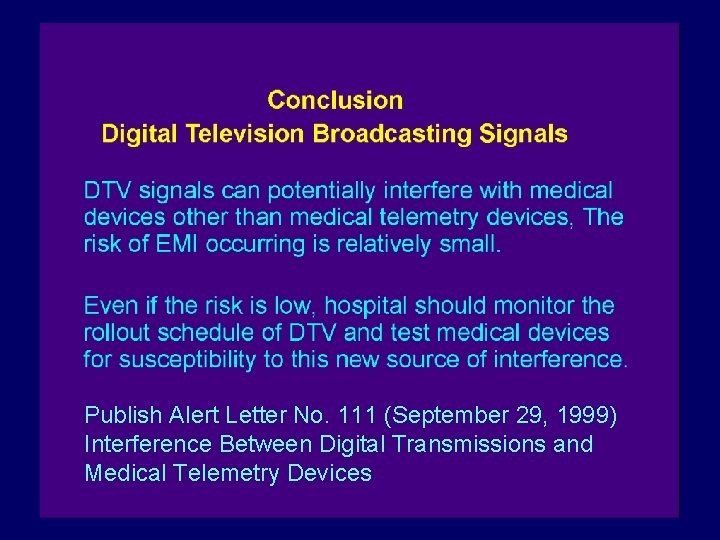
Publish Alert Letter No. 111 (September 29, 1999) Interference Between Digital Transmissions and Medical Telemetry Devices
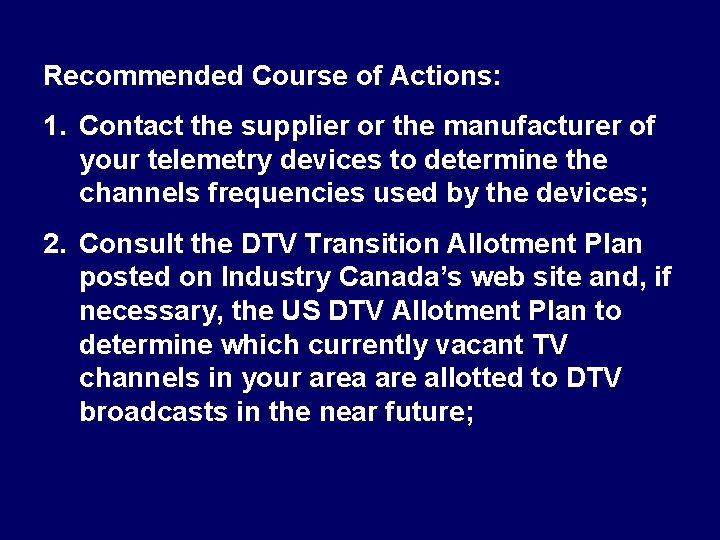
Recommended Course of Actions: 1. Contact the supplier or the manufacturer of your telemetry devices to determine the channels frequencies used by the devices; 2. Consult the DTV Transition Allotment Plan posted on Industry Canada’s web site and, if necessary, the US DTV Allotment Plan to determine which currently vacant TV channels in your area are allotted to DTV broadcasts in the near future;
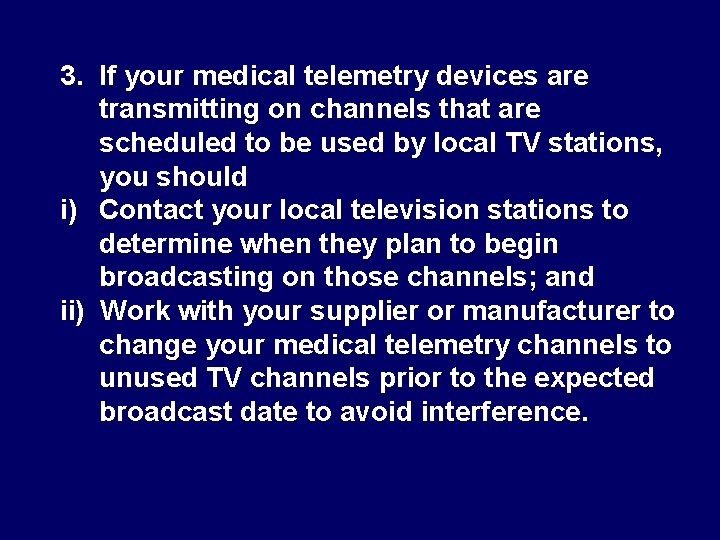
3. If your medical telemetry devices are transmitting on channels that are scheduled to be used by local TV stations, you should i) Contact your local television stations to determine when they plan to begin broadcasting on those channels; and ii) Work with your supplier or manufacturer to change your medical telemetry channels to unused TV channels prior to the expected broadcast date to avoid interference.