
Effects of Manual Resistance Training BY LIZETTE TERRAZAS

Effects of Manual Resistance Training BY: LIZETTE TERRAZAS
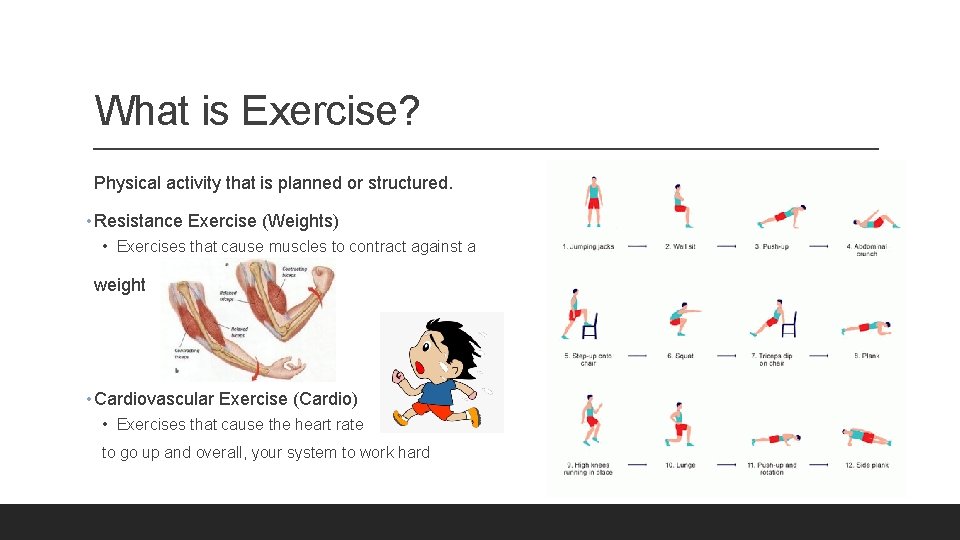
What is Exercise? Physical activity that is planned or structured. • Resistance Exercise (Weights) • Exercises that cause muscles to contract against a weight • Cardiovascular Exercise (Cardio) • Exercises that cause the heart rate to go up and overall, your system to work hard
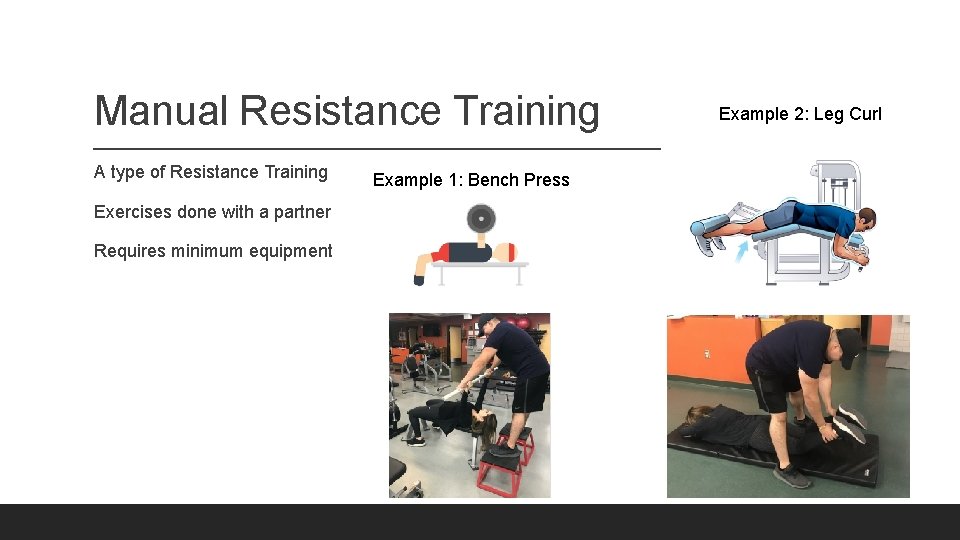
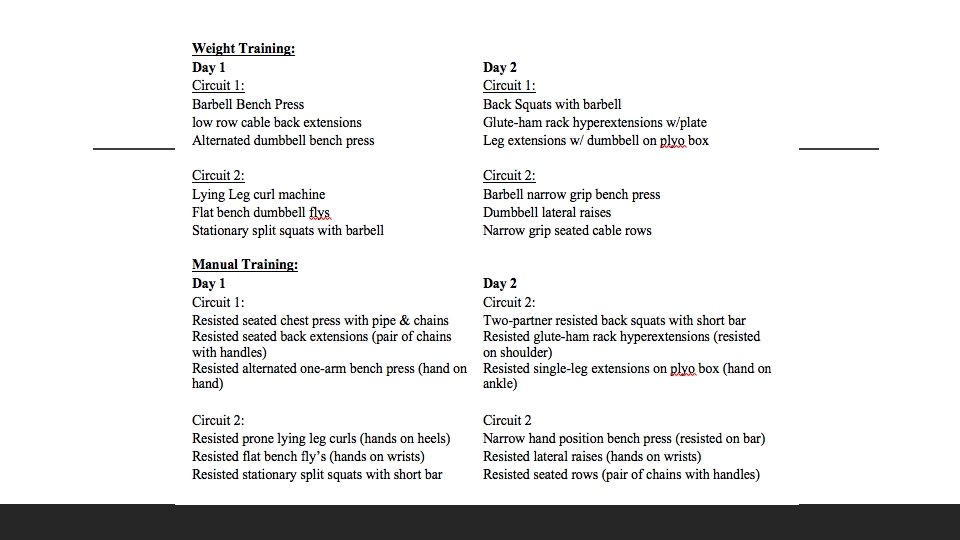
Manual Resistance Training A type of Resistance Training Exercises done with a partner Requires minimum equipment Example 1: Bench Press Example 2: Leg Curl
Benefits of Exercise • Improves and maintains posture, mobility, and balance • Creates stronger bones, tendons, ligaments • It controls weight • Improves mood and boosts energy
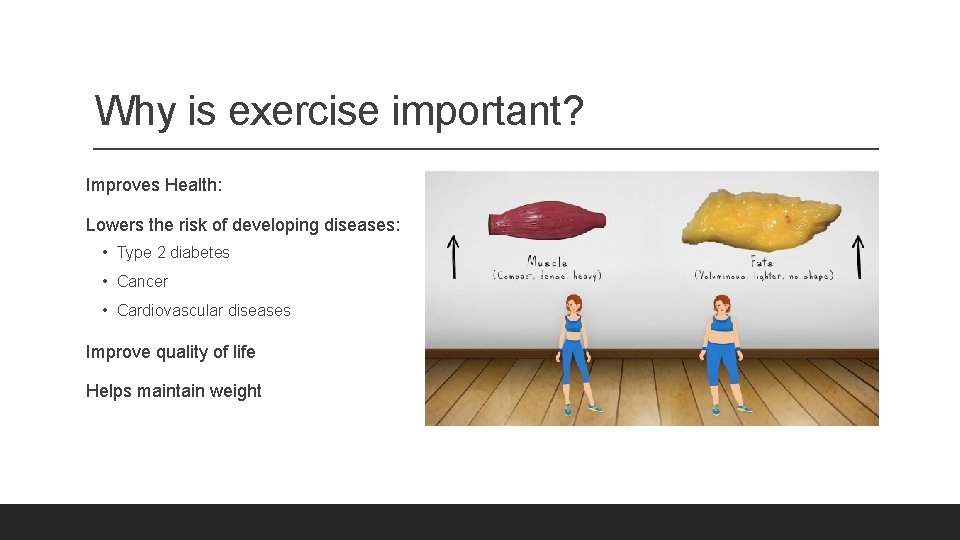
Why is exercise important? Improves Health: Lowers the risk of developing diseases: • Type 2 diabetes • Cancer • Cardiovascular diseases Improve quality of life Helps maintain weight
Research Study Title: Effects of Manual Resistance Training on Body Composition in Young Adults Purpose: 1. To view the difference in body composition and strength in 3 groups (Manual Resistance Training, Weight Resistance Training, and control groups) after an 8 -week training 2. To compare the changes in all three groups
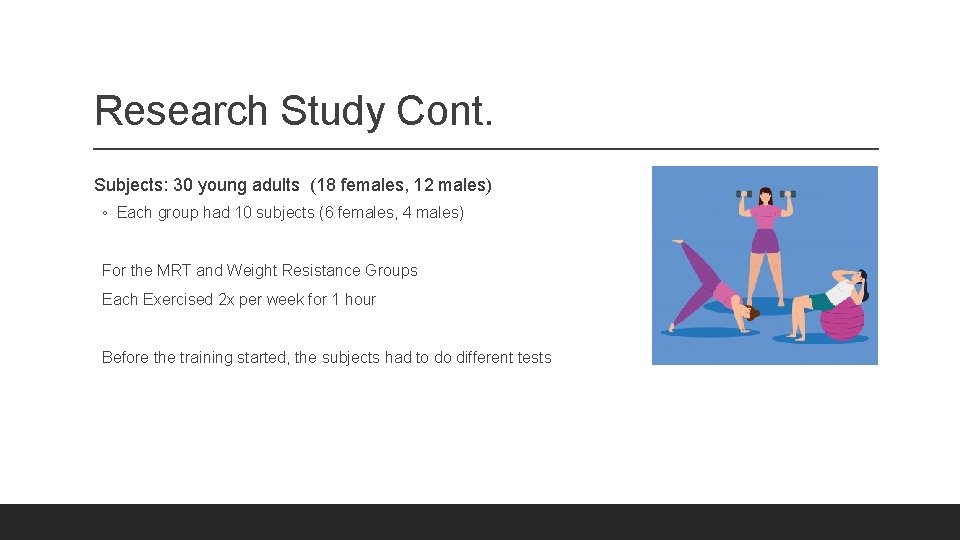
Research Study Cont. Subjects: 30 young adults (18 females, 12 males) ◦ Each group had 10 subjects (6 females, 4 males) For the MRT and Weight Resistance Groups Each Exercised 2 x per week for 1 hour Before the training started, the subjects had to do different tests
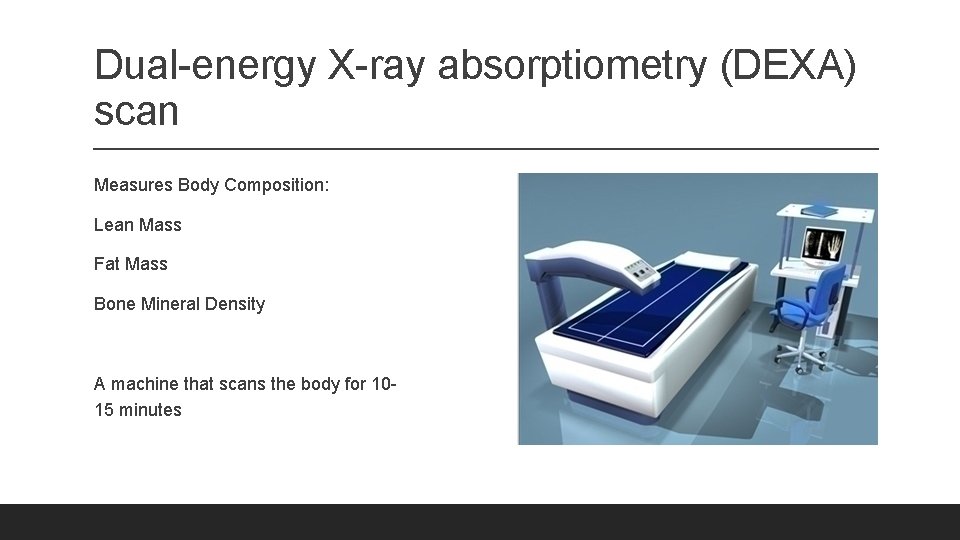
Dual-energy X-ray absorptiometry (DEXA) scan Measures Body Composition: Lean Mass Fat Mass Bone Mineral Density A machine that scans the body for 1015 minutes
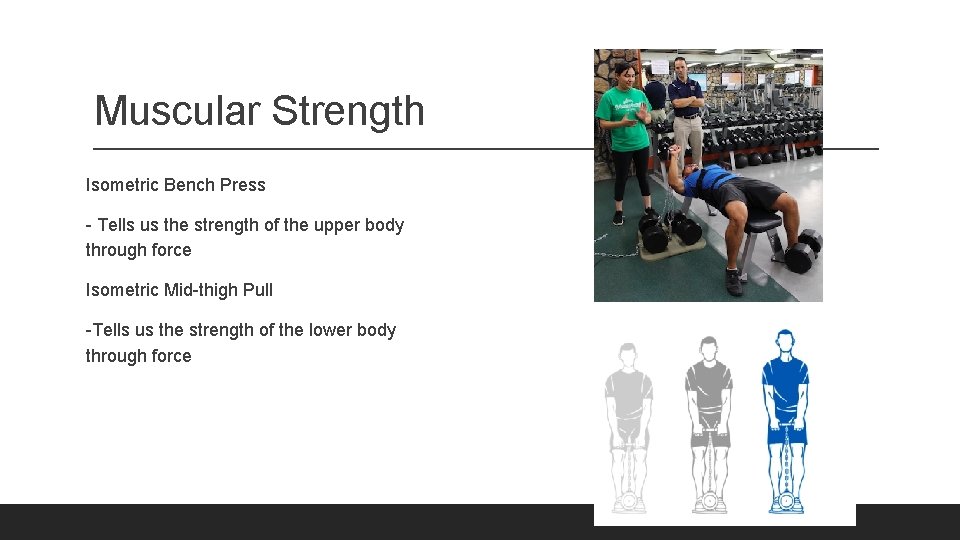
Muscular Strength Isometric Bench Press - Tells us the strength of the upper body through force Isometric Mid-thigh Pull -Tells us the strength of the lower body through force
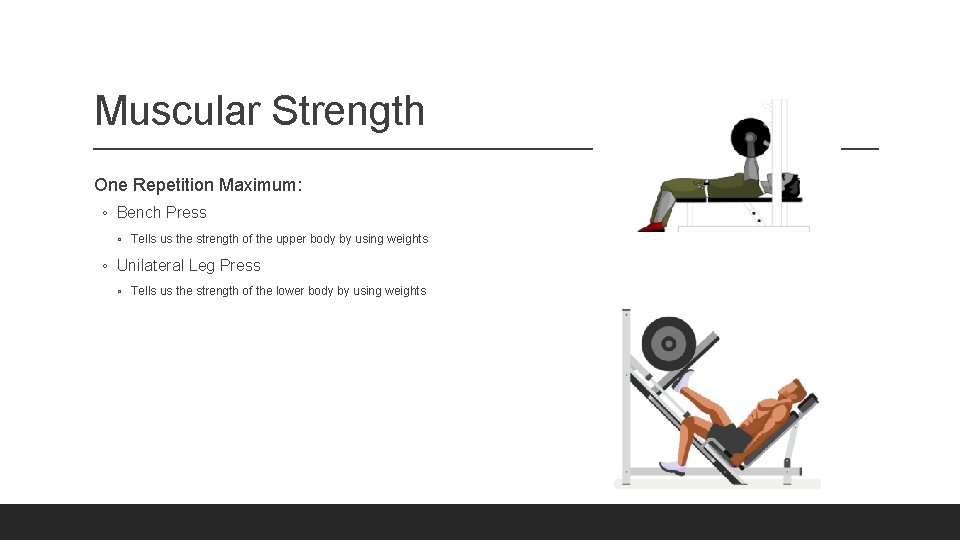
Muscular Strength One Repetition Maximum: ◦ Bench Press ◦ Tells us the strength of the upper body by using weights ◦ Unilateral Leg Press ◦ Tells us the strength of the lower body by using weights
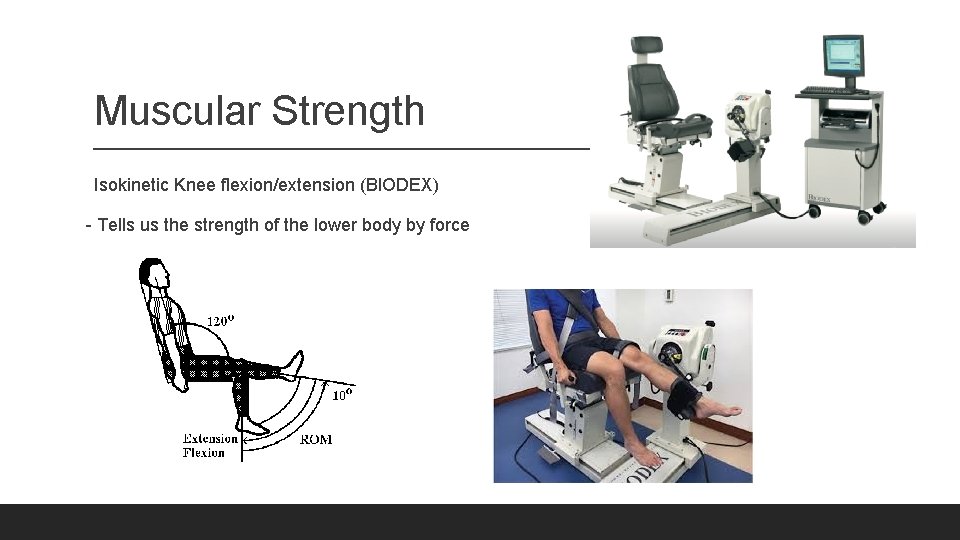
Muscular Strength Isokinetic Knee flexion/extension (BIODEX) - Tells us the strength of the lower body by force
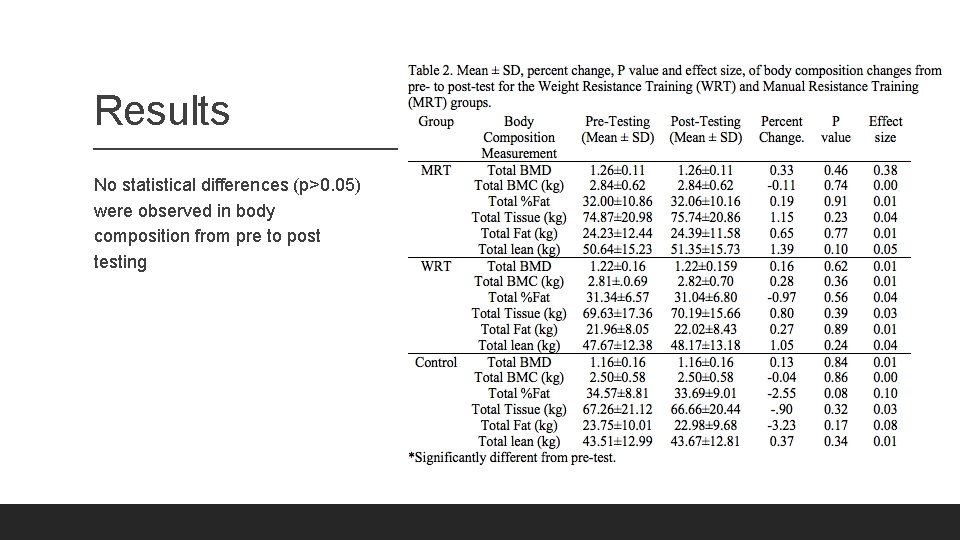
Results No statistical differences (p>0. 05) were observed in body composition from pre to post testing
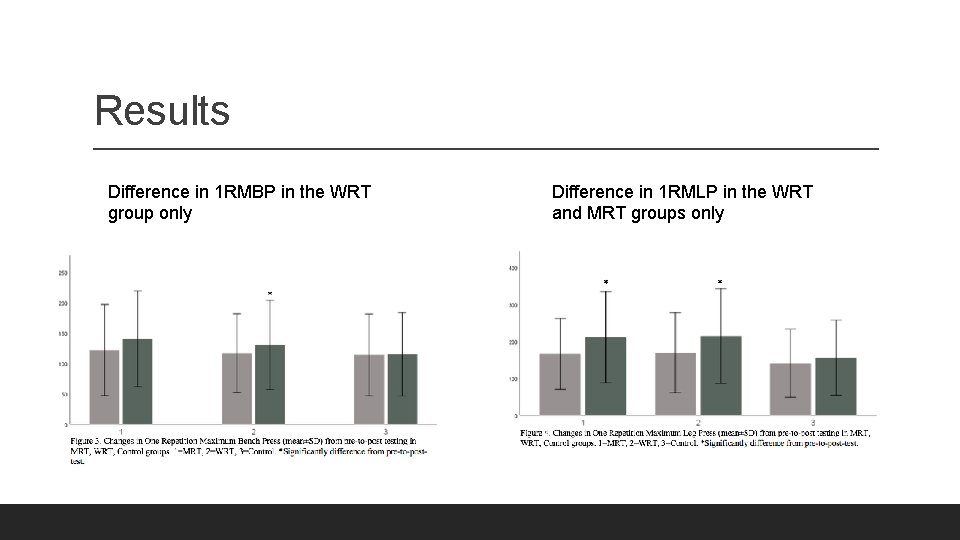
Results Difference in 1 RMBP in the WRT group only Difference in 1 RMLP in the WRT and MRT groups only
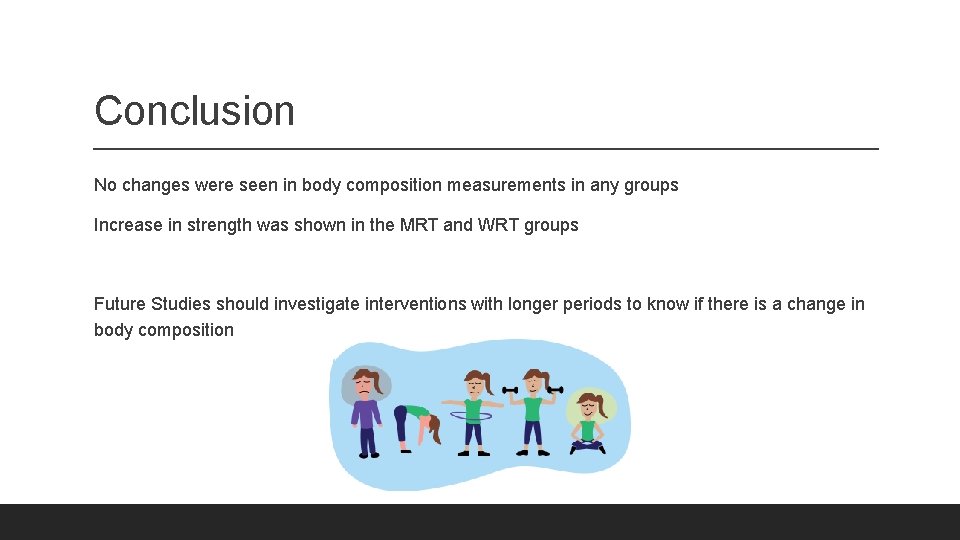
Conclusion No changes were seen in body composition measurements in any groups Increase in strength was shown in the MRT and WRT groups Future Studies should investigate interventions with longer periods to know if there is a change in body composition

- Slides: 16