
Effects of Lithologic Heterogeneity on Landscape Evolution in

- Slides: 12
Effects of Lithologic Heterogeneity on Landscape Evolution in the Canyons of the Colorado Plateau Courtney Starling Kelin Whipple Andrew Darling Arizona State University Brian Clarke 2014 -2015 Arizona Space Grant Symposium April 18, 2015
Outline �Objectives: Characterize lithologic heterogeneity �Method: Seismic refraction study �Analyze field findings using seismic software �Compare p-wave field velocities to lab core sample velocities.
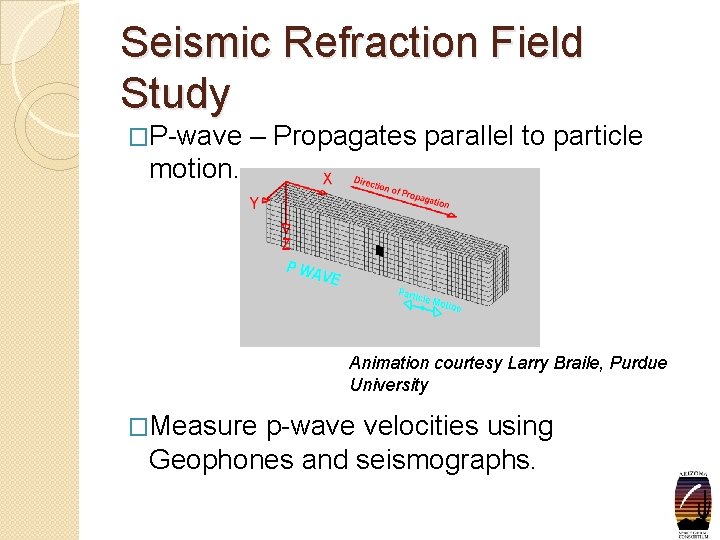
Seismic Refraction Field Study �P-wave – Propagates parallel to particle motion. Animation courtesy Larry Braile, Purdue University �Measure p-wave velocities using Geophones and seismographs.
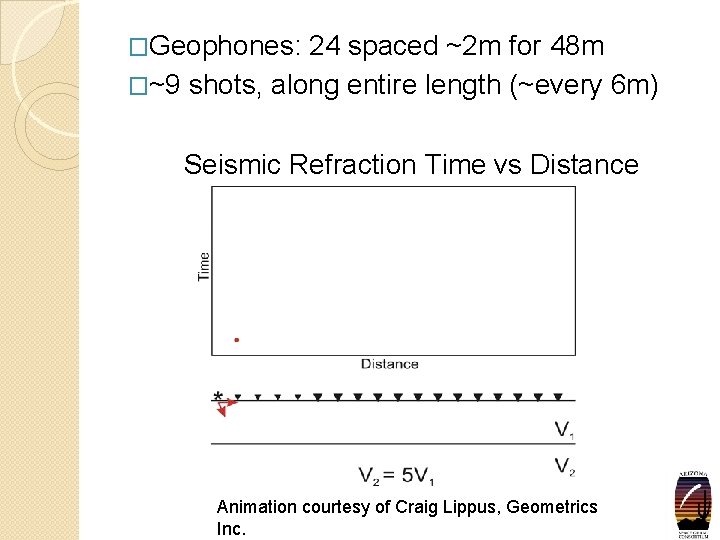
�Geophones: 24 spaced ~2 m for 48 m �~9 shots, along entire length (~every 6 m) Seismic Refraction Time vs Distance Animation courtesy of Craig Lippus, Geometrics Inc.
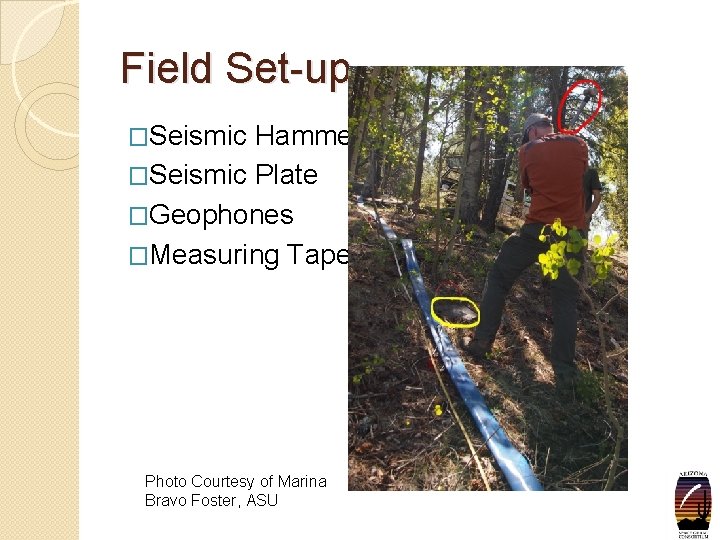
Field Set-up �Seismic Hammer �Seismic Plate �Geophones �Measuring Tape Photo Courtesy of Marina Bravo Foster, ASU
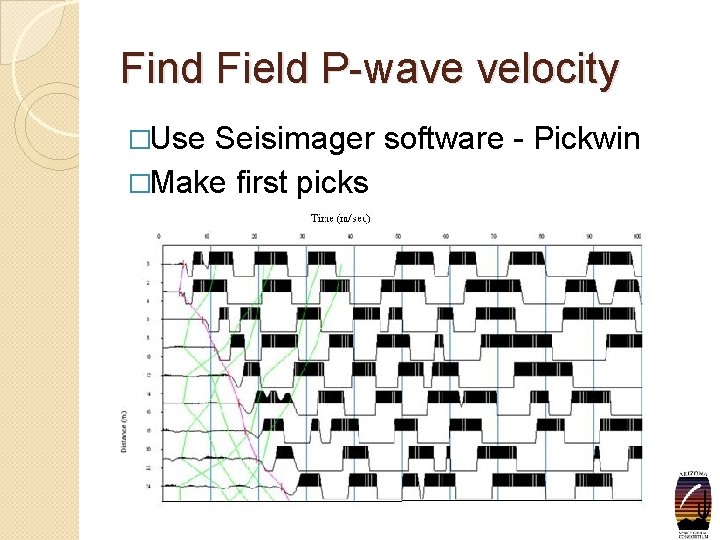
Find Field P-wave velocity �Use Seisimager software - Pickwin �Make first picks
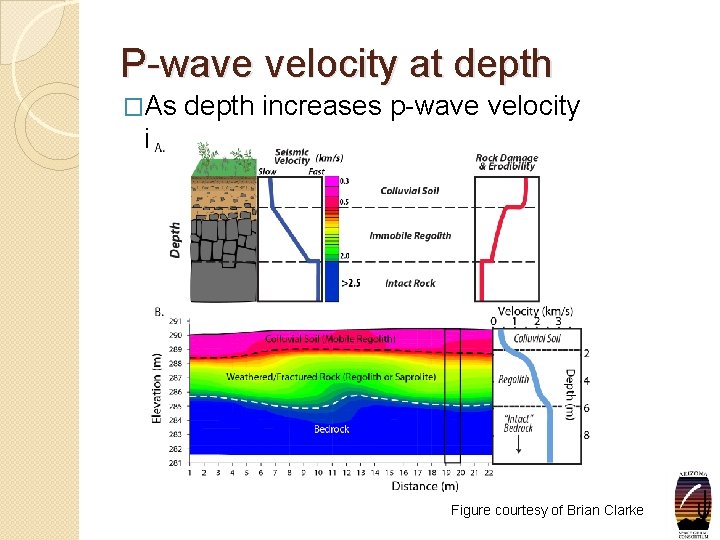
P-wave velocity at depth �As depth increases p-wave velocity increases Figure courtesy of Brian Clarke
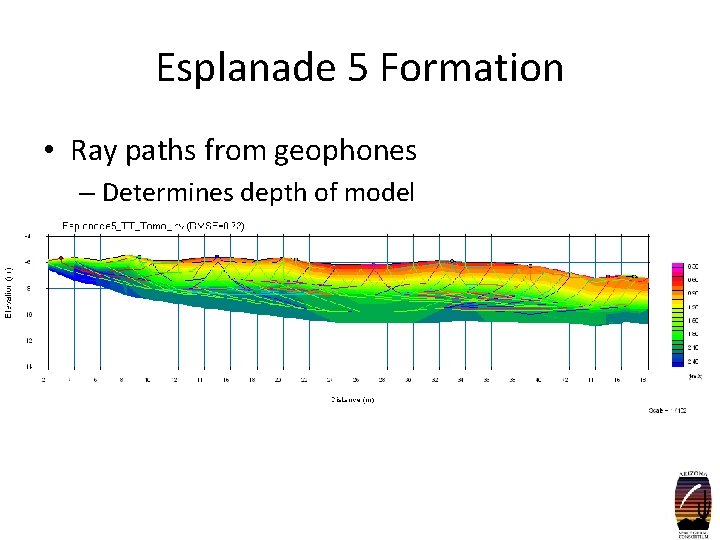
Esplanade 5 Formation • Ray paths from geophones – Determines depth of model
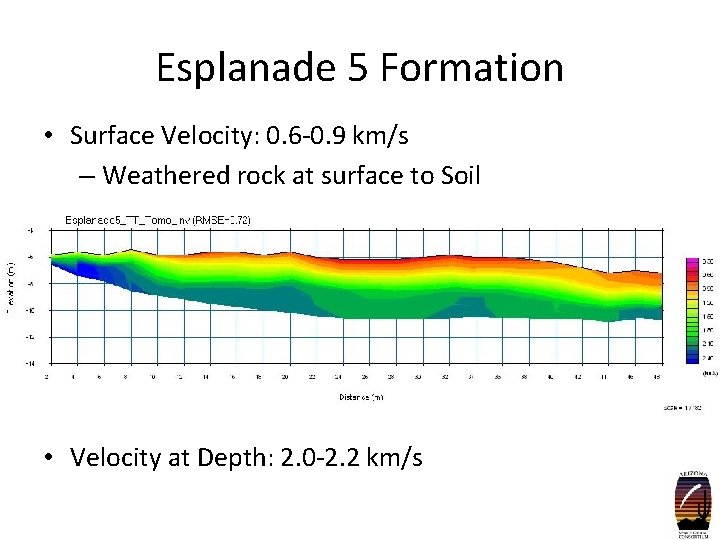
Esplanade 5 Formation • Surface Velocity: 0. 6 -0. 9 km/s – Weathered rock at surface to Soil • Velocity at Depth: 2. 0 -2. 2 km/s
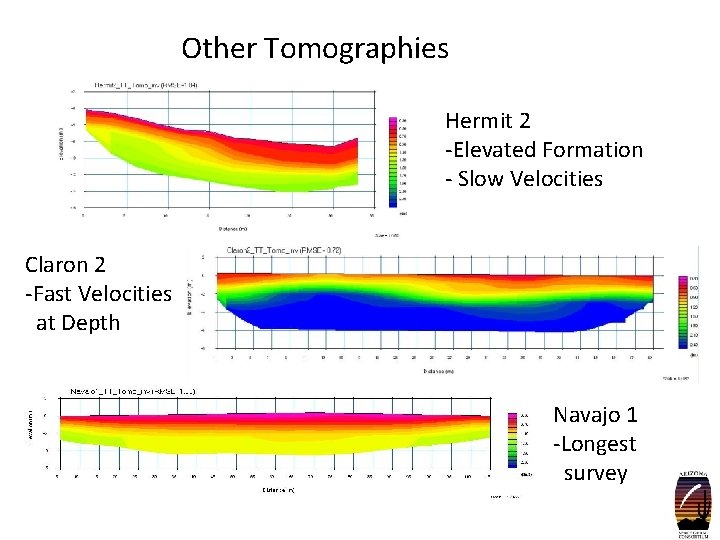
Other Tomographies Hermit 2 -Elevated Formation - Slow Velocities Claron 2 -Fast Velocities at Depth Navajo 1 -Longest survey
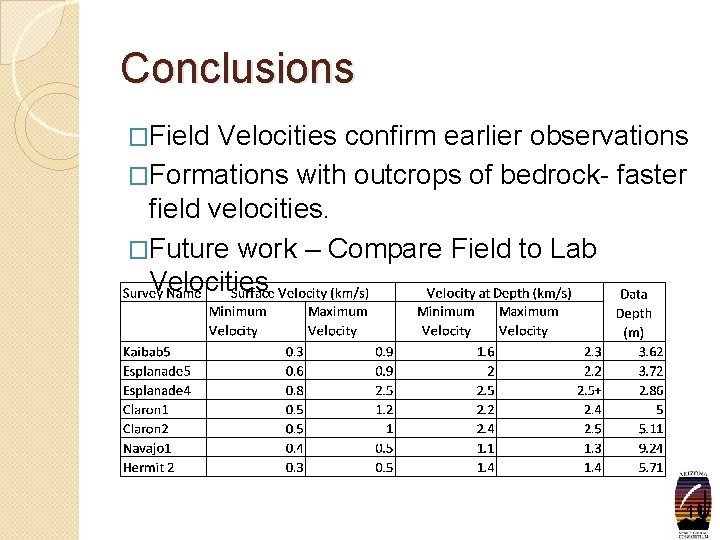
Conclusions �Field Velocities confirm earlier observations �Formations with outcrops of bedrock- faster field velocities. �Future work – Compare Field to Lab Velocities 11
Thank You Acknowledgements: Dr. Kelin Whipple Dr. Brian Clarke Andrew Darling Marina Bravo Foster