
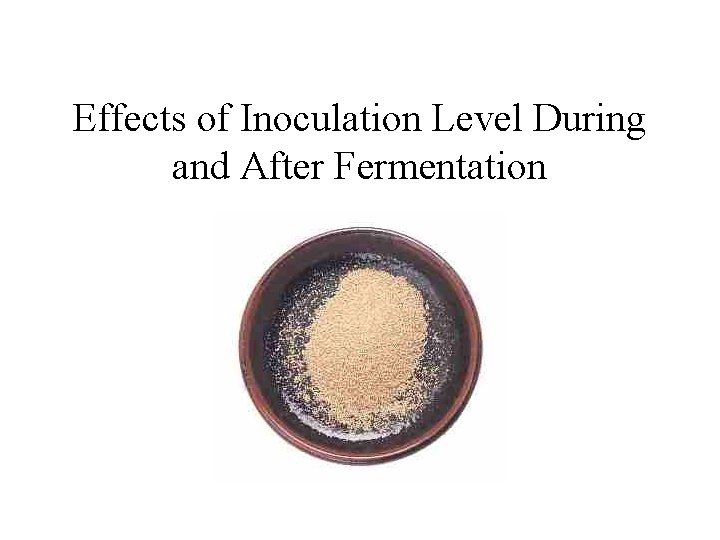
Effects of Inoculation Level During and After Fermentation


- Slides: 28
Effects of Inoculation Level During and After Fermentation
Student Team Meredith Bell, Sarah Harper, Joanne Oh, Diego Roig and Luke Bohanan
Fermentation Analysis Diego Roig
Goal of Study • To compare the effect of different levels of inoculation of active dry commercial yeast preparations on fermentation and sensory characteristics of wine • Used Chardonnay juice and Premiere cuvee
2010 UC Davis Chardonnay • • Crushed and Pressed 9/2/10 Healdsberg crusher destemmer Bucher Vaslin Press Juice held in cold storage news. ucdavis. edu
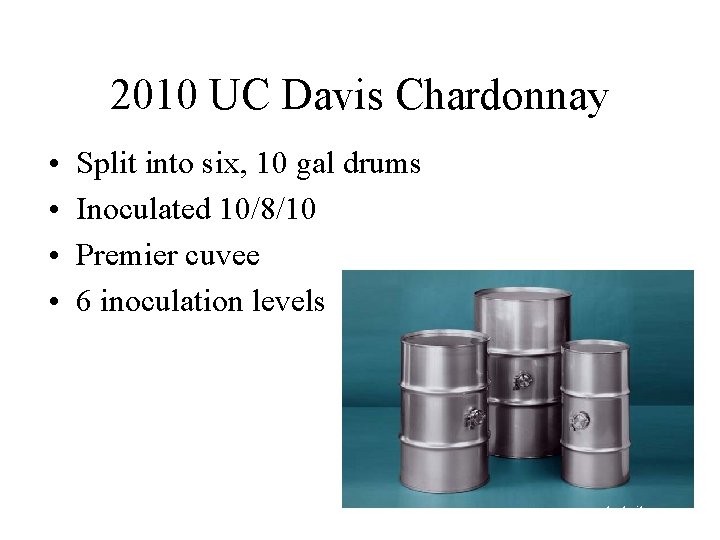
2010 UC Davis Chardonnay • • Split into six, 10 gal drums Inoculated 10/8/10 Premier cuvee 6 inoculation levels skolnik. com
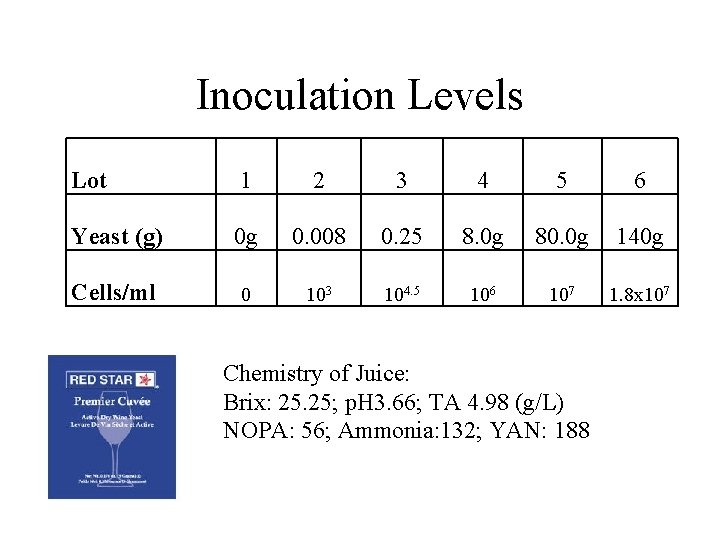
Inoculation Levels Lot 1 2 3 4 5 6 Yeast (g) 0 g 0. 008 0. 25 8. 0 g 80. 0 g 140 g Cells/ml 0 103 104. 5 106 107 1. 8 x 10⁷ Chemistry of Juice: Brix: 25. 25; p. H 3. 66; TA 4. 98 (g/L) NOPA: 56; Ammonia: 132; YAN: 188
Fermentation • Cold fermentation cellar • Brix and Temp taken twice daily • When Dry, moved to cold storage
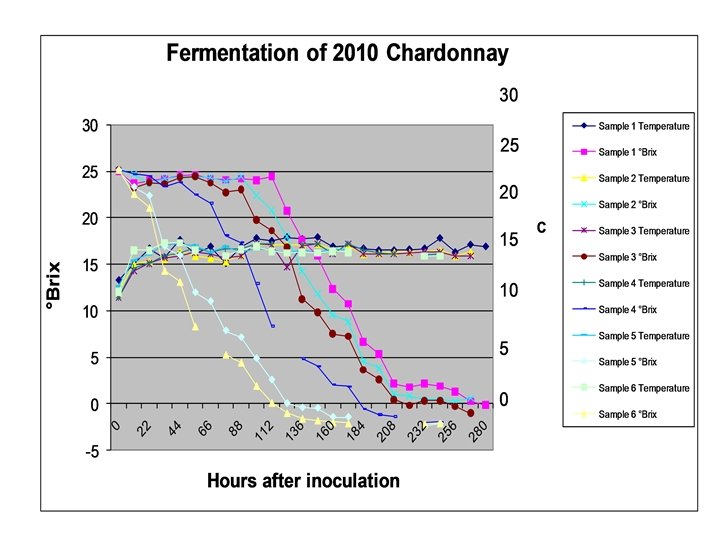
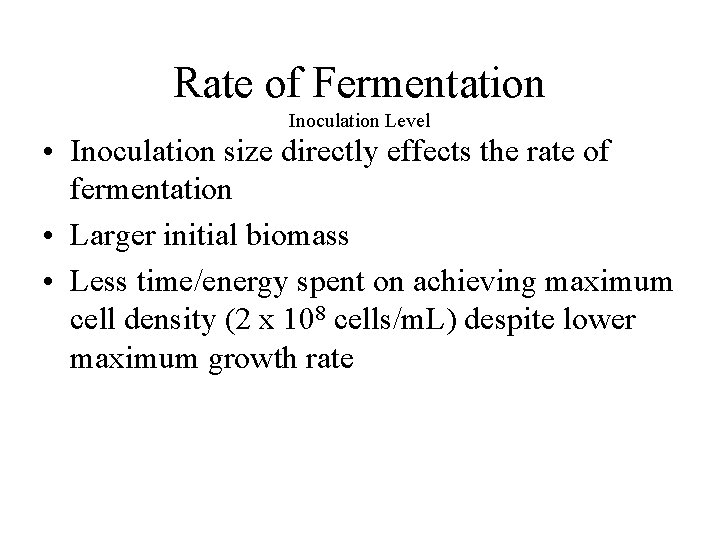
Rate of Fermentation Inoculation Level • Inoculation size directly effects the rate of fermentation • Larger initial biomass • Less time/energy spent on achieving maximum cell density (2 x 10⁸ cells/m. L) despite lower maximum growth rate
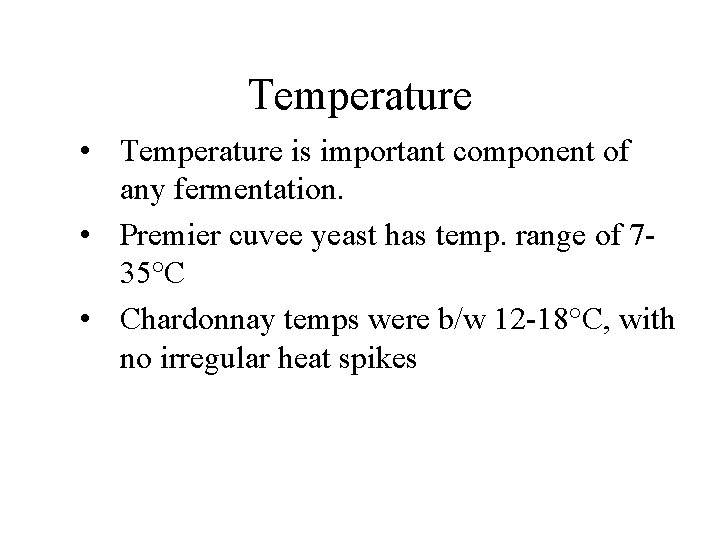
Temperature • Temperature is important component of any fermentation. • Premier cuvee yeast has temp. range of 735°C • Chardonnay temps were b/w 12 -18°C, with no irregular heat spikes
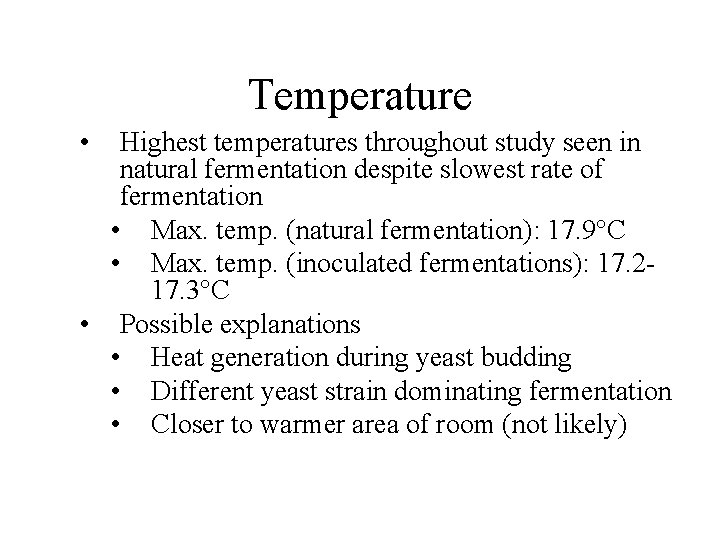
Temperature • Highest temperatures throughout study seen in natural fermentation despite slowest rate of fermentation • Max. temp. (natural fermentation): 17. 9°C • Max. temp. (inoculated fermentations): 17. 217. 3°C • Possible explanations • Heat generation during yeast budding • Different yeast strain dominating fermentation • Closer to warmer area of room (not likely)
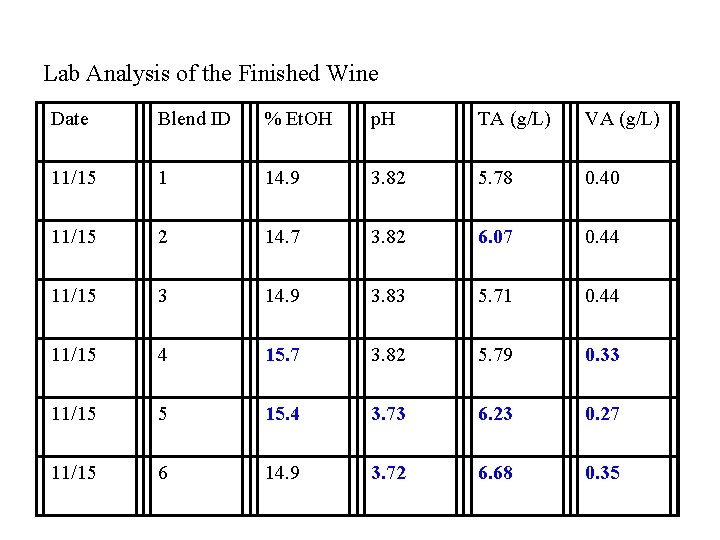
Lab Analysis of the Finished Wine Date Blend ID % Et. OH p. H TA (g/L) VA (g/L) 11/15 1 14. 9 3. 82 5. 78 0. 40 11/15 2 14. 7 3. 82 6. 07 0. 44 11/15 3 14. 9 3. 83 5. 71 0. 44 11/15 4 15. 7 3. 82 5. 79 0. 33 11/15 5 15. 4 3. 73 6. 23 0. 27 11/15 6 14. 9 3. 72 6. 68 0. 35
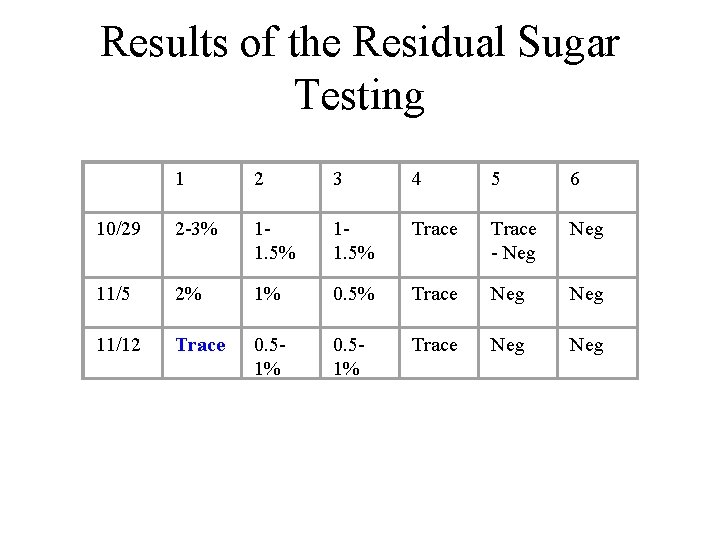
Results of the Residual Sugar Testing 1 2 3 4 5 6 10/29 2 -3% 11. 5% Trace - Neg 11/5 2% 1% 0. 5% Trace Neg 11/12 Trace 0. 51% Trace Neg
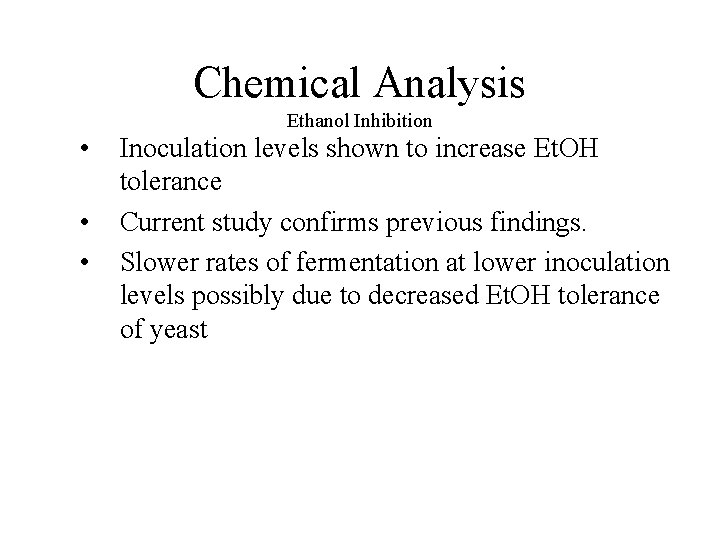
Chemical Analysis • • • Ethanol Inhibition Inoculation levels shown to increase Et. OH tolerance Current study confirms previous findings. Slower rates of fermentation at lower inoculation levels possibly due to decreased Et. OH tolerance of yeast
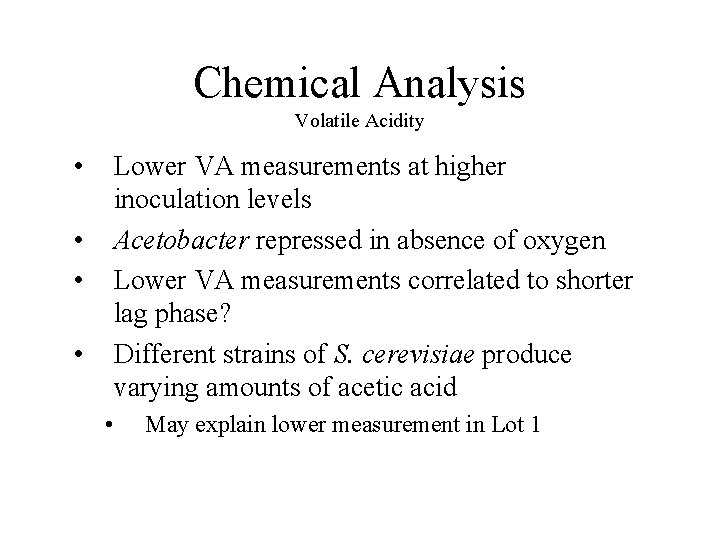
Chemical Analysis Volatile Acidity • Lower VA measurements at higher inoculation levels Acetobacter repressed in absence of oxygen Lower VA measurements correlated to shorter lag phase? Different strains of S. cerevisiae produce varying amounts of acetic acid • • May explain lower measurement in Lot 1
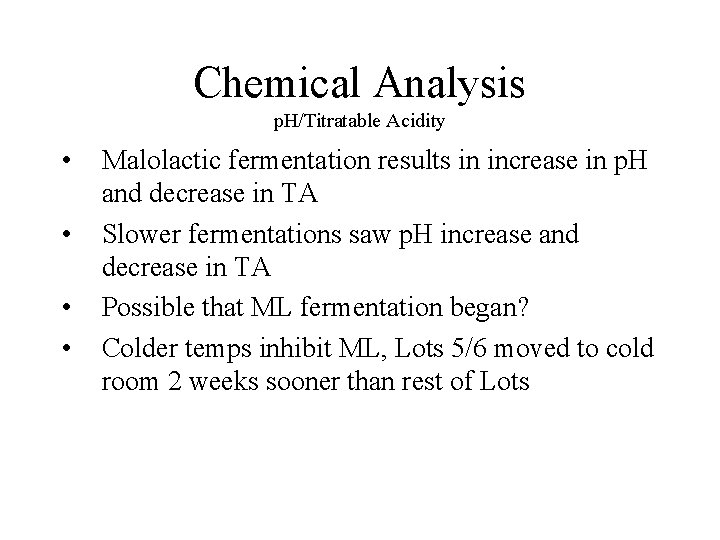
Chemical Analysis p. H/Titratable Acidity • • Malolactic fermentation results in increase in p. H and decrease in TA Slower fermentations saw p. H increase and decrease in TA Possible that ML fermentation began? Colder temps inhibit ML, Lots 5/6 moved to cold room 2 weeks sooner than rest of Lots
Sensory Analysis Luke Bohanan
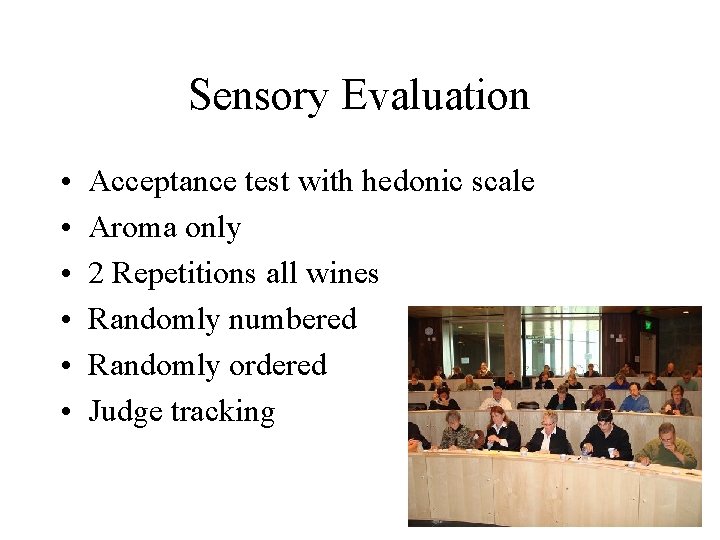
Sensory Evaluation • • • Acceptance test with hedonic scale Aroma only 2 Repetitions all wines Randomly numbered Randomly ordered Judge tracking
Mean Preference Scores • Reasonable Variance • Two Distinct groups • Outliers… 9. 00 8. 00 7. 00 4 2 1 6. 00 3 5. 00 4. 00 3. 00 2. 00 5 6 1. 00 0 2 4 6 8
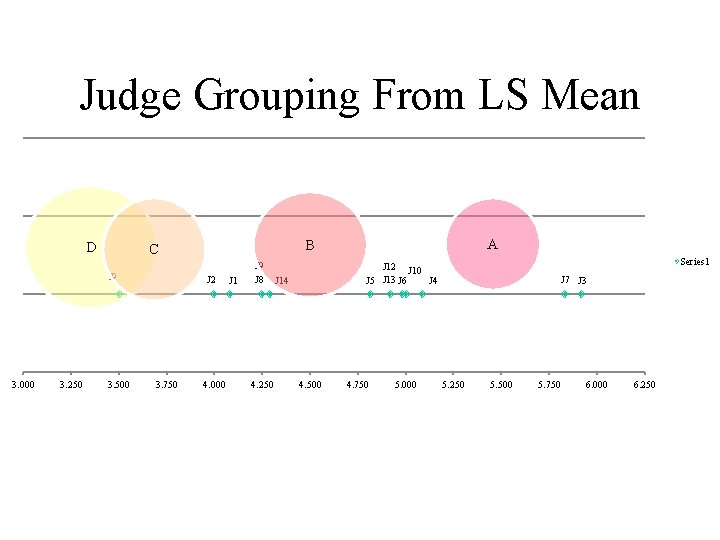
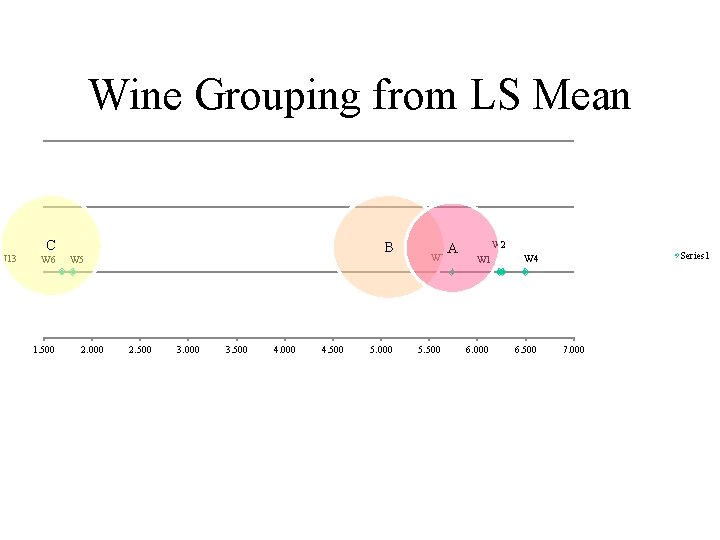
ANOVA • XLSTAT used • Judges H 0 rejected = Not all Judges scored the same • Wines H 0 rejected = Not all wines were scored the same • Reps H 0 accepted = No significant difference between reps
Judge Grouping From LS Mean D J 9 3. 000 3. 250 3. 500 J 2 3. 750 A B C 4. 000 J 1 J 9 J 8 4. 250 Series 1 J 12 J 10 J 5 J 13 J 6 J 4 J 14 4. 500 4. 750 5. 000 J 7 J 3 5. 250 5. 500 5. 750 6. 000 6. 250
Wine Grouping from LS Mean
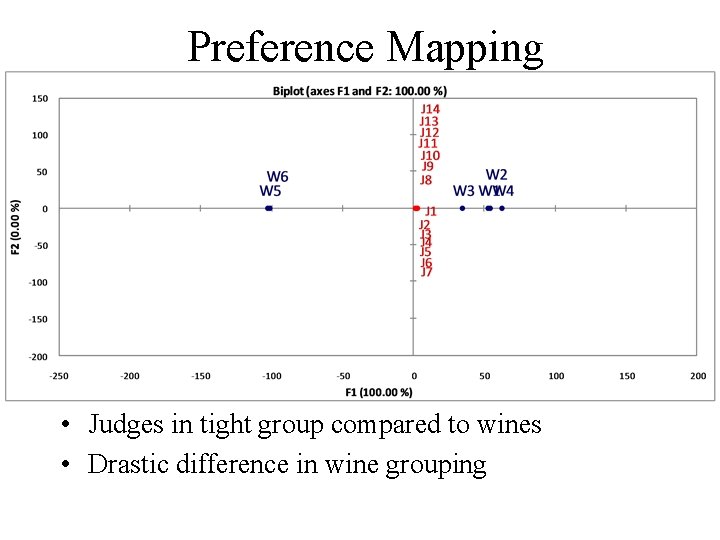
Preference Mapping • Judges in tight group compared to wines • Drastic difference in wine grouping
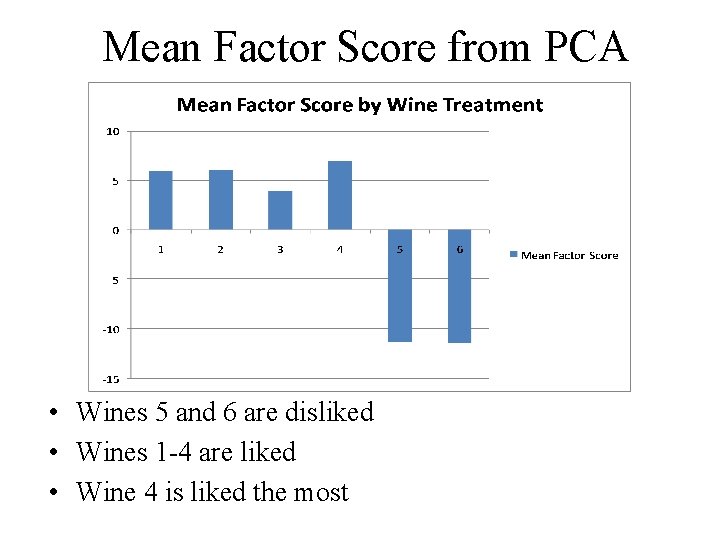
Mean Factor Score from PCA • Wines 5 and 6 are disliked • Wines 1 -4 are liked • Wine 4 is liked the most
What does sensory tell us? • Highest concentration of desired aroma compounds at 106 cells/ml • Higher concentration of undesirable compounds at 107 cell/ml and above • Concentrations below 106 cells/ml show acceptable levels of desirable aromas
Possible causes of negative aromas • Treatment 5 and 6 left on mass of lees = reductive environment = sulfur • Lack of nutrients • Post fermentation contamination • Headspace post fermentation = O 2 Exposure
Questions?