
Effects of Drugs on PSG and Sleep Rochelle





- Slides: 56
Effects of Drugs on PSG and Sleep Rochelle Zozula, Ph. D. , DABSM Sleep Services International, LLC Clinical Assoc. Professor of Neuroscience, Seton Hall University, School of Health & Medical Sciences
© 1987 Partnership for a Drug-free America
Drugs and Sleep Daytime drowsiness or nocturnal insomnia may be due to : • Direct pharmacologic effect • Disturbance in sleep patterns – Insomnia or nightmares • Aggravation of sleep disorder – Sleep apnea, restless leg syndrome • Drug withdrawal
General Rules • Stage N 1 – Increase can lead to increased arousals or wakefulness • Stage N 3 (SWS) – Decrease can lead to feelings of not being well rested and muscle aches • Stage REM – Decrease may lead to parasomnias – Increase may lead to nightmares
General Rules • One neurotransmitter/neuromodulator may involve multiple mechanisms. • The effect of the drug may vary depending on dosage and method of administration. • Many pharmacologic studies based on animal experiments; human case may be different.
Neurotransmitters of Wakefulness • Histamine • Acetylcholine (ACh) • Norepinephrine (NE) • Dopamine (DA) • Glutamate • Orexin
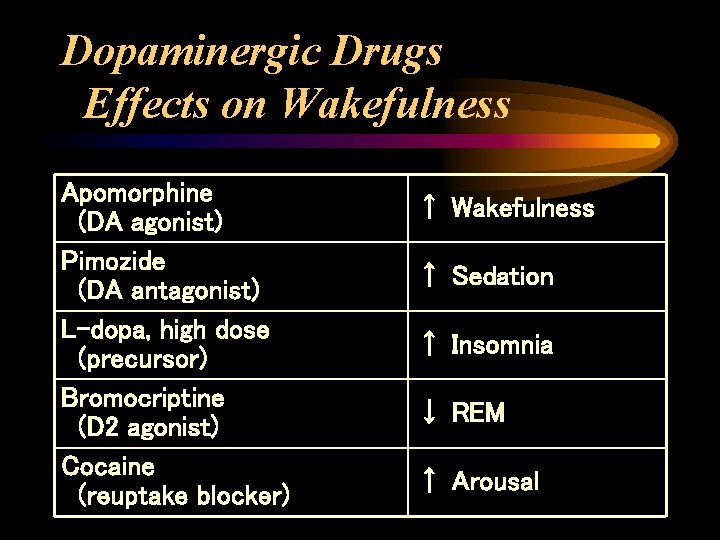
Dopaminergic Drugs Effects on Wakefulness Apomorphine (DA agonist) Pimozide (DA antagonist) L-dopa, high dose (precursor) Bromocriptine (D 2 agonist) Cocaine (reuptake blocker) ↑ Wakefulness ↑ Sedation ↑ Insomnia ↓ REM ↑ Arousal
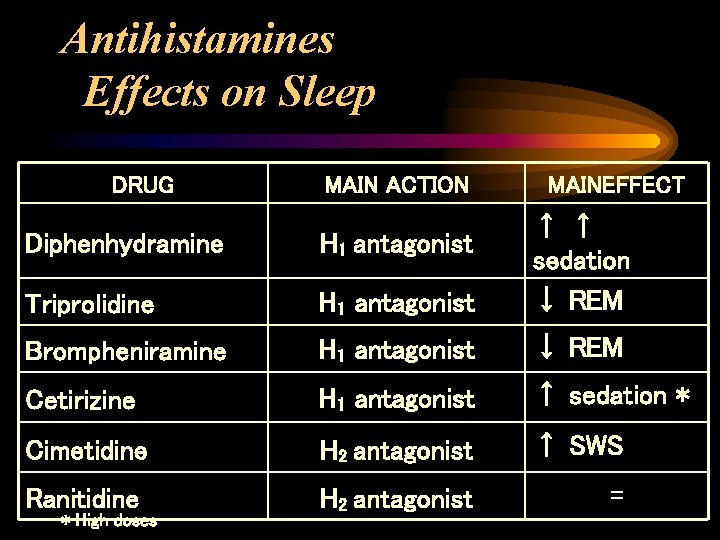
Antihistamines Effects on Sleep DRUG MAIN ACTION MAINEFFECT Diphenhydramine H 1 antagonist Triprolidine H 1 antagonist ↑↑ sedation ↓ REM Brompheniramine H 1 antagonist ↓ REM Cetirizine H 1 antagonist ↑ sedation * Cimetidine H 2 antagonist ↑ SWS Ranitidine H 2 antagonist = * High doses
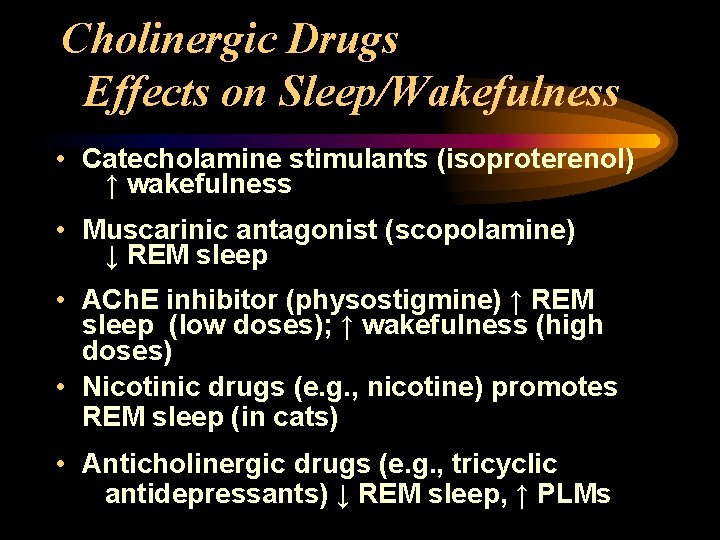
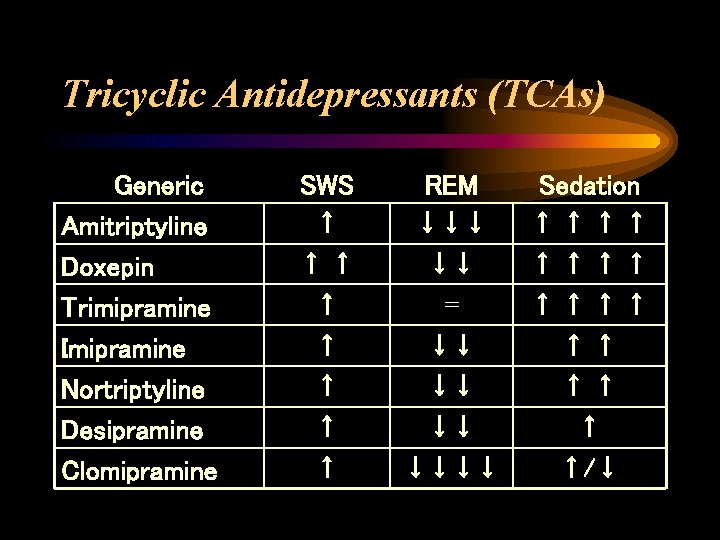
Cholinergic Drugs Effects on Sleep/Wakefulness • Catecholamine stimulants (isoproterenol) ↑ wakefulness • Muscarinic antagonist (scopolamine) ↓ REM sleep • ACh. E inhibitor (physostigmine) ↑ REM sleep (low doses); ↑ wakefulness (high doses) • Nicotinic drugs (e. g. , nicotine) promotes REM sleep (in cats) • Anticholinergic drugs (e. g. , tricyclic antidepressants) ↓ REM sleep, ↑ PLMs
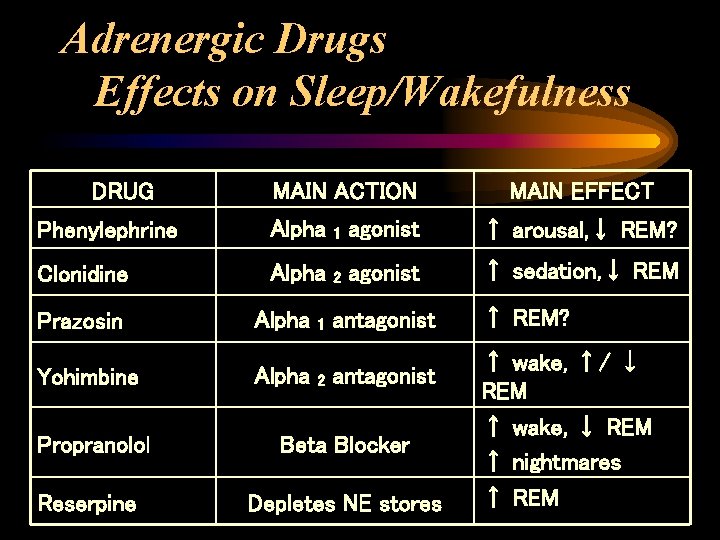
Adrenergic Drugs Effects on Sleep/Wakefulness DRUG MAIN ACTION MAIN EFFECT Phenylephrine Alpha 1 agonist ↑ arousal, ↓ REM? Clonidine Alpha 2 agonist ↑ sedation, ↓ REM Prazosin Alpha 1 antagonist Yohimbine Alpha 2 antagonist Propranolol Beta Blocker Reserpine Depletes NE stores ↑ REM? ↑ wake, ↑/ ↓ REM ↑ wake, ↓ REM ↑ nightmares ↑ REM
Neurotransmitters of Non-REM Sleep • GABA • Adenosine • Serotonin (5 -HT)
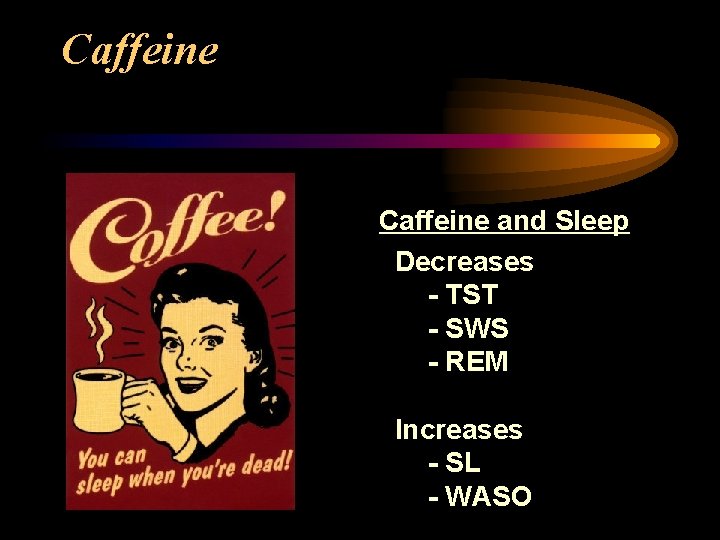
Caffeine and Sleep Decreases - TST - SWS - REM Increases - SL - WASO
Drug Effects on Non-REM Sleep • Adenosine receptor blockers (e. g. , theophylline, caffeine) promote wakefulness • GABA receptor agonists (e. g. benzodiazepines, zaleplon, zolpidem, eszopiclone) promote sleep
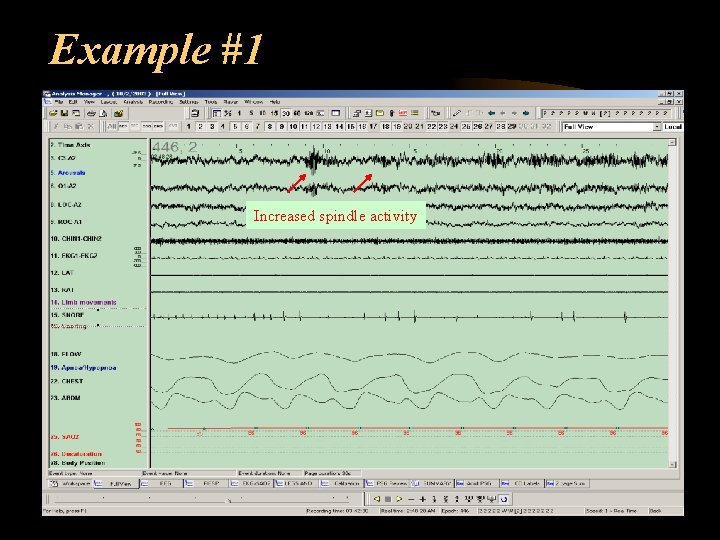
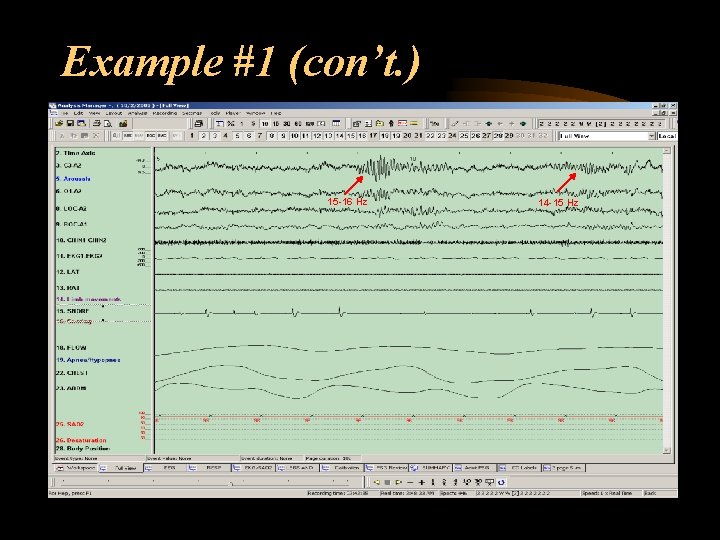
Benzodiazepines • Act on the GABA receptor • Daytime sedation common with long-acting agents • Short-acting agents may cause rebound insomnia and early morning awakening • Worsen sleep apnea & improve RLS • Rapid withdrawal may lead to nightmares, arousals, & increased sleep latency • Suppress SWS; useful for parasomnias
Example #1 Increased spindle activity
Example #1 (con’t. ) 15 -16 Hz 14 -15 Hz
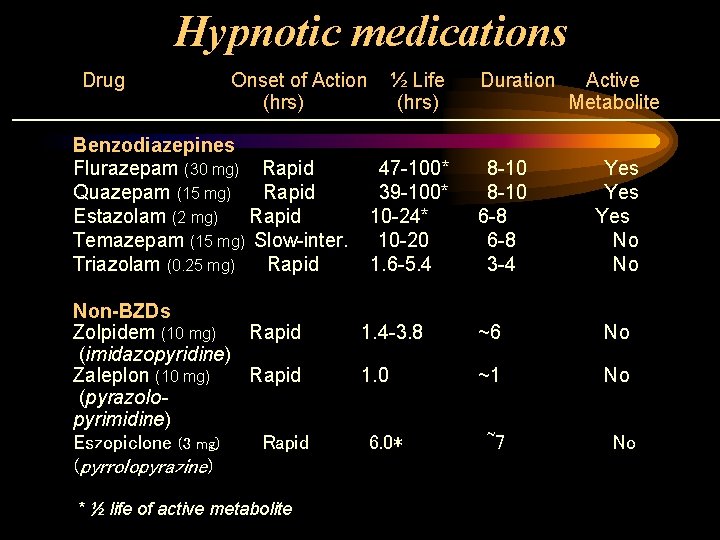
Hypnotic medications Drug Onset of Action (hrs) Benzodiazepines Flurazepam (30 mg) Rapid Quazepam (15 mg) Rapid Estazolam (2 mg) Rapid Temazepam (15 mg) Slow-inter. Triazolam (0. 25 mg) Rapid Non-BZDs Zolpidem (10 mg) Rapid (imidazopyridine) Zaleplon (10 mg) Rapid (pyrazolopyrimidine) Eszopiclone (3 mg) Rapid (pyrrolopyrazine) * ½ life of active metabolite ½ Life (hrs) 47 -100* 39 -100* 10 -24* 10 -20 1. 6 -5. 4 Duration 8 -10 6 -8 3 -4 Active Metabolite Yes Yes No No 1. 4 -3. 8 ~6 No 1. 0 ~1 No 6. 0* ~7 No
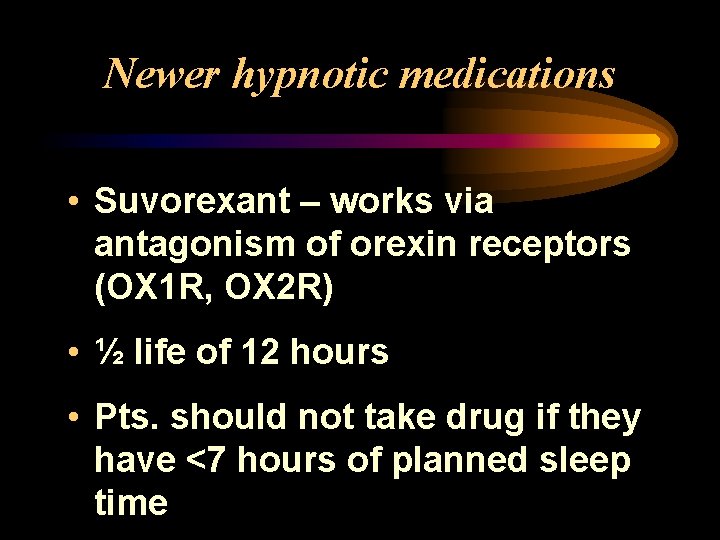
Newer hypnotic medications • Suvorexant – works via antagonism of orexin receptors (OX 1 R, OX 2 R) • ½ life of 12 hours • Pts. should not take drug if they have <7 hours of planned sleep time
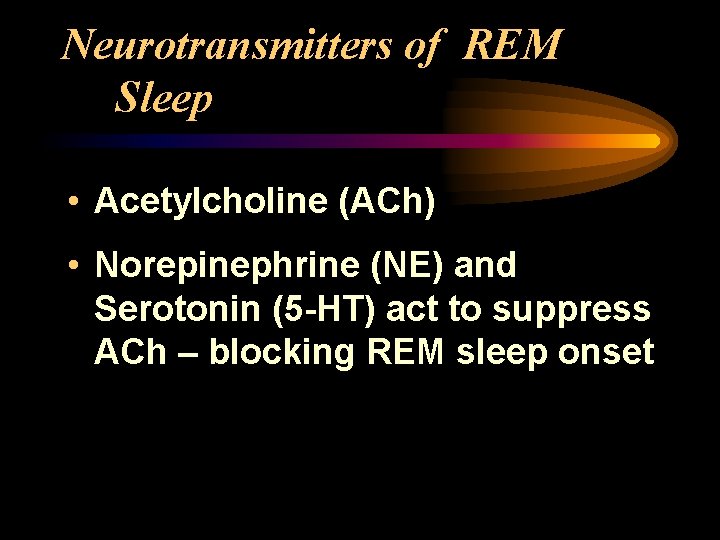
Neurotransmitters of REM Sleep • Acetylcholine (ACh) • Norepinephrine (NE) and Serotonin (5 -HT) act to suppress ACh – blocking REM sleep onset
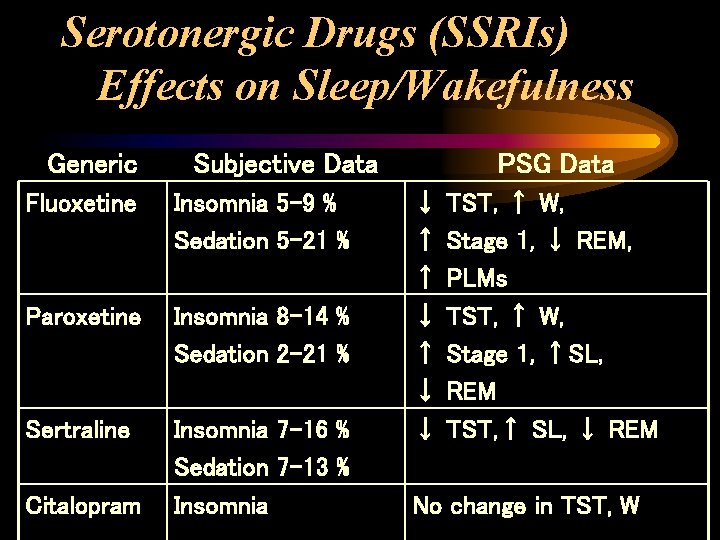
Serotonergic Drugs (SSRIs) Effects on Sleep/Wakefulness Generic Subjective Data Fluoxetine Insomnia 5 -9 % Sedation 5 -21 % Paroxetine Insomnia 8 -14 % Sedation 2 -21 % Sertraline Insomnia 7 -16 % Sedation 7 -13 % Insomnia Citalopram PSG Data ↓ ↑ ↑ ↓ ↓ TST, ↑ W, Stage 1, ↓ REM, PLMs TST, ↑ W, Stage 1, ↑SL, REM TST, ↑ SL, ↓ REM No change in TST, W
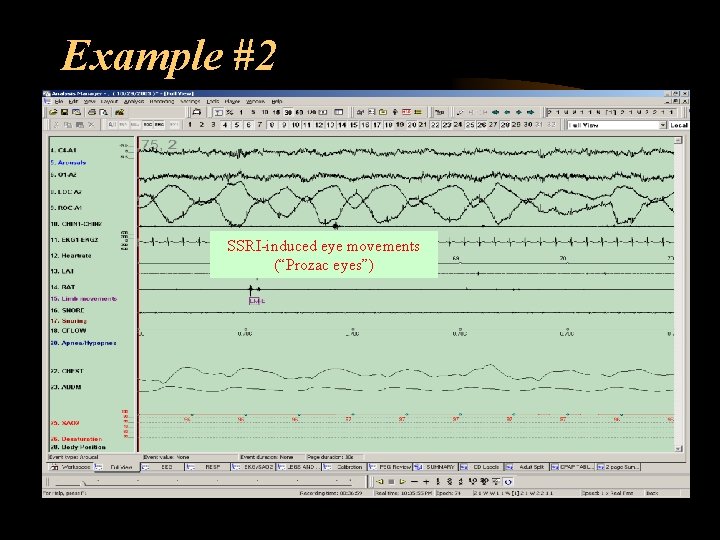
Example #2 SSRI-induced eye movements (“Prozac eyes”)
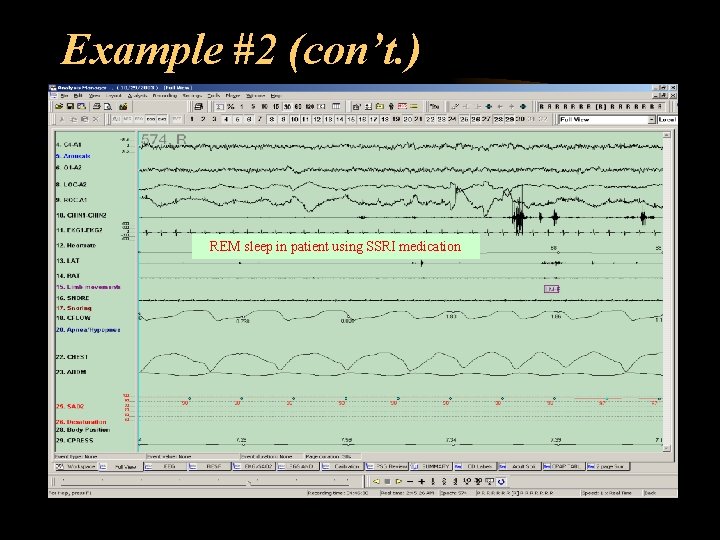
Example #2 (con’t. ) REM sleep in patient using SSRI medication
Tricyclic Antidepressants (TCAs) Generic Amitriptyline Doxepin Trimipramine Imipramine Nortriptyline Desipramine Clomipramine SWS REM Sedation ↑ ↓↓↓ ↑↑↑↑ ↑↑ ↓↓ ↑↑↑↑ ↑ = ↑↑↑↑ ↑ ↓↓ ↑ ↑ ↓↓↓↓ ↑/↓
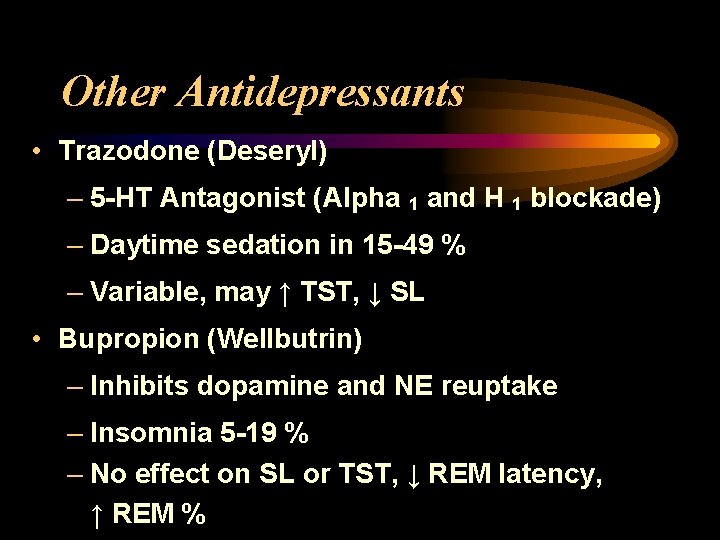
Other Antidepressants • Trazodone (Deseryl) – 5 -HT Antagonist (Alpha 1 and H 1 blockade) – Daytime sedation in 15 -49 % – Variable, may ↑ TST, ↓ SL • Bupropion (Wellbutrin) – Inhibits dopamine and NE reuptake – Insomnia 5 -19 % – No effect on SL or TST, ↓ REM latency, ↑ REM %
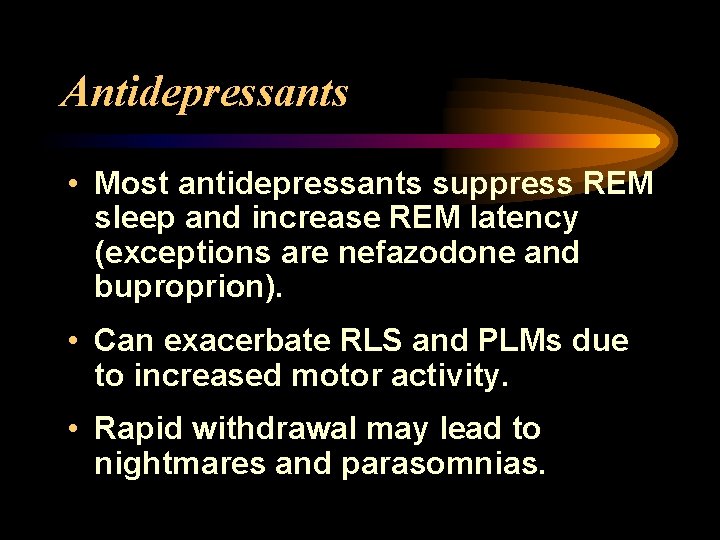
Antidepressants • Most antidepressants suppress REM sleep and increase REM latency (exceptions are nefazodone and buproprion). • Can exacerbate RLS and PLMs due to increased motor activity. • Rapid withdrawal may lead to nightmares and parasomnias.
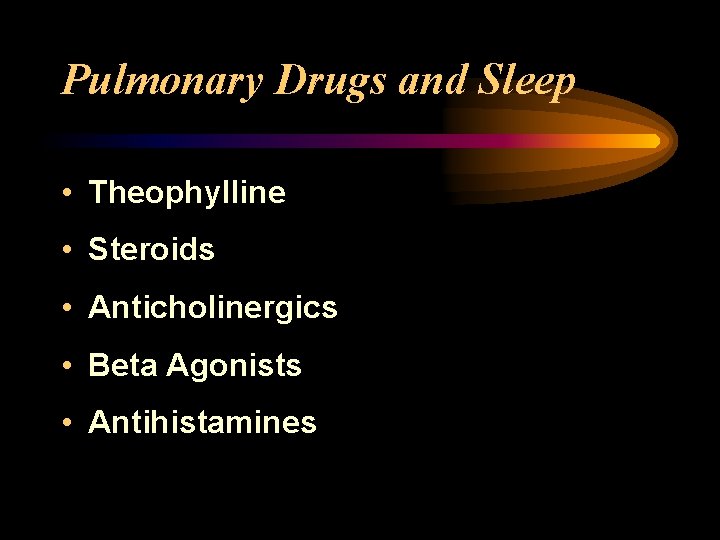
Pulmonary Drugs and Sleep • Theophylline • Steroids • Anticholinergics • Beta Agonists • Antihistamines
Theophylline • Theophylline associated with increased sleep complaints in COPD, asthma, CF • Asthma patients Rx’ed with theophylline: 55% insomnia vs 31% other asthma meds • Debate about theophylline in COPD • Studies claiming theophylline improves sleep lack placebo group and have high dropout rates
Corticosteroids and Sleep • Corticosteroid use associated with insomnia in asthmatics, patients with optic neuritis, and cancer patients • PSG data on patients on steroids: – ↓ ↓ REM – ↑ wake • Inhaled steroids do not appear to have the same effect
Anticholinergics and Sleep • Ipratropium improves both sleep quality and Sa 02 in patients with COPD • Effect of ipratropium on asthmatic bronchoconstriction is unclear
Beta Agonists and Sleep • Salmeterol – Reduces nocturnal awakenings – Is associated with improved a. m. FEV 1 – Reduces nocturnal use of rescue meds – May improve sleep structure
Antihistamines • Disruption of sleep architecture and increased sedation is common with first-generation antihistamines due to their high lipophilicity. • Second-generation antihistamines cause less clinically significant sedative effects.
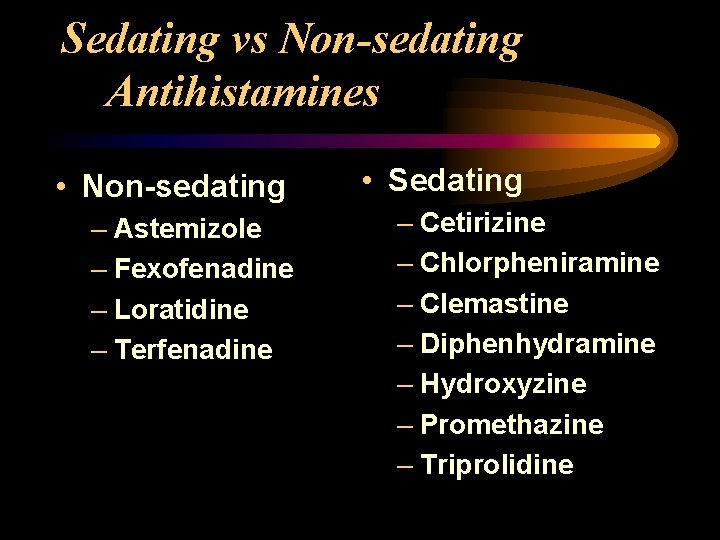
Sedating vs Non-sedating Antihistamines • Non-sedating – Astemizole – Fexofenadine – Loratidine – Terfenadine • Sedating – Cetirizine – Chlorpheniramine – Clemastine – Diphenhydramine – Hydroxyzine – Promethazine – Triprolidine
Effects of Sedating Antihistamines • Shorten sleep latency compared to placebo • Cause measurably reduced alertness • May prolong TST • Impair performance on neuropsych. tests • Impair driving performance • Comprehensive objective overnight sleep studies in humans are lacking
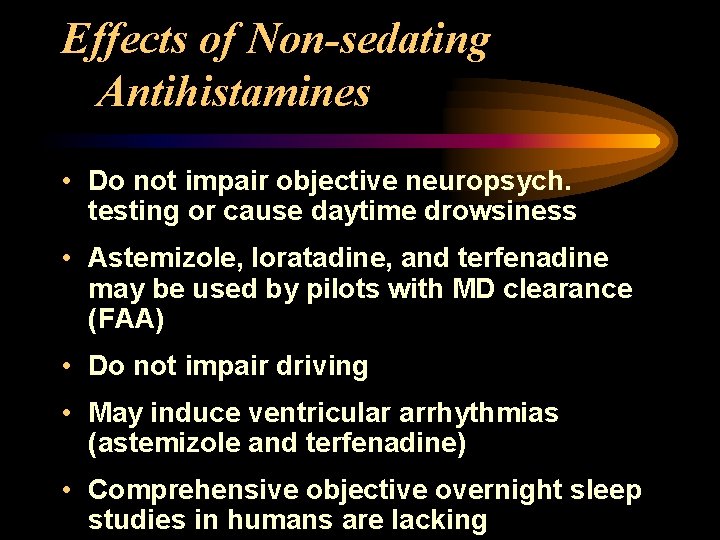
Effects of Non-sedating Antihistamines • Do not impair objective neuropsych. testing or cause daytime drowsiness • Astemizole, loratadine, and terfenadine may be used by pilots with MD clearance (FAA) • Do not impair driving • May induce ventricular arrhythmias (astemizole and terfenadine) • Comprehensive objective overnight sleep studies in humans are lacking
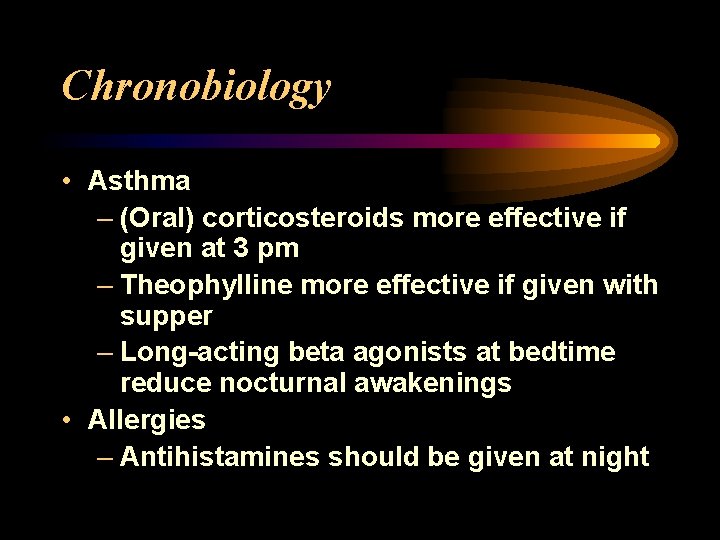
Chronobiology • Asthma – (Oral) corticosteroids more effective if given at 3 pm – Theophylline more effective if given with supper – Long-acting beta agonists at bedtime reduce nocturnal awakenings • Allergies – Antihistamines should be given at night
Allergic Rhinitis and Sleep-Disordered Breathing • Chronic rhinitis symptoms are associated with: – Habitual snoring – Chronic excessive daytime sleepiness – Chronic non-restorative sleep
Allergic Rhinitis and Sleep-Disordered Breathing • Individuals with allergic nasal congestion are more likely to have moderate to severe SDB than those without. • Allergic rhinitis is associated increased “microarousals” from sleep. • Allergic rhinitis symptoms result in longer, more frequent apneas, with reduced SWS.
Treatment of Allergic Rhinitis with Nasal Sprays • Fluticasone decreases the frequency of obstructive events in children with mild OSA. • Decongestant spray does not improve snoring.
Smoking, Nicotine, and Sleep • Cigarette smoking is associated with: – Increased risk of snoring – Increased risk of sleep apnea – Insomnia – Daytime sleepiness – Restless legs syndrome (it’s really bad!)
Other Common Drugs and Sleep • Antihypertensives • Beta Blockers • Opioids • Statins
Antihypertensives • In general, antihypertensive agents may decrease duration of REM sleep. • Beta-blockers, alpha-agonists, and alpha-antagonists can lead to sedation (tends to be transient). • Diuretics may cause sleep disruption secondary to increased nocturia.
Beta Blockers and Sleep • Compared with placebo, lipophilic beta blockers: – Increase REM latency, reduce REM – Increase W, TWT, Stage 1 – Deplete endogenous melatonin – Are associated with nightmares
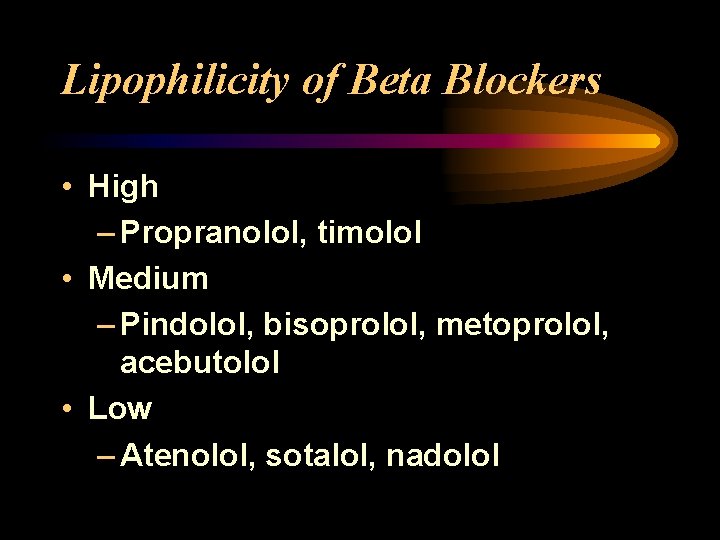
Lipophilicity of Beta Blockers • High – Propranolol, timolol • Medium – Pindolol, bisoprolol, metoprolol, acebutolol • Low – Atenolol, sotalol, nadolol
Opioid Analgesics • Cause daytime sedation • May worsen sleep apnea • Long-term use can suppress muscle activity (improve RLS) • Sudden withdrawal can lead to insomnia, nightmares, etc.
Lipid Lowering Agents • HMG - Co. A reductase inhibitors (“statins”) most commonly prescribed class of drugs • Anecdotal reports and controlled studies in normal volunteers suggest adverse effects of lovastatin on sleep and cognitive performance. • This finding not confirmed in controlled studies with hypercholesterolemic patients.
Drugs and RLS Symptoms • OTC’s • Antidepressants – Tricyclics – SSRI’s • Dopamine blockers – Metaclopramide – Calcium channel blockers – Antiemetics
OTC’s that Worsen RLS • Alcohol • Caffeine (and xanthines) • Antihistamines • Nicotine
Antidepressants Worsen RLS • Tricyclics (poorly documented) • SSRIs – Bupropion may be an exception
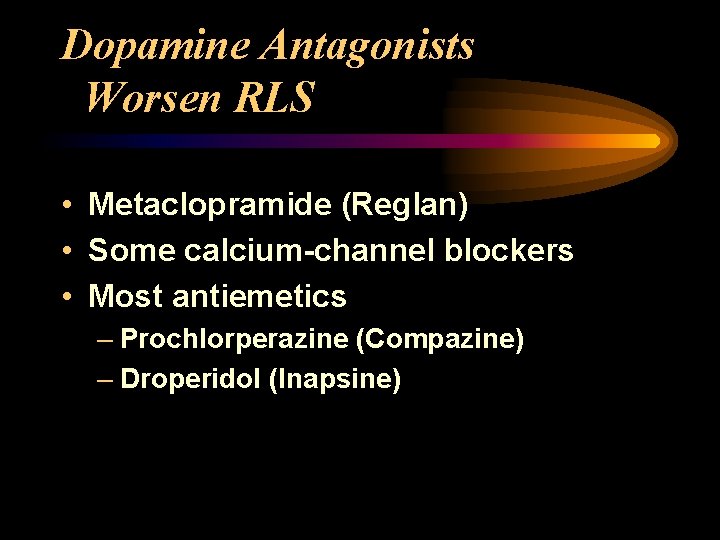
Dopamine Antagonists Worsen RLS • Metaclopramide (Reglan) • Some calcium-channel blockers • Most antiemetics – Prochlorperazine (Compazine) – Droperidol (Inapsine)
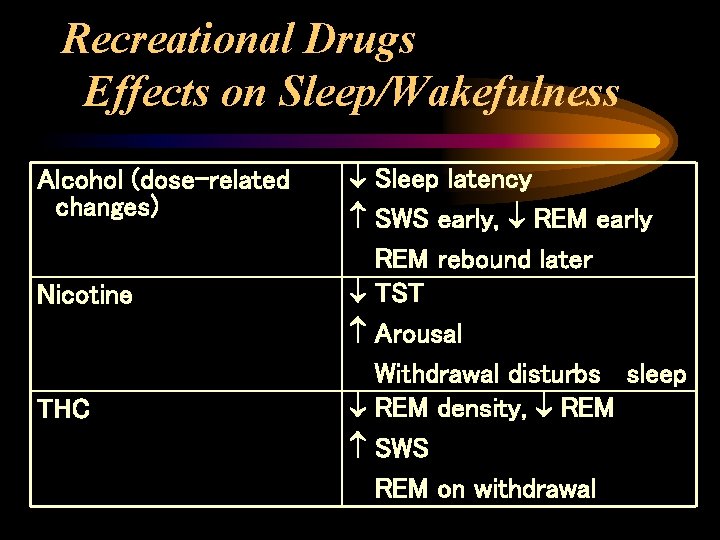
Recreational Drugs Effects on Sleep/Wakefulness Alcohol (dose-related changes) Nicotine THC Sleep latency SWS early, REM early REM rebound later TST Arousal Withdrawal disturbs sleep REM density, REM SWS REM on withdrawal
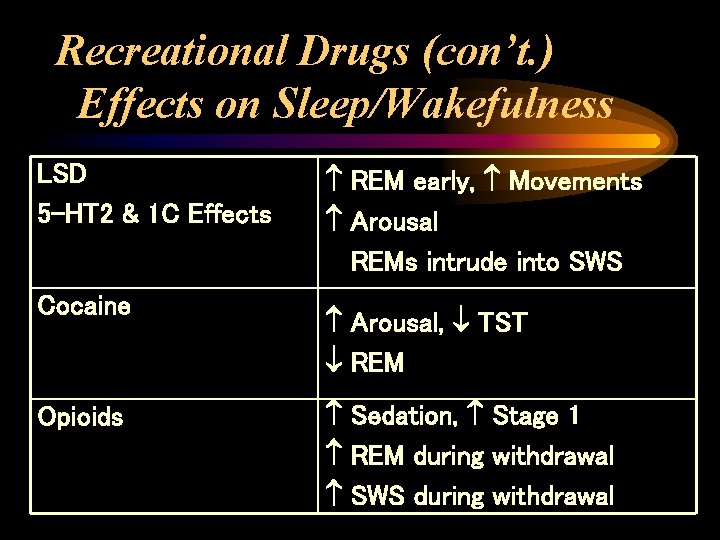
Recreational Drugs (con’t. ) Effects on Sleep/Wakefulness LSD 5 -HT 2 & 1 C Effects REM early, Movements Arousal REMs intrude into SWS Cocaine Arousal, TST REM Opioids Sedation, Stage 1 REM during withdrawal SWS during withdrawal
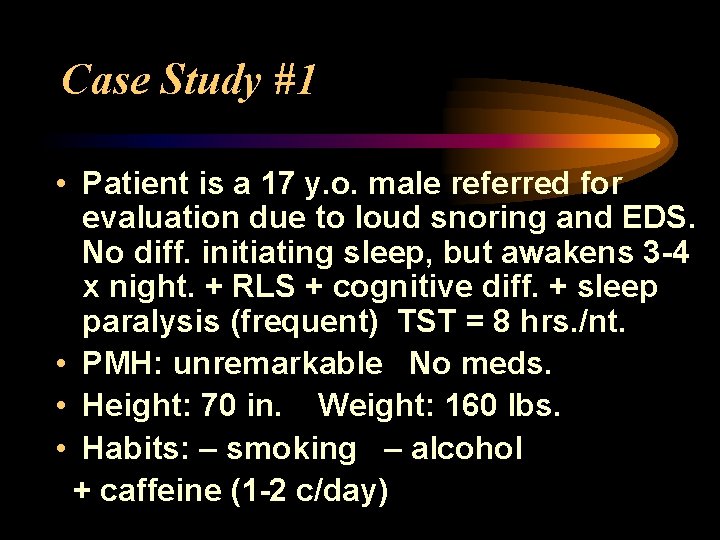
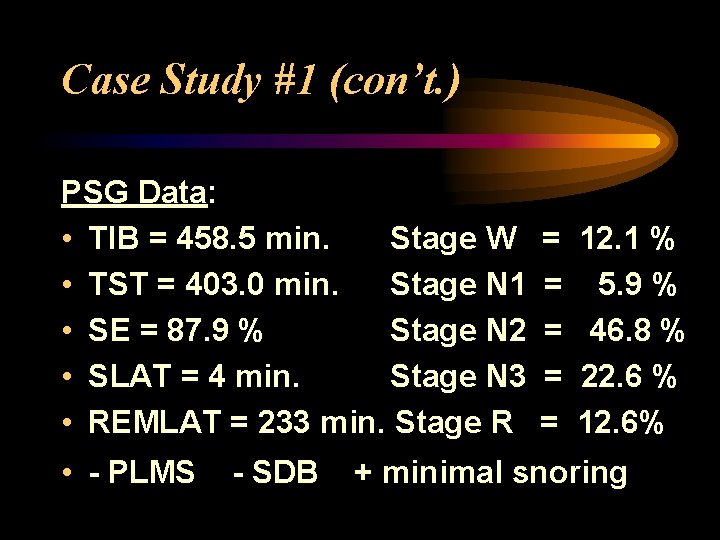
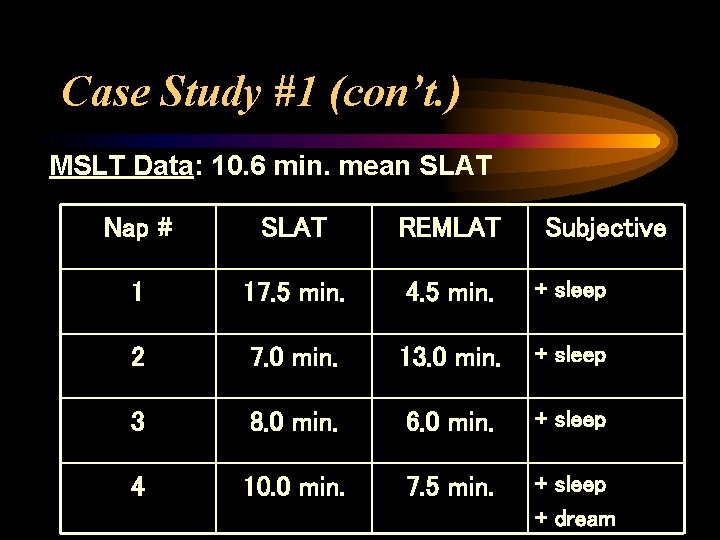
Case Study #1 • Patient is a 17 y. o. male referred for evaluation due to loud snoring and EDS. No diff. initiating sleep, but awakens 3 -4 x night. + RLS + cognitive diff. + sleep paralysis (frequent) TST = 8 hrs. /nt. • PMH: unremarkable No meds. • Height: 70 in. Weight: 160 lbs. • Habits: – smoking – alcohol + caffeine (1 -2 c/day)
Case Study #1 (con’t. ) PSG Data: • TIB = 458. 5 min. Stage W • TST = 403. 0 min. Stage N 1 • SE = 87. 9 % Stage N 2 • SLAT = 4 min. Stage N 3 • REMLAT = 233 min. Stage R • - PLMS - SDB = = = 12. 1 % 5. 9 % 46. 8 % 22. 6 % 12. 6% + minimal snoring
Case Study #1 (con’t. ) MSLT Data: 10. 6 min. mean SLAT Nap # SLAT REMLAT Subjective 1 17. 5 min. 4. 5 min. + sleep 2 7. 0 min. 13. 0 min. + sleep 3 8. 0 min. 6. 0 min. + sleep 4 10. 0 min. 7. 5 min. + sleep + dream
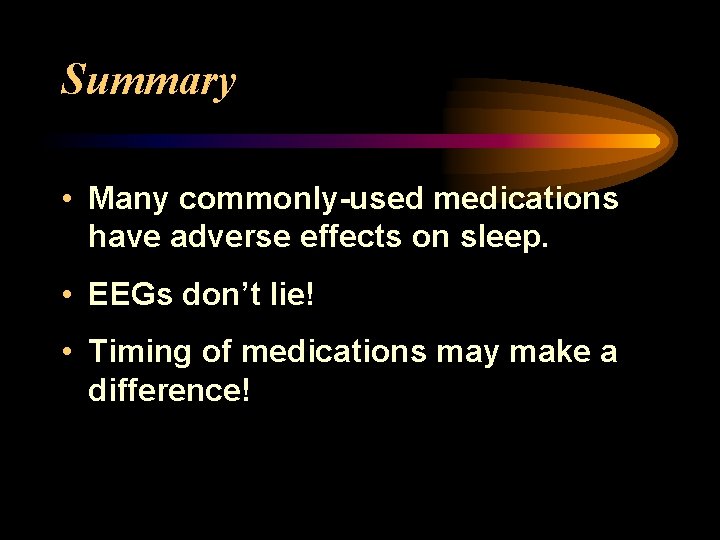
Summary • Many commonly-used medications have adverse effects on sleep. • EEGs don’t lie! • Timing of medications may make a difference!