
Effects of Attitude towards Speaking English and Exposure

- Slides: 25
Effects of Attitude towards Speaking English and Exposure to Oral Communication in English on Use of Communication Strategies by English Majors in Vietnam Bui Thuc Quyen Channarong Intaraprasert August 2013
Outline 1 Research Design 2 Results and Discussions 3 Implications, Contributions, and Suggestions for Future Research 2
Research Design • Definition of Terms • Theoretical Framework • Research Objectives & Questions • Data Collection and Data Analysis • Research Subjects’ Distribution • Sample of Questionnaires 3
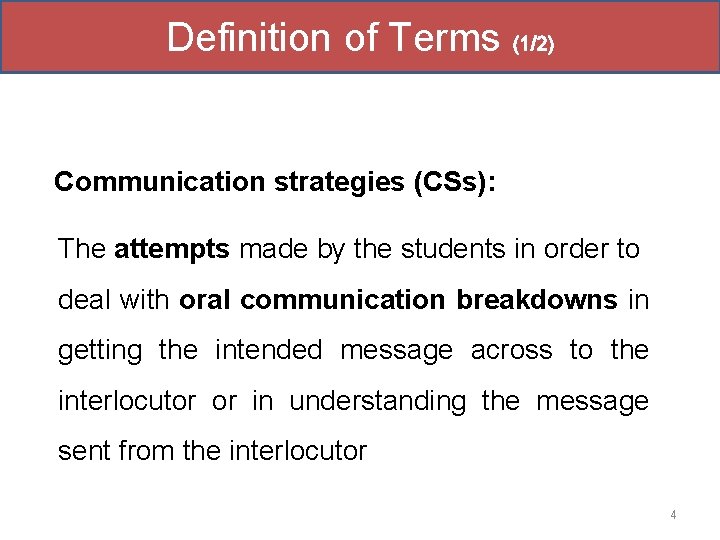
Definition of Terms (1/2) Communication strategies (CSs): The attempts made by the students in order to deal with oral communication breakdowns in getting the intended message across to the interlocutor or in understanding the message sent from the interlocutor 4
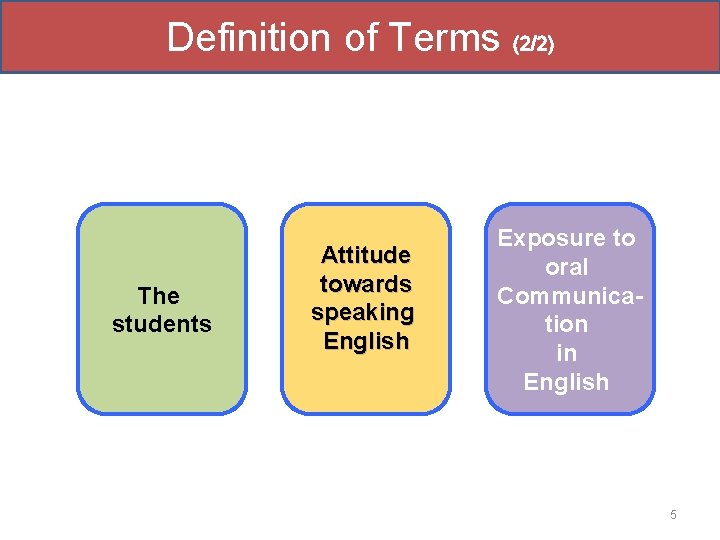
Definition of Terms (2/2) The students Attitude towards speaking English Exposure to oral Communication in English 5
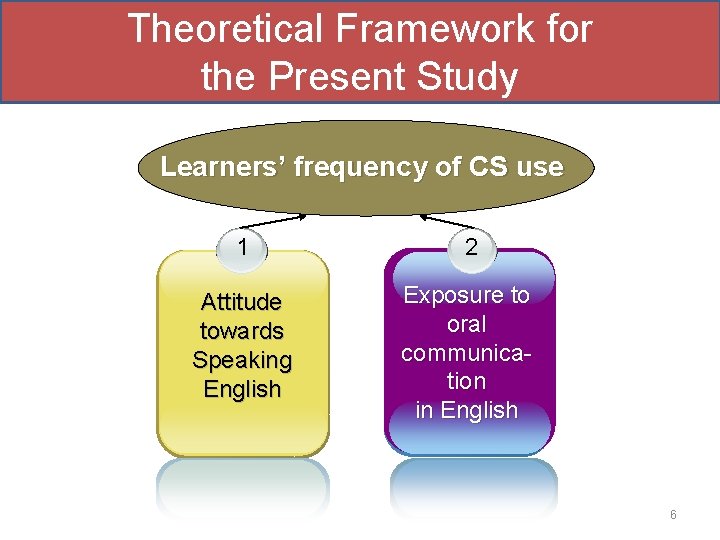
Theoretical Framework for the Present Study Learners’ frequency of CS use 1 2 Attitude towards Speaking English Exposure to oral communication in English 6
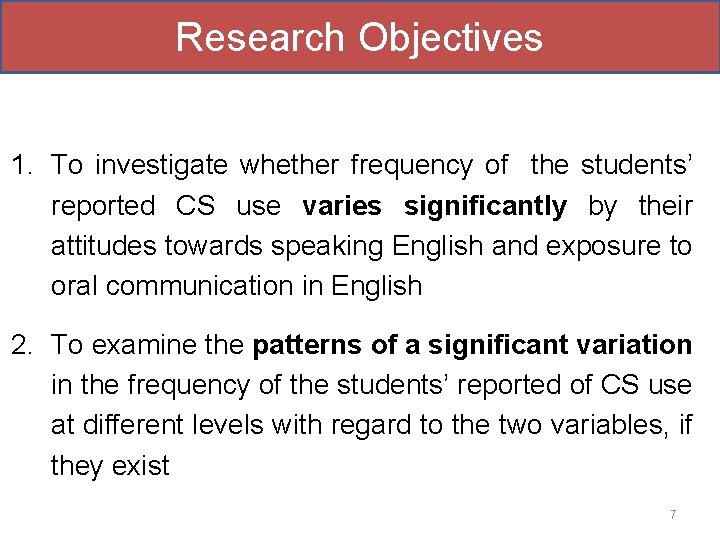
Research Objectives 1. To investigate whether frequency of the students’ reported CS use varies significantly by their attitudes towards speaking English and exposure to oral communication in English 2. To examine the patterns of a significant variation in the frequency of the students’ reported of CS use at different levels with regard to the two variables, if they exist 7
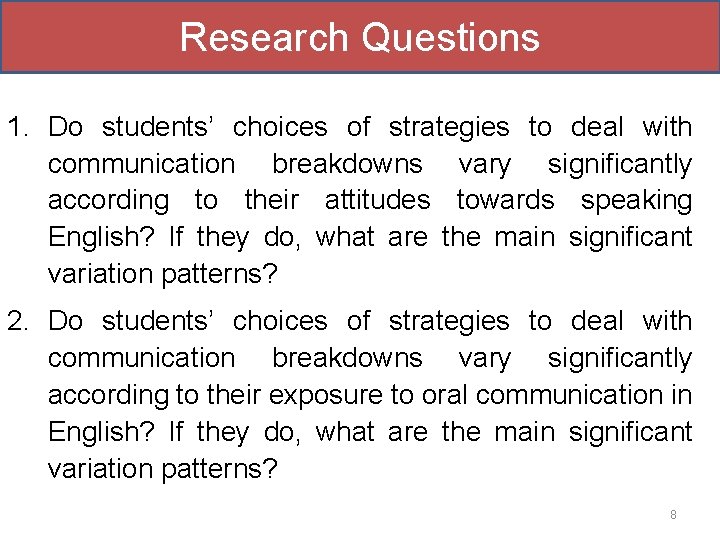
Research Questions 1. Do students’ choices of strategies to deal with communication breakdowns vary significantly according to their attitudes towards speaking English? If they do, what are the main significant variation patterns? 2. Do students’ choices of strategies to deal with communication breakdowns vary significantly according to their exposure to oral communication in English? If they do, what are the main significant variation patterns? 8
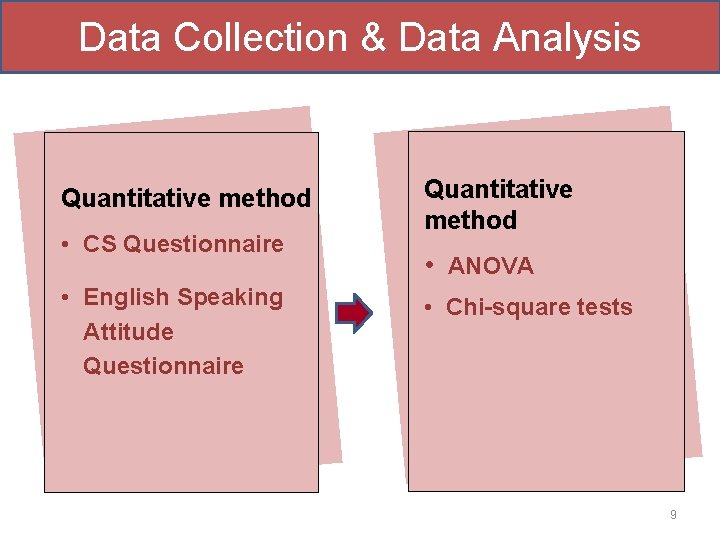
Data Collection & Data Analysis Quantitative method • CS Questionnaire • English Speaking Attitude Questionnaire Quantitative method • ANOVA • Chi-square tests 9
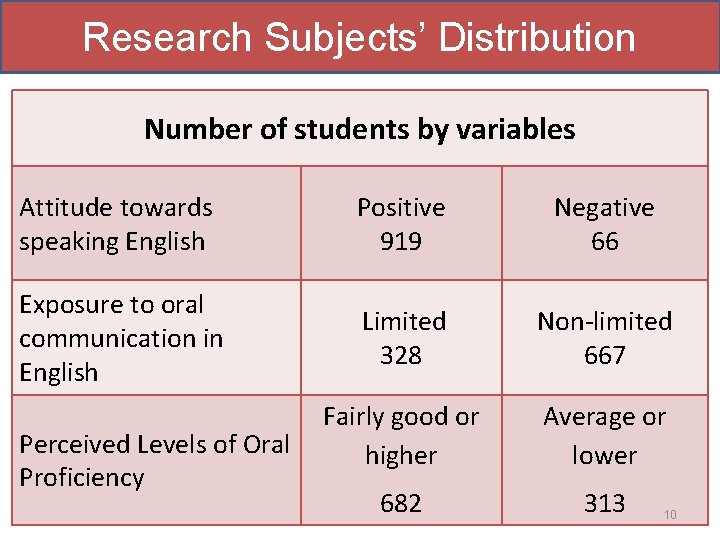
Research Subjects’ Distribution Number of students by variables Attitude towards speaking English Positive 919 Negative 66 Exposure to oral communication in English Limited 328 Non-limited 667 Fairly good or higher Average or lower 682 313 Perceived Levels of Oral Proficiency 10
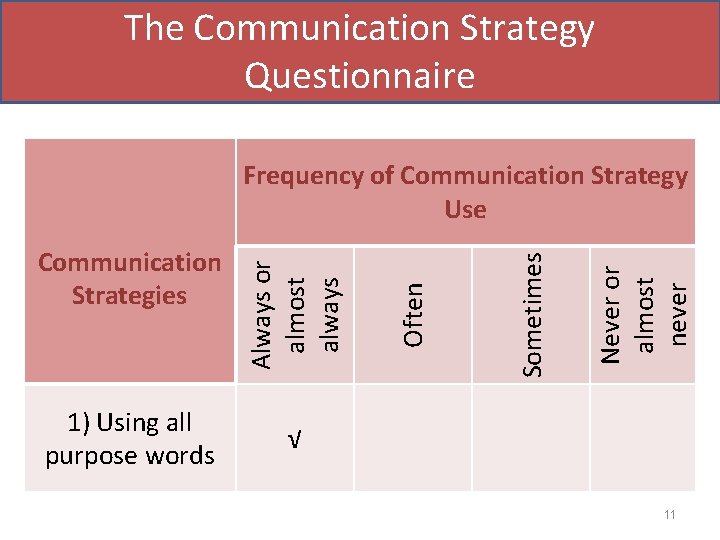
The Communication Strategy Questionnaire 1) Using all purpose words Never or almost never Sometimes Often Communication Strategies Always or almost always Frequency of Communication Strategy Use √ 11
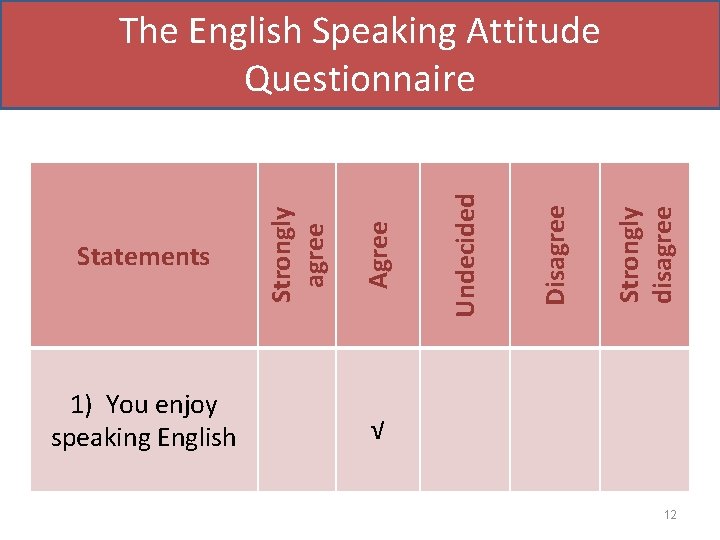
1) You enjoy speaking English Strongly disagree Disagree Undecided Agree Statements Strongly agree The English Speaking Attitude Questionnaire √ 12
Results and Discussions • Levels of Data Analysis • Variations in CS Use • Discussions 13
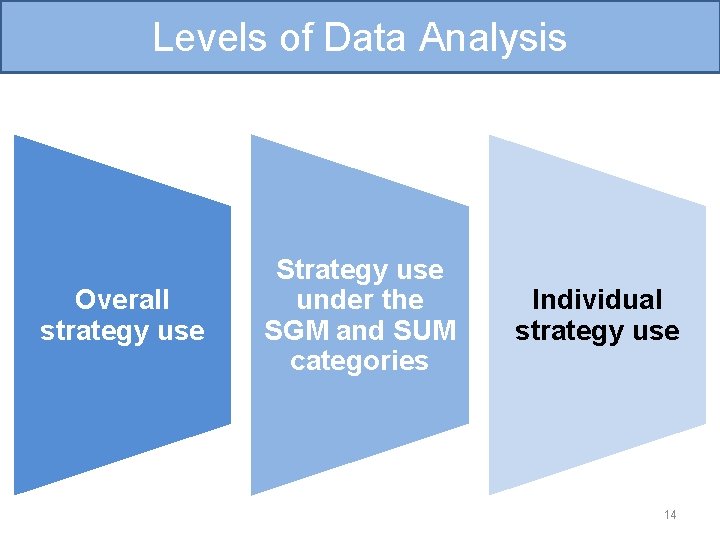
Levels of Data Analysis Overall strategy use Strategy use under the SGM and SUM categories Individual strategy use 14
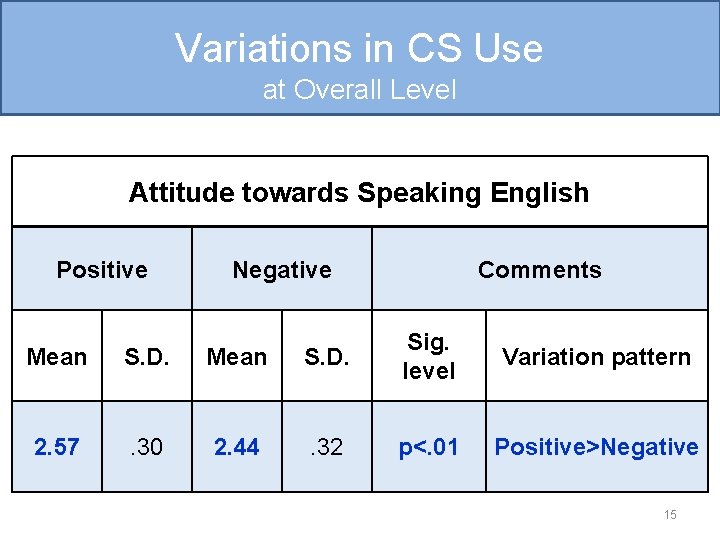
Variations in CS Use at Overall Level Attitude towards Speaking English Positive Negative Comments Mean S. D. Sig. level 2. 57 . 30 2. 44 . 32 p<. 01 Variation pattern Positive>Negative 15
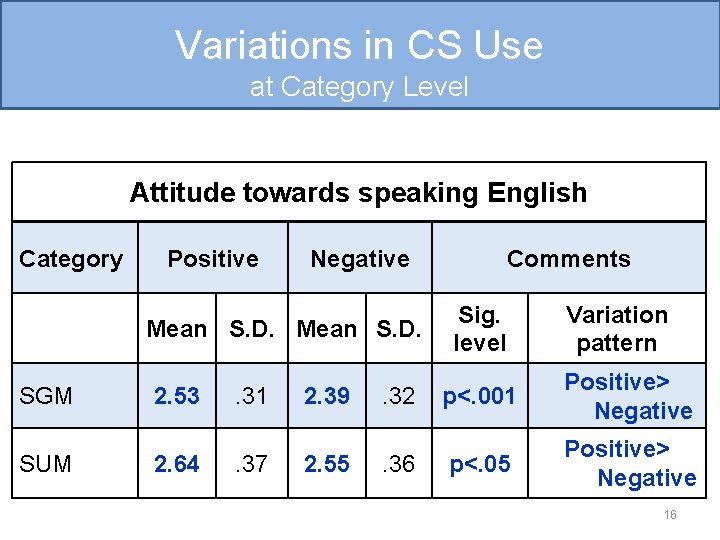
Variations in CS Use at Category Level Attitude towards speaking English Category Positive Negative Mean S. D. Comments Sig. level Variation pattern SGM 2. 53 . 31 2. 39 . 32 p<. 001 Positive> Negative SUM 2. 64 . 37 2. 55 . 36 p<. 05 Positive> Negative 16
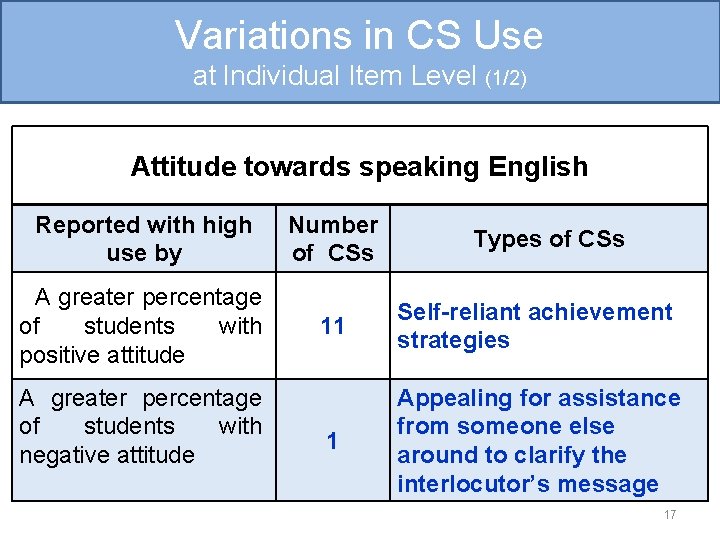
Variations in CS Use at Individual Item Level (1/2) Attitude towards speaking English Reported with high use by A greater percentage of students with positive attitude A greater percentage of students with negative attitude Number of CSs Types of CSs 11 Self-reliant achievement strategies 1 Appealing for assistance from someone else around to clarify the interlocutor’s message 17
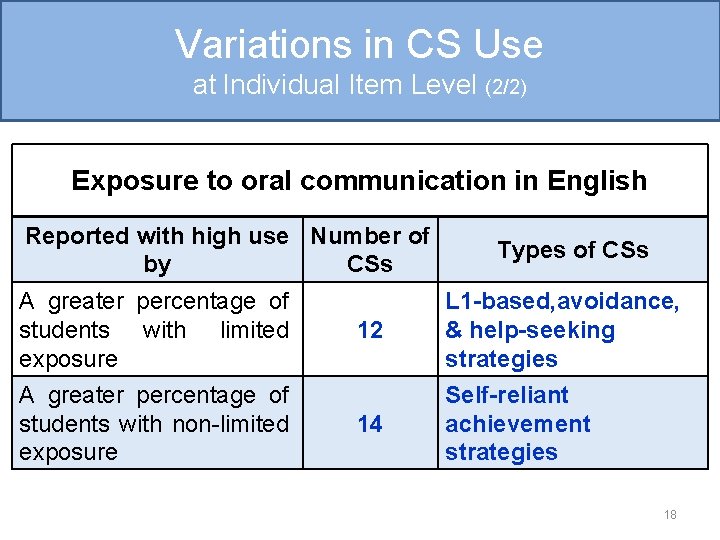
Variations in CS Use at Individual Item Level (2/2) Exposure to oral communication in English Reported with high use Number of by CSs A greater percentage of students with limited exposure A greater percentage of students with non-limited exposure Types of CSs 12 L 1 -based, avoidance, & help-seeking strategies 14 Self-reliant achievement strategies 18
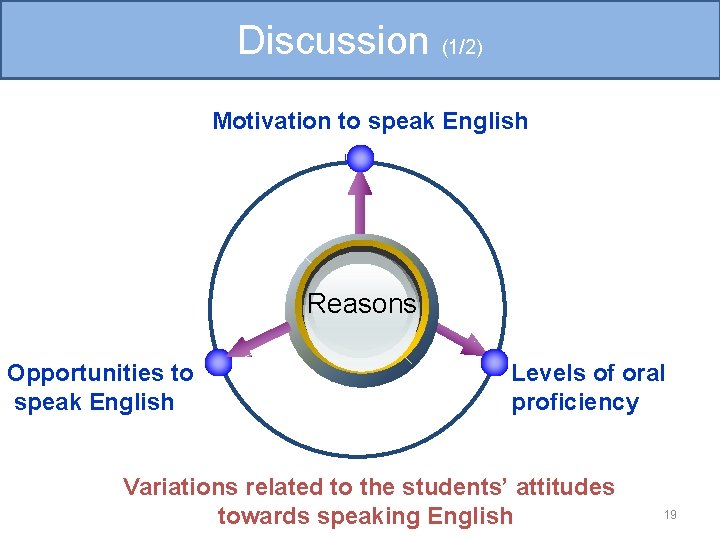
Discussion (1/2) Motivation to speak English Reasons Opportunities to speak English Levels of oral proficiency Variations related to the students’ attitudes towards speaking English 19
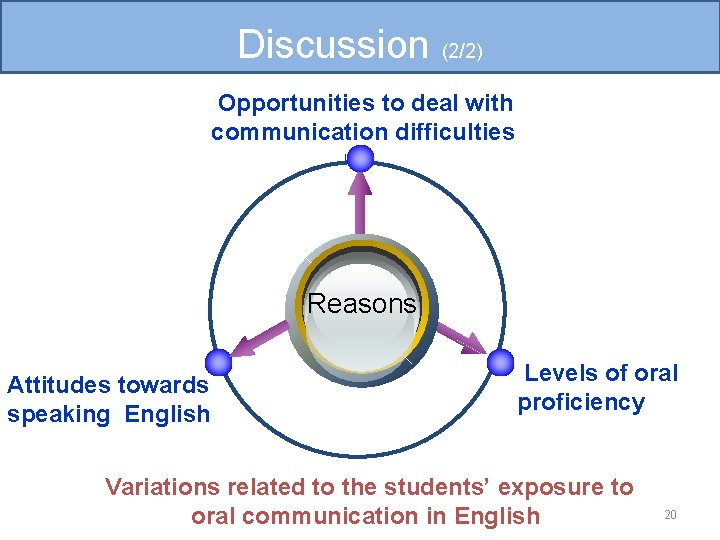
Discussion (2/2) Opportunities to deal with communication difficulties Reasons Attitudes towards speaking English Levels of oral proficiency Variations related to the students’ exposure to oral communication in English 20
Implications, Contributions, and Suggestions for Future Research • Implications • Contributions • Suggestions for Future Research 21
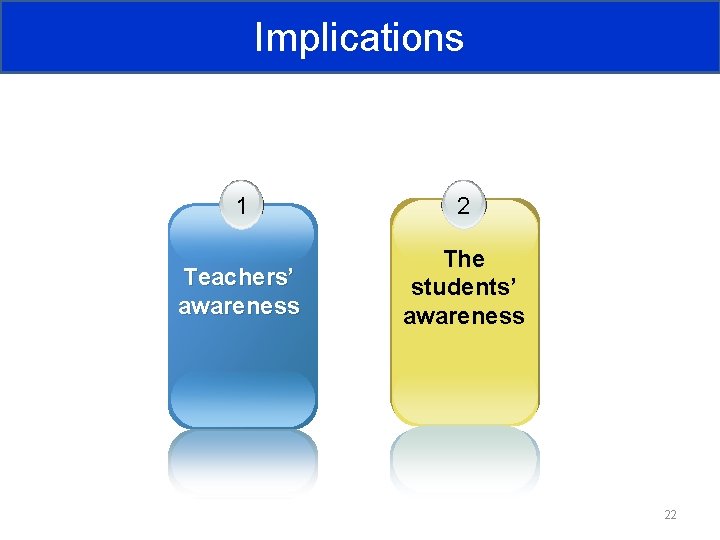
Implications 1 2 Teachers’ awareness The students’ awareness 22
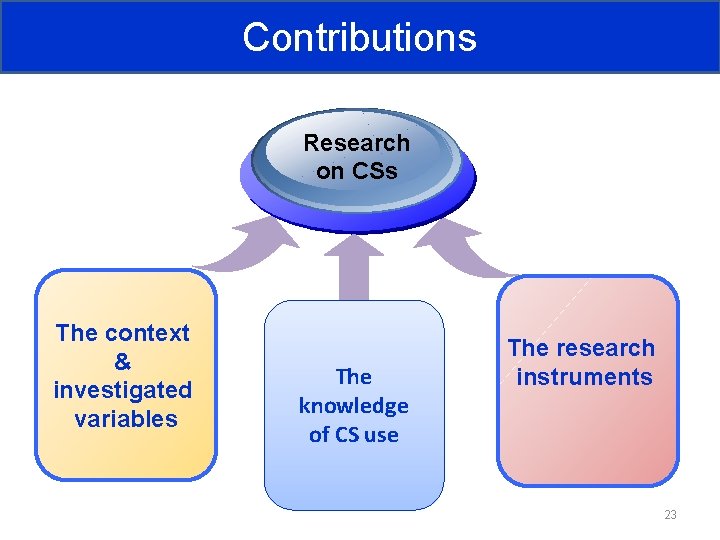
Contributions Research on CSs The context & investigated variables The knowledge of CS use The research instruments 23
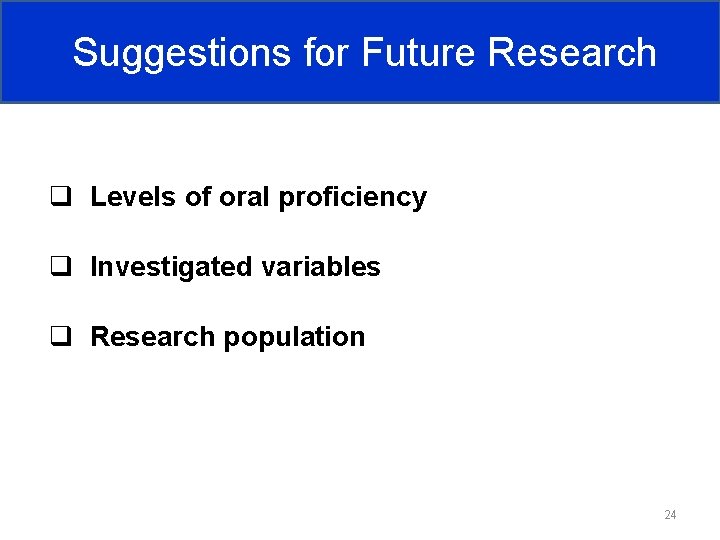
Suggestions for Future Research q Levels of oral proficiency q Investigated variables q Research population 24
www. themegallery. com