
Effects of a comprehensive communitybased lifestyle intervention in
Effects of a comprehensive community-based lifestyle intervention in patients with coronary artery disease: the trial Randomized Evaluation of Secondary Prevention by Outpatient Nurse Sp. Ecialists Ron Peters, MD, Ph. D on behalf of the study group Department of Cardiology Academic Medical Center Amsterdam the Netherlands 1
background (1) • among patients with coronary artery disease (CAD), lifestyle related risk factors (LRFs) are common • main 3 LRFs: – overweight – physical inactivity – smoking • improvement of LRFs reduces cardiovascular morbidity and mortality • however, modification of LRFs is very challenging 2
background (2) • nurse-led care improves – drug-treated cardiovascular risk factors (BP, LDL-C) – quality of life in CAD patients (RESPONSE 1 trial*) • however, the impact on LRFs is minimal • hospital based approaches may be insufficient to change a patient’s daily routines *Jorstad HT et al. Heart 2013; 99: 1421 -1430 3
hypothesis LRFs in CAD patients will be improved by • nurse-coordinated referral to • a comprehensive set of up to three communitybased interventions to achieve – weight loss, – improvement of physical activity, and – smoking cessation, • encouraging partner participation, • on top of usual care. 4
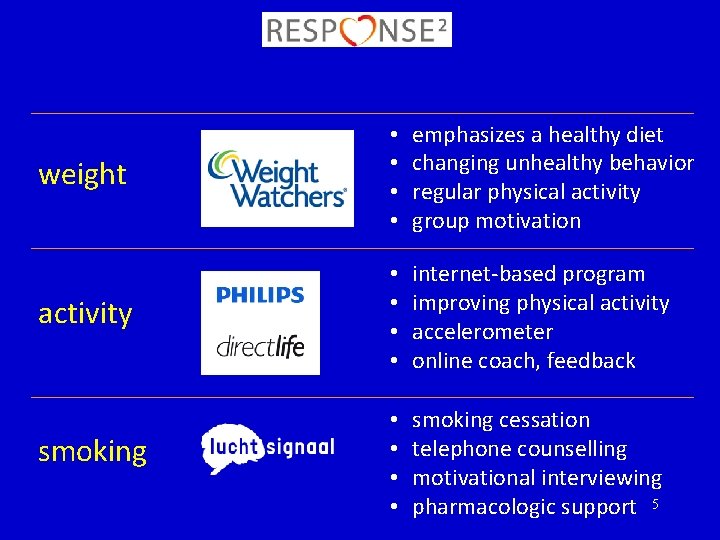
weight • • emphasizes a healthy diet changing unhealthy behavior regular physical activity group motivation activity • • internet-based program improving physical activity accelerometer online coach, feedback smoking • • smoking cessation telephone counselling motivational interviewing pharmacologic support 5
design • inclusion: Ø ACS and/or coronary revascularization < 8 weeks Ø at least one of the following LRF: 1. BMI>27 kg/m 2 2. physical inactivity: <30 min; 5 times / week 3. smoking (on admission) • exclusion: Øplanned revascularization Øinsufficient motivation Øprograms not feasible 6 ØHospital Anxiety and Depression Scale >14
usual care, guideline based • visits to the cardiologist • cardiac rehabilitation • nurse-led secondary prevention program o healthy lifestyles o drug treated risk factors o medication adherence 7
intervention • nurse-coordinated referral to up to 3 communitybased programs o Weight Watchers™ o Philips Direct. Life™ o Luchtsignaal™ • the number and sequence of programs was determined by the patient’s risk profile and preference • partners were offered participation in the programs 8
primary outcome • the proportion of successful patients at 12 months • success defined at patient level as: o improvement of at least one LRF o without deterioration in the other two • objective outcome measurements: o weight (kg) o 6 Minute Walking Distance (meters) o urinary cotinine (>200 microgram/L) 9
enrollment RCT in 15 centers in the Netherlands from April 2013 to July 2015 2031 824 731 711 CAD patients screened informed consent and randomized 12 months follow-up primary analysis 10
Baseline characteristics Intervention (n=360) Control (n=351) 58. 2 ± 9. 0 59. 2 ± 9. 4 21 21 caucasian 94 92 married, cohabitating 83 81 BMI, mean (SD), kg/m 2 29. 8 ± 4. 3 29. 3 ± 4. 3 75 72 physically inactive 63 62 smoking on admission * 28 25 antiplatelet agents 99 97 lipid lowering drugs 97 97 β-Blockers (%) 83 87 ACE inhibitor/ARB (%) 76 72 age (yrs) female overweight (BMI>27) (%) 11
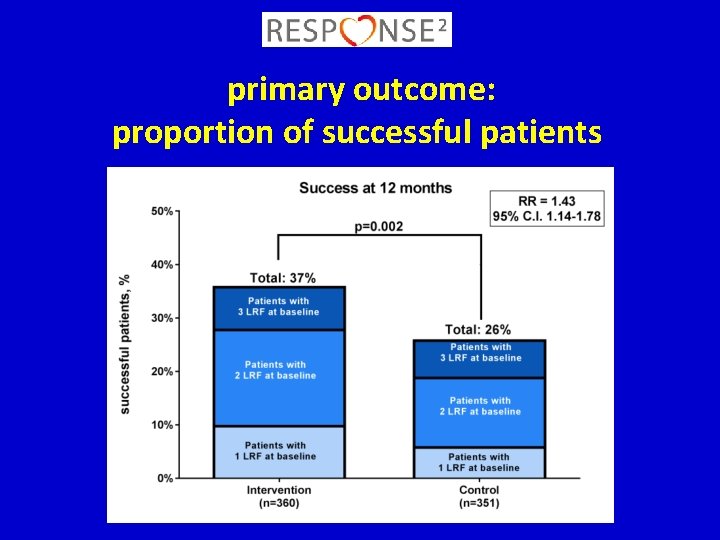
primary outcome: proportion of successful patients
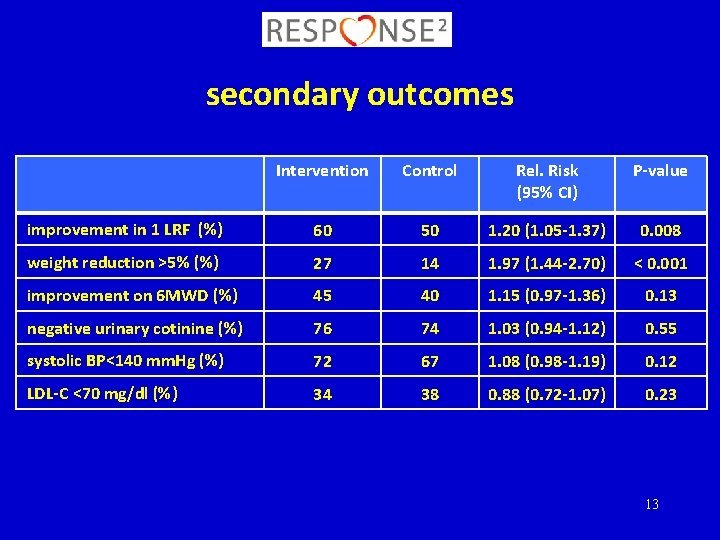
secondary outcomes Intervention Control Rel. Risk (95% CI) P-value improvement in 1 LRF (%) 60 50 1. 20 (1. 05 -1. 37) 0. 008 weight reduction >5% (%) 27 14 1. 97 (1. 44 -2. 70) < 0. 001 improvement on 6 MWD (%) 45 40 1. 15 (0. 97 -1. 36) 0. 13 negative urinary cotinine (%) 76 74 1. 03 (0. 94 -1. 12) 0. 55 systolic BP<140 mm. Hg (%) 72 67 1. 08 (0. 98 -1. 19) 0. 12 LDL-C <70 mg/dl (%) 34 38 0. 88 (0. 72 -1. 07) 0. 23 13
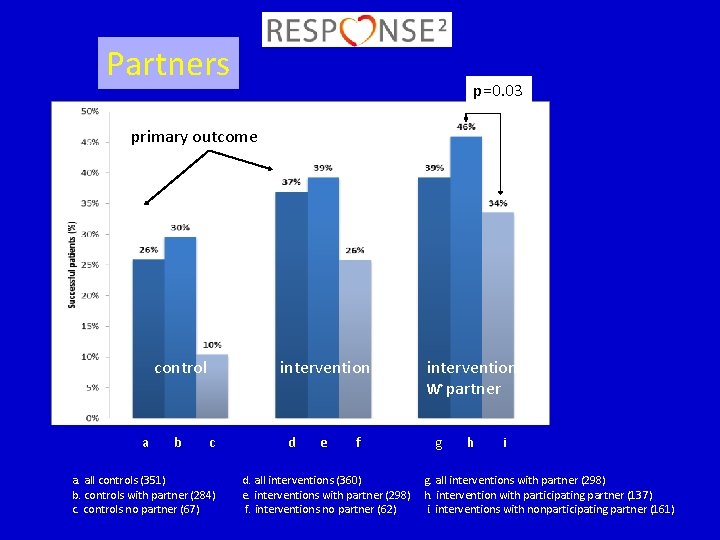
Partners p=0. 03 primary outcome control a b intervention c a. all controls (351) b. controls with partner (284) c. controls no partner (67) d e f d. all interventions (360) e. interventions with partner (298) f. interventions no partner (62) intervention ⱳ partner g h i g. all interventions with partner (298) h. intervention with participating partner (137) i. interventions with nonparticipating partner (161)
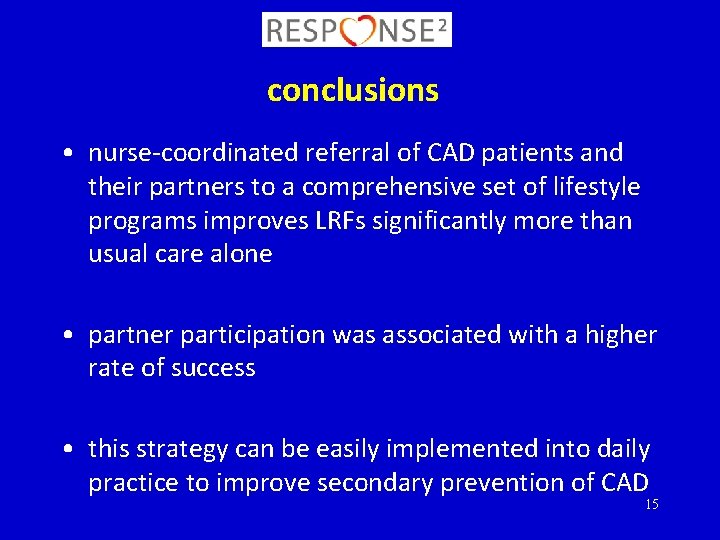
conclusions • nurse-coordinated referral of CAD patients and their partners to a comprehensive set of lifestyle programs improves LRFs significantly more than usual care alone • partner participation was associated with a higher rate of success • this strategy can be easily implemented into daily practice to improve secondary prevention of CAD 15
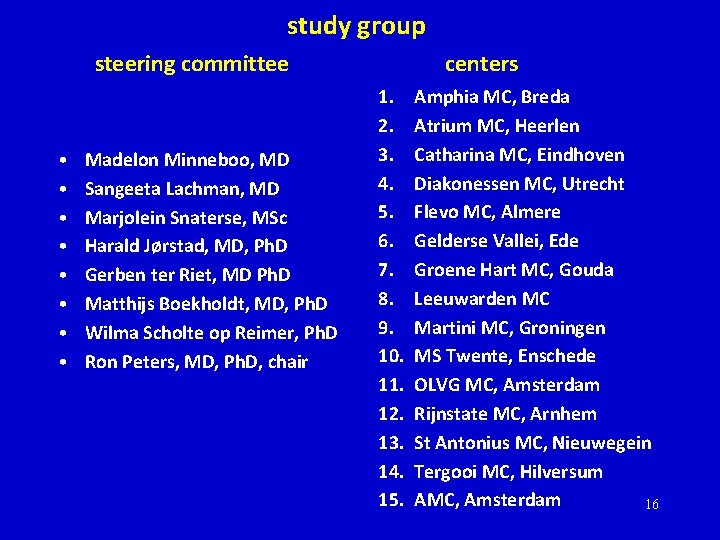
study group steering committee • • Madelon Minneboo, MD Sangeeta Lachman, MD Marjolein Snaterse, MSc Harald Jørstad, MD, Ph. D Gerben ter Riet, MD Ph. D Matthijs Boekholdt, MD, Ph. D Wilma Scholte op Reimer, Ph. D Ron Peters, MD, Ph. D, chair centers 1. 2. 3. 4. 5. 6. 7. 8. 9. 10. 11. 12. 13. 14. 15. Amphia MC, Breda Atrium MC, Heerlen Catharina MC, Eindhoven Diakonessen MC, Utrecht Flevo MC, Almere Gelderse Vallei, Ede Groene Hart MC, Gouda Leeuwarden MC Martini MC, Groningen MS Twente, Enschede OLVG MC, Amsterdam Rijnstate MC, Arnhem St Antonius MC, Nieuwegein Tergooi MC, Hilversum AMC, Amsterdam 16
Back-ups 17
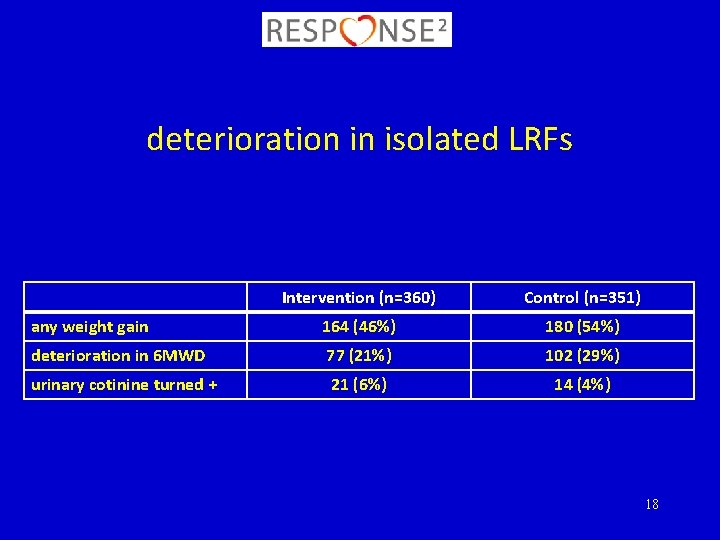
deterioration in isolated LRFs Intervention (n=360) Control (n=351) any weight gain 164 (46%) 180 (54%) deterioration in 6 MWD 77 (21%) 102 (29%) urinary cotinine turned + 21 (6%) 14 (4%) 18
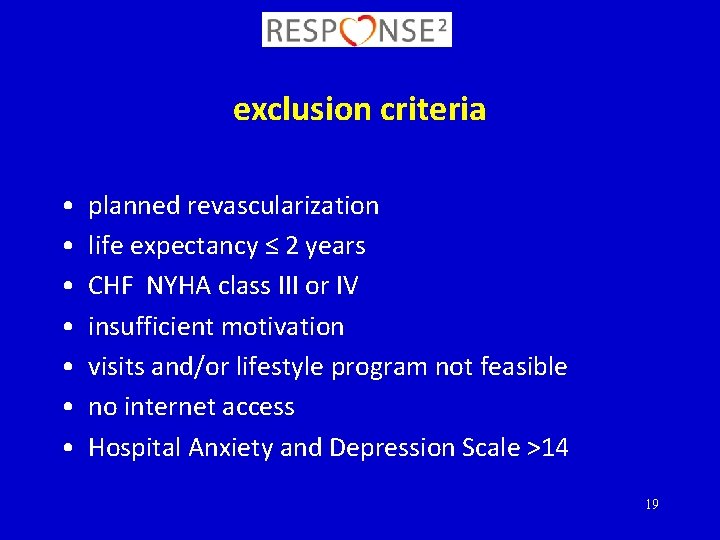
exclusion criteria • • planned revascularization life expectancy ≤ 2 years CHF NYHA class III or IV insufficient motivation visits and/or lifestyle program not feasible no internet access Hospital Anxiety and Depression Scale >14 19
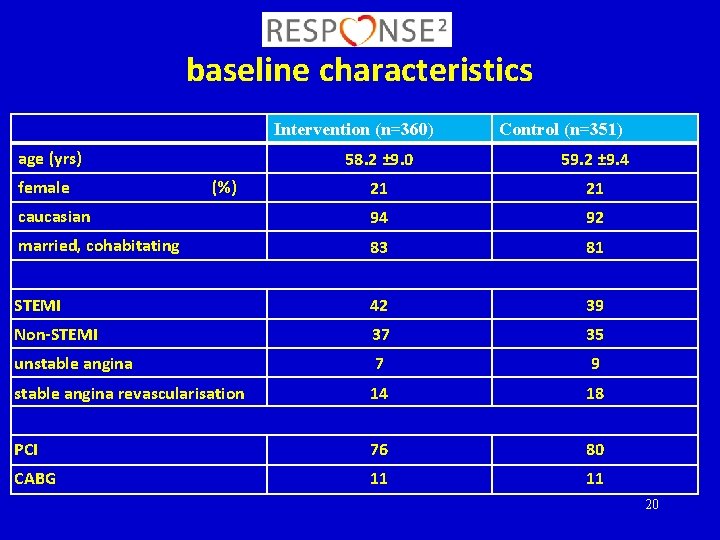
baseline characteristics Intervention (n=360) age (yrs) Control (n=351) 58. 2 ± 9. 0 59. 2 ± 9. 4 21 21 caucasian 94 92 married, cohabitating 83 81 STEMI 42 39 Non-STEMI 37 35 unstable angina 7 9 stable angina revascularisation 14 18 PCI 76 80 CABG 11 11 female (%) 20

No disclosures 21
- Slides: 21