
Effective Use of Rewards Sanctions Douglas B Marlowe
Effective Use of Rewards & Sanctions Douglas B. Marlowe, J. D. , Ph. D. Treatment Research Institute at the University of Pennsylvania
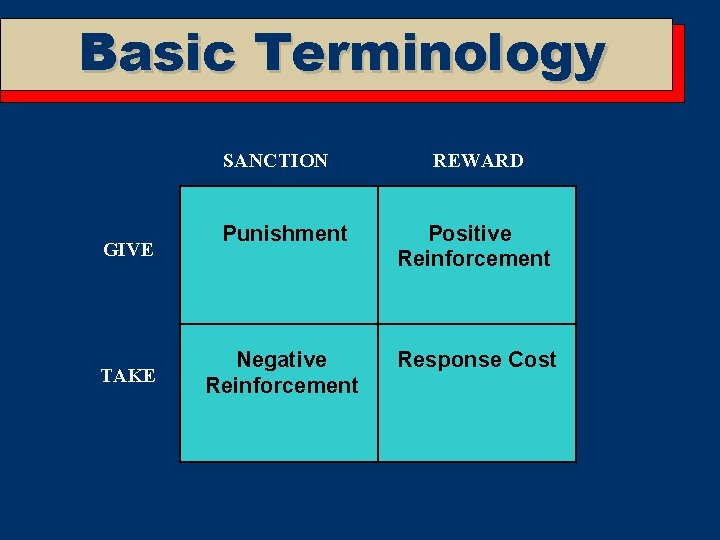
Basic Terminology SANCTION GIVE TAKE REWARD Punishment Positive Reinforcement Negative Reinforcement Response Cost
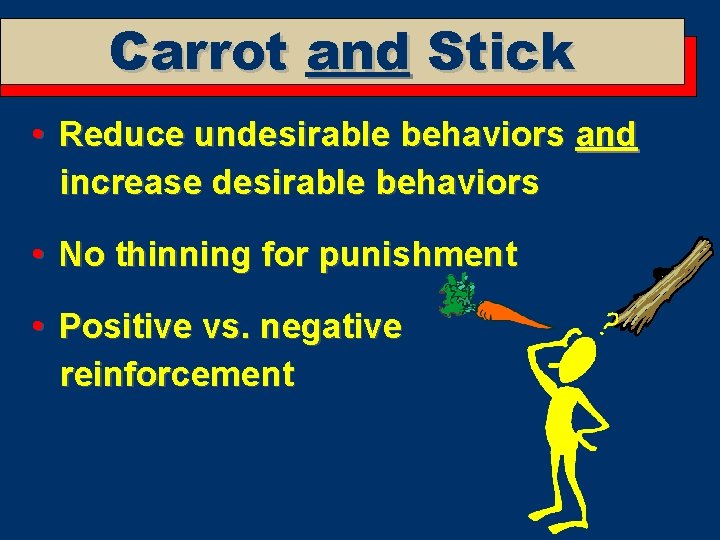
Carrot and Stick • Reduce undesirable behaviors and increase desirable behaviors • No thinning for punishment • Positive vs. negative reinforcement
Certainty • Reliable detection is key • Random drug testing twice per week, including weekends and holidays • Sufficient detection windows & panels • Community supervision • Last supervisory burdens to be lifted • Second chances
Celerity • Timing is second most influential • Interference from new behaviors • Status hearings every 2 weeks until the case has stabilized • Noncompliance hearings where indicated
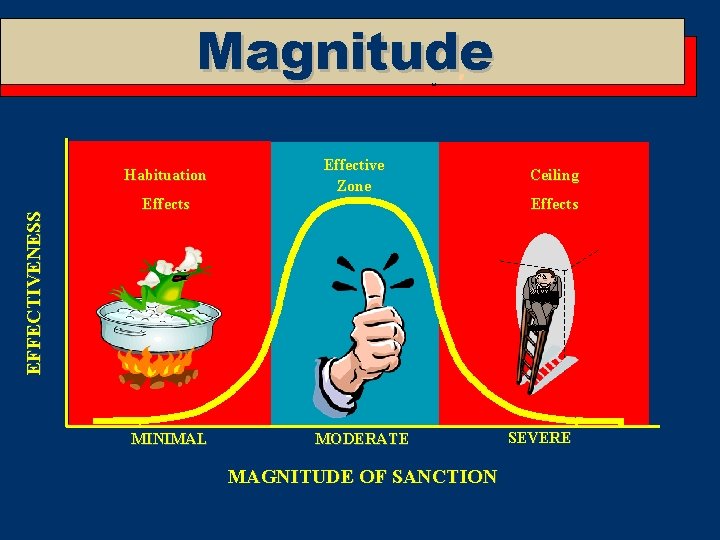
Magnitude E F F E CT IVE NE SS Habituation Effects MINIMAL Effective Zone MODERATE MAGNITUDE OF SANCTION Ceiling Effects SE VE RE
Procedural Fairness • Clearly communicated policies and procedures • Presumptive consequences with flexible application • Opportunity to be heard • Respect and dignity
Target Behaviors • Don’t expect too much – Learned helplessness and ratio burden • Don’t expect too little – Habituation • Proximal vs. distal goals • Phase specificity
Treat or Punish? Substance Dependence or Addiction
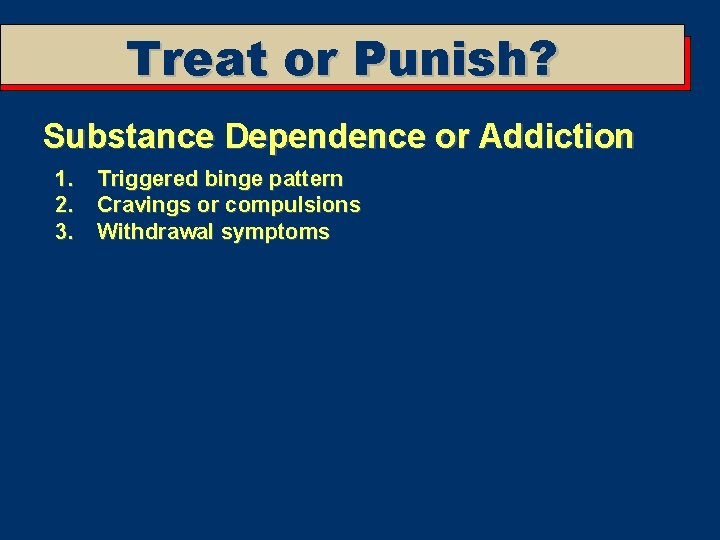
Treat or Punish? Substance Dependence or Addiction 1. Triggered binge pattern 2. Cravings or compulsions 3. Withdrawal symptoms
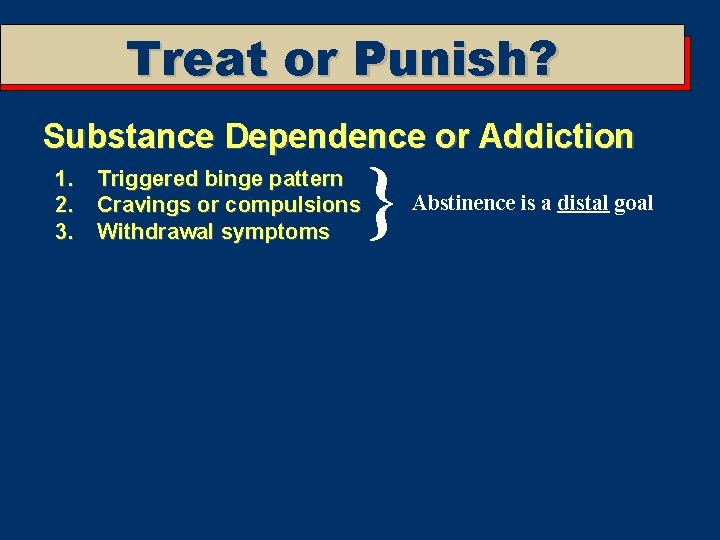
Treat or Punish? Substance Dependence or Addiction 1. Triggered binge pattern 2. Cravings or compulsions 3. Withdrawal symptoms } Abstinence is a distal goal
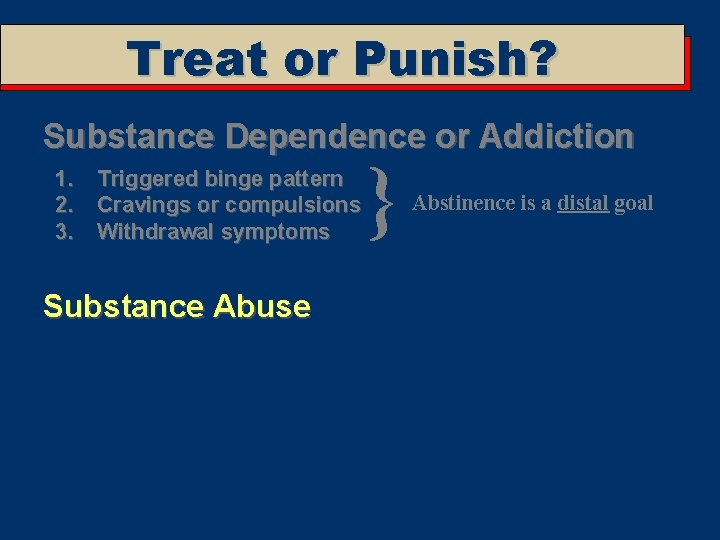
Treat or Punish? Substance Dependence or Addiction 1. Triggered binge pattern 2. Cravings or compulsions 3. Withdrawal symptoms Substance Abuse } Abstinence is a distal goal
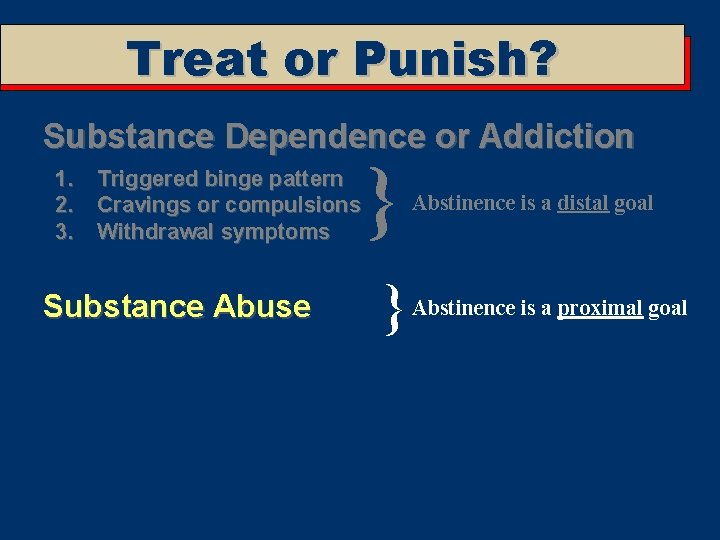
Treat or Punish? Substance Dependence or Addiction 1. Triggered binge pattern 2. Cravings or compulsions 3. Withdrawal symptoms Substance Abuse } } Abstinence is a distal goal Abstinence is a proximal goal
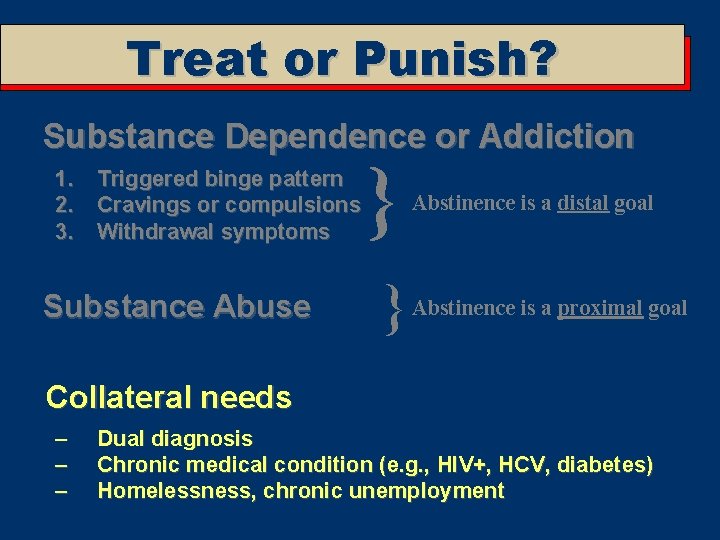
Treat or Punish? Substance Dependence or Addiction 1. Triggered binge pattern 2. Cravings or compulsions 3. Withdrawal symptoms Substance Abuse } } Abstinence is a distal goal Abstinence is a proximal goal Collateral needs – – – Dual diagnosis Chronic medical condition (e. g. , HIV+, HCV, diabetes) Homelessness, chronic unemployment
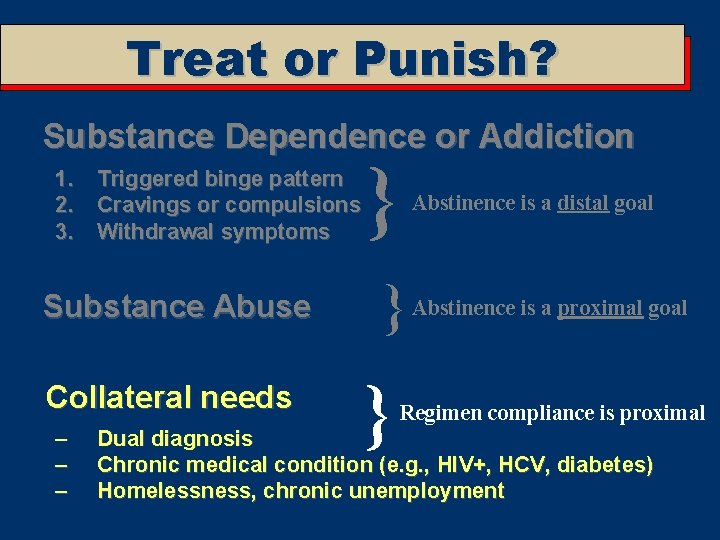
Treat or Punish? Substance Dependence or Addiction 1. Triggered binge pattern 2. Cravings or compulsions 3. Withdrawal symptoms Substance Abuse Collateral needs – – – } } } Abstinence is a distal goal Abstinence is a proximal goal Regimen compliance is proximal Dual diagnosis Chronic medical condition (e. g. , HIV+, HCV, diabetes) Homelessness, chronic unemployment
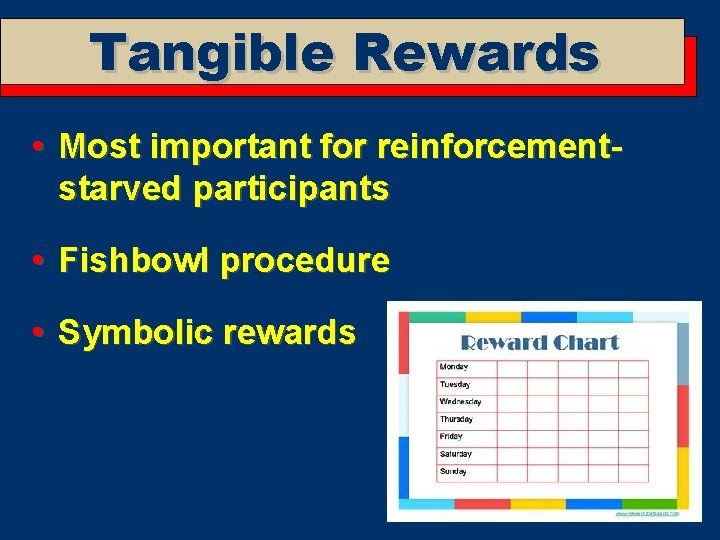
Tangible Rewards • Most important for reinforcementstarved participants • Fishbowl procedure • Symbolic rewards
Readings Burdon WM et al (2001). Drug courts and contingency management. Journal of Drug Issues, 31, 73 -90. Harrell A & Roman J (2001). Reducing drug use and crime among offenders: The impact of graduated sanctions. Journal of Drug Issues, 31, 207 -232. Marlowe DB (2007). Strategies for administering rewards and sanctions. In JE Lessenger & GF Roper (Eds. ), Drug courts: A new approach to treatment and rehabilitation (pp. 317 -336). New York: Springer. Marlowe DB (2008). Application of sanctions. In Drug Court Quality Improvement Monograph. Alexandria, VA: NDCI. Marlowe DB & Wong CJ (2008). Contingency management in adult criminal drug courts (pp. 334 -354). In ST Higgins, K Silverman & SH Heil (Eds. ), Contingency management in substance abuse treatment. New York: Guilford. Marlowe DB (2011). Applying incentives and sanctions. In The drug court judicial benchbook (pp. 139 -157). Alexandria, VA: NDCI.
- Slides: 17