
Effective Public Procurement for public service delivery Good
Effective Public Procurement for public service delivery: Good Practices from the OECD Experience Paulo Magina Head of the Public Procurement Unit, OECD RICG Meeting Montego Bay, 2 Nov. 2016
Contents • Who are we? • Public Procurement matters…. • Strategic Public Procurement • Delivering Infrastructures 2

WHO WE ARE
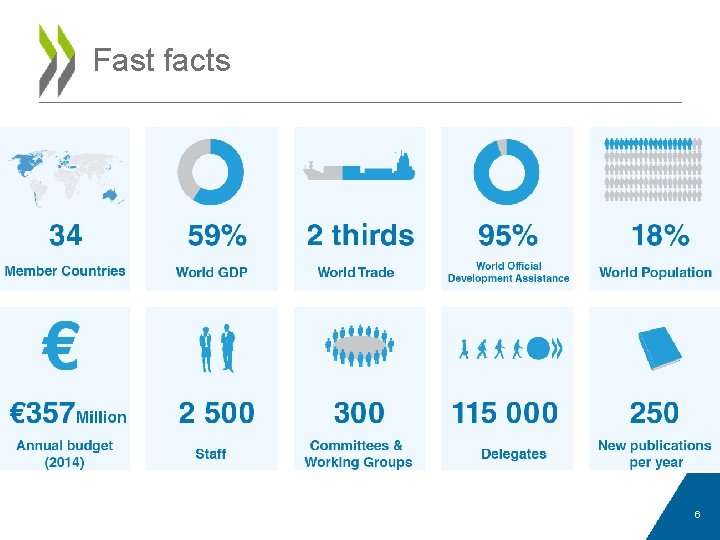
The OECD… • …is the global organisation that drives better policies for better lives: • The OECD provides a forum where countries compare and exchange policy experiences, identify good practices, discuss emerging challenges and adopt recommendations for better policies. • The OECD’s mission is to promote policies that improve economic and social well-being of people around the world. www. oecd. org 4
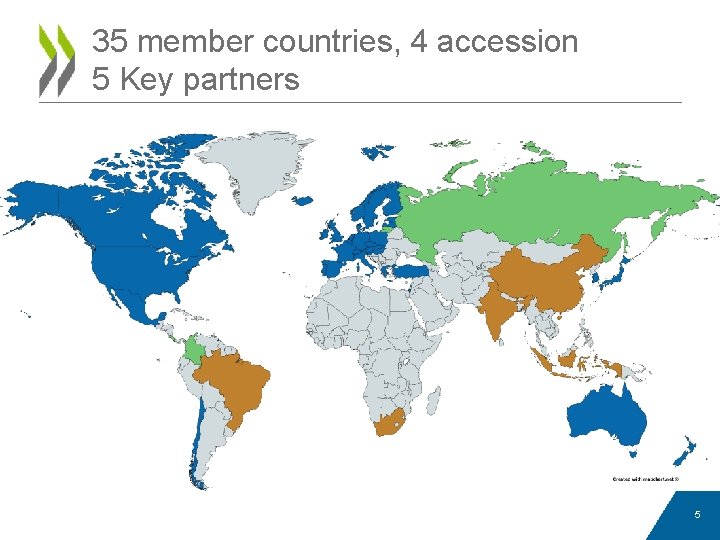
35 member countries, 4 accession 5 Key partners 5
Fast facts 6
Part of a global community 7

PUBLIC PROCUREMENT MATTERS …
Public Procurement matters • It stands as a crucial pillar of strategic governance for any government body; • It is also a high-risk area due to the close interaction between private and public spheres • Governments face the challenge of ensuring that different objectives are clear, work together and overlaps or conflicts are avoided. 9
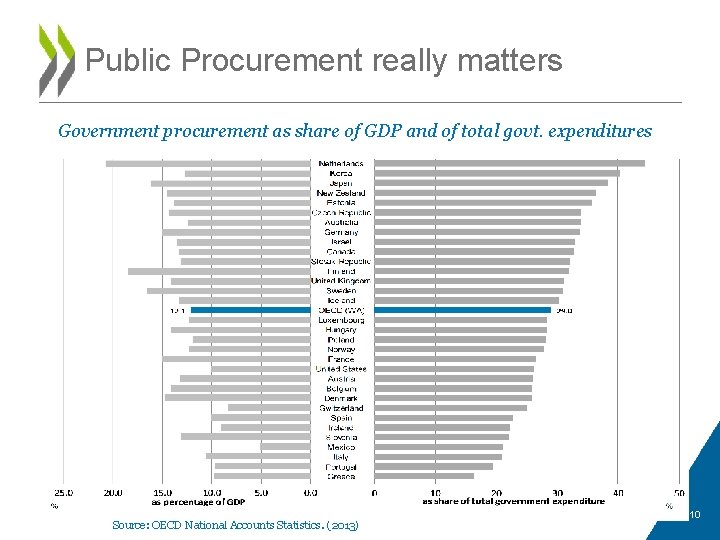
Public Procurement really matters Government procurement as share of GDP and of total govt. expenditures Source: OECD National Accounts Statistics. (2013) 10
OECD contribution to reforming public procurement • Building evidence from useful, reliable and comparable data across OECD countries on the performance of public procurement – Government at a Glance; Key Performance Indicators • Undertaking hands-on peer reviews that provide assessment of public procurement systems, either national or sectorial, and tailored proposals to address implementation gaps in specific context – in Italy, Greece, Northern Ireland but also US, Korea, Mexico, Colombia, Chile, Peru, other EU countries like Slovakia or Bulgaria • Organising policy dialogue to share insights & shape directions for future reforms, build strategic partnership with private sector - G 20 • Identifying good practices and providing international standards on public procurement – Compendiums on Green Procurement, Transparency, Accountability and Integrity, now Innovation, SME’s following 11

The 2015 Recommendation on Public Procurement: 12 integrated principles Transparency Accountability Access EProcurement Participation Evaluation Efficiency Integration Integrity Capacity Balance Risk Management 12
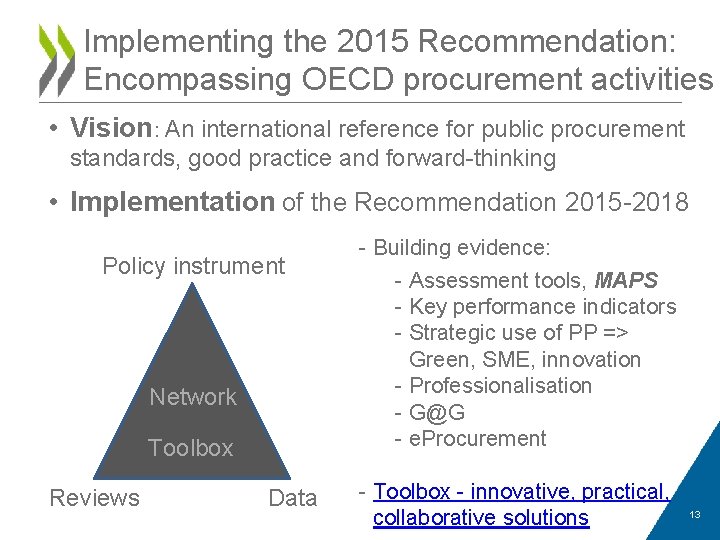
Implementing the 2015 Recommendation: Encompassing OECD procurement activities • Vision: An international reference for public procurement standards, good practice and forward-thinking • Implementation of the Recommendation 2015 -2018 Policy instrument Network Toolbox Reviews Data - Building evidence: - Assessment tools, MAPS - Key performance indicators - Strategic use of PP => Green, SME, innovation - Professionalisation - G@G - e. Procurement - Toolbox - innovative, practical, collaborative solutions 13
STRATEGIC PUBLIC PROCUREMENT
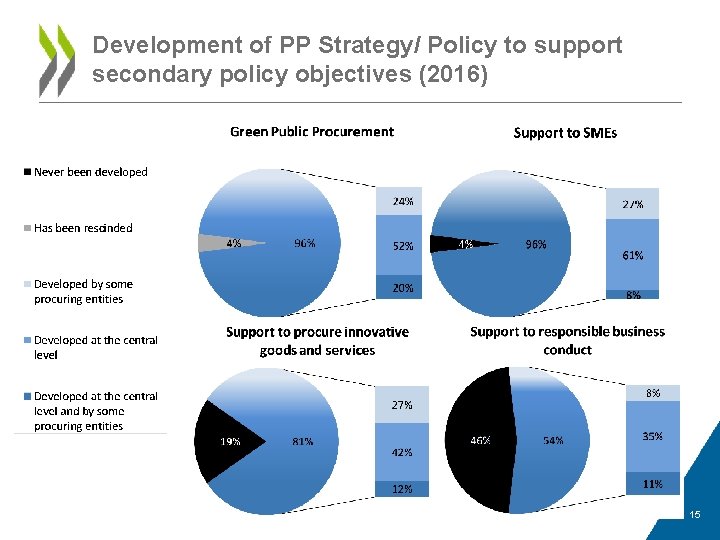
Development of PP Strategy/ Policy to support secondary policy objectives (2016) 15
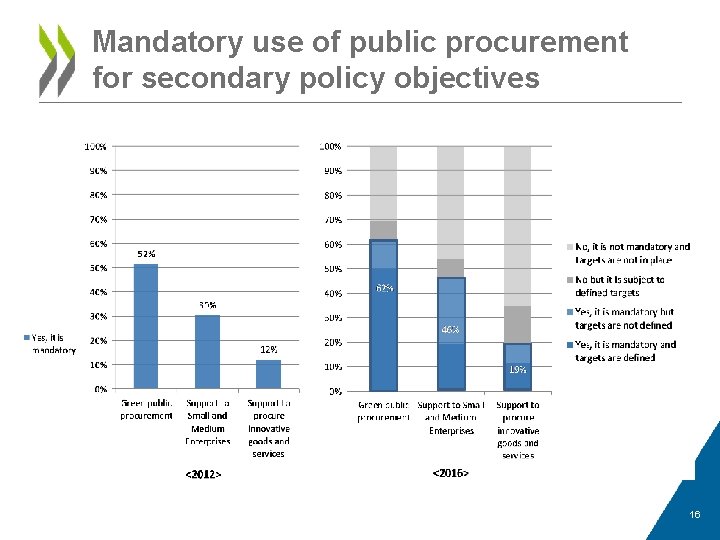
Mandatory use of public procurement for secondary policy objectives 16
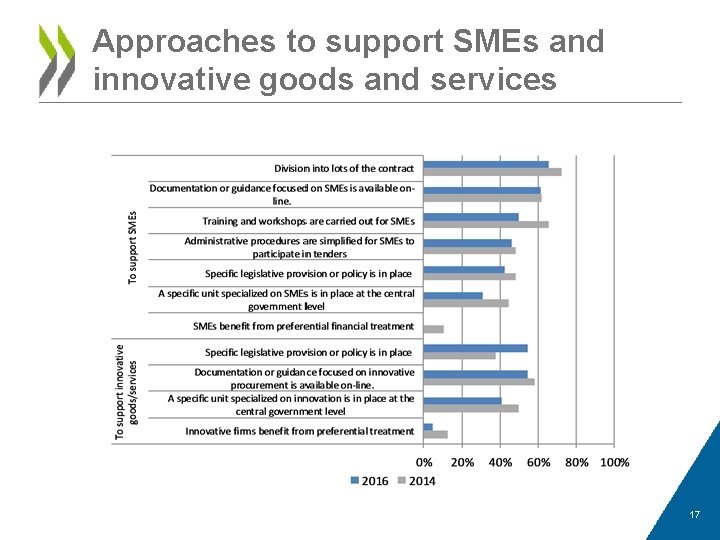
Approaches to support SMEs and innovative goods and services 17
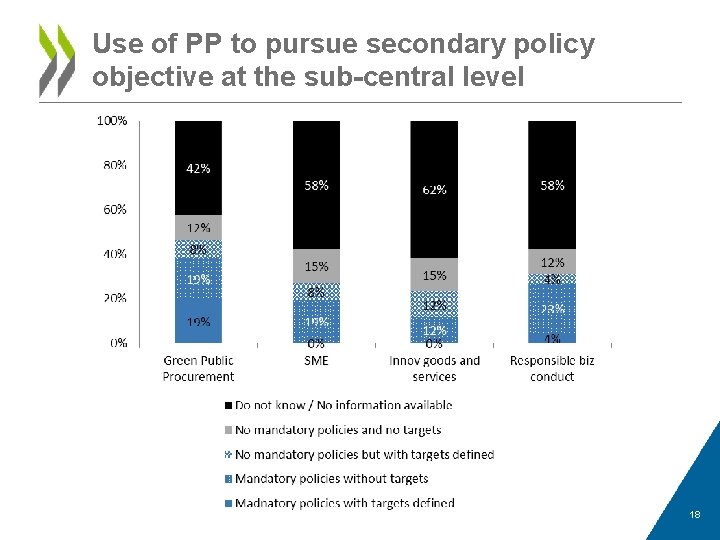
Use of PP to pursue secondary policy objective at the sub-central level 18
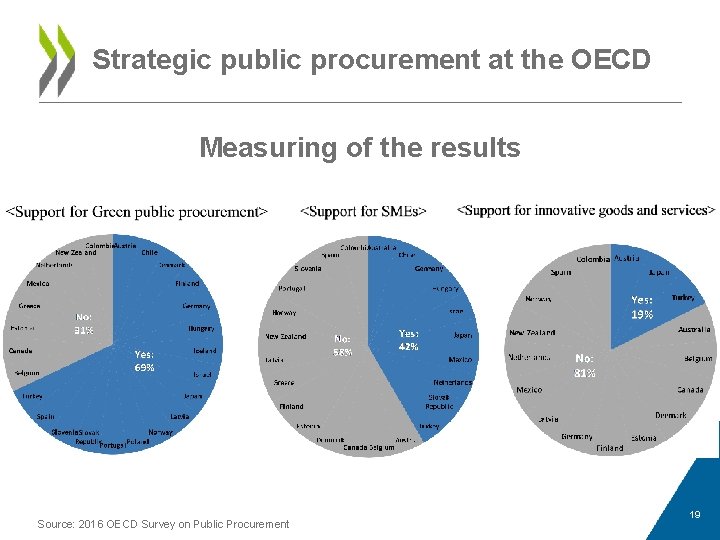
Strategic public procurement at the OECD Measuring of the results Source: 2016 OECD Survey on Public Procurement 19

DELIVERING INFRASTRUCTURES
Infrastructure matters • Infrastructure investments are expected to provide tangible impacts on growth, quality of life and productivity. • Total global infrastructure investment requirements by 2030 will come to USD 71 tn (3. 5% of the annual World GDP from 2007 to 2030). • A large share of infrastructure investment are and will be borne by governments 21
Yet, projects are increasingly complex • Interconnected layers in governance structure • Strategic choices on infrastructure projects ownership and delivery modes • Project developments require responsive policy making 22
If not strategically managed, projects may falter The “four Cs” in infrastructure projects: Inadequate Cost recovery Corruption Insufficient Competition Low Credibility of institutions. 23
Towards effective delivery of infrastructure projects Among other tools developed by the OECD, two major instruments can contribute to address the “four Cs”: Ø The Recommendation of the Council on Public Procurement Ø The Integrity Framework for Public Investment 24
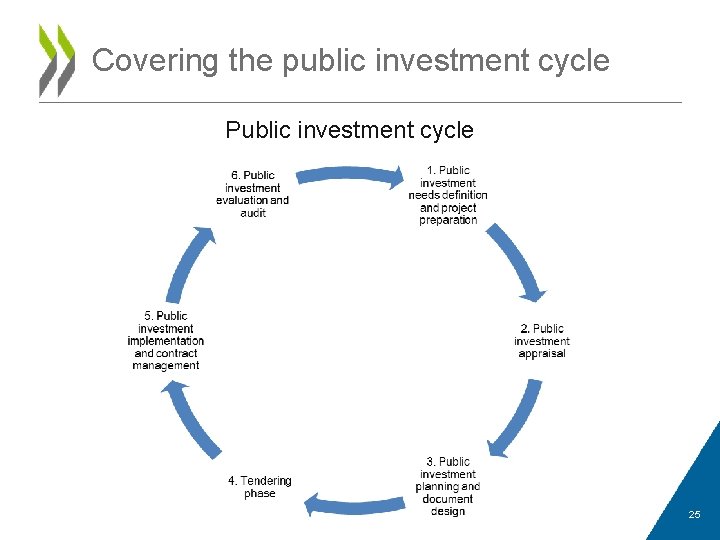
Covering the public investment cycle Public investment cycle 25
OECD Integrity Framework for Public Investment: addressing the entire cycle • The Framework proposes measures safeguarding integrity at each phase of the investment cycle: – Selection phase: making investment decisions in the public interest – Appraisal phase: ensuring credible and objective estimations of all costs and benefits related to the project – Planning phase: ensuring tender documents and processes do not unduly favour some stakeholders – Tendering phase: ensuring processes that promote qualification, accountability and value for money – Implementation phase: minimizing delays for completion, excess costs, and ensuring quality – Evaluation phase: auditing the government project upon completion by an independent institution 26
Countries’ experience in the governance of infrastructures • In 2016, the OECD issued a survey on the governance of infrastructures: – Questionnaire responded by 26 OECD members and key partners – “Good practices” can be found in a majority of countries – No country is a “best practice” 27
Main findings • Coordination across levels of governments is common in countries with long term strategic plans. However, intergovernmental coordination mechanisms for infrastructure are not frequent. • The most relevant criteria for determining the delivery modality are financial criteria, such as public sector financial resources, availability of public sector capacity, cost recovery possible from users, as well as the outcome of a quantitative analysis. 28
Main findings • Governance throughout the infrastructure lifecycle needs to be improved. Most institutions are responsible for the development of infrastructure policy and the improvement of infrastructure performance. Responsibilities for the assessment and monitoring of the projects are less defined. • Systematic data collection on the infrastructure asset’s performance is infrequent. 29
KEY FACTORS FOR EFFECTIVE DELIVERY OF INFRASTRUCTURES 30
Creating the right environment • An infrastructure environment conducive to effective delivery of projects starts with a skilled and mature organisation, notably for the procurement workforce. • Organisational capacity is a prerequisite for public procurement. 31
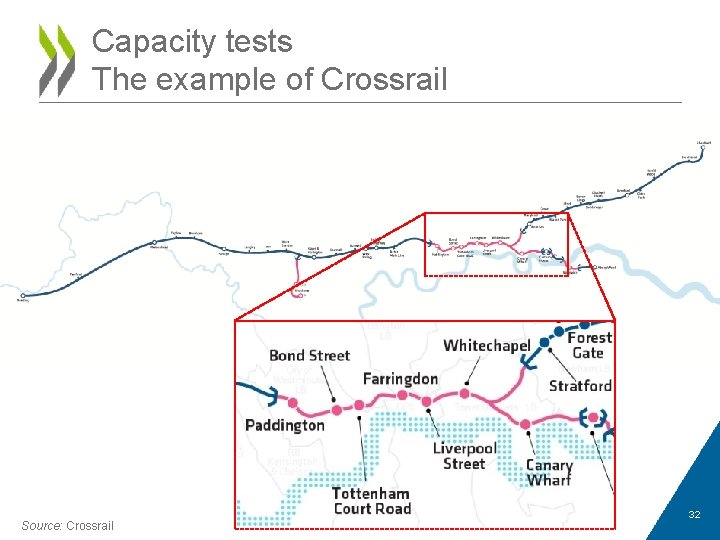
Capacity tests The example of Crossrail Source: Crossrail 32
Engaging Stakeholders - Consultations • Mandatory consultation processes are used at all stage of the infrastructure governance process • In the survey, for more than half of the countries, consultation is also mandatory in the evaluation of infrastructural needs and for the decision process of prioritising infrastructure projects. • During the construction phase, mandatory consultation is less common. 33
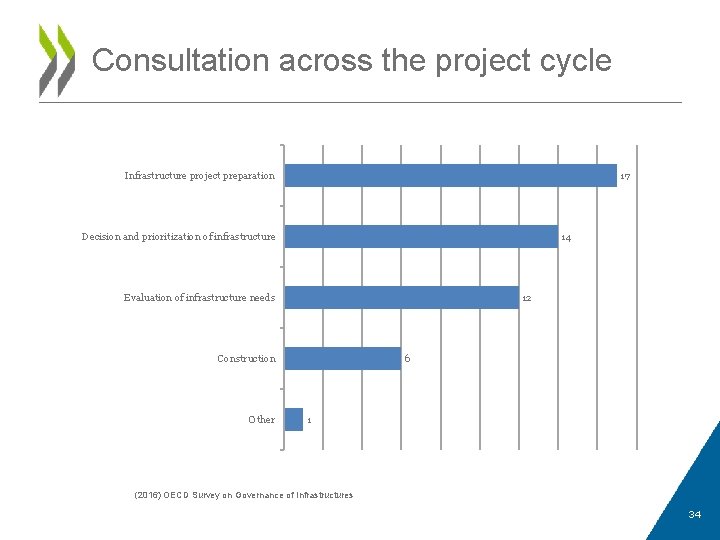
Consultation across the project cycle Infrastructure project preparation 17 Decision and prioritization of infrastructure 14 Evaluation of infrastructure needs 12 Construction Other 6 1 (2016) OECD Survey on Governance of Infrastructures 34
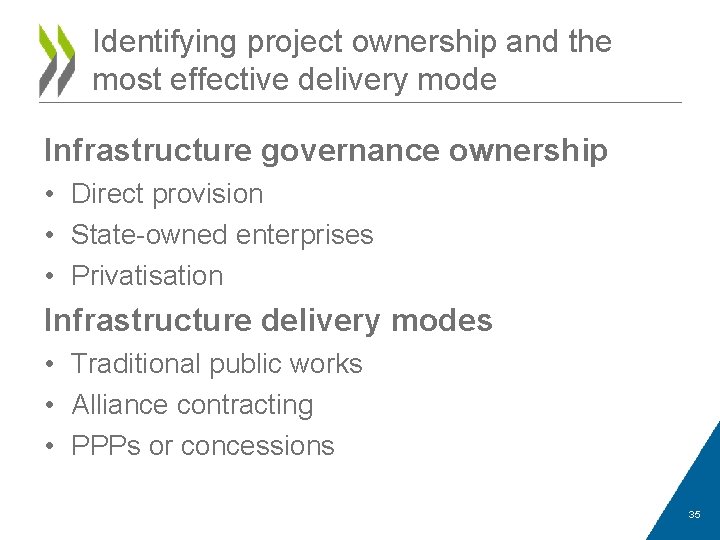
Identifying project ownership and the most effective delivery mode Infrastructure governance ownership • Direct provision • State-owned enterprises • Privatisation Infrastructure delivery modes • Traditional public works • Alliance contracting • PPPs or concessions 35
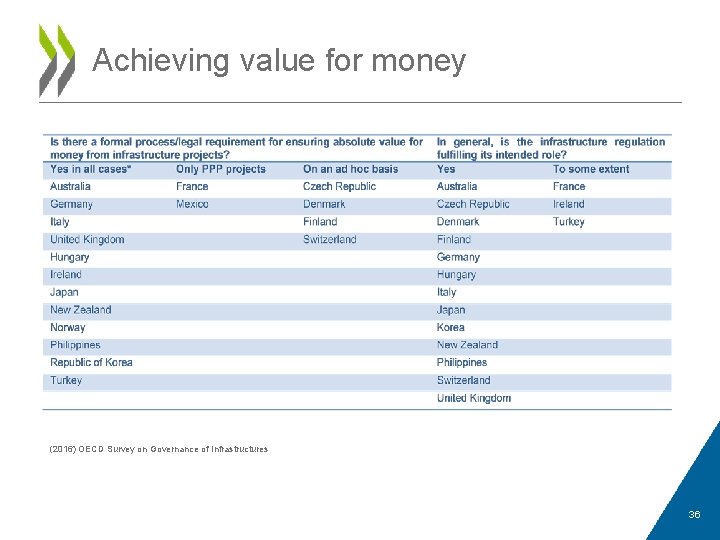
Achieving value for money (2016) OECD Survey on Governance of Infrastructures 36
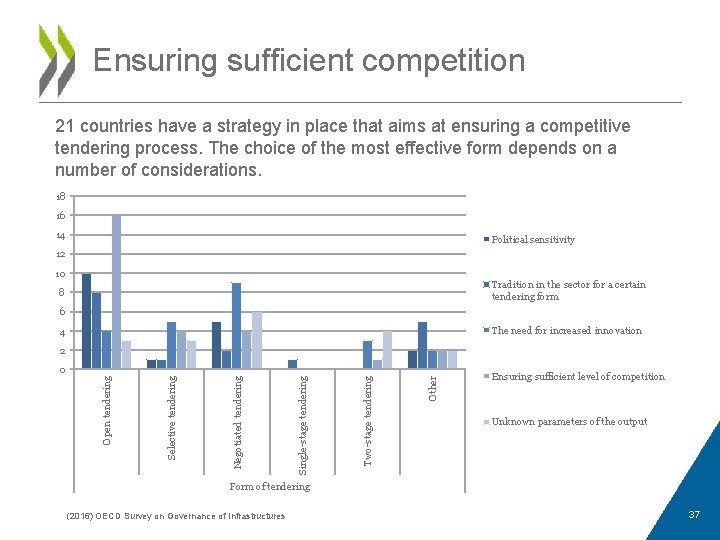
Ensuring sufficient competition 21 countries have a strategy in place that aims at ensuring a competitive tendering process. The choice of the most effective form depends on a number of considerations. 18 16 14 Political sensitivity 12 10 Tradition in the sector for a certain tendering form 8 6 The need for increased innovation 4 2 Other Two-stage tendering Single-stage tendering Negotiated tendering Selective tendering Open tendering 0 Ensuring sufficient level of competition Unknown parameters of the output Form of tendering (2016) OECD Survey on Governance of Infrastructures 37
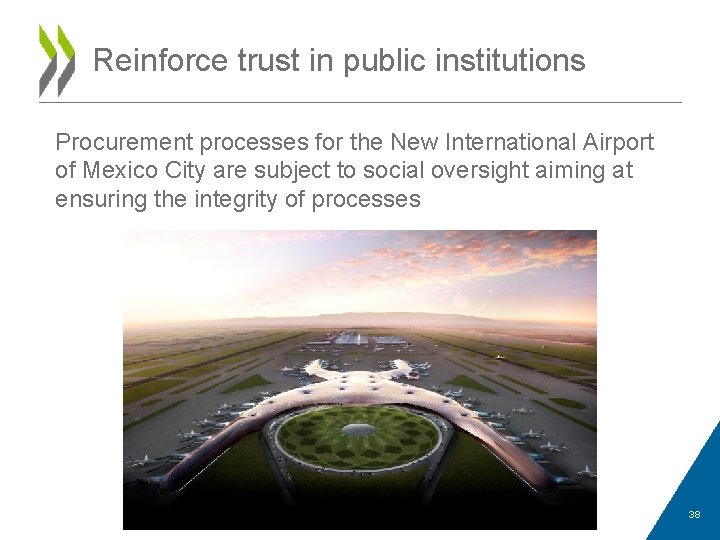
Reinforce trust in public institutions Procurement processes for the New International Airport of Mexico City are subject to social oversight aiming at ensuring the integrity of processes 38
Oversight: from compliance to advice • The OECD and ANAC developed Highlevel Principles for Integrity, Transparency and Effective Control of Major Events and Related Large Infrastructure • These Principles promote the implementation of a « collaborative supervision and control » model 39
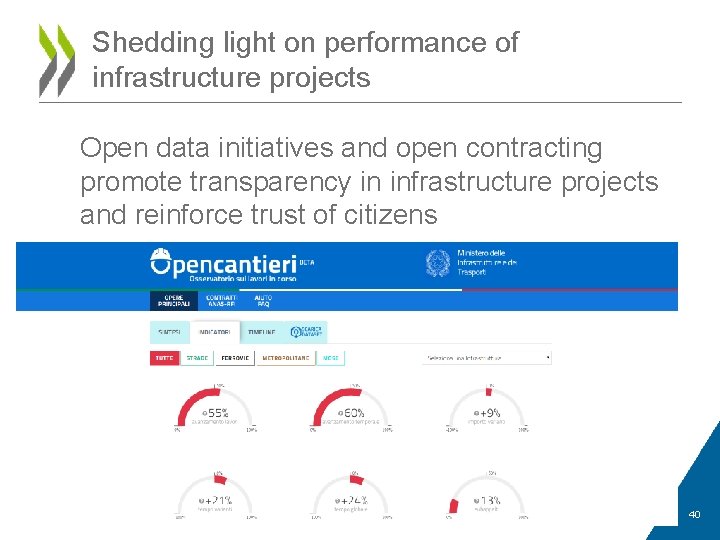
Shedding light on performance of infrastructure projects Open data initiatives and open contracting promote transparency in infrastructure projects and reinforce trust of citizens 40

THE KEY FACTORS FOR EFFECTIVE DELIVERY OF INFRASTRUCTURES
Ensuring transparency throughout infrastructure projects • Develop a comprehensive project risk map including integrity risks • Promote strategic oversight and coordinated governance models • Disclose project performance over time in a clear and understandable way 42
Key Success Factors to consider • Transparency, Accountability and Openness • Institutional Synergies, Collaborative Supervision and Control. • Multidisciplinarity and Governance Structures. • Early ex-ante controls and performance assessments. • Comprehensiveness and timeliness (of controls). • Adequate resources, skills and training. • International cooperation and access to data. 43
For more information on OECD work on public procurement www. oecd. org/gov/ethics/public-procurement. htm
paulo. magina@oecd. org Thank you 45
- Slides: 45