
Effective Prevention Practices within the Whole Child Approach

- Slides: 28
Effective Prevention Practices within the Whole Child Approach Micki Fuhrman, Regional School Health Coordinator Christina Holmes, Prevention Specialist
Learning Objectives ● Describe the Whole Child Model and identify the model’s 10 components ● Understand how the Michigan Model fits within the Whole Child model for comprehensive health education ● Identify ways your agency and programs could build upon Whole Child initiatives in schools, complementing existing school health programs ● Practice applying best practices in implementing prevention programs
“Health and success in school are interrelated. Schools cannot achieve their primary mission of education if students and staff are not healthy and fit physically, mentally and socially. ” National Association of School Boards. Fit, Healthy and Ready to Learn. 2000.
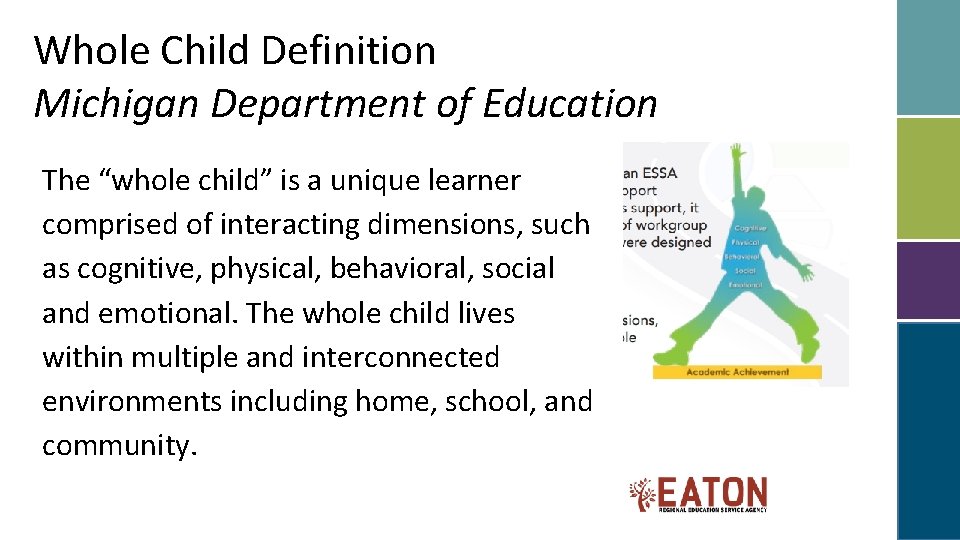
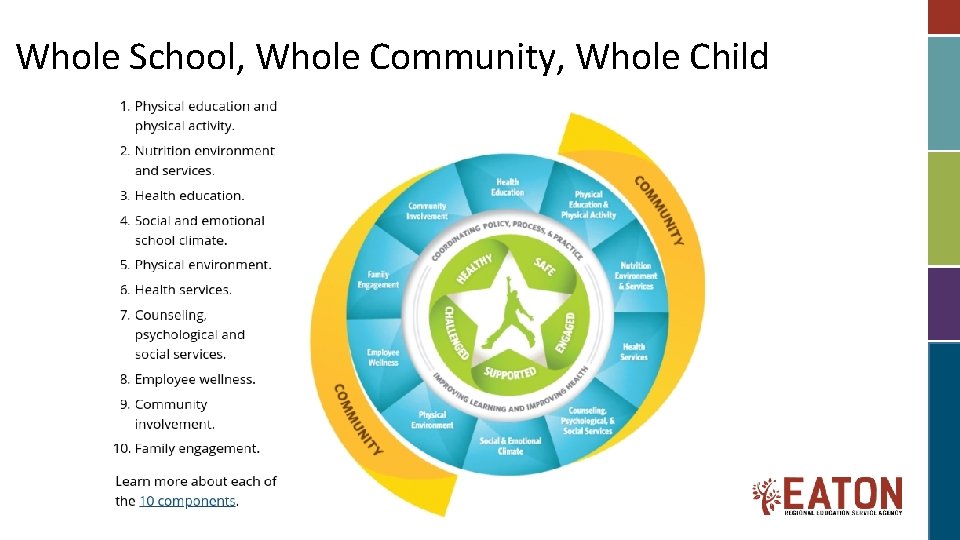
Whole Child Definition Michigan Department of Education The “whole child” is a unique learner comprised of interacting dimensions, such as cognitive, physical, behavioral, social and emotional. The whole child lives within multiple and interconnected environments including home, school, and community.
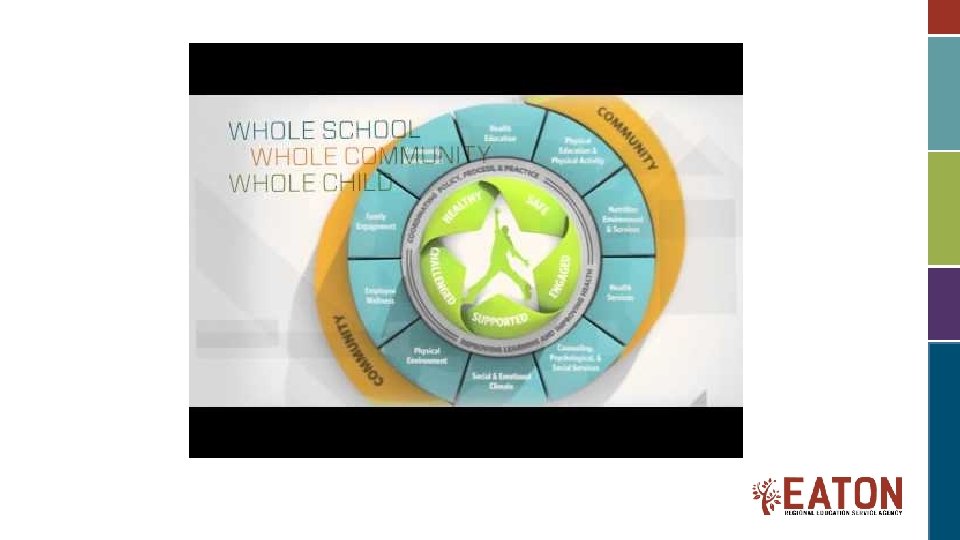
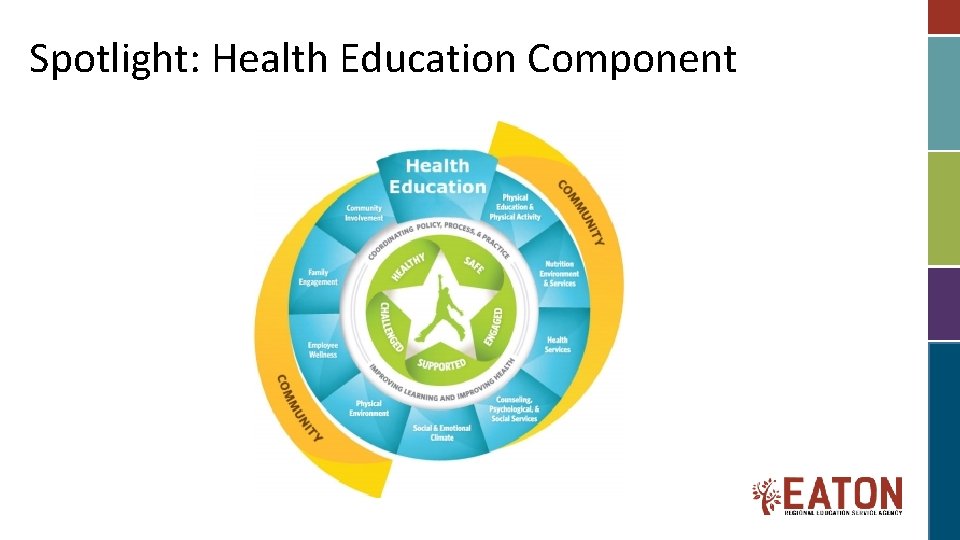
Whole School, Whole Community, Whole Child
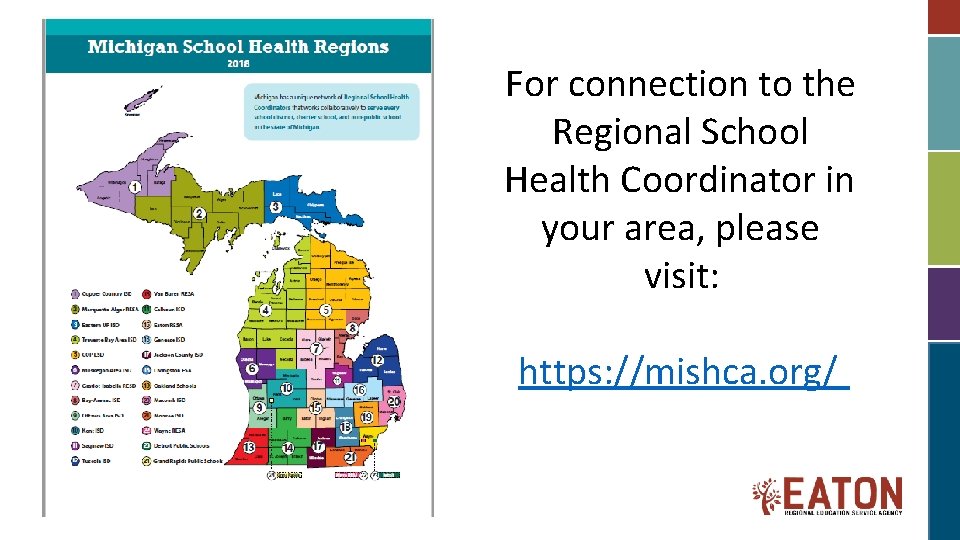
For connection to the Regional School Health Coordinator in your area, please visit: https: //mishca. org/
Stop and Process 1. What surprised you? 2. What validated what you know? 3. What are you wondering?
Spotlight: Health Education Component
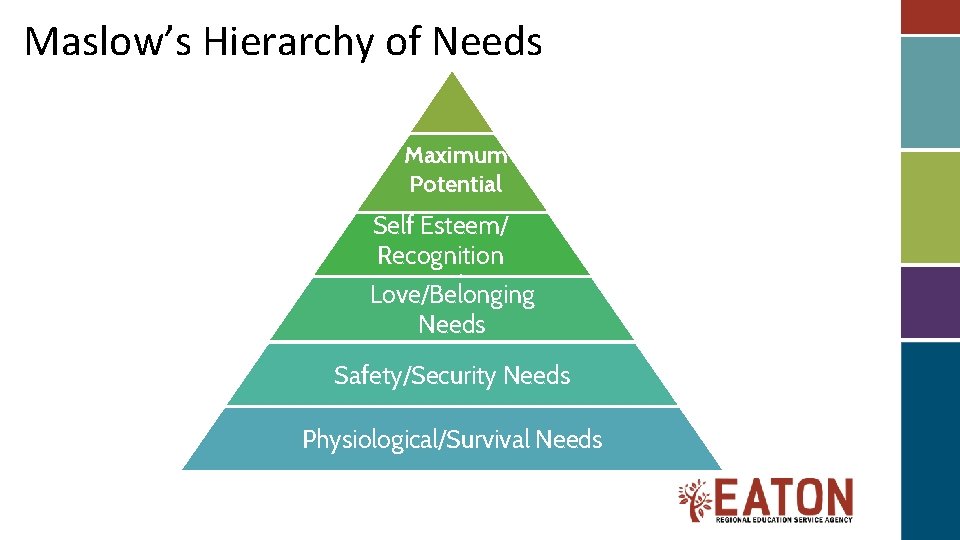
Maslow’s Hierarchy of Needs Maximum Potential Self Esteem/ Recognition Needs Love/Belonging Needs Safety/Security Needs Physiological/Survival Needs
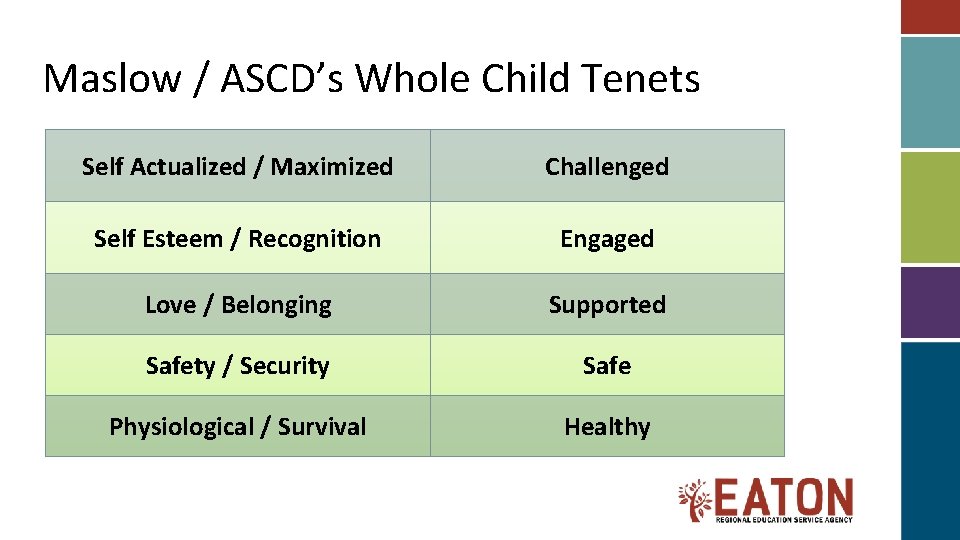
Maslow / ASCD’s Whole Child Tenets Self Actualized / Maximized Challenged Self Esteem / Recognition Engaged Love / Belonging Supported Safety / Security Safe Physiological / Survival Healthy
• Office of Justice Programs- promising program for violence prevention • Supported and formally recognized by MEMPSA for Social. Emotional Learning • Only Comprehensive Pre-K through 12 th grade curriculum
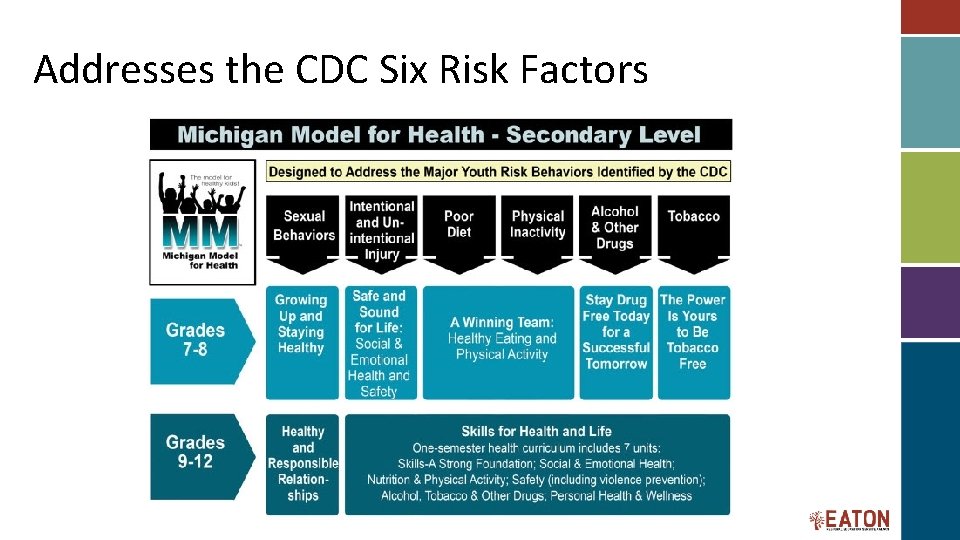
Addresses the CDC Six Risk Factors
As prevention practitioners, our goal is to change behavior…. . What is the behavior we want? How do we get that behavior?
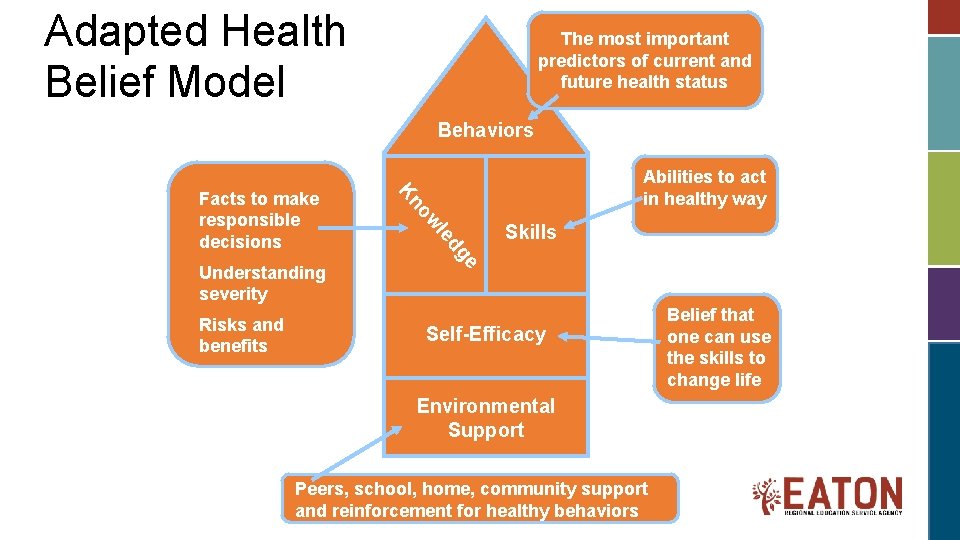
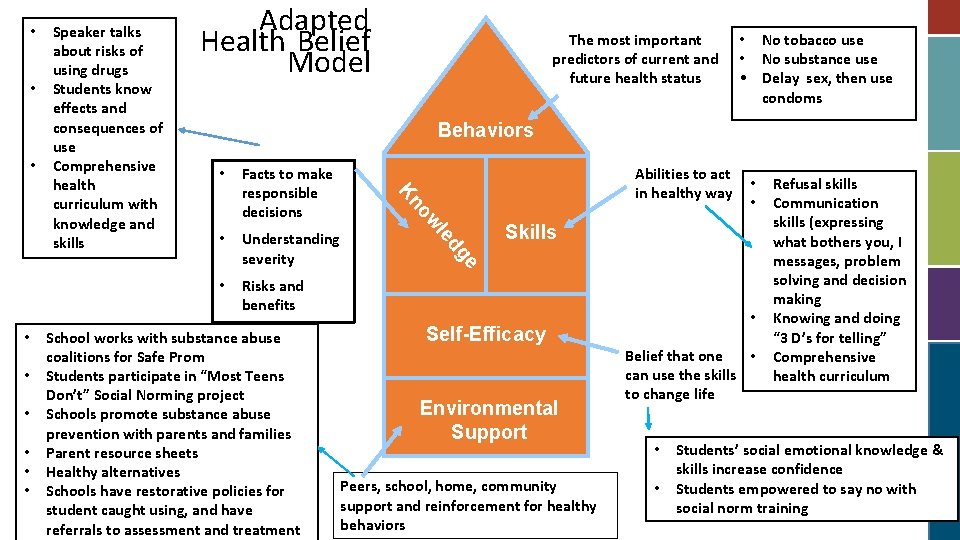
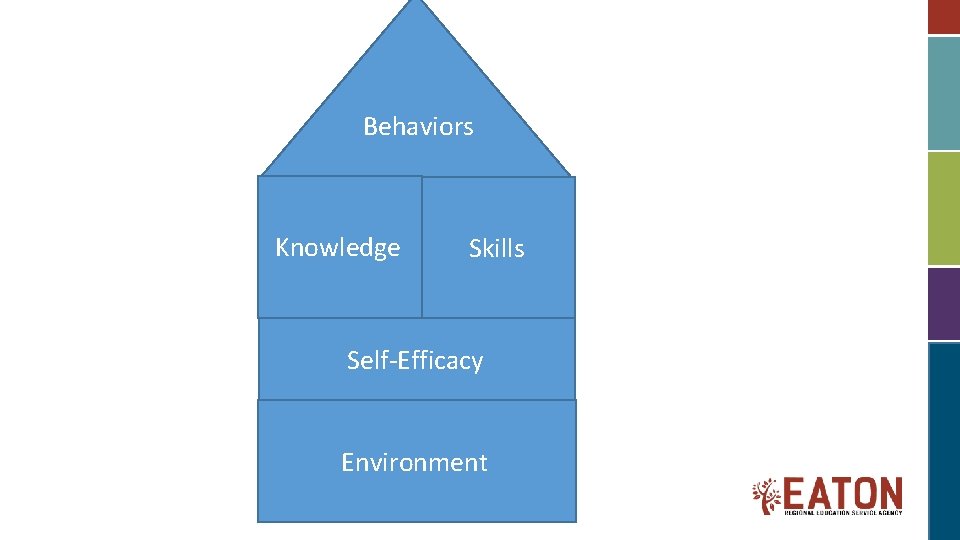
Adapted Health Belief Model The most important predictors of current and future health status Behaviors le Skills e dg Risks and benefits ow Understanding severity Kn Facts to make responsible decisions Abilities to act in healthy way Self-Efficacy Environmental Support Peers, school, home, community support and reinforcement for healthy behaviors Belief that one can use the skills to change life
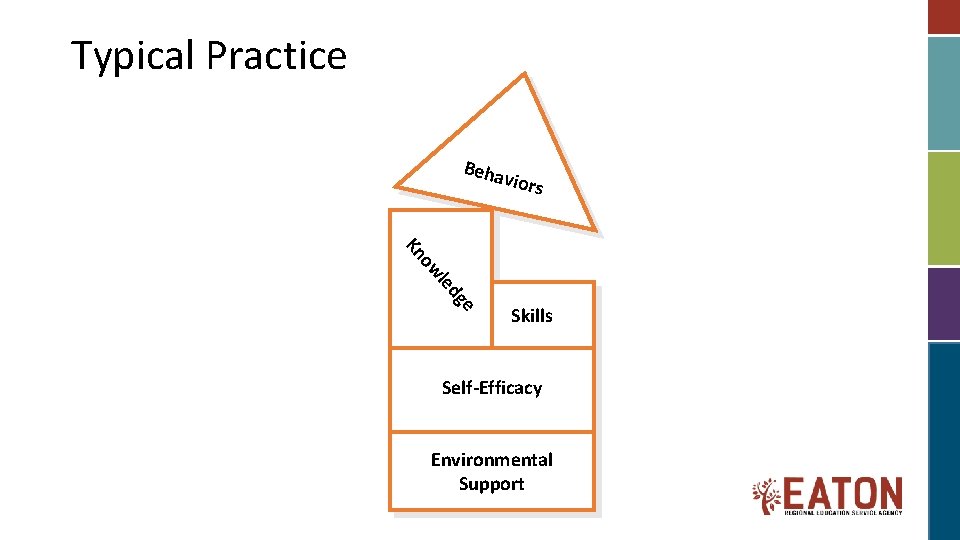
Typical Practice Beha viors e dg le w o Kn Skills Self-Efficacy Environmental Support
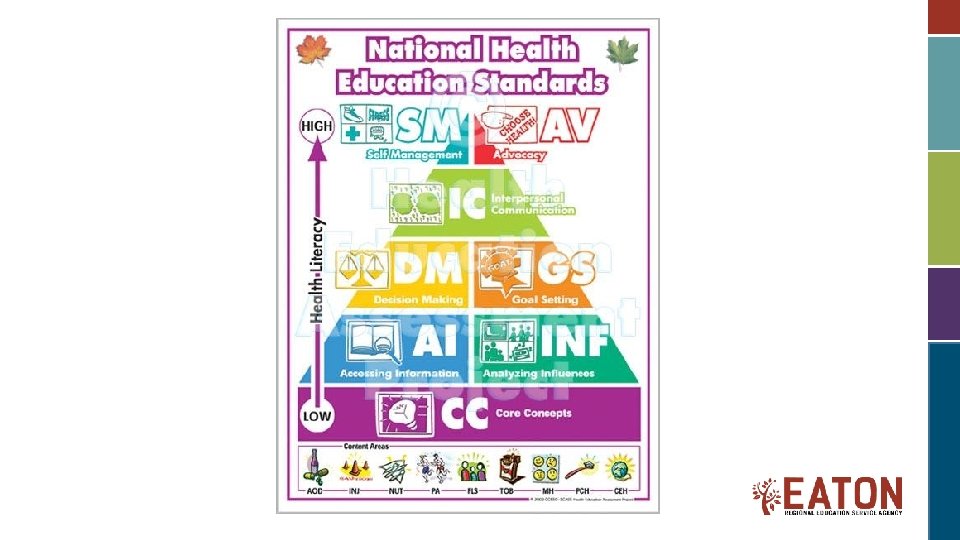
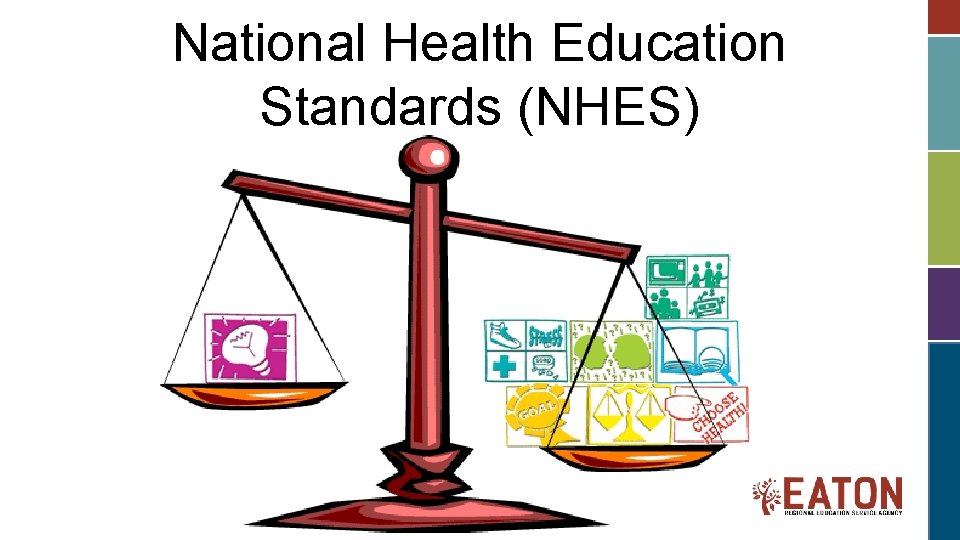
National Health Education Standards (NHES)
• • Facts to make responsible decisions • Understanding severity • Risks and benefits School works with substance abuse coalitions for Safe Prom Students participate in “Most Teens Don’t” Social Norming project Schools promote substance abuse prevention with parents and families Parent resource sheets Healthy alternatives Schools have restorative policies for student caught using, and have referrals to assessment and treatment Abilities to act in healthy way • • Skills e dg • • No tobacco use • No substance use • Delay sex, then use condoms Behaviors le • The most important predictors of current and future health status ow • Adapted Health Belief Model Kn • Speaker talks about risks of using drugs Students know effects and consequences of use Comprehensive health curriculum with knowledge and skills • Self-Efficacy Environmental Support Peers, school, home, community support and reinforcement for healthy behaviors Belief that one • can use the skills to change life • • Refusal skills Communication skills (expressing what bothers you, I messages, problem solving and decision making Knowing and doing “ 3 D’s for telling” Comprehensive health curriculum Students’ social emotional knowledge & skills increase confidence Students empowered to say no with social norm training
Stop and Process What is one way your agency or program builds upon the Whole Child initiatives in school complementing existing school health programs or one new way you think your agency or programs could complement existing school health programs?
Building on the Health Belief Model • Think of it as a puzzle—what pieces do you need to add to make a complete puzzle? What works in Prevention? • Remember, our goal is changing (or maintaining) behavior. • How do we build skills, knowledge, self efficacy, and environmental support?
Drug Prevention: What Does vs Does NOT Work • Deal out your deck of “Drug Prevention Strategies Cards. ” • Read one at a time. • Discuss whether you think each strategy is one that works or one that doesn’t. • Place them in two separate piles: • Does Work • Does Not Work
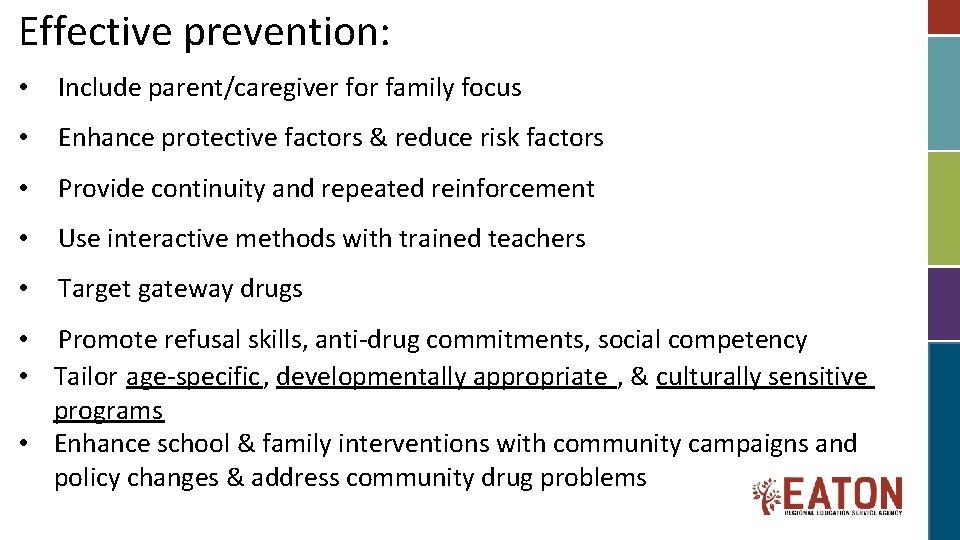
Effective prevention: • Include parent/caregiver for family focus • Enhance protective factors & reduce risk factors • Provide continuity and repeated reinforcement • Use interactive methods with trained teachers • Target gateway drugs • Promote refusal skills, anti-drug commitments, social competency • Tailor age-specific, developmentally appropriate , & culturally sensitive programs • Enhance school & family interventions with community campaigns and policy changes & address community drug problems
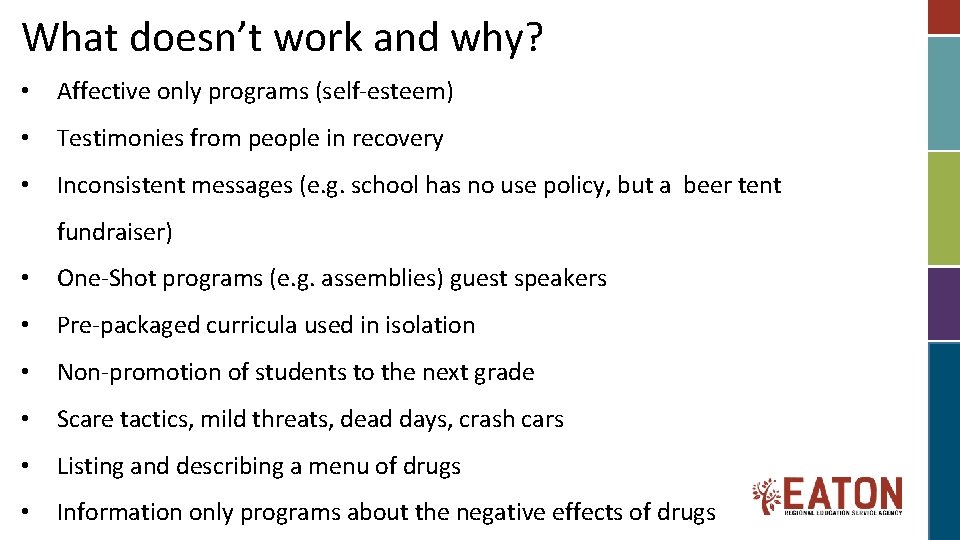
What doesn’t work and why? • Affective only programs (self-esteem) • Testimonies from people in recovery • Inconsistent messages (e. g. school has no use policy, but a beer tent fundraiser) • One-Shot programs (e. g. assemblies) guest speakers • Pre-packaged curricula used in isolation • Non-promotion of students to the next grade • Scare tactics, mild threats, dead days, crash cars • Listing and describing a menu of drugs • Information only programs about the negative effects of drugs
How can you use this information? ● Educate other stakeholders about best practices in prevention programs and strategies ● Advocate, explain and, persuade as to why certain programs/strategies are more effective ● Implement programs and interventions that are more likely to be effective and provide desired behavior change ● Use as a tool when choosing programs or interventions ● Helping Schools Construct Effective Prevention Policies they work toward policies that are restorative and sequential
What would you do if……. . • Superintendent wants an assembly on the dangers of tobacco use. You want to follow the principles of the Adapted Health Belief Model, so what recommendations would you make to change the assembly from a “stand alone” to a part of an effective prevention program?
Behaviors Knowledge Skills Self-Efficacy Environment
Prevention isn’t funded as well as the industries, so we need to be clear, concise and effective. We are the experts and can advocate for effective prevention programming in our schools and communities. Micki Fuhrman, Regional School Health Coordinator and Prevention Consultant mfuhrman@eatonresa. org Christina Holmes, Michigan Model Trainer and Prevention Specialist cholmes@eatonresa. org