
Effective Presentation Yeim K rak Sen Instructor SCT


- Slides: 39
Effective Presentation Yeşim K. Çırak, Sen. Instructor SCT
Many speakers lack the skills and confidence to make effetive presentations. We have all been victims of speakers who put us to sleep.
What is your vision of the ideal presenter in our environment?
Self-Assessment + -
Objectives for Today • By the end of the session, participants will be able to… • Utilize eye contact, body language and voice to their advantage in a presentation, • Apply the 3 A’s in preparing content for a presentation, • Develop visual aids that reflect good instructional design properties • Respond to questions in an effective manner.
General Competencies(1) • Interpersonal Communication Interpersonal communication is the process that we use to communicate our ideas, thoughts, and feelings to another person. Our interpersonal communication skills are learned behaviors that can be improved through knowledge, practice, feedback, and reflection.
General Competencies(2) • Professionalism It defines a profession as "a calling requiring specialized knowledge and often long and intensive academic preparation. " • Practice-Based Learning & Improvement understanding how learning experiences and educational processes might best be aligned or integrated to support professional learning.
Podium Panic For some people, the thought of giving a presentation is more frightening than falling off a cliff, financial difficulties, snakes and even death.
Dealing with Podium Panic(1) • Audiences are forgiving • Nervousness is usually invisible • Be yourself • Practice deep breathing/ visualization techniques • Begin in your comfort zone
Dealing with Podium Panic(2) • Check out the room in advance • Concentrate on the message • Begin with a slow, well prepared intro; have a confident and clear conclusion • Be prepared and practice
Eye Contact • Never let them out of your sight. • Looking them in the eye makes them feel that they are influencing what you say. • Eye contact allows the presentation to approximate conversation—the audience feels much more involved.
Body Language(1) List of NO’s • Lean on or grip the podium • Rock or sway in place • Stand immobile • Use a single body language repeatedly • Examine or bite your fingernails
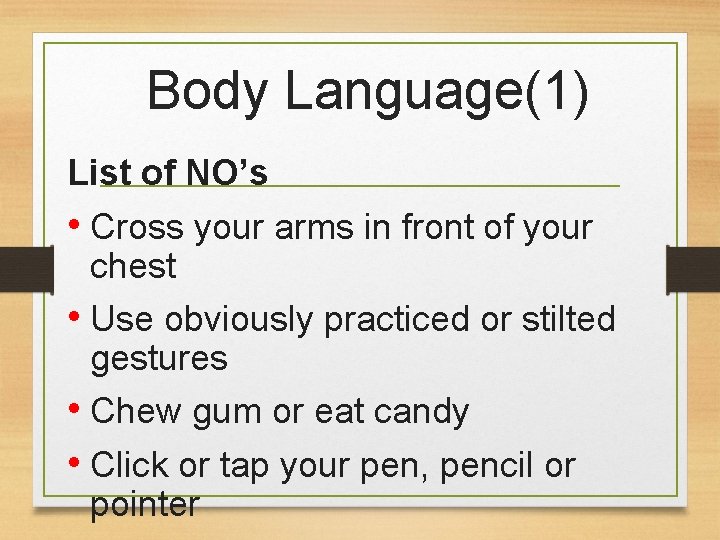
Body Language(1) List of NO’s • Cross your arms in front of your chest • Use obviously practiced or stilted gestures • Chew gum or eat candy • Click or tap your pen, pencil or pointer
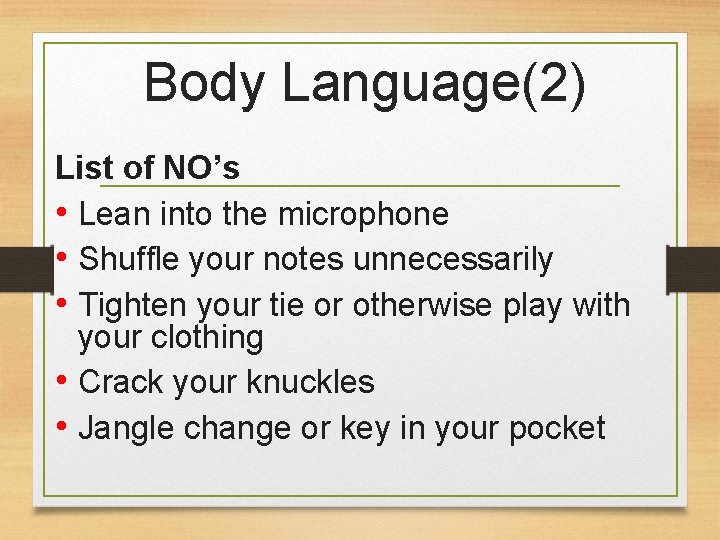
Body Language(2) List of NO’s • Lean into the microphone • Shuffle your notes unnecessarily • Tighten your tie or otherwise play with your clothing • Crack your knuckles • Jangle change or key in your pocket
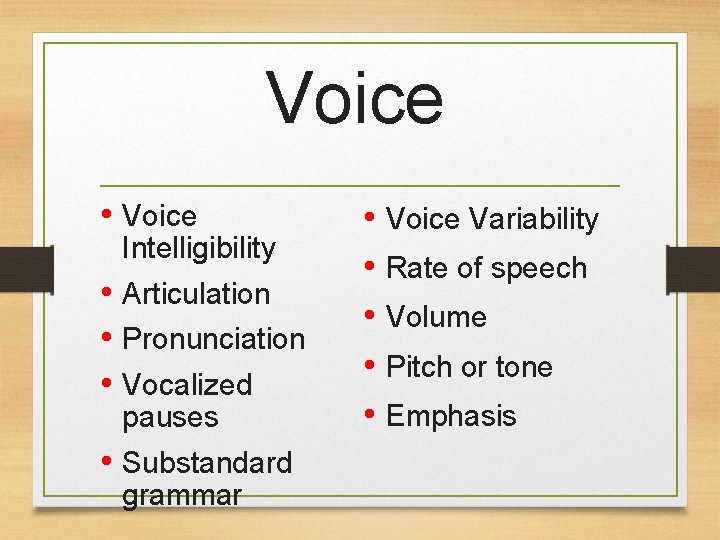
Voice • Voice Intelligibility • Articulation • Pronunciation • Vocalized pauses • Substandard grammar • Voice Variability • Rate of speech • Volume • Pitch or tone • Emphasis
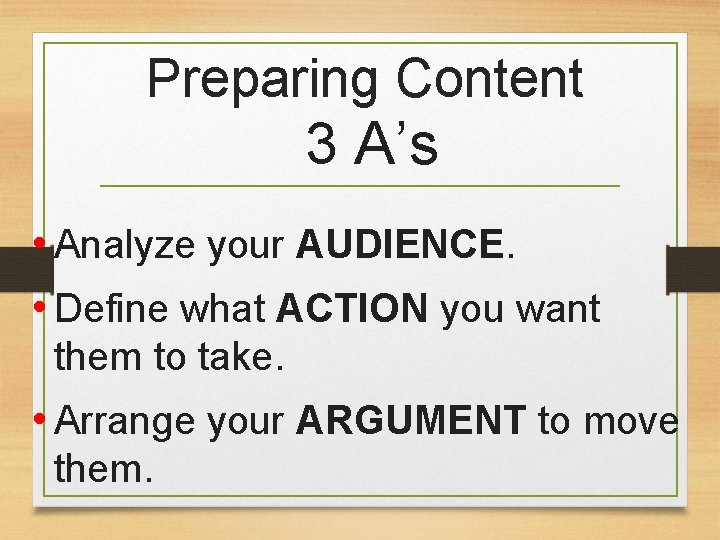
Preparing Content 3 A’s • Analyze your AUDIENCE. • Define what ACTION you want them to take. • Arrange your ARGUMENT to move them.
Analyze Your Audience • What are their names, titles, backgrounds, reasons for attending, etc…? • What are their big concerns? • What are their objectives, fears, hot buttons, and attitudes?
Analyze Your Audience • What is their perception of you and your institution? • What are their questions likely to be? • What is personally at stake for them? • How much detail do they need?
Define What Action • What action do you want the audience to take? • Define it in terms of the audience. • What will they feel, believe, and do after hearing your talk?
Arranging Your Argument 1. Shake hands with the audience. 2. Get to the point. 3. Present your theme. 4. Develop your agenda point by point. 5. Summarize and recommend.
Your turn!
Visual Aids
Visual Aids (not the stars of the show)
Design Concepts • Big • Simple • Clear
Big • Should be able to read everything from the back row • At least 28 pt, preferably 36 • Use the floor test
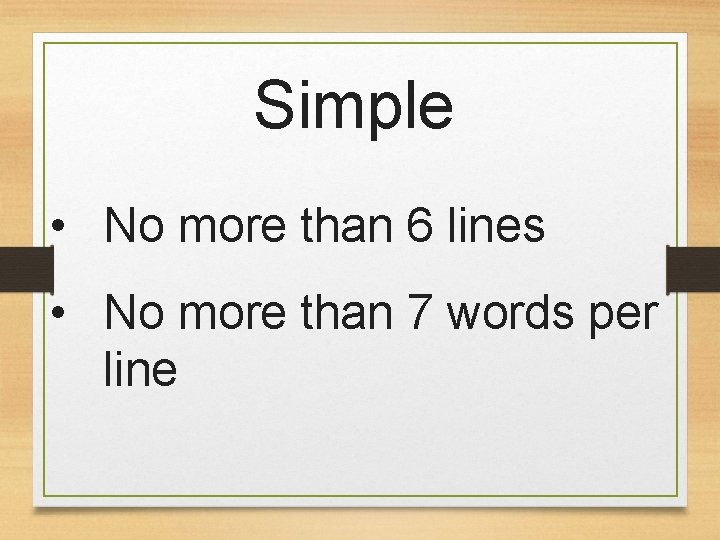
Simple • No more than 6 lines • No more than 7 words per line
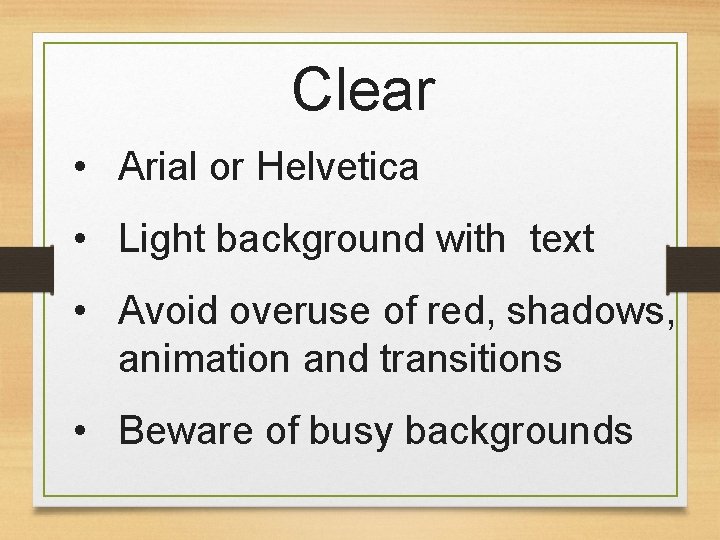
Clear • Arial or Helvetica • Light background with text • Avoid overuse of red, shadows, animation and transitions • Beware of busy backgrounds
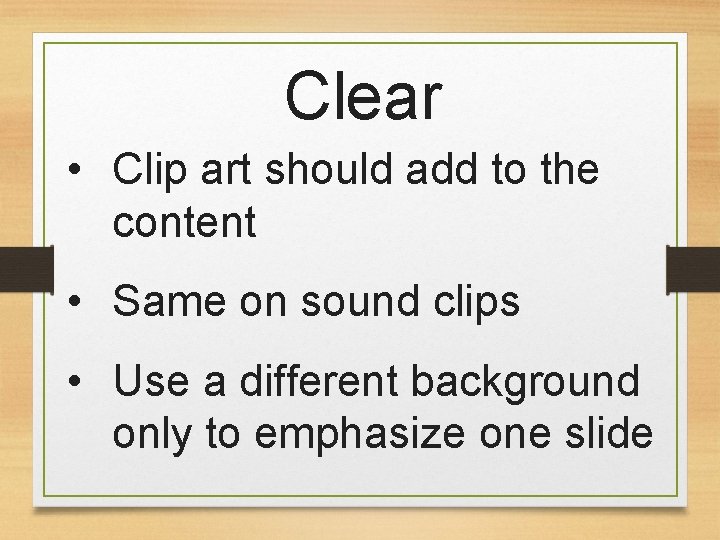
Clear • Clip art should add to the content • Same on sound clips • Use a different background only to emphasize one slide
s d i A l e a b u s d i l V hou e s n th r’s o ke a e sp left.
Your turn!
Questions & Answers “Does anyone have any questions for my answers? ” -Henry Kissinger
Questions & Answers • Beginning of a whole new interactive presentation • Opportunity to make a point • Most presentations are won or lost here
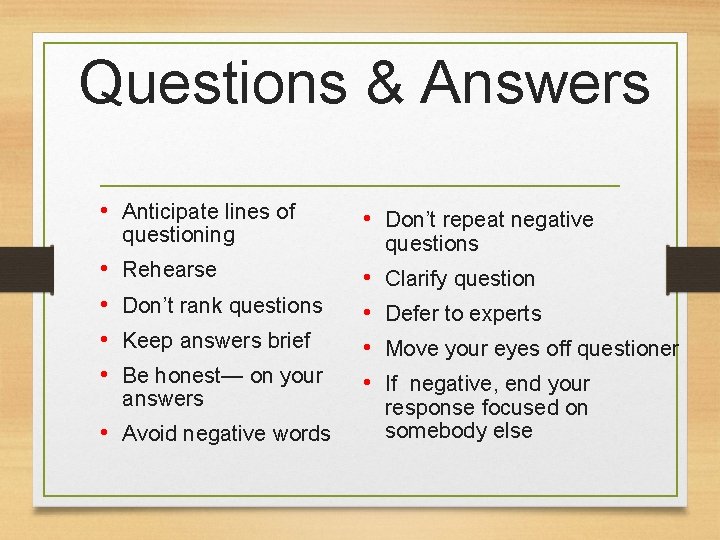
Questions & Answers • Anticipate lines of questioning • • Rehearse Don’t rank questions Keep answers brief Be honest— on your answers • Avoid negative words • Don’t repeat negative questions • • Clarify question Defer to experts Move your eyes off questioner If negative, end your response focused on somebody else
THE Golden RULE NEVER argue with a member of the audience.
Instead… • • • Look at the questioner. Remain neutral and attentive. Listen to the whole question. Pause before you respond. Address the questioner, then move your eyes to others.
Easy as A B C “I can’t Answer that question Because …, but I Can tell you…”
Objectives for Today • By the end of the session, participants will be able to… • utilize eye contact, body language and voice to their advantage in a presentation, • apply the 3 A’s in preparing content for a presentation, • develop visual aids that reflect good instructional design properties, and • respond to questions in an effective manner.
“Make sure you have finished speaking before your audience has finished listening. ” -Dorothy Sarnoff
QUESTIONS ? ?