
EFFECTIVE MICROORGANISM TECHNOLOGY 9122021 1 EM TECHNOLOGY Effective





- Slides: 20
EFFECTIVE MICROORGANISM TECHNOLOGY 9/12/2021 1
EM TECHNOLOGY Effective microorganism technology is a technique of using beneficial and highly efficient organisms as alternative for chemical fertilizers and pesticides. These microorganisms are not harmful, non pathogenic, not genetically modified, nor chemically synthesized. 9/12/2021 2
“The conversion of a degraded ecosystem full of harmful microbes to the productive and useful microorganisms”. v EM technology…. . One promising way. v. Much appreciated due to v. Ecofriendly in nature. v. Requires less input. v. Less cost and capital. 9/12/2021 3
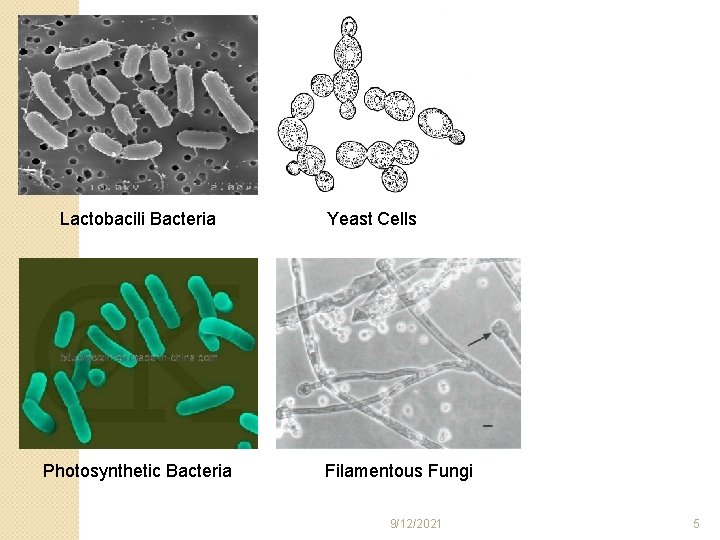
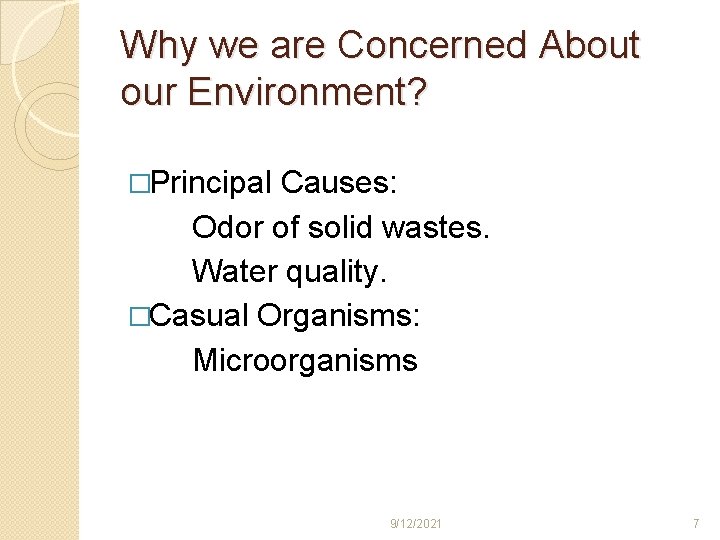
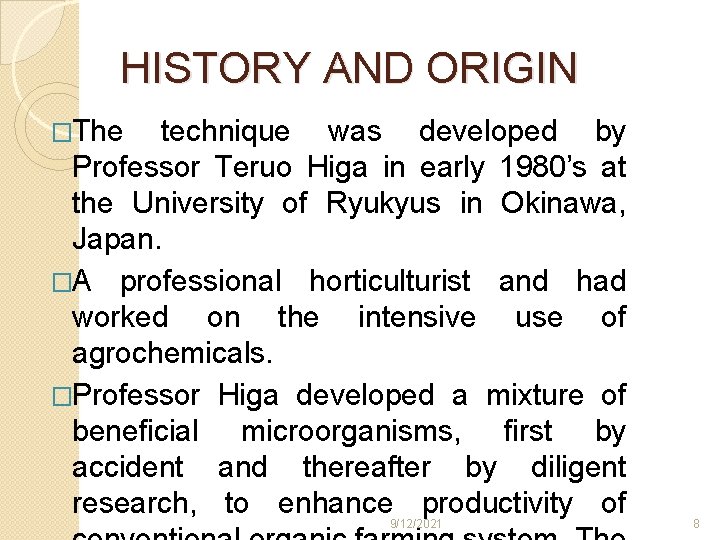
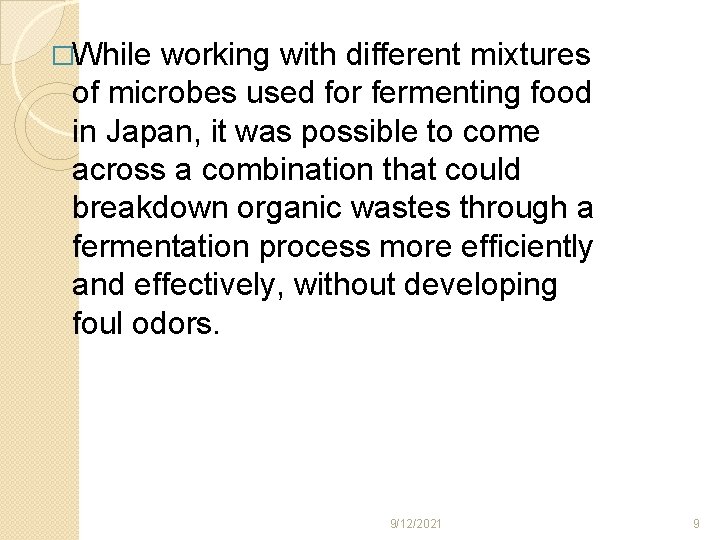
WHAT IS EM? EM is a liquid culture of aerobic and anaerobic micro-organisms mainly sourced from human food processing and from nature. It consists of lactobacilli, yeast, photosynthetic bacteria, ray fungi and filamentous fungi. It does not contain any genetically modified organisms, is safe and easy to handle, and harmless to human health even if accidentally ingested. 9/12/2021 4
Lactobacili Bacteria Photosynthetic Bacteria Yeast Cells Filamentous Fungi 9/12/2021 5
9/12/2021 6
Why we are Concerned About our Environment? �Principal Causes: Odor of solid wastes. Water quality. �Casual Organisms: Microorganisms 9/12/2021 7
HISTORY AND ORIGIN �The technique was developed by Professor Teruo Higa in early 1980’s at the University of Ryukyus in Okinawa, Japan. �A professional horticulturist and had worked on the intensive use of agrochemicals. �Professor Higa developed a mixture of beneficial microorganisms, first by accident and thereafter by diligent research, to enhance productivity of 9/12/2021 8
�While working with different mixtures of microbes used for fermenting food in Japan, it was possible to come across a combination that could breakdown organic wastes through a fermentation process more efficiently and effectively, without developing foul odors. 9/12/2021 9
MODE OF ACTIVITY Three principal species: • Lactic acid bacteria (Lactobacillus sp. ) • Phototrophic bacteria (Rhodopseudomonas sp. ) • Yeast (Saccharomyces sp. ) �Blended together in a sugar based medium at a low p. H. �Enhance the populations of beneficial organisms in the environment when applied. 9/12/2021 10
Photosynthetic bacteria (Rhodopseudomonas spp. ) The photosynthetic or phototropic bacteria are a group of independent, self-supporting microbes. These bacteria synthesize useful substances from secretions of roots and organic matter by using sunlight and the heat of soil as sources of energy. The useful substances developed by these microbes include amino acids, nucleic acids, bioactive substances and sugars, all of which promote plant growth and productivity? 9/12/2021 11
Lactic acid bacteria (Lactobacillus spp. ) Lactobacilli produce lactic acid from sugars and other carbohydrates developed by photosynthetic bacteria and yeast. Lactic acid is a strong sterilizing compound as it suppresses harmful microorganisms and enhances decomposition of organic matter. Moreover, promote fermentation and decomposition of material such as lignin and cellulose, thereby removing undesirable effect of undecomposed organic matter. Lactic acid bacteria have the ability to suppress certain harmful microorganisms such as Fusarium, which occur in continuous cropping programmes. . The use of lactic acid bacteria reduces nematode population and controls propagation and spread of Fusarium, thus producing a better environment for crop growth. 9/12/2021 12
Yeast (Saccharomyces spp. ) Yeasts synthesize antimicrobial and other useful substances required for plant growth from amino acids and sugars secreted by Photosynthetic bacteria, organic matter and plant roots. The bioactive substances such as hormones and enzymes produced by yeast, promote active cell and root division. These secretions are also useful substrates for Beneficial Microorganisms such as Lactobicilli and Actinomycetes. 9/12/2021 13
How to Use EM in Environmental Management? �Its use is simple. �EM is available in the form of a solution, which can be inoculated into solids such as bran of cereal and legume seeds, fermented animal manures and even soil. �These can be added to organic wastes and waste water to enhance the populations of beneficial organisms. 9/12/2021 14
�It is simple and inexpensive to use, due to the possibility of extending the solution by anyone prior to use. �It can be blended with household items such as soaps and detergents and normal chemicals that are being used for daily living, with no harm to the microbes. �Its use is not restricted to organic systems. �So, its application is versatile and easy. 9/12/2021 15
�In countries like Australia and Japan, EM based household and industrial waste management products are used very successfully. �Other products are also being developed by many organizations for waste water and soils waste management systems. 9/12/2021 16
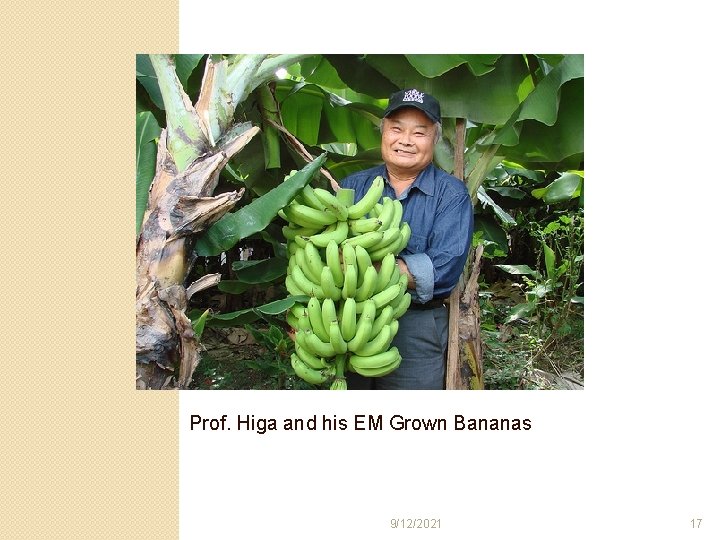
Prof. Higa and his EM Grown Bananas 9/12/2021 17
APPLICATIONS �Environmental management. �Industrial wastewater treatment. �Sustainable agriculture environmental management. �Water quality restoration. �Soil waste management. �Improve soil quality and health. �Disease and pest control. 9/12/2021 and 18
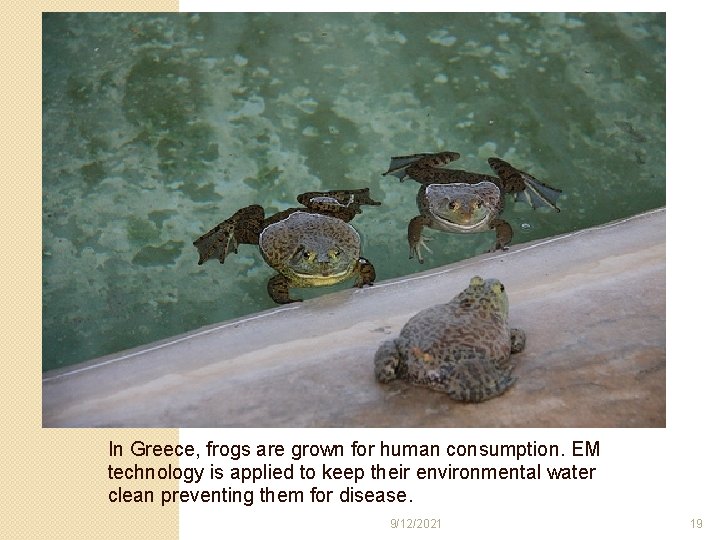
In Greece, frogs are grown for human consumption. EM technology is applied to keep their environmental water clean preventing them for disease. 9/12/2021 19
Use Of EM in Different Parts of World ASIA: Successful alternative agricultural systems. JAPAN: Streams, rivers, lakes, sea beaches and sewage plants were treated. AUSTRALIA: Sewage treatment. KENYA: Water treatment and environmental sanitation. THAILAND: City waste management. ASIA: Mitigation of smell in recent natural disaster. Tsunami. THAILAND: Odor control and sanitation management. 9/12/2021 20