
Effective Meetings 1 Presentation by Clodagh Geraghty 20122021
Effective Meetings 1 Presentation by Clodagh Geraghty 20/12/2021
Characteristics of Effective Team Meetings § Promptness § Participation § Basic Courtesies § Agenda and Minutes § Breaks § Assignments § Discussions § Next Meeting Agenda § Meeting Evaluation § Meeting Close
Essentially a Meeting is… § A forum for communication § An opportunity to build team unity § A chance to foster creativity § Group brainstorming § Problem solving
Before the Meeting (Secretary) § Prepares the meeting agenda in consultation with the chairperson § Issues Notice of the Meeting (7 clear days prior to the meeting) to all members of the BOM and the CE. § Ensures notice for BOM meeting includes: § Draft copy of minutes of the previous meeting § Draft agenda for meeting § Draft policies for review/adoption § Principal’s report to BOM § Child protection report § Anti-bullying report § Any relevant documentation / reading (Attachment 5 BOM Handbook)
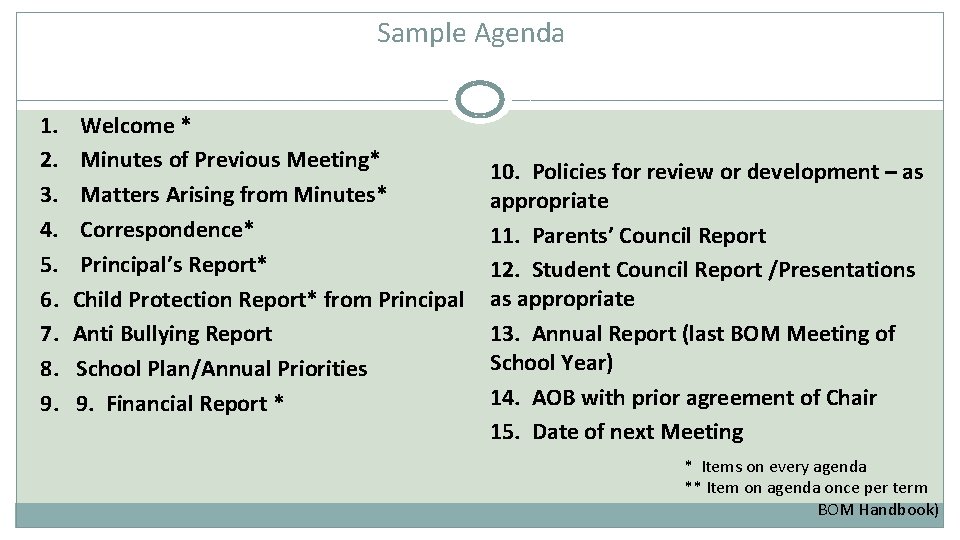
Sample Agenda 1. 2. 3. 4. 5. 6. 7. 8. 9. Welcome * Minutes of Previous Meeting* Matters Arising from Minutes* Correspondence* Principal’s Report* Child Protection Report* from Principal Anti Bullying Report School Plan/Annual Priorities 9. Financial Report * 10. Policies for review or development – as appropriate 11. Parents’ Council Report 12. Student Council Report /Presentations as appropriate 13. Annual Report (last BOM Meeting of School Year) 14. AOB with prior agreement of Chair 15. Date of next Meeting * Items on every agenda ** Item on agenda once per term BOM Handbook)
Before the Meeting (Chairperson) § Plan the agenda with secretary. § Decide the order and timing of the agenda. § Be well briefed about each item. § Ensure all necessary background papers (including the last meeting's minutes) are identified and sent out with the agenda beforehand. § Check practical arrangements have been made, e. g. room layout, Laptop, Data projector (if needed) etc. § Arrive in good time before the meeting is due to start.
Before the Meeting (Board Members) § Read the agenda in order to be familiar with and prepared for what’s coming up at the meeting § Read the documentation sent by the secretary of the board. § Familiarise themselves with any relevant legislation /policies for the upcoming meeting § Read draft minutes from last meeting – note any amendments they wish to suggest § Be sure that they have performed any actions they agreed to since previous meeting
Chairing the Meeting
Chairing the Meeting § Manage Time § Start and end on time § Review the Agenda and set priorities for the meeting § Agree a time-allocation for agenda items at the beginning of each meeting § Appoint a time-keeper (if needed) § Do not spend time recapping for latecomers § Don’t spend time reading documentation that members should have read beforehand
Chairing the Meeting § Clarify the ground rules § Be familiar with and comply with standing orders § passing minutes of previous meeting (check/propose /second /sign) § Voting protocols (e. g. quorum) § Keep control of discussion § § § All opinions encouraged and valued Keep discussion to the point One voice at a time Avoid repetitive comments Tactfully end destructive/unproductive discussions Remember – be a good listener
Chairing the Meeting § At end of each item § § Summarise the main points made in a succinct clear manner Always look to carry decisions by consensus Where necessary put the decision to a vote Chair has a 2 nd (casting) vote in the event of a tie § Concluding the meeting § § § Unfinished business - Put on agenda for next meeting Confirm date, time for next meeting Thank members for positive contributions Remind of agreements reached Thank those who have taken responsibility for further action Evaluate the meeting
Towards Consensus �Builds on respect, trust and cooperation to achieve agreeable solutions for everyone concerned. �Helps ensure that the sense of common purpose prevails for the good of all students. �All opinions, ideas and concerns are taken into account. Through listening closely to each other, the group aims to come up with proposals that work for everyone. �Voting, while appearing democratic, can be divisive. There will always be winners and losers.
Minutes General • Record all decisions taken • Maintain discretion – avoid personalising. • Should be circulated to all Members of Board well in advance of next meeting – 7 clear days • Be formally adopted at next meeting – only draft until adopted. • Signed copy of the adopted Minutes of the previous meeting and copy of draft minutes of current meeting to be issued to the CEO within 7 days of the BOM Meeting (Attachment 7 BOM Handbook)

Confidentiality 14 All business transacted at BOM meetings must be regarded as confidential by all members of the Board.
Scenarios (You are the Chairperson) • One member tends to ramble when contributing. You feel a lot of time is being wasted. • Two members are very reluctant to speak. You feel they are a little intimidated by others. • A proposed expulsion is being discussed. The student’s parent obviously angry, is beginning to speak aggressively to the principal. • A verbal altercation (row) breaks out between two members. You feel the row is personal rather than professional.
�Conflicts in meetings can be very disruptive. But they can also be very helpful. �Sometimes the person disagreeing has something valid to say that will contribute to improvement �However, if the disagreement goes too far, then steps have to be taken to keep things under control
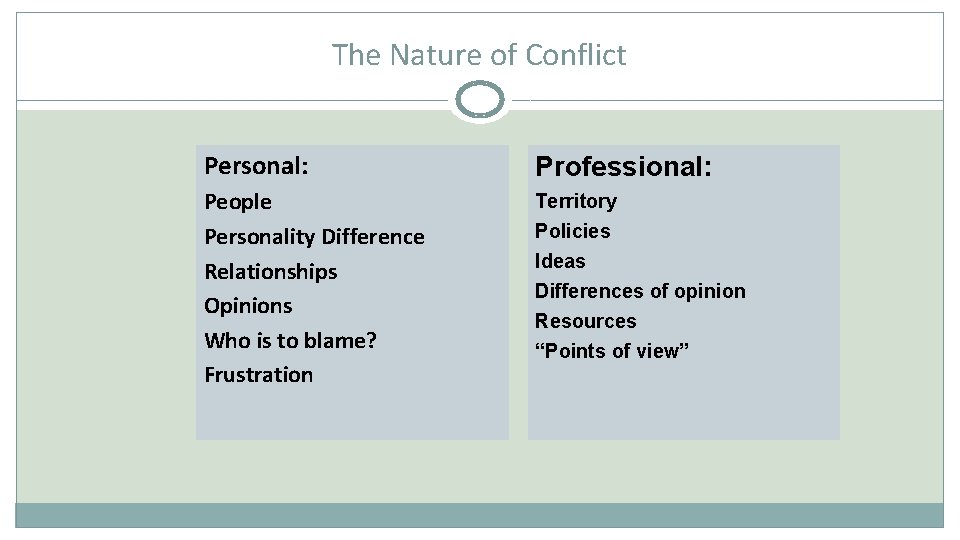
The Nature of Conflict Personal: Professional: People Personality Difference Relationships Opinions Who is to blame? Frustration Territory Policies Ideas Differences of opinion Resources “Points of view”
Reducing the Opportunity for Conflict • Carefully plan the agenda – a tight agenda helps keep things on course • Move non-contentious issues to the top of the agenda • Stick tightly to the protocols (e. g raise hand to speak) • Summarise points being made in calm manner • Ensure all voices are heard (avoids one or two dominating) • Watch body language ( Rolling eyes/tapping/ staring/ passing notes to colleague) – Acknowledge this and deal with it – “ I notice you seem to be a bit unhappy with this point …)
Sometimes conflict will occur • The chairperson needs to control the conflict- avoid others wading in. • Rephrase negative comments using positive language. • Ask questions that elicit thought to focus on the issue rather than the people (not yes or no answers). • Be prepared to challenge perception with factual details. • Know when to step away from it. Be prepared to acknowledge difference and defer (time -out can diffuse tension)
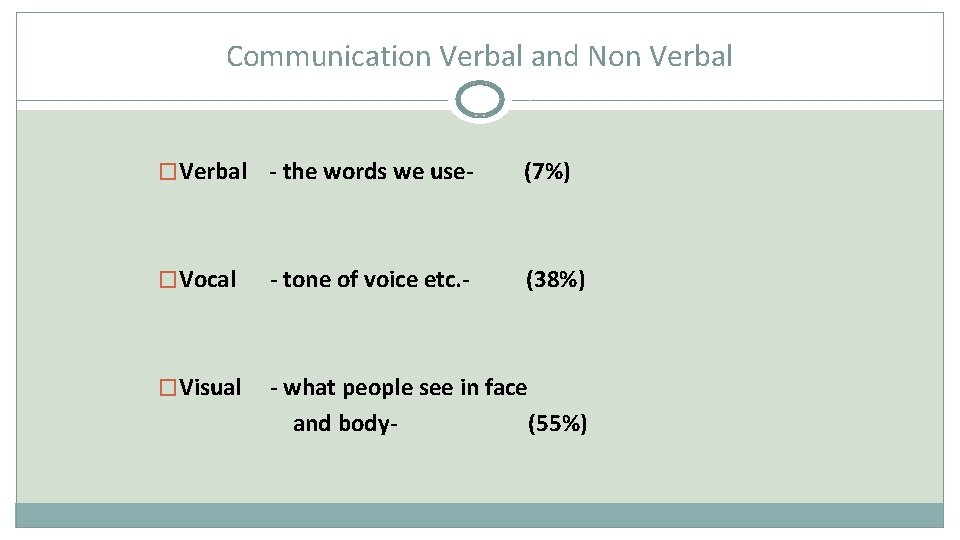
Communication Verbal and Non Verbal �Verbal - the words we use- (7%) �Vocal - tone of voice etc. - (38%) �Visual - what people see in face and body(55%)
It’s all in the mind. . �People will forget what you said. �People will forget what you did. �But people will never forget how you made them feel.
- Slides: 21