
Effective Imported Food Controls For inland authorities Aims


- Slides: 68
Effective Imported Food Controls For inland authorities
Aims n Provide practical guidance and best practice that to help inland enforcement officers to monitor, investigate and control imported foods. 2
Objectives n This course seeks to provide delegates with: q q An overview of imported food controls A review of the Trade in Animals and Related Products Regulations 2011 (TARP Regs) An update on imports of FNAO from third countries. Guidance on enforcement issues 3
Introduction 4
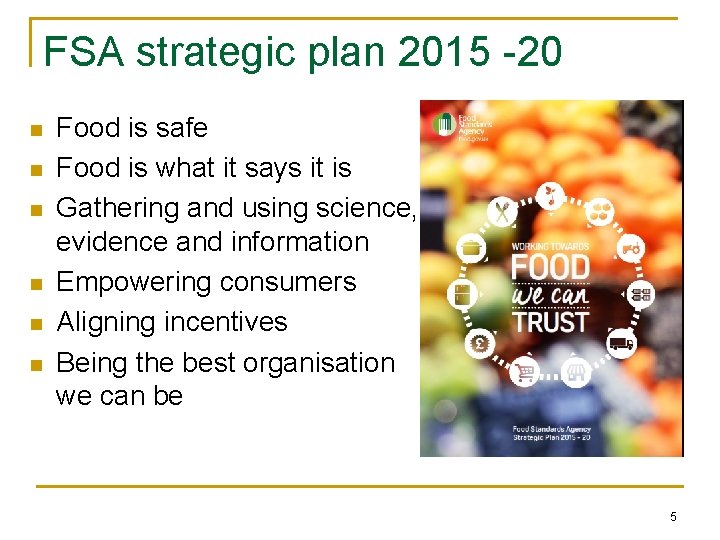
FSA strategic plan 2015 -20 n n n Food is safe Food is what it says it is Gathering and using science, evidence and information Empowering consumers Aligning incentives Being the best organisation we can be 5
Overview of imported food controls 6
Imported Food Control - Overview n For purposes of import control q Food imported from: n n q Within single market or From third countries Food from third countries can be classified as: n n Product of Animal origin (POAO) or; Food not of Animal Origin (FNAO)
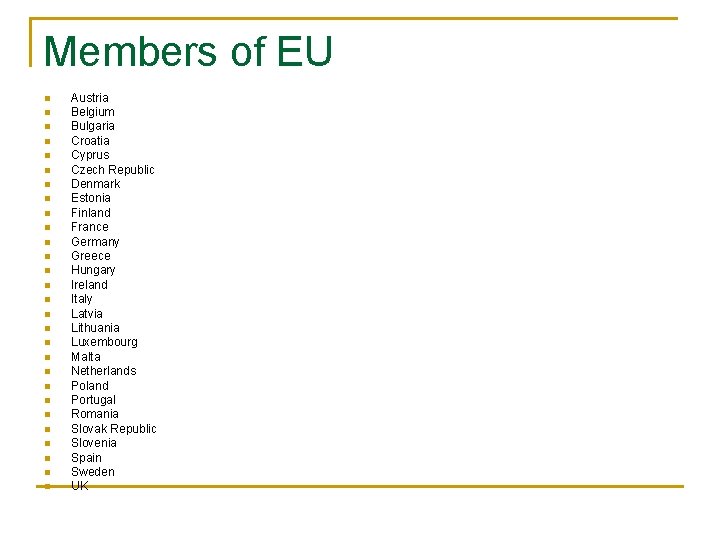
Members of EU n n n n n n n Austria Belgium Bulgaria Croatia Cyprus Czech Republic Denmark Estonia Finland France Germany Greece Hungary Ireland Italy Latvia Lithuania Luxembourg Malta Netherlands Poland Portugal Romania Slovak Republic Slovenia Spain Sweden UK
Products of animal origin (POAO) n n n n Meat Shellfish Milk Eggs Butter Honey Fish
Food not of Animal Origin (FNAO) n n n Nuts Fruit juice Spices Fruit Rice Vegetables
Composite foods Eg: n Pies n Pizzas n Casseroles 11
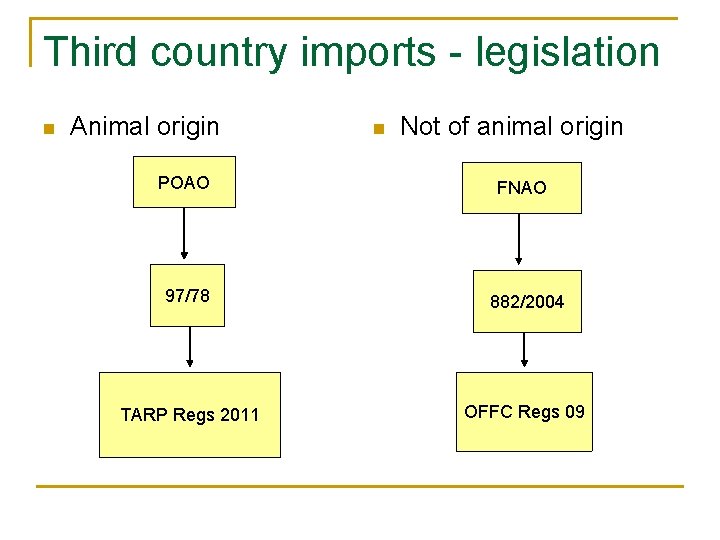
Third country imports - legislation n Animal origin POAO n Not of animal origin FNAO 97/78 882/2004 TARP Regs 2011 OFFC Regs 09
Import controls for products of animal origin (third countries) n n n n Imports only permitted from approved countries POAO handled in approved establishments Identification/health marking Health certification Import through Border Inspection Posts Veterinary checks Issue of Common Veterinary Entry Document
Import controls for foods not of animal origin n Most FNAO q q n Regulation (EC) 882/2004 q n may be imported from anywhere around the world and can be imported into any port of entry. sets out general import conditions regarding the importation of FNAO from third countries. Certain high risk FNAO q subject to enhanced official controls on import.
Enforcement key issues n n Identification of illegally imported food Detention of suspect foods Seizure of illegal foods Destruction of seized illegal products q n n Disposal as animal by-products Cost recovery Audit trail of above
Third country imports FNAO 17
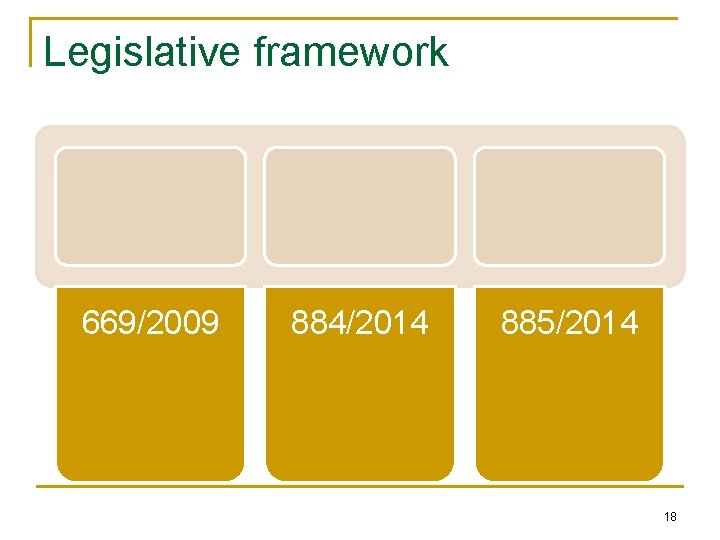
Legislative framework 669/2009 884/2014 885/2014 18
Regulation (EC) 669/2009 (c) Food Standards Agency
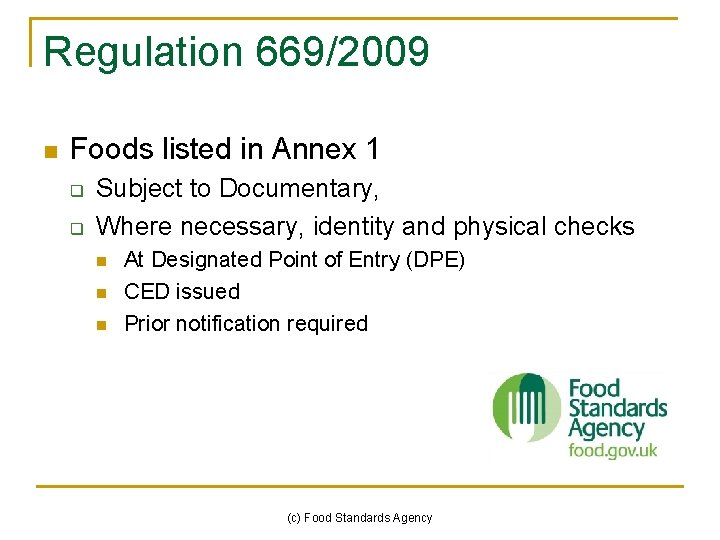
Regulation 669/2009 n Foods listed in Annex 1 q q Subject to Documentary, Where necessary, identity and physical checks n n n At Designated Point of Entry (DPE) CED issued Prior notification required (c) Food Standards Agency
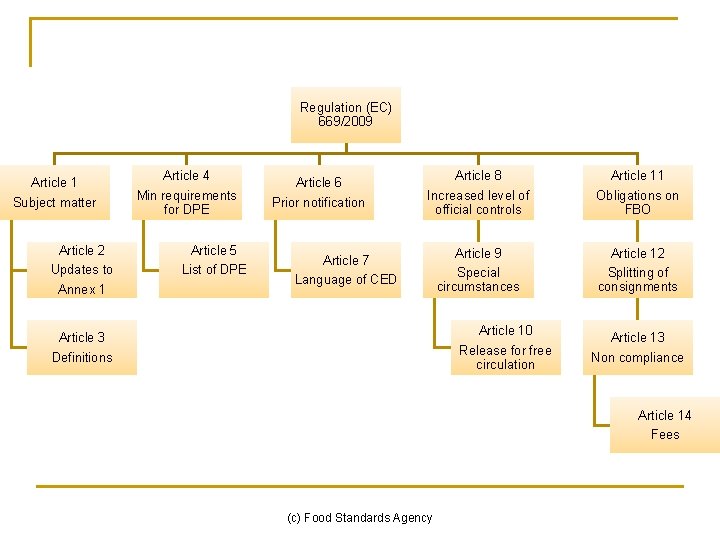
Regulation (EC) 669/2009 Article 1 Subject matter Article 2 Updates to Annex 1 Article 4 Min requirements for DPE Article 5 List of DPE Article 6 Prior notification Article 8 Increased level of official controls Article 11 Obligations on FBO Article 9 Special circumstances Article 12 Splitting of consignments Article 7 Language of CED Article 10 Release for free circulation Article 3 Definitions Article 13 Non compliance Article 14 Fees (c) Food Standards Agency
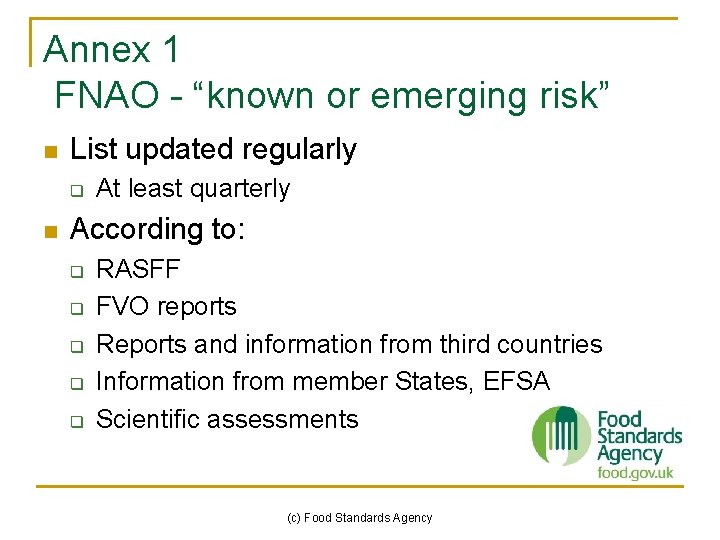
Annex 1 FNAO - “known or emerging risk” n List updated regularly q n At least quarterly According to: q q q RASFF FVO reports Reports and information from third countries Information from member States, EFSA Scientific assessments (c) Food Standards Agency
Regulation (EU) 884/2014 (c) Food Standards Agency
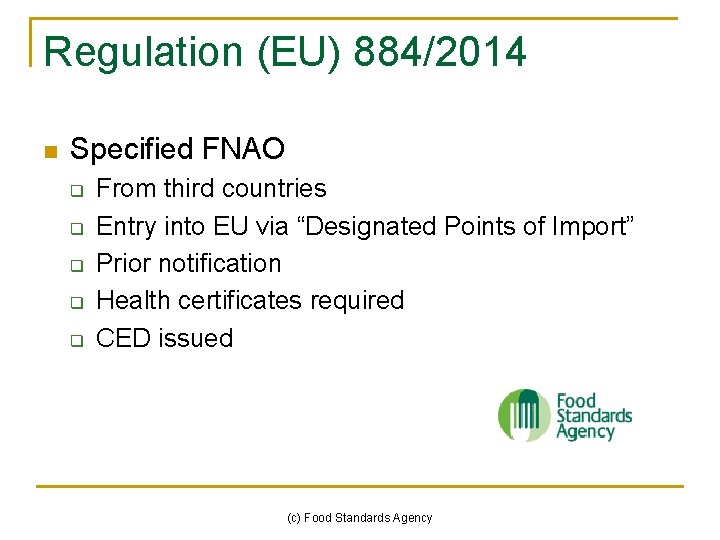
Regulation (EU) 884/2014 n Specified FNAO q q q From third countries Entry into EU via “Designated Points of Import” Prior notification Health certificates required CED issued (c) Food Standards Agency
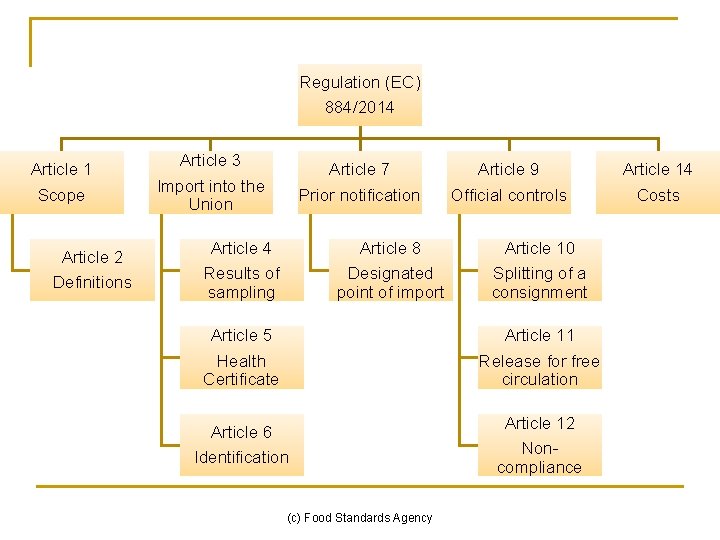
Regulation (EC) 884/2014 Article 1 Scope Article 2 Definitions Article 3 Import into the Union Article 7 Prior notification Article 4 Results of sampling Article 8 Designated point of import Article 9 Official controls Article 10 Splitting of a consignment Article 5 Health Certificate Article 11 Release for free circulation Article 6 Identification Article 12 Noncompliance (c) Food Standards Agency Article 14 Costs
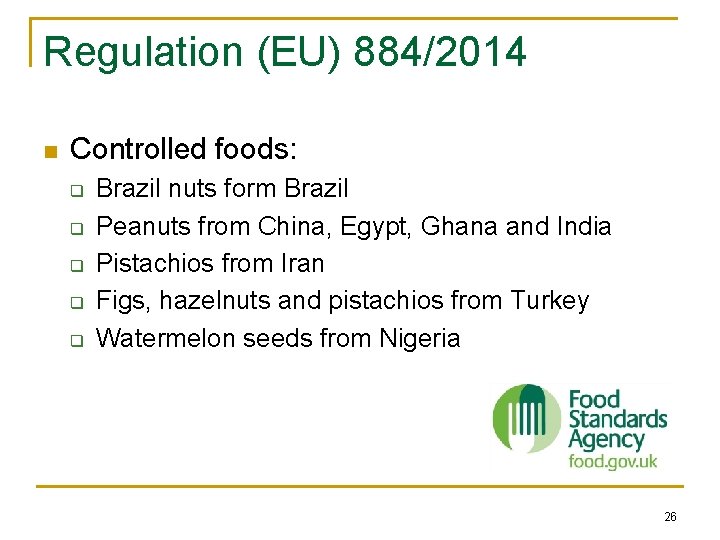
Regulation (EU) 884/2014 n Controlled foods: q q q Brazil nuts form Brazil Peanuts from China, Egypt, Ghana and India Pistachios from Iran Figs, hazelnuts and pistachios from Turkey Watermelon seeds from Nigeria 26
Regulation 885/2014 27
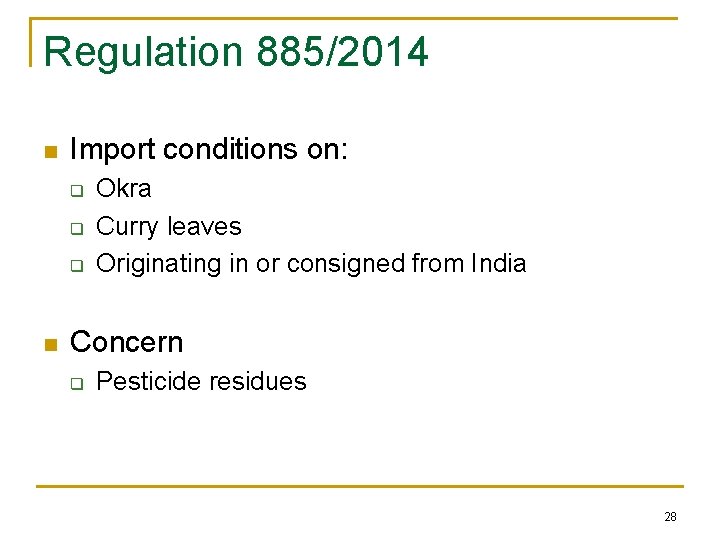
Regulation 885/2014 n Import conditions on: q q q n Okra Curry leaves Originating in or consigned from India Concern q Pesticide residues 28
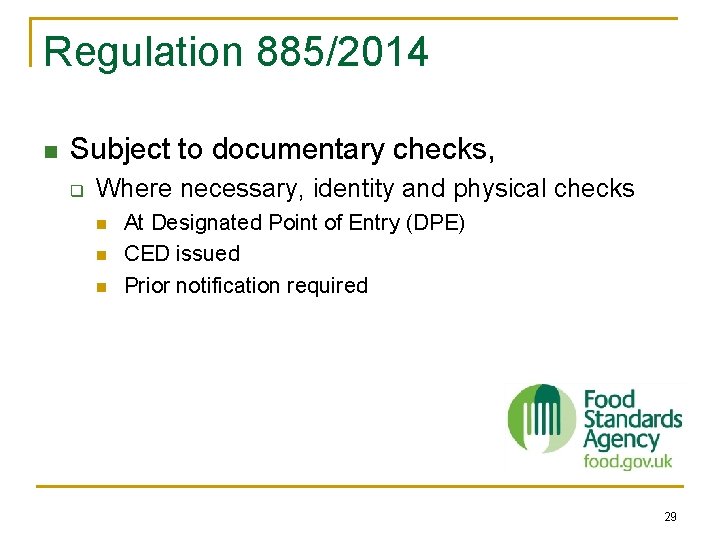
Regulation 885/2014 n Subject to documentary checks, q Where necessary, identity and physical checks n n n At Designated Point of Entry (DPE) CED issued Prior notification required 29
Import procedures 30
TRACES n TRACES q q n Trade Control and Expert System Network for veterinary health which notifies, certifies and monitors imports, exports and trade in animals and animal products. http: //europa. eu/!g. H 83 GQ 31
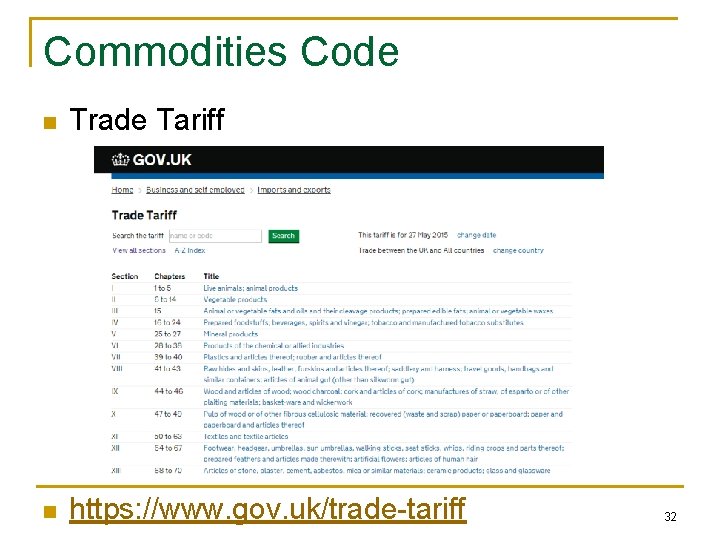
Commodities Code n Trade Tariff n https: //www. gov. uk/trade-tariff 32
Keeping up to date 33
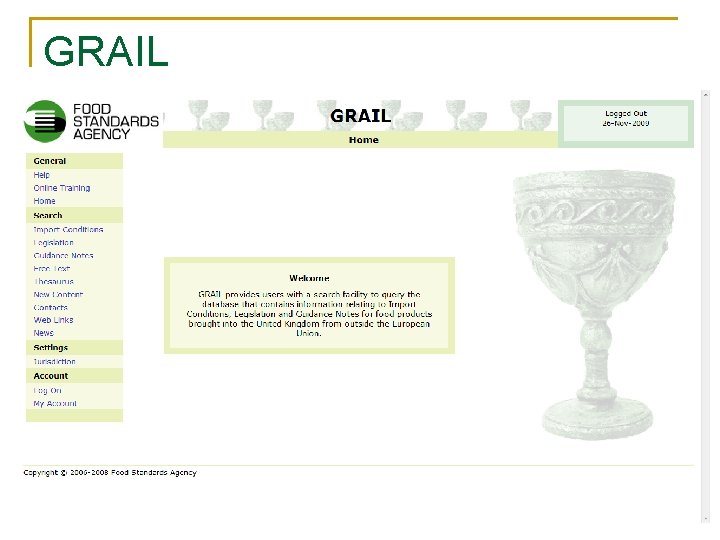
GRAIL
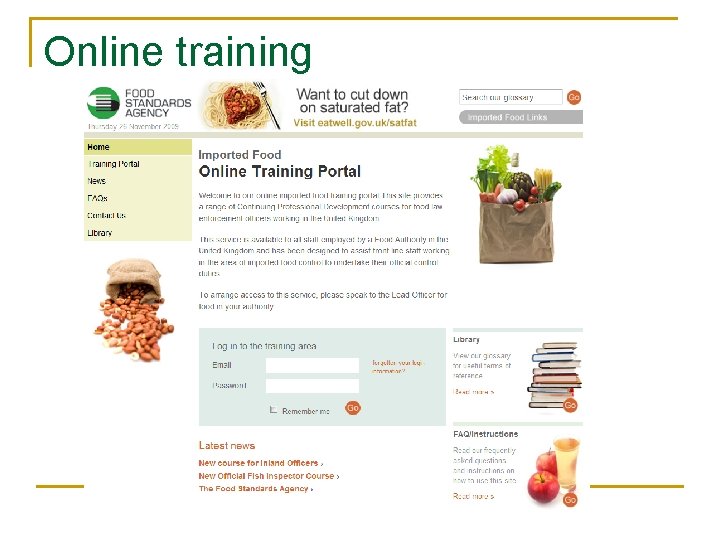
Online training
Roles and responsibilities
Food Standards Agency n Central Competent Authority (CCA) for imports of fishery products and bivalve molluscs from third countries to the UK q Primarily concerned with public health aspects of food, contamination of food and the Rapid Alert System for Food and Feed (RASFF).
Defra n n The Department for the Environment, Food and Rural Affairs (Defra) Central Competent Authority with respect to Products of Animal Origin other than fishery products and shellfish.
The Food and Veterinary Office (FVO) n Prior approval of prospective suppliers of n n n POAO to the EU. Checks on compliance with food law by Member States. Missions of third countries to ensure effective controls in place. http: //ec. europa. eu/food_veterinary_offic e/index_en. htm
Local authorities n n Port Health Authorities Local Authorities with Port Health Function Unitaries, London Boroughs, Districts etc County Councils
Other agencies n n Border Force Animal and Plant Health Agency (APHA) q Established October 2014 n n n Food and Environment Research Agency (FERA) Bee Inspectorate, Plant Health and Seeds Inspectorate Plant Variety and Seeds Group GM Inspectorate Animal Health and Veterinary Laboratories Agency (AHVLA)
Enforcement 42
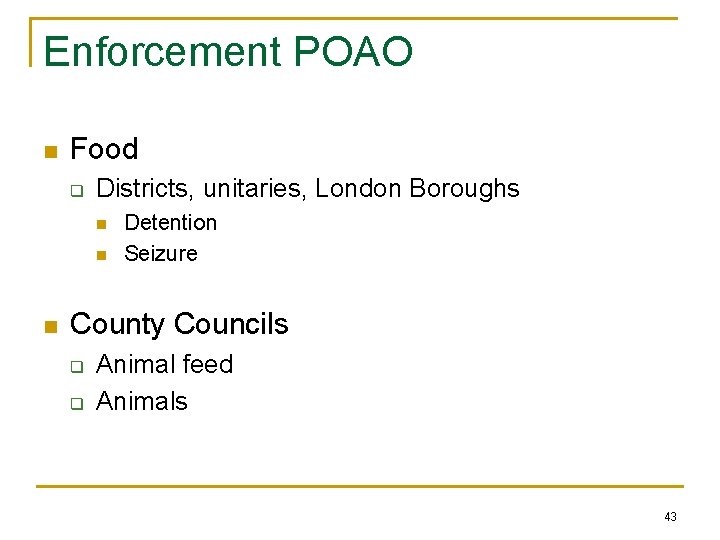
Enforcement POAO n Food q Districts, unitaries, London Boroughs n n n Detention Seizure County Councils q q Animal feed Animals 43
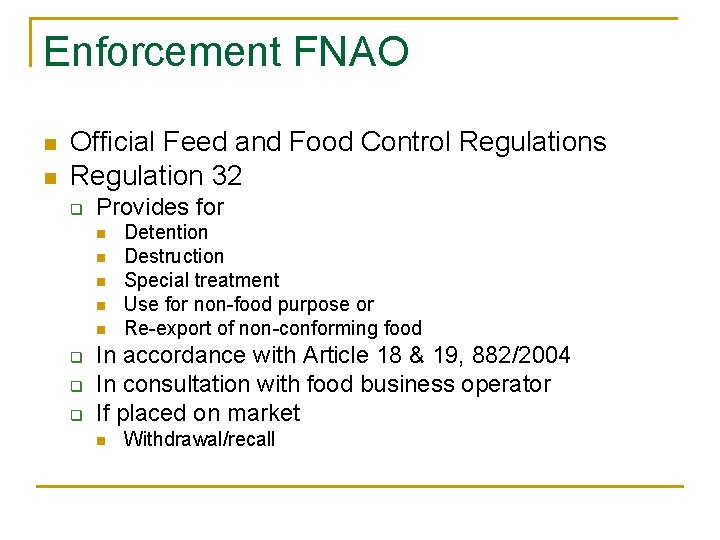
Enforcement FNAO n n Official Feed and Food Control Regulations Regulation 32 q Provides for n n n q q q Detention Destruction Special treatment Use for non-food purpose or Re-export of non-conforming food In accordance with Article 18 & 19, 882/2004 In consultation with food business operator If placed on market n Withdrawal/recall
Enforcement priorities n Banned or restricted products q q http: //www. food. gov. uk/businessindustry/imports/banned-restricted http: //www. food. gov. uk/sites/default/files/foodstuffs -with-current-EU-restrictions. pdf 45
Early Warning System for Emerging Risks in Imported Food and Feed not of animal origin (FNAO) 46
Early Warning System n n What is the FSA’s EWS? Why was it introduced? How does it work? What are the EWS successes?
EWS: What is it? n n An emerging risk detection tool Three key aims to: q Predict hazards for specific food and feed from specific 3 rd countries for inclusion in legislation n q q e. g. Annex I of Reg. 669/2009 Identify new issues affecting FNAO and alert PHAs / LAs to facilitate targeted enforcement; Address concerns from industry on imported food and feed
EWS – why was it introduced? n n Recognised need for early detection of amendments to Annex I of Reg. 669/2009 Introduction of peas and beans from Kenya to Annex I from 01/01/2012 – q majority were imported through Manston (not then a DPE), resulting in significant problems (including political!)
How does the EWS work? n n Daily analysis of the RASFF Window to identify issues concerning FNAO Routine analysis of Horizon. Scan tool Established system for recording new issues and cases of more than one notification Specific criteria for identifying emerging risks based on frequency of occurrence
Monthly discussions • With Incidents and horizon scanning colleagues • Liaison with intelligence hub • Agree action on hazards identified
Actions arising from monthly meetings n Risk assessments / policy advice q n may be sought for issues identified of concern Monthly email alerts q advising PHAs / inland LAs, trade and colleagues of frequency of RASFFs on hazards for specific FNAO products
The EWS Successes! n n n Early detection of: Chloramphenicol (prohibited substance) in enzyme preparation from India – effective from 1 April 2014 Salmonella in Sesame Seeds from India effective from 1 October 2014 under 669/2009 Pesticide residues in Dragon fruit from Vietnam – effective from 1 October 2014 under 669/2009 Positive feedback from ports – EWS has enabled better targeted enforcement
Identification of Imported Foods and Importers
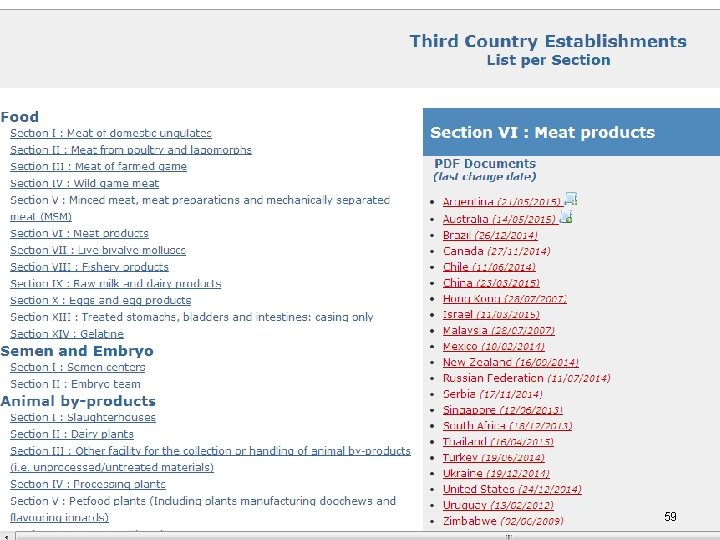
Imported POAO q Must be marked in accordance with EU requirements
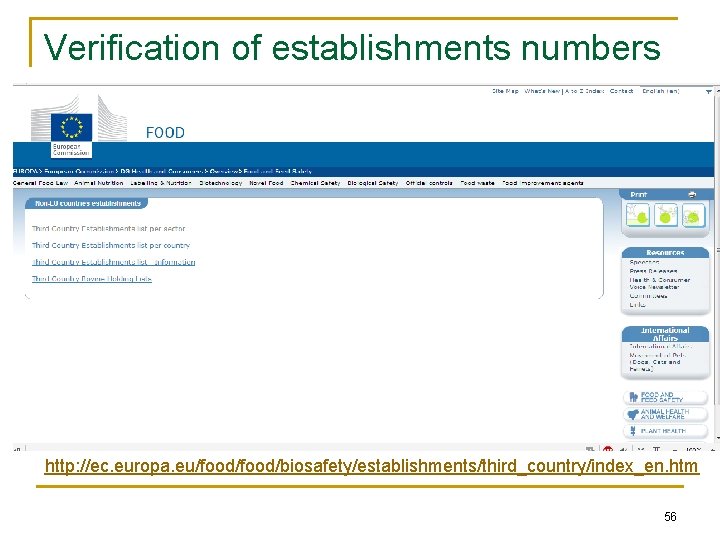
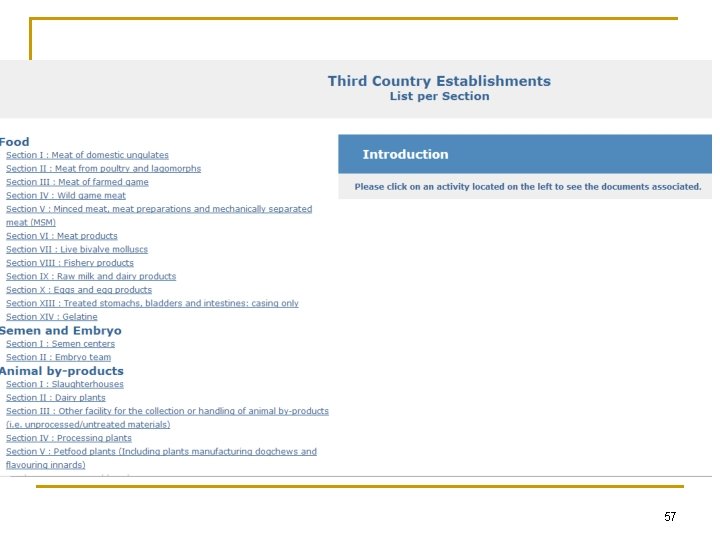
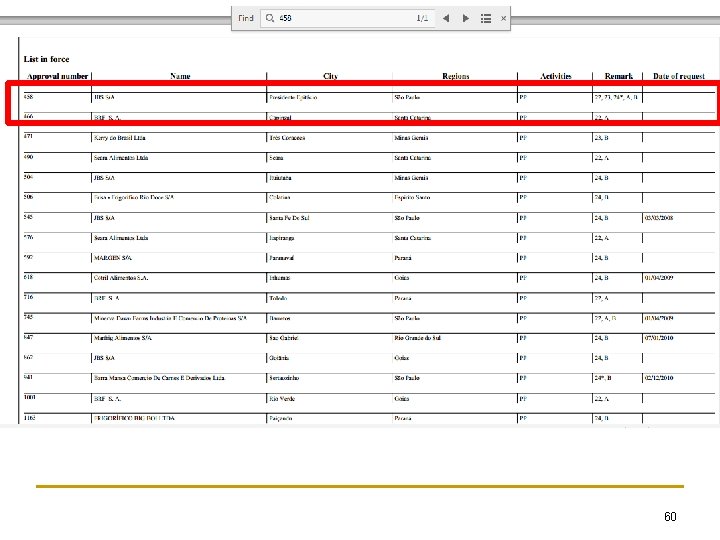
Verification of establishments numbers http: //ec. europa. eu/food/biosafety/establishments/third_country/index_en. htm 56
57
Corned Beef from Brazil n Establishment number : 458
59
60
Exercise Identification of imported food and importers
Identification of Importers n Consider what q q information you should obtain During routine interventions of the following. .
Manufacturer n n A manufacturer in your area produces a range of nut bars. Ingredients include: q q Almonds Peanuts Sunflower seeds Dried apricots
Manufacturer 2 n Produces q q n fish fingers Fish cakes Uses frozen blocks of fish
Warehouse n Supplies oriental food to restaurants q Products include n n n n n Canned fish Rice Fresh meat Fresh fish Dried shellfish Dried noodles Frozen vegetables Spices Dried fruits and nuts 65
Workshop Targeting resources for imported food control n List out the main types of establishment q Likely to handle FNAO from third countries n Most likely to be subject to enhanced controls q q Those most likely to fail legal requirements n n n eg 669/884/885 Inadvertently Intentionally Identify appropriate intervention strategies 66
Example n Establishment likely to handle FNAO q n Non compliance likely due to changes in 669 q q n Spice packers Compliant businesses Unaware of amendments to Annex 1 Solution q Quarterly e-mail to spice packers with link to 669 amendment 67
Questions? 68