
Effective Groups and Teams Groups Teams and Organizational
- Slides: 46
Effective Groups and Teams
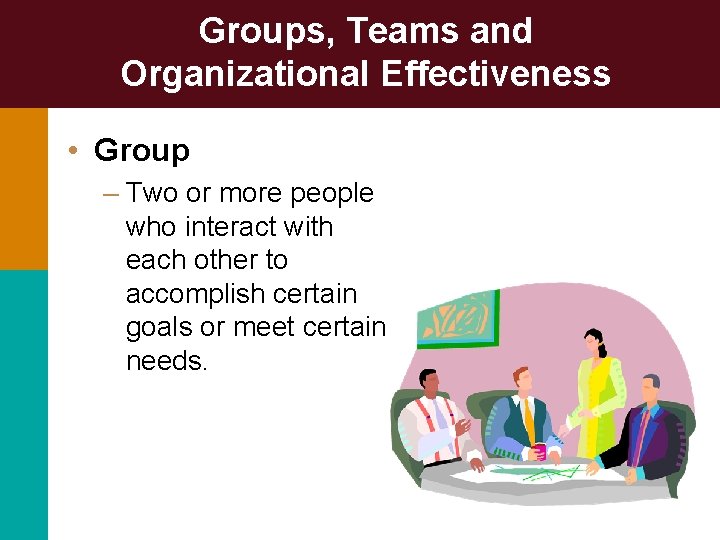
Groups, Teams and Organizational Effectiveness • Group – Two or more people who interact with each other to accomplish certain goals or meet certain needs.
Characteristics of group • • Two or more person Collective identity Interaction Common purpose
Groups, Teams and Organizational Effectiveness • Team – A group whose members work intensely with each other to achieve a specific, common goal or objective. – All teams are groups but not all groups are teams. • Teams often are difficult to form. • It takes time for members to learn how to work together.
Groups, Teams and Organizational Effectiveness • Two characteristics distinguish teams from groups – Intensity with which team members work together – Presence of a specific, overriding team goal or objective
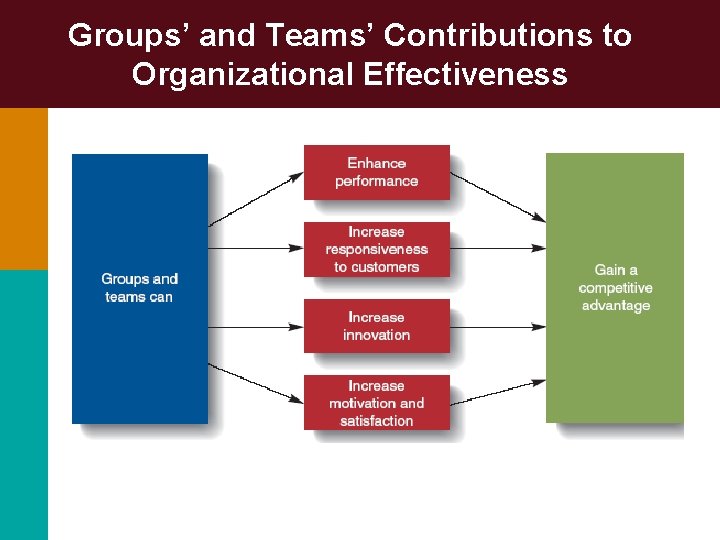
Groups’ and Teams’ Contributions to Organizational Effectiveness
Groups and Teams as Performance Enhancers • Synergy: the interaction or cooperation of two or more organizations, substances, or other agents to produce a combined effect greater than the sum of their separate effects. • Advantage of synergy – People working in a group are able to produce more outputs than would have been produced if each person had worked separately
Groups and Teams as Performance Enhancers • Factors that contribute to synergy – Ability of group members to bounce ideas off one another – To correct one another’s mistakes – To bring a diverse knowledge base to bear on a problem – To accomplish work that is too vast for any one individual to achieve
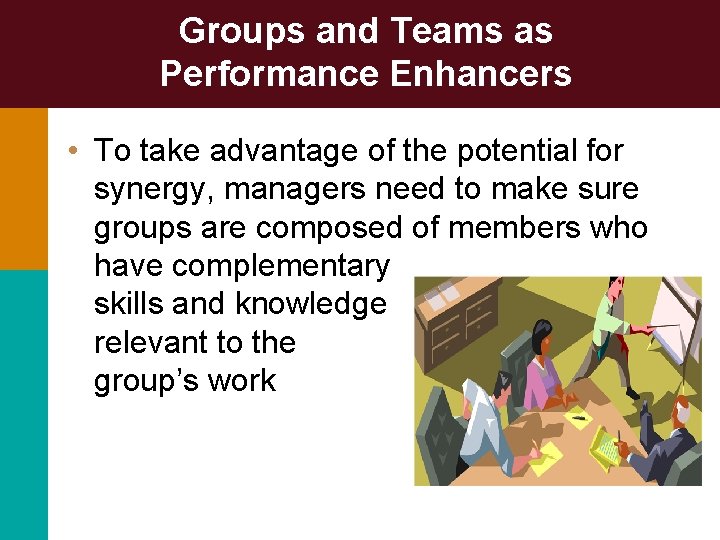
Groups and Teams as Performance Enhancers • To take advantage of the potential for synergy, managers need to make sure groups are composed of members who have complementary skills and knowledge relevant to the group’s work
Groups and Teams and Responsiveness to Customers • Responsiveness to Customers – Difficult to achieve given the many constraints. • Safety issues, regulations, costs. – Cross-functional teams can provide the wide variety of skills needed to meet customer demands. • Teams consist of members of different departments.
Teams and Innovation • Innovation – The creative development of new products, new technologies, new services, or new organizational structures • Individuals rarely possess the wide variety of skills needed for successful innovation. • Team members can uncover each other’s flaws and balance each other’s strengths and weaknesses • Managers should empower the team and make it accountable for the innovation process.
Groups and Teams as Motivators • Members of groups, and particularly teams, are often better motivated and satisfied than individuals. – Team members are motivated and satisfied than if they were working alone. – Team members can see the effect of their contribution to achieving team and organizational goals. – Teams provide needed social interaction and help employees cope with work-related stressors.
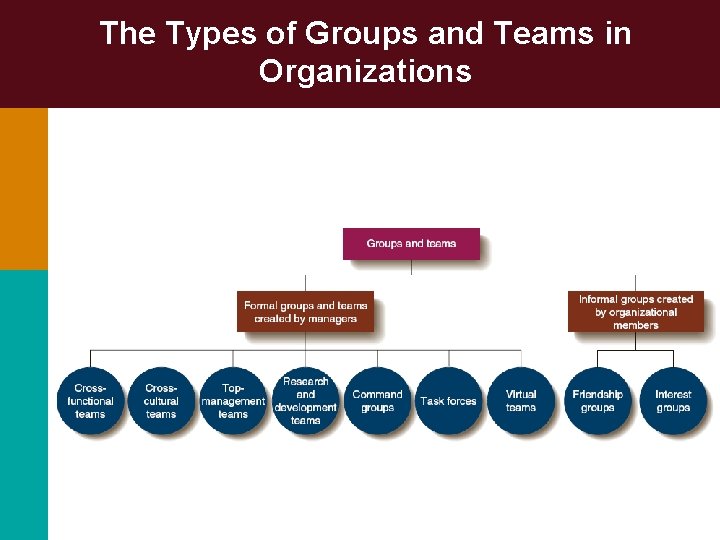
The Types of Groups and Teams in Organizations
The Types of Groups and Teams • Formal Group – A group that managers establish to achieve organization goals.
Formal Groups- teams Cross-functional teams – composed of members from different departments Cross-cultural teams – composed of members from different cultures or countries Top-management team -A group composed of the CEO, the president, and the heads of the most important departments Research and development team -A team whose members have the expertise and experience needed to develop new products
Teams • Self-managed work team • A group of employees who supervise their own activities and monitor the quality of the goods and services they provide. • Virtual team • A team whose members rarely or never meet face to face and interact by using various forms of information technology such as email, computer networks, telephone, fax and video conferences. 15 -16
Self-Managed Work Teams Keys to effective self managed teams: – Give the team enough responsibility and autonomy to be self-managing. – The team’s task should be complex enough to include many different steps. – Select members carefully for their diversity, skills, and enthusiasm. – Managers should guide and coach, not supervise. – Determine training needs and be sure it is provided.
Formal groups • Project group: Formed to complete a specific project. Life coincides with the length of project • Committees: Created outside the usual command structure to solve recurring problem • Command groups: A group composed of subordinates who report to the same supervisor, also called a department or unit, • Task forces: A committee of managers or non managerial employees from various departments or divisions who meet to solve a specific, mutual problem; also called an “ad hoc” committee
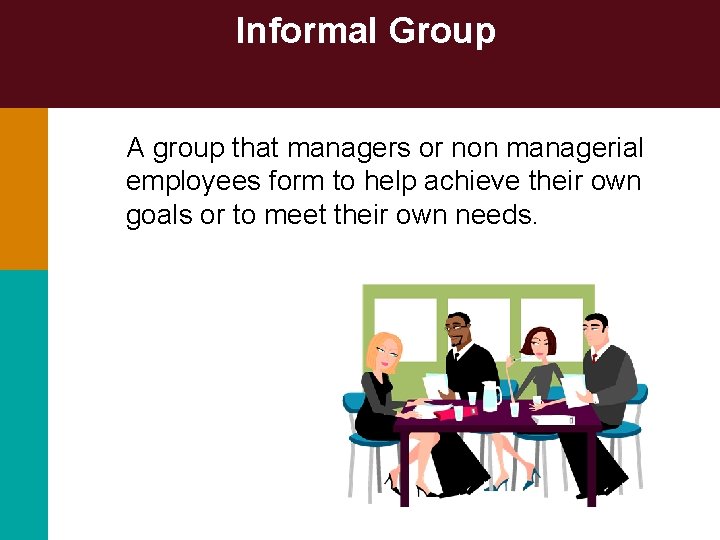
Informal Group A group that managers or non managerial employees form to help achieve their own goals or to meet their own needs.
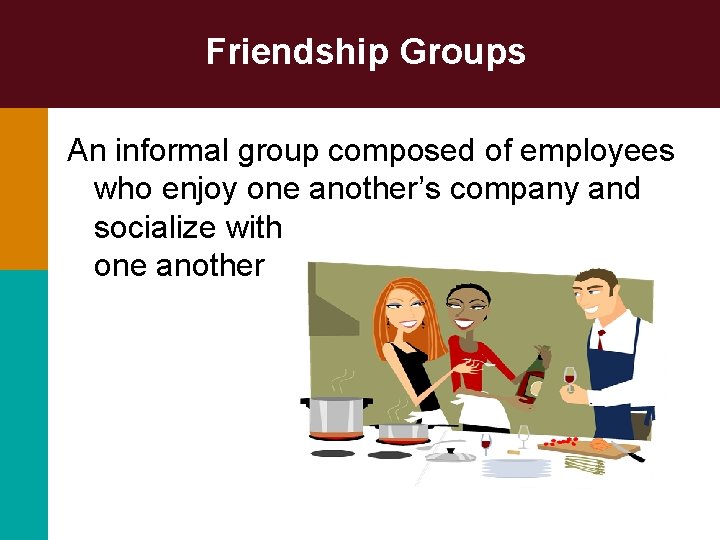
Friendship Groups An informal group composed of employees who enjoy one another’s company and socialize with one another
Interest Groups An informal group of employees may not be members of the same organisation but they are united by their interest in common issue
Reference group • Special type of group where a person would like to belong
Why people join group • • • Security needs Belongingness need Esteem needs Power Identity To vent up emotional feeling
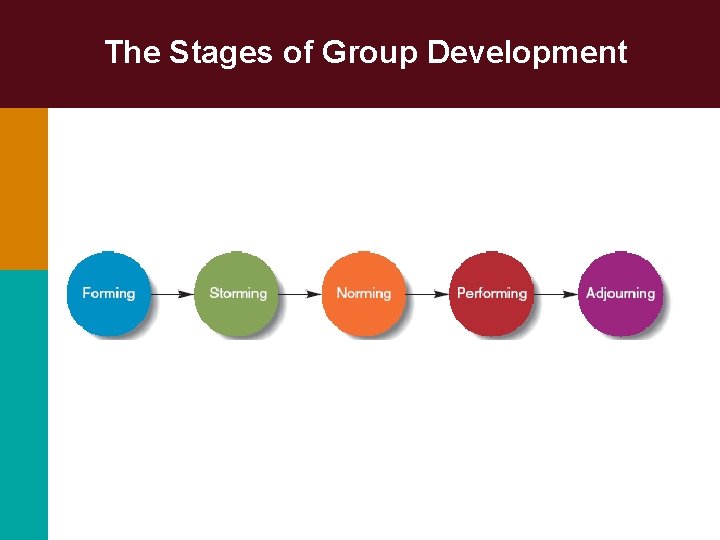
The Stages of Group Development
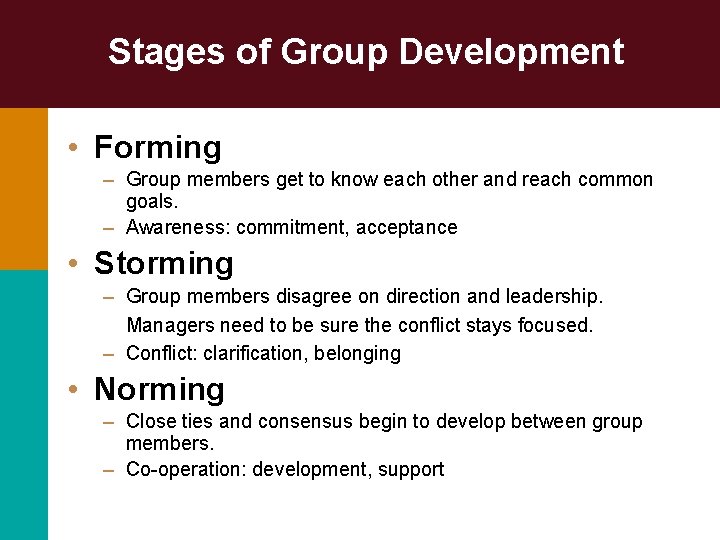
Stages of Group Development • Forming – Group members get to know each other and reach common goals. – Awareness: commitment, acceptance • Storming – Group members disagree on direction and leadership. Managers need to be sure the conflict stays focused. – Conflict: clarification, belonging • Norming – Close ties and consensus begin to develop between group members. – Co-operation: development, support
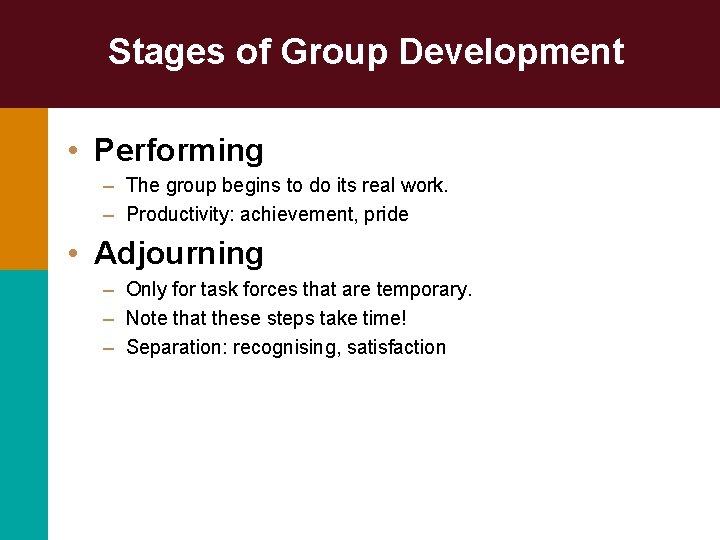
Stages of Group Development • Performing – The group begins to do its real work. – Productivity: achievement, pride • Adjourning – Only for task forces that are temporary. – Note that these steps take time! – Separation: recognising, satisfaction
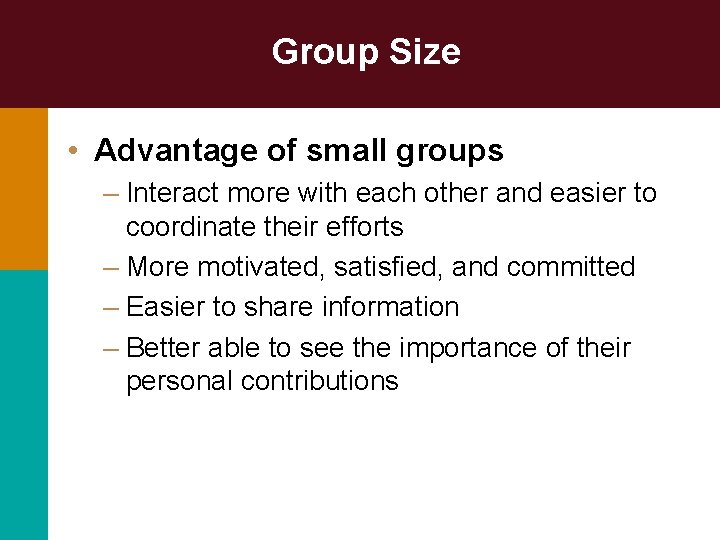
Group Size • Advantage of small groups – Interact more with each other and easier to coordinate their efforts – More motivated, satisfied, and committed – Easier to share information – Better able to see the importance of their personal contributions
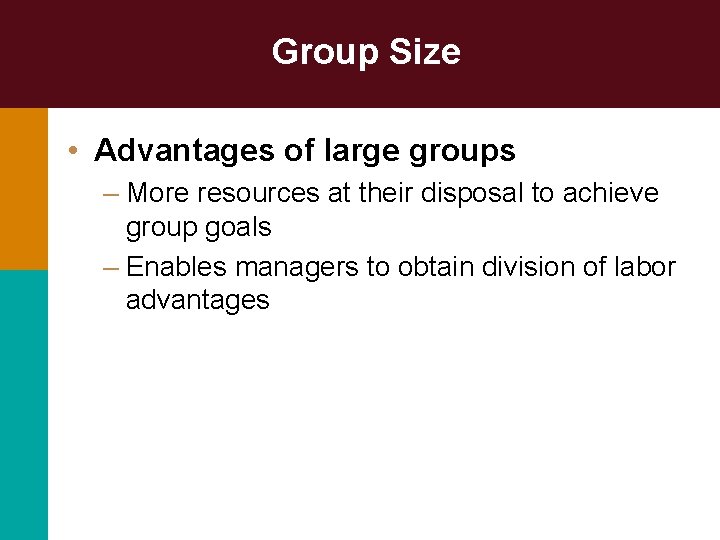
Group Size • Advantages of large groups – More resources at their disposal to achieve group goals – Enables managers to obtain division of labor advantages
Group Size • Disadvantages of large groups – Problem of communication and coordination – Lower level of motivation – Members might not think their efforts are really needed
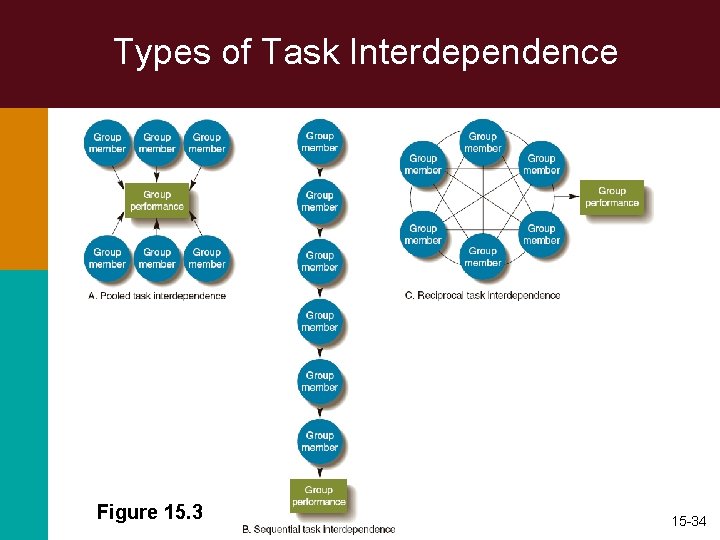
Group Tasks • Group tasks impact how a group interacts. – Task interdependence shows how the work of one member impacts another; as interdependence rises, members must work more closely together.
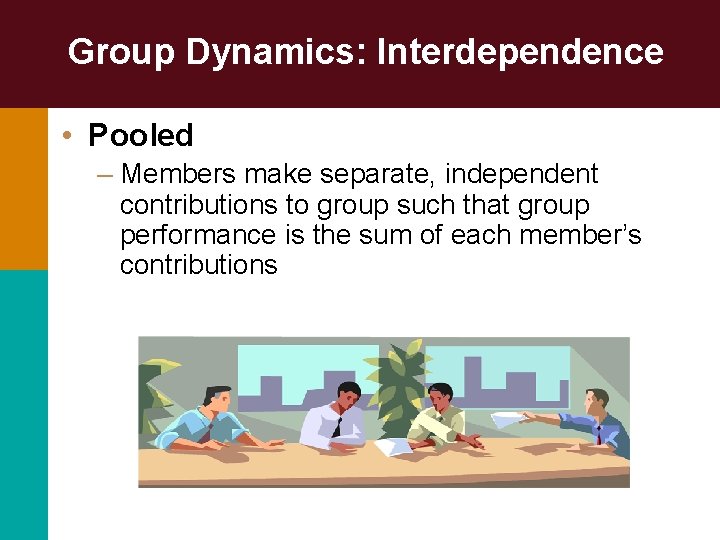
Group Dynamics: Interdependence • Pooled – Members make separate, independent contributions to group such that group performance is the sum of each member’s contributions
Group Dynamics: Interdependence • Sequential – Members perform tasks in a sequential order making it difficult to determine individual performance since one member depends on another.
Interdependence • Reciprocal – Work performed by one group member is mutually dependent on work done by other members. 15 -33
Types of Task Interdependence Figure 15. 3 15 -34
Group Roles • Group Roles – The set of behaviors and tasks that a group member is expected to perform because of his or her position in the group.
Group Roles • In cross-functional teams, members are expected to perform roles in their specialty. • Managers should clearly describe expected roles to group members when they are assigned to the group. • Role-making occurs as workers take on more responsibility in their roles as group members. • Self-managed teams may assign the roles to members themselves.
Group Norms • Group Norms – Shared guidelines or rules for behavior that most group members follow – Managers should encourage members to develop norms that contribute to group performance and the attainment of group goals – Provides a basis for understanding others behavior and for deciding ones’ behaviour – Regulation of behaviour – Norms develop in four ways- explicit statement, critical events in the group history, primacy , past experience – Types: performance, appearance, arrangement, allocation of resources, behaviour
Group Dynamics • Conformity: adjusting ones’ behaviour to align with the norms of the group. • Conformity and Deviance – Members conform to norms to obtain rewards, imitate respected members, and because they feel the behavior is right. – When a member deviates, other members will try to make them conform, expel the member, or change the group norms to accommodate them. – Conformity and deviance must be balanced for high performance from the group. – Deviance allows for new ideas in the group.
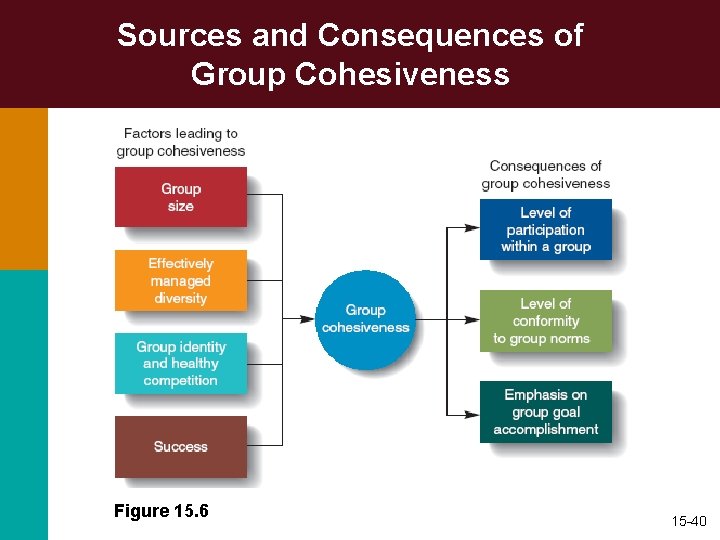
Group Cohesiveness • The degree to which members are attracted to their group • Three major consequences – Level of participation – Level of conformity to group norms – Emphasis on group goal accomplishment 15 -39
Sources and Consequences of Group Cohesiveness Figure 15. 6 15 -40
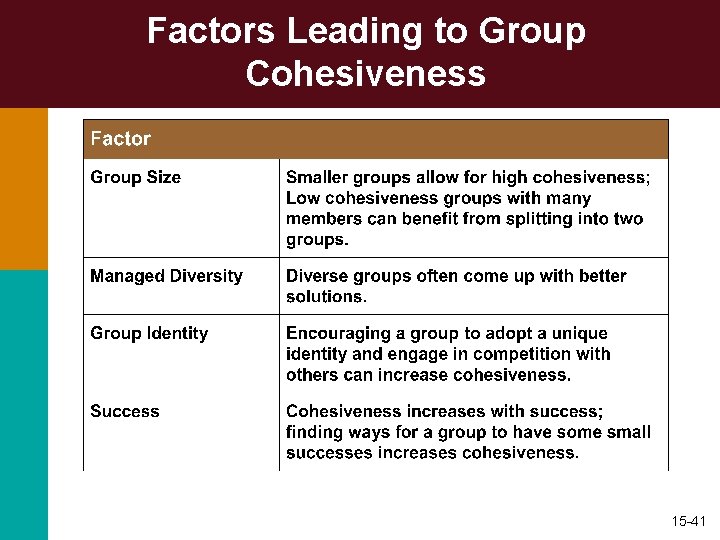
Factors Leading to Group Cohesiveness 15 -41
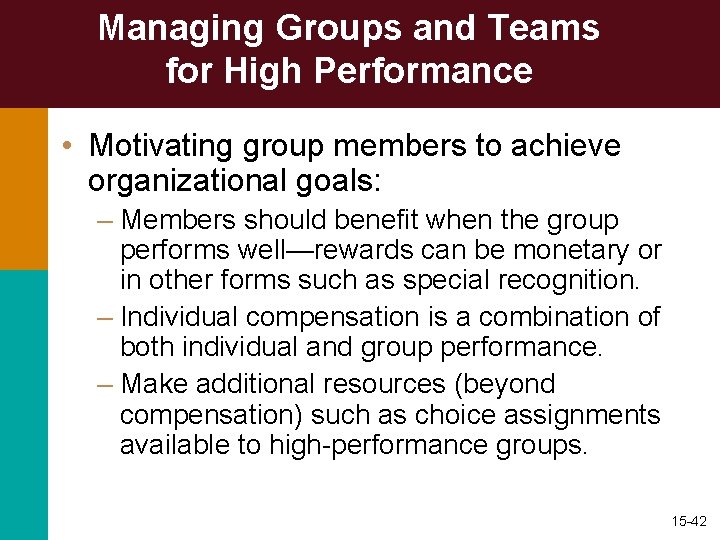
Managing Groups and Teams for High Performance • Motivating group members to achieve organizational goals: – Members should benefit when the group performs well—rewards can be monetary or in other forms such as special recognition. – Individual compensation is a combination of both individual and group performance. – Make additional resources (beyond compensation) such as choice assignments available to high-performance groups. 15 -42
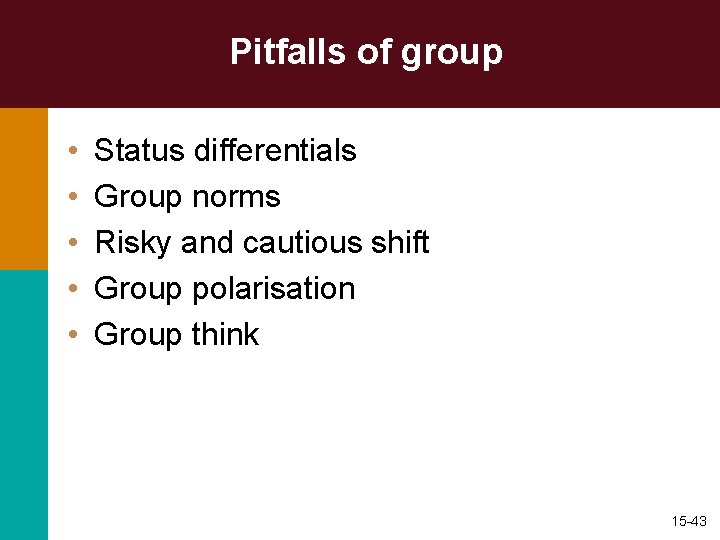
Pitfalls of group • • • Status differentials Group norms Risky and cautious shift Group polarisation Group think 15 -43
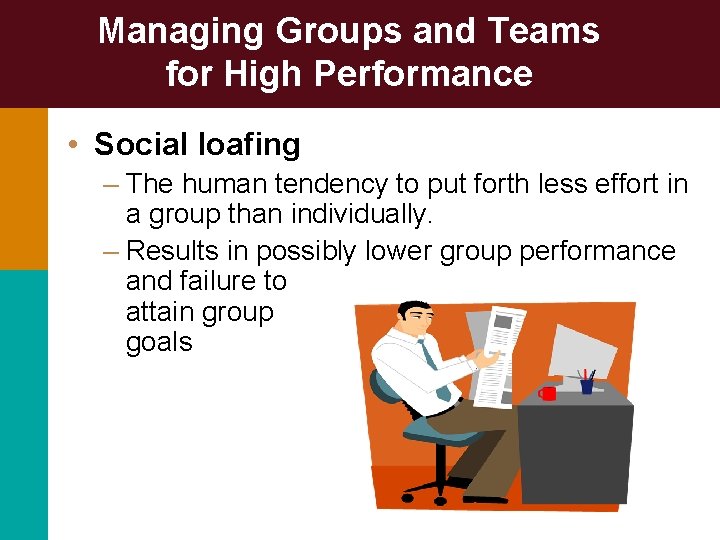
Managing Groups and Teams for High Performance • Social loafing – The human tendency to put forth less effort in a group than individually. – Results in possibly lower group performance and failure to attain group goals
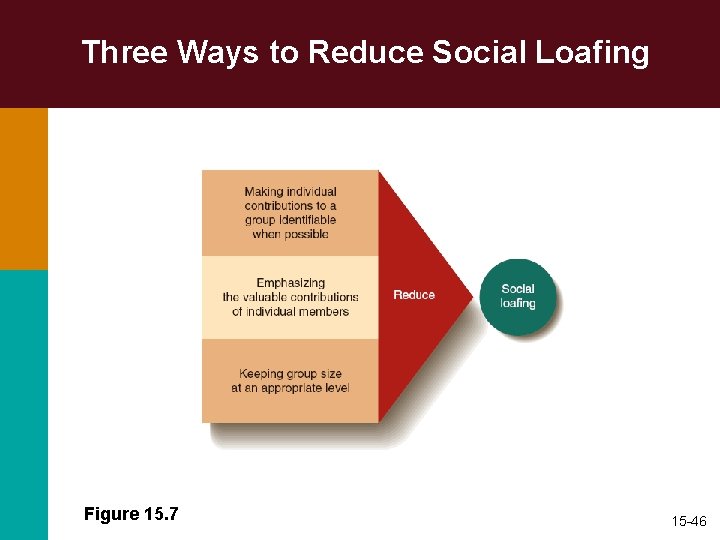
Managing Groups and Teams for High Performance • Reducing social loafing: – Make individual efforts identifiable and accountable. – Emphasize the valuable contributions of individual members. – Keep group size at an appropriate level. 15 -45
Three Ways to Reduce Social Loafing Figure 15. 7 15 -46