
Effective conversations What are they and why do

- Slides: 22
Effective conversations What are they and why do they matter? November 16
By the end of the presentation you will have a better understanding of: • The 5 ambitions for AHP services for children and young people (Ready to Act) • What an effective conversation is • Duty of care • Risk of harm and foreseeable harm • Impact of intervention
The 5 ambitions for AHP services for children and young people. (Ready to Act) • • • Access Early intervention and prevention Partnership and integration Participation and engagement Leadership for quality improvement
What is an effective conversation? • A collaborative conversation with a family at key points during their therapeutic journey. • Always to occur at Request for Assistance (RFA) or initial appointment but may also occur at regular intervals over time.
Why are effective Request For Assistance (RFA) conversations important?
What if the child can not be “cured”? • Scenario 1 “ Mary is 8 years old and has severe learning disabilities. Her play, gross and fine motor skills are that of a 2 -3 year old. She was previously known to SLT and a new RFA was made to speech and language therapy because her communication skills are delayed”
What if the issue would be tackled quicker if the family helped with the intervention? • Scenario 2 • Billy is 6 years old and tiptoe walks. A RFA was made to physiotherapy because orthopaedics did not feel that surgery or plastering were indicated.
What if the concern would be better dealt with by another service? • Scenario 3 • Joe is 6 yrs old and his mum made a RFA to OT due to concerns about fine motor skills. After discussing with mum it appeared that she wasn’t worried (bothered) but it was his class teacher. The outcome was that OT worked with his education Early Years worker so she could provide Joe with support for fine motor skills in class
What if the family don’t think there is a problem or don’t know why they have been referred? • Scenario 4 • Mum phones POST (Paediatric Overweight Service Tayside) as she has received a letter from POST saying that Dr X has referred her daughter and asking if they wish to opt in to the service. With the letter is an information sheet outlining the overall programme and what it involves including that it is family based and highlighting lifestyle behaviours that require modifying. Mum states that she is not sure why Dr X has referred her daughter.
• We must get the conversation right from the outset, set the scene, clarify expectations on all sides. • Have the effective conversation at the start and revisit it over and over again.
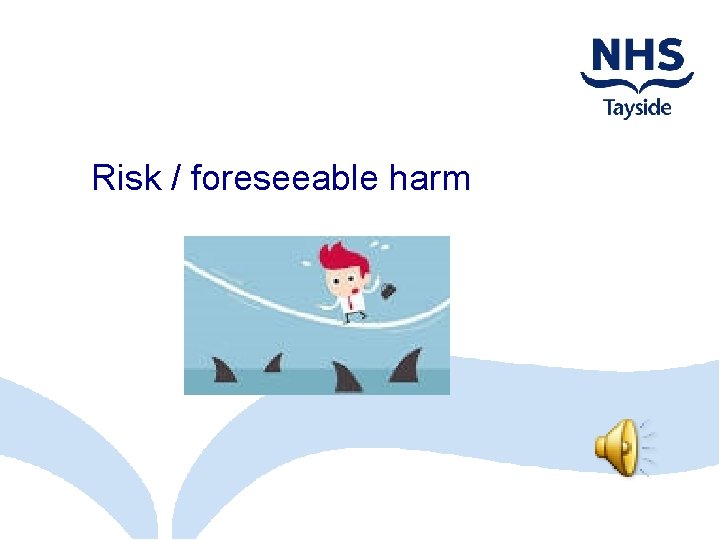
Risk / foreseeable harm
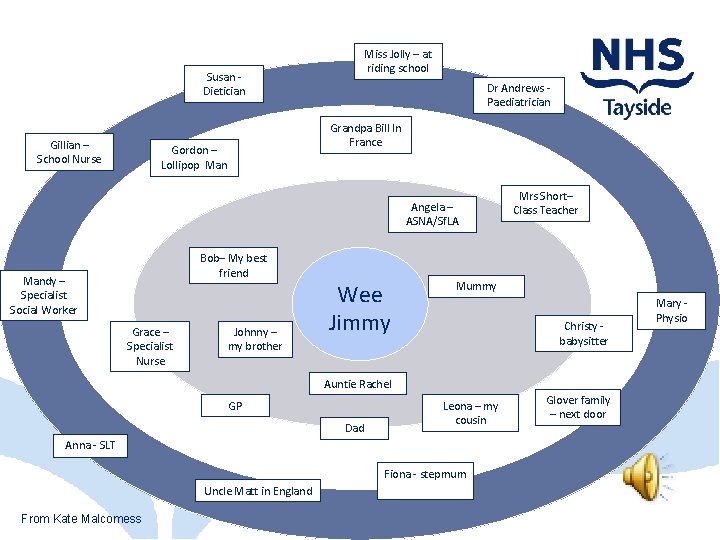
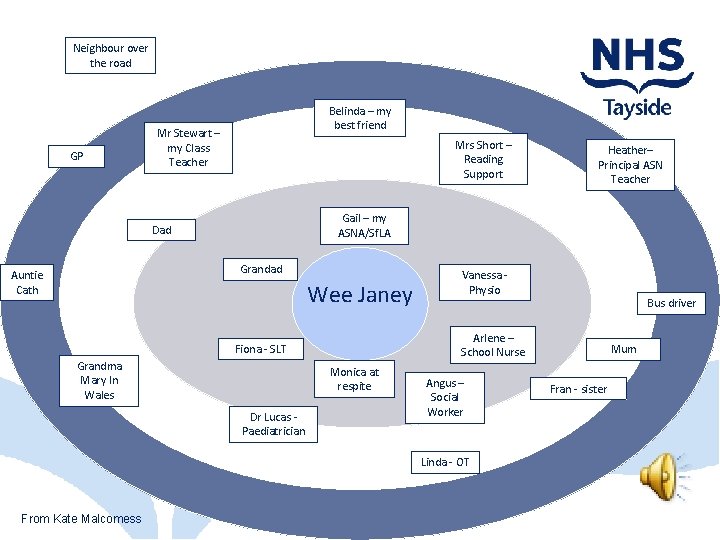
Proximity Be careful that we don’t disempower the people who are best placed to make a difference for that child and affect their wellbeing.
Miss Jolly – at riding school Susan Dietician Gillian – School Nurse Dr Andrews Paediatrician Grandpa Bill In France Gordon – Lollipop Man Angela – ASNA/Sf. LA Bob– My best friend Mandy – Specialist Social Worker Grace – Specialist Nurse Johnny – my brother Wee Jimmy Mrs Short– Class Teacher Mummy Christy babysitter Auntie Rachel GP Dad Leona – my cousin Anna - SLT Fiona - stepmum Uncle Matt in England From Kate Malcomess Glover family – next door Mary Physio
Neighbour over the road GP Belinda – my best friend Mr Stewart – my Class Teacher Mrs Short – Reading Support Gail – my ASNA/Sf. LA Dad Grandad Auntie Cath Wee Janey Grandma Mary In Wales Monica at respite Dr Lucas Paediatrician Vanessa Physio Bus driver Arlene – School Nurse Fiona - SLT Angus – Social Worker Linda - OT From Kate Malcomess Heather– Principal ASN Teacher Mum Fran - sister
Can we impact on the foreseeable risk?
Impact • Motivation for change/ carer responsible • Prognosis / previous response to treatment • Stability of condition/ situation • Level of interventions of other services
Motivation to change • IF NO ONE IS BOTHERED YOU WILL NOT CHANGE ANYTHING. . .
Prognosis • Is the condition likely to respond to treatment? • 75% of the time • 50% of the time • 30% of the time • Unlikely to respond
Stability • Sometimes our intervention can help to stabilise a situation or condition – we need to act • Sometimes a situation or condition is so unstable that our intervention will not be affective
Level of interventions of other services • Is the risk being managed adequately by family, education or others?
Summary • We have discussed the 5 ambitions for AHPs, duty of care, risk of harm and foreseeable harm, and Impact of intervention • Effective conversations can help: • Partnership working • Empowerment and engagement • And ultimately – timely access – Time to do universal training
Next steps Further training: • • Compassionate conversations Story life Child and family communication Make time to shadow colleagues to see effective conversations in action