
Effective Compliance Training Presented by Lauren Camilli VP
Effective Compliance Training Presented by: • Lauren Camilli, VP, CECO - International Relief & Development • Laura Danysh, VP, Senior Counsel Global Regulatory Dispute Resolution - Hilton Worldwide • Miriam Lefkowitz, CLO - Summit Equities, Inc. / Summit Financial Resources, Inc. 1
Why conduct compliance training? • • • Improve effectiveness of compliance program Regulatory requirements in some industries Federal sentencing guidelines Reduce incidence of lawsuits Positive effect on culture of the organization Decrease risks to the company 2
Areas which may apply to companies in most industries • • • OSHA (Safety, Environmental) DOL (wages/hours, anti discrimination/harassment) ERISA HIPAA Data security Privacy FCPA/AML and other Anti-Bribery Laws Whistleblower & Mandatory Disclosure Rules Confidentiality & Intellectual Property OFAC and other Sanctions Programs Import/Export Compliance 3
Role of In House Counsel in Compliance Training • Develop content – Enforcement actions can be very effective at training – especially for senior managers • Deliver training – Can use real world experience and examples • Identify areas of risk that may need additional training. • Training as part of corrective actions to investigations 4
Global Business 13 Brands 102 Countries & Territories 4, 661 Hotels 5
Approach to Compliance Values & Culture 6
Creating a Training Program Ø Identify risks and learning objectives Ø Prioritize risks with resources Ø Determine frequency, timing and length for each topic Ø Establish communication & touch points 7
Resources, Audiences & Frequency Prioritize Risks with Resources: Ø What can be done in house? Ø Who has the skill set to execute? Identify Audience: Ø Careful selection of audience is important; drives cost Ø Vendor selection is equally important Identify Frequency & Timing Ø How often is audience required to train on each topic? Ø How much time will it take to complete each training? 8
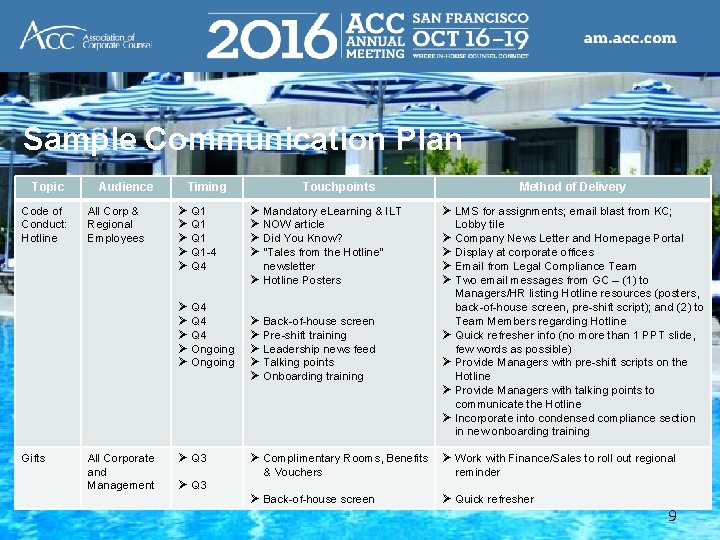
Sample Communication Plan Topic Code of Conduct: Hotline Gifts Audience All Corp & Regional Employees All Corporate and Management Timing Ø Ø Ø Q 1 Q 1 -4 Q 4 Ø Ø Ø Q 4 Q 4 Ongoing Ø Q 3 Touchpoints Ø Ø Mandatory e. Learning & ILT NOW article Did You Know? “Tales from the Hotline” newsletter Ø Hotline Posters Ø Ø Ø Back-of-house screen Pre-shift training Leadership news feed Talking points Onboarding training Method of Delivery Ø LMS for assignments; email blast from KC; Lobby tile Ø Company News Letter and Homepage Portal Ø Display at corporate offices Ø Email from Legal Compliance Team Ø Two email messages from GC – (1) to Managers/HR listing Hotline resources (posters, back-of-house screen, pre-shift script); and (2) to Team Members regarding Hotline Ø Quick refresher info (no more than 1 PPT slide, few words as possible) Ø Provide Managers with pre-shift scripts on the Hotline Ø Provide Managers with talking points to communicate the Hotline Ø Incorporate into condensed compliance section in new onboarding training Ø Complimentary Rooms, Benefits & Vouchers Ø Work with Finance/Sales to roll out regional reminder Ø Back-of-house screen Ø Quick refresher Ø Q 3 9
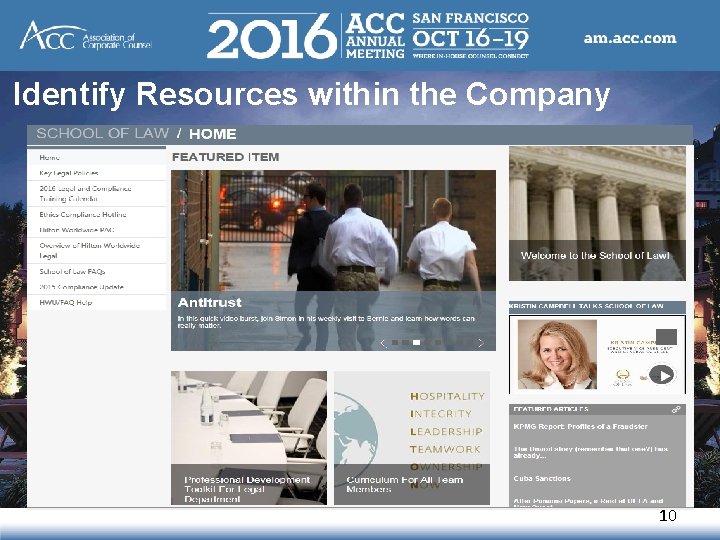
Identify Resources within the Company 10
Operationalize Compliance Ø Ø Ø Operational Meetings Leadership Training Onboarding Classes Professional Development Programs Internal Team Processes Ambassadors 11
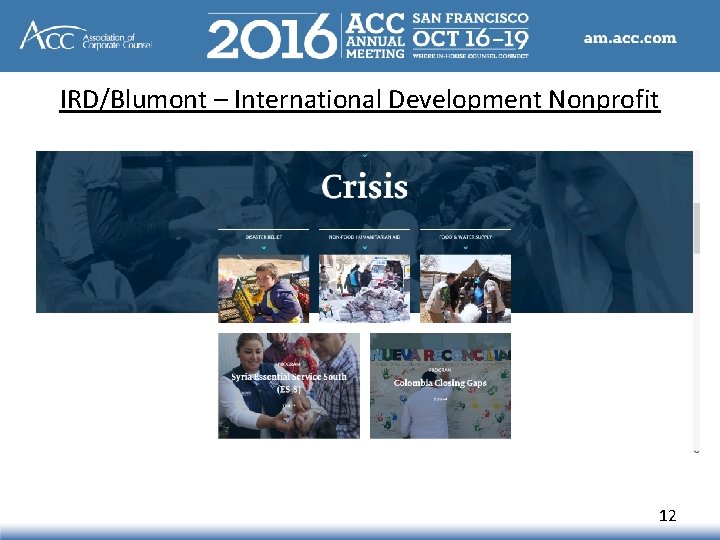
IRD/Blumont – International Development Nonprofit 12
Effective Compliance Training Strategy – Initial Questions • Orientation Training: How long after hire and what is included? • Annual Required Training: What is required for your business & regulations? How many required hours? How will you track completions? • Functionally Specific Training: What functions need additional deeper-dive training courses? Is your LMS set up to assign and track training to a specific group of people? • Risk Based Training: Can your program quickly adapt to changing circumstances (M&A, investigations, new products and evolving risks)? • Budget: What is your budget for the year and what is your preferred method of training for your staff? • Identify your audience: What are the demographics of your workforce? Are you training contractors and other third parties? • Online vs. In-Person: What is your preferred mix given resource constraints or in-house expertise? 13
Business Based Training Needs • U. S. Government Contracting – – – – TINA – Truth in Negotiation Act Human Trafficking Timekeeping Procurement Cost Accounting Standards – FAR Cost Principles Export Compliance (ITAR/EAR) CUI (Controlled Unclassified Information) Anti-Boycottt Sanctions & Embargoes Conflicts of Interest (OCI/PCI) Security – Cleared Contractors Whistleblower/Ethics/False Claims Act Gifts & Gratuities FCPA • Functionally Specific Training – Human Resources: employee I-9 verifications, sanctions checks, investigation techniques, foreign national hiring, COI/PCI, human trafficking, ethics. – IT: data privacy, cyber controls, export controls. – Finance: Cost Accounting Standards, FAR, Timekeeping, Internal Controls (COSO). – Contracts/Procurement: FAR requirements, export compliance, anti-boycott, sanctions, COI/OCI, gifts & gratuities, TINA, Anti-Trust. – Security: CUI, export compliance. – Business Development: TINA, Anti. Trust, gifts & gratuities, OCI/PCI, export controls, FCPA. 14
Overcoming Barriers to Effective Compliance Training • Translation into local languages – More effective to understand complex regulatory requirements. • Different Cultural Perspectives – Are there specific religious or cultural norms that may not align with your training? – Does humor translate locally into all cultures? • “Tone at the Middle” – Are your employees hearing the same compliance messages from their supervisors? • Training Fatigue – Are you scheduling your training when employees can be engaged and spacing out throughout the year? • Age and education level of your workforce • Technology limitations (bandwidth, firewalls, smartphones) • European Works Councils and required training • Time charging for compliance training 15
Adult Learning Styles • • • Create engaging videos with current staff members “Tone at the Top” messaging from the Top Leaders Animation software and add humor Real Life Scenarios Shorter and more frequent training throughout the year Generational Learning Styles: Millennials vs. Generation X Training through smartphone Apps Gamification Quizzes and Contests with Prizes Compliance Awards to increase interest in training and use as scenarios 16
Training on a Budget • Leveraging Resources Internally – Identify leaders who are engaging and good public speakers to diversify your trainers • Create In-House training using low cost tools – SCORM technology that is easily hosted on LMS (Articulate) – Go. Animate or other online animation tools • Create In-House videos using real people and real scenarios – i. Movie, Camptasia • Take advantage of online tools for video training and online forums when you can not do in-person. – Web. Ex, Google+ • Identify opportunities under your contracts if direct charge training is an option 17
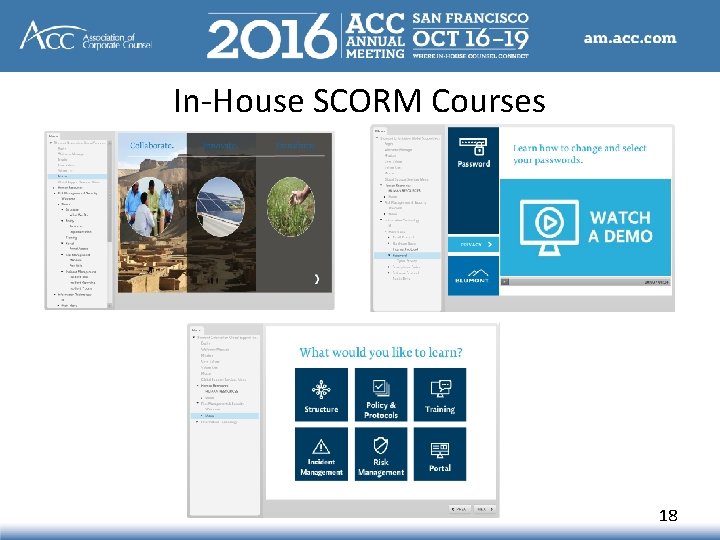
In-House SCORM Courses 18
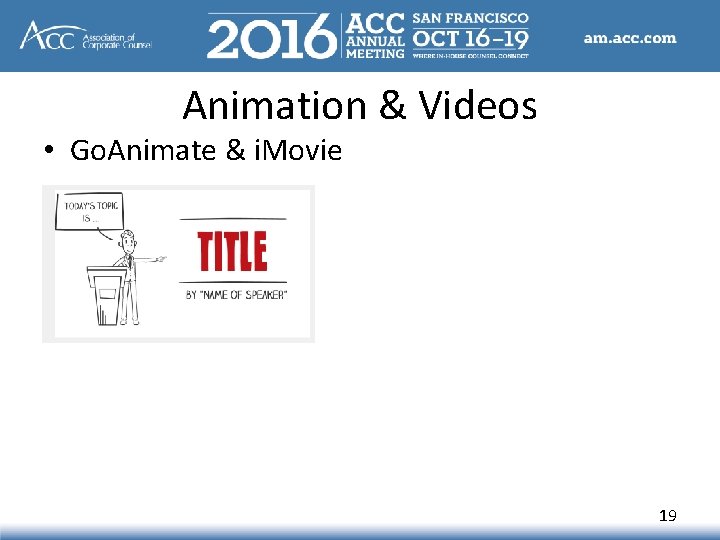
Animation & Videos • Go. Animate & i. Movie 19
Continuous Improvement & Feedback Mechanisms • Improve training year over year to ensure your training is fresh and engaging. Limit duplication • Solicit honest feedback for the training: – Survey Monkey – Request Direct Feedback – Pilot Groups • Shorter term contracts with vendors to increase flexibility in decision making. • Ensure your program can change and adapt quickly to changing risks to the company 20
TIPS TO IMPLEMENTING EFFECTIVE COMPLIANCE TRAINING • • • Onboarding Ongoing Functionally Specific Training Piggyback on other events Utilize appropriate third party content Smaller, bite-sized training more frequently The right mixture of online and in-person Get people involved – Audience participation Document all participation 21
Who to Train • • Tone from the top Mood in the middle Buzz at the bottom Also – independent contractors, temps, interns, agents 22
MAKING IT STICK Be scary Be funny Be repetitive Measure effectiveness Role play Gold stars do work Use real life examples Different presenters – hear from different voices at various levels of the organization • Use various mediums – Add videos, cartoons, quizzes • • • 23
QUESTIONS? Lauren Camilli lcamilli@ird. org Laura Danysh Laura. Danysh@Hilton. com Miriam Lefkowitz mlefkowitz@sfr 1. com 24
- Slides: 24